The song at #59 on my list of 100 Best Songs of the 2010s is “Bang Bang” by Green Day. The legendary rockers proved their staying power with the 2016 release of their 12th studio album Revolution Radio, 26 years after their first album 39/Smooth in 1990. The album’s hard-hitting first single “Bang Bang” stays true to the band’s penchant for topical themes, with lyrics that speak to America’s culture of gun violence and mass shootings in an era of narcissistic social media: “I want to be a celebrity martyr. The little man in my own private drama. Hurrah (bang bang), hurrah (bang bang) the hero of the hour. Daddy’s little psycho and Mommy’s little soldier.”
The explosive song’s musical high points are Billie Joe Armstrong’s furious guitar riffs, Mike Dirnt’s pummeling bass line and Tré Cool’s awesome galloping drum solo. And Armstrong impassioned vocals sound even more angry and intense than they were on American Idiot. I love it!
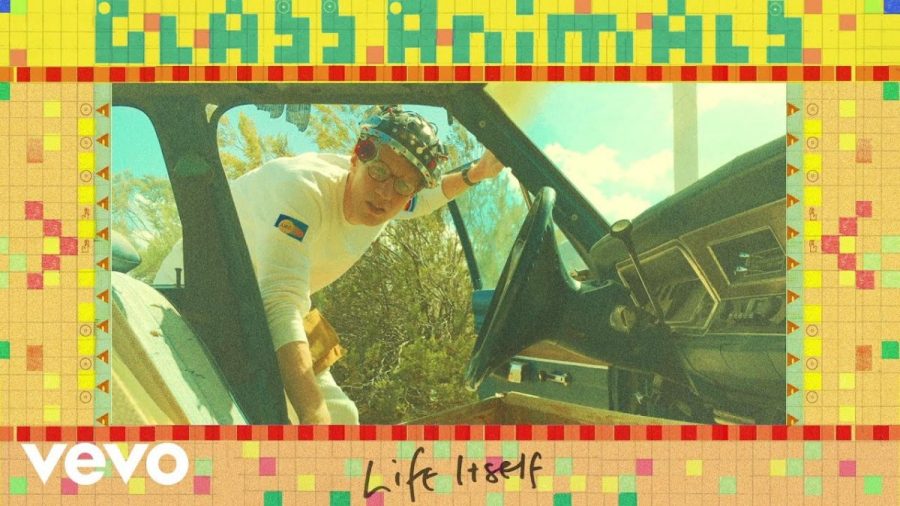
The song at #60 on my list of 100 Best Songs of the 2010s is “Life Itself” by British psychedelic art pop band Glass Animals. They have a distinctly unique sound, and I really like their music. From their second album How To Be a Human Being, “Life Itself” is one of the most interesting and musically complex songs on this list and I adore it. The band employs all sorts of colorful instruments, from harps and tom toms to tambourines, piano and unusual guitar synths to create an exceptionally strong and exuberant track. Lead singer Dave Bayley’s distinctive vocals are hypnotic and mesmerizing, as are the cheeky lyrics about being a millennial slacker: “I can’t get a job, so I live with my mom. I take her money but not quite enough. I sit in the car, and I listen to static. She said I look fat, but I look fantastic.”
The rather intense and artfully-filmed official video made for the song is quite good, but seems to tell a different story than that described in the lyrics. Therefore, I’ll start with the audio video first so you can fully appreciate the sound of the song itself, then you can watch the official video if you so choose.
After more than five years of blogging about music – which enables me to learn about a least a few new artists or bands literally every day – I’m still surprised when I discover an artist who’s been putting out superb music for several years that I knew nothing about. Just goes to show how many talented artists and bands exist out there, making some really great music. One such artist is British singer-songwriter and guitarist Jono McCleery, who’s latest single “Call Me” – which dropped October 23rd – has captured my attention. He also released a beautiful accompanying video for the track on October 29th.
Based in London, McCleery was deaf until the age of four, unable to perceive any acoustic stimuli. But when he turned 11, he picked up a guitar for the first time and took to it immediately. He eventually became part of the lively London “underground” and a member of One Taste Collective (OTC), a project founded in 2004 to support musicians and poets of all styles. Some of the artists who emerged through the collective include Little Dragon, Jamie Woon, Kate Tempest and the Portico Quartet, all of whom McCleery has worked with.
As I do with all artists and bands I write about for the first time, I checked out McCleery’s back catalog of music – which is pretty extensive – to get a feel for his sound and style. After listening to quite a few of his songs, I can unequivocally state that I love his music. He plays an incredibly pleasing style of what I’d loosely call contemporary folk, though many songs feature elements of electronica, world music, shoegaze, dreampop, soul and jazz. His music is characterized by captivating melodies, lush but understated instrumentation and his warm, soothing vocals in a style that to my ears is reminiscent of such artists as Sufjan Stevens and James Blake.
His first release, in 2008, was his self-produced debut album Darkest Light, a collection of eight lovely acoustic folk tracks. He followed in 2011 with There Is, a stunning, more experimental work with a greater emphasis on world, electronic and jazzy elements, and featuring collaborations with renowned artists Fink and Vashti Bunyon. One of the album’s tracks, a mesmerizing cover of Black’s 1986 hit “Wonderful Life”, has been streamed more than 3.6 million times on Spotify.
2015 saw the release of his third album Pagodes, another beautiful work that received widespread acclaim. Deutschland Funk called it “a stroke of genius”, while Rolling Stone described it as a “flawless album”. And in 2018, he released Seeds of a Dandelion, a marvelous album of covers in which McCleery re-interpreted songs like Roy Davis Jr.’s dance classic “Gabriel”, the Cocteau Twins’ “Know Who You Are at Every Age”, Atoms For Peace’s “Ingenue” and Beyonce’s “Halo”, an enchanting track which has been streamed over 8.8 million times on Spotify. Webzine Line of Best Fit called the album “a strong collection of songs, made with the upmost respect for its inspirations.”
Now he returns with “Call Me”, the second single from his forthcoming fifth album Here I Am and There You Are, set for release on November 20th via the Ninety Days Records label. The album, which McCleery recorded in just four days with the help of a few musician friends, is an homage to the Afro-American jazz musician Terry Callier, who died in 2012. I’ve had an advance listen of the album, and it’s every bit as stunning as his previous works. “Call Me” was written and sung by McCleery, who also played guitar. Supporting musicians include Steve Pringle on keyboards, Milo Fitzpatrick on bass and Dan See on drums. Production and mixing was done by Brett Cox, and mastering by Emil Van Steenswijk.
The song touches on the struggles of separation and finding inner strength. McCleery explained his inspiration for the song: “When I revisited the song before recording the album, I decided to dedicate a verse to Terry Callier’s song ‘Dancing Girl’, and these are his lyrics: ‘I saw a dream last night, bright like a falling star, and the sources of light seemed so near, yet so far. I thought I was in flight out where the planets are, moving between day and night. Here I am, and there you are.’ And then more recently whilst listening to the album recordings as quietly as possible, that line ‘here I am and there you are’ stood out. And I decided to use it for the album title.“
The song has an enchanting, almost jazzy vibe that’s at once melancholy and beautiful. McCleery’s gently strummed guitar, accompanied by subtle bass and the softest of toe-tapping beats, immediately draws us in, and once he begins singing the poetic lyrics in his soothing vocals, we’re more than eager to follow along. The instrumentals become more lively and his vocals more earnest in the choruses, and I love the haunting little piano chords that enter halfway into the track.
The gorgeous video was produced by France-based screenwriter and videographer Giovanni Di Legami, and features clips from his movie Idem, starring actors Roxane Colson and Jean Yann Verton.
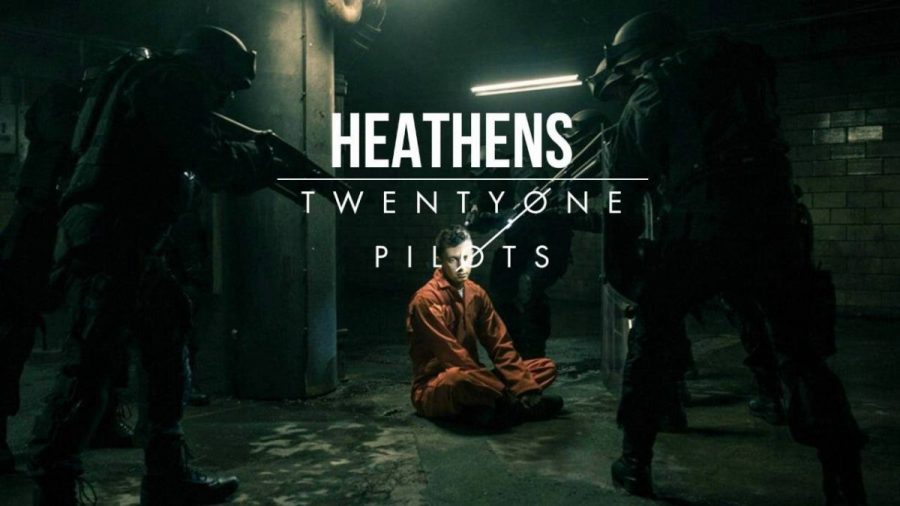
The song at #61 on my list of 100 Best Songs of the 2010s is the superb “Heathens” by twenty øne piløts. The third of their six songs on this countdown, it was written and recorded for the Suicide Squad film soundtrack. The dark song is in the style of rap rock, with a haunting arrangement set to a slow hip hop beat. The mournful piano keys, rough scratching sounds, Tyler Joseph’s monotone vocals, and a mysterious disembodied voice chanting “watch it” contrast with the dramatic, sweeping orchestration, creating a menacing sense of foreboding.
The lyrics speak to not making snap judgements about people you don’t know, and to be more sensitive to others, as we all have hidden issues. “We don’t deal with outsiders very well. They say newcomers have a certain smell. You have trust issues, not to mention, they say they can smell your intentions. You’re lovin’ on the freakshow sitting next to you. You’ll have some weird people sitting next to you. You’ll think ‘How did I get here, sitting next to you?’ But after all I’ve said, please don’t forget.”
The song was a big hit, peaking at #2 on the Billboard Hot 100, where it spent four weeks at that spot, held down by the inferior Chainsmokers/Halsey hit “Closer”. However, it reached #1 on the Alternative and Rock charts, as well as in the Czech Republic and Slovakia. The video for the song has been streamed more than one and a half billion times.
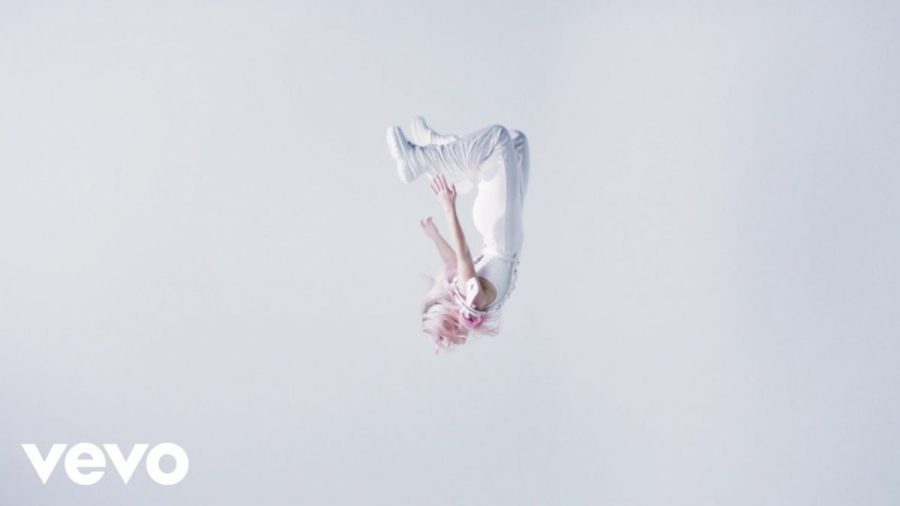
The song at #62 on my list of 100 Best Songs of the 2010s is the hauntingly beautiful “Trampoline” by indie dream-pop band SHAED. The band consists of lead vocalist Chelsea Lee and multi-instrumentalist twin brothers Max and Spencer Ernst (Chelsea and Spencer are married to each other). Their inspiration for “Trampoline” came one night as the trio sat together watching old family videos of Spencer and Max jumping on a trampoline as small children. The song’s meaning has been the subject of debate, ranging from death to suicide to drug addiction, but SHAED has stated that they simply wanted to write a great song loosely based on the idea of the Stranger Things alternative dimension “Upside Down” (Genius.com). This is artfully captured in the stunning and rather surreal video for the song.
A breakout hit for the Washington, D.C.-based threesome, “Trampoline” was originally released in May 2018, but got little airplay until it was featured in an Apple MacBook Air commercial that October, and the song quickly took off. The song finally debuted on the Billboard Alternative Chart in early December 2018, reaching #1 in the summer of 2019 and and spending 63 weeks on the chart. It also peaked at #13 on the Hot 100, and was named the #1 song of 2019 on the Alternative chart, and finished at #5 on my own year-end list for 2019.
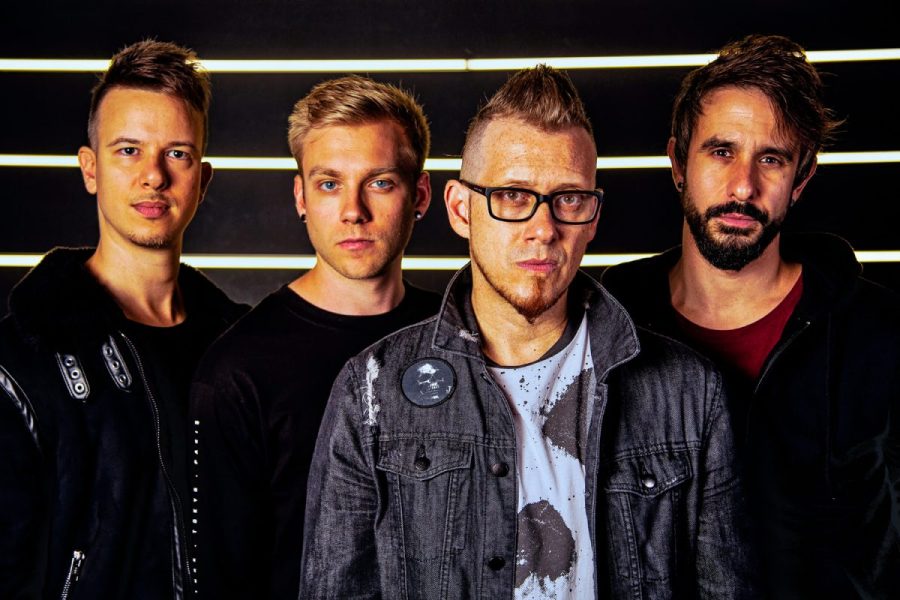
Los Angeles-based alternative rock band Disciples of Babylon were one of the very first acts to follow me on Twitter back in the fall of 2015 when I was just starting out as a new blogger. The four band members – Eric Knight on lead vocals and rhythm guitar, Ramón Blanco on lead guitar, Gui Bodi on bass and backing vocals, and Chris Toeller on drums – all of whom are gracious and kind, subsequently followed me too. I’ve had the pleasure of seeing them perform live three times at various venues throughout the L.A. region, so needless to say I have a special fondness for them.
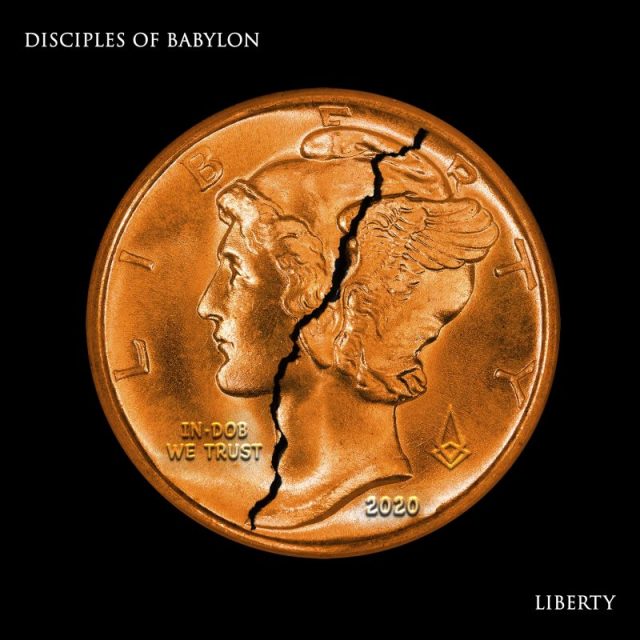
I first featured them on this blog in January 2016 when I reviewed their debut EP Welcome to Babylon, and wrote about them several more times in 2017 and 2018. (You can read some of those reviews by clicking on the links under “Related” at the end of this post.) Now, three years after the release of their fantastic debut album The Rise and Fall of Babylon, which they premiered in October 2017 at the legendary Viper Room on the Sunset Strip in West Hollywood, Disciples of Babylon returns with their politically-charged new single “Liberty“, which I’ve chosen as my New Song of the Week.
Eric and the band feel quite strongly about the subject of social justice, and The Rise and Fall of Babylon forewarned us about the beginnings of civil unrest stemming from the growing toxic political divisiveness in America. In a previous interview, Eric explained the impetus behind the album: “These are precarious times we live in. The Rise and Fall of Babylon signifies something that I feel has been a long time coming. Babylon, meaning the USA, is slowly spinning out of control and entering into vast turmoil. I feel we are at the beginnings of a revolution. one of which the likes we’ve never seen before. As a nation, we are no longer viewed in the regard we once were. The title reflects this shift and quite possibly a prelude of what’s to come.”
Now, three years later, he explains the band’s inspiration behind their new single “Liberty”: “We have now entered the perfect storm. The great divide that this country is currently facing is deeper than ever before. We have a government that is corrupt and has run amuck with impunity, with a global pandemic that has just exacerbated and accelerated everything tenfold. Our mission as a band has always been to be a mirror and write about our observations on what the world is showing us, but at the same time being a beacon of hope, strength and unity.”
The lyrics were written by Eric, who wrote the music along with band guitarist Ramón Blanco. The track was produced and mixed by drummer Chris Toeller, engineered by bassist Gui Bodi along with Alan Sosa and Rup Chattopadhyay, and mastered by Joe Bozzi (U2, Van Halen, Imagine Dragons). The dramatic lyric video was conceived by Eric and created by Shane Richardson.
“Liberty” is a powerful anthemic battle cry from the band, urging us to stand up to injustice and divisiveness, and to resist those in power who continually work to tear us apart. To drive home their message, the guys unleash their arsenal of sonic weaponry to create a crushing monumental soundscape befitting the seriousness of the subject. Each band members’ strong musicianship is on full display here: Ramón rips through the airwaves with an onslaught of snarling grungy riffs while Chris smashes his drums with greater force than I’ve ever heard on their previous songs. And ever the master bassist, Gui drives the song’s explosive rhythm forward with a fearsome pummeling bass line that cuts straight to our cores.
Eric’s an outstanding vocalist, with the ability to stir our emotions with his powerful unbridled passion, and he’s in fine form here. He sings the verses with a heartfelt fervency that beautifully conveys his anguish over the current situation, then launches into soaring impassioned wails in the choruses that, combined with the thunderous instrumentals, cover me with chills. I also love his and Gui’s soaring vocal harmonies.
I’m so happy Disciples of Babylon are back, and “Liberty” is one of their best songs yet!
This war has come into our doorstep The price for love of country There is no retreat Our chains are forged here The brave the bold is our decree
They’ll say, this is our destiny We’ll raise our hands for amnesty
We all want liberty We all want liberty I will fight for liberty Or give me death
Divide us and conquer Was that your goal You’ve got your wish How does it feel
They’ll say, this is our legacy United in arms till victory I will fight for liberty
We all want liberty I will fight for liberty Or give me death
We all want liberty We all want liberty I will fight for liberty Or give me death Oh I will fight for
If you can’t save me Heaven help us now The battle cries out
The song at #63 on my list of 100 Best Songs of the 2010s is “Adventure of a Lifetime” by British alternative pop-rock band Coldplay. I’m not ashamed to admit that I love Coldplay, who were my favorite band in the 2000s (six of their songs appear on my list of 100 Best Songs of the 2000s, including “Clocks” which I ranked at #1). They continued to produce some great music in the 2010s, although some have criticized their later music as being too ‘pop’. I suppose that’s partly true, but I still love a lot of their songs from this decade.
Coldplay pulled out all the stops with “Adventure of a Lifetime”, which was released in November 2015 as the lead single from their seventh studio album A Head Full of Dreams. That album was a stylistic departure for the band, as they wanted to make something more colorful and uplifting than their previous works. And though they’d collaborated with other artists on some of their songs in the past (such as Rihanna on “Princess of China”), this album saw them collaborate with many more artists, including Beyonce, Noel Gallagher, Tove Lo, Khatia Buniatishvili and Merry Clayton.
It’s a beautiful, joyously upbeat track, featuring Jonny Buckland’s gorgeous swirling guitars, Will Champion’s thumping drums and Chris Martin’s signature soaring vocals that make for a truly great song. Guy Berryman’s strong bass gives the feel of a heart beating and the mandolin at song’s end is stunning.
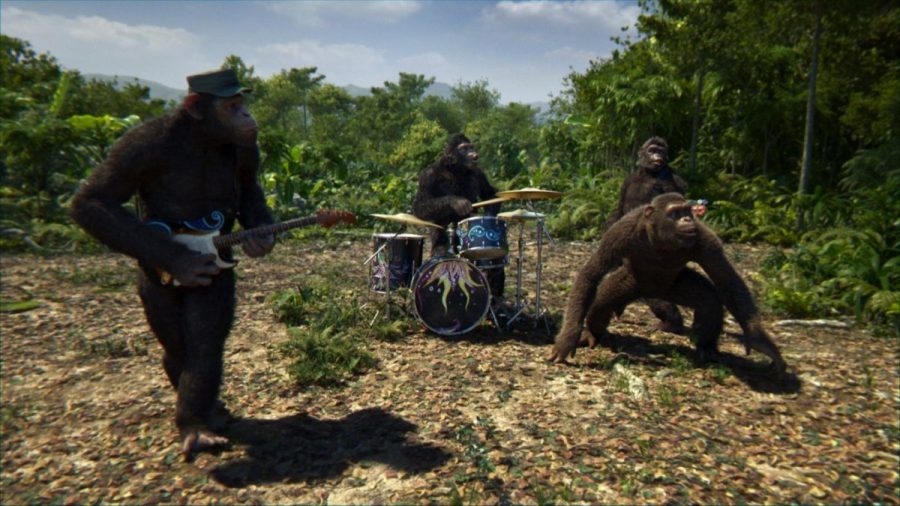
The whimsical video. directed by the band’s long-time collaborator, Mat Whitecross, shows the band members transformed through the magic of CGI into gorillas cavorting about in the jungle. According to The Guardian, the video was shot at The Imaginarium, where the reboot series of Planet of the Apes and parts of Avengers: Age of Ultron and Star Wars: The Force Awakens were filmed. Hannah Clark, the producer of the video commented, “As creatures go, chimps are one of the more difficult to animate. Not only are they quite human in their movement, but they are covered in hair. Add to this that we had no backgrounds shot, and we were asking an awful lot of any post-collaborator.”
The band’s faces were covered in a special, reflective and light-catching make-up that allowed the computers to appropriately interpret the video feed and create renders of the chimpanzees’ characters. The band members didn’t play real instruments, but instead held similarly-shaped objects that enabled creation of realistic body positions. The video took six months to complete, and has been viewed more than 1.1 billion times.
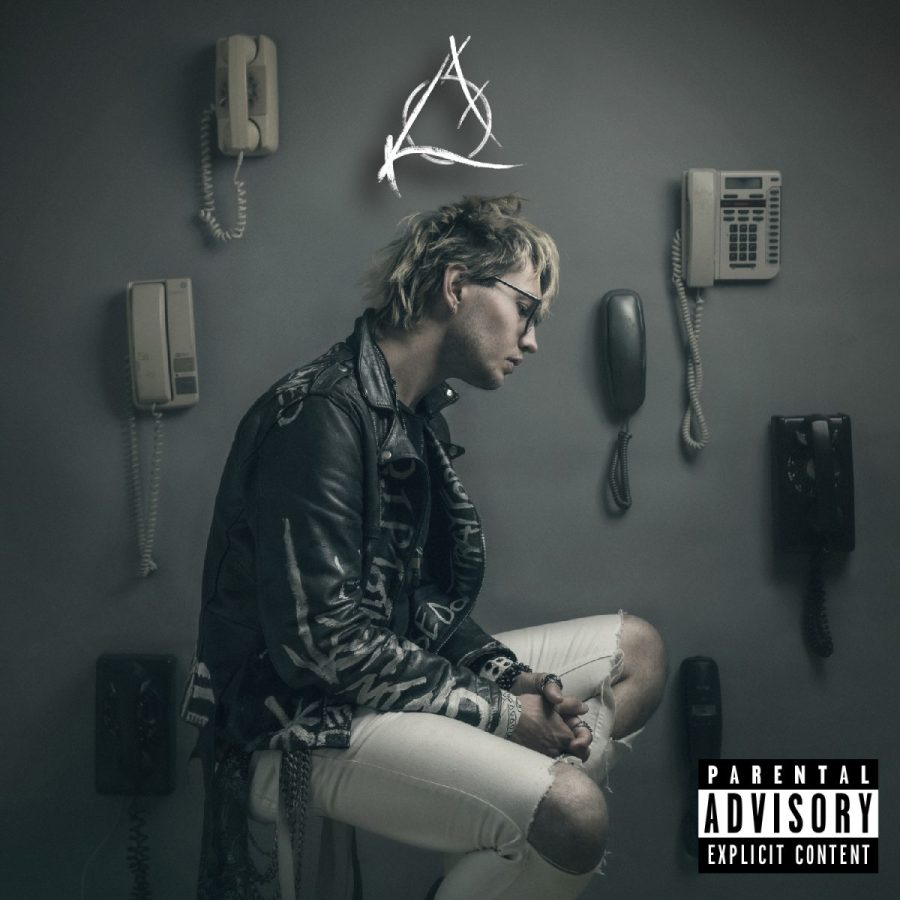
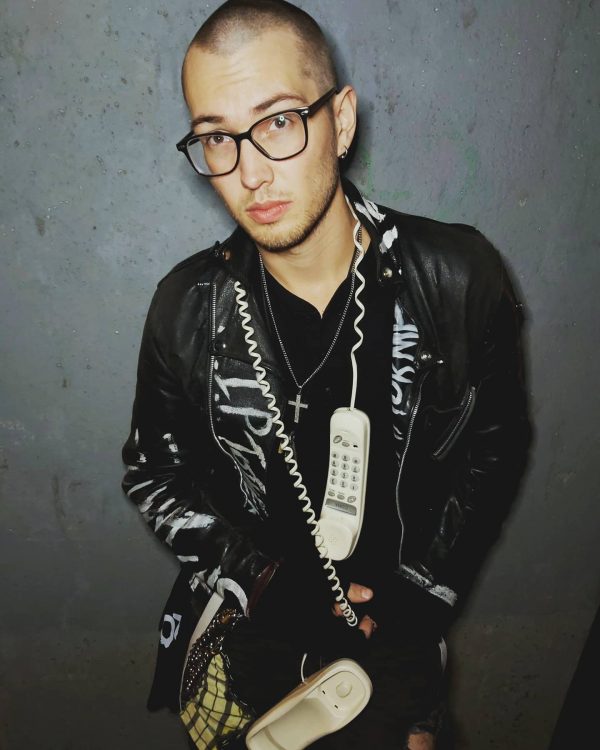
I’ve been following Canadian singer-songwriter and rapper Krosst Out since early 2017, when he reached out to me about his debut EP Life of the Party, an outstanding work that examined the darker aspects of party life, along with the sex, drugs and alcohol abuse that often go hand in hand. (You can read my review here.) Since then, the hard-working artist has released a number of singles and collaborations with other artists, and just dropped his debut album Phone Calls With Ghosts, which was a labor of love for him.
Born and raised in the small town of Campbellford, Ontario, he first studied piano as a child, then took up the bass guitar in his teens. He moved to Toronto, where he started his music career, but earlier this year he relocated to Montreal with his girlfriend and fellow music artist Melotika (who I’ve also featured on this blog several times). Influenced by the music of artists such as Manafest, Eminem, Underoath, Rage Against The Machine, System Of A Down, Nas, and Marilyn Manson, he fuses hip hop with grunge, alt-rock and punk to create his own unique contemporary sound. And like a lot of hip hop artists, his songs draw heavily from his own life experiences, with brutally honest, introspective and raw lyrics.
Phone Calls With Ghosts is a decidedly bleak work addressing youthful mistakes, broken relationships, and the reality that nothing will ever again be what it once was. Krosst Out elaborates: “Ghosts aren’t just your run of the mill spooks, they’re the thoughts and actions of your past that torture you, the baggage you never seem to shrug off. I’ve spent so much of my life trying to hide my demons from myself and the rest of the world, that I thought it was time I faced everything head on. It was like these ghosts were trying to call [me] my whole life and I never picked up. Writing this [album] was my therapy, it helped me come out of this dark place I’d been in, and made me realize more about myself. Ghosts are real, they are the thoughts that torture you, the people you leave behind, the moments you never get back.“
The album was recorded mostly at Pink Distortion Music in Toronto, under the guidance of producer and mixer Adam Van Ameringen aka Rain, although “Intro (Preface)”, “Reckless” and “Black & White” were produced by another frequent collaborator Jor’Del Downz. The entire album was mastered by Sean Savage.
Opening track “Intro (Preface)” does just what it implies, laying out for us what the album’s about and setting the overall dark mood. Against a backdrop of throbbing, reverb-heavy bass accompanied by enchanting synths, Krosst Out tearfully pleads “Can you hear me? Can you really hear me out there? Pick up the phone!” A heavy beat then kicks in as he launches into an angry freestyle rapping tirade, recounting his early dreams of making it as a successful hip hop artists, the sacrifices he made and poverty he endured, and decrying those who never had faith in him: “Don’t ask me why I’m angry / Don’t ask my why I’m upset / These likes and these retweets don’t amount to much / Fuck every single person that ever doubted me / Cause I’ve been down and out.” The song ends with a woman’s voice (who I’m guessing is Melotika) saying, as if a telephone operator, “Welcome to phone calls with ghosts. Thank you for calling.“
“Funerals”, the lead single from the album that I reviewed this past April, touches on how Krosst Out has changed and grown since leaving Campbellford. It’s often challenging when leaving home and moving away to make a new life for ourselves, and though we generally maintain a sense of love and fondness toward family and friends we left behind, the distance and passage of time can complicate and/or diminish relationships. He told me the song title “Funerals” is a metaphor for the death of his old self. “I feel like I’ve just grown so much that I’m unrecognizable now, but at the same time, if I wanted to go [back] home I couldn’t. Also, the more you grow, the more you have people that will hate you for that.” The song has a heavy dub step beat, with a dramatic mix of spooky psychedelic synths, deep, throbbing bass and glittery keyboards creating a dark and moody backdrop for his impassioned free style rapping as he laments about the guilt trips foisted upon him by his mother and friends.
Krosst Out taps into his love of grunge on “Drive“, a cynical song about just saying fuck it, ditching your problems and heading out on the road in search of thrills, because nothing really matters anyway. “Cause I’m living for today, put that on my gravestone.” I like the dark vibes and Rain’s badass grungy guitar riffs at the beginning and in the choruses.
The haunting “Edges” speaks of a failing relationship, with the singer pleading to his partner to stop torturing him. Swirling keyboards contrast sharply with ominous harsh industrial synths to create a darkly beautiful backdrop for Krosst Out’s bitter vocals as he bemoans “We push, we pull, we scream, we shout, you say you want me out.” Guest vocalist Kyle Laird of Ontario metal band As the Structure Fails growls the chorus “You’re breaking my heart. So I’m burning these bridges. Stop tearing me apart. Cause I’m only these edges.”
On “Reckless“, he sings about not giving a fuck what others think of him to a guitar-driven melody over a dubstep beat. Rain’s grungy guitars make a return appearance on “Running in Traffic“, a song that continues on the theme of living life recklessly with a fatalistic attitude. With his voice brimming with emotion, Krosst Out raps “Never played it safe. Screaming here I am. Running in that traffic. Please don’t hold my hand. Gotta take my chances, gotta be a man. Now the ghosts are calling.“
“Background” is a bleak yet beautiful song about that seems to be about a person contemplating suicide. Over a sharp knocking beat and pulsating rhythm, Krosst Out and Rain layer haunting piano keys and a lovely strummed guitar. Krosst Out raps about his feelings of depression and futility, with Rain joining him in vocal harmonies on the chorus: “There are days I wish to just not wake up. I won’t be that shoulder that you needed to lean on. I can’t be that person that you need right now. Let me go, let me go into the background.“
The final track “Black & White” has a funereal grunge rock vibe, with a deep, reverb-heavy bass groove, accompanied by an almost haunting chiming guitar riff played by Andrew Falcao. Krosst Out ruefully raps the lyrics that speak of past regrets he has no desire to correct, and the pain he continues to self-medicate: “I never said goodbye to my friend that died at 25 / But these hard pills get easier to swallow. Don’t be alarmed, numbing myself is just part of the process. All of this shit is just hard to process / You can erase me if you like, black & white. It makes no difference, so take me out.” The instrumentals continue for the final two and a half minutes of the song, highlighted by Falcao’s marvelous guitar solo.
Phone Calls With Ghosts is a marvelous little album with a huge, impactful sound. I love Krosst Out’s songwriting and lyricism, and while he doesn’t have a particularly strong voice, he’s a highly emotive vocalist and terrific freestyle rapper. It’s been a distinct pleasure following on his musical journey over the past four years and watching him grow as an artist. I’m so very proud of him.
The song at #64 on my list of 100 Best Songs of the 2010s is “So Tied Up” by blues rock band Cold War Kids featuring vocals by Bishop Briggs. Based in Long Beach, California, Cold War Kids formed in 2004 and has undergone numerous changes in lineup, and now consists of Nathan Willett (lead vocals, piano, guitar), Matt Maust (bass guitar), David Quon (guitar, backing vocals), Matthew Schwartz (keyboards, backing vocals, guitar, percussion), and Joe Plummer, who formerly played drums for bands Modest Mouse and The Shins (drums, percussion). I love their vibrant, hard-driving sound, and they have two songs on this list – “So Tied Up” and their 2015 single “First”, which appears later.
Singer-songwriter Bishop Briggs, based in nearby Los Angeles, is pretty awesome too, with a distinctive, powerhouse voice. Combining her passionate vocals with the commanding vocals of Cold War Kids lead singer Nathan Willett on “So Tied Up” results in auditory fireworks to match the biting lyrics about a destructive co-dependent relationship that’s become so toxic the two partners loathe each other, yet are powerless to escape from it. The song is from Cold War Kids’ sixth album L.A. Divine, which also features another great song “Love is Mystical”. I loved “So Tied Up” at first listen and never tired of hearing it.
The song is positively electrifying, with an aggressive stomping beat-driven melody highlighted by pounding drums and piano keys, and fortified with a heavy thumping bass line, gritty synths and fantastic guitar work. The track’s massive sound combined with Willett and Briggs’ fiery vocals never fails to cover me with goosebumps. Shockingly, the song was not a very big hit, peaking only at #9 on the Billboard Adult Alternative and #12 on the Alternative charts. It spent two weeks at #1 on my own Weekly Top 30 chart, however.
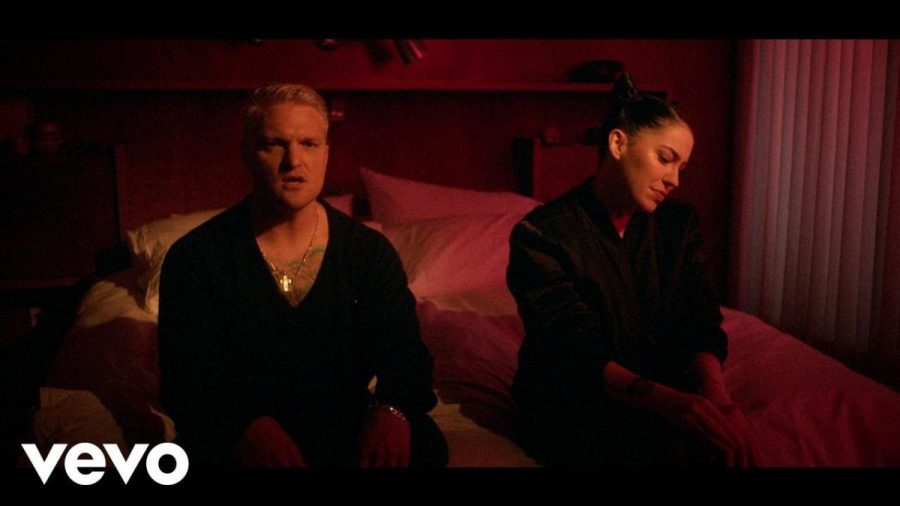
The darkly amusing and rather violent video shows Willett and Briggs singing the song interspersed with scenes of a couple hell-bent on killing each other. By the time the song was released, Bishop Briggs had become quite popular in her own right, and many of her fans complained that her vocals weren’t prominent enough on the song. So, Cold War Kids invited her back into the studio so she could dub more of her vocals onto the track. The official video was reissued with her vocals given greater prominence.




 ECLECTIC MUSIC LOVER