The song at #41 on my list of 100 Best Songs of the 2010s is “This is America” by Childish Gambino, the artistic name for the music project of the multi-faceted and incredibly talented actor, writer, director, producer, singer-songwriter and rapper Donald Glover. One of the best songs of 2018, “This is America” features an alternating mix of African-folk inspired melodies and pulsating hip hop-driven trap beats, paired with highly provocative lyrics addressing issues of racism, police brutality and gun violence in America. It features background vocals by rappers Young Thug (who also co-wrote the song with Glover and Swedish songwriter-producer Ludwig Göransson), Slim Jxmmi, BlocBoy, JB, Quavo (of the group Migos), and 21 Savage. The song debuted at #1 on the Billboard Hot 100 on May 5, 2018, and also topped the charts in Canada, Australia and New Zealand. In February 2019, the song won Grammy Awards for Record of the Year, Song of the Year, Best Rap/Sung Performance, and Best Music Video.
The companion video for the song, directed by Hiro Murai, drives home the lyrics’ message with shocking and often disturbing visual imagery. Released on YouTube simultaneously with Gambino’s performance of the song on Saturday Night Live on May 5, 2018, the video quickly went viral, garnering 12.9 million views in the first 24 hours. As I write this, it’s been viewed over 736 million times.
Things start off pleasantly enough, with Glover/Gambino dancing about shirtless, but using grotesque smiles and exaggerated poses that some believe invoke the racist caricature Jim Crow. He sings “We just wanna party. Party just for you. We just want the money“, possibly referencing Black peoples’ historic role as entertainers for White people. Events take a violent turn when he walks up to a man who’s sitting on a chair playing guitar with his head covered by a hood, and shoots him in the head. A little later, he nonchalantly mows down a choir of singers with an automatic weapon. In both cases, he hands the guns over to someone holding a red cloth, giving the impression that the guns are being handled with greater care than the people he’s killed. The shooting of the choir is thought to represent the 2015 massacre at the Emanuel AME Church in Charleston, South Carolina. Glover/Gambino and a group of kids clad in school uniforms dance throughout much of the video, smiling as violence erupts around them. At the end of the video, he’s shown running for his life from an angry white mob.
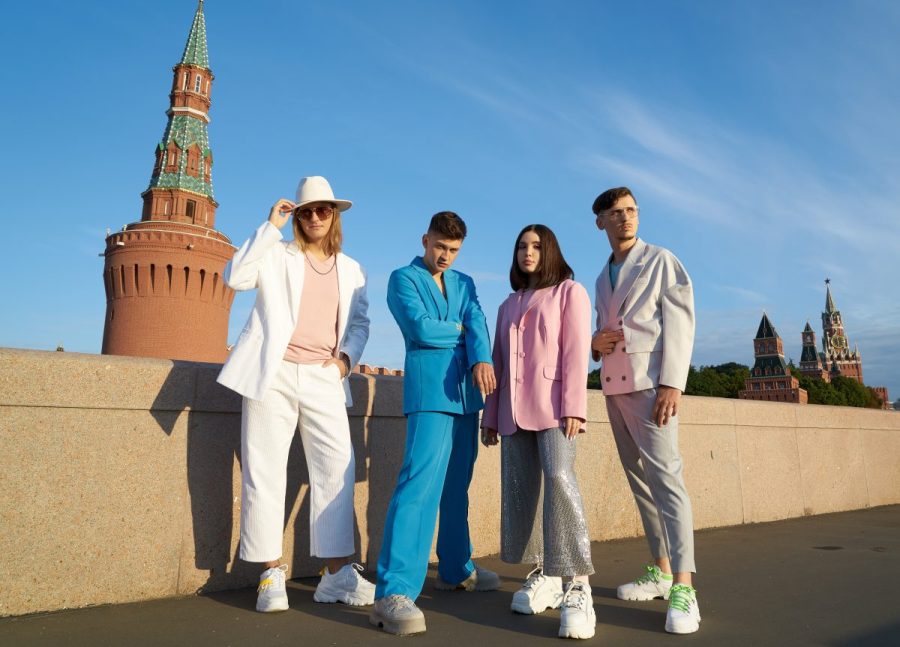
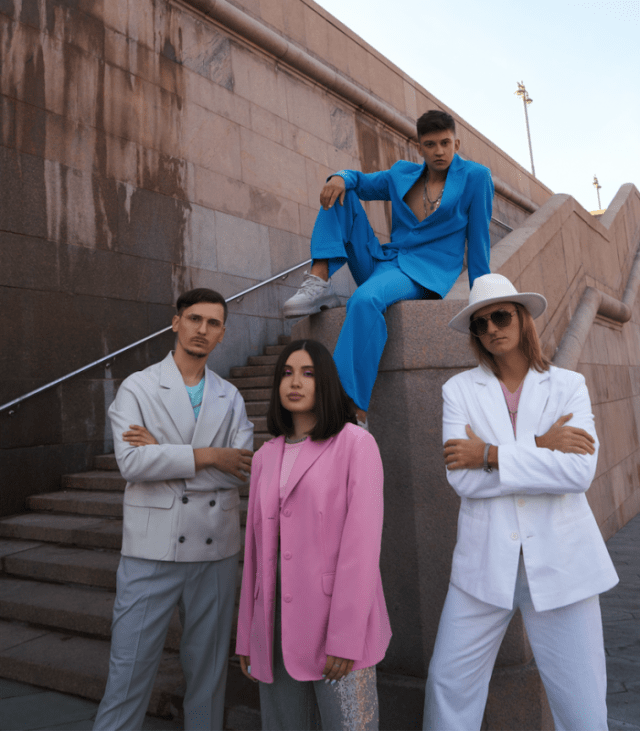
I’m excited to introduce the delightfully-named electro funk band Neon Tapehead, the very first music act from Russia to be featured on this blog. Drawing inspiration from R&B, soul, funk, electronic, early House and nu disco influences ranging from Rick James, Kool and the Gang, The GAP Band and Whitney Houston to Bruno Mars, Chromeo and Lizzo, the Moscow-based group combine nostalgic elements of old-school analog synthesizers with modern music production techniques to create their own sophisticated style of stylish and upbeat music. Making this wonderful music are Dmitry Ursul on lead guitar and synths, Aleksandr Kovalchuk on drums, Dmitry Votintsev on bass, and Maya Shonia on lead vocals. On November 13, they released “Know What I Want“, the lead single from their forthcoming debut EP Never Say Never, due out on December 4.
Neon Tapehead have spent the last few years honing their craft by releasing a number of terrific singles and remixes, and performing live shows in Moscow, where they were discovered by U.S. independent music label NexGen Music. The band’s first release on the label, “Know What I Want” is about the girl who knows what she wants even if her acts or wishes are illogical or inconsistent. About the song’s creation, the band explains: “This song was written and produced with influences of 80’s Electro Funk and Early 90’s house with a slower tempo. We tried to mix different elements of these styles into the one song. The main meaning behind this song is that you shouldn’t be shy with your wishes or goals. Just ask yourself about what you want right now and then go and get it! Brrr POW!”
“Know What I Want” is a feast for the ears, with a sensual vibe and funky dance groove that aims straight for the hips. The silky smooth synths and crisp percussive beats form a captivating backdrop for Maya’s soulful vocals that seduce us with her sultry croons and devilish purrs. It’s a terrific song that hearkens back to some of the great dance-funk and R&B songs of the 1980s.
The band has produced a beautiful video of them performing the song on a golf course outside Moscow. In most cases, I generally prefer videos that show an artist or band performing their song, rather than some silly narrative or plot line, so this video is right up my alley. The band provides some background about the video’s creation: “The music video was shot on a golf field in the suburbs of Moscow. It took some time and stress to organize the session but we made it happen. We were adamant about wanting to use the open space for a live video. The sound of the video is an actual live recording, so as far as we know we are the first Russian band to have recorded a funk song on a golf field in real-time! We were lucky because the wind had stopped blowing just before we started the recording and shooting, so it was easier to use to mix and master the sound later.”
“The introduction scene including Maya riding the golf car took a lot of takes because it was the first time that Maya had driven a vehicle of any kind – it was not a stand in actor! The trickiest part was to stop the car in the right place in front of the camera and walk to the microphone before the verse starts. We also had to be constantly aware of the Sun’s position which appeared to want to move towards sunset in double-time, so we tried to shoot this video as fast as possible.”
The song at #42 on my list of 100 Best Songs of the 2010s is “Radioactive” by Las Vegas-based pop-rock band Imagine Dragons. Since the release of their breakout single “It’s Time” in 2012, Imagine Dragons has become one of the biggest and most successful music acts in the world, selling over 35 million singles in the U.S. and 20 million albums worldwide (RIAA). Unfortunately, as it happens with a number of bands who’ve become hugely popular, there’s also been a bit of a backlash, with a sizable number of people hating them as well. I like them a lot, though I’ll admit many of their songs have been overplayed to the point where they got to be annoying.
“Radioactive” was their second single, and was included on their EP Continued Silence and later on their debut album Night Visions. It’s a bombastic alternative electronic rock song with booming dubstep beats, loads of distortion, and dramatic soaring choruses that make for an intense and exciting listen. The dark lyrics reference apocalyptic and revolutionist themes, though band front man Dan Reynolds told Rolling Stone that it’s “basically about my struggle with anxiety and depression. It’s about becoming self-empowered and rising above that. I wanted to write a masculine and primal song about conjuring and rising above human weakness.”
The song has sold over 10 million digital copies, and peaked at #3 on the Billboard Hot 100, and #1 on the Alternative, Hot Rock and Rock Airplay charts.
The official video produced for the song was directed by Syndrome and features actors Lou Diamond Phillips, who plays the ringleader of an underground puppet-fighting ring, and Alexandra Daddario, who plays a mysterious female drifter on a quest to save her friends in Imagine Dragons from Phillips. The video shows a series of fights between puppets, and just seems rather silly and childish to me, taking away from the overall power of the song. But in an interview with MTV, Reynolds explained that they wanted a more lighthearted approach in the video: “We read through a ton of scripts from really talented directors, and we came across one that stood out to us in particular, because it put into visuals the general theme of the song, which is kind of an empowering song about an awakening, but it did it in a way that was very different. A lot of people probably see a post-apocalyptic world when they hear ‘Radioactive’, understandably, but we wanted to deliver something that was maybe a little different from that … a lot different from that.” As I write this, the official video has been viewed more than 1.2 billion times, with 7.6 million likes on YouTube.
Here’s an audio-only video for those who’d just like to hear the song:
The song at #43 on my list of 100 Best Songs of the 2010s is “Happy” by Pharrell Williams. Despite its repetitive chorus and being played to death on the radio (which I still listened to a fair amount back in 2014), I never tired of hearing this irresistibly catchy earworm. Neither did millions of others, as “Happy” became a massive worldwide hit, reaching #1 in over 30 countries, including the U.S. It spent 10 weeks atop the Billboard Hot 100, where it was also named the #1 song of 2014.
A renowned and prolific singer, rapper, songwriter, record producer and fashion designer, Pharrell has had a successful career as a solo artist, as part of the record production duo The Neptunes (with Chad Hugo), lead singer of rock/hip hop band N.E.R.D., and a frequent collaborator with an astonishing array of artists. In late 2013, on the heels of his monster collaborative hits “Get Lucky” (with Daft Punk) and “Blurred Lines” (with Robin Thicke and T.I.), he released “Happy”, which was one of five tracks he wrote for the Despicable Me 2 film soundtrack. The song was originally intended to be sung by fellow singer/songwriter CeeLo Green, whose version Pharrell actually thought was better than his, however, CeeLo’s label Elektra Records decided against it, as he was about to release his Christmas album. So, Pharrell’s recording was used for the film soundtrack and released as a single instead, and the rest, as they say, is history. The song was also later included on his album G I R L.
To coincide with the single release, the website 24hoursofhappy.com was launched, featuring a 24-hour long video of “Happy” consisting of the song repeated multiple times, with footage of the charismatic Pharrell and an array of people, including celebrities and the Despicable Me minions, dancing and miming along to the song on streets and parks around Los Angeles. An equally delightful official four-minute long edited video was also released, and has been viewed over 1 billion times. The song was nominated for an Academy Award for Best Song, but unfortunately lost to the inferior “Let it Go” from Frozen.
And for those who want to indulge, here’s the series of 24 hour-long videos:
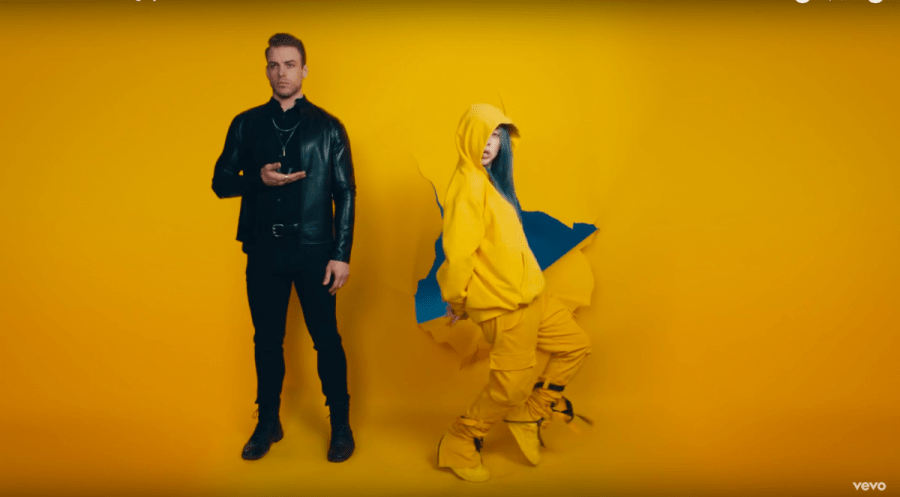
The song at #44 on my list of 100 Best Songs of the 2010s is “Bad Guy” by the insanely talented young artist Billie Eilish (her full birth name is Billie Eilish Pirate Baird O’Connell). With the meteoric success of her ground-breaking debut album When We All Fall Asleep, Where Do We Go?, one of the biggest-selling albums of 2019, the Los Angeles-based singer-songwriter became a superstar. I was blown away by her phenomenal performance at the 2019 Coachella Music Festival (which I watched livestreamed on YouTube) when she was only 17 years old. “Bad Guy” reached #1 on numerous music charts in the U.S. and around the world, including Australia, Canada, Mexico, Greece, Hungary, Norway and the Czech Republic.
“Bad Guy” was co-written by Eilish and her older brother Finneas O’Connell (a successful artist in his own right), who also produced and programmed the track. Musically, the song has an unusual minimalist melody featuring instrumentation provided by synth bass, kick drum, finger snaps and 808 bass, pulling us headlong into a thumping, ominous soundscape. Eilish’s clipped, breathy vocals have a seductive, almost menacing quality as she sings the provocative lyrics that seem beyond her tender years, yet she makes them totally believable. “I’m that bad type. Make your mama sad type. Make your girlfriend mad tight. Might seduce your dad type. I’m the bad guy, duh.” It’s brilliant!
Given her talent, creativity, intelligence and willingness to experiment, I’m confident that Billie Eilish is destined for a long and illustrious career.
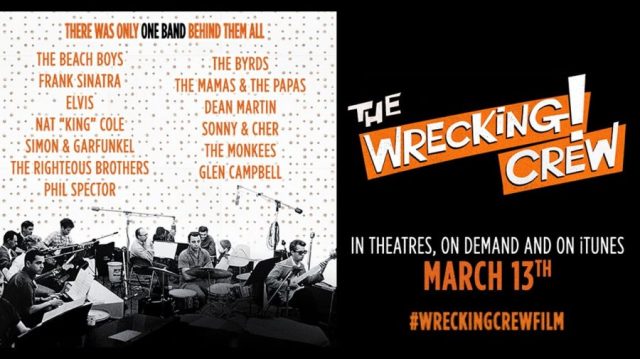
Growing up in the 1960s, and hearing so much great music by such diverse artists and groups as the Beach Boys, the Ronettes, the Righteous Brothers, the Mamas & Papas, Sonny & Cher, the Monkees, Frank Sinatra and Glen Campbell, I never really gave much thought to who created their music. Until the arrival of bands like the Beatles, the Rolling Stones, the Who and the Kinks, who played most or all of their own music, it was common for the music on nearly all songs being recorded to be played by session musicians who worked behind the scenes.
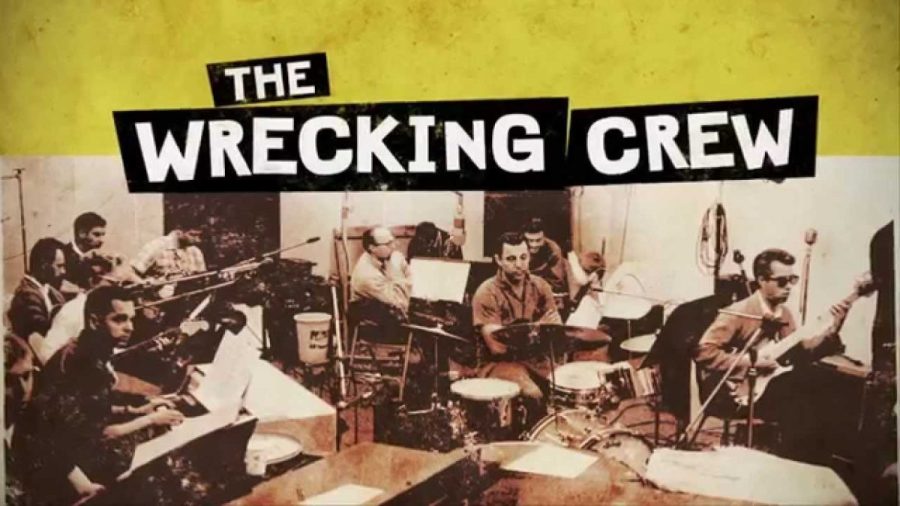
Many of those musicians played for particular studios or music labels; Motown had the Funk Brothers, Muscle Shoals had the Muscle Shoals Rhythm Section, Stax Records had their own in-house musicians, and so on. Another important group of session musicians, who were based in Los Angeles, came to be known as “The Wrecking Crew”. They played the music for such iconic hits as “Be My Baby”, “You’ve Lost That Lovin’ Feeling”, “California Dreamin’”, “Good Vibrations”, “The Beat Goes On”, “These Boots Are Made For Walkin’” and “Wichita Lineman”, as well as the Beach Boys’ album Pet Sounds, to name but a few.
Wanting to honor his father – the noted guitarist Tommy Tedesco, who along with other musicians was a key member of The Wrecking Crew – Denny Tedesco produced and directed a documentary film about these renowned session musicians. Production on the film began in June 1996, and took nearly 12 years to complete. The film premiered at the 2008 South by Southwest Film Festival in Austin, and closed out the Nashville Film Festival in April 2008, however, it was not released theatrically until March 2015, which is when I saw it.
Anyone and everyone who loves the songs from that golden age of music – or anyone interested in the history of American pop music for that matter – would enjoy this documentary. Scores of producers, sound engineers, session musicians and artists recall fond memories – along with a sprinkling of fraught moments as well – of sessions where they all came together to record songs that made history. In addition to Tommy Tedesco, some of the other notable session musicians included drummer Hal Blaine, bassist Carol Kaye and a young Glen Campbell, who started his career as a session guitarist before making it big as a solo act.
It’s fun to hear them discuss working with some of the talented and eccentric artists and producers of the day like Brian Wilson and Phil Spector. Conversely, it’s also great hearing artists like Wilson, Cher, Nancy Sinatra and Leon Russell discuss the brilliance of those musicians and producers, and how their skills and creative ideas made certain songs sound so much better. Carol Kaye’s subtle yet monumental bass riffs at the beginning of “Wichita Lineman” and “The Beat Goes On” are two examples that stand out. Two more are the beautiful opening guitar licks on the Mamas and Papas hit “California Dreamin’ and the Frank & Nancy Sinatra duet “Somethin’ Stupid”.
Here’s a snippet from the film focusing on Phil Spector’s legendary Wall of Sound:
And here’s one focusing on the Beach Boys:
The entire film can be streamed for a small fee on YouTube.
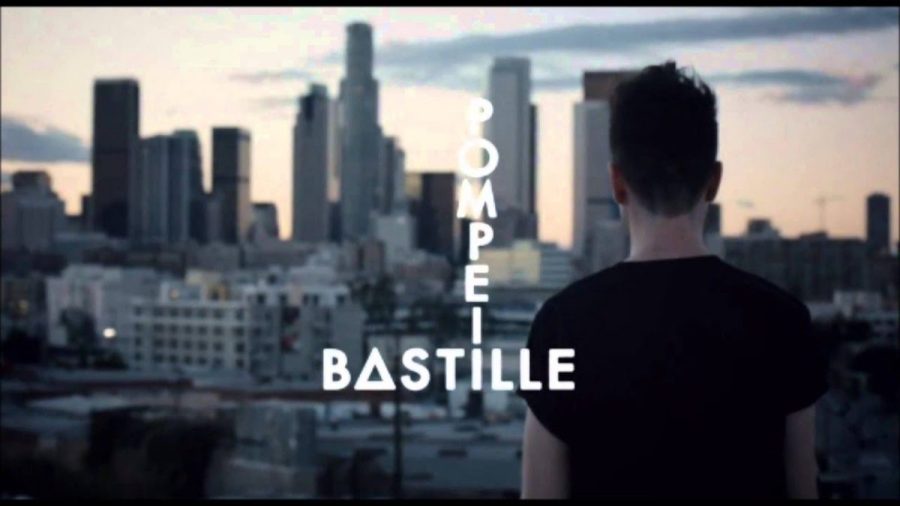
The song at #45 on my list of 100 Best Songs of the 2010s is “Pompeii” by British alternative pop-rock band Bastille. Originally started in Leeds in 2010 as a solo project of singer-songwriter Dan Smith – who named his project after the French holiday that’s celebrated on his birthday of July 14 – Bastille later grew into a four-piece. In 2011, they released their debut EP Laura Palmer, featuring songs Dan had previously written. That December, they signed with Virgin Records, and began recording and releasing a series of singles that would become part of their debut album Bad Blood, which dropped in March 2013. One of those singles, “Pompeii”, would catapult Bastille to international fame. It reached #1 in Scotland and Ireland, and #2 in the UK, Italy and Mexico. In the U.S., it peaked at #5 on the Billboard Hot 100, and #1 on the Alternative, Adult Alternative and Rock Airplay charts.
Smith wrote the song in 2010 while still a student, after reading about the eruption of Mount Vesuvius and the destruction of Pompeii. It made him think about all those who perished being forever frozen in time. He later told The Daily Telegraph that he imagined what those dead inhabitants might have to say to one another, and explained the song’s meaning “It is essentially about fear of stasis and boredom. Being quite a shy, self-conscious person, I was afraid my life might get stuck.” “Pompeii” is darkly beautiful, immediately grabbing our attention with its ominous opening chant of “Eh, eheu, eheu…” (“eheu” is Latin for alas, which is an exclamation of grief, pain, or fear) that’s repeated throughout the track, ending as it started. It was one of the more unusual and haunting songs of the decade.
The fascinating and eerie video plays almost like a mini horror film, albeit not a terribly frightening one. Smith is shown frantically wandering about an empty-looking Los Angeles at night, discovering that the few people he encounters all have unnatural vacant black eyes that resemble the looks of the petrified remains of those who perished in Pompeii. He steals a car and flees to the desert to try and escape, but the car breaks down. The next morning, in a scene filmed next to the Whitewater River in north Palm Springs not far from where I live, he realizes he’s been infected too. In the final scene, he’s atop Mt. San Jacinto looking out at the view, then turns around to reveal his own eyes have turned black.
The song at #46 on my list of 100 Best Songs of the 2010s is the gorgeous anthem “Mountain At My Gates” by British alt-rock band Foals. They rank among my current favorite bands and I passionately love their distinctive sound, characterized by uniquely beautiful guitar work and lead singer Yannis Philippakis’ rich vocals that make their music instantly identifiable. The group was formed in Oxford, England in 2005, and their current line-up consists of the aforementioned Yannis Philippakis (I love that name!) who also plays lead guitar, drummer and percussionist Jack Bevan, rhythm guitarist Jimmy Smith and keyboardist Edwin Congreave. Their previous bassist Walter Gervers left the band in 2019 to pursue other interests.
From their stunning fourth album What Went Down, “Mountain At My Gates” was released as a single in July 2015. The song peaked at #1 on the Billboard Alternative chart in early 2016. The lyrics seem to address perseverance and overcoming life’s obstacles, although in a 2015 interview with NME, Philippakis said the lyrics just came to him spontaneously in the studio: “The central image – ‘I see a mountain at my gates’ was from me getting more interested in seeing what would come out lyrically where there wasn’t a pre-conceived idea. Normally I write voraciously in books and journals, then harvest a lot of that for the record. This, though, came out instantaneously in the room.”
I see a mountain at my gates I see it more and more each day And my desire wears a dark dress But each day, I see you less
Oh, gimme some time Show me the foothold from which I can climb Yeah, when I feel low You show me a signpost for where I should go
The dramatic and powerful instrumentals – highlighted by those beautiful guitars – are fantastic, and Philippakis’ fervent vocals smolder and soar to impassioned wails as the song builds to a climactic flourish, leaving me covered in chills every time I hear it.
The interesting video produced for the song is a spherical video filmed with a GoPro omnidirectional camera. You can rotate the imagery with your cursor.
leaving richmond is the instrumental electronic music project of Los Angeles-based composer and producer Jordan Pier. He recently reached out to me about his latest album Visions, which dropped November 13th. As I always do when preparing to review an artist or band’s music for the first time, I checked out his back catalog to better acquaint myself with his style and sound, and was surprised at his considerable music output over the past 10 years. From what I can tell, his first release, in 2010, was the EP The Secret Traditions of Washington Ave., a very respectable work featuring five tracks. Since then, he’s released another two EPs, several singles and five albums, the latest of which is Visions.
His works have received widespread acclaim from both music critics and fans alike, with several of his songs garnering airplay on NPR and other radio stations around the world. Despite the pandemic, he says 2020 has been an amazing year for him from a musical standpoint. In addition to composing and producing a new album, he also saw a number of his tracks land placements on popular TV shows as well as advertisements.
About his new album, Pier explains: “Following the release of [his previous album] ‘Great Distances’, I took a deep dive which bore fruit in multiple ways, particularly in honing my composition, production and engineering capabilities in aspects that were exciting and inspiring. I strove to take all the new skills I had learned and combined it with the organic songwriting I so loved. The melodic, layered guitar as the main and guiding instrument represents a return to roots as I simultaneously embraced new electronic techniques. As a result of this new outlook on songwriting and experience in the studio, the ‘Visions’ LP was born. Every track on this album is tied to and inspired by a visualization of some sort. What this album has allowed me to do is combine my love for music and imagery into one offering. It is my hope to provide a soundtrack for the thoughts of the listener and offer some respite.”
All tracks were composed, arranged, produced and engineered by leaving richmond, and mastered by Brian Hazard. The album kicks off with “You Must Break Yourself“, an enchanting track featuring a kaleidoscope of shimmery and spacey synths punctuated by dubstep-like percussive beats. The result is a dreamy and optimistic soundscape that, to my ears, evokes a sense of breaking free from whatever it was holding you back and entering an aura of enlightenment.
“Memories of Another You” is a stunning feast for the ears that really showcases leaving richmond’s impressive compositional and production talents. He intertwines layers of gorgeous chiming guitar notes with glittery string synths and delicate skittering piano keys to create a scintillating soundscape that’s truly magical. It’s an instant favorite of mine. The lovely “There Is So Much to See” has a somewhat more subdued and introspective vibe, with warm, sumptuous synths.
Inspired by the 1879 painting Joan of Arc by Jules Bastien-Lepage, which hangs in the Metropolitan Museum of Art, “Adherence” is a rather dark and somber track, with a deep bass synth-driven melody overlain with swirling synths and reserved jangly guitars that nicely convey Joan of Arc’s sense of purpose and valor. “Daydreams at the Cannery” was inspired by a character in the 2017 video game What Remains of Edith Finch?, developed by video game company Giant Sparrow. The shimmery guitars and glistening synths are intended to honor the beautiful storytelling and cinematic art of the game.
On a more spiritual level, “Washing Over Us” attempts to convey through music the concept that, in his words, “pure emotion can surround, envelop and cleanse us like the beautiful waters in the oceans and lakes around the world.” He skillfully employs watery synths, chiming guitar notes and ethereal choir-like vocals to create images of water nymphs singing in a crystalline lake. “The Frequency of You” is a beguiling guitar-driven track with wonderful spacey synths and a hypnotic toe-tapping beat. Once again, his guitar work is quite marvelous.
leaving richmond’s love of neon light signs was the inspiration behind the sublime “Red Orange Light“. The track opens with muffled sounds of neon gas pulsating through glass tubes, followed by a building cinematic soundscape of spacy synths and delicately-strummed jangly guitars, accompanied by a gentle dubstep beat. It’s an enchanting and beautiful song. Keeping with the more techno-oriented sound, the enchanting “The Soul is Greater” serves up more of those spacey, otherworldly vibes, highlighted by leaving richmond’s signature gorgeous shimmery guitars.
I’ve run out of descriptors and superlatives by now, so let me just say that closing track “And Then We Begin Again” is yet another exquisite song, and a fine finish to a stunning album. I’ve listened to a lot of electronic instrumental albums over the years, and Visions stands among the very best. leaving richmond’s skill for writing beautiful and compelling melodies is impressive, and his guitar work and keyboards are truly breathtaking.
The song at #47 on my list of 100 Best Songs of the 2010s is the superb “Seasons (Waiting on You)” by American pop-rock band Future Islands. Despite releasing three studio albums and touring almost non-stop for years, they’d remained relatively unknown since forming in North Carolina in 2006. That all changed in 2014 with the release of their fourth album Singles, particularly the breakthrough single “Seasons (Waiting on You)”, and their riveting performance on The Late Show with David Letterman in March 2014, which became the show’s most-viewed video.
Lead singer Samuel T. Herring, who actually started out as a rapper, is a lifelong lover of performance art. His on-stage performances are characterized by his elaborate and animated dance movements and raw, aggressive vocals, and he literally owns the stage when he performs. He also has Reinke’s edema, a condition involving swelling of the vocal chords that has caused him to compensate for the fact that he can no longer hit certain notes by growling, which is now part of his signature vocal style. In an interview with Stereogum, Herring attributed his condition to four causes: “Acid reflux, smoking, talking too much or overuse of the vocal cords, and then chronic misuse of the vocal cords … which is how I sing.”
Now based in Baltimore, Maryland, Future Islands has long rejected being called synth-pop, instead calling their music “post-wave”, a combination of the romanticism of new wave with the power and drive of post-punk. “Seasons (Waiting on You)” is a stunning, almost heartbreaking song about finally giving up on trying to win the love of another, and Herring makes us believe every word he sings. The song was named best track of 2014 by NME, Pitchfork and Spin.
Here’s their famous performance on The Late Show with David Letterman (which may get removed over copyright issues with video owner).







 ECLECTIC MUSIC LOVER