EML’s Favorite Albums – THE PRETENDERS: “Learning to Crawl”

Though many music writers and critics believe The Pretenders debut album Pretenders is their best work (in 2013 Rolling Stone Magazine named it the 13th best debut album of all time), I prefer their third album Learning to Crawl on the strength of its outstanding tracks like “Back on the Chain Gang”, “Middle of the Road”, “Show Me”, “Time the Avenger” and “My City Was Gone”. While I’d liked their 1980 breakthrough hit “Brass in Pocket” well enough, it was the bittersweet “Back on the Chain Gang”, with its jangly guitars, haunting lyrics, Chrissie Hynde’s distinctive lilting vocals, and the chain-gang chant in the chorus that really caught my attention. To this day, the song remains one of my favorites of the 1980s.

Learning to Crawl was literally a phoenix rising from the ashes, as it was recorded in the wake of upheaval and tragedy for the band and, as such, many of its songs deal with various aspects of loss. In June 1982, after they finished touring in support of their commercially and critically disappointing second album Pretenders II, Hynde and fellow band members guitarist James Honeyman-Scott and drummer Martin Chambers fired bassist Pete Farndon over his diminishing performance resulting from his escalating heroin abuse. Two days later, Honeyman-Scott died of heart failure brought on by his own cocaine abuse. (Sadly, Farndon would die 10 months later by drowning in a bathtub after passing out from a heroin binge.)

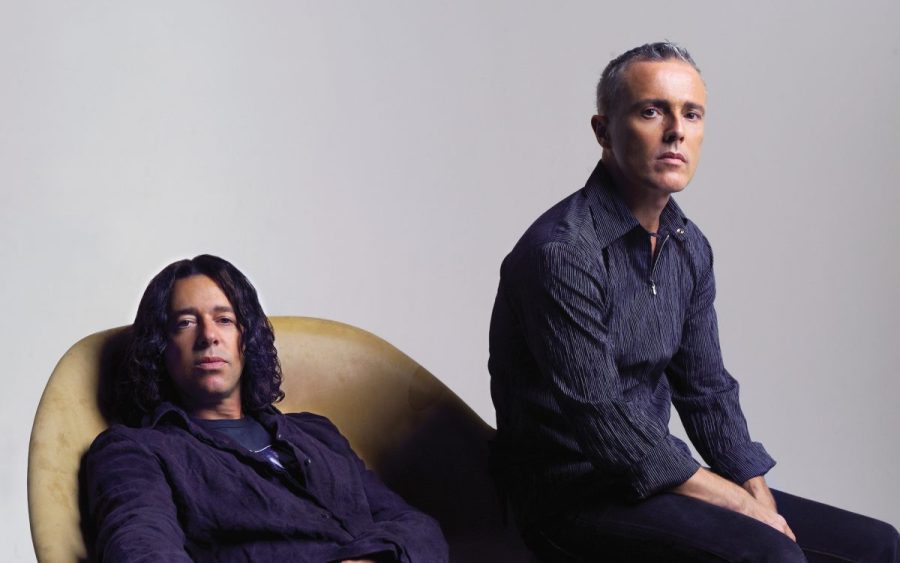
Band lineup for the recording of Learning to Crawl, including Malcolm Foster, Martin Chambers, Chrissie Hynde and Robbie McIntosh

Hynde and Chambers decided to soldier on in grief. In a 1984 interview with Rolling Stone Magazine, Hynde said, “What else were we going to do? Stay at home and be miserable, or go into the studio and do what we dig and be miserable?” A month after Honeyman-Scott’s death, Hynde hired Big Country bassist Tony Butler and Rockpile guitarist Billy Bremner, along with Robbie McIntosh (who would go on to become the band’s lead guitarist) to record a new single “Back on the Chain Gang” along with its B-side “My City Was Gone” (with its now iconic thumping bass groove that the execrable Rush Limbaugh later adopted as the theme for his radio show).

The single was released that September, and would become The Pretenders’ highest-charting single in the U.S. (“Brass in Pocket” is their highest-charting single in the UK.) Hynde wrote “Back on the Chain Gang” as a tribute to Honeyman-Scott and dedicated it to him. The song was also written during her strained on-and-off relationship with Kinks front man Ray Davies, and recorded when she was three months pregnant with their daughter. They split up for good six months later.

Through the rest of 1982 and into 1983, in between having and raising a baby and mourning Farndon (who died in April 1983), Hynde would periodically return to the studio with Chambers, new guitarist Robbie McIntosh and new bassist Malcolm Foster to record songs for an album she would name after her baby daughter Natalie’s first attempts to become mobile. In a sense, Learning to Crawl could also be a metaphor for The Pretenders regaining their footing as a band. The album was finally released in January 1984, receiving unanimously positive reviews. With regard to the notion that the album’s songs are mostly about loss, in that 1984 Rolling Stone interview Hynde was dismissive, saying, “It’s just a collection of 10 measly songs. It’s not a real important deal. I hate this sort of romantic or sentimental take people have on it—you know, the tragic demise, the reawakening. It wasn’t like that at all. I even regret naming the album ‘Learning To Crawl’, because it just sounds pathetic. I mean, I’m not sentimental.”

Be that as it may, many tracks do speak to a sense of loss, whether it be missing a loved one on “2000 Miles”, happier times on “Back on the Chain Gang”: “I found a picture of you / Those were the happiest days of my life.”, the “pretty countryside” surrounding her childhood home of Akron, Ohio ruined by urban sprawl and over-development on “My City Was Gone”, or one’s dignity and reputation in the wake of an adulterous affair on “Time the Avenger”: “Nobody’s permanent / Everything’s on loan here / Even your wife and kids / Could be gone next year”.

The band’s strong and incredibly tight musicianship is nicely showcased on several tracks. One of my favorites is the rousing album opener “Middle of the Road”, with its aggressive driving beat and stellar guitar work. Highlights for me are Chambers’ blasting drumbeats, McIntosh’s dazzling guitar solo in the bridge, and Hynde’s angry growl as she launches into her blazing harmonica solo toward the end. It’s such a great song, and I never understood why it wasn’t a bigger hit (it peaked at only #19 on the Billboard Hot 100).

Another favorite is the stunning “Show Me”, a hopeful plea for love and humanity as an antidote for mankind’s inherent tendencies for conflict: “Welcome to the human race, with its wars, disease and brutality / You with your innocence and grace restore some pride and dignity to a world in decline.”  The shimmery chiming and jangly guitars are gorgeous, and I love the intricate music touches such as the spacey little ascending guitar chord that plays when Hynde sings “Welcome here from outer space”.

“Time the Avenger” starts off with an infectious head-bopping beat, throbbing bassline and simple guitar riff, then gradually builds into a storm of Hynde’s and McIntosh’s intertwining riffs that’s downright exhilarating. The band seems to give a nod to Johnny Cash on “Thumbelina”, a lively rocker with a chugging train-style rhythm beautifully expressing the cross-country journey of a mother and her child as they head toward a new beginning.

One of the earliest songs recorded for the album was the beautiful cover of the Persuaders’ hit “Thin Line Between Love and Hate”, in which guitar was played by Billy Bremner, bass by Andrew Bodnar and piano by Paul Carrack (formerly of Squeeze, Ace and Roxy Music). “Watching the Clothes” is not a particularly strong track, though I do like its frantic punk rock vibe. The lyrics speak to the boredom of dealing with chores, but also to toiling in the service sector at a dead-end job: “I’ve been kissing ass / Trying to keep it clean / So that the middle class has a clean routine.”

In the years following the release of Learning to Crawl, The Pretenders would unfortunately continue to experience more internal upheaval and numerous changes in lineup. From what I can tell, some of it seems to stem from Hynde’s perfectionism and mercurial nature. Soon after recording sessions began for their next album Get Close, she declared that Chambers was no longer playing well and dismissed him. Discouraged at the loss of his bandmate, Foster then quit, leaving Hynde and McIntosh to record the rest of the album in New York and Stockholm with assorted session musicians. Despite all the upheaval, the Pretenders are still going strong in 2020, and in July dropped their 11th album Hate For Sale, which is actually pretty good.

EML’s Favorite Albums – ELTON JOHN: “Goodbye Yellow Brick Road”

One of my favorite albums from the 1970s is the monumental double album Goodbye Yellow Brick Road by Elton John. While I don’t feel it qualifies as a true masterpiece, I think it comes pretty close, and is an album I’d want to have with me on that proverbial desert island. Though my younger sister became a rabid Elton John fanatic from the moment he released his tender and heartfelt debut single “Your Song” way back in 1970, it took me a while to warm up to him and his music. I mean, I liked him well enough, but can’t say I became a huge fan until the release of Goodbye Yellow Brick Road (though I now more fully appreciate the brilliance of his early albums like Tumbleweed Connection and Madman Across the Water.)

Since its release in 1973, the album has sold over 30 million copies worldwide, and is widely considered John’s finest work. It contains several of his signature songs like “Bennie and the Jets”, “Goodbye Yellow Brick Road”, “Candle in the Wind” and “Saturday Night’s Alright (For Fighting)”, as well as the epic – and my personal favorite – “Funeral For A Friend/Love Lies Bleeding”. The album was inducted into the Grammy Hall of Fame in 2003, and ranks #91 on Rolling Stone magazine’s most recent list of the 500 greatest albums of all time, although at the time of its release, the magazine gave it a negative review: “This new record is a big fruity pie that simply doesn’t bake. But, oh lord, how it tries.” Well, that reviewer sure ended up with pie on his face!

Bernie Taupin wrote all the song lyrics for the album over a period of two and a half weeks, then John composed most of the music in three days while staying at the Pink Flamingo Hotel in Kingston, Jamaica. He’d wanted to write and record the songs in Jamaica partly because the Rolling Stones had just recorded their album Goats Head Soup there. Unfortunately, difficulties with the piano and sound system, as well as logistical issues arising from the Joe Frazier-George Foreman boxing match and unrelated political protests then taking place in Kingston, caused him and his musicians to rethink their plans. They ended up recording the album at Château d’Herouville, the same studio in France where he’d previously recorded Honky Château and Don’t Shoot Me I’m Only the Piano Player.

Though not a concept album per se, many of its songs touch on disillusionment and a nostalgia for a childhood and culture left in the past. The artwork for the album was fabulous, both inside and out, and vividly displayed in a tri-fold format. The outside cover art was created by Ian Beck, and inside illustrations were drawn by David Larkham, Michael Ross and David Schutt. Here’s a photo of two-thirds of the inside, which features a drawing and lyrics for each track:

elton-john-goodbye-yellow-brick-road-inside

Given all the flamboyance, tabloid sensationalism, fame and infamy of Elton John’s illustrious and colorful career, it’s easy to sometimes overlook the fact that, in addition to being a great composer and vocalist, he’s also an incredible pianist. Perhaps no other song showcases his piano-playing skills than the epic album opener “Funeral For A Friend”. Together with its companion track “Love Lies Bleeding”, the fantastic 11-minute long piece is a grandiose and dramatic melding of classical music and progressive rock, and was reportedly conceived by John as the kind of music he wanted played at his own funeral. I was blown away the first time I heard it, and to this day it remains my all-time favorite of his many great songs. The bittersweet lyrics of “Love Lies Bleeding” tell of a lost love: “Oh it kills me to think of you with another man. I was playing rock and roll and you were just a fan, but my guitar couldn’t hold you so I split the band. Love lies bleeding in my hands.”

Next up are three of his most famous and beloved songs. The beautiful piano ballad “Candle in the Wind” is a sort of tribute to Marilyn Monroe, with lyrics spoken from the perspective of a fan trying to reconcile the myths and legends attached to the legendary and tragic actress. “Loneliness was tough. The toughest role you ever played. Hollywood created a superstar. And pain was the price you paid. Even when you died, Oh the press still hounded you. All the papers had to say was that Marilyn was found in the nude.” (The song was later reimagined in 1997 as a tribute to Princess Diana after her own tragic death.) Davey Johnstone’s guitar work is particularly outstanding on this track.

The stomping glam-rock gem “Bennie and the Jets” is, according to Bernie Taupin, a satire on the greed and glitz of the early 70s music industry. John was initially set against releasing it as a single, as he thought it would flop, but it went to #1 in the U.S. and Canada, and endures as one of his most popular songs and biggest hits. Unfortunately, the song was (and still is) overplayed to death on the radio, and I grew tired of it decades ago, though I still acknowledge its brilliance. The title track “Goodbye Yellow Brick Road” is probably my second-favorite track on the album, as I love the great piano-driven melody and soaring vocal harmonies in the choruses.

John’s brilliant piano skills are also strongly evident on the folk-inspired “This Song Has No Title”, the exuberant “Grey Seal”, the haunting, cinematic torch song “I’ve Seen That Movie Too” and the dramatic tour de force “The Ballad of Danny Bailey (1909-1934)”, with its bouncy honky-tonk style piano and sweeping orchestrals. “Jamaica Jerk-Off” is a fun, reggae-infused nod to the place where John penned his lyrics, and is one of the lighter tunes on the album. A song that piqued my sexual curiosity when the album came out (I was 19 at the time) was “All The Girls Love Alice”, with lyrics that tell a tragic story of a young lesbian who died in the streets. Though the lyrics are depressing, I love the powerful driving beat, abrasive, wobbly synths and distorted psychedelic guitars that give the song such an edgy and dangerous vibe.

Side 4 is the weakest part of the album overall, keeping it from being a perfect work in my opinion, though none of the tracks are terrible. John and company dial up the energy on “Your Sister Can’t Dance (But She Can Rock’n’Roll)” (probably my least-favorite track on the album, as I’m also not a fan of his big 50s throwback hit “Crocodile Rock” either) and “Saturday Night’s Alright (For Fighting)”, which I do like, mainly for its hard-driving and edgy vibe, great piano and guitars. “Roy Rogers” and “Social Disease” have an Americana vibe, a genre John has visited many times through his career with varying degrees of success, and he succeeds pretty well here.

The final side is redeemed by the sultry closing track “Harmony”. The song is a piano-driven love song with more of those sweeping orchestrals and John’s wonderful vocal harmonies. He assures his recalcitrant loved one Harmony that she and he are pretty good together and may as well make a go of it: “Harmony and me, we’re pretty good company. Looking for an island in our boat upon the sea.”, ending things on an optimistic note.

EML’s Favorite Albums – JEFFERSON AIRPLANE: “Surrealistic Pillow”

surrealistic-pillow-1024x1024

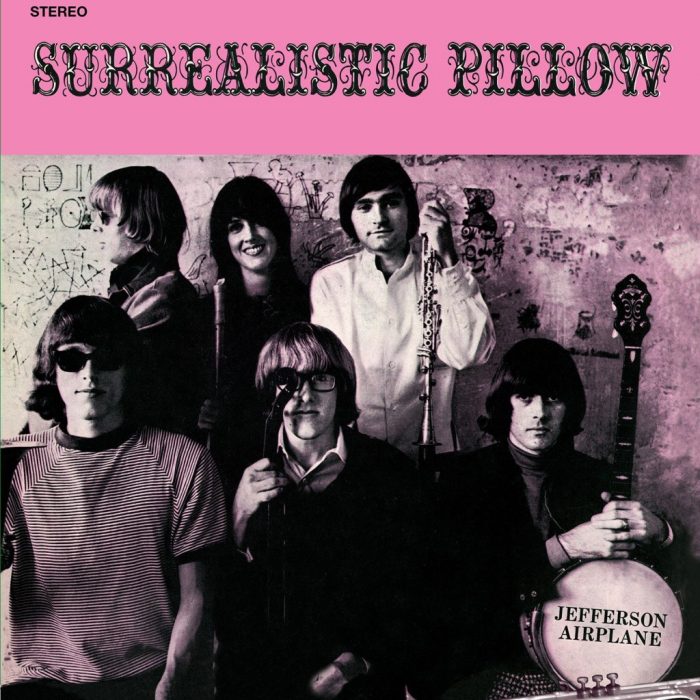
Surrealistic Pillow by Jefferson Airplane was one of the earliest albums I remember buying as a teenager growing up in the San Francisco Bay Area, where the band was based. I’d loved their two hit songs “White Rabbit” and “Somebody to Love”, but when I heard the album in its entirety at a friend’s house when it was played by her older sister, I was immediately smitten. I loved every song on the album, and had to have my own copy.  To this day, it remains one of my top 10 all-time favorite albums, and I still cherish my copy, now more than 50 years old. I also think it’s one of the best album covers ever!

Originally formed in 1965, Jefferson Airplane became one of the pioneering bands of psychedelic rock, and came to define what was then called the ‘San Francisco Sound’. They released their debut album Jefferson Airplane Takes Off in 1966 to critical acclaim and decent sales, eventually enough to have it certified gold. It’s a very good album, with songs that were more folk-rock oriented, and inspired by the music of bands like the Beatles, the Byrds and the Lovin’ Spoonful. A turning point in the band’s sound came after the departure of their original female vocalist Signe Anderson in October 1966, who wanted to devote more time to raising her baby daughter. She was replaced by Grace Slick, who’d previously been with the band The Great Society. In addition, founding drummer Skip Spence had earlier been replaced by Spencer Dryden. This new Jefferson Airplane lineup, which would last until early 1970, now consisted of Marty Balin (vocals), Grace Slick (vocals), Paul Kantner (guitar, vocals), Jorma Kaukonen (lead guitar, vocals), Jack Casady (bass) and Spencer Dryden (drums).

Slick’s joining the band proved pivotal to the Airplane’s commercial breakthrough, as her wonderful resonant contralto voice nicely complemented Balin’s beautiful tenor voice, and was well-suited to the band’s increasingly amplified psychedelic sound. In addition, being a former model, her good looks and on-stage charisma greatly enhanced the band’s live performances. She also contributed two of what would become the band’s signature songs – “White Rabbit” and “Somebody to Love”, both of which she originally recorded while with The Great Society (Slick wrote “White Rabbit” and her brother-in-law Darby Slick wrote “Somebody to Love”).

Surrealistic Pillow was recorded in Los Angeles under the guidance of producer Rick Jarrard in only 13 days, at a cost of $8,000. According to Wikipedia, the title “Surrealistic Pillow” was suggested by the album’s “shadow producer” Jerry Garcia, when he commented that the album sounded “as surrealistic as a pillow is soft.” Although the band’s label RCA would not acknowledge Garcia’s considerable contributions to the album’s production, he is listed in the album’s credits as “spiritual advisor.” The album was released in February 1967, and remained on the Billboard 200 album chart for more than a year, peaking at No. 3. Rolling Stone Magazine has ranked the album at #146 on their list of the “500 Greatest Albums of All Time”.

OK, enough with the background information. Let’s get to the album. It kicks off with the rousing “She Drives Funny Cars”, and what a great opening track it is. The first sounds we hear are Dryden’s aggressive galloping drumbeats, which are soon joined by Kaukonen’s and Kantner’s dual guitars, and we’re off to the races. Their intertwining psychedelic riffs are incredible, and so is Casady’s powerful bass line. Balin sings lead vocals here, with Slick nicely crooning in the background. Before we can catch our breath, we’re hit with Slick’s verbal assault of “When the truth is found to be lies”, and for the next two minutes and 55 seconds the masterpiece “Somebody to Love” unfolds, pulling us willingly into its maelstrom of explosive psychedelic greatness. The guitar work on this track is positively wicked! The song became Jefferson Airplane’s highest-charting single.

“My Best Friend” was written by former drummer Spence, and is a pleasing folk-rock song with a Lovin’ Spoonful vibe that would have been at home on their first album. Balin and Slick’s vocal harmonies are particularly nice. Next up is the haunting Balin-Kantner penned love ballad “Today”, with gorgeous jangly and chiming guitars and featuring Balin’s fervent vocals, enveloped by a dramatic percussion-heavy wall of sound that would make Phil Spector proud. “Comin’ Back to Me” is a beautiful mellow ballad with strummed acoustic and electric guitars, some of which were reportedly played by Jerry Garcia. Highlights of the song are the haunting flute and Balin’s stunning heartfelt vocals.

As we continue with the album, it’s clear that every single track is outstanding, and that the band had an incredibly diverse and wide-ranging sound. The hard-driving psychedelic guitars on “3/5 of a Mile in 10 Seconds” are fantastic and gnarly as hell, showcasing the band’s ability to deliver down and dirty blues rock. They seem to channel the Byrds on the breezy gem “D.C.B.A.-25”, with glorious jangly guitars and more of Balin and Slick’s gorgeous vocal harmonies. The song has a different feel from most of the others on the album, but is one of my favorites. “How Do You Feel” is a nod to the Mamas and Papas, with its pleasing melody, beautiful harmonies and more of those beguiling flutes. And then we have the stunning instrumental “Embryonic Journey”, featuring a tour de force acoustic guitar solo performance by Kaukonen of a song he wrote.

Next up is my personal favorite Jefferson Airplane song “White Rabbit”. Slick has stated she wrote the song as a slap to parents who read their children novels like Alice in Wonderland, then wonder why their children later used drugs. In an interview with The Wall Street Journal, she mentioned that besides Alice in Wonderland, her other inspiration for the song was “the bolero used by Miles Davis and Gil Evans on their 1960 album Sketches of Spain,” which was itself inspired by the famous classical composition “Bolero” by Maurice Ravel. It’s the buildup to the crescendo that makes both “Bolero” and “White Rabbit” so wonderful. Here’s a performance of the song on the Smothers Brothers Comedy Hour in 1967.

The album closes with the bluesy “Plastic Fantastic Lover”, with more of those wonderful psychedelic guitars, accompanied by the kind of powerful head-bopping beat I love. It’s a fantastic finish to an album I consider a masterpiece. Although Jefferson Airplane would go on to release several more albums before splitting up in 1972 and going their separate ways with other music projects, none would match the phenomenal success of Surrealistic Pillow.

The album was later re-released with five bonus tracks not on the original 1967 release.


EML’s Favorite Songs – SPENCER DAVIS GROUP: ” Gimme Some Lovin'”

Gimme Some Lovin' - LP

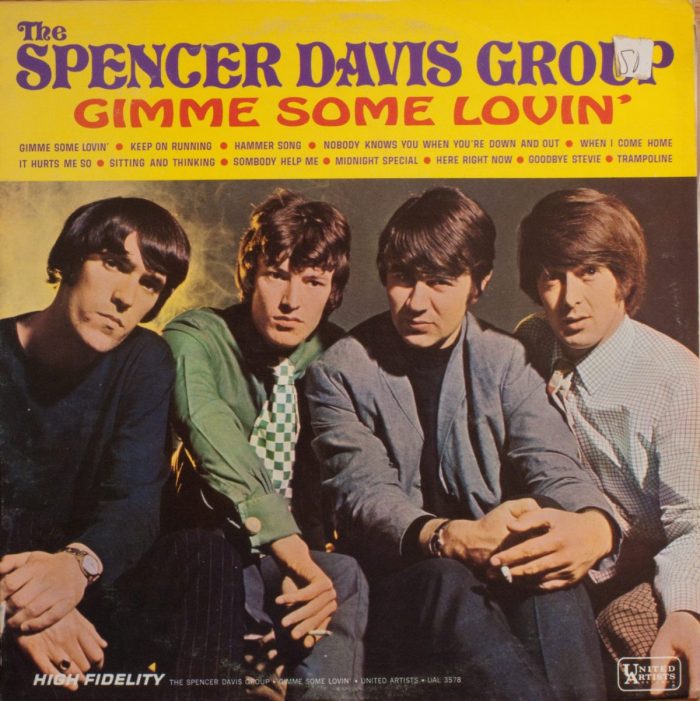
One of the most electrifying rock songs ever recorded has to be “Gimme Some Lovin‘” by British band Spencer Davis Group. After reading a recent post by fellow blogger Cincinnati Babyhead about Blind Faith, the short-lived supergroup of which Spencer Davis Group vocalist Steve Winwood was also a member, it reminded me of what an amazing talent he was, especially at such a young age. As a pre-teen who was only six years younger than Steve Winwood – he was 18 when he co-wrote and recorded “Gimme Some Lovin'”, I was blown away by his incredibly powerful and soulful vocals when I first heard the song back in late 1966.

Spencer Davis Group was formed in Birmingham, England in 1963, and consisted of Spencer Davis (rhythm guitar, backing vocals), brothers Steve Winwood (lead guitar, lead vocals, organ, piano) and Muff Winwood (bass) and Pete York (drums & percussion). Steve Winwood was only 14 at the time! They had two #1 singles in the UK with “Keep On Running” and “Somebody Help Me”, but their latest single “When I Come Home” had not performed well. Also, none of their singles up to that point had charted in the U.S. The band was under pressure to come up with another hit single but weren’t happy with songs submitted by Jackie Edwards, who’d written their previous singles. Finally, their manager Chris Blackwell took them to London, put them in a rehearsal room, and ordered them to come up with a new song. As quoted in the liner notes by John Bell for the 2-CD Island Records 1996 release Eight Gigs A Week: The Spencer David Group – The Steve Winwood Years, Muff Winwood recalled that “Gimme Some Lovin'” was conceived, arranged, and rehearsed in just half an hour. He elaborated about the song’s creation:

We started to mess about with riffs, and it must have been eleven o’clock in the morning. We hadn’t been there half an hour, and this idea just came. We thought, bloody hell, this sounds really good. We fitted it all together and by about twelve o’clock, we had the whole song. Steve had been singing ‘Gimme, gimme some loving’ – you know, just yelling anything, so we decided to call it that. We worked out the middle eight and then went to a cafe that’s still on the corner down the road. Blackwell came to see how we were going on, to find our equipment set up and us not there, and he storms into the cafe, absolutely screaming, ‘How can you do this?’ he screams. Don’t worry, we said. We were all really confident. We took him back, and said, how’s this for half an hour’s work, and we knocked off ‘Gimme Some Lovin’ and he couldn’t believe it. We cut it the following day and everything about it worked. That very night we played a North London club and tried it out on the public. It went down a storm. We knew we had another No. 1.

Well, they created quite an explosive banger of a tune! Opening with a heavy bass riff and ominously building percussion, Steve Winwood’s wailing organ arrives like an angry velociraptor, followed by his fiery, impassioned vocals that instantly cover me with goosebumps. The feral hunger in his vocals make us believe him when he practically screams “I’m so glad we made it, I’m so glad we made it! You’ve gotta gimme some lovin’!” From that point on, that sonic velociraptor rampages onward, laying waste to the airwaves and our eardrums. God, what a song!

“Gimme Some Lovin'” finally brought the Spencer Davis Group long-elusive success in the U.S. The song peaked at #7 on the Billboard Hot 100, becoming their highest-charting U.S. single (should have been #1). It reached #2 in UK, and is ranked #247 on Rolling Stone magazine’s list of The 500 Greatest Songs of All Time. It certainly ranks highly among my 500 favorite songs of all time.

In 1980, The Blues Brothers, who consisted of Dan Aykroyd and the late John Belushi, did a pretty good cover of “Gimme Some Lovin'”. The song was featured in their film The Blues Brothers, and was a sizable hit, reaching #18 on the U.S. Billboard Hot 100.

EML’s Favorite Albums – COLDPLAY: “A Rush of Blood to the Head”

Coldplay A Rush of Blood to the Head

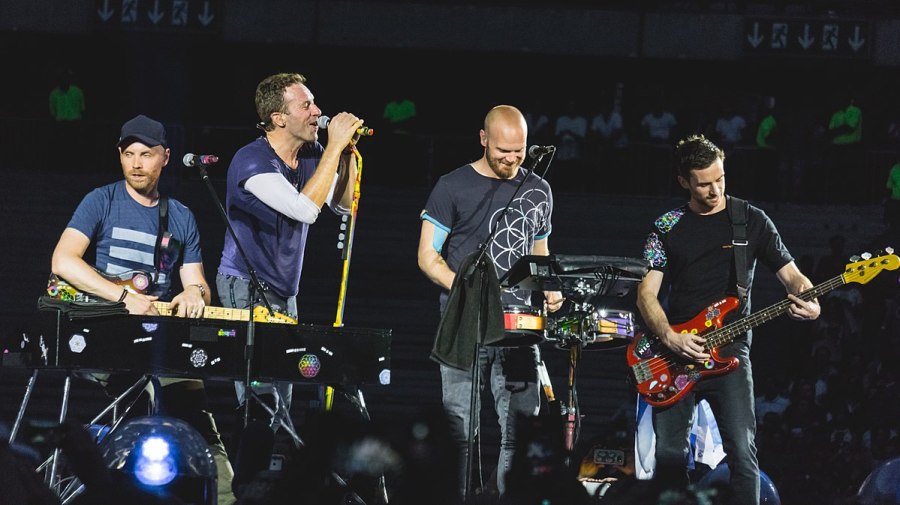
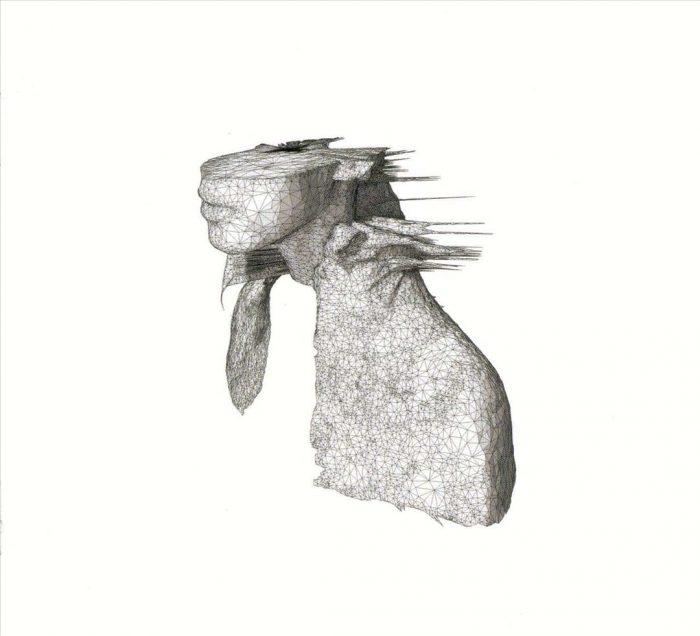
I distinctly remember the first time I heard British band Coldplay’s magnificent song “Clocks” on the radio in the spring of 2003. Though they’d already released a number of singles over the previous three years or so, I had not yet heard any of them because I listened to crappy radio stations in St. Louis, where I lived at the time. I was blown away by the song and immediately fell in love with it’s haunting piano melody. Given my love for “Clocks”, I rushed out (pun intended) and purchased their CD A Rush of Blood to the Head. It was their second studio album, and is my personal favorite of all their albums. I also became a big fan of Coldplay, who to this day rank among my top ten favorite bands of all time (the Beatles, Stones and Fleetwood Mac will forever be my top three, but I digress). The band is comprised of four underrated musicians: front man and lead vocalist Chris Martin, guitarist Jonny Buckland, bassist Guy Berryman, and drummer Will Champion.

After the popularity and success of their first album Parachutes, the band was under tremendous pressure to deliver an album at least as good – something all artists and bands with successful debut albums have experienced. I’ve heard many say they liked Coldplay’s early music (“Yellow” from Parachutes is one of their most beloved songs), but don’t much care for their later stuff, which they claim sounds too polished, too over-produced, too sappy or too ‘pop’. A Rush of Blood to the Head, with its piano and guitar-driven sound, is generally considered more acceptable to those earlier fans.

The album was released on August 26, 2002 in the UK, debuting at #1, and a day later on August 27 (my birthday) in the U.S. Besides topping the chart in the UK (where it would become the 10th best-selling album of the 21st Century), the album also reached #1 in Argentina, Australia, Brazil, Canada, Denmark, Germany, Ireland, Italy, Norway and Switzerland. It won three Grammy Awards (one of them for “Clocks”, for 2003 Record of the Year), and the 2003 BRIT Award for Best British album.

Though every song on the album is excellent, there are a number of standouts, the two greatest being “Clocks” and “The Scientist”. With its repetitive piano progression, including a descending scale in the chord progression that creates such a hauntingly beautiful sound, “Clocks” is considered one of Coldplay’s finest achievements. That breathtaking piano melody is accompanied by a somewhat minimalist atmospheric soundscape of synths, guitar, bass and drums, yet the whole thing sounds incredibly powerful and compelling. The lyrics are rather ambiguous, but seem to address the conflicts of being in a relationship that causes pain, yet you cannot or do not want to escape it. Martin begins by singing about his situation: “The lights go out and I can’t be saved / Tides that I tried to swim against / You’ve put me down upon my knees / Oh, I beg, I beg and plead.” Then he ponders “Am I a part of the cure? Or am I part of the disease?“, finally concluding “And nothing else compares / You are home, home, where I wanted to go.”

I think it’s a masterpiece, and one of the greatest songs ever recorded, and it boggles my mind that it wasn’t a bigger hit (it only peaked at #29 on the Billboard Hot 100, though it did reach #1 on the Adult Alternative chart). It’s my favorite song of the 2000s, and my fourth favorite song of all time. Surprisingly, “Clocks” was originally not intended for inclusion on A Rush of Blood to the Head. The band planned to use it on their third album, however, their manager Phil Harvey strongly pushed for its inclusion.

“The Scientist” is a gorgeous love song of apology, and another of Coldplay’s most beloved songs. The track starts off with just a melancholy piano riff and Martin’s sad vocals, then eventually a strummed acoustic guitar enters, followed by drums, bass and finally Buckland’s electric guitar. In an interview with VH1, Martin stated: “The song was a turning point. I don’t think we’ll ever top it. It was inspired by George Harrison’s All Things Must Pass. We really wanted to do a piano ballad with loud guitars at the end, because we didn’t think many people had tried that, so Jon put this really distorted guitar on the end of it.” Well, I think it’s another masterpiece, and most definitely one of the band’s finest songs.

Though Coldplay has never been known for writing many political songs, they were inspired to write “Politik” a few days after the 9/11 attacks. The song touches on the then-current state of the world, where whole countries and religions were being vilified over the horrific actions of a relative few. Martin implores people to seek the truth and see the bigger picture: “Give me real, don’t give me fake / Give me strength, reserve, control / Give me heart and give me soul / Open up your eyes.” They decided to make “Politik” the first track on the album, and its bombastic opening consisting of an aggressive, banging piano riff and crashing cymbals all but demand that we pay attention.

The beautiful “In My Place” was the first song they wrote after finishing Parachutes, and the first single released from A Rush of Blood to the Head. Buckland’s gorgeous chiming guitar is a highlight of the song. Another favorite of mine is “A Whisper”, with its dramatic chord progressions, glittery synths and spectacular guitar work, especially the shimmery chiming guitar run in the final chorus. The title track “A Rush of Blood to the Head” is a darkly beautiful song about wanting to undo all one’s wrongs and start over anew: “He said I’m gonna buy this place and watch it fall / Stand here beside me baby in the crumbling walls / Said I’m gonna buy a gun and start a war / If you can tell me something worth fighting for / Blame it upon a rush of blood to the head.”

Some songs on the album have a pleasing guitar-driven folk-rock feel, namely “God Put a Smile on Your Face”, “Green Eyes” and “Warning Sign”. Closing out the album is the lovely and introspective piano ballad “Amsterdam”. Like a few of their other songs, the instrumentals build as the track progresses into a dramatic crescendo in the final chorus, before fading out at the end, a right proper finish to a phenomenal album.

I finally saw Coldplay perform live on their Head Full of Dreams Tour in August 2016, at the historic Rose Bowl in Pasadena, California. Though it was a huge venue, with over 70,000 people in attendance, they still managed to make it feel intimate.

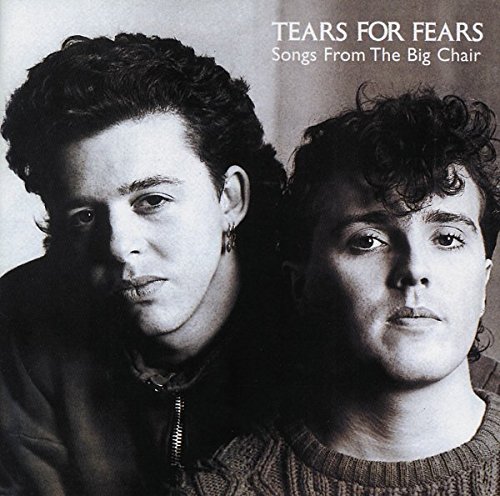
EML’s Favorite Albums – TEARS FOR FEARS: “Songs From The Big Chair”

Songs From the Big Chair

One of my favorite albums of all time is Songs From the Big Chair by British band Tears For Fears. Released in February 1985, it was their second album and also their most successful from both a critical and commercial standpoint. Even though it contains only eight tracks, with five of them running more than five minutes long it feels almost monumental in scope.  Every track is brilliant in its own right, and there isn’t one wasted second on the entire album. The band released five of the tracks as singles, including the massive worldwide hits “Shout”, “Everybody Wants to Rule the World” and “Head Over Heels”.

I’d first learned about Tears For Fears two years earlier when I heard their song “Change”, one of the singles from their excellent 1983 debut album The Hurting, on the radio. I really liked that song, but shockingly, never heard “Mad World” until years later. That song was a huge hit in Britain, but received practically zero airplay in the U.S. where I live. Two years would pass before I would hear another song by them, and when “Everybody Wants to Rule the World” hit my eardrums, it was love at first listen. The song was actually the third single from Songs From the Big Chair to be released (after “Mothers Talk” and “Shout”), but the first to receive radio airplay in the U.S. in the spring of 1985.

In the creation of Songs From the Big Chair, Tears For Fears moved away from the predominantly synthpop feel of The Hurting, and toward a more sophisticated and fuller orchestral sound that would become their signature style – a style of music that I dearly love. In addition to band front men Roland Orzabal on guitar and lead vocals and Curt Smith on bass and backing vocals, other working members included Ian Stanley on keyboards and backing vocals, and Manny Elias on drums and percussion. Under the guidance of producer Chris Hughes, the new Tears for Fears sound helped make Songs from the Big Chair become one of the biggest-selling albums worldwide in 1985, as well as receive near-unanimous critical acclaim.

The album was originally to be titled The Working Hour, but Orzabal fought to change it to Songs From the Big Chair, inspired by the 1976 television film Sybil starring Sally Field, about a woman with multiple personality disorder who feels safe only when she’s sitting in her analyst’s “big chair”. Orzabal and Smith have both stated that they feel each of the album’s songs had it’s own distinct personality.

The album opens with “Shout”, a bombastic protest anthem that makes you want to stomp your feet and pump your fists in the air. The song was a stylistic departure for Tears For Fears, with explosive percussion, screaming synths and a lengthy killer guitar solo that propelled it straight to number 1 on the Billboard Hot 100. I love how the song builds to a spectacular crescendo, and it’s arguably one of the most musically and lyrically satisfying songs ever recorded. Next up is the brilliant “Working Hour”, a gorgeous and dramatic song with jazzy overtones courtesy of the soulful wailing saxophone, accompanied by incredible guitar work, sweeping synths and resounding percussion that send chills up and down my spine. Orzabal passionately sings about being a slave to one’s work: “This is the working hour. We are paid by those who learn by our mistakes.”

“Everybody Wants to Rule the World” is a truly exceptional song, and perfection from start to finish. It’s also very likely their most catchy, radio-friendly song, though the lyrics deal with a rather dark subject. Smith has stated “It’s about everybody wanting power, about warfare and the misery it causes.” Interestingly, Orzabal and Smith were ambivalent about the song, and initially didn’t want to include it on the album. They felt it’s syncopated shuffle beat wouldn’t fit in with the timing and feel of the rest of the album. That said, I think Orzabal’s intricate guitar work is absolutely fantastic, and I love the powerful driving rhythms and both his and Smith’s impassioned vocals. It’s become Tears For Fears’ signature song, as well as one of the most beloved songs of the past 40 years. It ranks among my top 10 favorite songs of all time, and I never tire of hearing it.

“Mothers Talk” has a progressive rock feel, with an intense galloping beat as a foundation, over which the band layers a fusillade of cinematic synths, along with a lively mix of jangly and chiming guitars, and lots of unusual sounds. They slow things down on the mysterious and jazzy “I Believe”, a live recording of their song about primal therapy. The highlights here are the haunting piano work and gorgeous sax played by Will Gregory, their touring saxophonist at that time.

Tracks 6 & 7, “Broken” and “Head Over Heels”, play like one long continuous song, with “Broken” serving as both a dramatic introduction and ending to “Head over Heels”, which is essentially a love song. Taken together, they’re a musical masterpiece as far as I’m concerned. The piano riff at the beginning of “Head Over Heels” is magnificent, and the synths, strings, guitars and percussion are all glorious. The official video they made for the song is really charming, and god, weren’t they adorable back then!

The song segues into “Listen”, an epic, nearly seven minute-long track of such incredible beauty it almost makes my heart ache. The lush instrumentals and cinematic synths are spectacular, then calm to a peaceful interlude as Curt Smith softly croons the hopeful lyrics “Mother Russia badly burned. Your children lick your wounds, your wounds. / Pilgrim father sailed away. Found a brave new world, new world. Listen…” The song ends with Orzabal and guest vocalist Marilyn Davis chanting the lines “Cumpleaños chica, no hay que ocuparse”, which roughly translates to “birthday girl, don’t worry”. They seem to be telling us that everything will work out alright (though now, some 35 years later, I’m not so sure.)

Songs From the Big Chair is one of the most beautiful and flawlessly-produced albums I’ve ever heard, and is a true masterpiece on every level. Tears For Fears also released a deluxe version of the album featuring a total of 33 tracks, some of them additional songs and others remixes or edits of the eight original songs, as well as a seven and a half minute long interview with Orzabal and Smith discussing various aspects of the album.

I saw Tears For Fears in concert on their Seeds of Love Tour in 1990 (with Debbie Harry opening), and it remains one of the best shows I’ve ever seen.

EML’s Favorite Songs – THE UNDISPUTED TRUTH: “Smiling Faces Sometimes”

undisputed-truth-smiling-faces-sometimes

As a teenager back in the late 1960s to mid 1970s, I was madly in love with soul and R&B music (still am, actually), and among my favorite songs from those years is “Smiling Faces Sometimes” by The Undisputed Truth. Written by the renown Motown songwriting team of Norman Whitfield and Barrett Strong, it’s a dramatic psychedelic soul song about phony, back-stabbing people who do their friends wrong behind their backs. The song peaked at #3 on the Billboard Hot 100, but was a huge #1 hit in the San Francisco Bay Area, where I lived at the time.

Beginning in the mid 1960s, Norman Whitfield and Barrett Strong helped turn Motown into a veritable hit machine. Along with Smokey Robinson and the songwriting team of Holland-Dozier-Holland, Whitfield and Strong were instrumental in the creation of what was referred to as “The Motown Sound”, as well as the late-1960s subgenre of psychedelic soul. They were one of the principal songwriters for the Temptations, penning such hits as “Cloud Nine”, “I Can’t Get Next to You”, “War”, “Ball of Confusion (That’s What the World Is Today)”, “Just My Imagination (Running Away with Me)”, “Smiling Faces Sometimes”, and “Papa Was a Rollin’ Stone.”, as well as the brilliant “I Heard it Through the Grapevine”, which was a monster #1 hit for both Gladys Knight & the Pips and Marvin Gaye.

“Smiling Faces Sometimes” was first recorded by the Temptations as a 12:43-minute-long opus that was included on their 1971 album Sky’s the Limit. An edited version of the song was to be released as a 45 single, but was scrapped when one of the track’s co-vocalists Eddie Kendricks left the Temptations for a solo career in April 1971. Undaunted, Whitfield quickly turned to another psychedelic soul group he’d created known as The Undisputed Truth, and had them record the song, which was released that May. Whitfield liked to record dramatically different versions of the same song with different Motown artists (see “I Heard it Through the Grapevine”), so having The Undisputed Truth record “Smiling Faces Sometimes” was a no-brainer. He later had the Temptations record The Undisputed Truth song “Papa Was a Rollin’ Stone”, which became a #1 hit for them.

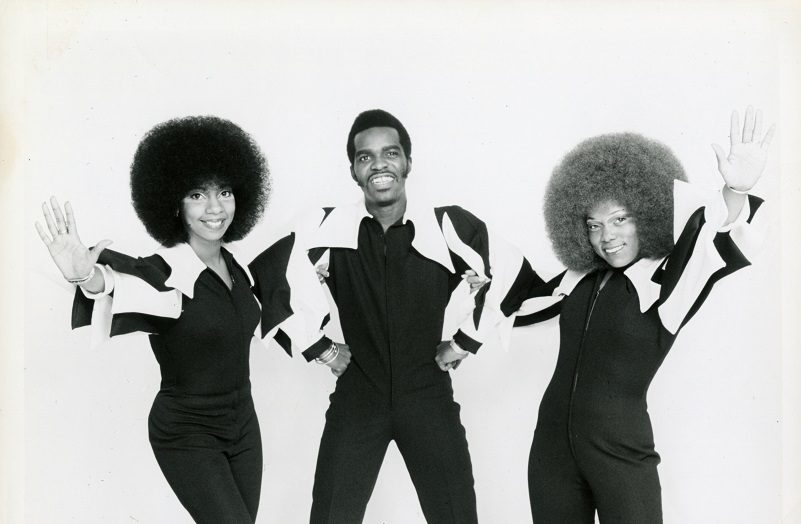
Whitfield created The Undisputed Truth in 1970 to further explore his interest in producing more songs in his psychedelic soul format, but also partly in response to fan criticism that he was using the Temptations as his personal plaything. The Undisputed Truth consisted of Joe Harris, Billie Calvin and Brenda Evans, all seasoned vocalists who’d previously worked with other soul and R&B acts.

It’s a darkly beautiful song with a sophisticated, yet menacing vibe thanks to a brilliant arrangement and stunning instrumentation. The track opens with what sounds like an abrupt horn blast, quickly followed by a deep bass line, wobbly guitar notes and a brief flourish of cinematic strings. Then, a rattle-based beat kicks in, nicely conveying mental images of a rattlesnake lurking in the shadows, which is alluded to in the lyric “beware of the handshake that hides the snake”. The intricate psychedelic guitar work is really fantastic, as are the jazzy horns and soaring strings, while that continuous rattling percussion keeps the eerie vibes alive. I love that all three band members share vocals, giving the song a fuller, more exciting sound. Their urgent, soulful vocals are perfect as they warn of the evil lurking behind our backs. I love this song. 

Smiling faces sometimes
Pretend to be your friend
Smiling faces show no traces
Of the evil that lurks within
(Can you dig it)

Smiling faces, smiling faces sometimes
They don’t tell the truth
Smiling faces, smiling faces
Tell lies and I got proof
Oh lord, yeah

Let me tell ya, the truth is in the eyes
Cause the eyes don’t lie, amen
Remember a smile is just a frown turned upside down
My friend, so hear me when I’m sayin’

Smiling faces, smiling faces sometimes
They don’t tell the truth
Smiling faces, smiling faces
Tell lies and I got proof

Beware, beware of the handshake
That hides the snake
(Can you dig it, can you dig it)
I’m a-telling you beware
Beware of the pat on the back
It just might hold you back
Jealousy (jealousy)
Misery (misery)
Envy, I tell you, you can’t see behind

Smiling faces, smiling faces sometimes
Hey, they don’t tell the truth
Smiling faces, smiling faces
Tell lies and I got proof

And your enemy won’t do you no harm
‘Cause you’ll know where he’s coming from
Don’t let the handshake and the smile fool ya
Take my advice I’m only tryin’ to school ya

Smiling faces, smiling faces sometimes
They don’t tell the truth
Smiling faces, smiling faces
Tell lies and I got proof

Song of the Day Challenge – Day 13: COLD WAR KIDS – “Complainer”

Song A Day Challenge

Today’s Song of the Day Challenge theme is “A song that describes you”. Self-reflection can often be a difficult thing to do, but sadly, I have to go with the song “Complainer” by L.A. alt-rock band Cold War Kids. While some of the lyrics don’t exactly describe me or my personality, the title absolutely does. All my life, I’ve been a glass half-empty pessimist and malcontent. I bitch, whine or moan about at least one thing or another on a daily basis, driving those around me nuts for as long as I can remember. I wish it were otherwise, but it is what it is. On the plus side, three things that keep me from being a complete asshole are my inherent kindness, empathy and sense of humor.

Getting back to the music, I’m a big fan of Cold War Kids. My favorite songs from them are “First”, “Love is Mystical”, “So Tied Up” and “Miracle Mile”, and I also love their cover of Rihanna’s “Love On the Brain”.


Song of the Day Challenge – Day 12: THE BEATLES – “She Loves You”

Beatles-She-Loves-You

Today’s Song of the Day Challenge theme is “A song from your childhood” and my pick is “She Loves You” by The Beatles. It ranks among their greatest songs, and is one of my all-time favorite Beatles songs.

Anyone who was a kid or teenager in the early to mid 1960s remembers the first time they heard a song by The Beatles. They started out playing clubs in Liverpool and Hamburg, Germany in 1960, and in October 1962, their first single “Love Me Do” was released in the UK. “She Loves You” was released in the UK in August 1963, where it became the best-selling single of 1963, and remains to this day the top-selling Beatles single ever in the UK.

Because of contract disputes with their American label Vee-Jay Records, “She Loves You” ended up being released in the U.S. by Swan Records in September 1963. Shockingly, it sold only around 1,000 copies and failed to chart. But after the meteoric success of the Capitol Records release of “I Want to Hold Your Hand” launched the so-called “British Invasion” of the American music scene at the end of 1963, “She Loves You” finally entered the Billboard chart in late January 1964, and spent four weeks at #2 behind “I Want to Hold Your Hand” before replacing it at #1 that March.

It’s such a joyful and exhilarating song that resonates with young and old alike. The lyrics are from the perspective of a go-between, who tells a friend that his estranged girlfriend still loves him, and that he needs to apologize to make things right with her:

She loves you, yeah, yeah, yeah
She loves you, yeah, yeah, yeah, yeah

You think you’ve lost your love
Well, I saw her yesterday
It’s you she’s thinking of
And she told me what to say

She says she loves you
And you know that can’t be bad
Yes, she loves you
And you know you should be glad

She said you hurt her so
She almost lost her mind
But now she says she knows
You’re not the hurting kind

She says she loves you
And you know that can’t be bad
Yes, she loves you
And you know you should be glad, ooh

She loves you, yeah, yeah, yeah
And with a love like that
You know you should be glad

You know it’s up to you
I think it’s only fair
Pride can hurt you too
Apologize to her

Because she loves you
And you know that can’t be bad
Yes, she loves you
And you know you should be glad, ooh

She loves you, yeah, yeah, yeah
With a love like that
You know you should be glad
With a love like that
You know you should be glad
With a love like that
You know you should be glad
Yeah, yeah, yeah
Yeah, yeah, yeah, yeah

Song of the Day Challenge – Day 11: JUDY GARLAND – “The Man That Got Away”

Song A Day Challenge

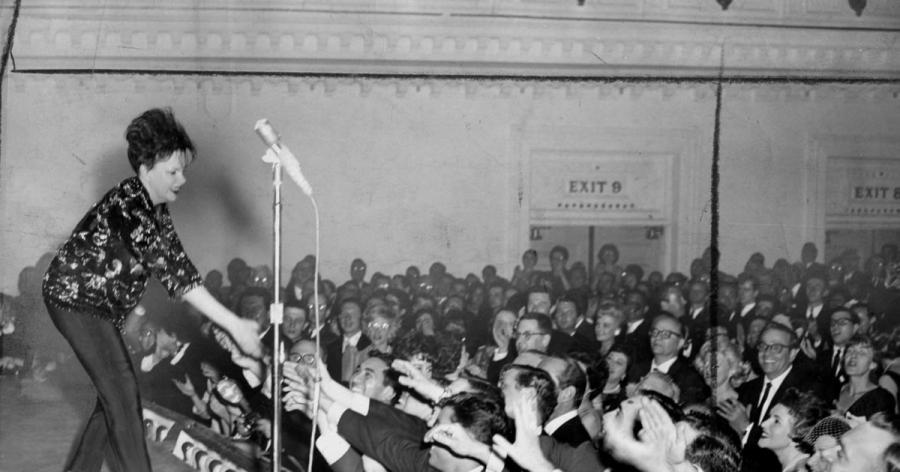
Today’s Song of the Day Challenge is “A song you wish you could witness live”, and my pick is “The Man That Got Away” by Judy Garland. Specifically, it’s her performance of the classic torch song at her legendary concert at Carnegie Hall on April 23, 1961, which many called “the greatest night in show business history”. Truth be told, I would like to have seen her perform any one of a number of her iconic songs at that show, but choose “The Man That Got Away” because of the incredible sense of vulnerability and heartbreak she conveys in her powerfully raw performance that really tears me up. By 1961, Garland had endured many difficulties, heartaches and setbacks in her life and career, and this show was a personal and professional triumph for her.

Judy Garland had a deep and resonant vocal style in the contralto range, characterized by a tremulous, powerful vibralto. Her voice was unparalleled, and in my opinion, she was one of the greatest vocalists of the 20th Century. In a piece he wrote for Turner Classic Movies, biographer Jonathan Riggs commented that Garland had a tendency to imbue her vocals with a seemingly contradictory combination of fragility and resilience that eventually became a signature trademark of hers. “Those who saw her perform live spoke of the experience in almost mystical terms, especially a comeback performance captured on the Grammy-winning Judy at Carnegie Hall, widely considered the greatest night in show business history. Literally giving her life for her art, Garland poured her soul out in every song, achieving immortality of the highest order and recognition as one of the greatest entertainers of all time.”

The recording from that show, which featured a full orchestra conducted by Mort Lindsey, was released as a two-record album Judy at Carnegie Hall in July 1961. The album became a best seller, spending 73 weeks on the Billboard album chart, 13 of them at #1. It won Grammy Awards for Album of the Year, Best Female Vocal Performance, Best Engineered Album, and Best Album Cover, and has never gone out of print  since its release 59 years ago! In 2003, it was one of 50 recordings chosen by the Library of Congress to be added to the National Recording Registry. (Wikipedia)

Here’s a famous scene from the 1954 version of A Star is Born where an awestruck Norman Maine, played by James Mason, watches Judy as Esther Blodgett perform the song at an after-hours club: