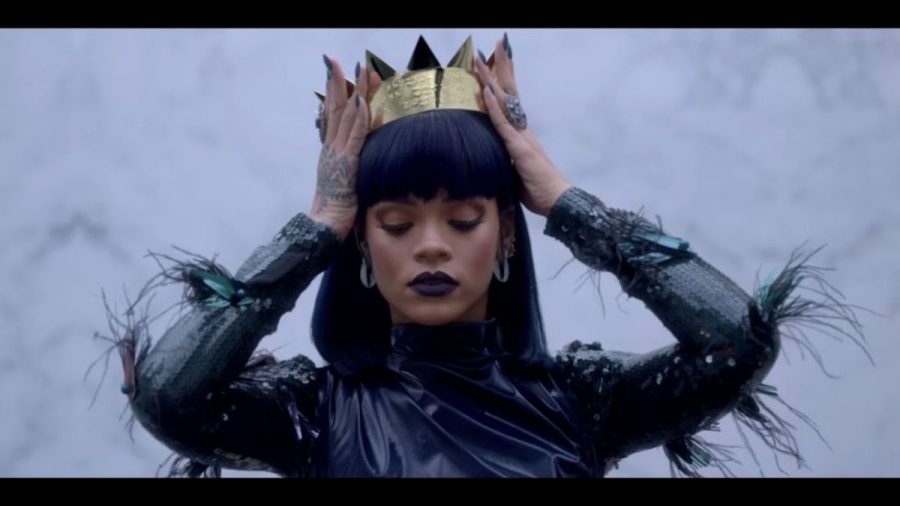
Rihanna (born Robyn Rihanna Fenty in Barbados) is an international music superstar, fashion designer, actress and businesswoman who emerged on the music scene in 2005 at the tender age of 17. Since then, she’s racked up an impressive string of monster hits and earned numerous awards and accolades. I love many of her songs, especially “Only Girl (In the World)”, “Stay”, We Found Love” and her duet “Love the Way You Lie” with Eminem, but my favorite of all is “Love on the Brain”.
The song is from her eighth studio album Anti, and features a sultry doo wop/R&B vibe in the style of many great R&B songs of the late 50s and early 60s that strongly appeals to my mature music sensibilities. It’s a stunning torch song that beautifully showcases her considerable vocal talents. Though it was a sizable hit, “Love on the Brain” peaked at only #5 on the Billboard Hot 100, a relative disappointment considering how many of her singles reached #1.
The song was originally written by Norwegian songwriter and producer Fred Ball and American songwriter Joseph Angel in late 2013. They wanted an old school soul feel with modern lyrics, and did not write it with Rihanna in mind. After hearing the song, however, Ball’s manager Jay Brown loved it and thought it would be a great song for Rihanna. He sent it to her and she loved it too, adding some additional lyrics to make the song her own. The explicit lyrics speak of a romantic obsession with another person who treats her poorly, but her feelings are so intense that she’s willing to endure whatever hurt and pain he doles out so long as he loves her. Some believed the song referred to Rihanna’s tempestuous relationship with Chris Brown, though she’s never confirmed it one way or another.
Oh, and, babe, I’m fist-fighting with fire Just to get close to you Can we burn something, babe? And I run for miles just to get a taste Must be love on the brain That’s got me feeling this way (feeling this way) It beats me black and blue but it fucks me so good And I can’t get enough Must be love on the brain, yeah And it keeps cursing my name (cursing my name) No matter what I do I’m no good without you And I can’t get enough Must be love on the brain
Baby keep loving me Just love me, yeah Just love me All you need to do is love me yeah Got me like ah-ah-ah-ow I’m tired of being played like a violin What do I gotta do to get in your motherfuckin’ heart?
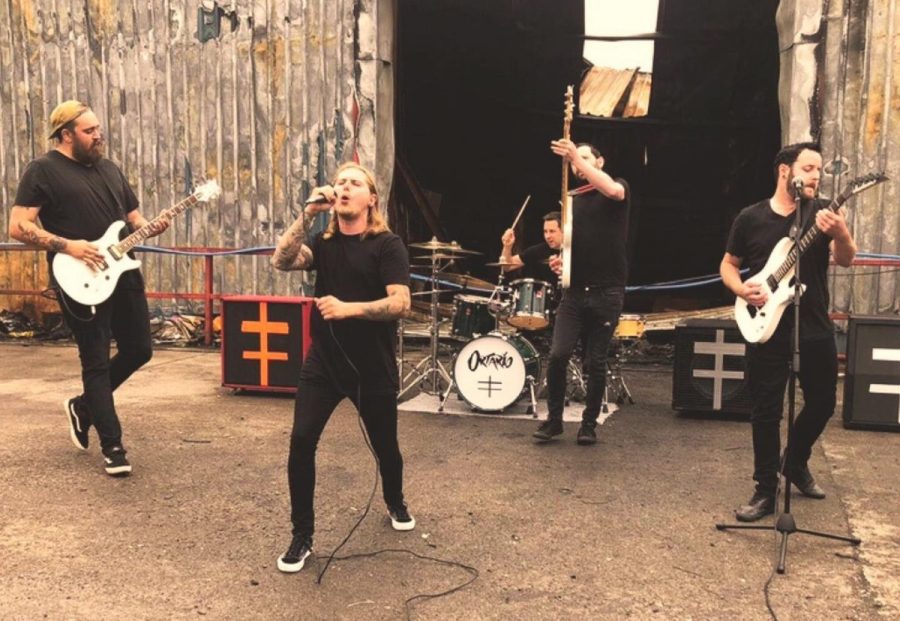
Ortario is an alternative hard rock band from the South Wales Valleys, a region rich in musical heritage, as I’ve written about several artists and bands from that bucolic corner of the country. I’ve been following Ortario for more than four years, and first wrote about them back in March 2017, when I reviewed their debut EP A Place Called Home for The Symphony of Rock blog. (You can read that review here.) Comprised of Chris Clark (vocals), Jamie Thomas (bass), Scott Lloyd (guitar), Mark Lloyd (guitar) and Nathan Lewis (drums), the band released their self-titled album Ortario in April 2018, followed that December by Live, featuring live versions of seven of their best songs.
On September 4th, Ortario returned with their second EP Playing With Fire, featuring five hard-hitting bangers that see them exploring a harder rock sound. As the title suggests, the songs address themes of duplicity and mistrust, and the damage it can cause in relationships. There’s an interesting little story behind the artwork for the EP, as explained by the band: “The matchsticks that appear on the front cover of the EP actually spell out ‘Ortario’. The lettering seen is taken from the old Welsh and primitive Irish alphabet called “Ogham”, which dates back to the 3rd century. The medieval inscription was primarily used on tombstones and stone monuments. Examples of this alphabet can still be found in Pembrokeshire, West Wales.”
The guys get right down to business with the opening track “Losing Control”, blasting through the speakers with a furious onslaught of thunderous distortion and pummeling rhythms. Chris has a perfect voice for their style of hard rock – powerful enough to keep up with the intense instrumentals, while retaining a heartfelt vulnerability that beautifully conveys the pain and despair described in the lyrics. He laments of having to lose a piece of himself along with his self-esteem in order to keep his deteriorating relationship alive: “So I guess I better swallow my pride. But oh, I just want one more go. I know I think I’m losing control. And I don’t want to see the end. Not long ago you were my friend. And everything that we shared, I would never think it’d end this way.“
Ortario continues on their relentless sonic rampage as they launch into “Save the Day”, delivering frantic riffs of gnarly guitars and smashing drumbeats. “The Fall” follows suit, as Scott and Mark’s dual guitars slice through the airwaves with a barrage of jagged, buzzsaw riffs, while Jamie drives the rhythm forward with his propulsive bassline and Nathan aggressively beats his drum kit into submission.
“Time and Space” opens with a melodic intro of gently strummed guitar, accompanied by measured percussion and vocal harmonies lasting around 30 seconds before the song erupts in a storm of shredded guitars and thunderous percussion. While I do love the guys’ hard-driving sound, I also like when they scale things back and show their softer side. I would have enjoyed hearing an entire song played in the more acoustic style that the song opened with. That said, “Time and Space” is a highly satisfying badass rocker with some fine reverb-soaked guitar work.
They close out the EP with the hard-rocking “Sunrise”, featuring more of their signature blistering riffs and massive, speaker-blowing rhythms. The chiming guitar and Chris’s echoed vocals in the bridge add a bit of enchanting beauty, quickly followed by a final blast of distorted guitar to close things out with a bang.
Playing With Fire is an explosive little fireball, delivering 17 minutes of unrelenting hard rock grooves. The five members of Ortario really know how to kick ass, and if you like rock music that’s heavy, aggressive and loud, you will enjoy this EP.
To learn more about Ortario, check out their Website
Mondo Cozmo performing at the Outside Lands Music Festival at Golden Gate Park on Saturday, Aug. 12, 2017, in San Francisco, Calif. (Photo by Amy Harris/Invision/AP)
The song at #99 on my list of 100 Best Songs of the 2010s is the beautiful “Shine” by Mondo Cozmo. I’m not a religious person (I grew up Catholic but am now Atheist), so it’s kind of surprising that I would love it as much as I do. I guess it’s because of its stirring melody, the incredible guitar work, the way the instrumentals build into a sweeping gospel-like crescendo, and his raw, soaring vocals that remind me a little of Bob Dylan’s. Also, his lyrics are truly inspirational without sounding one bit mawkish or trite.
Mondo Cozmo is the artistic name of Philadelphia-born and now L.A.-based singer-songwriter Josh Ostrander, who told ABC Radio in an interview that he “wasn’t in the best headspace” when he wrote “Shine”. He added “It’s so cool that something written during that [low] time could be looked at now as being an inspirational thing. I didn’t think about the mixes or the recording, it was just all really loose, and I like to keep it like that. I think some of the charm is the shittiness of the recording.” I think it’s absolutely perfect.
Because literally no one is reading my decade-end post 100 Best Songs of the 2010sfor reasons that escape me – unlike my five-year-old post of the 100 Best Songs of the 2000s that still picks up 5-15 new views every single day – I’ve decided to post each song from the 2010s list, individually, at the rate of one per day. I worked very hard on that post, painstakingly writing about each of the 100 songs, and this will enable me to hopefully bring a bit of attention to each song by sharing my pithy discussions as to why I think it deserves to be considered among the 100 best of the decade.
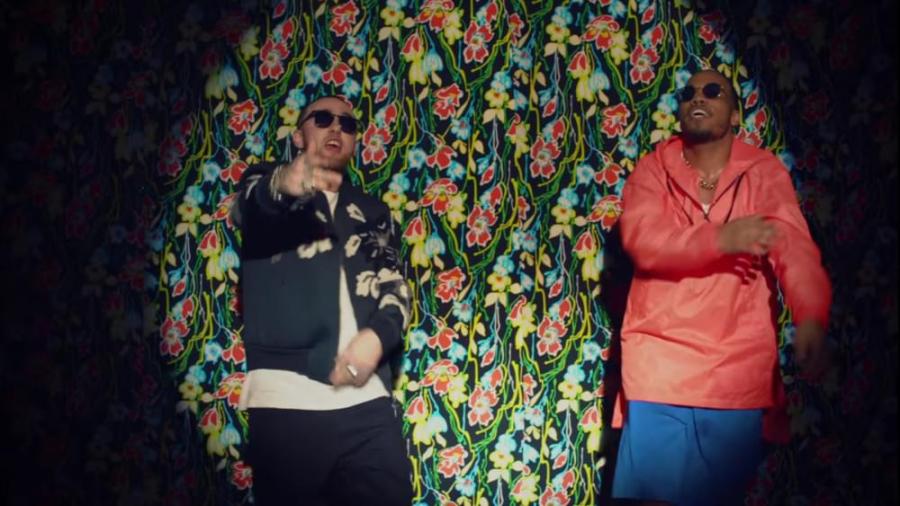
I’ll begin at #100 – “Dang!” by the late Mac Miller, featuring Anderson .Paak. The untimely death of Mac Miller (born Malcolm James McCormick) was one of the more heartbreaking and unfortunate losses suffered by the music industry over the past decade. Born and raised in Pittsburgh, Pennsylvania, Miller was a musical genius of sorts, learning to play the piano, guitar, drums, and bass by the age of six. As he entered his teens he decided he wanted to be rapper, and started recording and releasing mixtapes at 15, becoming prominent in the city’s hip hop scene. By the time he reached 21, he was presented a key to the city by the mayor of Pittsburgh, and had a day named in his honor. He was such an amazing talent who produced an impressive catalog of music by the time of his death at 26, and we can only imagine what more great music he would have given us.
The first single from his fourth studio album The Divine Feminine, “Dang!” is ear candy from start to finish, featuring not only Miller but also the wonderful Anderson .Paak to sweeten the mix. Over a thumping retro-soul groove and shimmery synths, .Paak delivers the hook in his smooth, soulful croon: “I can’t keep on losing you / Over complications / Gone too soon / Wait, we was just hangin’ / I can’t seem to hold on to, dang!” Then Miller enters the scene, delivering his flow with swagger tinged with just enough vulnerability to reveal his consternation over the fragile state of his relationship. Initially boasting of his sexual prowess: “Yeah the dick ain’t free, I don’t give no fucks”, he later concedes love ain’t so simple: “Can’t concentrate, you always on my brain. If it’s love then why the fuck it come with pain?”
The sweet, colorful and sexy video produced for the song is superb.
Ronnie the Bear is the music moniker of Joshua Rukas, a talented and charismatic young singer/songwriter and musician from Grand Rapids, Michigan. He’s also a member of the punk/emo rock band MUSCLEMAN, as well as a former member of alt-rock band Dancing On Pluto, who I reviewed a couple times prior to their splitting up in August 2018. On September 9th, he released his stunning debut single “Do You Feel That?“, the first track from his forthcoming EP.
Josh composes, performs and produces all his own music, as well as the mixing and mastering, and I must say he’s done a masterful job (no pun intended) with “Do You Feel That?” Starting with a languid, seductive synth bass beat, he skillfully layers a lush array of shimmery and grainy-textured synths, accompanied by gorgeous chiming guitar notes, then bathes it all in just enough reverb to create a dreamy, atmospheric soundscape that carries us off to an enchanting faraway place.
He has a smooth and warm singing voice, and his somewhat echoed vocals are really lovely and soothing, perfectly complementing the song’s atmospheric aura. Halfway through the song, he briefly transitions to rapping a verse of lyrics, pulling it off quite nicely. Then, during the final minute, his vocals are electronically altered, giving them an otherworldly feel that enhances the song’s overall dreamy vibe. I love it!
The song seems to be about living life to the fullest and in the moment, being independent and free to make your own decisions, and unafraid of what the future might bring:
It might be time to shake things up a littleNo longer feel the danger I'm just trying to feel myself a little So glad I'm on my own I think I want to dance just for a little Not a care if it's been raining I'll leave my shoes behind and let my body be my guideI'll get by I'm just strolling through life
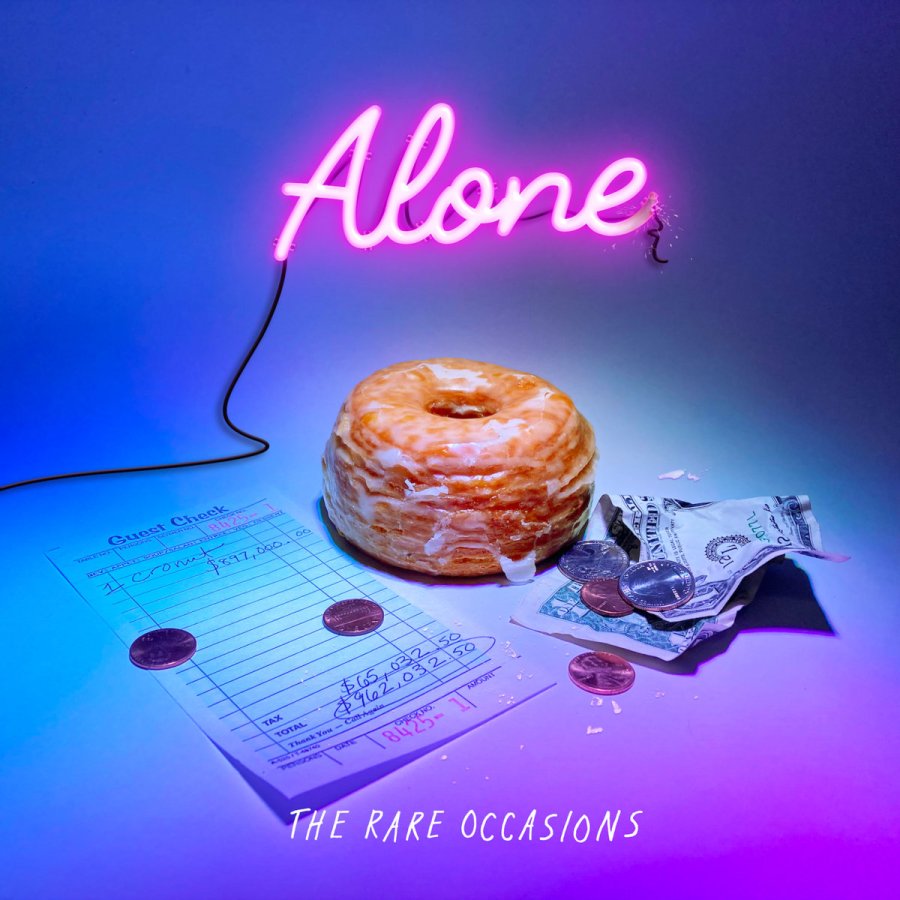
I recently got a notification in my inbox for the new single “Alone” by an indie rock band called The Rare Occasions. Being the dutiful music blogger that I am, I gave it a listen and liked it so much that I started delving into their impressive music catalog. Well, I’m happy to report that I love their music and am now a big fan. Fashioned with colorful melodies, sparkling arrangements, exuberant instrumentals and endearing vocals, but with contemplative and often biting lyrics, their songs are immediately memorable and deeply addictive. It’s not surprising they have a sizable following; their song “Notion” has been streamed over 1.7 million times on Spotify, with another six of their songs garnering between 100,000-800,000 streams.
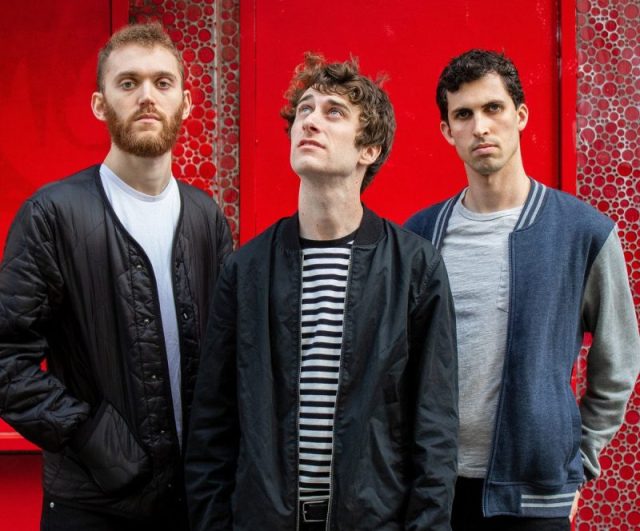
With origins in Providence, Rhode Island and now based in Los Angeles via Boston, The Rare Occasions was formed by childhood friends Brian McLaughlin and Luke Imbusch after they moved to Boston to form a band. They soon met bassist Jeremy Cohen and guitarist Peter Stone, and with McLaughlin on vocals and Imbusch on drums, their lineup was complete. In 2013, they released their debut EP Applefork, then followed up a year later with Feelers. Their song “Dysphoric”, one of the tracks from Feelers, won the ‘Song of the Year’ award in the John Lennon Songwriting Contest. They released more singles and a third EP, the wonderful Futureproof, in 2016.
Fiercely independent, the band has always recorded and produced all their own music, getting help only with final mastering. Wanting to devote their full energies and earn a living from music by doing studio session work and songwriting, they relocated to Los Angeles in 2017, and would go on to record their exquisite full-length album Into the Shallows, which they released in 2018. After a national tour to promote the album, The Rare Occasions saw the amicable departure of guitarist Peter Stone. Now forced to reinvent themselves as a three-piece, they continued writing and recording new songs featuring, in their own words, “three-part harmonies, wall-of-sound instrumentation, and a pointed sense of cheekiness.”
Since becoming a three-piece, they’ve released three singles, “Control”, “Set It Right”, and their latest “Alone” which dropped September 16th. It’s an infectious, anthemic banger, highlighted by an aggressive foot-stomping beat and explosive instrumentals. The thunderous mix of jangly and gnarly riffs, punctuating by lunging guitar notes, and driven by Jeremy’s powerful buzzing bass line and Luke’s smashing percussion, create an electrifying wall of sound that serves as a dramatic backdrop for Brian’s wonderful plaintive vocals. I especially love the soaring vocal harmonies in the choruses. It’s a fantastic song.
The lyrics are a defiant repudiation of an affluent and controlling parental figure who wants their son to toe the line and adopt their status symbol-based materialistic lifestyle, or face being cut off from the family fortune:
I take time kicking it down the line I don’t know where I’m going where I’m going I think twice before taking your advice ‘cause I can see your ignorance is showing
you say “real estate is what you need a little place beside the sea if you don’t fall in line then you’re no son of mine”
so I swing my shoulder through the thick of it and face tomorrow alone because you own me and I’m sick of it but you don’t own me no more
where’ve we seen this before? the age was gilded; cronuts weren’t to blame your world is purely transactional why don’t you look around and think before you blurt out gems like:
“jewelry is what you want a sterling piece that you can flaunt if you don’t fall in line then you’re no son of mine”
so I swing my shoulder through the thick of it and face tomorrow alone because you own me and I’m sick of it but you don’t own me no more
And here’s a cute video of them performing the song at their virtual release party:
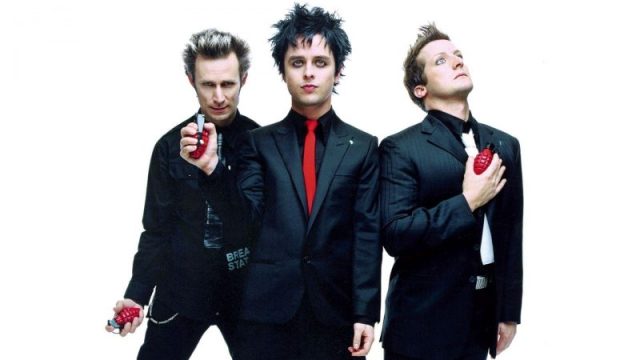
American Idiot is my favorite album by punk rock band Green Day, who also happen to be one of my all-time favorite bands. Their seventh studio album, it was released 16 years ago almost to the day, on September 21, 2004. Since 1990, the three primary members of Green Day have included Billie Joe Armstrong on lead guitar and vocals, Mike Dirnt on bass and backing vocals, and Tré Cool on drums.
American Idiot was a comeback album of sorts for them. Thanks to the massive success of their 1994 breakout album Dookie, as well as follow-up albums Insomniac and Nimrod, Green Day became one of the most popular rock bands of the 1990s. Unfortunately, despite garnering mostly positive reviews, their 2000 album Warning was a commercial disappointment. By 2003 they were experiencing internal strife, as well as beginning to feel like “elder statesmen” of the pop punk scene, even though they were then only in their early 30s.
They’d spent much of 2002 writing and recording songs for their next album to be titled Cigarettes and Valentines, but the demo master tapes were stolen from the studio (they were eventually recovered). After consulting with their longtime producer Rob Cavallo, the guys decided to scrap the old material and start fresh on a new project, with the goal of writing their best material yet. They also decided to use louder and heavier guitars for the record. For a story in a June 2005 issue of Guitar Legends, Armstrong told Alan DePerna: “We were like, ‘Let’s just go balls-out on the guitar sound—plug in the Les Pauls and Marshalls and let it rip’.”
Each band member began crafting their own 30-second songs in a kind of competition. In an interview with Entertainment Weekly, Armstrong recalled, “It started getting more serious as we tried to outdo one another. We kept connecting these little half-minute bits until we had something.” These bits would become the nine-minute long suite “Homecoming” consisting of five connected songs. They went on to write another nine-minute long suite, “Jesus of Suburbia”, also featuring five connected songs.
Armstrong then wrote the title and opening track “American Idiot” in response to the American public’s patriotic support of the Bush Administration’s war against Iraq. He was not only infuriated by the war itself, but also angered at how the mass media orchestrated support for the war by sowing paranoia and idiocy among the public through their news broadcasts. His anger carried over to the aggressive riffs and explosive percussion they employed on the track. That song, combined with the two suites they’d written, led to a change in the direction of the album, with the guys viewing the songs more as chapters or movements in a larger work. They decided to make it a concept album, also titled American Idiot, addressing sociopolitical issues of the day, and in a format they would call a “punk rock opera.” The title track was the first by Green Day to chart on the Billboard Hot 100, peaking at a paltry #61, however, it would spend six weeks at #1 on the Alternative chart.
For the creation of the album, Green Day drew inspiration from other notable rock operas such as the Who’s “Tommy” and “Quadrophenia” and David Bowie’s “The Rise and Fall of Ziggy Stardust and Spiders from Mars”, as well as the Broadway musicals West Side Story, The Rocky Horror Show, Grease, and Jesus Christ Superstar.
American Idiot explores the disillusionment and dissent of a generation that came of age in a period shaped by traumatic events like 9/11 and the Iraq War, and essentially follows the story of Jesus of Suburbia, a lower-middle-class suburban American teen, raised on “a steady diet of soda pop and Ritalin.” He hates his town, his family and everyone around him: “Everyone is so full of shit! Born and raised by Hypocrites.” He eventually escapes to the big city. His story is laid out in the nine-minute long “Jesus of Suburbia”, a hard-driving punk-infused suite consisting of five songs: “Jesus of Suburbia”, “City of the Damned”, “I Don’t Care”, “Dearly Beloved” and “Tales of Another Broken Home.”
Following the “Jesus of Suburbia” suite is “Holiday”, a protest anthem inspired by the Bush Administration’s invasion of Iraq. To a powerful driving beat, Armstrong emphatically rails against the neo-conservatives who pushed for war and their strategy of pitting one group against another. According to Armstrong, the chorus’s refrain – “This is our lives on holiday”— was intended to reflect the average American’s ambivalence of the issues of the day, and is spoken from the point of view of Jesus of Suburbia, who’s now high from endless partying in the big city.
The song immediately segues into “Boulevard of Broken Dreams”, a fantastic and bleak song described by Armstrong as the “subsequent morning after hangover”. He wrote it to describe the feelings of loneliness he sometimes felt during his time living in New York. The incredible musical arrangement with scratchy, tremolo-laden guitar set to a constant, mesmerizing beat, and accompanied by Armstrong’s almost mournful vocals, create a strong sense of isolation and disillusionment. One of my all-time favorite songs, “Boulevard of Broken Dreams” ranks #3 on my Top 100 Songs of the 2000s list. It peaked at #2 on the Billboard Hot 100, making it Green Day’s most successful song in the U.S. It also topped the Alternative chart, spending an astonishing 16 weeks at #1, and the Adult Top 40 chart, where it spent 11 weeks at #1. The song was awarded a Grammy for 2005 Record of the Year, and was the ninth-highest-selling single of the decade, with worldwide sales exceeding 5 million.
The second character introduced in the story is St. Jimmy, a badass “suicide commando that your momma talked about / King of the 40 thieves and I’m here to represent the needle in the vein of the establishment.” The third is Whatsername, introduced as a nemesis of St. Jimmy in the song “She’s a Rebel”: “She’s a rebel, she’s a saint / She’s the symbol of resistance and she’s holding on my heart like a hand grenade.” St. Jimmy and Whatsername represent the album’s underlying theme of “rage versus love”, with St. Jimmy turning out to be the rebellious and self-destructive facet of Jesus of Suburbia’s personality, explained to him by Whatsername in the song “Letterbomb”: “The St. Jimmy is a figment of your father’s rage and your mother’s love.” In choosing a more righteous path forward, Jesus of Suburbia eventually causes the figurative suicide of St. Jimmy. The album’s final song “Whatsername” touches on the passage of time, and that Jesus of Suburbia has lost his connection with Whatsername as well. He remembers her fondly but can’t recall her name.
The most poignant track on the album is “Wake Me Up When September Ends”, a beautiful and moving song written by Armstrong to convey his feelings of loss for his father, who died of cancer when Armstrong was 10 years old. The song seems like an outlier, in that it doesn’t directly relate to the rest of the album’s tracks or narrative, although the video made for the song addresses the loss of soldiers deployed in the Iraq War, so there’s that tie-in. The song also came to be used as a memorial to the victims of the 9/11 attacks, and in an independently made video, the song was used by a blogger to symbolize the aftermath of the Hurricane Katrina disaster. The guitar work is especially good on this track.
American Idiot is Green Day’s most successful album, selling more than 16,000,000 copies worldwide, and charting in 27 countries, reaching #1 in 19 of them. It spawned five successful singles: “American Idiot”, “Boulevard of Broken Dreams”, “Holiday”, “Wake Me Up When September Ends” and “Jesus of Suburbia”. Its success inspired a Broadway musical and it has appeared on several lists of the best albums of the year and the decade. In 2012, Rolling Stone ranked it #225 on their 500 Greatest Albums of All Time list, and Kerrang named it the best rock album of the 2000s, and 13th best of all time. I would place it among my 20 favorite albums of all time.
Given the ongoing fear-mongering by the media, increasingly intense political divisiveness, and chronic stupidity of the American public, American Idiot remains quite relevant in 2020.
Strangely Alright is a wonderful and wildly-entertaining psychedelic-punk rock band based in Seattle-Tacoma, Washington. Referring to themselves as an “Eclectic Traveling Minstrel Magic Music Medicine Show”, they’ve built a loyal following not only through their great music, but also for the positive messages of humanity, love, kindness and acceptance in their songs. Their quirky and unique style of punk-infused rock is inspired by such iconic British artists as David Bowie, T.Rex, Pink Floyd, the Jam, Suede, the Buzzcocks and Supergrass. The band is fronted by Regan Lane, who does much of the songwriting and sings lead vocals, Sean Van Dommelen (lead guitar, backing vocals), Ken Schaff (bass), Raymond Hayden (keyboards, backing vocals) and Jason Bair (drums).
They’ve released a number of recordings over the past several years, including their debut album The Time Machine is Broken in 2013, as well as a compilation album All of Us Are Strange (The Singles) and an EP Stuff, both of which were released in 2018. Since then, they’ve dropped a number of terrific singles, one of them the brilliant and trippy “Psych Film”, which has been streamed nearly 75,000 times on Spotify. The song has also spent the past four months on my Weekly Top 30 list, peaking at #4. (You can read my reviews of Stuff and “Psych Film” by clicking on the links under “Related” at the end of this post.)
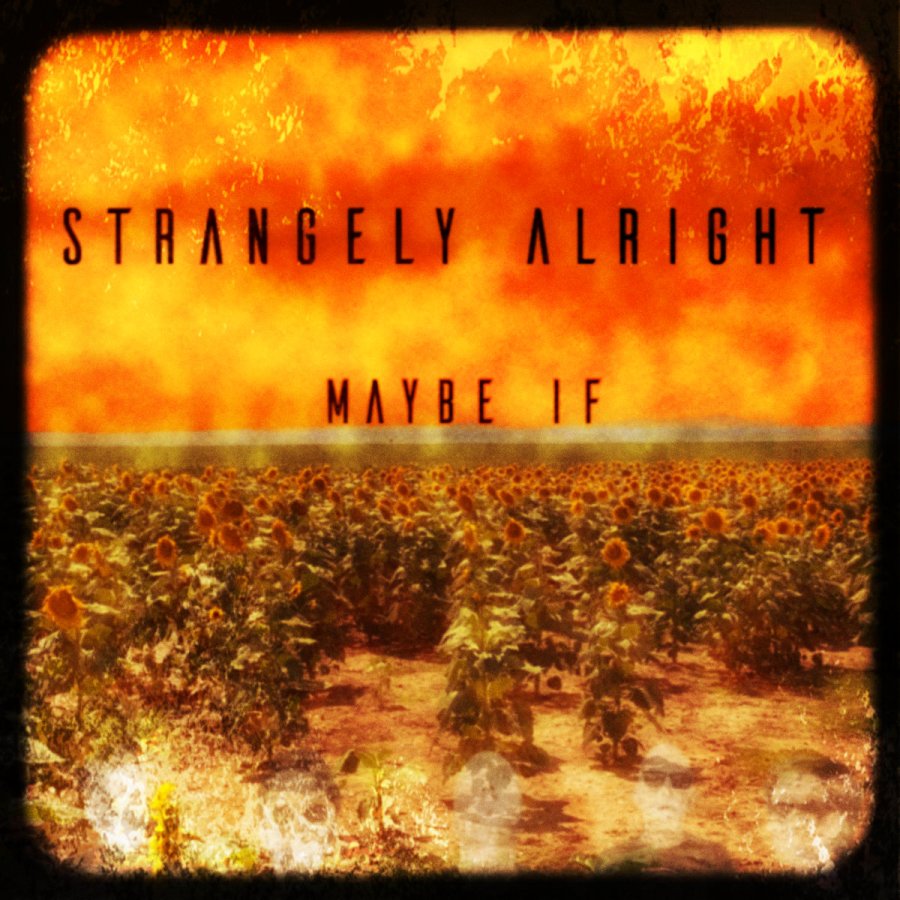
Now Strangely Alright returns with their marvelous new single “Maybe If“, a beautiful song of hope, love and gratitude. About the song’s message, the band states “In a world of pointing fingers, we have decided to look inside for the answers. And let’s be kind! It matters in ways we often never see.” Running nearly eight minutes long, the song has an epic, otherworldly feel reminiscent of some of Pink Floyd’s music. The intricate guitar work is fantastic, alternating between jangly, chiming and grungy textures, and accompanied by sparkling piano keys, measured percussion, and a colorful mix of spacey and sweeping orchestral synths. It all comes together beautifully to create a dreamy cinematic backdrop for Regan’s wonderful Bowie-esque vocals.
Feeling like an alien Who fell and landed here Maybe if I face my pride The answers will be clear Maybe if I ride a cloud Into the sun my darkness disappears
Everything I never had I’d give it all away If I have to steal a smile I’ll wear it for the day If I have to tell where I have been I have to sell there’s nothing left to win
Maybe If I look inside I’ll see the things I’ve always tried to hide
Maybe everything I have Is everything I need And I can’t control the world outside And I hate who I can be If I lose control will I disappear And will I fade away to the nothing In the mirror
Galaxies of brokenness that fabricate what I have missed Peculiar thoughts I died when I was young Can’t escape what might have been The atmosphere is getting thin I’m out of gas Maybe If
Maybe If my gratitude is greater than my faith If I see myself in everyone will I share a little grace And I want to trust all the things I see And I want to feel just a little peace There’s a million no’s deep inside of me If I let em go I just might end up free
Strangely Alright hit the ball out of the park yet again with “Maybe If”, further cementing their reputation for putting out stellar tunes with the power to both dazzle our senses and stir our souls.
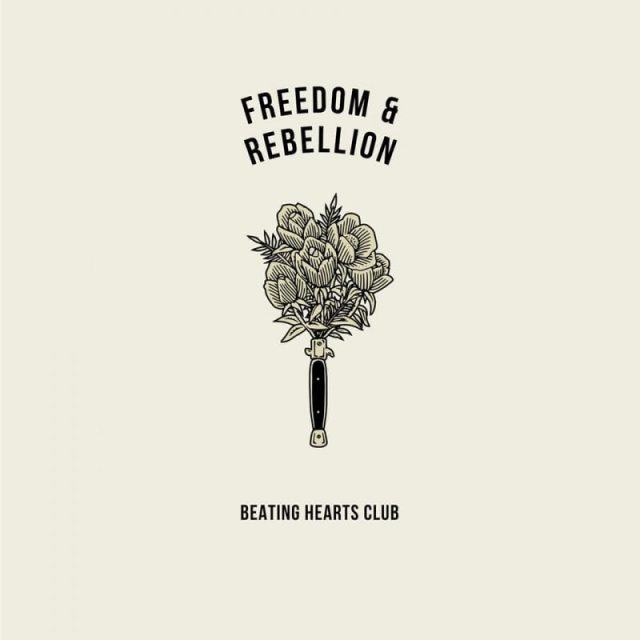
One of the benefits (and challenges) of being a music blogger is discovering lots of music by an ever-expanding number of indie and up and coming artists, more than I could possibly ever write about, let alone listen to it all! There’s a surprising amount of real talent out there, and I’ve had the pleasure of writing about quite a few artists and bands who are making some truly great music. And every now and then, one comes along that stands out among the crowd, such as Australian folk-rock band Beating Hearts Club. Since learning about them this past April, they’ve become one of my favorite indie bands. I’ve already featured them twice on this blog earlier this year, when I reviewed their singles “Black & White Love” and “Round the Bend” (you can read those reviews by clicking on the links under “Related” at the end of this post). I’m now pleased to review their stunning debut album Freedom & Rebellion, which drops today, September 18th.
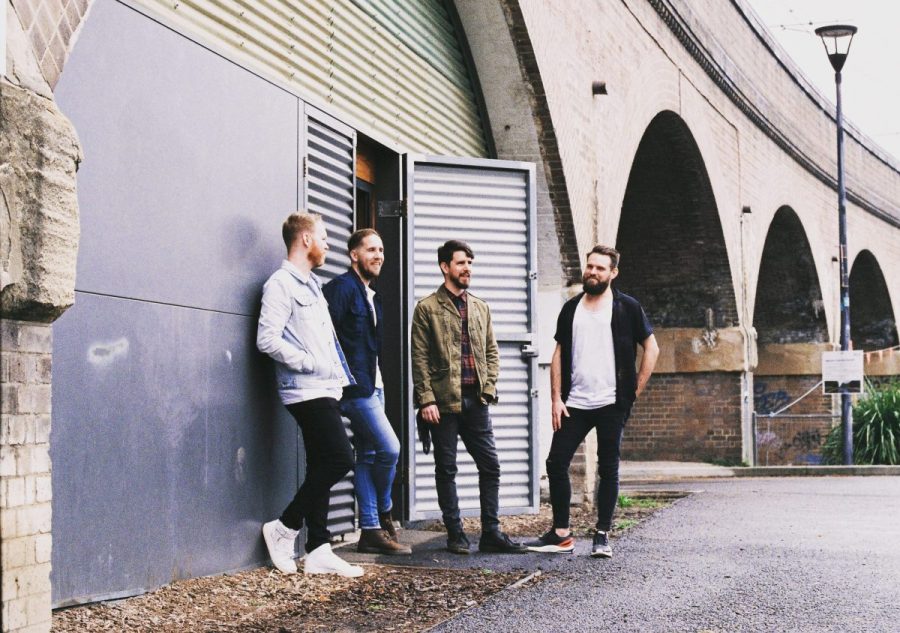
Based in Sydney, Beating Hearts Club is comprised of Duncan Welsh (lead vocals/rhythm guitar), Ciaran Loughran (lead guitar/backing vocals), Lukas Thurner (bass) and Trent Miller (drums), who joined the band a few months ago after their previous drummer left. With their shared love of rock, folk, country and blues, the talented foursome create exceptional music characterized by beautiful melodies, stellar arrangements and intelligent lyrics, and delivered with superb instrumentation and Duncan’s sublime vocals.
As suggested by the title, the album’s theme seems to be about the ups and downs of love and relationships, and the eternal struggle between wanting freedom and wanting to belong to someone. The album opens with “Heroin“, the very first single the band released back in April 2019. It starts off as a gentle ballad, with Duncan’s earnest vocals accompanied by strummed and chiming electric guitars as he sings to a loved one who’s saving him from falling into a downward spiral: “You are my heroin, a shot to the veins / You’re my therapy, you’re the cure.” Then the song expands into a full-blown rocker, with rapid-fire riffs of reverb-soaked guitars, humming bass and thumping drums. Duncan’s vocals rise to the occasion, become more impassioned in their urgency, and Ciaran’s blistering guitar solo in the bridge is fantastic.
Next up is “Black & White Love“, a gorgeous love song that instantly became one of my favorites of the year. I love it so much it’s spent the past four months on my Weekly Top 30, recently going all the way to #1. The instrumentals are stunning, with some of the most achingly beautiful guitar work I’ve heard in a long while. Duncan’s plaintive vocals are lovely and heartfelt, and when the music builds to an anthemic crescendo in the final chorus, I’m covered with goosebumps. The moving lyrics speak of how finding true love in the right person can be a force for healing in our sometimes broken lives: “Could you be the reason? You know I need you, Seen my last chance die but I’m still breathing / Do you feel what I’m feeling? You know I need you shook me upside down and I saw meaning.”
When I didn’t think the guys could top “Black & White Love”, along comes “Crying Wolf” and I’m quickly blown away. What a magnificent song this is, with lush, intricate guitar work and beautiful layered vocals. I also love the mournful organ riff in the outro that gives the song a country rock vibe. The lyrics are about being stuck in a dysfunctional relationship with a partner who constantly complains and threatens to leave, but never does: “Thought I’ve heard, heard it all before / You got me shook, shaking to the core / Why am I the subject, why am I the cries? / Well everybody knows you’re the one who made you cry.“
Beating Hearts Club are adept at making both hard-rocking bangers and gentle ballads. A great example of the former is “First Sight of the Rain“, a dark rock’n’roll song about a romantic partner who’s afraid of commitment and wants to bolt from the relationship at the slightest hint of a problem: “You’re running from yourself, it’s you who won’t make a change and no one else / You gave it all to me, then turned and ran away.” The exuberant, hard-driving rhythms and fuzz-coated guitars that break into a scorching solo in the bridge are sensational. Likewise, “Homemade” and “Round the Bend” are rousing folk-rock tunes with resonant jangly guitars and galloping drum beats, punctuated by terrific guitar solos, pummeling drumbeats and ample flourishes of wildly crashing cymbals that make for a lively and highly satisfying listen.
Turning to the ballads, one of my favorite tracks is “Freedom Pt. 2“, a lovely Americana song with strummed acoustic guitar, beautiful piano and strings, and is that a didgeridoo I hear in the background? I may be way off, but the lyrics seem to speak of a man who’s been released from prison, and facing his newly-found freedom with some apprehension: “Heaven knows that I’ve paid my dues / Bring back a feeling, I forgot to use / And from here we’re going wherever I might choose / I know, it’s gonna take a lifetime.” “Olivia” is an equally beautiful song of love and devotion, highlighted by gorgeous strummed guitars and sparkling piano keys.
As the album continues to unfold, it’s clear these guys can do no wrong, as every track is perfect. I’m sounding like a broken record, but on “The Reaper“, the intricate guitar work is spectacular, and when combined with the organ at the beginning and the mournful piano later in the song, the results are breathtaking. Special mention must also be given to Lukas for his wonderful bass line that gives the song such incredible depth. Album closer “Stockholm” is a hard-rocking song about being in an unhealthy, co-dependent relationship similar to Stockholm Syndrome. I love the frantic riffs of grimy guitars and strong, driving beats that nicely convey a sense of tension expressed in the lyrics: “Stockholm Syndrome’s got a hold of me / She takes me down and she won’t let me breathe / I don’t believe in anything I see.”
What more can I possibly say to gush any further about this beautiful work of musical art? Freedom & Rebellion is easily one of the best albums I’ve heard this year, and I love every one of its tracks – something that doesn’t happen very often. It’s an impressive debut from this extremely talented band, and they should be very proud of their magnificent accomplishment.






 ECLECTIC MUSIC LOVER