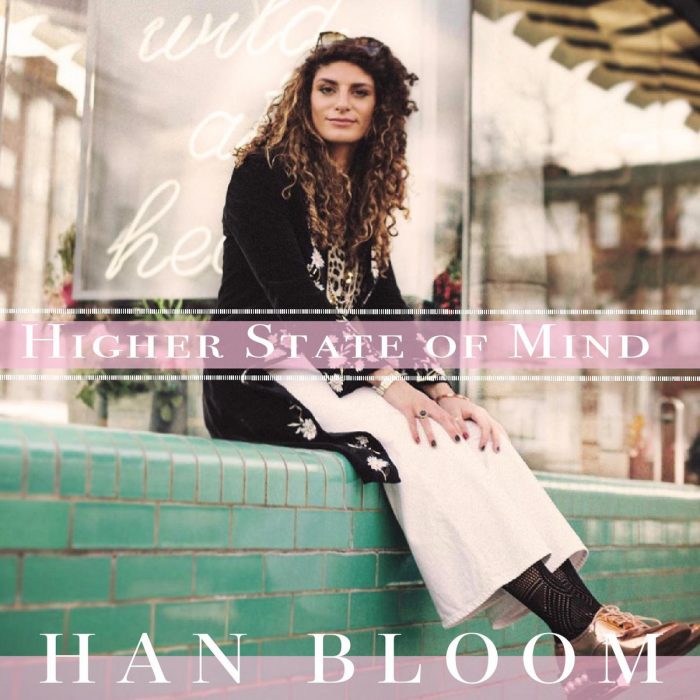
HAN BLOOM – Album Review: “Higher State of Mind”

Han Bloom Higher State of Mind

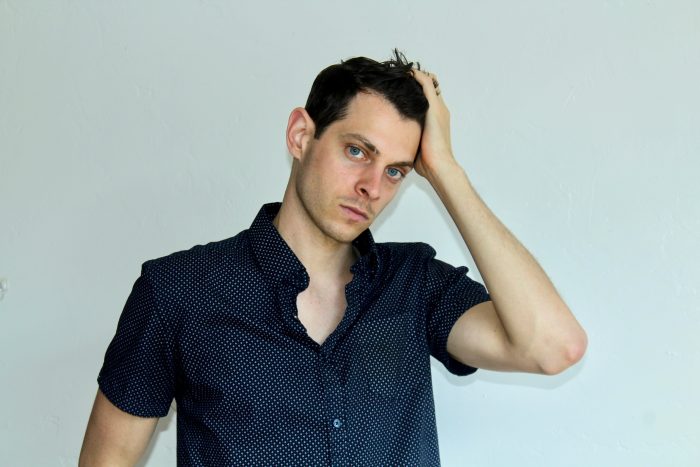
Han Bloom is a classically trained pianist, composer and singer-songwriter based in London, England. Strongly influenced by modern jazz, progressive rock and experimental music, she uses her classical training to musically explore themes of interest to her such as society, politics, culture, ideology, conformism and big brother, among others. In her bio, she states that she “always strives to be as original and free thinking as possible. Creativity is the answer.” Sounds like a winning combination to me.

With that in mind, Han recently released her ambitious debut album Higher State of Mind, which dropped on May 1st. She wrote all music and lyrics, played piano and all other keyboards, programmed all instruments (other than the drums that were played on some tracks by Eddie Van Dorgen), sang all vocals, and produced, mixed and mastered the entire album herself (with the exception of one track “Free Me Now”, which was produced by Harry Powell). With 13 tracks and running an hour in length, there’s a lot to listen to, but I’ll touch on the songs that really clicked with me.

The album opens with “Bach Got Funked Up“, a fascinating instrumental track that fuses contemporary classical, modern jazz and experimental elements. Employing an array of ominous wobbly and spacey synths and jazzy piano chords, Han creates a trippy and mysterious soundscape that whets our appetite for what’s to come. Next up is “Burn“, a bewitching track that starts off quietly, with distant sounds of storms accompanied by the most delicate of keyboard synths. As her low-key, quirky vocals enter, the tempo changes to a toe-tapping beat, with jazzy piano, organ, cool synths and gentle percussion. I like the whispy little ‘whoosh’ snare sounds she uses to convey a feeling of water being softly poured onto a smouldering fire.

Blasphemy” resonates strongly with me, as I like Han’s biting lyrics touching on the hypocrisy that so often exists in religion and democracy: “Don’t tell me with your shit decree, excuse my Christianity. Don’t tell me about blasphemy, when you don’t know how to live in peace. Don’t tell me with your shit decree, about democracy, cause you don’t know nothing about me. But it don’t matter, so I won’t shatter, But they don’t listen, so I keep on living in sin, gladly.” I really like the song’s cool, jazzy grooves, and the deep synth bass,  moody piano keys and tapping percussive beats that make it a great listen.

One of my favorite tracks is “Finer Things“, both for it’s great tongue-in-cheek lyrics and mellow, jazzy vibe. Han’s conversational-style vocals and nimble piano work give the song a fun, casual quality that makes it sound like a live recording of a performance you’d hear in an intimate little nightclub. In fact, I think her music style is well-suited for that format, and it would be fun to see her perform live. About the song, she says “‘The Finer Things’ is a disposable comedic tribute to Frank Zappa that utilises the ridiculousness and profound impact of ‘influencers’ and ‘influence culture’, and the subsequent snowflake generation that it resonates with.”

I love the lines decrying influence culture and the fact she’s doesn’t quite measure up to their shallow definition of success: “Hello, my name is Hannah Bloom, and this song is about the death of influence culture…hopefully. I wanna shop at Liberty, but they welcome me bitterly, ’cause I ain’t got no money. I’m sorry, ’cause in my disposable song, don’t get me wrong. I like the finer things and I sure do love the joy that it brings. I love Pucci, Emilio Pucci…so much better than Gucci. So tutti frutti, but instead I’m wearing Tom Sweeney, which is for men.” Exasperated, she later asks “Can somebody please explain to me what an influencer is? “Cause in my mind it just makes sense that they’re professional beggars. And a lot of people would say the same thing about musicians. And they do say the same things. But we actually do stuff, and we’re just undervalued, whereas influencers are like super valued in society. And it’s like please stop making our generation stupid and meaningless.” I couldn’t agree more!

On “Free Me Now“, Han uses a greater electronic approach and somewhat darker tone to address the subject of addiction. In her notes about the track, she states that she developed the song’s framework off a Korg Tribe drum pattern machine she’d been experimenting with. She then layered delicate piano and organ keyboards to create an enchanting soundscape for her airy vocals. About the song’s meaning, she explains: “Lyrically it depicts a prior relationship with addiction that I needed to express in a raw and free form; hence the experimental instrumentation found in this track.” Her blunt lyrics get straight to the point: “I have an obsession. Addiction, yeah. My mind is imprisoned. Loneliness is not your friend. Free me now. You gotta let me out. Free me now. I don’t wanna be a burnout.

On the moody “These Games” – which Han says was inspired by the George Orwell classic 1984 – she rejects the expectations and ethical wrongs of social conditioning practiced by Western societies, pressuring us to conform to a specific set of social norms, and leaving us often feeling like our lives are unfulfilled. Han croons “So she goes to work for the man. Hiding his sweet lies, pulling the wool over their eyes. She says ‘I don’t know why I do it. And I don’t know how I do it. But I need to survive’. / So he says he stayed at work late today. Hiding his bitter lies. Wasting his own time, and he knows he’s not right to do it. But he just can’t say no ’cause money’s his goal. / And I see it happening every single day. And I don’t know why they play these games with themselves.” The song has a languid, piano-driven melody, with delicate synths, subtle organ notes, and Eddie Van Dongen’s gentle percussion.

My absolute favorite track is album closer “Light and Love (Coda)“, a stunning eight-minute-long instrumental that really showcases Han’s impressive compositional and piano-paying talents. She weaves a rich tapestry of ambient and glittery atmospheric synths, then adds vibrant piano keys to create a breathtaking contemporary classical piece that can easily hold its own among the works by many of today’s classical composers. I would love to see her put out an entire album of this kind of instrumental music.

I’ll be honest that it took a couple of plays for this album to grow on me, as the melodies are more experimental and free-form than typical pop, folk or rock music, requiring a more careful listen to fully appreciate its many nuances. I love when artists fuse multiple elements and genres into their music, and I applaud her courage to experiment with her sound and create a style uniquely her own. If you like music that strays from the conventional, with more contemporary, experimental and progressive jazz, pop and rock vibes, delivered by some really superb piano work, then you will enjoy Higher State of Mind.


SOFT SHELTER – EP Review: “Judgment Day”

Soft Shelter EP Art

Soft Shelter is a singer-songwriter, guitarist and music producer from Southern California who writes pleasing indie dream pop songs laced with alt-rock, psychedelic, pop and electronic elements, and featuring thoughtful lyrics. Since the release of his first single “Ashes” last November (2019), he’s been a busy guy, dropping a new single or EP every month or so. In March, he released his single “Anticipation”, and now returns with his second EP Judgment Day, featuring “Anticipation” and two new tracks written during the COVID-19 quarantine.

He states that the EP is sort of a loose trilogy, with rather moody songs that still contain a certain optimism toward the future: “I tried to understand what it means to be an individual within a community during a global pandemic.” He wrote, performed , sang, produced and mixed the songs. Mastering was done by Matt Pereira (aka KOMAK).

Soft Shelter2

The first track, “Anticipation,” was written during the early stages of the COVID-19 outbreak, and it’s title is an apt descriptor for the growing anxiety of the period. Soft Shelter states that the song “speaks to the anxious feeling that accompanies the anticipation of a crisis and the weird sensation of questioning whether it’s paranoia or legitimate.” The song is beautiful, with warm, shimmery synths and gentle percussion, over which he and fellow musician Noah Kastenbaum have layered beautifully strummed guitar notes. It all creates an enchanting backdrop for Soft Shelter’s ethereal vocals, which rise to a lovely falsetto in the choruses. The xylophone at the end is a nice touch.

Dead Metaphors” touches on how languages evolve over time, with word meanings going from literal to figurative, and trying to stay optimistic: “Time to hit stop and rewind. Dead metaphors don’t stay behind. We too can rise again. Let’s just say when.” The song has a languid sort of hip hop beat, with piano, programmed drums and gnarly electric guitar being the dominant instruments. I like how he makes the music shudder just before the second chorus, like hitting stop, rewind and play on a tape machine.

The third track “Judgment Day” was inspired by the writings of French philosopher Albert Camus, who Soft Shelter admires. He explains that the lyrics “attest to feeling lost and looking for guidance, which is often the case when people look to religion or philosophy or any ideology for meaning or support. We have to work toward uncovering our blind spots and the things that prevent us from seeing clearly.” This is beautifully articulated by the lines “It sure feels like judgement day. Tell me what the wise men say?  In the end, perhaps we’ll find all the things that made us so blind. Will anything be the same?

Musically, the song has a pleasing synth-pop vibe, highlighted by resonant piano keys, crisp percussion and electric guitar. As always, Soft Shelter’s velvety smooth vocals are captivating. The track ends with an excerpt from Camus’s Nobel Prize speech, in which he calls attention to how artists require beauty but also are uniquely tied to their communities: “True artists hold nothing in contempt; they oblige themselves to understand, rather than judge.”

It’s gratifying to see so many artists using their imaginations and creative talents to write relevant and topical music during this unfortunate virus quarantine, and Soft Shelter’s Judgment Day is another shining example of this. He will also be donating 50% of all sales of his EP on the Bandcamp music site to food banks.

Follow Soft Shelter on Instagram
Stream his music:  SpotifySoundcloudApple Music
Purchase:  BandcampGoogle Play

SURRIJA – Album Review: “Surrija”

Surrija Albumcover

This past January, I introduced my readers to Surrija, the music project of the hyper-talented singer-songwriter Jane Lui, when I reviewed her marvelous single “Nothing Love”. The song was the lead single of her self-titled album Surrija, which dropped April 3rd. Born and raised in Hong Kong, and now based in Los Angeles, Lui began studying classical piano at the age of five, and that traditional training, combined with her love for the music of artists like Tori Amos, Kate Bush and Björk, helped shape her unique sound and music style. She has a gorgeous and unusual singing voice, and uses it almost like another instrument in her arsenal, seducing us with tender whispers one moment, then startling us with a feral urgency the next.

Recording under her given name, Lui produced three studio albums between 2004 and 2010, along with numerous singles and covers, which you can find on her SpotifySoundcloud, and YouTube pages. Despite her success, however, she felt constrained, and wanted to make music that more closely reflected what she refers to as her “slightly feral tendencies.” It was with this new approach that Lui rebranded herself as Surrija. In 2016 she spent time in Barcelona, Spain, where she initially found inspiration from Picasso’s artistic output during his own years spent living there. But eventually, she became fascinated instead with his famous lovers and muses who he kept in the shadows, often preventing them from realizing their own potential. Wanting to tell their story, she began researching about some of them and writing songs for what would become her debut album Surrija. As a concept album, Surrija is a complex and remarkable work, with a lot to unpack. Not being a musician, I approach this review with a bit of trepidation, as I hope to adequately articulate at least some of its many nuances.

The first album cut and lead single “Nothing Love” actually predates her time spent in Barcelona, as it was written in 2013. The song – and the entire album actually – is a musical feast for the ears, with an impressive array of instruments, synths and sounds. Starting with a foundation of stuttering dubstep beats, Surrija and her team of musicians layer a rich and colorful kaleidoscope of sounds and textures to create a dramatic and rather chaotic soundscape that thrills and surprises at every turn. Surrija plays the Moog synthesizer, electric organ, piano and mellotron, Matt Chamberlain plays drums, mixed percussion and modular synths, Maxwell Gualtieri plays electric guitar, Sophocles Papavasilopoulos plays piano and clarinet, and Christine Tavolacci plays the enchanting flute that’s one of the song’s highlights for me. Lui told the webzine Clout: “‘Nothing Love’ is about the kind of heartbreak that hurts so much it feels absurd”, and her fervent vocals most definitely convey that kind of emotional intensity.

Surrija and gang
Albert Chiang, Surrija, Maxwell Gualtieri & Sophocles Papavasilopoulos

Next up is “Barcelona“, one of my personal favorites on the album. Like most of the tracks, it was co-written by Lui and Albert Chiang, and while the lyrics are ambiguous to me, the song’s arrangement and Surrija’s captivating vocals are incredible. The song starts off almost tentatively, with wobbly industrial synths set to a slow dubstep beat as Surrija’s softly croons. Subtle keyboards and haunting guitar notes enter as the song builds, soaring to a dramatic crescendo in the chorus as she passionately sings “I’ll be waiting in Barcelona”, covering me in goosebumps.

A number of songs are named for Picasso’s paintings, muses or lovers, the first of which is “Sylvette“, which is also the title of Picasso’s 1954 painting of a young woman with a pony tail. The model for the painting was a young French woman named Lydia Sylvette David, who worked in a pottery studio near Picasso’s studio. Finding her appearance appealing, he ultimately created 40 works inspired by her. It’s been said that she was an inspiration for actress Brigitte Bardot and the Roger Vadim film And God Created Woman. Now 85, Lydia starting drawing to pass the time while she sat for Picasso, and became an artist in her own right. (Wikipedia) Musically, “Sylvette” has a throbbing synth-driven dance vibe with funky guitars and sharp drumbeats. Surrija’s soulful vocals remind of a bit of Madonna on this track, which actually sounds to me like a song Madonna could have sung in the 90s.

Minotaur” is inspired by Picasso’s fascination with the mythical creature, which was a prominent and recurring motif in his artwork from 1928-1958. The bull is a significant element in Spanish culture, representing power and strength, as evidenced in the rituals of bullfighting and the running of the bulls. For the online art webzine Widewalls, art critic Balasz Takac observed that Picasso “apparently perceived himself as the Minotaur, a creature of huge physical power and sexual energy, which suited his need for expressing the male principal in all of its glory. He somehow saw the battle in corrida through the prism of his own relationships with women. On the other hand, it is also important to point out that the bull is a rebellious and durable animal eager to resist the attacker, which is relevant in the light of Picasso’s political engagement and reaction on the rising Fascism in the 1930s.”

I may be way off, but the lyrics “Behind the terror where the gentle lives / Breathing heavy always counting on the scars and open wounds / She knows those lilies and nightlight” seem to speak to how one of Picasso’s lovers would deal with him in the context of his identity as a Minotaur.

Another favorite track of mine is the enchanting “Dora“, highlighted by beautiful violin, deep, resonant piano keys, and Surrija and Albert Chiang’s exquisite vocal harmonies. The song is named for French photographer, painter and poet Dora Maar (aka Henriette Theodora Markovitch), who had a tempestuous affair with Picasso from 1935-43 (even though he was still somewhat involved with his previous lover Marie-Thérèse Walter). He painted many portraits of her, often depicting her as a tortured, anguished woman, which she did not appreciate. The most well known of these portraits is “The Weeping Woman.” Her sentiments are vividly expressed in the lyrics: “You introduced me to your war / I learned a lot keep folding it in / Take care of the dark / Knife between the roses on the table top / The blood I kept and promised / Like a dream come true / You’re a dream come true.

Serial philanderer and overall louse that he was, Picasso dumped Dora for his next lover Marie Françoise Gilot, with whom he had a stormy affair from 1943-53, and subject of the song “Gilot“. She was also an accomplished artist, but her professional career was eclipsed by her involvement with Picasso. After they split up, he discouraged galleries from showing or buying her work, and tried to block the publication of her memoir Life with Picasso. (Still alive at 98, she later married Jonas Salk, developer of one of the first polio vaccines.) “Gilot” has a harsher, lo-fi sound, with a skittering dubstep beat and spacey synths, highlighted with some somber piano keys. With breathy, ethereal vocals, Surrija softly laments as Gilot, coming to terms with Picasso’s shortcomings and finally choosing to move on: “You could be here with history waiting / Keep still for a moment / ‘Cause I know you and all you want to take / I see you through your loops and endings / Sweet wreckage awaiting / It’s hard but i will walk away.

Turnstile Hostile” seems to address Picasso’s penchant for having a revolving door of lovers, and his mistreatment and ultimate discarding of them: “Turnstile hostile temperamental / We lined up for your blows / Arms up gun point my anger hollowed / Can’t feel the quiet it’s time to go.” The gnarly synths, gritty bass and punchy drums create a discordant vibe that suits the biting lyrics. “Semibelieve” is a rather haunting, ethereal song with ambient psychedelic synths, delicate piano keys and distant sounds of crickets. I can’t figure out what the lyrics are about, but Surrija’s soft, breathy vocals are lovely as she sings them.

Mercy Street” is a beautiful and haunting cover of the song written by Peter Gabriel that originally appeared on his 1986 album So. Though unrelated to the subject matter of the other tracks, it seems to fit the album’s overall theme quite well, The album features two brief instrumental tracks, the first of which “She Learned to Not Be Scared” consists of a pensive but lovely piano melody accompanied by ambient sounds of rain and thunder, broken at the end by sounds of a tape recorder being turned on with some entirely different music playing before being abruptly shut off. The second is “H.U.M.“, which is essentially 30 seconds of deep synth bass.

The album closes with the beautiful piano ballad “Almost Time“, a bittersweet song that seems to speak to broken relationships and the pain they leave in their wake: “Well it’s almost time / Maybe you’ll get lucky / At least in my mind / No answers for I know I’d lose / But i can say ‘least I tried so I can hide.” The only sounds we hear are Surrija’s captivating piano and vocals that start off tender and heartfelt, then rise to an impassioned plea in the chorus that brings chills.

Surrija is a brilliant and innovative work, and one of the most fascinating albums I’ve heard so far this year. Though each track can stand on its own, I think the album should be listened to in its entirety from beginning to end to fully appreciate its beauty, power and nuance. Surrija and her fellow musicians have crafted a stunning work that should make them all quite proud.

Connect with Surrija:  Facebook / Twitter / Instagram
Stream her music:  Spotify / Soundcloud / Apple Music
Purchase: Google Play / cdbaby

New Song of the Week – COUNCIL: “Savages”

Council Savages

I’ve been following New York alternative rock band COUNCIL for the past four years, and have featured them on this blog a number of times, beginning in 2016 when I reviewed their debut EP Rust to Gold, and most recently in June 2019 with the release of their single “Born Ready”. (You can check out those reviews under “Related” at the bottom of this post.) Through their signature sweeping melodies, bold instrumentation and anthemic choruses, COUNCIL’s dynamic sound has been compared to Imagine Dragons. Their magnificent life-affirming single “Rust to Gold” received worldwide acclaim, including being played at the opening ceremonies of the 2018 Winter Olympics and the FIFA World Cup, as well as on American Idol, So You Think You Can Dance, World Of Dance and Premier League. It’s been streamed more than 7 million times on Spotify, and ended up on my list of 100 Best Songs of 2017.

Council3

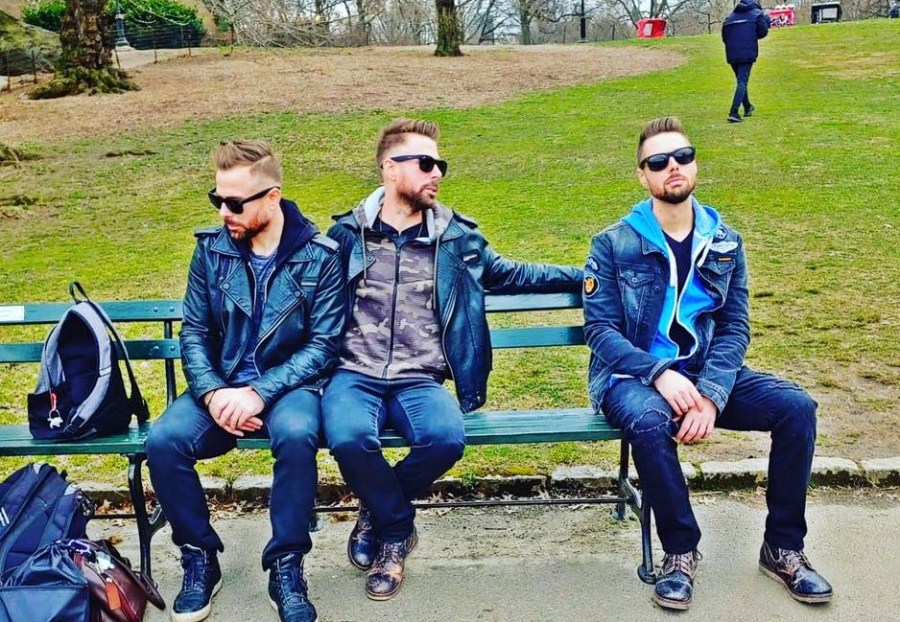
COUNCIL is comprised of three strikingly handsome brothers – Patrick, Doug and Andy Reeves. Patrick (bass and lead vocals) and Doug (drums) are twins, and Andy (guitar) is a year younger. Raised on a farm in rural upstate New York, they now split their time between tending the family farm and working on their music in New York City. The guys have just released their latest single “Savages“, which I’ve chosen as my New Song of the Week.

It’s a darkly beautiful and grandiose anthem, highlighted by a complex mix of dramatic industrial synths. The track opens with spooky synths and haunting plucked guitar notes that set an ominous tone. The music then expands with sharp percussive synths, deep bass and thunderous echoed reverb sounds that add a palpable sense of tension and foreboding. The instrumentals are really spectacular, and the finest of any song COUNCIL has done thus far.

The lyrics speak of a couple for whom the love that originally brought them together has turned into hate and acrimony for one another. Patrick fervently laments that they now behave like savages to each other, his vocals soaring to a passionate wail in the chorus.

All the plans that we made were just a lost cause
It’s like we turn a parade into a death march
A dirty angel landed on my shoulder
She said be calm and let the drums take over
I’m just trying to blow these ashes into sparks
We live like savages, savages…oh oh, savages!

Header photo by Jennifer Burgess

Connect with Council:  Website / Facebook / Twitter / Instagram
Stream their music:  Spotify / Soundcloud / ReverbnationApple Music
Purchase it:  iTunesGoogle Play

DEBRIS DISCS – Single Review: “We Never Die”

Debris Discs is the solo music project of British singer-songwriter James Eary, former front man of Manchester, England alternative dream pop band Coves & Caves. Last October, I featured his first single “Animals“, and now he’s back with his third release “We Never Die“. It’s a beautiful and poignant song that touches on the notion that love is a powerful and enduring component in the cycle of life. The song is part two of his hope and survival themed audio triptych, the first of which was his previous single “Daniel and the Apocalypse”, which he released in January.

Eary states that the song was inspired by a visit to his grandparent’s memorial bench on a windswept day on the Northwest English coast. “‘We Never Die’ is an attempt to find comfort in the despair of loss. It tells the story of lifetime lovers so entwined they reach their end of days in tandem. They search for solace in the legacy they leave behind and a love that burns in perpetuity. It’s a message to each other and their families that this is not the end. There are no goodbyes.

“We Never Die” is an enchanting dream pop gem, fashioned from a rich palette of swirling glittery synths, subtle guitar chords and gentle percussive grooves. Debris Discs skillfully incorporates all these musical elements into a lush, sweeping backdrop for his sweet vocal harmonies, resulting in an achingly beautiful track that captures the power and romance of an enduring love. He has a marvelous singing voice that registers in the higher range, just below a falsetto, and it’s positively sublime on this track.

It’s ok we never die
They keep our dreams
And our names they engrave in aluminium
On a park bench plaque
For all to see
Who we were, what we did, where we’ve been

Muscles knotted
All our words forgotten
Milky eyes, milky eyes
We’ve come too far
So now we wait for stars
And no goodbyes, no goodbyes

It’s ok we never die
No eulogy
Just a spark, flickers free from the embers
To illuminate and help them see
Who we were, what we did, where we’ve been

Connect with Debris Discs: Twitter
Stream his music:  Spotify / Soundcloud / Apple Music
Purchase:  Bandcamp / Google Play

Erki Pärnoja – Album Review:”Leva”

Erki Parnoja LEVA album art

Though the vast majority of artists and bands I’ve featured on this blog have been from the US, UK, or Canada, I always enjoy writing about ones from other nations. In the past week or so, I’ve featured a band from Malta and a music producer from Luxembourg, and am now thrilled to introduce my very first artist from the Baltic nation of Estonia: the astonishingly talented songwriter, composer, producer and multi-instrumentalist Erki Pärnoja. Based in the capital of Tallinn, Pärnoja plays guitar, bass, keyboards and synthesizers, and creates some of the most exquisite instrumental music I’ve heard in a very long while. Using an impressive array of instruments and textures, he weaves lush, dreamy soundscapes that envelop us in layers of shimmery atmospheric gossamer. Seriously, his music is fucking gorgeous!

He’s been recording and releasing music for the past five years, beginning with his late 2015 debut EP Himmelbjerget. He followed that EP with two stunning albums, the guitar-dominant Efterglow in 2017 and more synth-oriented Saja Lugu in 2018, both of which I’ve immersed myself with over the past several days. The track “Ranna I” from Saja Lugu has been streamed more than 2.3 million times on Spotify. All three works are exceptional, and I highly recommend that my readers check them out on one of the music streaming platforms listed at the end of this review.

Now Pärnoja is back with a glorious new album Leva, which dropped on February 12. His previous works have all been instrumental-only, however with Leva, Pärnoja for the first time introduces lyrics and vocals on some of the tracks. Also, while still delivering his signature enchanting melodies and dreamy soundscapes, he now injects a more orchestral perspective, along with more exotic elements that give the album a fresher, more eclectic feel.

The album was recorded in Gothenburg, Sweden in early 2019, and features a number of guest musicians. In addition to Swedish producer/keyboardist Filip Leyman and Danish drummer Ulrik Ording (Pärnoja’s loyal collaborators since his debut album) are Estonian singer-songwriter Anna Kaneelina, Swedish marimba player Love Meyersson, and the string quartet Prezioso. The striking artwork for the album cover was painted by Estonian artist/photographer Riina Varol, and incorporated into a beautiful cover design by Estonian artist Helmi Arrak. Pärnoja has written wonderful little explanations for each of the seven tracks on Leva that provide insight into his creative process, and enable us to more fully understand and enjoy each song. I will quote or paraphrase from them in my own discussions of each track.

The title of the opening track “Maa” is the Estonian word for “land” or “country”, and serves as an introduction to the album, both musically and conceptually. Pärnoja explains: “The whole album is about living and the different lives people lead, and that we can’t really get a look into other people’s worlds. The song gradually reveals a view into one world. It starts off as a harmless dreamy waltz, and moves with baby steps into this vast open field with all the space and possibilities in the world.” His words perfectly describe how the instrumentals and dreamy synths gradually expand into a lush soundscape like a field bursting into color with the first warmth of Spring. Although primarily an instrumental track, he uses his voice almost like an instrument with his lovely ambient background vocals.

The gorgeous Middle-Eastern infused “Fatigue” was inspired by the music of Algerian band Tineariwen, which Pärnoja first heard around ten years ago. It happened to be playing on the sound system in a second hand store in Toronto he walked into, and he immediately loved it. The use of what sounds like a zither or oud, along with Moroccan castanets. give the song it’s enchanting Middle-Eastern flavor. Parnoja states that the song is a kind of tribute to Tineariwen that came to him in one big rush. “The dreamy state symbolizes a need for something more or something better, and the continuous loops are the circles that always try to catch us and take us back to their cycles.”

The title track “Leva” is positively stunning, with layers of strummed guitars, backed by enthralling strings that give the song a haunting, otherworldly feel. The lyrics are in Estonian, a language closely related to Finnish, and beautifully sung by Pärnoja and his wife Anna Kaneelina. Nearly seven minutes in length, “Leva” almost sounds like two different songs, and in fact, the first time I listened to it on my smart phone though earbuds, I thought it was two separate tracks. The first part, which is more gentle and melodic, seems to end at 4:07, then two seconds later the music starts back up with a heavier, electric guitar-driven sound, deeper bass, stronger percussion and more passionate vocals.

About the song, Pärnoja explains: “This is most certainly the song that started it all. It holds the essence of the whole album. It became clear to me that even if you are content with your life, and if everything seems to be in order, you can still be going in circles and not be moving on in life. It might just be that you’re in the same place as you were years ago, and it’s only minor details of your life that have changed. I realised that I want to live more and better and make good use of my time.”

Here’s a lovely acoustic performance of “Leva”. For this version, Pärnoja and Jonas Kaarnamets played guitar, Pärnoja and Anna Kaneelina sang vocals, Peedu Kass played acoustic bass, Kristjan Kallas played drums, and Prezioso played strings.

Island” is a fairly simple, breezy track constructed with recurring cycles of loops, augmented with charming twangy guitars and lots of abstract sounds that convey a sunny, windswept sense of freedom. It’s a wonderful song that just makes me feel hopeful and happy. Next up is “Eha“, a beautiful, sweeping track that reminds me of some of the more atmospheric-sounding songs by Coldplay. The song title translates to “dusk” in English, and Pärnoja states it’s “a dreamy cinematic journey dedicated to a present-day soul. It is a story about the search for inner peace and belonging. It is also a wake-up call to one’s self to take a breath and look around.” He adds that “the occasionally atonal strings symbolise the dissonances we have within just before making a decision for a new direction.” His soft vocal croons are sublime, in perfect harmony with the gently soaring synths and strings as if they’re another component in his colorful instrumental palette.

Another standout track for me is the captivating “Soledad“, which is Spanish for “solitude”. The languid song has a slight Latin sensibility, though in no way does it sound like a Latin or Spanish song. The layered strummed guitars and sparkling keyboards are really marvelous, and this time, the lyrics are mostly in English, and sung by Pärnoja and Kaneelina’s enthralling vocal harmonies. Pärnoja explains the meaning behind the song: “The meaning of solitude has changed a lot for me. Once it used to have a negative meaning, but back then I must have mistaken it for loneliness or abandonment. Now in a time when society is seemingly social to the extreme, I came to re-evaluate the meaning of the word. There is a big contradiction to this, since hidden behind this big socially-connected world, there are a lot of people that are lonely, and not at peace with themselves. Loneliness makes them reach out to another world. ‘Soledad’ is a hymn to solitude – the only place where I personally can grow and make peace with myself.

The artful and compelling video for “Soledad” was produced and directed by  Kärt Hammer, and stars Edgar Vunš as the dancer who interprets the song through his passionate yet graceful movements.

The final track “Saudade” actually has a more pronounced Spanish guitar, which Pärnoja beautifully strums throughout the song. At first, all we hear is his guitar, then he begins to sing in a mournful yet beautiful chant, backed by what sound like his own vocal harmonies. The music gradually grows more animated and the vocals more impassioned as swirling synths are added to create a sparkling, cinematic soundscape. Parnoja states that this track sums up the album, and that the title is basically untranslatable, but represents “the presence of absence. It is a longing for someone or something that you remember fondly, but know you can never experience again.” I’ve experienced such human encounters and moments myself throughout my life, and their memories can elicit intense feelings of joy or sadness.

I feel I’ve used up all the superlatives I can think of to describe Leva, but folks, this is a magnificent work of musical art. With only seven tracks totaling 36 minutes of run time, it’s a bit on the short side for an album, however, each track is so exquisite and powerful that it feels almost monumental in scope. With an EP and three albums to his credit, Erki Pärnoja is without question one of the finest composers and producers of ambient instrumental music around today. I love his music and I love this album.

Catch Pärnoja at one of these upcoming shows:

Friday, April 3 – LEVA release show, Korjaamo, Helsinki, Finland
Saturday, April 11 – Südaöine, EELK Tallinna Jaani kogudus ja kirik, Tallinn, Estonia
Saturday, May 2 – Jazz.ee ja Saare KEK LIVE, SAARE KEK, Kuressaare, Estonia
Thursday, May 7 – Jazz.ee ja Rüki Galerii LIVE, Rüki galerii, Viljandi, Estonia
Friday, May 15 – Jazz.ee ja Haapsalu Jazziklubi LIVE, Haapsalu kultuurikeskus, Haapsalu, Estonia
July 3-4 – VÕNGE 2020. Rändav kultuurifestival, Mulgi elamuskeskus, Sooglemäe, Tõrva vald, Valgamaa, Latvia

Connect with Erki: Facebook / Instagram
Stream his music: Spotify / Soundcloud / Apple Music
Purchase: Google Play / Bandcamp

New Song of the Week – TOBISONICS: “All These Things”

Tobisonics All These Things Cover Art

Tobisonics is the music project of Toby Davis, a longtime music producer, composer and writer based in Luxembourg. He’s used his creative vision and talents mixing, mastering or remixing other artists and bands’ music for some time, but more recently, has chosen to create his own solo works. For his first effort, released in December 2018, he teamed up with the theatrical, genre-bending Las Vegas-based duo Fans of Jimmy Century to re-imagine their modwave neo-noir song “Noirstar (Memories of His City)”, which he redubbed “Noirstar (Dark City Edition)”. Giving their song a cinematic synthscape treatment resulted in a dark and sexy track with a slightly menacing vibe that artfully conveys the sense of excitement, titillation and danger inherent in big city life. I wrote a review of the track, which you can read here.  Now he returns with a brand new single “All These Things“, which I’ve chosen as my New Song of the Week.

He states that the song is a bit of a departure for him, as he usually works primarily with virtual instruments and midi, whereas this one is more loop-based and more pop. He provided some background for the song and his inspiration behind it, including an admission that he’s struggled with PTSD, chronic anxiety and depression for years, and only rediscovered music in his mid 30s. “I’d played in bands as a teenager, but hadn’t picked my guitar up for over 15 years. It’s like the depression drowned out the music in me. Once I started seeing a psychiatrist and taking anti-depressants, the music just flowed. I couldn’t have stopped it, if I’d wanted to. I’ve always been pretty open about my depression and anxiety. The reasons that lie beneath, I’m not so open about. I guess that’s where the music comes in.

‘All These Things’ explores a difficult subject matter, but remains a compelling piece of contemporary pop, painted in fiercely percussive tones and an ear-catching vocal hook. It begins as an apparently simple love song, painted in soulful tones and lo-fi beats. The infectious chorus ‘All these things I remember’ arrives early, perhaps nostalgic for a summer love. But as the track unfolds, a darker truth emerges, one that can not be forgotten nor easily escaped: ‘Nobody can stop me, I am running’.”

Tobisonics skillfully employs a colorful kaleidoscope of sultry keyboards, mesmerizing beats and a mix of glittery and spacey looped synths to create a lush and captivating soundscape. As the track progresses, the music becomes heavier and the mood darker, culminating in a stunning crescendo of swirling string synths in the bridge. The previous beat-driven tempo then returns along with the refrain “All these things I remember”, which continues through to the song’s end.

Regarding the bewitching female vocals, which sound to me a bit like an early Madonna, Tobisonics found the right vocals he desired and looped them. Unfortunately, under the terms of their use, he was not allowed to credit the vocalist.

Connect with Tobisonics: WebsiteFacebook / Twitter / Instagram
Stream his music:  SpotifyApple Music
Purchase:  Google PlayAmazon

DUNKIE – Album Review: “Working to Design”

Dunkie Working To Design (front cover)

As a music blogger who’s been at this more than four years, I still marvel at the fact that artists and bands would want me to write about their music. I receive a continuous flood of music submissions every week to sift through, sometimes overwhelming me to the point of despair, but every now and then some of it stands out in the crowd. One such artist is Dunkie, the music project of Welsh singer/songwriter Anthony Price. Hailing from the town of Mountain Ash in the South Wales Valleys, Price has written and recorded songs for many years, and at the end of December (2019), he released his debut album Working to Design. It’s an exquisite and monumental work, featuring 17 tracks exploring the universal subjects of life, love, the passage of time, death and loss, but also healing, hope and rebirth.

It’s a concept album, with songs partially inspired by the books and works of author Richard Matheson, but also an ambitious and deeply personal labor of love. Price has spent the past two years of his life, toiling countless long hours writing and recording the songs and meticulously working to get each track just right, as well as making imaginative videos for a few of the songs. In advance of the album, he released four of the tracks that are featured on Working to Design, beginning with “Can a Song Save Your Life?” in May 2018, and subsequently dropping another single every few months.

The songs were all written by Price and flawlessly produced, engineered, mixed and mastered by Wayne Bassett at Robot Recordings in Aberdare, Wales. Besides Price and Bassett, who played numerous instruments on many of the tracks, more than 30 other musicians and vocalists performed on various tracks, making it a truly collaborative effort on a near-epic scale. Another interesting aspect of the creation of this album is the use of dramatic artwork by Welsh artist Michael Gustavius Payne. The album is dedicated to the memories and lives of many of Price and his family’s loved ones, including some of their beloved pets, one of whom (Flea) is named in a song title.

Just over a year ago, I wrote a piece on Dunkie which included a review of the first four tracks he released, which you can read here. But now that the album is out, it’s a revelation to hear it in its entirety, as it flows seamlessly from one track into the next like a journey through song. The album opens with “∼Introduction∼So Little Time∼“, setting the stage for the musical and lyrical beauty about to unfold over the next one hour and 14 minutes. It’s immediately apparent that Price put an incredible amount of thought and care into creating the stunning instrumental soundscapes for his thoughtful, and sometimes brutally honest lyrics. When he sings “So much to do, so little time. It’s nice to know you’ll wait a while“, we willingly follow him along on this journey.

With 17 tracks, there’s a lot to unpack on Working to Design, and I’ll try to keep my review as succinct as possible – never an easy thing for a detail-oriented writer like me. “The White Hole” has an alt-rock vibe, with layered electric guitars, psychedelic synths and a gentle drumbeat driving the song forward. To my ears, Price’s soft vocals remind me at times of John Lennon in tone and style, only a bit higher in octave. In fact, it sounds like a song The Beatles could have recorded in their later, more experimental phase. The song immediately segues into the lovely “Can A Song Save Your Life?“, an optimistic song about the healing power of music. Price explains his inspiration behind the lyrics: “The concept behind this song is trying to find a little hope; when all really seems a little lost. When the deepest, darkest moment seems to smother over you, when it suffocates you. But then the littlest gesture lifts, the smallest moment lifts, a piece of music, a film or song you love just lifts you.” 

Rabbit Hole” is a poignant song about coming to terms with the agonizing pain of the loss of a loved one. Price wistfully sings: “Tumble and fall, this rabbit-hole is funnel-webbed and soaring. I fear I’ll never reach this endless horror I fold upon myself…  Another pill dissolves; I’m crawling faster to the edge. To the edge for you.” The track has a serene, rather bittersweet melody with gentle guitar, synths and percussion, and the vocal harmonies are really nice.

The beautiful and endearing video shows a large group of family and friends coming together for a picnic to remember a loved one. About the people in the video wearing rabbit masks, Price explains: “I wanted people to be wearing masks. I loved the metaphor of hiding behind many a mask. Oscar Wilde once said ‘Man is least himself when he talks in his own person. Give him a mask, and he will tell you the truth’. The ‘dunkie’ name and music is my mask. So I wanted to represent the mask in these videos. In particular I wanted to represent them by the use of Wintercroft Masks. Each mask is a downloadable PDF template, each mask has to be created individually, and each mask can take about 2-4 hours each to create (longer if you’re me!!). Added here was the decorative design I wanted to include by adding my own song lyrics, in multiple languages (and the entire pages of Crime and Punishment) upon each mask face.”

One of the more musically interesting and lyrically enigmatic tracks is “I Don’t Wanna Die in Minnesota (Part II)“. Though I’m not sure, the lyrics seem to be about not wanting to waste one’s life: “I don’t wanna die in Minnesota. All liberties lost and the walls move in closer. ‘When I need you to jump I’ll give you the order!’ Dead diaries day to day – for how long do I stay? I’m afraid to waste my life down in Minnesota.” “I Think I’ve Been Asleep (All My Life)” is a folk-rock song with a gospel vibe, thanks to the sublime organ work. The lyrics speak to sleepwalking through one’s life, barely connecting with those around you: “Never knew your life, never knew you long. Regretting all the silence now that you’re gone. What a fool to be. Blind faith and empathy.” I really like the soulful guest vocals of Lucy Athey and Cat Southall on this track.

∼Intermission∼an Ode to a Flea∼” is a lovely little song in honor of one of Price’s beloved departed pets. “(W.A.L.L.S.) Within a Little Love Song” is a stunning and heartfelt ode to a loved one, affirming that even though you may not say it as often as you used to, your love for them is as strong as ever: “(You know) yesterday I loved you. (Don’t forget) I have and always will. (But through) the years I spoke it lessened. (Know this) my love’s never subdued. So I’ve found these words to sing and they’re all for you, they’re all for you.” The chiming guitars and soaring vocal harmonies are gorgeous.

I think my favorite track on the album is “Ten“, an enchanting, mostly instrumental song. It opens with sounds of a bird chirping, followed by an acoustic guitar and lovely a cappella vocal harmonies. Gradually, an achingly beautiful flute (played by Tony Kauczok) and cello (by Isobel Smith) enter, accompanied by Wayne Bassett’s delicate piano keys and Price’s lovely falsetto vocals, transporting us to a dreamy state of mind. The only lyric is “I’m just working to design. Perfectly flawed…“, which Price repeats throughout the song. I’m guessing it’s his philosophy for his life, and the overriding theme of the album. The song is so beautiful and moving it brings tears to my eyes.

1896” is an introspective look back at life, family and career, and of choices and decision made, for better or worse: “I’ve been a Father, and I’ve been a Brother. I know now that decisions may have been wrong. I have imploded and I’ve fought with self-control. I’ve seen my children grow. I’ve taken all I can from the love of this band.” The majestic orchestral instrumentals, highlighted by a trumpet played by Charlotte Jayne Goodwin and Mellotron by John Barnes, make this a spectacular song.  “Sugar” is a sweet (no pun intended) love song of thanks to a partner who has stood by you through good times and bad, with unconditional love.

Another favorite track of mine is the haunting “71-41-11“, a deeply moving tribute to Price’s father, who passed away from cancer in February 2015. The song, along with the following track “The Memory Tree“, were an effort by Price to come to terms with his pain and loss, and help him to move forward.  The song’s title consists of the age of his father when he died [71], Price’s age when his father died [41], and the age of his eldest son when his grandfather died [11] – each 30 years apart. The mournful, but beautiful song has an ethereal feel reminiscent of Sufjan Stevens.

A particularly poignant aspect of this song is how Price, through the help of another musician (Scottish musician BigRoundBaby aka Stephen McKinnon, who’d experienced his own grief over the death of his mother), managed to include his father’s voice on the track. Price recalls “During the 60’s I remember my Father and Mother made a spoken vinyl 7” ‘Record’ together when they were first dating.  They went into a portable recording booth and just playfully and awkwardly sang, and coaxed each other to say words into the microphone.  I remember as a teenager listening to the recording, it was very crackle but thankfully my friend was able convert the vinyl recording into a MP3 file. I wanted the song to have my Father’s voice, to keep him close by always, and I wanted it to be accompanied with my own children, his beloved grandson’s, to just create a time capsule moment.” Their voices can be heard at the end of the track. Also, McKinnon played electric guitar, bass and percussion on the track, and along with his daughters, sings backing vocals.

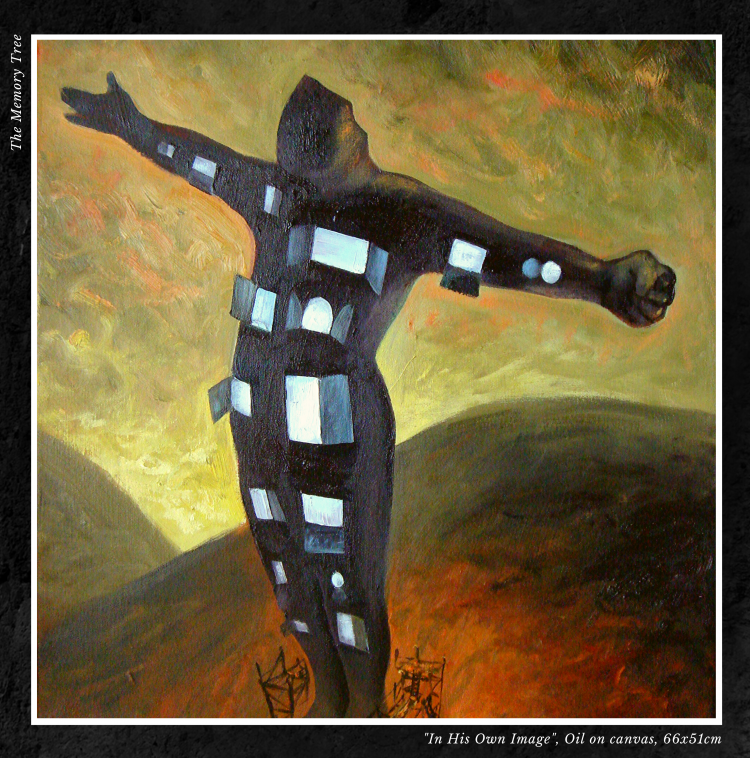
The gorgeous track “The Memory Tree” is a song of celebration about the power of memories, inspired by the book of the same name by Britta Teckentrup – Illustrator. An example of Price’s phenomenal songwriting are these touching lyrics: “From a child… you towered above me. You never once made me feel at all small. You’d fall to your knees, just so I’d feel the same size. And one by one these stories will climb through…A tree made of memories and full of love (for you).”

37 The Memory Tree - Art
‘The Memory Tree’ by Michael Gustavius Payne

The final track “∼Closure∼1972∼” revisits the lyrics of “1896”, only this time told from a woman’s perspective: “I’ve been a mother, and I’ve been a lover. I know now that decisions may have been wrong.” It’s a gorgeous song, with lovely vocals by Jennifer O’Neill Howard, lush piano and mellotron played by John Barnes, acoustic guitar played by Price, an enchanting Glockenspiel played by Wayne Bassett and a stunning choral vocal arrangement by Matt Williams.

I cannot gush enough about this magnificent album. I realize the word sometimes gets overused, but I feel safe in saying that Working to Design is a true masterpiece in every respect. It’s quite honestly one of the most perfectly-crafted albums I’ve ever had the pleasure of hearing. Anthony Price, Wayne Bassett, and all the musicians and vocalists who assisted in the creation and production of this gorgeous work have much to be proud of.

Connect with dunkie on Facebook / Twitter / Instagram
Stream/purchase his music on Bandcamp / iTunes / Google Play / Spotify / Soundcloud

SURRIJA – Single Review: “Nothing Love”

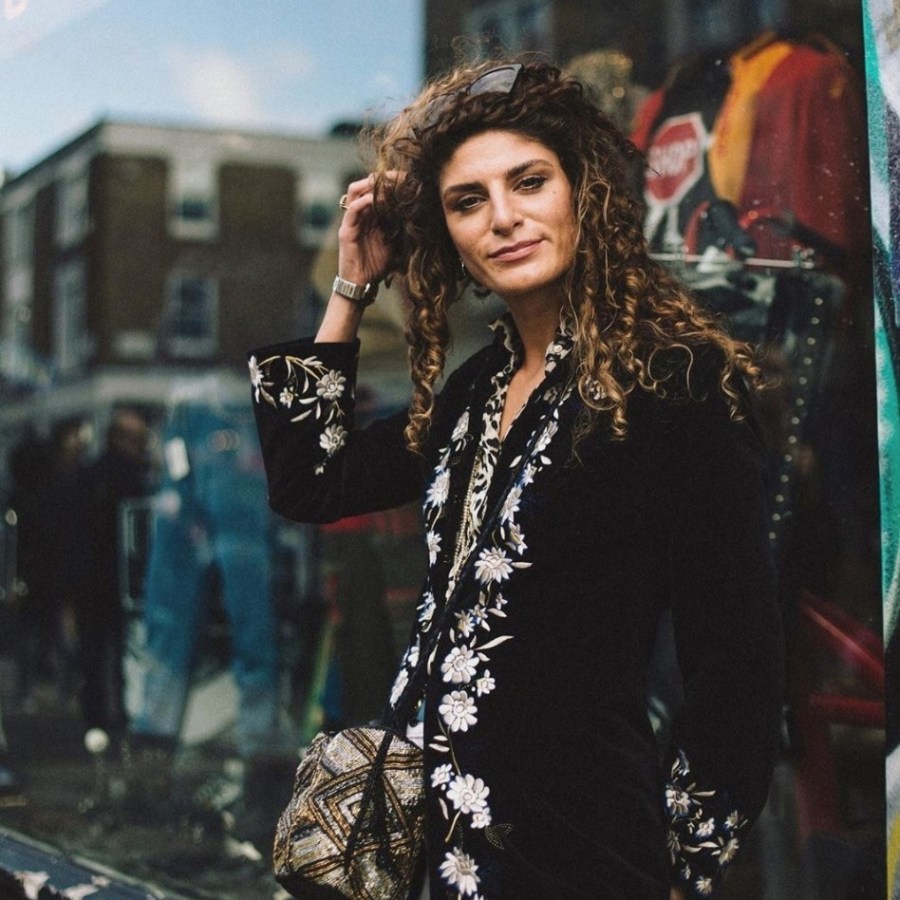
Surrija is the music project of singer-songwriter Jane Lui, a hyper-talented woman with a most beguiling singing voice. Born and raised in Hong Kong, she moved to Southern California with her family when she was 12 and is now based in Los Angeles. She began studying classical piano at the age of five, and that traditional training, combined with her love for the music of artists like Tori Amos, Kate Bush and Björk, helped shape her unique sound and music style. Recording under her given name, Lui produced three studio albums between 2004 and 2010, along with numerous singles and covers, which you can find on her SpotifySoundcloud, and YouTube pages. Despite her success, however, things just didn’t feel right to her. Lui states that she “felt a bit constrained by my YouTube personality, and stopped writing music to get a grip on who I actually was. I had to shed my clinical approach and befriend my slightly feral tendencies.”

Surrija2

It was with this new approach that Lui decided to rebrand herself as Surrija. In 2016 she spent time in Barcelona, Spain, where she was initially inspired by Picasso’s artistic output during his own years spent living there. But eventually, she became fascinated instead with his famous lovers and muses who he kept in the shadows, often preventing them from realizing their own potential. Wanting to tell their story, she began researching about some of them and writing songs for what would become her self-titled album Surrija under her new music project. The album is set to be released on April 3, and the first single in advance of the album is “Nothing Love“, which dropped on January 10.

“Nothing Love” actually predates her time spent in Barcelona, as it was written in 2013. Lui explained the song’s evolution on her Facebook page: “I only wrote two songs in 2013. This is one of them, written in a half-empty apartment that I was moving out of. The walls were so thin in that building that I didn’t play the piano much at all. Back then, songs came on like the flu – I’d feel a scratch of a lyric or line, then it just takes a sneeze and I’ll want to quarantine myself to sweat through the fever. I sneezed that day and spent many days after as the loud obnoxious musician neighbor. I looked at the chicken scratch afterwards and thought ‘Mm. There’s something here.’ Since then I’ve tested this song at shows, we’ve destroyed, reworked, subtracted, multiplied, and overhauled it into what you [now] hear. This is the last song from that time of my life and I think we succeeded in bringing it forward with flying colors.” I think so too!

The song is a captivating musical feast for the ears. Starting with a foundation of skittering dubstep beats, Surrija and her team of musicians layer a rich and colorful kaleidoscope of sounds and textures to create a dramatic, ever-changing soundscape that thrills and surprises at every turn. The array of instruments and synths used are impressive: Surrija plays the Moog synthesizer, electric organ, piano and mellotron, Matt Chamberlain plays drums, mixed percussion and modular synths, Maxwell Gualtieri plays electric guitar, Sophocles Papavasilopoulos plays piano and clarinet, and Christine Tavolacci plays the enchanting flute that’s one of the song’s highlights for me.

Surrija has a gorgeous singing voice, which she uses almost like another instrument to seduce us one moment, then startle us with a feral urgency the next. I found myself entranced by the interplay between the lush instrumentals and her vocals. She told the webzine Clout: “‘Nothing Love’ is about the kind of heartbreak that hurts so much it feels absurd”, and her passionate vocals most definitely convey that kind of emotional intensity. The wonderful backing vocals were provided by Albert Chiang, Sophocles Papavasilopoulos, Callaghan Papavasilopoulos and Mano Koolhaas.

Listen to this exquisite song and hear for yourself:

Connect with Surrija:  FacebookTwitterInstagram
Stream/purchase her music:  SpotifySoundcloudGoogle Playcdbaby

MANDALAN ft. CADENCE XYZ – Single Review: “How We Live”

Every so often, I hear a song for the first time that instantly takes my breath away, which for a jaded old music lover like me is a very big deal. That’s the feeling I got when I heard the stunning new single “How We Live” by Mandalan, featuring enchanting vocals by young singer Cadence XYZ. I hit the replay button numerous times, as I couldn’t get enough of it!

Mandalan

Mandalan is the music project of Los Angeles-based musician, composer and producer James Brennan. He’s been recording and producing electronic and EDM music for the past several years, and teamed up with vocalist Cadence XYZ for his latest single, which I think is his best work yet.

Drawing from a colorful kaleidoscope of shimmery synths, Mandalan adds a mesmerizing percussive beat to craft a dreamy, almost exotic soundscape that evokes a sun-kissed faraway place. Then there’s Cadence XYZ exquisite vocals that so beautifully complement the sultry vibe of the instrumentals. Wow, what a gorgeous voice she has, at once sweet yet seductive as she croons of escaping to a paradise where life can be better: “It’s a new day in paradise, an island sure in sight.  The sun is warm as it starts to rise, shining so bright. Silent storms in your eyes, wildfire in your veins, and I’m drowning in love… Come fly with me. Soar across the sea. There’s no turning back, just signs for us to pass. Let it go, let it go, letting it all slip away.”

Check it out for yourself and let me know what you think.

Connect with Mandalan:  FacebookTwitterInstagram
Stream “How We Live” on SoundcloudApple MusicSpotify
Purchase on  Google PlayAmazon