The song at #27 on my list of 100 Best Songs of the 2010s is “First” by Los Angeles-based alt-rock band Cold War Kids. The dramatic and stunning anthem is their second song on this list, the other being “So Tied Up”, which appeared at #64. Released in February 2015 as the second single from their fifth album Hold My Home, “First” was my introduction to the band, even though they’d been putting out music since 2006. It’s their most successful single, spending an incredible 64 weeks on the Billboard Alternative chart, seven of them at #1.
“First” is about a troubled relationship in which both parties are deeply unhappy, and wracked with both guilt and anger toward each other. The intelligent lyrics are particularly compelling: “Flying like a cannonball, falling to the earth / Heavy as a feather when you hit the dirt / How am I the lucky one? / I do not deserve to wait around forever when you were there first / First you get hurt, then you feel sorry.” Musically, the song features a gorgeous chiming guitar line over explosive drumbeats and bold hand claps, creating a magnificent wall of sound for lead singer Nathan Willett’s emotionally-charged vocals. The song brings chills every time I hear it.
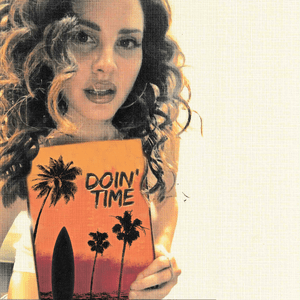
The song at #28 on my list of 100 Best Songs of the 2010s is “Doin Time” by American singer-songwriter Lana Del Rey. One of the best songs of 2019, “Doin’ Time” was the lead single from her stunning and critically-acclaimed sixth studio album Norman Fucking Rockwell, which she co-produced with the equally brilliant musician and producer Jack Antonoff. It’s a cover of the song originally recorded in 1997 by the ska punk band Sublime, which itself samples the great classic “Summertime” from the musical Porgy and Bess, written in 1934 by George and Ira Gerwshin, with lyrics by DuBose Heyward.
Del Rey’s version is faithful to Sublime’s ska vibe, but her signature breathy seductive vocals and shimmery instrumentals take the song to a whole new level, as well as capturing the languid, sultry feel of the original “Summertime”. I love that she kept the lyrics and pronouns exactly as written by Sublime, which describe a cheating girlfriend whose infidelities and poor treatment of her lover makes him feel like he’s in prison. “Me and my girl, we got this relationship. I love her so bad, but she treats me like shit. On lockdown, like a penitentiary. She spreads her lovin’ all over, and when she gets home, there’s none left for me.”
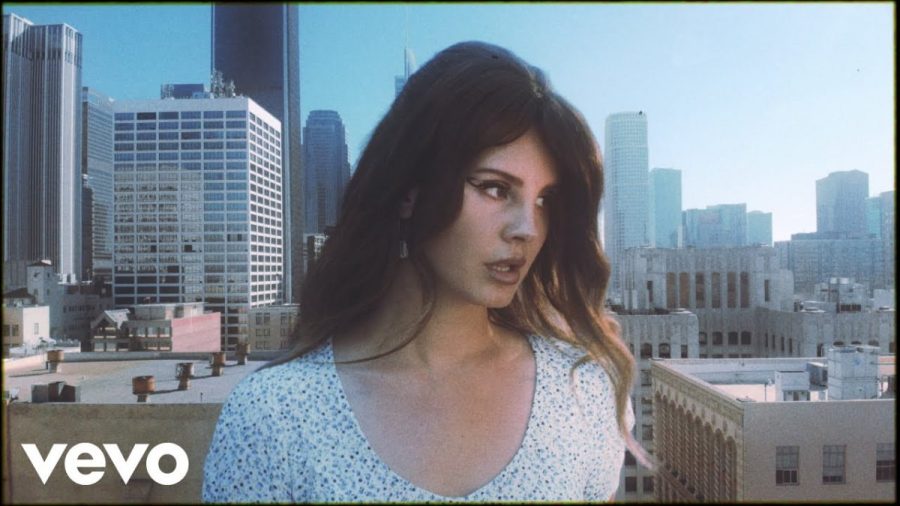
The song received widespread critical acclaim and was a modest hit, reaching only #59 on the stupid Billboard Hot 100, but spent several weeks at #1 on the Alternative chart at the end of 2019. The wonderful video shows Del Rey as a giant woman in an homage to the 1958 sci-fi film Attack of the 50 Foot Woman, roaming the streets of Los Angeles and eventually revealed to be in a movie being shown at a drive-in theater. Lana also plays a character named Lizzy, who catches her boyfriend cheating on her with another girl at the drive-in. The giant woman version of Lana from the movie blows a sandstorm into the audience, then climbs out of the drive-in screen to shake & drop the car the boyfriend and the other girl are in, killing them and exacting revenge on behalf of Lizzy. She and Lizzy give each other a smile, then she climbs back into the movie.
I’ve featured scores of artists on this blog over the past five years, and one of the more interesting and unique among them is singer-songwriter Erin Cookman, who goes by the wonderful artistic moniker Erin Incoherent. Originally from Fort Collins, Colorado and now based in Philadelphia since late 2017, the self-described “singer, musician, poet, writer, mental health advocate, model, artist, makeup junkie, loudmouth and strong woman” is a hyper-talented songwriter, vocalist and guitarist. She’s also a fiercely passionate and outspoken champion for mental health and issues like domestic violence and sexual abuse, topics that often appear in her powerful songs. Erin’s music style tends mostly toward folk/indie rock with strong punk and grunge elements.
I last wrote about Erin two years ago, in December 2018, when I reviewed her album Medusa, a brilliant 11-song manifesto addressing anxiety, trauma and pain. Now she returns with her new album Déjà Vu, which dropped November 30th. The album was co-produced by Erin and Bill Nobes, and recorded and mixed by Nobes at The House of Robot studio in Wrightstown, New Jersey with assistance from Vincent Troyani. Erin sang all vocals and played guitar and bass, with help from a number of musicians, including Chris Olsen on drums and additional percussion, Nikki Nailbomb on cello for “Of Roaches & Roommates” and bass on “25” and “The Fog”, Skelly on upright bass for “Harvestman”, and Joe Falcey on drums for “Of Roaches & Roomates”. The album was mastered by Jason Livermore at The Blasting Room in Fort Collins. Bill Nobes also did the photography and cover art for the album.
With Déjà Vu, Erin continues to explore themes of disillusionment and pain stemming from emotional trauma, the loss of loved ones, and relationships gone bad. She’s a very fine singer and acoustic guitarist, but it’s her unflinching and profound lyrics that impress me the most. Each song is laid out like a deeply personal story told though a lengthy poem, and her lyrics are so good I’d like to quote them all for every song, but will control myself. The opening title track “Déjà Vu“ is a shining example of how she skillfully uses tempo and melodic changeups to reflect the different moods expressed by her lyrics. The song starts off with Erin’s gently-strummed acoustic guitar and soft breathy vocals, then both turn more aggressive and harsh as she coldly proclaims that she’s done with the relationship: “I never wanted all of this / Neglect is cold as snow / And now I don’t care where you went because I’d rather be alone.”
On the bluesy “The Fog“, Erin bitterly laments to a lover whose drug addiction has destroyed their relationship. I like how she uses the words ‘heroine’ and ‘heroin’ in the song to great effect. In one stanza, she sings “And I will never be your heroine / Not for my lack of, lack of trying / You left me, I was broken / No longer, your trophy / Why would I wanna be the habit you’re always kicking?“, then in another almost identical stanza, she sings “And I will never be your heroin…” “The Storm” is a great kiss-off song, with Erin telling the man who broke her heart that he’ll be facing dark times ahead: “And I hope that when the rain comes for you, you’re a little too late, just a little too late to find your way back home / And away you are swept with the hurt, and the pain, and the grief, and the shame that you left me.“
“25“, with it’s chugging guitar-driven melody and Erin’s gentle, heartfelt vocals, has a haunting Americana vibe. The introspective lyrics seem to speak of being overwhelmed by anxiety and self-doubt: “I think I’ve bitten off more than I can chew / I’m scared of dying but I’m scared of living too / I’ve never really felt like I belonged / I don’t feel like people listen, or ever really wanna talk / So now I’m always dreaming of a life that feels like home / Somehow I must make it on my own.” She drastically changes the mood with “Aculeus (The Sting)” a provocative and sensual song that speaks to pansexual desires. First she seductively croons ” Hey, oh yeah, alright boy you’re looking like you want it. Cause I like it hot, I like it cold. Unpredictable and bold / And I think that part of who I am is part of what’s driving you mad.” But then she later sings “…alright girl you know I fucking want you. Cause I like it hot, I like it cold. Unpredictable and bold / My favorite part of who I am.“
Perhaps the most poignant track on the album is “Of Roaches & Roommates“, a heartfelt tribute originally written for her friend Bonnie who died of a drug overdose, but now dedicated to friends Erin has lost to addiction-related struggles, as well as those fighting to remain clean in recovery. “So now we’re smoking in the basement drinking Old Crow / And we tuned up the Ibanez so we could sing every song we know / Cause Bonnie didn’t have to die man but she shot up / Slug said he didn’t have the narcan but we can’t trust that fuck no, we can’t trust him.” With the help of videographer Shad Rhoades, Erin has produced a deeply moving video featuring interviews of people who’ve lost friends or loved ones to drugs, interspersed with footage of her and her fellow musicians Joe Falcey and Nikki Nailbomb performing the song.
The next several songs deal with emotional pain and the struggle to heal and feel ‘normal’. On “The Plan“, Erin resolves to learn to love herself, warts and all: “One day I’m gonna wake up in my someday / Cause if I don’t, I’d rather not wake up at all / The hardest thing that I’ve learned is to love me even though it hurts / Cause not being able to love me just seems worse.” Continuing on a similar vein, the rousing “The End of the World (again)” sees her feeling overwhelmed by self-doubt and wallowing in her emotional pain: “I can’t seem to live my life with consistency, no matter how hard I try, and I don’t know which is worse – Feeling like ‘I shouldn’t hurt’ or living so comfortably with pain, that it’s all I feel, and all I look for.” But then she resolves to not let it defeat her: “No, it’s my turn, give me time / Piss off, I’m gonna be fine Yeah, it’s my turn.” And on the hopeful and comforting “The Edge of September“, she vows to emerge from her mental breakdown as a stronger person: “I’m pinning my hope on the edge of September and praying the payoff’s not too far away / I’m trying to focus and change for the better / Breakdown’s cause breakthroughs, I’m reminded each day.”
“The Coal” seems to speak to the pain each partner in a dysfunctional relationship is going through, with each of them trying to heal without also hurting the other in the process. Erin sings “Maybe it’s your time. Time to fight, time to feel. To do not just what’s right, but what will help you heal / Cause now that the storm has lifted, it’s left you with this view / What the hell will you do?” But then she points out that their actions are detrimental to her own well-being: “And I think you try to make your words hurt. Yeah, I think you like knocking me down. You’re daft if you think that it’s working. You’re not an anchor, I’m not gonna drown. No, nobody ever held me back.”
The track “Harvestman” is a bit of an outlier on the album, both musically and lyrically. The song has more of an ethnic folk vibe, with a jaunty Latin guitar-driven melody and lyrics in both English and Spanish. I’m not certain as to the meaning of the spiritual lyrics, but I’m guessing that the harvestmen is a metaphor for death: “The harvestman comes now for me, as fire greets the stars / And I could not grieve, for silently, I knew just where we’d go.” The forest sounds and chirping birds at the beginning and end of the song are a nice touch. The album closes with “Déjà Vu (Reprise)“, a brief track featuring Erin’s lilting and rather haunting a cappella vocals pondering what it all means: “No, you’ll never get it back / Where you’ve been keeps what you’ve lost / Yeah, there is no real conclusion Are we memories, or thought?” To me, it serves to end things on a somewhat upbeat and optimistic tone, while acknowledging there’s not necessarily a ‘happily ever after’.
I’ll admit that it took me a couple of listens to fully grasp and appreciate this rather intense album, as the melodies aren’t immediately catchy, nor are the lyrics the kind you can quickly sing along to. But once I delved more deeply into those meaningful lyrics, as well as discovered the many nuances contained in the music and Erin’s emotive, wide-ranging vocals, I’ve come to realize that Déjà Vu is another brilliant work of musical art by this amazing storyteller.
The song at #29 on my list of 100 Best Songs of the 2010s is “Bad Bad News” by American singer-songwriter and producer Leon Bridges. The talented Ft. Worth, Texas-based artist is like a breath of fresh air with his throwback R&B style that echoes some of the great soul singers of the 60s like Sam Cooke, Marvin Gaye and Otis Redding. It’s a reflection of my advanced age perhaps, but though most of his songs are mellow and low-key, they excite me because they remind me of so many of the artists and music coming out of Detroit (Motown), Memphis and Philadelphia from the early 60s to the mid 70s that I loved.
“Bad Bad News”, from his second album Good Thing, is fantastic, with jazzy guitar, gorgeous brass, crisp percussion and a deep bass groove set to a soulful, hypnotic beat. Add Bridges’ smooth vocals that go from sensual to plaintive, and the result is sonic heaven. He sings about overcoming others’ lack of faith in him, and making it on his street smarts, honesty and belief in himself: “Ain’t got no riches, ain’t got no money that runs long. But I got a heart that’s strong and a love that’s tall. Ain’t got no name, ain’t got no fancy education. But I can see right through, a powdered face on a painted fool./ They tell me I was born to lose. But I made a good good thing out of bad bad news.”
Though none of Bridges’ songs have appeared on the stinking Billboard Hot 100 nor even the R&B chart – which is a shocking travesty! – both of his albums have made the top 10 on the 200 Album chart, and two of his singles, “Smooth Sailin'” and “Bad Bad News” reached #1 on the Adult Alternative Chart. “Bad Bad News” spent three weeks at #1 on my own Weekly Top 30 in early summer of 2018.
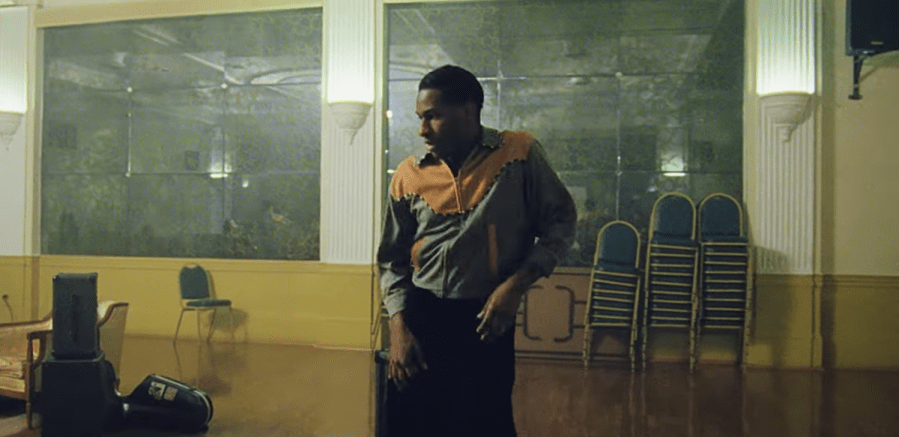
The sexy video for the song was directed by Natalie Rae, and shows scenes of a woman following a man who she thinks whistled at her through an empty underground subway station and out into the streets at night, when she suddenly becomes overtaken by the song’s sensual grooves. Scenes of her are interspersed with footage of Bridges walking into an auditorium where he encounters a group of musicians jamming, and he then dances around them as he sings the song. At the end, the woman finally catches up to the man and silently confronts him before walking away.





 ECLECTIC MUSIC LOVER