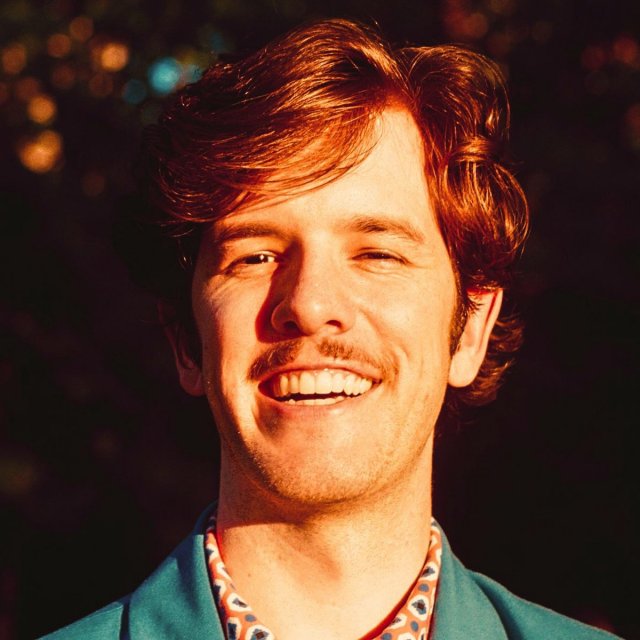
Wise John is a talented, amiable and relentlessly charming singer-songwriter and multi-instrumentalist who’s originally from Southern California and now based in Brooklyn, New York. I learned about him last fall when I read a post on the Audio Mirage Studios blog about his wonderful song “Marry Another Man”, and became in instant fan. I love his pleasing, laid-back style of soulful folk-rock, characterized by memorable melodies, colorful instrumentation, and intelligent, relatable lyrics delivered with his beautiful warm vocals.
Though he’d long had a love of music in his veins, Wise John pursued a career as a computer/aerospace engineer. He still kept one foot in music, however, and in June 2021, released his terrific debut album A Wonderful World. The following January, finally realizing that the life he’d planned out for himself and worked so hard to achieve was making him miserable, he took a leap of faith and quit his engineering job to pursue music as a full-time career. Since then, he’s released more music, played gigs around the New York area, and has continued to build a base of loyal fans.
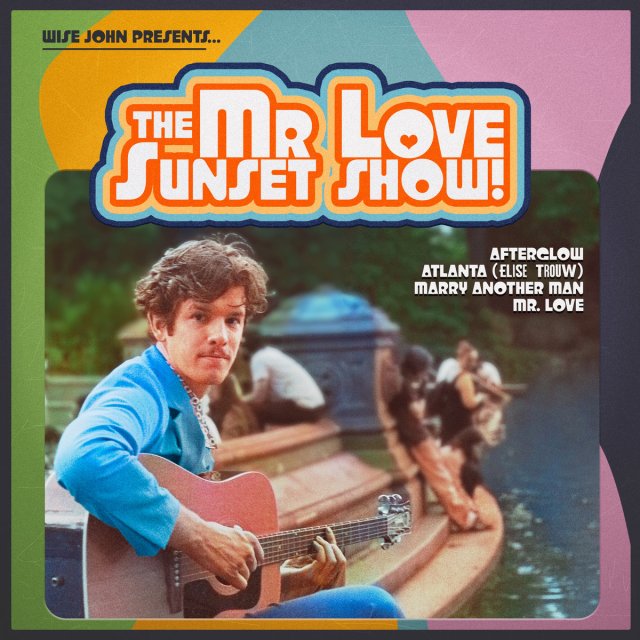
On May 5th, he released a delightful EP The Mr. Love Sunset Show! which he calls “a retro love song EP designed to heal your heart and sharpen your soul, rendering the feelings, failings, and fallings of romance from four very different angles.” Featuring four tracks, the EP was written, composed, and performed by Wise John with the help of producers Quinn Devlin and Alex Strahle, mixed by Sahil Ansari, and mastered by Joey Messina-Doerning. The various songs feature contributions from an array of guest musicians and vocalists, including Elise Trouw on vocals and drums, Daniel Chae on strings, Kumara Robideau on bass, Shaun Valentine on drums, Quinn Devlin on bass, drums, piano, electric guitar, alto saxophone and percussion, James Wyatt Woodall on pedal steel, Andy Shimm on bass, Dylan DeFeo on organ, Justin Garcia on guitar, and Keara Callahan, Berit Bassinger, Daniela Silva on backing vocals.
The first track “Afterglow” is a lovely but sad song, with bittersweet lyrics about falling for someone who’s not interested in becoming involved in a committed relationship “You made me say I wouldn’t get confused. It’s only play, I shouldn’t feel so used. A love vacation, a toy you didn’t choose to sleep with. Feeling sick in the afterglow.” The arrangement and instrumentation, highlighted by Daniel Chae’s achingly beautiful strings, create an enchanting backdrop for John’s incredibly vulnerable croons.
“Atlanta“, with captivating dual vocals by Wise John and Elise Trouw, tells the true story of how John’s parents got married. Elise sings from the perspective of John’s mother who, frustrated by his father’s (who was then her boyfriend) inability to commit to her, leaves him “I got way too much to lose to let you walk on me that way. So now I’m ridin’ down the road to Atlanta, Georgia towards my peace of mind. Oh I’m ridin’ down the road to Atlanta, Georgia, to leave your halfway love behind.” John sings from his father’s perspective, who after two years has a change of heart: “I’ll speak honestly and tell you I can’t stand being left behind. So now I’m ridin’ down the road to Atlanta, Georgia towards my peace of mind. Oh I’m ridin’ down the road to Atlanta, Georgia to leave my halfway loves behind.” Musically, the song has a soothing guitar-driven melody, and the marvelous pedal steel by James Wyatt Woodall gives it a lovely country folk vibe.
My favorite song on the EP, “Marry Another Man” is a poignant and beautiful love letter to the one that’s getting away. Wise John implores his girlfriend to reconsider her plans to marry someone else: “We could get married in the springtime, or tonight for all I care. Long as I have you for a lifetime. I would speak the vows in city hall with no one there. All that matters is I’m the one to take you home. I’m the one to hold you when we’re finally alone. So please darlin’ don’t marry the other man.” The official video shows Wise John performing the song in Quinn’s living room along with Elise Trouw on drums, Andy Shinn on bass, Dylan DeFeo on organ and Justin Garcia on guitar.
The wonderful lyric video for the song, filmed by Berit Bassinger, shows John as Mr. Love, forlornly walking the streets of New York at night.
The final track “Mr. Love” is a delightfully upbeat ode to Wise John’s alter-ego that, in his own words, “offers a bird’s eye view of the landscape of love from the pits of loneliness to the sunny meadows of romance.” The song is pure pop goodness, with a breezy melody, sunny instrumentals, exuberant vocals and hopeful lyrics: “Who ate all your sad day sorrows? Only Mr. Love can do. Took an endless tune of blue tomorrows, wrote the hook to a dance for two. When it’s cold outside, you’ll feel warm in the light.”
The lyric video, also filmed by Berit Bassinger, shows Wise John as Mr. Love, walking along the seacoast and spreading his positive love vibes.
I could keep gushing about this great little EP, but since I’ve already overused the words ‘wonderful’, ‘marvelous’, ‘beautiful’, ‘delightful’, etc., just give it a listen and hear it for yourselves. Better yet, fork over a few dollars and buy it on Bandcamp!
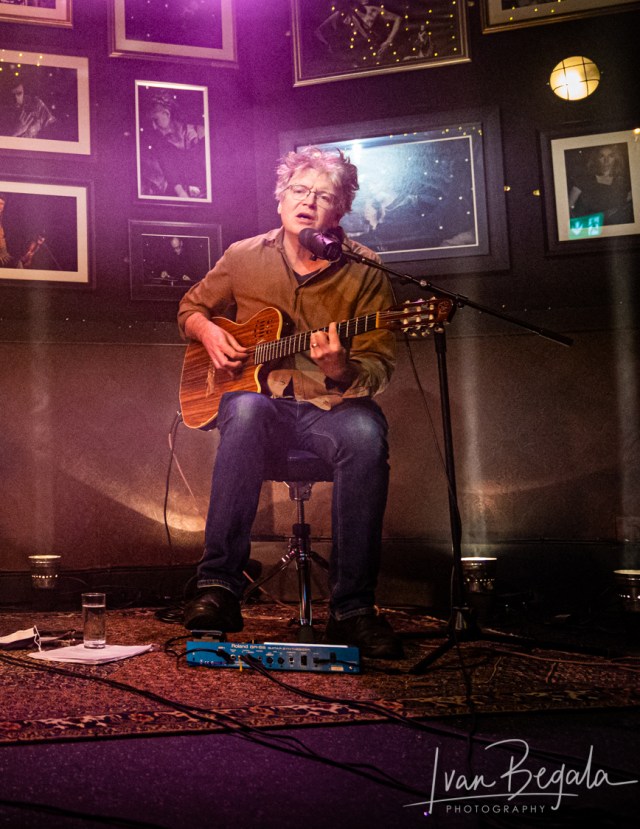
Irish musician and singer-songwriter Cormac O Caoimh is a skillful wordsmith, guitarist and vocalist from Cork. He writes sublime indie folk/pop songs filled with thoughtful, intelligent lyrics touching on the universal subjects of life, love, hope and loss, and delivers them with subtle hooks, fine instrumentals and pleasing vocals that remind me at times of Paul Simon. His catchy melodies seem to effortlessly draw us in, then stay with us long after the songs end. As Mojo Magazine once so eloquently put it: “each song superglues to the memory“, and indeed they do! His songs have earned him comparisons to such artists as The Go Betweens, Badly Drawn Boy, Elliott Smith, Crowded House, Nick Drake, Leonard Cohen and Sufjan Stevens.
Photo by Ivan Begala
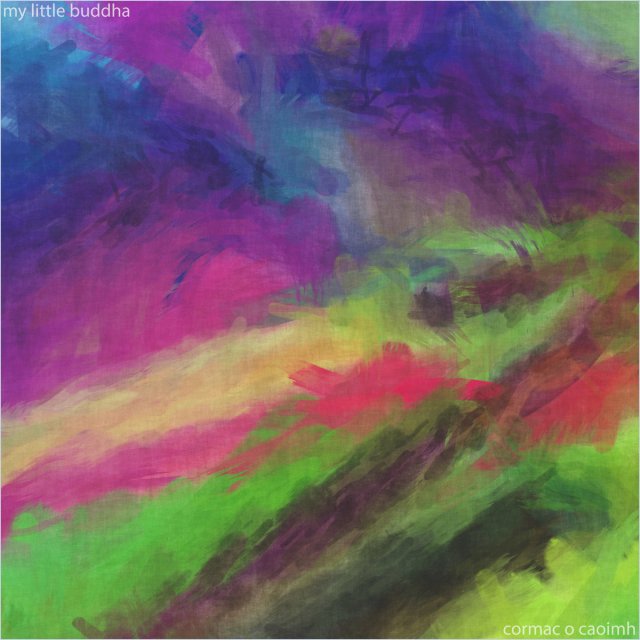
Cormac has released an impressive amount of music since 2007, including five studio albums, the most recent being the beautiful Swim Crawl Walk Run, released in May 2020. In February 2020, I reviewed “I’m in Need”, the lead single from that album. He followed in June 2022 with his lovely single “There Must Be a Catch”, and since then has dropped five more singles, the latest of which is “My Little Buddha“, a song he says is “about living in the now“. For the song’s recording, Cormac sang lead vocals and played guitars and keyboards, Aoife Regan sang backing vocals, and Cormac’s frequent collaborator, friend and fellow musician Martin Leahy played drums and bass. The track was mixed by Adam Whittaker, and mastered by Hafod Mastering.
It’s a charming song, with beautiful guitar work, accompanied by gentle bass and percussion, with a frosting of twinkly synths adding a lovely magical touch to the proceedings. Cormac’s vocals are comforting and warm as he sings the sweet lyrics expressing his love and assurance to a child, telling them to enjoy their moment, free from fears or worries: “Dance, no words my little Buddha. Dance, no fear, my little Buddha, Dance, no worries no fear here.” Aoife’s delicate backing vocals nicely complement Cormac’s in perfect harmony.
The delightful video for “My Little Buddha” features the same footage of actor Christopher Walken dancing around a deserted hotel lobby that was originally used in Fatboy Slim’s award-winning video for his 2001 song “Weapon of Choice”.
Those who purchase the song on Bandcamp will get an exclusive bonus b-side track “Believe (If You Feel)”, a mellow reimagining of Cormac’s song “If You Feel” from his debut album Start a Spark.
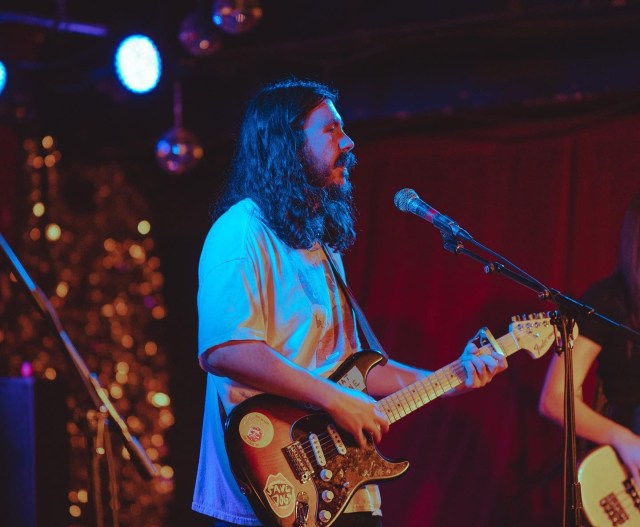
Canadian singer-songwriter Alex Southey is a thoughtful and talented artist who makes some really outstanding music. Originally from Vancouver and currently based in Toronto, the busy artist has released a lot of music over the past four years, including three albums, three EPs and numerous singles. His style can generally be described as alternative indie folk, but it’s much more than that, as his sound is varied and eclectic, drawing from rock, folk, singer-songwriter and shoegaze elements. Like all creative artists, he’s not afraid to explore and experiment with his music, and as a result, each of his albums and EPs sound quite different from one another. I’ve featured him twice on this blog, most recently in September 2021, when I reviewed his exquisite EP My Nights On the Island. Last month (December 2022), Alex returned with a new EP Common Fantasies, containing six wonderful tracks.
Alex recorded the EP with the help of fellow musicians Christina Dare on bass & backing vocals, Gab Lavoie on Korg synth & piano, and Craig McCann on drums & percussion, all of whom played on four of the tracks (they also support him for live shows). Production, mixing and mastering were handled by Alex Gamble.
Before I discuss the songs, I’ll share what Alex wrote about his evolving creative process for the EP: “There were a lot of iterations of this EP in my mind at different times. There’s a version where it’s a full album; another where it’s a double album! There’s a version where it’s just three songs. There’s also an option where – why put it out at all? (A classic part of the process, I realise over and over and over). This is the version I went with. I felt like by placing together two delicate acoustic songs along with four bigger, grander songs there’d be this push and pull of inertia. All my big ideas would have remained totally abstract if it wasn’t for Alex Gamble, Christina Dare, Gab Lavoie, and Craig McCann, who were able to come in and help shape these blue prints into songs with real personality. This happened all the way from practices to live shows to rehearsals for the studio, to the studio, to the mix after the studio.“
Photo by Ryan Brough of Zeebrah Media
Common Fantasies opens with “Come and See“, a mostly instrumental track that starts off with a pleasant little acoustic guitar riff accompanied by soothing synths, before bursting into a riotous cinematic soundscape of explosive percussion and dramatic synths. Alex croons “Come and see“, then his vocals soar to an impassioned falsetto with the music, leaving us breathlessly anticipating what comes next! He answers with the electrifying title track “Common Fantasies“, a glorious mélange of blazing gnarly guitars, driving rhythms and smashing drums. Alex and company really let loose here, making this one of the hardest rocking songs I’ve heard by him. I’m not quite sure about the song’s meaning, but the lyrics seem to address the conflict between self-preservation and giving oneself over completely to another in a romantic situation: “I’m caught in the in-between. Loving you and loving me. I’m right where the lightning strikes, like my anger might. And these are high highs. Sucker. And common fantasies.”
“Soften” is simply stunning, with a lush synth-driven melody overlain with marvelous jangly and chiming guitars, dreamy piano keys and snappy drums. But as beautiful as the music is, it’s Alex’s plaintive vocals that really resonate with me. I love his singing voice, which goes from an emotive croon to airy falsetto, all the while raising the hairs on the back of my neck. Christina’s backing vocals are wonderful too, adding tremendous emotional heft to the song. The lyrics seem to urge us to be kinder to the earth and, by extension, ourselves: “Soften the earth so we can grow up here. Caught in the surf. Caught it in just the right way. And if you believe, they’ll teach you to serve. Teach you the right way to pray.“
The languid and gentle “Twist It” is the first of two mostly acoustic tracks on which Alex played all the instruments – guitar, Roland Juno-60 analog synthesizer and piano. He describes it as “kind of a mini cliff hanger song in a way. At the end you feel an instinct to lean forward and there is nothing to catch you.” The lyrics start off with Alex taking a rather defiant stance “I don’t like to wait. Won’t learn your name. But I can always listen“, but by the end of the song, he’s come around to a more amenable approach: “We’re cool. It won’t hurt to wait. And it won’t hurt to listen. So seal your fate and come on and twist it.”
“Open Season” is another terrific hard-driving rocker that starts off with a bit of a Foo Fighters vibe (at least to my ears), but once those sweeping synths kick in, the song transitions to more of a new wave feel, only to be shattered by a blistering guitar solo at the end. And yet again, the lyrics are somewhat ambiguous to me, but my take is that they speak to issues of honesty and trust in a romantic relationship: “You don’t lie the way I do. In the blink of an eye. Let’s share clothes and attitudes, and swap our half lines.”
The EP closes with “You Want It Brighter“, a poignant track consisting of just Alex’s pleasing acoustic guitar work and melancholy vocals. He states that he “wrote the majority of ‘You Want It Brighter’ (which is a for-no-good-reason play on ‘You Want It Darker’, a late Leonard Cohen thing) maybe two or three years ago at an ex-partner’s place.” The bittersweet lyrics speak of a relationship that’s over, with the protagonist coming to terms with having to be the one who leaves his home and son behind: “I will wait. I will sit awhile and watch as the sun sets on my son. And I admit it’ll take a while to live in – and out – of this place./ And you’ll stay. And I’ll go ‘Cause you asked for this.”
To sum up, Common Fantasies is another superb effort by Alex, and I think it’s one of my personal favorites of all his releases. He’s an outstanding songwriter and musician, with a distinctive vocal style that effortlessly flows from comforting croon to emotion-packed rawness to soaring falsetto, all of which are on fine display. He and his fellow musician collaborators have much to be proud of here.
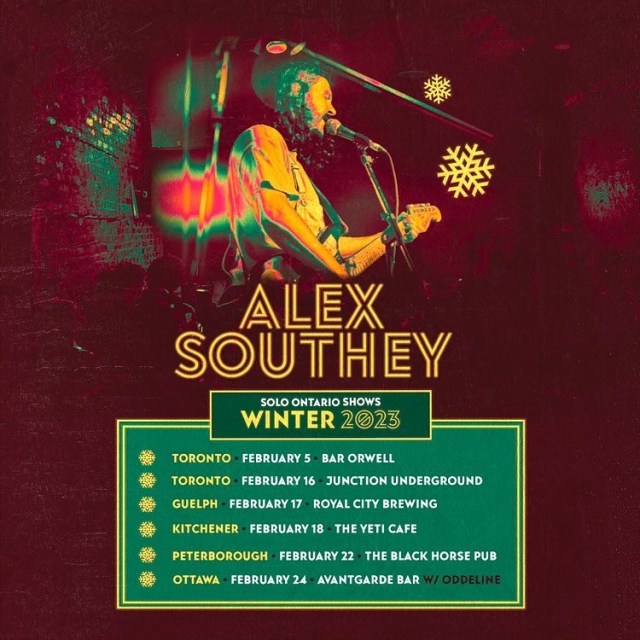
Those of you living in, or planning to visit, Ontario in February can catch Alex at one of these upcoming shows:
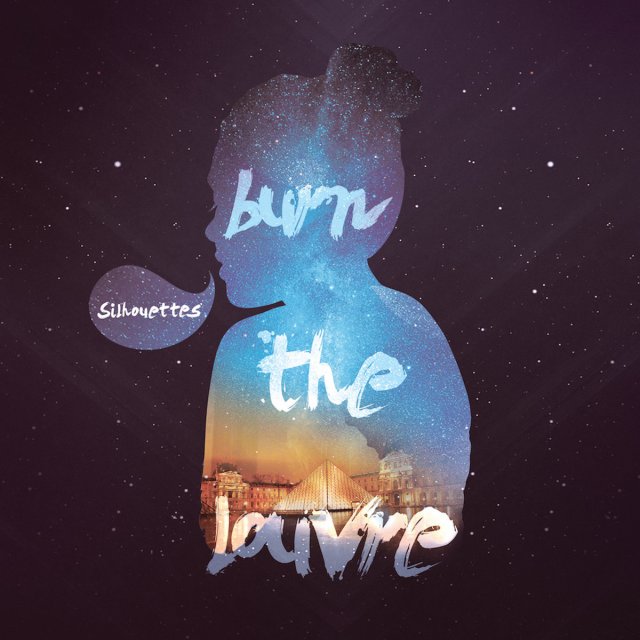
Burn The Louvre are a Canadian indie rock duo based in Hamilton, Ontario, and consisting of Jordan Speare (vocals, guitar, ukulele, drums & percussion) and Sean Cooper (guitar/vocals). I first featured them on this blog this past April, when I included one of their songs “Driving in the Rain” in a Fresh New Tracks post. I provided some background about how the act began as a duo consisting of Jordan and his brother Dylan, and released two EPs in 2014 and 2017, But by 2018, Burn the Louvre became Jordan’s solo project, at which time he began work on a full-length album Silhouettes with the help of his friend Andrew Billone, of indie rock band Silvertone Hills, on lead guitar and bass. The album was recorded, mixed & mastered by engineer/producer Mickey Ellsworth, who also played synthesizers and additional percussion, and sang backing vocals.
Rather serendipitously, after he and Mickey finished recording Silhouettes in late 2018, Jordan received an email from guitarist Sean Cooper, in response to an old “musicians wanted” ad he’d forgotten to take down. The two immediately hit it off, and began jamming together on the already-recorded songs. Jordan recalls “The way he was able to come up with his own unique leads to songs that were already recorded, giving them different nuances while maintaining the vibe of each song…I mean, I don’t think we’ve ever had a bad practice. I felt this was a perfect opportunity to re-imagine Burn The Louvre as a duo and I am very happy he wanted to be a part of this.”
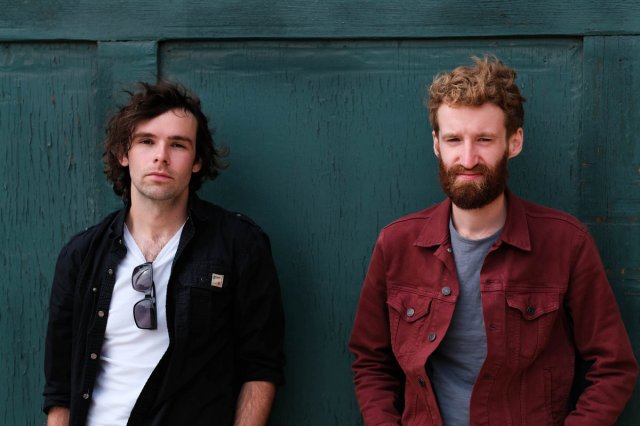
Photo of Jordan and Sean by iamnenkan
In early 2022, they decided to finally release Silhouettes, initially as 11 separate singles at the rate of one song per month over a period of 11 months, beginning in January with “Wish We Were”. They ended with “Honolulu”, which dropped simultaneously with the full album on November 29th. The songs, all of which were written by Jordan, explore the emotional minefield of young romantic love and relationships with extensive, relatable lyrics, delivered in his laid-back conversational singing style, and accompanied by catchy melodies and fine guitar work. Burn the Louvre’s music style is hard to classify, but can best be described as a pleasing and eclectic blend of punk, pop, rock’n’roll, singer-songwriter and folk.
The title track “Silhouettes” is one of more melodically interesting, starting off with an energetically-strummed folk guitar that’s soon joined by a tasty bass groove. The song seems to end at around 1:46 minutes, then starts up again and continues for 30 seconds until it seems to end yet again, only to start back up at a slightly slower pace. Jordan has an interesting sing-song vocal style, with an offbeat sensual drawl that’s quite endearing. Here he emphatically croons the lyrics about a doomed love affair: “Silhouettes in the yellow moon. Fell a little too hard and they split in two. Raw, a little out of tune. Beautiful and broken, but try not to swoon. Oh you…was disinterested until I heard her say ‘So nice to finally meet you’. Autumn eyes and sweet perfume. My heart might’ve skipped just a beat or two. That little black dress and those ruby shoes. Okay…was all that I could say. I sense there’s heartache on the way.“
On “Wish We Were“, Jordan wistfully sings of a simpler, more innocent time when he was younger and things didn’t seem so heavy and problematic: “Well sometimes, I wish that we were younger. Turn nineteen in the early summer, with nothing but blue skies and moonshine spilling outside on a Wednesday night. Alone in the dark, such a beautiful sight. If only sometimes. But if we’d met before. Would you still be knocking on my door if you lived down the street? Would you just want to be friends with me? I’m wishing I could have the time back that I borrowed. Yesterdays are overrated, show me the tomorrows.” I love the song’s upbeat bouncy groove and jangly guitars.
On the lovely ballad “Driving In The Rain”, Jordan sings of driving through a rainstorm to see his girlfriend, with whom he has a troubled relationship: “I’m 15 minutes out, the sky is darker than her hair. And all Beck’s “Modern Guilt” has got me way too self-aware. The weather’s getting worse, man it’s really coming down. It’s just the second verse, but I think I’m gunna drown. Conventional conversation is ringing in my ears. I want to kiss her in the rain, so I can’t see the tears.” And “Lost With You” has a retro early 60s “malt shop” vibe, with a fun rockabilly quality in the guitars.
One of my favorites is “Nice Guy“, a lively post-punk rocker that has Jordan lamenting about how his good manners seem to go unappreciated by a girl he likes: “Really think that you don’t like me. Well, I’m sorry if I’m just too polite. Really wish that I could be an asshole. Blame my Mum, she’s the one who raised me right. But I’m sick of being the nice guy. I’ll give you my coat when it’s cold outside. Yeah, I’m so sick of always being the nice guy. It’s a phase I still haven’t got over, I’ll try, yeah I’ll try.”
His clever songwriting is strongly evident on “Easy“, a song about how love and relationships could be easy and stress-free, but we often have a way of over-complicating things: “Well, it could all just be so easy. Uncomplicated, apparent, simple too. It could all just be so easy. I’m so easy, yeah but so are you. Open my mouth, make a fool of myself. Could almost hear her falling back in love with someone else. You’re my last cigarette, it’s too bad for my health. Your love is cancerous and I’m just trying to kill myself.” The jangly and shimmery guitar work is terrific, accompanied by nice bass groove and subtle keyboards and percussion.
“Dumb” is a rousing rock’n’roll gem, with twangy guitars and a catchy, toe-tapping beat. The tongue-in-cheek lyrics speak of wishing his ex-girlfriend ill: “I’d rather see you under the sea than see those big green eyes staring back at me. I’ll give your best to your new boyfriend, and let him know that he won’t ever see your face again“, but then admitting his threats were meant in jest: “I’d never hurt you, honestly. I’d never hurt you purposely, You’re lucky I’m not as dumb as I thought I was.” And on the sweet jangle pop song “Hey Stacey“, he sings of how he loves and misses her: “Hey Stacey, is there something wrong? You know I’d do my very best to make it right. I really thought that you might like this song. It’s kinda dumb, but it’s the best I’ve got tonight./ Trying so hard not to blow it. But has anybody ever told you you’re beautiful, but you don’t even know it?“
“Alison” is another sweet tune, this time with a bit of a doo wop vibe and featuring added vocals by Stephanie Deshane. The poignant lyrics speak of two wounded souls, seeking a bit of love and solace in each other’s arms, even if only for a night: “And Alison, you know I’ve been struggling trying to put my life together. She laughs and says, ‘mine’s not much better’. But Alison, I want to thank you for listening. Now, she’s not likely to stay, but I know I won’t soon forget her.”
The final track “Honolulu” is a deeply personal one for Jordan. He explains: “‘Honolulu” is a song I wrote for my first girlfriend Gillian for her birthday. We’d always joked about running away to Honolulu one day, so I wrote this song about the idea of doing just that. To be honest, I really wasn’t the best boyfriend, but I did some things right and this song is definitely one of them. After opening the album with ‘Silhouettes’, which is a song about the aftermath of our relationship from my perspective, I felt it was fitting to close the album with ‘Honolulu’, a song about when times were great.” Appropriately, the song opens with a Hawaiian ukulele riff, accompanied by subtle bass notes. Halfway into the track, the tempo ramps up to a jaunty, head-bopping groove, with a strummed guitar joining the ukulele and bass while Jordan croons “Well I can’t say, I’ve felt this way before. My heart is on fire, yeah. It’s not a holiday, this is a getaway. Gill, hop on the plane and we’ll leave right now for Honolulu… feels so far away.”
Silhouettes is an enjoyable album from start to finish, filled with charming songs dealing with the ins and outs of love in a lighthearted, realistic way. Jordan and Andrew’s guitar work is terrific throughout, and the songs are all expertly-crafted and engineered, giving the album an outstanding quality of sound. Nice work guys!
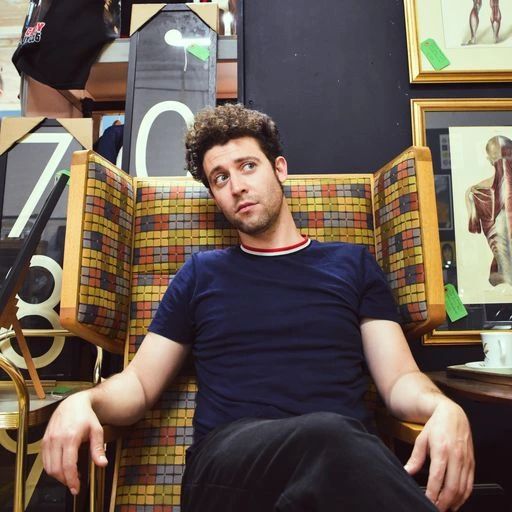
I continue to be astounded by all the creativity and talent coming out of the British music scene, and one of my favorites (who I’ve been following for several years) is Granfalloon, the music project of Manchester-based singer-songwriter, producer and guitarist Richard Lomax. Using acoustic guitars, synthesizers and drum loops, along with unusual instruments such as vintage Omnichords, the engaging, curly-haired artist creates his own unique style of music that’s a pleasing hybrid of lo-fi alternative folk, experimental and electronica. His songs are enchanting little stories touching on the many idiosyncrasies of everyday life, but with a dollop of quirky surrealism to keep them fun. And his warm, soothing vocals, delivered with a lighthearted cheekiness and charming accent, are so wonderful I would literally enjoy hearing him sing the telephone book. Simply put, his songs make me feel happy.
Since forming Granfalloon in late 2016, Lomax has released a fairly steady stream of singles and albums, beginning with his debut album Down There For Dancing in 2017. He followed two years later with his beautiful second album RGB, then dropped his marvelous third album Positive Songs in August 2021, a collaborative work featuring 11 tracks produced for The Positive Song Project, launched by Lomax and his friend Lobelia Lawson during the first lockdown of 2020. They invited songwriters to create new music by challenging themselves to focus on positive aspects and feelings, rather than negative or depressing songs about feeling isolated and bored during lockdown. The response was overwhelming, resulting in the creation of over 300 tracks by artists from around the world. (I reviewed two of the tracks from Positive Songs – “Working On Your Own” and “The Pigeon” – which you can read by clicking on the Related links at the end of this post.)
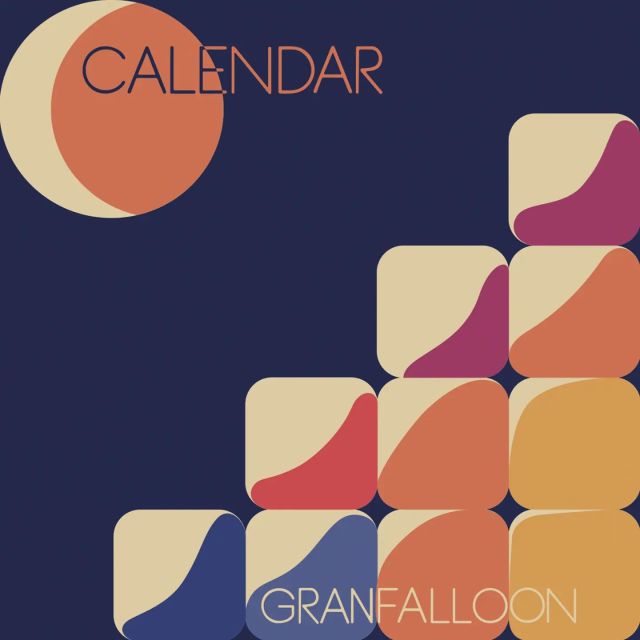
Now he’s back with his fourth album Calendar, featuring 12 delightful tracks. I’ll leave it to him to explain his inspiration behind the album’s creation: “The roots of this album can be traced back to 2014, when I was recording a debut album with my previous band. It was the 13th time I had recorded that album. Getting it right was proving difficult… A different approach was needed to keep things fresh. I would write new songs, one every week, without perfectionism weighing down the process. By the end of 2014 I had amassed 52 new songs, each one reflecting the week I’d experienced, all framed as fevered journal entries. After founding Granfalloon in 2016 and releasing two albums, I went into the studio in February of 2020 to begin the task of committing definitive versions of the songs from my ’52 Project’.
Obviously the pandemic put the project on hold and ironically, now everyone had a double album of songs squirrelled away. But I never wrote because I had too much time on my hands. Writing has always been a matter of necessity for me. I returned to the studio again in 2021 with a core band from the Positive Songs Project to whittle down the original 52 to 12 songs. These 12 songs comprise this new album ‘Calendar’.”
In addition to Lomax, who sang lead vocals and played guitars, Wurlizter, Omnichord and melodica, a host of other musicians contributed their talents on some or all of the songs, adding a colorful kaleidoscope of instrumental sounds and textures: Daz Woodcock (bass, vocals, organ, keys), Andy Lyth (drums, percussion, banjo), Cleg (guitars, mandolin, vocals), Garreth Knott (trumpet), Sarah-Jane Pearson (vocals), Caffs Burgis (vocals, synths), Dom Major (guitars), Ellie Boney (cello), George Burrage (violin), Robin Melinda Koob (violin), Molly Becker (violin), Tim Davies (drums), Jack Wakeman (bass), and Jason Alder (contrabass clarinet).
The songs encompass an array of styles, from the exotically folksy “Witch of Woodplumpton” and seductively bluesy “Eulerian Circles“, to the whimsically poppy “Bee on a String” and Americana-tinged “A Year After the Party Died“. But the one thing they all have in common is their outstanding arrangements, instrumentation and production values. The album kicks off with “Archive“, which opens with Jason Alder’s fascinating contrabass clarinet notes, nicely accompanied by twangy guitars, George Burrage’s violin, Ellie Boney’s cello, Tim Davies’ military-style drumbeats. and Sarah-Jane Pearson’s gentle vocals.
I like all the songs of Calendar, but I’ll call out some of the standouts for me, as well as some particularly lovely little moments heard on a few tracks. The aforementioned “Witch of Woodplumpton” is pleasing, but with a mysterious undercurrent, and lyrics that speak to the historic and ongoing oppression of women: “From Mary of Eden to Joan of Arc, we’ve been burning and burying you from the start. You have to dig your way out of your own grave.” Richard’s intricate guitar work is sublime, and I think I also hear Cleg’s sweet mandolin notes. And once again, we’re treated to Sarah-Jane Pearson’s smooth backing vocals, Ellie’s lovely cello, and George’s violin, with added violin by Robin Melinda Koob for good measure.
“Paint It By Numbers” is a cheeky number sung from the perspective of a professor who can only express their love through mathematical figures: “Shall I compare thee to the fundamental theorem of algrebaic K-theory? Like Pythagorus said, something’s deeply irrational about the square root of 2 where the 2 are me and U. Let me show you the numbers. Tell you in numbers. Lay down the numbers. Paint it by numbers 4 U.“
Far and away the highlight for me on the album is the thoroughly enchanting “Please Write Responsibly“, which tells the story of an innocently-written song that goes rogue: “This yarn had caused more harm than was ever my intention. I’d only scribbled words on paper, I hadn’t wanted this destruction. I mean, whoever got hurt by a story? What song brought a government to its knees? What poem dismantled a tank, or started World War 3? And As I tracked the trail of carnage caused by my fantasy, it leapt right out of my computer screen and began to attack me. My Story tore me limb from limb, all the while screaming with glee: ‘Words are more powerful than you ever could conceive So please write responsibly!’” The beguiling song features the musical handiwork of Richard and Dom Major on guitars, Molly Becker on violin, Daz Woodcock and bass, and Andy Lyth on the sweet banjo. I love this song, which is currently enjoying an extended run on my Weekly Top 30.
Another favorite is the bouncy “Bee on a String“, with its lively guitars and Garreth Knott’s warm trumpet. The lyrics describing a woman who keeps a bee on a string trapped in a tupperware box in her refrigerator are an allegory for keeping her man similarly under her control: “I know you’re fascinated by me but won’t you let me be free? Why won’t you let me bee free? O must you keep me in a deep freeze. It makes me sleep so you keep me, and she keeps bees in a deep freeze...”
“O Joyce” tells the story of a Joyce over a 60-plus period of years, beginning with how her mother bought a pet Macaw who she named Bobby Corwen when Joyce was a young child. It’s a cute little ditty, with some nice trumpets by Garreth and guitar, Wurlizter and Omnichord by Richard. I also like how he whispers in a slightly seductive voice, “Joyce, make us a cuppa tea“, after each verse.
“All My Old Lovers (live on the same street)” is a rather wistful, introspective song about past loves, loss, and the need to move on and away from judgmental neighbors and gossiping tongues: “All the meetings they’ll have about this and that, make you feel so exposed. In a small town like this all you do is exist. This is no place to heal. It’s time to move on – You can’t live here any more.” The song is lovely, with a bit of a melancholy undercurrent, highlighted by gentle chiming guitar notes, cello and violin. Richard’s smooth vocals convey a slightly sad sense of resignation.
In a similar vein, “The Day the Party Died” speaks to loss and the passage of time, with references to several mythical characters like Ahab, Peter Pan and Cupid to drive home the inevitable changes that happen with time. Not all of these changes are for the better, expressed in the lyrics “They’ve turned the club into a takeaway. They’ve turned the pub into a takeaway. They’ve turned our home into a takeaway.”
But then on the album closer “Rushmore“, Granfalloon admonishes us to look to the future with hope and optimism, and not dwell in the past: “Don’t waste your life on a memory. The wind will change, both kind and strange. It’s never as dark as you think.” The song is another favorite of mine, as I love the dramatic shimmery electric guitars and beautiful soaring vocal harmonies in the chorus. It’s a fine finish to a delightfully charming album. With Calendar, Richard and his fellow musicians have created a lovely and thoughtful work that makes for a thoroughly enjoyable listen, for which they should be very proud.
His albums are only available as a digital download on Bandcamp and in CD format, though several of his singles are also available for streaming on Spotify, Apple Music & Soundcloud.
The cool album artwork was designed by Daniel Benayun
Though many singer-songwriters tend to draw inspiration from their own life experiences, few I’ve come across are quite as thoughtful, candid and personal as Virginia-based singer-songwriter Andrew Neil (born Andrew Neil Maternick). Considered an outsider music artist in a similar vein to the late Daniel Johnston, Andrew writes from his heart and soul. The 34-year old has faced a number of daunting life challenges that would have crushed many of us, but his faith, strength and resilience, as well as the incredible love and support of his family and friends, have enabled him to flourish as an artist.
I’ve featured Andrew twice on this blog, first in November 2019, when I reviewed his third album Freak, then again in June 2021 when I reviewed his fourth album Sunny Side (you can read those reviews by clicking on the Related links at the end of this post). I wrote extensively about his life experiences in those reviews, but will touch on a few significant points to provide a bit of context.
After growing up as a fairly typical kid and high school athlete, he suffered a life-altering event in 2009 when he sustained a serious head injury in a car accident. The injury resulted in two significant changes for Andrew: 1) he began having a series of psychotic episodes, and 2) he started writing songs, despite the fact he’d never had any prior music training of any kind. During a psychotic episode in 2013, he stabbed his younger brother in the arm, which landed him in jail for seven months until his family and attorney convinced the prosecutor that he needed help, rather than being incarcerated.
He was subsequently released and sent to a state mental hospital, where he received excellent treatment and learned to manage his illness. During the three years there, he wrote and recorded around 70 songs on a battery powered Tascam recorder, which his father Ray later uploaded to a computer. Andrew was conditionally released from the hospital in May 2017, and moved into a group home in Charlottesville. (He now lives independently.)
Upon his release, he produced his first album Code Purple – Andrew Neil, featuring 11 melancholy yet optimistic songs he hoped might help others struggling with similar mental health issues. He followed up a year later with his second album Merry Go Round, then quickly went back to work in early 2019 to record his third album Freak. Sadly, as he was wrapping up the recording he was hit with yet another health crises when he was diagnosed with Non-Hodgkin’s Lymphoma. He underwent a grueling round of chemotherapy while the album was being mixed and mastered, and he and his family started a Kickstarter campaign to help raise funds for album production and marketing, garnering even greater support than expected. The album, an ambitious work featuring 14 tracks addressing topics of love, faith, mental illness and self-identity, was released that October to widespread acclaim.
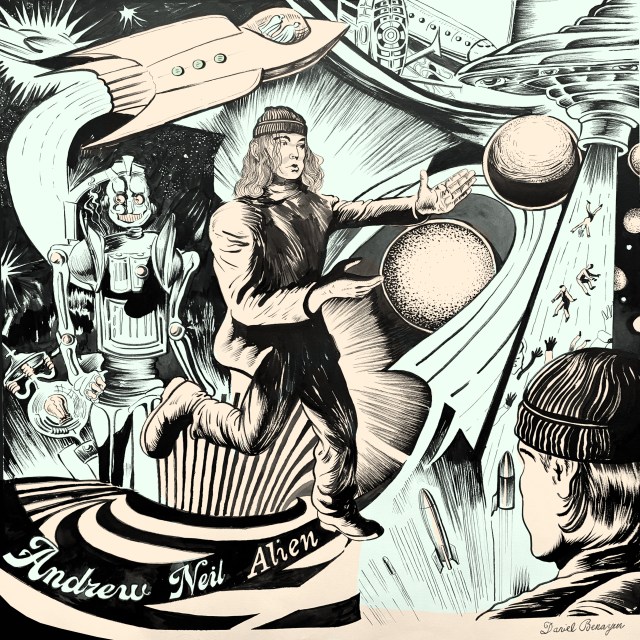
His cancer thankfully in remission, Andrew began recording songs during the Covid lockdown, this time with only his own quirky, endearing vocals and vintage nylon string Ovation acoustic guitar, accompanied on some tracks by subtle keyboard overdubs. The songs came together as his fourth album Sunny Side, featuring 10 optimistic tracks with a mellower, more lo-fi folk sound. Ever the creative, hard-working artist, Andrew’s now returns with his fifth album Alien, which dropped September 15th. Similar to Sunny Side, the songs on Alien were performed with just Andrew’s vocals and acoustic guitar, giving them a lo-fi folk sensibility. But the subject matter is a bit darker, touching on such issues as mental health, loneliness, suicide, alcoholism and relationships.
In order to get a bit more insight into his inspiration for writing Alien, I asked Andrew a few questions, to which he graciously responded.
EML: Thank you, Andrew, for agreeing to speak with me about your latest album Alien. You’ve experienced more than your fair share of trauma and difficult challenges in your life, and also suffer from depression, which you’ve spoken about pretty openly on social media. Like many songwriters, you draw from your own experiences when writing your lyrics, and as was the case with your previous albums, the songs on Alien address such topics as mental health and emotional well-being, addiction, suicide, loneliness and faith. Does writing and recording songs help bring you a little peace of mind?
Andrew: Yes, writing songs does bring me a little peace of mind. Some songs help me process my grief and sorrow. When I write it is like the hand of my heart reaching out to the world for help, love and understanding; almost always the world reaches back and that feels good. I also hope that my music will help others to deal with their own issues, depression, loneliness. If you think about it, it’s almost like a continuous circle of emotions. You write to help yourself, which directly or indirectly helps others and they in turn help you back with positive feedback. They view my song within their own life experiences and relate in their own way. We all learn from this exchange of melody and lyrics and emotions. Knowing this gives me peace of mind.
EML: The title track “Alien” reminds me a bit of “Freak” in that it seems to speak to embracing one’s identity, warts and all, rather than being ashamed of it. Is that the point you’re trying to make on this song?
Andrew: The point of “Alien” is the truth behind my belief in a universal family. We may come from other places, have different religions, have different governments, eat different food, but at the end of the day I firmly believe we all have hearts with similar desires. These hearts feel and desire love and it’s this desire that illustrates we truly are a family. So, when we see someone different, someone who fits the mold of an alien we should reach out to them with love and understanding.
EML: Two songs in particular, “I Need a Reason” and “Don’t Tell the Doctor”, are pretty heavy and dark, dealing with thoughts of suicide. Your dad told me that “Don’t Tell the Doctor” was inspired by a comment a woman whispered to you during a group therapy session – “Don’t tell the Doctor, but I’m in love with suicide”. What prompted you to write about that experience?
Andrew: I have spent a fair share of time in mental hospitals and have met many interesting characters. During one of my first stays at Virginia Baptist Memorial Hospital I met a young lady named Holly. It is true that we had a group session in which we were supposed to talk about what we love. Her answer was “Suicide”. I, like many in the group, could relate and it’s a moment of genuineness I will never forget. I wonder where Holly is these days, and she will always have a place in my heart.
EML: Not being a songwriter nor musician, I’m always impressed by people who can write compelling lyrics and compose interesting or catchy melodies. Do you generally write your lyrics first, then set them to music, or do you first come up with a melody or guitar riff, then write words to fit?
Andrew: When writing songs, I usually start with strumming some chords on the guitar. Then I hum a tune that fits and then I transform that tune into words. Sometimes I feel as though my fingers are guided on the fretboard. I don’t really know any standard chords or notes or even musical keys, but my fingers seem to find the right sound and melody. I really think melody is important. Melody is something I think is missing from many songs written today. There are lots of “beats” but not really much melody in many contemporary songs.
Once I have a melody, I try to determine what the melody is telling me or saying. The words/lyrics are by far the hardest part of the process. The lyrics are really my notes in a weird way. I write the lyrics so that the melody wraps around them. Sometimes I’ve come up with lyrics when the guitar is not in my hands. I might have a dream or a special feeling and the lyrics just pop into my head. “Mongolia” was a good example of this. In that case the lyrics helped to dictate the melody. I tend to write 2 to 3 songs a month.
EML: From what I can tell, the only sounds we hear on these songs are your voice and acoustic guitar, is that correct?
Andrew: Yes, it was certainly stripped down. Just me and my nylon string ovation guitar. I do not recall any keyboard dubs on the Alien album tracks. We decided to keep it simple and maintain a lo-fi sound. We also wanted to help the subtleties of my guitar playing, which is different than many guitarists, stand out. Over the years, I have come up with my own style of playing and make up my own chord shapes. It’s a very percussive style. My dad says it reminds him of Richie Havens in some ways. I am not really encumbered by the rules, scales, etc. of the instrument. I really think this gives me a certain amount of freedom in writing songs that many songwriters don’t have. They tend to stick to the conformity of the instrument.
EML: Who are some living artists or musicians whose work inspires you, or that you would like to collaborate with if possible?
Andrew: My inspirations are many. The living artists who come to mind are Bob Dylan, Willie Nelson, Carlos Santana, Richard Thompson, Sanjay Mishra, and Lady Gaga to name a few. I’ve also been listening a lot to Country artists John Anderson and Raelyn Nelson. It would be cool to collab with them, but I realize that is pie in the sky kind of stuff. More realistically, as far as collaboration, I would love to work with and perhaps co-write songs with some rising artists in different genres. One genre in particular I am developing an interest in is Alt-Country, which is a mix of Country, Garage Rock, Blues and Alternative. One up and coming Alt-country artist I would love to co-write a song with is Raelyn Nelson. As you know I was scheduled to open for her Band on 19 August of this year in Hershey PA, but it was cancelled due to an illness in her band. It will be rescheduled hopefully in November. After her manager notified me that they wanted me to open for them, I started listening to the Raelyn Nelson Band music. That listening experience inspired me to write a few Alt-County songs for the show. I would love to release an alt-country album after Alien. This would definitely be a different direction, but I think it’s also a way to reach more people with my music.
Prior to the inspiration by the Raelyn Nelson Band, I had begun to dabble in writing more country-like songs. For instance, I think the songs “Gambin Man” and “Kinda Turns me On”, on my Sunny Side Album have an alt-country feel to them. I think I am going to travel in that direction for the time being. Also, I am on this list on Ranker (Best Outsider Music Artist list). Many of the artists that are listed have passed on now. I really wish I could have worked with Daniel Johnston. But there are a few younger living artists on the list like John Revitte who is an exceptional lyricist, that I would love to collab with. R. Stevie Moore, and Iggy Pop are also on the list, but are really up there in age and I’m not sure if they are still active in music.
EML: Anything else you’d like to say about Alien or yourself that I’ve neglected to ask?
Andrew: No storm lasts forever. Life is good and people are beautiful. I appreciate you taking the time to review my music and get my story out there into this world. Music makes a difference in this jello world. Thanks again and peace out.
Now, let’s get to the album, which opens with the title track “Alien“. As Andrew stated, the song speaks of reaching out to people who are different from us with love and understanding, as we’d hope they’d do for us: “Far from ordinary, makes life kind of scary. I’d have it no other way. We come in peace. Don’t shoot please. It’s alright alien.” On the melancholy “I Need a Reason“, he questions the value of his very existence: “Like a bug stuck in a spider’s web, the more I struggle, the more I’m dead. I am blue, and blue I remain. Will I get conquered by my pain?I need a reason baby, a reason to be here. I need a reason baby, to make it through the year. I need a reason baby, before I disappear.“
While “Mongolia” comes across as a pleasing folk tune, its lyrics are packed with meaning and emotional conflict. It starts off with Andrew listing a few of his psychoses: “I know angels on a first-name basis. And I can’t stare at the walls too long, or else I’ll see faces.” He then describes his wanting to escape to an exotic place in hopes of overcoming some of his shortcomings: “I want to go to Mongolia, Perhaps there I’ll get holier. Holier than the Judas that I am. Holier like Mary’s little lamb.” Continuing on, he acknowledges that he’s too old to be treated like a child, yet still needs emotional support and comfort from his mother: “Mommy please don’t spank me. I’m way, way too old. And I need a blankie, cause this world is so cold. So I wanna go to Mongolia.” Here’s a wonderful live performance of Andrew singing the song in 2021.
As described earlier, “Don’t Tell the Doctor” was inspired from an experience Andrew had in one of his group therapy sessions back in 2009, in which the discussion leader asked them to talk about what they loved. A woman in the group leaned over to Andrew and whispered “Don’t tell the doctor, but I’m in love with suicide“. The song has a languid, rather somber melody, with some really fine guitar noodling. Andrew’s melancholy vocals sing of feelings of hopelessness: “Sometimes I feel like there’s only one way out. That’s when you’ll find me hanging from a cloud. And sometimes I feel like there’s nowhere left to run. I keep my promises, I won’t use a gun.” That line, combined with the almost grungy feel of Andrew’s acoustic guitar, makes me think of Nirvana.
“Fingers Crossed” seems to touch on people’s superficiality and phoniness, and making empty promises but not following through: “Ring, ring, ring, I ignore the call. So leave a message and I’ll call you back. Fingers crossed, yeah we all know that.” On “My Best Friend is Not Whiskey“, Andrew speaks to how alcohol does not solve our problems or make us feel better: “Where’s my fairy tale ending? What the fuck happened to me? Every day I keep pretending that I’m not in misery. Every day I keep pretending my best friend is not whiskey. It’s a thirsty world.” And on the allegorical “The Beat Goes On“, he describes a series of dreams in which he meets an Aztec priestess, has Jesus in a high school class, and is a Samurai warrior addicted to death and glory who ultimately commits hara kiri.
“Remember to Forget” is a sweet song about being supportive and loving to a friend in need: “When you’re cold, I’ll be your sweater. When you’re sad, I’ll make you smile. We’re all in this together, mile after mile. When you need a hug, I’ll be your teddy. Yes, I’ll be your happy thought. Remember, remember to forget, the vampire that bit. Remember, remember to forget all of the bullshit.” And of course, it’s always wonderful getting that support in return: “When it rains, you’re my umbrella. When I cry, you dry my tears. We’re all in this together. You put meaning in my years.“
The album closes with the charming “Black Sheep“, which speaks to how just because someone may be quirky and different, they still have qualities worth loving: “One day, we all kick the can. So girl, won’t you hold my hand. I promise that I am no creep. Yeah, I’m just a black sheep.” Andrew’s percussive style of guitar playing is strongly evident in his heavily-strummed acoustic notes. It’s an upbeat ending that keeps the album from being too overwhelmingly bleak. All in all, Alien is a marvelous little album, and Andrew’s stripped-down acoustic treatment really allows his endearing, heartfelt vocals and relatable poetic lyrics to shine.
As I continue working my way through new music being released by artists I’ve previously featured on this blog, I now bring you British indie folk artist Holly Rees. Based in Newcastle, the talented singer-songwriter and guitarist has been writing and recording exceptional music over the past five years or so. Her honest, relatable lyrics, often inspired by her own personal experiences, are wrapped in beautiful, understated melodies and fine guitar work, and delivered with her lovely, highly emotive vocals.
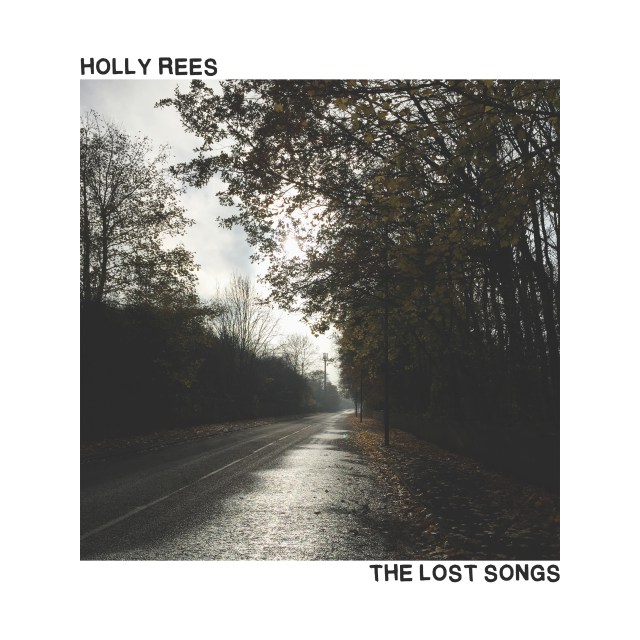
This past December, Holly released her sublime EP The Lost Songs, featuring five acoustic songs she recorded in isolation during lockdown. You can read my review of the EP here. Now she returns with a new single “English Bay“, which she wrote in 2019 while on tour in Canada. The song was recorded with her band members Ryan Peebles on bass and Rhys Melhuish on drums, and thus has a fuller, more hard-driving sound than the acoustic tracks on The Lost Songs.
The song starts off gently, with Holly’s slightly grungy strummed guitar and smooth vocals as she sings of a woman who catches her eye: “She walked past me with her headphones in singing her heart out. A Stanley Park evening. I guess I do the exact same thing.” Thirty seconds in, the rhythm section kicks in with Ryan’s driving bassline and Rhys’ snappy drums, turning the song into a vibrant, head-bopping rocker. Holly’s gnarly guitar hums with greater urgency as the song progresses, her plaintive vocals rising to the occasion and brimming with heartfelt emotion, but still upbeat enough to avoid becoming maudlin.
The lyrics speak to feelings many of us have experienced when embarking on a new romantic relationship, unsure as to whether we want to truly commit to another person, but also fearful we’ll screw things up and scare them off: “And I keep saying I’m trying, and I wonder if it’s true. Come on, bear with me ’til I get cold feet, and tell me to stop messing around./ I guess I never listen when they told me, everyone’s a little bit lonely.”
Aptly-named Cleveland, Ohio-based indie band You’re Among Friends want us to feel welcome when hearing their music or watching them perform. With their laid-back style of funky, blues-infused folk rock reminiscent of the music of Steely Dan and The Grateful Dead, with touches of Randy Newman and Elvis Costello, listening to their music is like spending time with a good friend. That comforting, low-key vibe, combined with relatable lyrics touching on everyday aspects of life in this crazy, mixed-up world of ours, has a way of making us feel that everything’s gonna be alright at the end of the day.
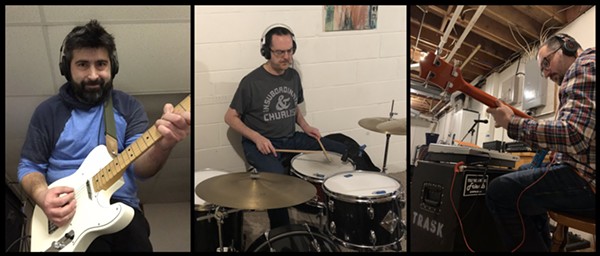
The band was formed in 2007 by founding members and long-time friends Anthony Doran (lead vocals and guitars) and Kevin Trask (bass, keyboards and backing vocals). And like too many bands, they’ve struggled to find and keep drummers, but their current (and seventh) drummer Mike Janowitz, who came on board in late 2019, has turned out to be a perfect fit.
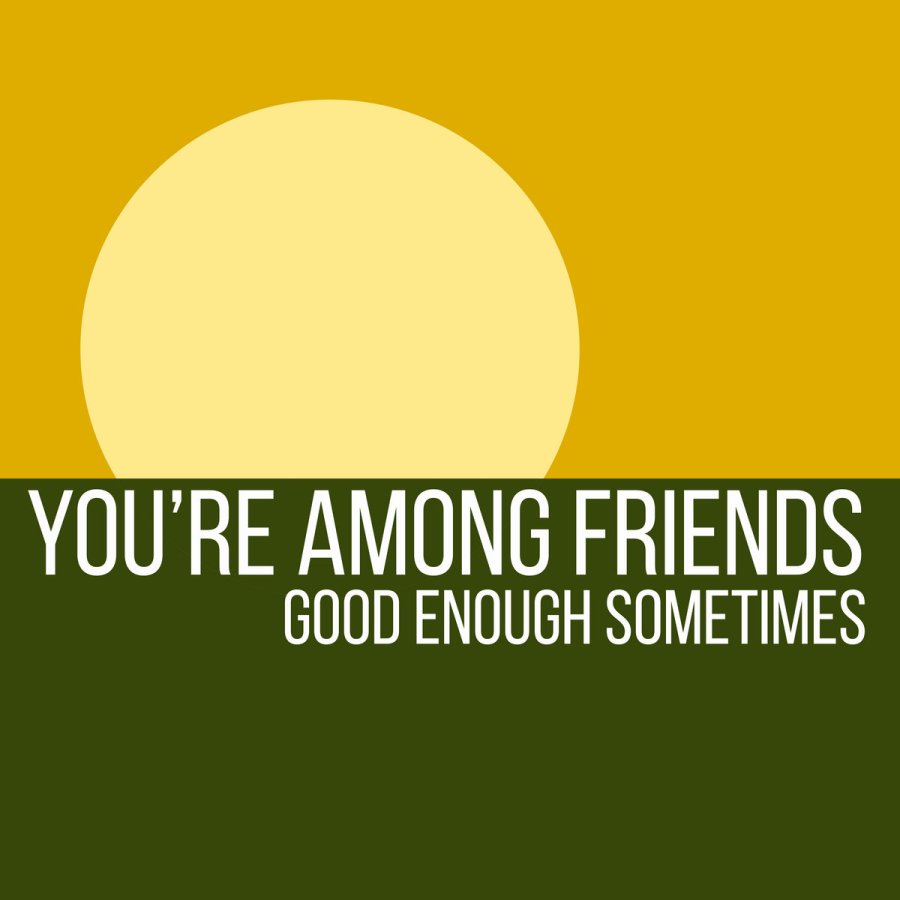
You’re Among Friends released their debut self-titled album in 2007, followed by an EP and double single, but the demands of life, work and starting families took so much of their time, they went on a hiatus in 2011 lasting four years. They reconnected in 2015, and the following year, released their second album As We Watch the Years Go…, with songs inspired by their life experiences, as well as the passage of time and how it affects friendships and relationships. They followed in late 2017 with an EP One Day You’ll Look Back, then dropped their third album Start Making Sense in May 2020. (I’ve reviewed their last three releases, which you can read by clicking on the links under “Related” at the bottom of this page.) Now the guys are back with their fourth album, Good Enough Sometimes, which dropped January 10th.
One of the many things I like about their songs is that the titles let us know exactly what they’re about, as well as the conversational flow of their down-to-earth lyrics that make us feel like we’re speaking with a friend. Kicking things off is “Don’t Borrow Trouble“, a mellow, upbeat song advising us to not overthink or worry over things we can’t change or that haven’t even happened yet: “Don’t borrow trouble, why worry about something before it’s here. By the time the dust settles, and the moving parts stop, don’t you know it may not be as bad as you fear.” These simple but wise words could be directed at me, as I’m frequently guilty of obsessing over a lot of shit.
Several tracks address the theme set forth in the album’s title, starting with “Here in the Middle of the Pack“. The lyrics advise us that it’s okay to be average, so long as we do our best and feel contentment with ourselves: “Don’t have to be the best. Just strive to be consistent./ It all works out eventually.” I like Anthony’s guitar noodling and endearing vocals that remind me of Randy Newman. On a similar vein, “Okay is Good Enough Sometimes” urges us not to expect everything in life to be perfect or the way we want them to be: “Got to let some things go, to preserve your mind and soul. Not everything is worth your peace, try not to lose too much sleep, because okay is good enough sometimes.” Anthony’s bluesy guitars and Kevin’s funky bassline are terrific.
The guys take a somewhat different tack on “You Know What You Want“, with lyrics about not giving up on your dreams and aspirations, “When you set your mind on something, you don’t stop til you’re done. It’s one of those things that I love about you. Someday your chance will come. Cause you know what you want.” I like the quirky and cool instrumental flourish in the bridge. And on the sweet “Accompanied“, Anthony sings his praises to a loved one who’s always there for him: “Sometimes life brings me down. That’s when I’m glad you’re around to pull me through. It’s tried and true.”
But sometimes, even friends need a bit of tough love. On the catchy “Toxic Positivity“, with its bluesy Grateful Dead vibe, Anthony calls out those who spout meaningless positive adages like “What doesn’t kill us makes us stronger”: “Spare me your toxic positivity. When the world’s pissing in my face, I don’t have to pretend it’s refreshing rain.” On “Learn to Leave Well Enough Alone“, he admonishes someone to get off his back and mind their own business: “You’ll be the first to know when I want to hear opinions from folks who don’t understand a thing about my business.” The song has an interesting sound, with a repetitive bluesy groove, and delightful jazzy organ and percussion at the end.
Though You’re Among Friends don’t get political very often, there are times you just need to call out corporations, politicians and the media for their duplicitous actions too. The dark “Bad Karma and a Special Place inHell” decries those who promote fear to keep the masses fired up and their profits soaring, while “This is Unsustainable” speaks to corporate greed and income inequality: “Don’t expect them to understand, how they’re living off our backs.”
With a breezy, upbeat groove that hovers in a sweet spot between Steely Dan and the Grateful Dead, album closer “Plan Cancellation Chicken” is one of my favorite tracks from a musical standpoint. Anthony’s guitar riffs are really wonderful, nicely layered over Kevin and Mike’s jazzy, thumping rhythm. The song circles back to the album’s overall theme of just calming down and going with the flow, with lighthearted lyrics that describe a romance in a cheeky, backhanded way: “It’s all a big game of plan cancellation chicken. I’m so glad you caved and canceled before I did. It’s looks like I won this round. Let’s keep each other around, so we’ll have someone to cancel plans with.”
With Good Enough Sometimes, You’re Among Friends serves up 30 minutes of pleasing songs – with a few edgier ones thrown in for variety – we’ve come to expect and enjoy from them. Like I’ve mentioned previously, it’s like the return of an old friend with whom we’re able to pick right back up from where we left off.
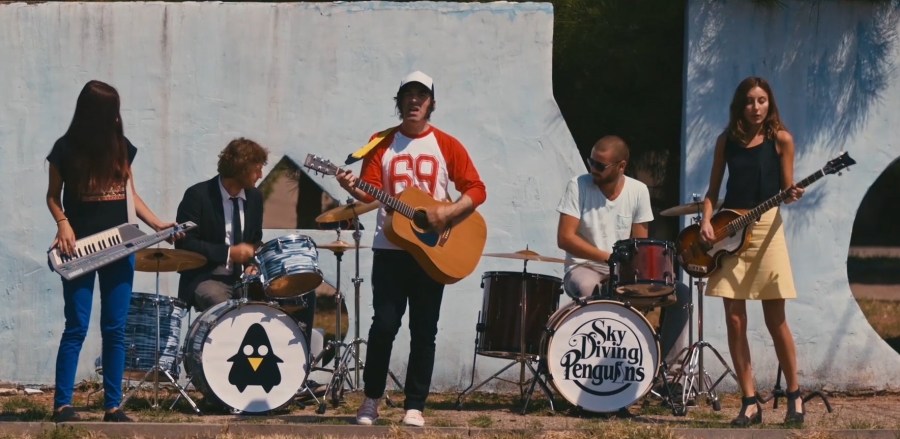
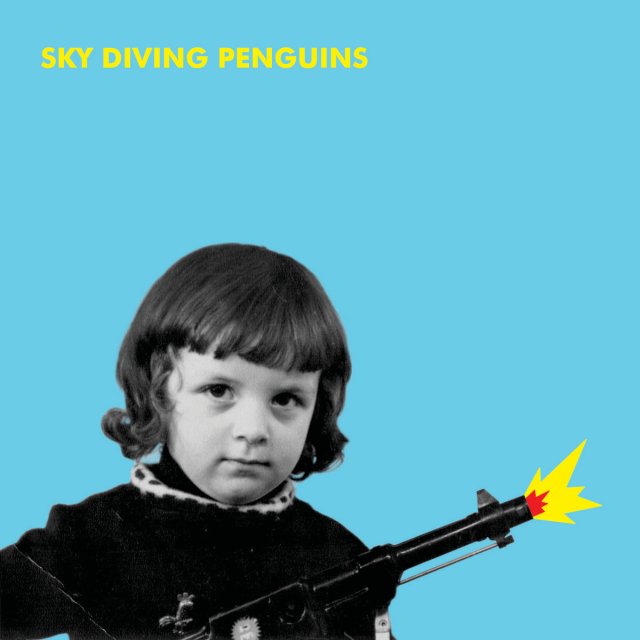
Who would ever expect to find an act with a music style and sound similar to the Beatles in the tiny nation of Georgia? Well, such an act exists in the form of Sky Diving Penguins, the brainchild of singer-songwriter and multi-instrumentalist Gia Iashvili, who on December 1st released his debut self-titled album Sky Diving Penguins. Based in the Georgian capital of Tbilisi, Gia is an interesting guy with a fascinating life story, some of which I learned about in a great review by Iain Key for webzine Louder Than War.
He grew up in a time when Georgia was part of the Soviet Union, and though Western music was frowned upon and even illegal, he managed to get his hands on some Beatles albums, which had a life-changing impact on the impressionable young teen. After the collapse of the Soviet Union in the early 1990s, he was able to openly revel in the music of Nirvana, Beck and Elliott Smith, among others, all of which have had a major influence on his sound.
In 2001, Sky Diving Penguins released Outspoken EP to critical acclaim, and were on the verge of signing with a record label when Gia decided to relocate to Japan, where he began studying cinematography and Kyudo (archery). One day, while practicing Kyudo, an arrow accidentally struck his left ear, leaving him deaf in that ear. After a lengthy convalescence, he went off the grid in the Mount Fuji Five Lakes region, where he spent the next eight years in a kind of self-imposed exile. Once he emerged, he moved back to Georgia, where he had a serendipitous encounter in Tbilisi with Georgi Kinkladze, the Georgian former player for the Manchester City Football Club who’d become a cult hero.
After talking and reminiscing about their time in the Red Army together and living in Manchester, Gia felt reinvigorated. He began writing music again, including co-writing the 2016 Georgian Eurovision entry “Midnight Gold” for indie rock band Young Georgian Lolitaz, performing with the band Z for Zulu, and slowly rebuilding his fan base. He recorded the songs for Sky Diving Penguins over the past three years or so, with the help of his friend and producer Mark Tolle, who sadly passed away before the album was completed. Additional production was handled by sound engineer Kote Kalandadze, who also mixed the songs with Tolle. Mastering was done by acclaimed mastering engineer Pete Maher.
For the album’s recording, Gia played guitar, bass, mouth organ, electric piano and percussion, and sang lead vocals, and Dimitri Oganesian played drums. Additional musicians performing on individual songs included Kote Kalandadze on acoustic or electric guitar, Nika Kocharov on electric guitar, Tiko Kvaliashvili on flute, Vako Saatashvili on trumpet, Beka Berikishvili on French horn, and Evgenyi Inchagov on cello. Gia’s wife Maria Charkseliani sang backing vocals.
Sky Diving Penguins features ten tracks touching on the sadness and pain that’s an inevitable part of life, but softened with glimmers of optimism and the belief that things will usually be alright in the end. About the album and it’s quirky cover art, Gia explained: “I always wanted my first album to feature this artwork. It’s a picture of me from when I was a child, holding a toy machine gun; it’s kind of weird and cute at the same time. Every word and every note that I recorded on this album is honest. It took me three years to complete. This is also the last piece of work my producer and friend, Mark Tolle, was involved in. He died a couple of years ago. I wouldn’t change a bit of this album.”
The album opens with “I Don’t Want, I Don’t Care“, a melancholy but lovely song with a strong Beatles vibe. The piano and horns are marvelous, and Gia’s gentle vocals hover in a sweet spot between John Lennon and George Harrison. The lyrics speak to feelings of ennui that keep one from accomplishing anything or moving forward: “I’ve got many things to do, but I don’t do. I’ve got many things to share, but I don’t share. Indifference is everywhere. So I don’t want and I don’t care.”
On “Serotonin“, he successfully melds grungy Nirvana-esque vibes with more lighthearted and melodic Beatles elements, but most of the album’s tracks have a soothing Beatles sound. Case in point are “This Is Breaking MeApart“, highlighted by enchanting flute and Gia’s delicate heartfelt vocals, and the hauntingly beautiful “HatingWaiting“, which sounds like a song John Lennon could have sung on Sgt. Pepper’s Lonely Hearts Club Band. Gia’s layered vocal harmonies are wonderful, and I love the horns, xylophone and glittery guitar notes.
The pleasing two-minute long “All Goes Back In The Box In The End” sounds a bit like a Bob Dylan song recorded by the Beatles, highlighted by a cheerful mouth organ and fluttery guitar notes. The lyrics advise us to not get caught up too heavily with material things, and to try to keep our perspective on the more important things in life: “You can build the biggest house by the water. You can deny all your friends. Big cars won’t make you feel better, no matter. All goes back in a box in the end.” “About One Hermit” has a quiet introspective feel, with gentle acoustic guitars, horns and strings creating a somewhat melancholy feel. Gia’s vocals sound more like George Harrison here as he sings words of encouragement to another: “This pain won’t last forever. Stupid self-destruction ends. All of us dig at our own pure holes.”
“Run Boy” is a bouncy, lighthearted song that continues on the theme introduced on “All Goes Back In the Box In The End”, that we should make the best of this life we’re given: “You dream of the place where ice-cream mountains and melon sun. There’s only weekends. Cops are playing with water guns. And there’s no trouble. Everyone’s a Beatles fan. You got no time boy. Find this place just live and Run boy, life’s notforever. Run boy, you got to get on a bus boy, take it, be clever. Run boy, find the place where you belong.”
“Depressedor Bored” is a charming tune, despite its rather dour title. The humorous tongue-in-cheek lyrics speak of a general feeling of discontent with life and perhaps ourselves: “All the questions that I’ve come across, I’m the first in line to get the answer. Wish I was David Hasselhoff, brave, young with toned muscles. Ohhh, depressed or bored.” Once again, I must make note of the strong Beatles vibe, especially in the George Harrison-esque guitars and lilting vocal harmonies. “Headache Will Cause Migraines” is decidedly more downbeat, with lyrics that speak to our sometimes fragile emotional well-being: “Back to my emotions. Rituals of my childhood years. Still get pretty strange notions. But crying with sun-dried tears. Headaches will cause migraines.”
As its title suggests, album closer “Tripping #9” has a delicious psychedelic vibe, with spacey atmospheric synths and watery guitar notes layered over a droning melodic rhythm. The appropriately trippy lyrics are somewhat ambiguous and surreal, but seem to describe conflicting feelings of euphoria and fear: “Air is only distance betweenme and the stars, but It’s too far. Laughing at the treason. Crying for the sin, where have I been? Mind is the trigger, feeling is the gun. Ever since you’re gone, drink without permission. Glass of diet sky, with no ice.” It’s a haunting and beautiful song.
Sky Diving Penguins is marvelous, and such a delightful listen that made it a joy to review. Gia Iashvili and company have crafted a really brilliant album, and I for one am happy he came out of exile and gifted us with his wonderful music.
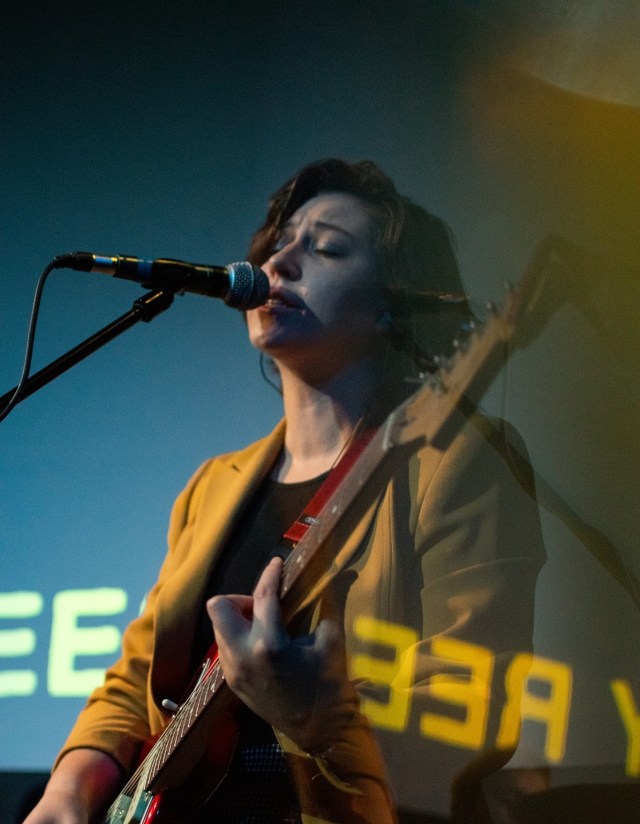
Holly Rees is a talented and thoughtful singer-songwriter based in Newcastle, England who’s been writing and recording exceptional indie folk songs for the past five years or so. Like many songwriters, her poetic lyrics are inspired by personal experiences that make them highly relatable to us listeners. She then delivers them wrapped in beautiful, understated melodies, fine guitar work and lovely, heartfelt vocals, all of which have earned her critical acclaim and a loyal following, with flattering comparisons to artists like Laura Marling and Courtney Barnett.
Holly released her debut EP Ilex in 2017, garnering airplay on BBC 6 Music and a feature on Tom Robinson’s BBC Introducing Mixtape. In 2018, she performed at the Hit The North and Evolution Emerging music festivals, and released her excellent second EP Slow Down. She followed with “Text Me When You Get There”: The Live EP in May 2019, and that September, dropped her single “Getting By“, which I reviewed. On December 10th, she surprised us with release of The Lost Songs, an all-acoustic EP originally recorded in isolation exclusively for her Patreon supporters (patreon.com/hollyrees) that she’s now gifted to the world.
She explains: “Here are the lost songs – songs I’ve written over the past three years that have fallen down the gaps. I never really intended these sad soft songs to see the light of day, but coming towards the end of another year I thought it might be nice to share them now, as a gentle winter gift before we draw a line under the year and start fresh in 2022. As some of you know, I’ve had to shield for a lot of the past two years, which is where this project started, in isolation. Every part of this project I’ve done by myself – writing, playing, recording, mixing, mastering, even the artwork – and I’m really proud of that. I hope that in listening you might find some of the joy, peace or escape that I found in making it.”
It’s a gentle EP, featuring five melancholy but lovely acoustic folk songs addressing conflicting emotions stemming from lost loves, missed connections, and the passage of time. With only her beautifully strummed guitar notes and clear, soothing vocals, Holly has created exquisite little gems that are simple yet profound, with a quiet intensity that touches the soul. The opening track “heather” is a kind of love song to her home of North East England (she told me that she actually got a heather tattoo right before leaving for her Canada tour in 2019, as an homage to the heather on the moors where she grew up): “I could be anywhere, except that the rain is making me homesick. Cry at your records, you were always such a sensitive soul. I tried to wear my heart on my sleeve but I must have got cold. And I feel open for the first time in a year.“
Likewise, the enchanting “victoria” is a heartbreak song to the British Columbia capital city: “Oh Victoria, I think you always knew that I would fall for her. Victoria. She broke my heart for a year, god was I trying. But first came Victoria, Vancouver Island.” On the bittersweet song of unrequited love “i justwant you“, Holly softly laments about being hopelessly in love with someone who just doesn’t feel the same about her: “Tell me about your family and living with your brothers. Tell me all your favourite streets, your heartbreaks and lovers. Tell me everything except the one thing I won’t ask. You don’t tell me if you feel the same. I know that you can’t do. I know it’s all on me, but I’m sick of writing about things that I can’t change. But I can’t change. I just want you.”
She touches on how shyness and fear of rejection sometimes hold us back, possibly losing out on opportunities for love on “seattle“. She sings of seeing a woman she’s attracted to on a bus in Seattle, but being too afraid to make contact: “Don’t know why I still hide like I’m seventeen. Smile and I won’t meet your eyes. You take down your bike. This must be your stop and we’re out of time. Go to Seattle maybe you were the one.” The serene “glad it’s you” has a bit of a Joni Mitchell vibe, and finds Holly content in a loving and trusting relationship: “Been singing with my all exposed. Been listening with my eyes closed, but my heart’s open. No I haven’t felt like this in a long time a long time, but I’m glad it’s you.“
The Lost Songs is a wonderful little EP that beautifully showcases Holly’s strong songwriting, singing, recording and production talents. I’m confident she’ll continue to impress us with more outstanding music in 2022.





 ECLECTIC MUSIC LOVER