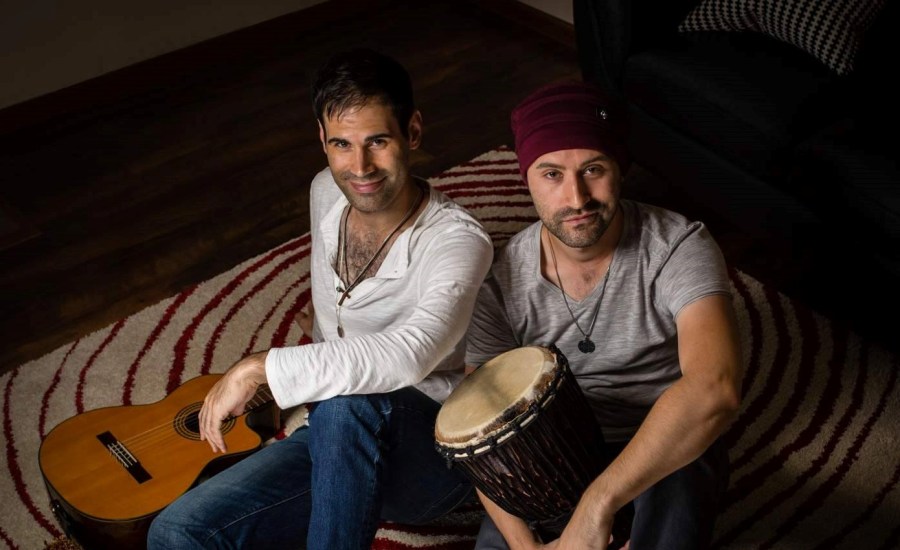
Novus Cantus is an innovative music act comprised of brothers Alexander (vocals and guitar) and Christian Herasimtschuk (drums and percussion). Based in the Hudson River Valley roughly halfway between Albany and New York City, the duo draw from a broad and eclectic mix of influences ranging from traditional ethnic music like flamenco and Hungarian folk, to classical Medieval, Renaissance and Baroque, to alternative rock, to create their uniquely enchanting and exotic sound. They’ve been performing and recording together since 2010, and have released a fair amount of music. I’ve written about them three times over the past three and a half years, and you can find those reviews under “Related” at the bottom of this post.
On November 16th, they released their latest single “Georgia“, along with a darkly beautiful video that nicely captures the song’s brooding essence. The song was recorded and produced by Novus Cantus, with assistance from Scott Apicelli of Blue Sky Music Studios, who mixed and mastered the track. The video, which starts off with historical images and realistic sounds of battle, features footage made available by pexels.com, as well as Civil War images from the Library of Congress Image Archives. Live footage of Novus Cantus performing the song were taken by Alex and Christian, as well as A. Delgado.
Though the music consists primarily of Alex’s gorgeous strummed guitars and Christian’s layered percussion, accompanied here and there by spare synths, the haunting song has a lush fullness of sound. Alex’s guitar work is truly stunning, with a vibrant blend of acoustic and electric guitars. The strummed acoustic guitars lend a soothing Americana/folk vibe to the song, but when he plays those chiming electric guitar notes, the song takes on a richer, more cinematic feel, especially when combined with Christian’s dramatic percussion. Alex’s heartfelt vocals beautifully convey the feelings of loss and despair expressed in the lyrics, and when his backing harmonies are added to the mix, the song becomes even more impactful. It’s another stellar release by these amazing brothers, and I’m happy to choose it as my new song of the week.
About the song, Christian told Albany-based The Capital Underground podcast that “Georgia” deals with a character in the post Civil War era struggling to return to the only place he knew. Only it’s no longer really home, but rather a place of suffering and loss. In his heart, he’s conflicted, because it’s the only home he’s ever known.
Oh I'm going home to Georgia
Oh I'm going home to see That house of bondage in Georgia
That was the only home for me
Oh how I long for rest
This cross must rest upon my breast
But now I'm going back to Georgia
A war-torn refugee
Time's calling out in Georgia
The voices of my family
Winter has fallen and spring now has come
Let's go and see what Sherman has doneOh how I long for restThis dream is deep within my breast
That sweet wistful dream of Georgia
Is nothing but a dream for me
Where am I to go but Georgia
It was the only home for me
Ewan Patrick is a talented and thoughtful singer-songwriter from Edinburgh, Scotland who’s had music in his blood for much of his life. He studied contemporary classical composition at Napier University in Edinburgh, then earned a graduate degree in Music Production at Leeds College of Music. He’s also played in many bands over the years, performing extensively across the UK, including at a number of major music festivals. More recently, Ewan has recorded some of the songs he’s written over the years that he says “never quite found their place in any of the bands I’ve played in.“
In October 2020, he released his first double A-side single “Retrospect/Hurricane”, then followed this past February with a second double A-side single “Feels Good To Be Alive/Two Hearts“, which I reviewed. Now he returns with his debut full-length album Forever Love, featuring 10 wonderful tracks touching on the universal subjects of life, love, loss, family and current affairs. The four previously-released singles are included on the album, along with six new songs, all of which beautifully showcase Ewan’s outstanding songwriting, performance and production skills, as he records, mixes and masters all his music by himself.
His songs are a pleasing mix of acoustic, folk rock, piano ballads and anthemic rock, nicely sequenced in a way that gives the album a balanced, fresh-sounding flow. Ewan has a strong, clear and beautiful singing voice too, which sounds great on every style of song he sings. The album opens with “Feels Good To Be Alive“, an uplifting rock song about recognizing the things that really matter and that, despite one’s problems, life is still worth living: “Nothing’s working but I’m feeling carefree. I’m still hurting, yet it doesn’t bother me. Why? Because I’m still alive. It feels good to be alive.” The song starts off low-key, with his acoustic guitar accompanied by gentle percussion, then explodes into a torrent of electric guitar and crashing cymbals for a dramatic finish.
Next up is “Hurricane“, a rousing guitar-driven rock song about standing up against oppression: “No longer hiding in the shadows. No longer afraid of speaking up. The winds of change are gradually building, and we’re looking just like a hurricane.” Another politically topical song, and one of my favorites on the album, is “Not Invincible“, which Ewan says was written during the first lockdown, after the murder of George Floyd last year in Minneapolis. It’s a hauntingly beautiful track, with sweeping cinematic synths, highlighted by mournful piano keys and stunning guitars.
Like the opening track “Feels Good To Be Alive”, several songs explore various aspects of making the most of our time on this planet, and successfully navigating through both good times and bad. “Law of Life“, which sounds like a song that could have been recorded by Tears For Fears, addresses the inevitability of change. Ewan gives us something to think about: “It’s a law of life. Can’t fight the changing tide. What will you sacrifice? Will you be left behind? Are you looking forward to a better past?” On the beautiful piano ballad “Be Strong“, he encourages us to remain steadfast and resilient in the face of those changes: “You wait a lifetime, and then one moment can change your life. So many questions, keep searching for answers that aren’t easy to find./ Be strong, you’re stronger than you’ll ever know.” And on the bittersweet folk-rock track “Retrospect“, he speaks to the heartache and pain of moving on from a relationship that’s ended. “To say goodbye is the hardest part, but like the continents we drifted apart. The broken promise brings a tear to our eyes as we kiss for the very last time.”
Then there are the songs that are the most deeply personal for Ewan. The title track “Forever Love” is a lovely piano ballad written for his young daughter, and expressing the joy she brings him: “And every day you give me is a little miracle. Cause you’re my forever love.” Along a similar theme, the poignant “You Don’t Get A Second Chance At Life” is a conversation between a parent and child, in which the parent offers advice for living their best life: “So fall in love. Try to be kind. But speak the words that are on your mind./ Spread your love and share your time. Leave all your dark thoughts far behind. You don’t get a second chance at life.” The hard-driving rocker “The Call of Home” is a heartwarming ode to his beloved home town of Edinburgh: “Around every corner, another vista to break your heart. We’ve been apart far too long. I feel the call of home.” His guitar work is particularly good, a colorful mix of shimmery notes and thunderous riffs.
Perhaps the most personal song of all is album closer “Two Hearts“, which Ewan composed while writing his own wedding speech. He recalls “I was not for a minute trying to contrive a love song for my future wife but it just kind of happened.” The song is appropriately beautiful and heartfelt, with him singing of his love and devotion, and how his bride has made him a better man. “You took my hand. Made me a man. You’ve made me better than I’ve ever been. Come walk with me through hopes and dreams, and together we’ll take the world head on. Two hearts will beat as one.” It’s a fitting song with which to end this wonderful, uplifting album.
Forever Love is a first-rate, meticulously-crafted work, and a very impressive debut by this talented musician. I hope we’ll be hearing more great music from Mr. Patrick soon.
Ivor Game is a British singer-songwriter from Middlesex who’s been making music for most of his life. He began playing guitar and singing at the age of ten, and in his teens, played with a number of bands. When he entered his 20s, he began performing as a solo artist in small clubs and venues around London, and later toured throughout the UK and Ireland, parts of Europe and all the way to America, where he performed in Los Angeles and Nashville.
His music is a pleasing, laid back style of indie pop with strong folk undercurrents and intelligent, straightforward lyrics touching on life, love and relationships. His songs are also quite economical, both instrumentally and length-wise. Generally, the only sounds we hear are his acoustic guitar and gentle, understated vocals, though some tracks may also feature subtle piano, strings and/or percussion. Most of Ivor’s songs are under three minutes in length, with a fair number clocking in at under two minutes, but whatever their length, each song sounds complete and as long or short as it needs to be to get his message across. As the old adage goes, sometimes less is more.
Beginning with his debut album Hit the Big Time in 1996, the prolific musician has released a total of 12 albums at the rate of one every two years, his most recent work being Be Good to Yourself in 2018, as well as numerous singles along the way. Several of his songs have garnered airplay on radio stations across the UK and around the world. A highlight for Ivor was having his song “Highbury” played at half time during the Arsenal vs. Tottenham North London Derby at The Emirates Stadium on November 18, 2017.
One could spend many hours listening to Ivor’s extensive discography. I’ve listened to quite a bit of it to prepare for this article, and there are so many wonderful songs to choose from. But I’ve selected a few I especially like that I feel give a good representation of his sound. One of his most recent singles, from May 2020, is “I’m Not Sure”, a poignant folk song about not yet having come to terms with a restless romantic partner you fear may leave you for good: “It’s easy to hang on to the past, and try to make the whole thing last. But things are always moving on. One day I might wake up with you really gone. I’m remembering the time that you walked out my door. But you’re still in my sights, how long for I’m not sure.”
The song received airplay on Readifolk, Deal Radio, Hayes FM and Marlow FM in England, Acoustic Routes in Wales and the RTE in Ireland, as well as in Australia, Germany, The Netherlands, New Zealand and New York, USA.
“It Ain’t You and Me” is a track that originally appeared on his 2010 album Then. The song was recently played on Tom Robinson’s show on BBC6 Music, and the response was so positive that Robinson asked Ivor if the song could be made more easily accessible for people to listen to or download. Accordingly, Ivor made it available as a stand alone track on both Bandcamp and YouTube.
A particularly lovely song is his 2017 single “Water and Wine”, which is both longer (3.47 minutes) and features ethereal keyboard synths and gentle percussive textures, creating an enchanting backdrop for his soothing vocals.
His most recent single, released in May, is “You Lovely You”, a comforting song about those special friendships in our lives that endure despite distances apart or the passage of time: “I only see you once in a blue moon. But it feels like yesterday that I was here with you. Oh, oh, oh, you lovely you. We seem to pick up where we left off. But we’ll always be the ones that time forgot. Everyone gets old, but we do not.” The song has a breezy, vintage feel like it could have been written in the 1920s.
While I’m a huge fan of alternative rock, dream pop, R&B and dance music, it’s also nice to indulge in a little easy-listening folk pop once in a while to relax and gather my thoughts. Ivor Games’ soothing tunes fit the bill nicely, and I hope my readers will enjoy them as much as I do.
I’ve featured scores of artists on this blog over the past five years, and one of the more interesting and unique among them is singer-songwriter Erin Cookman, who goes by the wonderful artistic moniker Erin Incoherent. Originally from Fort Collins, Colorado and now based in Philadelphia since late 2017, the self-described “singer, musician, poet, writer, mental health advocate, model, artist, makeup junkie, loudmouth and strong woman” is a hyper-talented songwriter, vocalist and guitarist. She’s also a fiercely passionate and outspoken champion for mental health and issues like domestic violence and sexual abuse, topics that often appear in her powerful songs. Erin’s music style tends mostly toward folk/indie rock with strong punk and grunge elements.
I last wrote about Erin two years ago, in December 2018, when I reviewed her album Medusa, a brilliant 11-song manifesto addressing anxiety, trauma and pain. Now she returns with her new album Déjà Vu, which dropped November 30th. The album was co-produced by Erin and Bill Nobes, and recorded and mixed by Nobes at The House of Robot studio in Wrightstown, New Jersey with assistance from Vincent Troyani. Erin sang all vocals and played guitar and bass, with help from a number of musicians, including Chris Olsen on drums and additional percussion, Nikki Nailbomb on cello for “Of Roaches & Roommates” and bass on “25” and “The Fog”, Skelly on upright bass for “Harvestman”, and Joe Falcey on drums for “Of Roaches & Roomates”. The album was mastered by Jason Livermore at The Blasting Room in Fort Collins. Bill Nobes also did the photography and cover art for the album.
With Déjà Vu, Erin continues to explore themes of disillusionment and pain stemming from emotional trauma, the loss of loved ones, and relationships gone bad. She’s a very fine singer and acoustic guitarist, but it’s her unflinching and profound lyrics that impress me the most. Each song is laid out like a deeply personal story told though a lengthy poem, and her lyrics are so good I’d like to quote them all for every song, but will control myself. The opening title track “Déjà Vu“ is a shining example of how she skillfully uses tempo and melodic changeups to reflect the different moods expressed by her lyrics. The song starts off with Erin’s gently-strummed acoustic guitar and soft breathy vocals, then both turn more aggressive and harsh as she coldly proclaims that she’s done with the relationship: “I never wanted all of this / Neglect is cold as snow / And now I don’t care where you went because I’d rather be alone.”
On the bluesy “The Fog“, Erin bitterly laments to a lover whose drug addiction has destroyed their relationship. I like how she uses the words ‘heroine’ and ‘heroin’ in the song to great effect. In one stanza, she sings “And I will never be your heroine / Not for my lack of, lack of trying / You left me, I was broken / No longer, your trophy / Why would I wanna be the habit you’re always kicking?“, then in another almost identical stanza, she sings “And I will never be your heroin…” “The Storm” is a great kiss-off song, with Erin telling the man who broke her heart that he’ll be facing dark times ahead: “And I hope that when the rain comes for you, you’re a little too late, just a little too late to find your way back home / And away you are swept with the hurt, and the pain, and the grief, and the shame that you left me.“
“25“, with it’s chugging guitar-driven melody and Erin’s gentle, heartfelt vocals, has a haunting Americana vibe. The introspective lyrics seem to speak of being overwhelmed by anxiety and self-doubt: “I think I’ve bitten off more than I can chew / I’m scared of dying but I’m scared of living too / I’ve never really felt like I belonged / I don’t feel like people listen, or ever really wanna talk / So now I’m always dreaming of a life that feels like home / Somehow I must make it on my own.” She drastically changes the mood with “Aculeus (The Sting)” a provocative and sensual song that speaks to pansexual desires. First she seductively croons ” Hey, oh yeah, alright boy you’re looking like you want it. Cause I like it hot, I like it cold. Unpredictable and bold / And I think that part of who I am is part of what’s driving you mad.” But then she later sings “…alright girl you know I fucking want you. Cause I like it hot, I like it cold. Unpredictable and bold / My favorite part of who I am.“
Perhaps the most poignant track on the album is “Of Roaches & Roommates“, a heartfelt tribute originally written for her friend Bonnie who died of a drug overdose, but now dedicated to friends Erin has lost to addiction-related struggles, as well as those fighting to remain clean in recovery. “So now we’re smoking in the basement drinking Old Crow / And we tuned up the Ibanez so we could sing every song we know / Cause Bonnie didn’t have to die man but she shot up / Slug said he didn’t have the narcan but we can’t trust that fuck no, we can’t trust him.” With the help of videographer Shad Rhoades, Erin has produced a deeply moving video featuring interviews of people who’ve lost friends or loved ones to drugs, interspersed with footage of her and her fellow musicians Joe Falcey and Nikki Nailbomb performing the song.
The next several songs deal with emotional pain and the struggle to heal and feel ‘normal’. On “The Plan“, Erin resolves to learn to love herself, warts and all: “One day I’m gonna wake up in my someday / Cause if I don’t, I’d rather not wake up at all / The hardest thing that I’ve learned is to love me even though it hurts / Cause not being able to love me just seems worse.” Continuing on a similar vein, the rousing “The End of the World (again)” sees her feeling overwhelmed by self-doubt and wallowing in her emotional pain: “I can’t seem to live my life with consistency, no matter how hard I try, and I don’t know which is worse – Feeling like ‘I shouldn’t hurt’ or living so comfortably with pain, that it’s all I feel, and all I look for.” But then she resolves to not let it defeat her: “No, it’s my turn, give me time / Piss off, I’m gonna be fine Yeah, it’s my turn.” And on the hopeful and comforting “The Edge of September“, she vows to emerge from her mental breakdown as a stronger person: “I’m pinning my hope on the edge of September and praying the payoff’s not too far away / I’m trying to focus and change for the better / Breakdown’s cause breakthroughs, I’m reminded each day.”
“The Coal” seems to speak to the pain each partner in a dysfunctional relationship is going through, with each of them trying to heal without also hurting the other in the process. Erin sings “Maybe it’s your time. Time to fight, time to feel. To do not just what’s right, but what will help you heal / Cause now that the storm has lifted, it’s left you with this view / What the hell will you do?” But then she points out that their actions are detrimental to her own well-being: “And I think you try to make your words hurt. Yeah, I think you like knocking me down. You’re daft if you think that it’s working. You’re not an anchor, I’m not gonna drown. No, nobody ever held me back.”
The track “Harvestman” is a bit of an outlier on the album, both musically and lyrically. The song has more of an ethnic folk vibe, with a jaunty Latin guitar-driven melody and lyrics in both English and Spanish. I’m not certain as to the meaning of the spiritual lyrics, but I’m guessing that the harvestmen is a metaphor for death: “The harvestman comes now for me, as fire greets the stars / And I could not grieve, for silently, I knew just where we’d go.” The forest sounds and chirping birds at the beginning and end of the song are a nice touch. The album closes with “Déjà Vu (Reprise)“, a brief track featuring Erin’s lilting and rather haunting a cappella vocals pondering what it all means: “No, you’ll never get it back / Where you’ve been keeps what you’ve lost / Yeah, there is no real conclusion Are we memories, or thought?” To me, it serves to end things on a somewhat upbeat and optimistic tone, while acknowledging there’s not necessarily a ‘happily ever after’.
I’ll admit that it took me a couple of listens to fully grasp and appreciate this rather intense album, as the melodies aren’t immediately catchy, nor are the lyrics the kind you can quickly sing along to. But once I delved more deeply into those meaningful lyrics, as well as discovered the many nuances contained in the music and Erin’s emotive, wide-ranging vocals, I’ve come to realize that Déjà Vu is another brilliant work of musical art by this amazing storyteller.
After more than five years of blogging about music – which enables me to learn about a least a few new artists or bands literally every day – I’m still surprised when I discover an artist who’s been putting out superb music for several years that I knew nothing about. Just goes to show how many talented artists and bands exist out there, making some really great music. One such artist is British singer-songwriter and guitarist Jono McCleery, who’s latest single “Call Me” – which dropped October 23rd – has captured my attention. He also released a beautiful accompanying video for the track on October 29th.
Based in London, McCleery was deaf until the age of four, unable to perceive any acoustic stimuli. But when he turned 11, he picked up a guitar for the first time and took to it immediately. He eventually became part of the lively London “underground” and a member of One Taste Collective (OTC), a project founded in 2004 to support musicians and poets of all styles. Some of the artists who emerged through the collective include Little Dragon, Jamie Woon, Kate Tempest and the Portico Quartet, all of whom McCleery has worked with.
As I do with all artists and bands I write about for the first time, I checked out McCleery’s back catalog of music – which is pretty extensive – to get a feel for his sound and style. After listening to quite a few of his songs, I can unequivocally state that I love his music. He plays an incredibly pleasing style of what I’d loosely call contemporary folk, though many songs feature elements of electronica, world music, shoegaze, dreampop, soul and jazz. His music is characterized by captivating melodies, lush but understated instrumentation and his warm, soothing vocals in a style that to my ears is reminiscent of such artists as Sufjan Stevens and James Blake.
His first release, in 2008, was his self-produced debut album Darkest Light, a collection of eight lovely acoustic folk tracks. He followed in 2011 with There Is, a stunning, more experimental work with a greater emphasis on world, electronic and jazzy elements, and featuring collaborations with renowned artists Fink and Vashti Bunyon. One of the album’s tracks, a mesmerizing cover of Black’s 1986 hit “Wonderful Life”, has been streamed more than 3.6 million times on Spotify.
2015 saw the release of his third album Pagodes, another beautiful work that received widespread acclaim. Deutschland Funk called it “a stroke of genius”, while Rolling Stone described it as a “flawless album”. And in 2018, he released Seeds of a Dandelion, a marvelous album of covers in which McCleery re-interpreted songs like Roy Davis Jr.’s dance classic “Gabriel”, the Cocteau Twins’ “Know Who You Are at Every Age”, Atoms For Peace’s “Ingenue” and Beyonce’s “Halo”, an enchanting track which has been streamed over 8.8 million times on Spotify. Webzine Line of Best Fit called the album “a strong collection of songs, made with the upmost respect for its inspirations.”
Now he returns with “Call Me”, the second single from his forthcoming fifth album Here I Am and There You Are, set for release on November 20th via the Ninety Days Records label. The album, which McCleery recorded in just four days with the help of a few musician friends, is an homage to the Afro-American jazz musician Terry Callier, who died in 2012. I’ve had an advance listen of the album, and it’s every bit as stunning as his previous works. “Call Me” was written and sung by McCleery, who also played guitar. Supporting musicians include Steve Pringle on keyboards, Milo Fitzpatrick on bass and Dan See on drums. Production and mixing was done by Brett Cox, and mastering by Emil Van Steenswijk.
The song touches on the struggles of separation and finding inner strength. McCleery explained his inspiration for the song: “When I revisited the song before recording the album, I decided to dedicate a verse to Terry Callier’s song ‘Dancing Girl’, and these are his lyrics: ‘I saw a dream last night, bright like a falling star, and the sources of light seemed so near, yet so far. I thought I was in flight out where the planets are, moving between day and night. Here I am, and there you are.’ And then more recently whilst listening to the album recordings as quietly as possible, that line ‘here I am and there you are’ stood out. And I decided to use it for the album title.“
The song has an enchanting, almost jazzy vibe that’s at once melancholy and beautiful. McCleery’s gently strummed guitar, accompanied by subtle bass and the softest of toe-tapping beats, immediately draws us in, and once he begins singing the poetic lyrics in his soothing vocals, we’re more than eager to follow along. The instrumentals become more lively and his vocals more earnest in the choruses, and I love the haunting little piano chords that enter halfway into the track.
The gorgeous video was produced by France-based screenwriter and videographer Giovanni Di Legami, and features clips from his movie Idem, starring actors Roxane Colson and Jean Yann Verton.
There’s a lot of musical talent in Wales, and I’ve written about several artists and bands from that fair British Isles nation: David Oakes, Dying Habit, Revolution Rabbit Deluxe, GG Fearn, Dunkie, Head Noise and, most recently, Kidsmoke. Another Welsh act I’m especially fond of is The Puss Puss Band, who I’ve featured a few times on this blog over the past four years. Based in Cardiff, they started out as a duo consisting of multi-instrumentalists Asa Galeozzie and Lee Pugh (the band is named for Asa’s cat Puss Puss). Both are accomplished musicians who’ve worked with numerous artists and bands in the UK and Welsh music industry for nearly 15 years as writers & session musicians. Asa plays guitar, bass, percussion, piano and melodica, while Lee plays lead guitar, bass and piano, as well as sings lead vocals. Their relaxed music style is a pleasing mix of jazz and folk-infused indie pop that just makes you feel good.
In April 2017, with help from seasoned musician and producer John ‘Rabbit’ Bundrick (who’s best known for his work with The Who, as well as on the soundtracks for the films The Rocky Horror Picture Show and Almost Famous), the guys released their beautiful debut album Echoes Across the Cruel Sea. (I reviewed that album along with an interview with Lee, which you can read here.) On July 3rd, they dropped their second album Life Cycles, featuring ten wonderful tracks addressing the subjects of life, love, loss and the passage of time. Once again, the recordings were all written, arranged, performed and engineered by Asa, Lee and Rabbit. Post-production, mixing and mastering was done by Richard Digby Smith at TQ1 Studios. The Puss Puss Band has now expanded to include six members, including Asa, Lee, Steven Stanley, Joel Rees, Luke Moore, and Nigel Hodge. Only Nigel is featured on the new album, as he played flute and alto sax on the track “Losing The Rain”.
The opening track “We Should Be” is a bittersweet song about missing someone you’d had a love affair with who now seems to have lost her feelings for you, and wishing she was back in love with you so you could be together. Gently strummed guitars, crisp percussion and delicate synths create a warm backdrop for Lee’s soothing, breathy vocals that convey a sense of sad resignation as he sings the poignant lyrics “The way you see the world is just the same. It’s just the way you feel about me that’s changed. But we should be…. We should be in love.”
The delightful video shows a man in a cat suit (played by Lee) standing in downtown Cardiff, holding a large flip chart printed with words that are directed at his love interest. In various scenes, he’s shown chasing pigeons, riding the merry-go-round, and sitting on the bench offering some of his food to a man who politely turns him down, then proceeding to eat it out of the bowl. By and by, he walks past a busking musician (played by Asa) and throws a few pieces of dry cat food into his guitar case. At the end, the busker sees him sitting forlornly on the ground next to the merry-go-round, offers his hand, and they walk off together down the street holding hands.
Many tracks have a gentle folk-rock vibe, such as “About Time“, which touches on how a relationship built on love and respect endures over time: “It’s about time. It’s about all we got left. It’s about the way you walk. And the way that you still care about me.” The song has a mellow vibe and catchy melody, with a lovely mix of jangly and chiming guitars accompanied by snappy drums, and some nice keyboards and organ. I love Lee’s breathy vocals that hover in a sweet spot between raw and comforting, with an almost seductive quality. Another is “Holding Its Own“, a pretty but poignant song about the daily struggles of keeping one’s sanity in this crazy world: “Hopeful yet empty, Following rules. Blind to the life of a mind. Just holding its own.” The instrumentals are sublime, with what sounds like a mellotron being the highlight for me. The guitars, bass, keyboards and organ are all pretty terrific as well.
The Puss Puss Band channel their rock side on “Thank You“, thanks to a harder-driving beat, heavier electric guitars and more aggressive percussion. The lyrics seem to acknowledge a friend who saved the singer through tough love, brutal honesty and perseverance: “But thank you so much for saving me from me. Thank you so much. For friends who never sleep.” One of my favorite tracks is “Pretty Games“, as I love the horns, funky guitars and mellow instrumentals that give it a cool, jazzy vibe. The lyrics speak to the games we play at one time or another, unable to be honest to ourselves or others about how we feel, which keeps us treading water so to speak. I like how they give a nod to their previous album Echoes Across the Cruel Sea: “It’s all a pretty game. Another year and still the same. But I still hear echoes of that sea. Parts we play. Wasted days. Still the same. Pretty games.”
“On The Common” is an exquisite song, with beautiful acoustic and delicate chiming electric guitar notes, accompanied by the gentlest of synths, all creating a glittery, ethereal backdrop for Lee’s soft vocals. “Losing the Rain” is another favorite, with its sophisticated, jazzy feel thanks to Nigel’s wonderful flute and saxophone. The lyrics seem to be about trying to make a relationship work despite the many obstacles: “I’m losing the rain. These broken thoughts that roll around inside my brain. Maybe I’m too blind to see? I wasn’t meant for you and you were never meant for me.”
The guys deliver more stellar guitar work on “Junkie“, a song about trying and failing to save someone from addiction and the realization some people just can’t be saved. A standout track is the marvelous Pink Floyd-esque “Time and Tide“. The song starts off slowly, with only gentle acoustic guitars, but gradually builds into a dramatic rock song with electric guitars, piano, sweeping synths and heavy percussion. The lyrics were inspired by the passing of Asa’s uncle, with whom he was close; his uncle took him to gigs and got him into music when he was young. “For all the glitter and gold. We all grow old. As the lights fade down. We still hold for applause. And the show moves on. But the feeling… Lingers on and on.”
They close out the album with “Missed“, a beautiful and very poignant song that nicely encapsulates the album’s overall theme of the cycles of life – how relationships and friendships come and go over time. The piano melody was written a while back by Rabbit, and the lyrics later written by Lee to address the loss of a loved one: “I’m losing you tonight. But I’m here by your side. There’s no more need to fight. / But time shows no kind of nostalgia for goodbyes.” Musically, the song is different from all the other songs, as it features only a haunting piano and Lee’s raw, yet comforting vocals.
Life Cycles is a really lovely album and a pleasurable listen from start to finish, without a single weak or throwaway track. The song arrangements and production values are flawless, and the guys’ musicianship is outstanding on every level. I love this band!
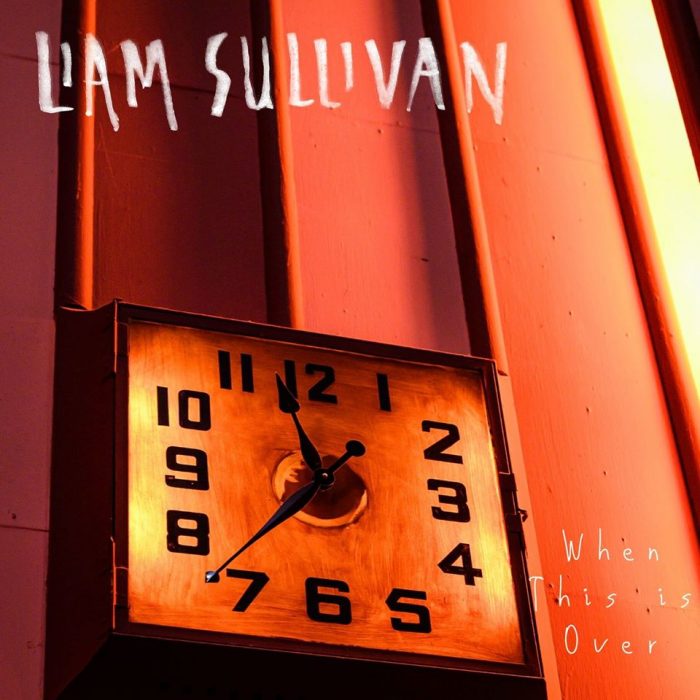
I’ve been featuring a lot of British artists on this blog lately, and singer-songwriter Liam Sullivan is now the seventh in a row. The engaging musician from Leeds reached out to me a few days ago about his latest single “When This is Over“. He’s a fine songwriter and guitarist, and has a lovely and vibrant singing voice that’s quite pleasing. His music can generally be classified as alternative rock with strong folk overtones, and I’ve been listening to and really enjoying his back catalog of songs, which I strongly urge my readers to check out on one of the music platforms listed at the end of this review.
Liam has been writing and performing music for well over a decade, and released his first solo EP Restless in June 2017, featuring four stunning tracks. More recently, he teamed up with a group of musicians to form his own back up band, and released an equally beautiful second EP The News I Needed in December 2019. On May 1st, he released “Wasted Days”, a poignant single about depression and feelings of uselessness, and now follows with “When This is Over”, which dropped on May 25th. Written and recorded during the COVID-19 quarantine, the song is a hopeful look ahead toward happier times.
Like “Wasted Days”, “When This is Over” has a gentler folk vibe, with just Liam’s beautifully-strummed acoustic guitar, accompanied by soft percussion. His vocals are heartfelt yet comforting as he laments of the many things we’ve been unable to do socially with others during this unprecedented quarantine, while remaining optimistic that we will do them all again one day. He also admonishes us to take a look at ourselves, and not place blame or remain divisive about something that many have suffered from. It’s a wonderful song.
Maybe someday when this is over We can sit out in the sun Maybe someday when this is over We will embrace everyone Maybe someday when this is all over We will share a beer Maybe someday when this is all over We will see what happened here
What’s in your heart, and your mind? This is not the time for choosing sides What’s in your heart, your mind?
Maybe someday when this is over I can shake your hand Maybe someday when this is over We will understand more Maybe someday when this is over We can start again Maybe someday when this is all over It’s over, it’s over
What’s in your heart, and your mind? This is not the time for choosing sides What’s in your heart, your mind?
Cleveland, Ohio-based band You’re Among Friends are most definitely among friends at this blog. Their laid back style of funky, blues-infused folk rock seems to channel Steely Dan, The Grateful Dead and even a bit of Elvis Costello, and always makes for a pleasurable listen. That comforting low-key vibe, combined with their thoughtful, down-to-earth lyrics about this crazy thing we call life, has a way of making me feel that everything’s gonna be alright. And boy, we can all use more of that right now!
I’ve had the pleasure of featuring them twice on this blog, first in June 2017, when I reviewed their 2016 album As We Watch the Years Go…, and again in January 2018 when I reviewed their EP One Day You’ll Look Back. (You can read those reviews by clicking on the links under “Related” at the bottom of this page.) They’ve just released their latest album Start Making Sense, which dropped May 8. It’s their first release in two and a half years, and they sound better than ever.
You’re Among Friends was born in 2007 when guitarist and vocalist Anthony Doran and bassist Kevin Trask – who’d both played together in another band – rechristened it with a new name and began reworking songs from the previous band’s repertoire. They released their debut self-titled album in 2007, then soon followed up with an EP and double single. As the demands of life, work and starting a family took more of their time, however, the band went on a hiatus in 2011 that lasted four years. Once they reconnected in 2015, they began working on the album As We Watch the Years Go…, with songs inspired by their life experiences as well as the passage of time and how it affected friendships, relationships, and the band itself. Their follow-up EP One Day You’ll Look Back continued to explore some of the themes first addressed by the album.
Like more than a few bands, You’re Among Friends has struggled since their beginnings to find and keep drummers. They’re now on their seventh drummer in the person of Mike Janowitz, who appears to be a perfect fit. In a recent interview with Jeff Niesel of Cleveland Scene, Anthony commented “Mike is great. We have had some drummers who are great technical drummers and skilled, but they often treat us like we’re a stepping stone to the next gig. And then, we’ve had some cool, nice guy drummers, who aren’t that great at drumming. Mike is the best of both worlds. He’s the best drummer we’ve ever played with.”
Anthony wrote the music and lyrics for most of the songs, and all three members worked out the arrangements together. They began recording songs together for Start Making Sense this past January and early February at Kevin’s house prior to the COVID-19 outbreak. Anthony later overdubbed his guitar parts and vocals at his home from late February through early April, then Kevin mixed the recordings from late April through early May at his home. Anthony noted: “We haven’t been in the same room since February. It’s really weird, but we kept going with the album and let it happen naturally.” Mike came up with the album title, and Kevin designed the artwork using a photograph he took during one of their sessions.
Opening track “Trying to Take It All In” speaks to the pressures of trying to keep up with the constant flood of information that can be downright overwhelming these days, and coming to the conclusion that’s it’s really not all that important in the end: “Things move fast these days. And folks who try to say if you’re not keeping up the pace, you’re in the wane. But I’m beginning to think that I could handle the shame. Getting kicked out of the race might be okay. But if I ever move too slow, you should probably know I’m trying to take it all in. It doesn’t matter who’s the fastest, when there’s this much information to process. The avalanche rolling down the mountain is gonna bury us all just the same.”
Their song titles let us know exactly what the songs are about, and I really enjoy the almost conversational flow of their lyrics, which are easy to understand and relate to. On the toe-tapping “Waiting For Life to Start Making Sense” they tell us to lighten up a bit and not take everything so seriously: “Take life as it comes. Don’t get uptight. Just keep moving on. Never know about what’s coming next. Seems like the worst could turn out to be the best.” I like Anthony’s guitar noodling on the track as he lays down a catchy little riff, as well as his endearing vocals that remind me of Randy Newman.
The short and sweet “Once the Toothpaste is Out of its Tube” uses a simple but brilliant metaphor to describe how our words and actions can sometimes have more impact than we might realize: “Stuff you put out into the world, might come back around to you. So don’t forget what happens once the toothpaste comes out of its tube.” “Why Do I Dwell on Things?” asks why some of us (me included) focus on the negative rather than all the good things in our lives. “Why do I dwell on things that I can’t change? What good does it do, it just winds me up, and life has to go on anyway.” The funky guitars and bass on this track are really good.
One of my favorite tracks on the album is “Hills You’re Willing to Die On“, not only for Kevin’s wonderful bass-driven groove and Mike’s jazzy drums, but also its message about how so many people today choose to blindly cling to their political beliefs: “Carefully choose the hills you’re willing to die on. Those coattails you ride on get more torn and frayed by the day.” About the song, Anthony explained to Cleveland Scene: “It was during the impeachment hearings that the lyrics came to me. We’re all divided, and we can’t communicate any more because we’re all set in our ways.”
The first thing we hear on “Just Keep Being Nice” are the faint spoken words “That does not count against me. This is the one.” Whether intentional or not, it reveals, to me at least, how funny and real these guys are. They also serve up more funky guitars and jazzy rhythms as Anthony advises us to not let the blowhards and assholes get to us: “Life is too short to give anything they say a second thought. Smile and pretend you agree that their message has value and meaning as it goes in one ear and out the other. Just keep being nice. And pretend to play the game. Act like you want to win, although none of this means anything.”
On the sweet “On Again, Off Again“, they touch on how some friendships and even love affairs can wax and wane, yet endure through time: “We go from the closest of friends to the coldest of strangers. But whenever we find our way back here again it seems like no time has passed and nothing’s changed between us.” From a musical standpoint, “String a Few Nice Words Together” is one of my favorites, as I love Anthony’s funky guitars and Kevin & Mike’s cool, jazzy rhythms. The lyrics, however, speak to the singer’s shortcomings with regard to his actions not living up to his words: “Talk is cheap, but that’s always been good enough for me. I understand when you say that my apologies don’t mean anything because things never change. They always go right back to the way they were before.”
Kevin wrote the lyrics for the final track “My Best Friend Is Never Coming Home“. It’s a poignant song about remembering a best friend who’s gone: “So much has changed since you left us. I’ve got kids now. You would have loved them. They would have loved you too. But now you’re gone. I’m all alone. My best friend is never coming home.” It has a languid melody that suits the wistful lyrics quite well, without sounding maudlin or depressing.
With Start Making Sense, You’re Among Friends have delivered yet another thoughtful and pleasing album for us to enjoy. As their name implies, it’s like the return of an old friend with whom we’re able to pick right back up from where we left off. And that, my friends, is a mighty good thing indeed.
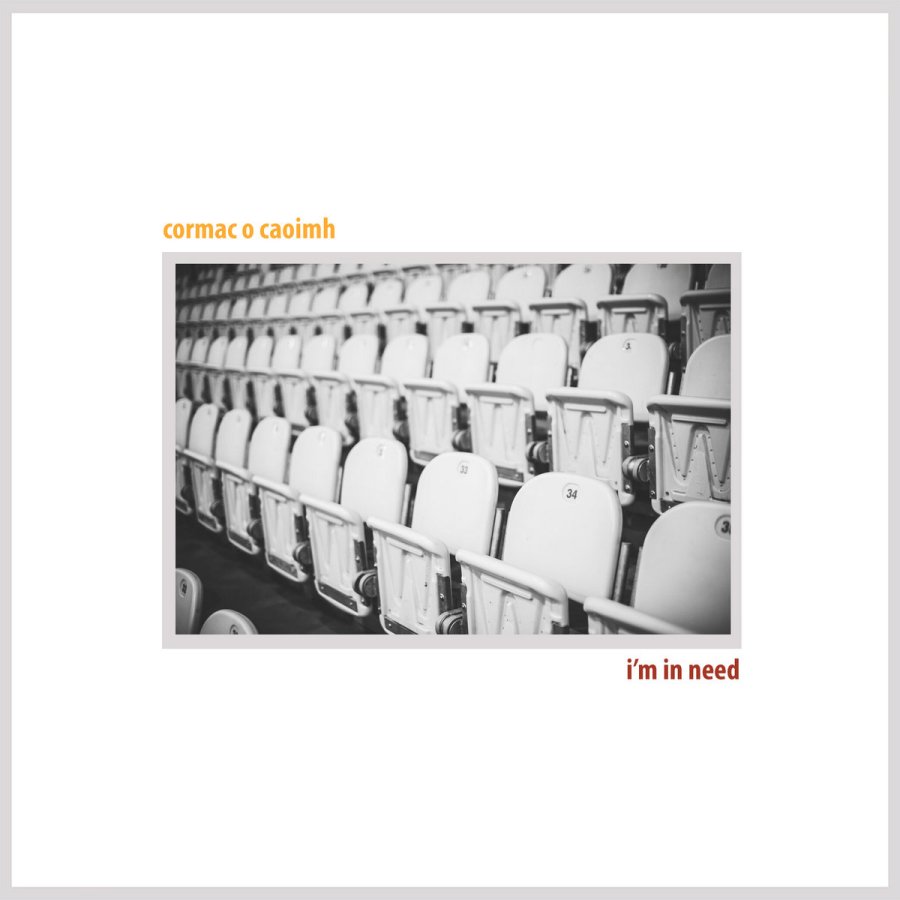
A few weeks ago, I featured Cork, Ireland-based collaborative music project SomeRiseSomeFall when I reviewed their beautiful song “The Rain Came Down on Everything”. After reading that review, fellow Corkonian (I love that word) musician and singer-songwriter Cormac O Caoimh reached out to me about his new single “I’m in Need“, and I’m glad he did because I really like his music! He’s a skillful wordsmith and guitarist, writing sublime indie folk/pop songs overflowing with thoughtful, intelligent lyrics about the universal subjects of life, love, hope and loss, and delivered with subtle hooks, fine instrumentals and his pleasing vocals that sounds a bit like Paul Simon at times. His catchy melodies seem to effortlessly draw us in, then stay with us long after the songs end. I found myself humming “I’m in Need” long after hearing it. As Mojo Magazine so eloquently put it: “each song superglues to the memory“.
Cormac has released a substantial amount of music over the past 15 years or so, including four studio albums, the most recent of which was his marvelous 2017 release Shiny Silvery Things. (I strongly encourage my readers to check out his music, which you can find on most music platforms, some of which I’ve listed at the end of this post.) Now he’s putting the finishing touches on his forthcoming fifth album Swim Crawl Walk Run, due for release on May 15. “I’m in Need” is the album’s lead single, which Cormac released on February 21st. The single and album were produced by his friend and fellow musician Martin Leahy, a talented multi-instrumentalist who’s collaborated with Cormac on previous records, and also played drums, bass, keyboards and more on the new album. The lovely backing vocals on “I’m in Need” and other tracks on the album are by Aoife Regan.
Cormac gave me the opportunity to have an advance listen to Swim Crawl Walk Run, and it’s a stunning work. It’s obvious he poured his heart and soul into it, as he explained in his message to me: “It is the first album I actually enjoyed making. I have been playing live with Martin Leahy for over 8 years but this is my first time making an album with him. It was a joy. I loved the whole process. It was relaxed, exciting, calm, manic. Everything. And the end product is something I could not be prouder of. The songs morphed and moved and grew during the process and the end result is an album I’m not sure I can top. It is full of singles. I want to release them all and I can’t wait for the first one to get out there.”
About the song, Cormac states: “During the writing of ‘I’m in need’ I did have the simplicity and directness of The Beatles ‘Help!’ as an influence. ‘Help me’ as a lyric is so fragile and honest and sad…but the song isn’t. The song is catchy and poppy. It works on two levels. I wanted the same for ‘I’m in need’. I wanted it to have meaning but more so a groove and be catchy. The feeling of the song also evolves. What starts as vulnerable ends up as a celebration of our humanity. We are all in need at times. Our feelings can be shaped by our thoughts. Musically the chorus gets more emphatic and joyful as the song progresses musically demonstrating the power of positivity.”
“I’m in Need” has a mellow and catchy acoustic-guitar driven melody, but a deeper listen also reveals a slight jazzy quality to Cormac’s guitar work that’s quite marvelous. His guitar notes beautifully meld together with the gentle percussion and keyboards, resulting in a harmonious and captivating soundscape. His calm, smooth vocals are exquisite, and like the music, blend in perfect harmony with Aoife Regan’s backing vocals. I like the spacey little sound effects inserted into the middle of the song that perk up our ears. It’s a lovely and wonderful song.
Catch Cormac at one of these upcoming shows, all in Ireland:
Apr 27 – Mick Murphy’s, Ballymore Eustace May 02 – The Glens Centre, Manorhamilton May 15 – Album launch @ The Kino, Cork May 29 – The Dc Music Club, Dublin Jun 12 – The Weir Folk Club, Midleton
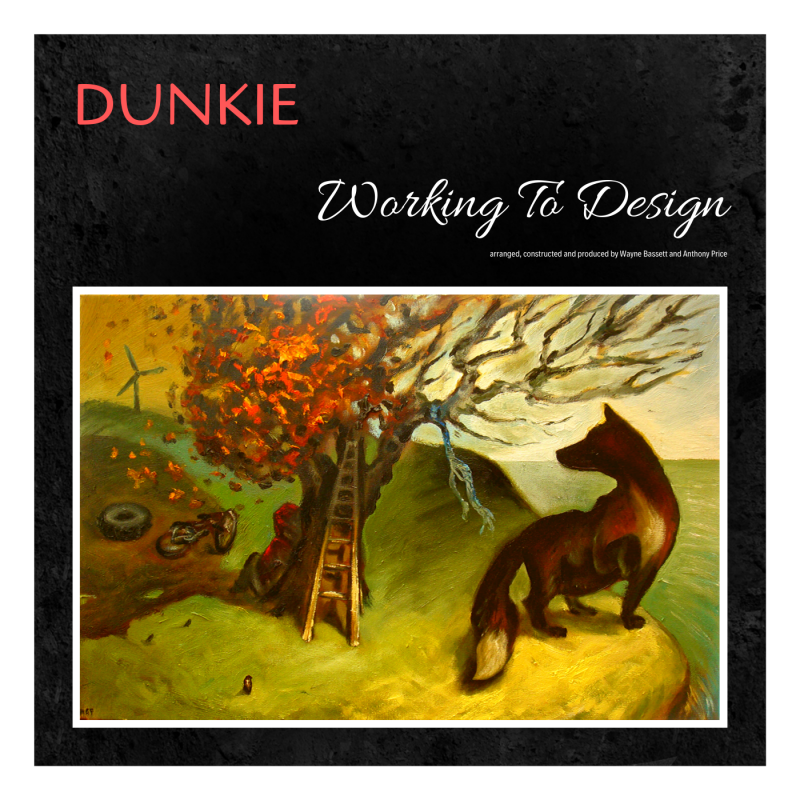
As a music blogger who’s been at this more than four years, I still marvel at the fact that artists and bands would want me to write about their music. I receive a continuous flood of music submissions every week to sift through, sometimes overwhelming me to the point of despair, but every now and then some of it stands out in the crowd. One such artist is Dunkie, the music project of Welsh singer/songwriter Anthony Price. Hailing from the town of Mountain Ash in the South Wales Valleys, Price has written and recorded songs for many years, and at the end of December (2019), he released his debut album Working to Design. It’s an exquisite and monumental work, featuring 17 tracks exploring the universal subjects of life, love, the passage of time, death and loss, but also healing, hope and rebirth.
It’s a concept album, with songs partially inspired by the books and works of author Richard Matheson, but also an ambitious and deeply personal labor of love. Price has spent the past two years of his life, toiling countless long hours writing and recording the songs and meticulously working to get each track just right, as well as making imaginative videos for a few of the songs. In advance of the album, he released four of the tracks that are featured on Working to Design, beginning with “Can a Song Save Your Life?” in May 2018, and subsequently dropping another single every few months.
The songs were all written by Price and flawlessly produced, engineered, mixed and mastered by Wayne Bassett at Robot Recordings in Aberdare, Wales. Besides Price and Bassett, who played numerous instruments on many of the tracks, more than 30 other musicians and vocalists performed on various tracks, making it a truly collaborative effort on a near-epic scale. Another interesting aspect of the creation of this album is the use of dramatic artwork by Welsh artist Michael Gustavius Payne. The album is dedicated to the memories and lives of many of Price and his family’s loved ones, including some of their beloved pets, one of whom (Flea) is named in a song title.
Just over a year ago, I wrote a piece on Dunkie which included a review of the first four tracks he released, which you can read here. But now that the album is out, it’s a revelation to hear it in its entirety, as it flows seamlessly from one track into the next like a journey through song. The album opens with “∼Introduction∼So Little Time∼“, setting the stage for the musical and lyrical beauty about to unfold over the next one hour and 14 minutes. It’s immediately apparent that Price put an incredible amount of thought and care into creating the stunning instrumental soundscapes for his thoughtful, and sometimes brutally honest lyrics. When he sings “So much to do, so little time. It’s nice to know you’ll wait a while“, we willingly follow him along on this journey.
With 17 tracks, there’s a lot to unpack on Working to Design, and I’ll try to keep my review as succinct as possible – never an easy thing for a detail-oriented writer like me. “The White Hole” has an alt-rock vibe, with layered electric guitars, psychedelic synths and a gentle drumbeat driving the song forward. To my ears, Price’s soft vocals remind me at times of John Lennon in tone and style, only a bit higher in octave. In fact, it sounds like a song The Beatles could have recorded in their later, more experimental phase. The song immediately segues into the lovely “Can A Song Save Your Life?“, an optimistic song about the healing power of music. Price explains his inspiration behind the lyrics: “The concept behind this song is trying to find a little hope; when all really seems a little lost. When the deepest, darkest moment seems to smother over you, when it suffocates you. But then the littlest gesture lifts, the smallest moment lifts, a piece of music, a film or song you love just lifts you.”
“Rabbit Hole” is a poignant song about coming to terms with the agonizing pain of the loss of a loved one. Price wistfully sings: “Tumble and fall, this rabbit-hole is funnel-webbed and soaring. I fear I’ll never reach this endless horror I fold upon myself… Another pill dissolves; I’m crawling faster to the edge. To the edge for you.” The track has a serene, rather bittersweet melody with gentle guitar, synths and percussion, and the vocal harmonies are really nice.
The beautiful and endearing video shows a large group of family and friends coming together for a picnic to remember a loved one. About the people in the video wearing rabbit masks, Price explains: “I wanted people to be wearing masks. I loved the metaphor of hiding behind many a mask. Oscar Wilde once said ‘Man is least himself when he talks in his own person. Give him a mask, and he will tell you the truth’. The ‘dunkie’ name and music is my mask. So I wanted to represent the mask in these videos. In particular I wanted to represent them by the use of Wintercroft Masks. Each mask is a downloadable PDF template, each mask has to be created individually, and each mask can take about 2-4 hours each to create (longer if you’re me!!). Added here was the decorative design I wanted to include by adding my own song lyrics, in multiple languages (and the entire pages of Crime and Punishment) upon each mask face.”
One of the more musically interesting and lyrically enigmatic tracks is “I Don’t Wanna Die in Minnesota (Part II)“. Though I’m not sure, the lyrics seem to be about not wanting to waste one’s life: “I don’t wanna die in Minnesota. All liberties lost and the walls move in closer. ‘When I need you to jump I’ll give you the order!’ Dead diaries day to day – for how long do I stay? I’m afraid to waste my life down in Minnesota.” “I Think I’ve Been Asleep (All My Life)” is a folk-rock song with a gospel vibe, thanks to the sublime organ work. The lyrics speak to sleepwalking through one’s life, barely connecting with those around you: “Never knew your life, never knew you long. Regretting all the silence now that you’re gone. What a fool to be. Blind faith and empathy.” I really like the soulful guest vocals of Lucy Athey and Cat Southall on this track.
“∼Intermission∼an Ode to a Flea∼” is a lovely little song in honor of one of Price’s beloved departed pets. “(W.A.L.L.S.) Within a Little Love Song” is a stunning and heartfelt ode to a loved one, affirming that even though you may not say it as often as you used to, your love for them is as strong as ever: “(You know) yesterday I loved you. (Don’t forget) I have and always will. (But through) the years I spoke it lessened. (Know this) my love’s never subdued. So I’ve found these words to sing and they’re all for you, they’re all for you.” The chiming guitars and soaring vocal harmonies are gorgeous.
I think my favorite track on the album is “Ten“, an enchanting, mostly instrumental song. It opens with sounds of a bird chirping, followed by an acoustic guitar and lovely a cappella vocal harmonies. Gradually, an achingly beautiful flute (played by Tony Kauczok) and cello (by Isobel Smith) enter, accompanied by Wayne Bassett’s delicate piano keys and Price’s lovely falsetto vocals, transporting us to a dreamy state of mind. The only lyric is “I’m just working to design. Perfectly flawed…“, which Price repeats throughout the song. I’m guessing it’s his philosophy for his life, and the overriding theme of the album. The song is so beautiful and moving it brings tears to my eyes.
“1896” is an introspective look back at life, family and career, and of choices and decision made, for better or worse: “I’ve been a Father, and I’ve been a Brother. I know now that decisions may have been wrong. I have imploded and I’ve fought with self-control. I’ve seen my children grow. I’ve taken all I can from the love of this band.” The majestic orchestral instrumentals, highlighted by a trumpet played by Charlotte Jayne Goodwin and Mellotron by John Barnes, make this a spectacular song. “Sugar” is a sweet (no pun intended) love song of thanks to a partner who has stood by you through good times and bad, with unconditional love.
Another favorite track of mine is the haunting “71-41-11“, a deeply moving tribute to Price’s father, who passed away from cancer in February 2015. The song, along with the following track “The Memory Tree“, were an effort by Price to come to terms with his pain and loss, and help him to move forward. The song’s title consists of the age of his father when he died [71], Price’s age when his father died [41], and the age of his eldest son when his grandfather died [11] – each 30 years apart. The mournful, but beautiful song has an ethereal feel reminiscent of Sufjan Stevens.
A particularly poignant aspect of this song is how Price, through the help of another musician (Scottish musician BigRoundBaby aka Stephen McKinnon, who’d experienced his own grief over the death of his mother), managed to include his father’s voice on the track. Price recalls “During the 60’s I remember my Father and Mother made a spoken vinyl 7” ‘Record’ together when they were first dating. They went into a portable recording booth and just playfully and awkwardly sang, and coaxed each other to say words into the microphone. I remember as a teenager listening to the recording, it was very crackle but thankfully my friend was able convert the vinyl recording into a MP3 file. I wanted the song to have my Father’s voice, to keep him close by always, and I wanted it to be accompanied with my own children, his beloved grandson’s, to just create a time capsule moment.” Their voices can be heard at the end of the track. Also, McKinnon played electric guitar, bass and percussion on the track, and along with his daughters, sings backing vocals.
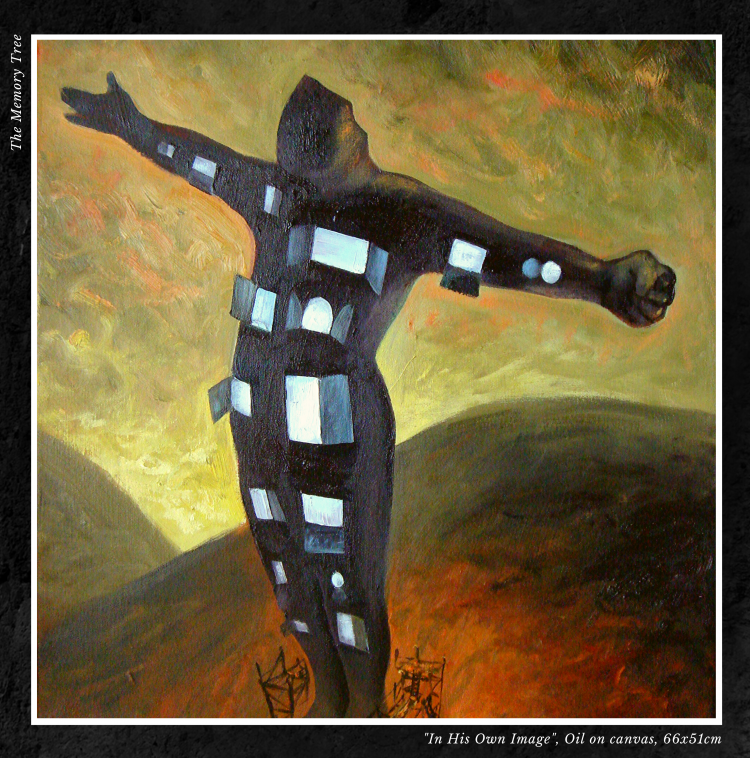
The gorgeous track “The Memory Tree” is a song of celebration about the power of memories, inspired by the book of the same name by Britta Teckentrup – Illustrator. An example of Price’s phenomenal songwriting are these touching lyrics: “From a child… you towered above me. You never once made me feel at all small. You’d fall to your knees, just so I’d feel the same size. And one by one these stories will climb through…A tree made of memories and full of love (for you).”
‘The Memory Tree’ by Michael Gustavius Payne
The final track “∼Closure∼1972∼” revisits the lyrics of “1896”, only this time told from a woman’s perspective: “I’ve been a mother, and I’ve been a lover. I know now that decisions may have been wrong.” It’s a gorgeous song, with lovely vocals by Jennifer O’Neill Howard, lush piano and mellotron played by John Barnes, acoustic guitar played by Price, an enchanting Glockenspiel played by Wayne Bassett and a stunning choral vocal arrangement by Matt Williams.
I cannot gush enough about this magnificent album. I realize the word sometimes gets overused, but I feel safe in saying that Working to Design is a true masterpiece in every respect. It’s quite honestly one of the most perfectly-crafted albums I’ve ever had the pleasure of hearing. Anthony Price, Wayne Bassett, and all the musicians and vocalists who assisted in the creation and production of this gorgeous work have much to be proud of.












 ECLECTIC MUSIC LOVER