Interest in these posts (and my blog in general) seems to be falling faster than a lead balloon, but I’ll soldier on. The song at #78 on my list of 100 Best Songs of the 2010s is “Trouble” by American alternative rock band Cage the Elephant. Cage the Elephant are one of my favorite bands, and “Trouble” is one of three of their songs on this list. The song is the second single from their fourth album Tell Me I’m Pretty, (after the uneven “Mess Around”) and was released in April 2016. The album was produced by Dan Auerbach of The Black Keys, and really shows his strong influence.
“Trouble” has a cool, almost magical vibe, thanks to its twinkling piano keys, xylophone and intricate chiming and gnarly guitars. I love singer Matt Shultz’s wonderful swooning falsetto in the chorus. Shultz explained to ABC Radio in an interview that the song was inspired by a conversation he had with someone close to him. “We were both presenting ourselves as being very honest in the conversation. And I felt there were several places where I was holding back, or kind of curating the idea of what I wanted projected pretty heavily as inside the conversation. So I was curious at what level they were doing the same. “So the song’s kinda just about honesty and adversity and struggle.”
The song’s entertaining video was shot in a Western theme at Joshua Tree National Park, which is near my home and one of the most popular places to make music videos.
The song at #79 on my list of 100 Best Songs of the 2010s is “Stereo Hearts” by American rap/rock band Gym Class Heroes, featuring additional vocals by Maroon 5 front man Adam Levine. I love this song! It’s so damned catchy and upbeat, with a joyful melody and irresistible hip hop beat, and just makes me feel happy. The endearing lyrics are filled with music-based metaphors that make the song very relatable to a music freak like me. Though the song was played nearly to death on the radio, I never tired of hearing it.
The track opens with Levine singing the chorus hook: “My heart’s a stereo. It beats for you, so listen close. Hear my thoughts in every note. Make me your radio. Turn me up when you feel low. This melody was meant for you. So sing along to my stereo.” Gym Class Heroes front man Travie McCoy then raps the lyrics directed at a former loved one, using musical metaphors to proclaim his love and devotion in the hope of winning her back: “If I was an old-school, fifty pound boom box. Would you hold me on your shoulder, wherever you walk. Would you turn my volume up in front of the cops, and crank it higher every time they told you to stop. And all I ask is that you don’t get mad at me when you have to purchase mad D batteries. Appreciate every mix tape your friends make. You never know we come and go like we’re on the interstate.” Songwriting doesn’t get any better than this.
Like Tough On Fridays, who I wrote about a couple of weeks ago, The Metal Byrds are a female-fronted rock band from Texas. Based in the music city of Austin, the band formed in 2018 after a chance meeting between London-born singer-songwriter Suzanne Birdie and guitarist Sly Rye Dovey. Both were in other bands at the time, and one night, at the urging of a mutual friend, Suzanne sat in on Sly Rye’s rehearsal with his band. He asked Suzanne to sing any song she wanted and she began singing “Sweet Child O’ Mine”. That was all it took, and she soon joined his band and began performing with them. His band was having internal issues however, which ultimately led he and Suzanne to create their own project together as The Metal Byrds. They were later joined by bassist Kevin Kurts and drummer Alex Romanov to complete their lineup.
The Metal Byrds play a dynamic style of rock infused with healthy doses of rock’n’roll and power pop, along with enough metal in the mix to give their songs a dark, edgy quality. They released their debut EP The Song Byrd in April 2019, then quickly followed two months later with a second EP Byrds on a Wyre. On October 2nd, they dropped their latest EP Life in 20, and listening to all three works, it’s clear that their songwriting and musicianship have gotten stronger with each release.
As the title would suggest, the opening track “The Ganges” starts off with Suzanne singing what sounds like an Indian chant, accompanied by jangly Indian instruments lasting around 15 seconds. Suddenly, the song blasts open with a juggernaut of Metallica-esque riffs, gnarly bass and pummeling drums that takes the song deep into hard rock territory. Sly Rye’s guitar work is truly impressive as he shreds the hell out of his six-string, laying waste to the airwaves with rapid-fire noodling and wailing distortion. Suzanne’s aggressively fervent vocals demand our full attention as she sings of feeling overwhelmed as if drowning, while making references to maharajas, brahmins and ghats.
“Dreamin’” is a full-on rock’n’roll banger, with furious riffs and explosive rhythms that really showcase what The Metal Byrds are all about. Suzanne emphatically implores a love interest to give her a little consideration: “Can’t you see I’m standing right here in front of you / But you don’t even notice.” Keeping with that theme, “Tell Me” is about coming to terms with the fact that, no matter how hard you’ve tried, the person you pinned all your hopes on just doesn’t feel the same toward you. Suzanne’s emotion-filled vocals convey the sad resignation expressed in the lyrics “Tell me I’m wrong, you’re not the one. I don’t need convincing.” Musically, the song starts off as a folk ballad but gradually transitions into a terrific Southern rocker, with lots of great twangy and distorted guitars. It’s my favorite track on the EP.
The rousing title track “Life in 20” has a Pat Benatar vibe, with a frantic driving beat and more of Sly Rye’s fantastic riffing. In fact, the song reminds me a bit of Benatar’s “Heartbreaker”. In their notes, the band states the song “is a generalization of what the year 2020 has been like. A diary of events and feelings, of sorts. The guitars wail, along with lead singer, Suzanne Birdie’s voice, to evoke feelings of struggle and inequities that we have experienced during the past year.” Suzanne mournfully laments “Everything could end, you don’t know. One step from letting go.”
“Impossible” is another excellent hard-rocking tune, with the kind of powerful driving beat that I love. Kevin and Alex deliver aggressive thumping rhythms guaranteed to get your blood pumping and hips moving, and Sly Rye layers a lively mix of staccato riffs and screaming distortion that would satisfy even the hardest metal head. Suzanne gives her lover an emphatic kiss-off: “I’m leaving tonight to get on this flight like a thief in the dark to protect my own heart / You’re impossible to love, and still too blind to see.”
Life in 20 is a great little EP that gets better with each listen. The Metal Byrds sure know how to rock, and I think this is their finest work yet. As I noted earlier, the quality of their songwriting, production and musicianship have gotten stronger on each release, and I’m confident they’ll continue on this upward trajectory.
Note: The version of the EP on Bandcamp features five tracks, however, the one on Spotify and Apple Music also includes a sixth track, a radio edit of “The Ganges” without the 15 seconds of Indian chanting at the beginning.
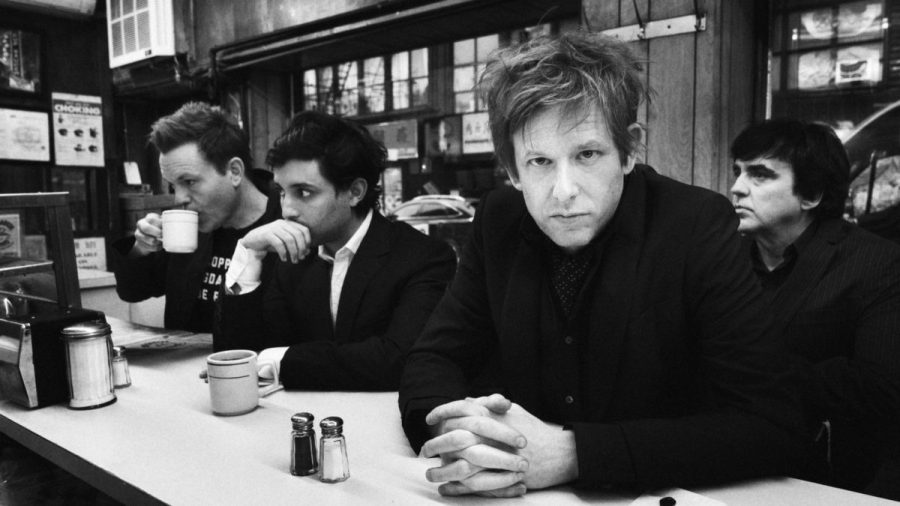
The song at #80 on my list of 100 Best Songs of the 2010s is “Can I Sit Next to You” by Austin, Texas based alternative/art rock band Spoon. I’m embarrassed – no, make that mortified – to admit that I was not familiar with Spoon until 2017, despite the fact they’ve been around since the mid 1990s! When I heard their brilliant ninth album Hot Thoughts, I became an instant fan and started bingeing on their impressive music catalog while kicking myself for all their great music I missed out on hearing all those years. I love their unique, innovative sound, as well as band front man Britt Daniel’s distinctive gritty vocal style that gives their songs an edgy authenticity.
My favorite track from Hot Thoughts is the deliciously sexy “Can I Sit Next to You”. The song has an almost sinister vibe, with a deep, bass-driven beat, accentuated by strong hand claps and grimy heavily-strummed guitars contrasting with twinkling and swirling psychedelic synths that impart an otherworldly feel. I love the dramatic spiraling synths in the chorus, as well as Daniel’s raspy vocals as he seductively snarls his way through each verse. It’s fucking awesome, and the surreal and trippy video directed by Marcel Dzama is both creepy and funny.
The song at #81 on my list of 100 Best Songs of the 2010s is “Some Nights” by New York City-based alternative pop-rock band fun. Formed in 2008, fun. consists of singer-songwriter Nate Ruess, multi-instrumentalist Andrew Dost and singer-songwriter, multi-instrumentalist and record producer Jack Antonoff (who’s also front man for the terrific band Bleachers). Their debut album Aim and Ignite was fairly well-received, though a commercial disappointment. But it was their second album Some Nights that propelled fun. to international fame. The title track “Some Nights” was the second single and follow-up to their massive hit “We Are Young” (which appears later on this list). The song was a worldwide hit, reaching #1 in Australia, New Zealand, Belgium and Israel, and also the Billboard Alternative, Rock and Adult Top 40 Charts. It reached #3 on the Hot 100.
With both folk rock and power pop elements, “Some Nights” has an incredibly exuberant melody, with a powerful military-style drumbeat and Ruess’ commanding vocals that give it a jubilant vibe. The song has been favorably compared to Simon & Garfunkel’s “Cecilia”, and in fact, in an interview with Billboard, Ruess stated that Paul Simon’s Graceland was a major influence for the song. He added that the song is about “just being someone different on any given night.” In another interview with Mesfin Fekadu of the Associated Press, Ruess explained: “I’m always thinking about, ‘Who am I and why did I do something like that?’ And I think then it harkens back to my family, and I have such a strong tie to them and it’s always therapeutic to sing about them.”
The rather dark and intense video, produced by Poonam Sehrawat and directed by Anthony Mandler, depicts a fictional battle taking place during the American Civil War. The band is shown performing the song from afar as a battle breaks out, with lead singer Ruess appearing as the commander of the Union force.
In early 2015, fun. announced they were going on hiatus so that each band member could pursue their own individual projects. Ruess sang on P!nk’s 2013 hit single “Just Give Me a Reason” (which will also appear later on this list), and on Eminem’s 2014 single “Headlights”, and released a solo album Grand Romantic in June 2015 to mostly positive reviews. Andrew Dost wrote the soundtrack for the 2015 black comedy The D Train, and is currently working on new music. In addition to his work as front man for Bleachers, Jack Antonoff has worked as a songwriter and producer with several renowned artists, including Taylor Swift (on her albums 1989, Reputation, Lover and Folklore), Lorde (on her album Melodrama), St. Vincent (on her album Masseduction), Lana Del Rey (on Norman Fucking Rockwell) and The Chicks (on their album Gaslighter).
Since forming only two years ago, Dutch indie alt-rock band Morgendust have made quite an impression both at home and abroad with their superb music. The Zwolle, Netherlands-based quintet is comprised of Marco de Haan (lead vocals, guitars), Ron van Kruistum (guitars, backing vocals), Iwan Blokzijl (keyboards, backing vocals), Dario Pozderski (bass, backing vocals) and Job Noordmans (drums & percussion). All are talented and accomplished musicians with years of collective experience playing in other bands and as session musicians, imparting their music with a maturity and worldliness that comes from having lived on this earth for a while and experiencing the joys and pains of life, love and relationships. Through intelligent, thoughtful lyrics, they tell stories that everyone can relate to, and package them with exquisite dark-edged rock melodies and beautiful instrumentation.
In September 2019 they released their outstanding debut EP Storm Will Come, then followed up this past May with a powerful and timely single “Alien”, inspired by the story of band member Pozderski, who as a young man fled his war-torn homeland of Bosnia. (You can read my reviews of the EP and single by clicking on the links under “Related” at the end of this post.) In July, they released another great single “Sundays”, and now return with their latest offering, an inspiring and lovely new single “Hands“, which I’ve chosen as my New Song of the Week.
The song is a tribute to all the craftsmen and women around the world who take care of us. About the song, Morgendust explains: “Making, building and creative hands. At work and at home. Helping, stroking and saving hands. By caring and loving in families and relationships. Hands can make what our eyes can see. Hands can make or break our relationships. We tell a story with our hands. Hands are valuable tools. For the makers who help shape and keep our society running and for all of us to support each other. Or the encouraging handshake as soon as the rules allow it again. Making, building, creating and connecting hands.
As a band we pay tribute to these crucial limbs by celebrating craftsmen from our hometown Zwolle. The stories of a chef, farmer, furniture maker, artist, motorcycle mechanic, baker and tattoo artist all come together in the new video clip shot by (Dutch 3FM / Radio 2) photographer and filmmaker Bullet Ray (Raymond van Olphen). The release of ‘Hands’ is accompanied by a fan contest, in which the fans participated by singing the chorus “build it with your hands” and doing something with their hands.”
“Hands” is an uplifting, celebratory song that just makes you feel good. It’s an affirmation that the world and the people in it are basically good and that everything is gonna be okay. To convey the sentiments expressed in the hopeful lyrics, Morgendust starts with an upbeat melody, then layers a mix of sunny guitars, humming bass, swirling synths and lively percussion to create a joyous backdrop for Marco’s warm, earnest vocals.
The song at #82 on my list of 100 Best Songs of the 2010s is “Cough Syrup” by Southern California alternative rock band Young the Giant. This is the second song by them on this best of the decade list, their other being “Superposition” which ranks at #91. “Cough Syrup” is one of their most well-known songs, and my personal favorite. It was released in 2011 as the second single from their eponymous debut album Young the Giant, but the song actually predated the band, as it was composed when they were called The Jakes, and first appeared on their 2008 EP Shake My Hand.
It’s a beautiful song, with gorgeous swirling guitars, somber cello and spirited drumbeats creating a stunning backdrop for band front man Sameer Gadhia’s passionate vocals. About the song’s meaning, Gadhia has stated it was written at a time when the band was unsigned, had no money and “felt somewhat oppressed by the universal expectation of what to do in Orange County…in suburbia in general. I think we really yearned to break out of that and do something a little bit different. [The song] is kind of a cry for help to break free, not necessarily from oppression, but from the common symptoms of suburbia like boredom, normality and homogeneity.”
I saw Young the Giant in concert in August 2019 (in a double bill with Fitz & the Tantrums), and here’s their wonderful performance of “Cough Syrup”.
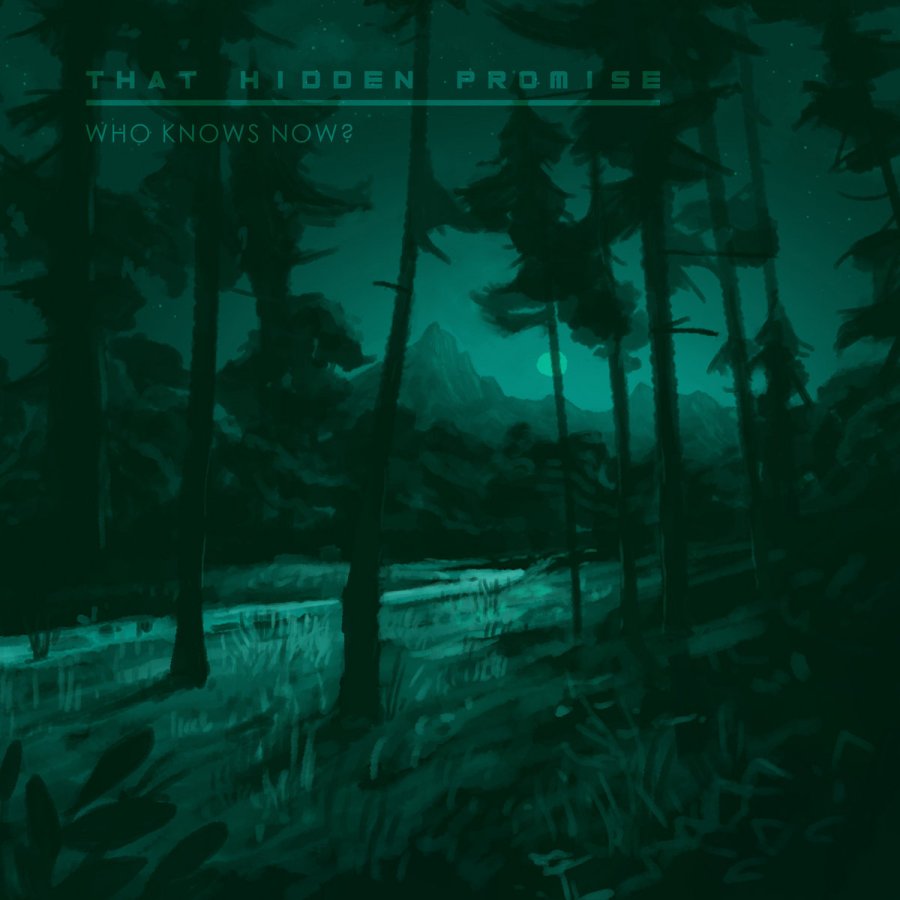
That Hidden Promise is the music project and alter ego of British singer-songwriter and multi-instrumentalist Wayne Lee. Based in Somerset, England, he’s been recording and performing under that moniker since 2011. The talented and versatile fellow writes his own songs, plays acoustic and electric guitar, and creates all his own music, including beats and percussion. He’s produced an extensive catalog of outstanding alternative and pop-rock music over the past nine years, often incorporating blues, post-punk, folk, electronic, psychedelic and shoegaze elements into the mix. The result is a varied and eclectic sound, delivered with exceptional guitar work and distinctive vocals that remind me at times of a young Bob Dylan.
I’ve featured That Hidden Promise on this blog a number of times over the last three-plus years, most recently just two months ago when I reviewed “You Can Have the World”, the lead single from his new album Who Knows Now?, which dropped October 2nd. The album is an ambitious and meticulously-crafted work featuring 12 tracks that, in Lee’s own words, “explores what it is to be in these times, through the joys, the frustrations, the anger, injustice and how do we even know what our place is in this world anymore?” The album was recorded and entirely self-produced, mixed and mastered by Lee between March-May 2020.
The album opens with “Intro“, an ominous instrumental track with a harsher and more psychedelic feel than any previous songs I can recall hearing by him. The spooky industrial synths and mix of wailing and distorted guitars set a darkly beautiful tone for what’s to come, and I love it. Next up is “You Can Have the World“, and as I wrote in my review of the song, Lee’s intricate layered guitar work is nothing short of spectacular as he delivers an explosive torrent of ever-changing textures that go from melodic to aggressive buzz-saw to screaming distortion. It’s an electrifying and powerful wall of sound for his plaintive vocals, driving home the urgency expressed in his biting lyrics that speak to finding strength through one’s confusion and rage over a corrupt and unjust system in order to survive and ultimately rise above it: “You can have the world if you’re gonna pay / Though have you got the nerve to fail again and again / Those who lead won’t keep you down / They may seek acclaim but it’s clear / If I win, If I fail in this world, Ain’t a damn thing to do with them.” I think it’s one of the best songs he’s ever recorded.
On “Your Own Enemy“, he urges us to live our own truths and forge our own paths forward in life: “Cut out all the voices, all the actions not working for you / Act free Act simply Act in your best interest / Forego your ego / Your shackles, release them / Construct your own self, not one projected for you.” Over a driving rhythm of throbbing bass and urgent toe-tapping beats, he layers a mix of gnarly and jangly guitars, all of which makes for a rousing and satisfying folk-rock song.
“Caught in Yesterday” is a breezy and pretty tune, with lots of great guitar work and pleasing horn synths. The lyrics are an assurance of unconditional friendship, acceptance and standing by someone,: “You’ve got nothing to prove to me / If the world should split in two I’d be on the side with you / If the world should break in four we’d belong for evermore.”
Following on that thread, “End Game” is pre-apocalyptic, and speaks to finding acceptance and peace of mind when the end does arrive: “As we reach the end game / As we near our time don’t let fear sweep over / Just learn to free your mind / So take me with you to paradise / Away from conflict Away from these times.” It’s a musically complex and stunning song, and a real testament to Lee’s impressive songwriting and musicianship. The song opens with an ominous-sounding drumbeat, accompanied by gentle industrial synths, then a lovely strummed guitar enters along with shimmery synths, softening the mood as Lee begins to sing. Eventually, the languid vibe is briefly interrupted by a flourish of screaming guitar, only to calm back down. This back and forth continues through to the end, punctuated by some really stellar guitar work. It’s one of my favorite tracks on the album.
As the album progresses, I’m struck by how really good every track is, as well as the variety of melodies, textures and sounds he’s used. It holds our interest from one track to the next, keeping the record from ever feeling monotonous or predictable. “One Day Other Than This” is a melancholy but lovely song with his heartfelt vocals accompanied by gentle string synths and beautifully strummed guitars, whereas the gorgeous “Stop Praying For the Sun” has a sweeping cinematic feel like a song you might hear in a Western movie soundtrack. Lee explained to me that lyrics are about not waiting for things that are out of your control to happen (praying for the sun), and also whether what you’re doing or where you’re headed is just delusion: “A new delusion of false design / If the best of times will come / Stop praying for the sun.”
“Not In This World (Or the Next)” has a folk/Americana vibe, with a bouncy, head-bopping beat and lively riffs of jangly guitars. That Hidden Promise seems to ponder about our purpose on this earth: “I’ve given more than I can take / How much longer should I have to wait? / There’s time to come, there’s time to try / You give your all, but is it right? Alright.” The hauntingly beautiful “What Lies Beneath” is another favorite of mine, thanks to its eerie melody, piercing synths, and incredible guitar work.
That Hidden Promise turns more hopeful with “Calling All You Seekers“, a poignant ballad about holding on to our sense of adventure and optimism, and never giving up: “Calling all you seekers / The places yet to go / The majesty of wanderlust forever taking hold.” And even more so on “In the Night Time“, a celebratory folk-rock song about grabbing hold of one’s dreams and trying to make them real: “In the night time I’m inspired, and I just can’t settle / On fire / And this fever burns inside.“
The closing track “Screaming in My Soul” seems to be somewhat auto-biographical, or at the very least, touches on some of the demons that plague musicians and songwriters if I’m reading these lyrics correctly: “Do you know what’s it’s like? To have a demon strip your soul / Well I know /All the songs that are trapped in my head / All the words that are lost in some black hole / I wish I could know how to bring them home / Got a screaming in my soul now.” Over a pulsating hypnotic groove, he layers swirling synths and a mix of intricate guitar riffs and textures to create a mesmerizing track.
With “Who Know Now?, That Hidden Promise has created his best work yet. It’s an exquisite album filled with exceptional songs, and his impressive songwriting, musicianship and production skills are evident on every track.
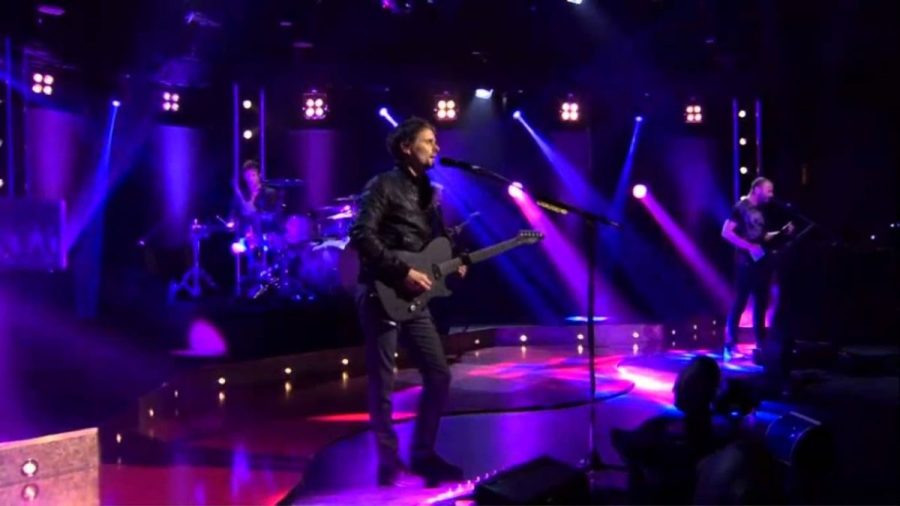
The song at #83 on my list of 100 Best Songs of the 2010s is “Madness” by British alternative/art rock band Muse. Like “Thrift Shop”, this was another song I loathed the first couple of times I heard it. At the time of its release in 2012, I wasn’t very familiar with Muse or their music; the opening lines “Ma ma ma ma ma ma madness” nearly drove me to the point of madness until one day the song suddenly clicked for me, and I fell madly in love with it – as well as Muse, who is now one of my favorite bands.
Formed in 1994 while they were in high school, Muse is comprised of the immensely talented Matt Bellamy on lead vocals, guitar and keyboards, Chris Wolstenholme on bass and backing vocals (who I think is one of the finest bassists around today), and Dominic Howard on drums. “Madness” is from their sixth studio album 2nd Law, and was inspired by a fight Matt Bellamy had with his then girlfriend Kate Hudson. He later said in an interview that the song was also an attempt to strip down the sound of the album.
To me, the song seems to be somewhat in the Bolero style, starting off slowly with Wolstenholme’s pulsating, almost wobbly double bass-driven melody that creates a sensual vibe, perfectly complementing Bellamy’s breathy vocals and chants of “Ma ma ma ma ma ma madness“. The music gradually builds to a dramatic crescendo, highlighted by Bellamy’s phenomenal guitar work and enthralling vocals that soar to the heavens, covering me in goosebumps. “Madness” was a modest hit, peaking at #25 in the UK and #45 on the Billboard Hot 100, however it spent an astonishing 19 weeks at #1 on the Billboard Alternative chart.
Fun fact: Bellamy’s father George was the rhythm guitarist of the 1960s British pop group The Tornados, who had a #1 hit in 1962 with “Telstar”.
Rather than the official video, I’m sharing one of their electrifying live performance of the song at their triumphant 2013 concert at Rome Olympic Stadium.






 ECLECTIC MUSIC LOVER