The song at #36 on my list of 100 Best Songs of the 2010s is “Counting Stars” by pop-rock band OneRepublic. I’ve been a big fan of OneRepublic since falling in love with their beautiful song “Apologize” in 2008, which ended up at #8 on my Top 100 Songs of the 2000s. Their fantastic song “Counting Stars”, was released in June 2013 as the second single from their third album Native. It was a huge hit around the world, reaching #1 in Canada, Brazil, Finland, Poland, Scotland, Slovakia, Israel and the UK. In the U.S. it peaked at #2 on the Billboard Hot 100, and #1 on the Adult Top 40 and Adult Contemporary charts.
The song has an infectious and powerful beat-driven melody, with touches of soul, gospel and dance-pop that make for a colorful and exciting listen. Band front man Ryan Tedder wrote the song while staying in a house in the Hamptons being rented by Jay-Z and Beyonce, and said it’s about “laying in bed awake at night when you’re stressed out of your mind, thinking ‘How are we gonna make ends meet? How are we gonna pay the bills?’ You know, all those things you wanna do with your life – how are we gonna make them work? How’s this actually gonna happen or come to pass? So, instead of counting sheep, we’re counting stars.” For me, the highlight of the song are Tedder’s beautiful vocals.
The music video for the song was filmed in New Orleans, and shows the band performing the song in a dusty, decrepit building – complete with a roaming alligator – while a church revival service goes on upstairs. As of November 2020, it has received over 3.1 billion views, and currently ranks as the 14th most-viewed YouTube video ever.
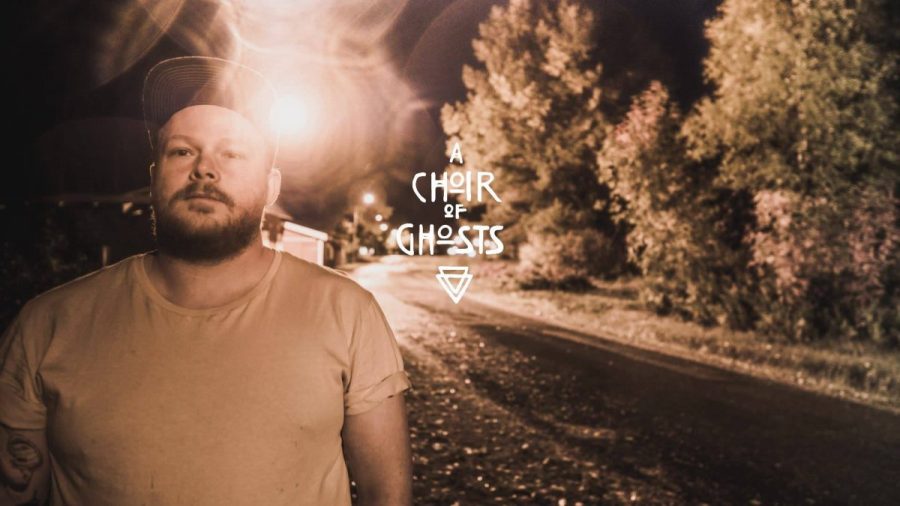
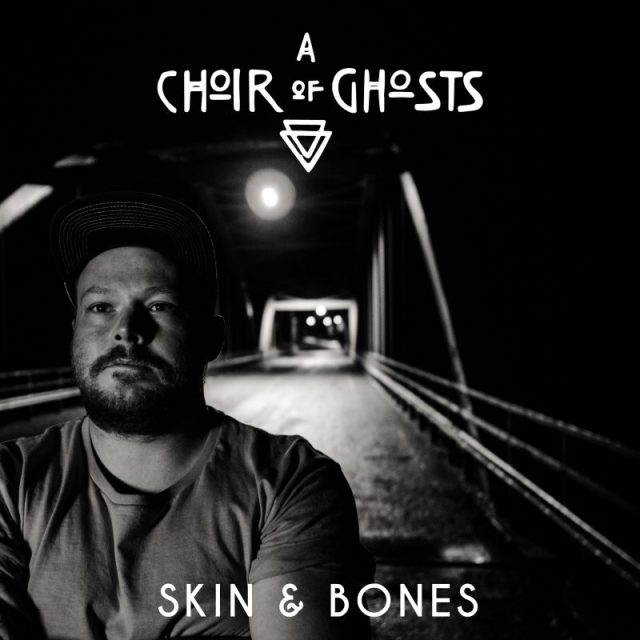
This past April, I featured Swedish alternative folk artist A Choir of Ghosts when I reviewed his exquisite debut album An Ounce of Gold. It’s an impressive and stunning work that turned me into a fan of this talented young man. The musical alter-ego of British-born but now Sweden-based singer-songwriter James Auger, A Choir of Ghosts creates beautiful songs drawing from folk, Americana, and pop-rock influences. He’s now returned with a lovely new single “Skin & Bones“, released on November 20th through his label Greywood Records.
Auger provided a bit of background for his inspiration in writing “Skin & Bones”: “The song is about the realization that you can’t always ‘fix it’ for the people you love. Sometimes they have to solve it themselves, and you can’t do anything but watch and hope for the best. In order for things to grow to its full potential, you sometimes have to let go. It’s a hard realization but I think a lot of people can identify with the feeling of sudden emptiness, when you come to something in your way that you cannot share, but rather have to go about alone. Your only hope lays in that once the obstacle has been passed, you can rendezvous on the other side.”
“Skin & Bones” has a simple but enchanting melody, highlighted by his beautifully-strummed acoustic guitar work and warm, comforting vocals that make for a pleasing listening experience. His vocals grow more emotional in the chorus as he assures a loved one that she has his support while she works through her issues:
It’s cold when you’re not home Holding on to our skin and bones You said it’ll be alright But I can’t be there, to take the fight Hold on darling, You won’t get nowhere if you run I’ll pray for you Till the morning comes The silence when we speak Our dreams are far too weak I can see it on my own The wuthering heights, and the crushing lows Hold on darling, You won’t get nowhere if you run I’ll pray for you Till the morning comes
The video was filmed and directed by Dorian Vergensson this past summer in the beautiful Swedish countryside.
The song at #37 on my list of 100 Best Songs of the 2010s is “Hey, Soul Sister” by California pop-rock band Train. From their fifth studio album Save Me, San Francisco, the song is a sweet and joyous celebration of lust and love. Technically, the song is from the previous decade, as it was released in August 2009, but didn’t peak on most charts until early 2010, so qualifies for inclusion on my best songs of the 2010s list. It’s the best-selling single of Train’s career, and also highest-charting, reaching #3 on the Billboard Hot 100, and #1 on the Adult Top 40 and Contemporary charts. It was named the #1 song of 2010 on the Adult Top 40 chart and #3 on the Hot 100. It also reached #1 in Australia, Hungary, Ireland and the Netherlands.
Band front man Pat Monahan teamed up with New York-based Norwegian songwriting and music production duo Espionage (consisting of Espen Lind and Amund Bjørklund, who wrote Beyoncé’s smash hit “Irreplaceable”, among others) to write “Hey, Soul Sister”. Monahan told them he wanted the song to have an INXS vibe, and after they wrote the melody, he wrote the lyrics and started to sing the song, but wasn’t pleased with what they’d come up with. He later recalled: “Espen, who’s like a huge star in Norway, picked up a ukelele and said, ‘Hey, how about this?’ I said, ‘Are you kidding me?’ And it made the difference. It made my words dance. It made sense. These words were meant to dance with ukulele and not guitar.” (Wikipedia)
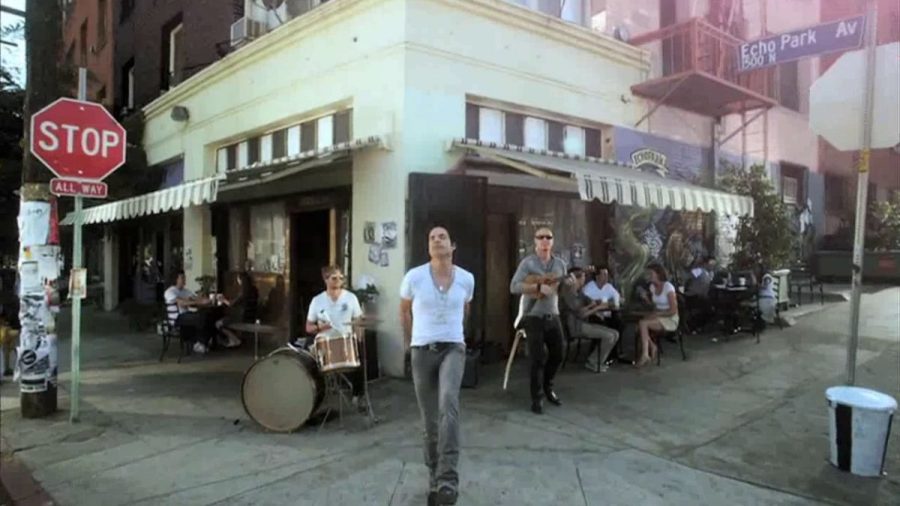
The heartwarming lyrics speak of being besotted with a woman and singing her praises, and are nicely delivered by Monahan with an endearing fervor guaranteed to bring a smile to even the dourest face. “Hey soul sister, ain’t that Mr. Mister on the radio, stereo. The way you move ain’t fair you know. Hey soul sister, I don’t wanna miss a single thing you do tonight.” The charming video was filmed in front of Chango Coffee in the Echo Park neighborhood of Los Angeles.
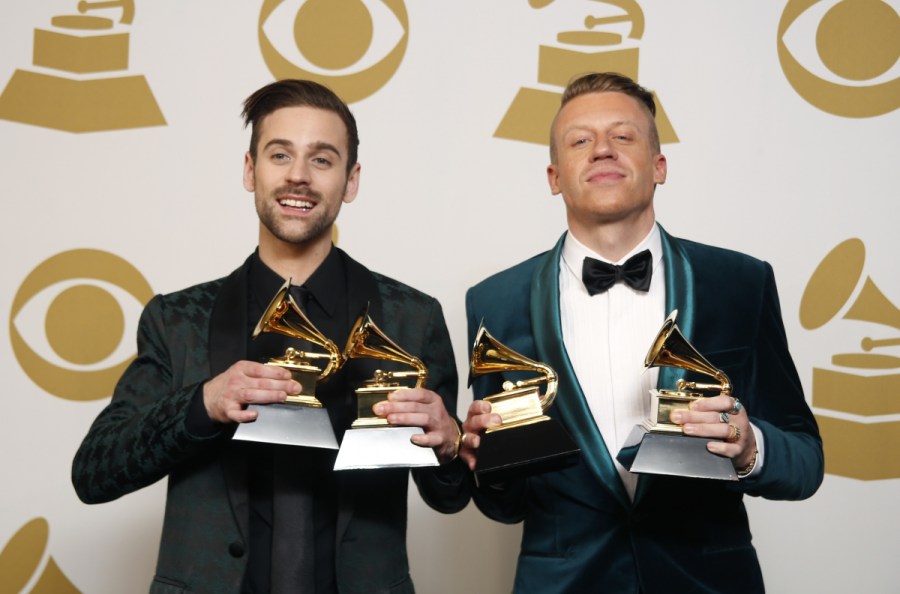
The song at #38 on my list of 100 Best Songs of the 2010s is “Can’t Hold Us” by Seattle hip hop duo Macklemore & Ryan Lewis, featuring guest vocals by R&B singer Ray Dalton. On the heels of their worldwide smash hit “Thrift Shop” (which ranks at #89 on this list), the charismatic duo hit the jackpot again with “Can’t Hold Us”, although it took a while for the song to catch hold. The single was actually first released in August 2011, a full year before “Thrift Shop” (which instantly became their first big hit) but didn’t gain much traction or airplay until after the release of “Thrift Shop” and their debut album The Heist more than a year later. The song finally entered the Billboard Hot 100 in early 2013, and reached #1 that May.
“Can’t Hold Us” is a wonderful feel-good anthem of hope and perseverance that’s so joyously upbeat that I can’t help but get swept up in it’s euphoric celebratory vibe, wanting to jump up and down with glee! Macklemore freestyles the lyrics about overcoming naysayers and fighting onward in the pursuit of his dreams with a flow that’s truly impressive: “Chasing dreams since I was fourteen with the four-track, bussing halfway cross that city with the backpack / Fat cat, crushing labels out here, nah, they can’t tell me nothing. / We give that to the people, spread it across the country.” Dalton sings the hook “Can we go back, this is the moment / Tonight is the night, we’ll fight ’til it’s over /So we put our hands up like the ceiling can’t hold us / Like the ceiling can’t hold us.”
Musically, the song features an exuberant array of instruments, including a fantastic piano line, horns, strings, tambourine, guitar and drums, all accompanied by bold handclapping, foot stomping, and a soaring gospel-like chorus that make for a truly uplifting and electrifying track. The video produced for the song is a mini saga, filmed in several locations around the globe.
And here’s a terrific live performance in November 2011 of the song at their legendary hometown radio station KEXP. I almost prefer this, as it allows us to more fully appreciate the song’s greatness, as well as Macklemore and Ryan Lewis’ joyful energy.
The song at #39 on my list of 100 Best Songs of the 2010s is the deliciously bombastic “The Man” by The Killers. I’m a huge fan of The Killers, and have loved or at least liked every song I’ve ever heard from them. Released in June 2017, “The Man” was the lead single from their fifth studio album Wonderful, Wonderful. The song received mostly positive reviews from critics, and I think it’s terrific; it spent five weeks at #1 on my own personal Weekly Top 30 chart. I love how the music revs up at the beginning, then explodes into a pounding dance beat courtesy of Ronnie Vannucci’s power drums. Throw in a sturdy bass line, sweeping synths and band front man Brandon Flowers’ soaring tenor vocals, and you’ve got a fun, exhilarating tune. I also love when Flowers pays homage to David Bowie late in the song when he shouts “headed for the hall of…FAME!”
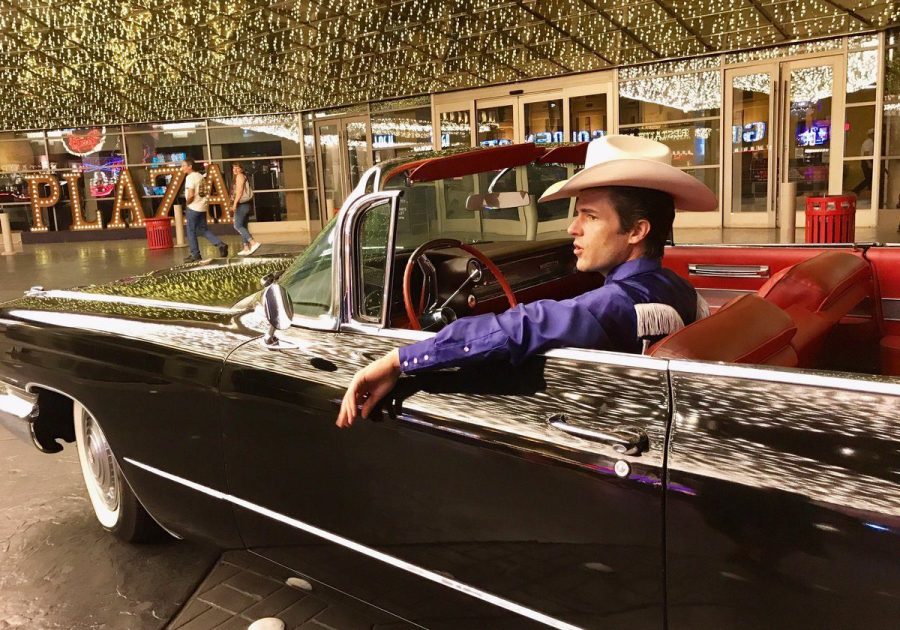
Vannucci has stated that the song is basically about how a lot of men feel invincible when they’re younger: “Sort of your chest out, the breadwinner, nothing could stop you… It’s tongue-and-cheeking that, how that is not really the point of being a man at all. It’s actually more about compassion and empathy.” The fantastically entertaining video, filmed in and around the band’s hometown of Las Vegas, shows Flowers playing several different arrogant characters who are full of themselves, all thinking they’re ‘the man’.
From a bad guy to a bad romance, the business of love can be a treacherous minefield. The song at #40 on my list of 100 Best Songs of the 2010s is “Bad Romance” by Lady Gaga. At the dawn of the 2010s, Lady Gaga (born Stefani Joanne Angelina Germanotta) was already an international star, thanks to the success of her debut album The Fame, which launched her career like a shot from a cannon. Two singles from the album – “Just Dance” and “Poker Face” were both huge worldwide hits, topping the charts in the U.S. and many countries.
In late 2009, she followed up with Fame Monster, released as both a stand-alone EP and as a deluxe reissue of The Fame, which included two discs, one consisting of the eight new tracks, and the other consisting of the original tracks from The Fame. One of the new tracks was “Bad Romance”, which I think is her best song ever. The unusual melody and song structure are interesting and fairly complex, featuring elements of German-esque house and techno that Gaga described as being experimental pop. But whatever it’s called, it’s absolutely brilliant and gloriously cinematic, with a larger-than-life quality befitting her own persona.
The lyrics address aspects of a bad relationship and her poor choice in men, specifically, of being attracted to men with whom romance never works, and falling in love with your best friend. In an MTV interview, she stated that in the verse, “I want your psycho, your vertigo shtick, Want you in my rear window, baby, you’re sick“, she used Alfred Hitchcock film titles to express that she wanted “the deepest, darkest, sickest parts of you that you are afraid to share with anyone because I love you that much.”
The stylish and surreal video for “Bad Romance” has garnered nearly 1.3 billion views.
The song at #41 on my list of 100 Best Songs of the 2010s is “This is America” by Childish Gambino, the artistic name for the music project of the multi-faceted and incredibly talented actor, writer, director, producer, singer-songwriter and rapper Donald Glover. One of the best songs of 2018, “This is America” features an alternating mix of African-folk inspired melodies and pulsating hip hop-driven trap beats, paired with highly provocative lyrics addressing issues of racism, police brutality and gun violence in America. It features background vocals by rappers Young Thug (who also co-wrote the song with Glover and Swedish songwriter-producer Ludwig Göransson), Slim Jxmmi, BlocBoy, JB, Quavo (of the group Migos), and 21 Savage. The song debuted at #1 on the Billboard Hot 100 on May 5, 2018, and also topped the charts in Canada, Australia and New Zealand. In February 2019, the song won Grammy Awards for Record of the Year, Song of the Year, Best Rap/Sung Performance, and Best Music Video.
The companion video for the song, directed by Hiro Murai, drives home the lyrics’ message with shocking and often disturbing visual imagery. Released on YouTube simultaneously with Gambino’s performance of the song on Saturday Night Live on May 5, 2018, the video quickly went viral, garnering 12.9 million views in the first 24 hours. As I write this, it’s been viewed over 736 million times.
Things start off pleasantly enough, with Glover/Gambino dancing about shirtless, but using grotesque smiles and exaggerated poses that some believe invoke the racist caricature Jim Crow. He sings “We just wanna party. Party just for you. We just want the money“, possibly referencing Black peoples’ historic role as entertainers for White people. Events take a violent turn when he walks up to a man who’s sitting on a chair playing guitar with his head covered by a hood, and shoots him in the head. A little later, he nonchalantly mows down a choir of singers with an automatic weapon. In both cases, he hands the guns over to someone holding a red cloth, giving the impression that the guns are being handled with greater care than the people he’s killed. The shooting of the choir is thought to represent the 2015 massacre at the Emanuel AME Church in Charleston, South Carolina. Glover/Gambino and a group of kids clad in school uniforms dance throughout much of the video, smiling as violence erupts around them. At the end of the video, he’s shown running for his life from an angry white mob.
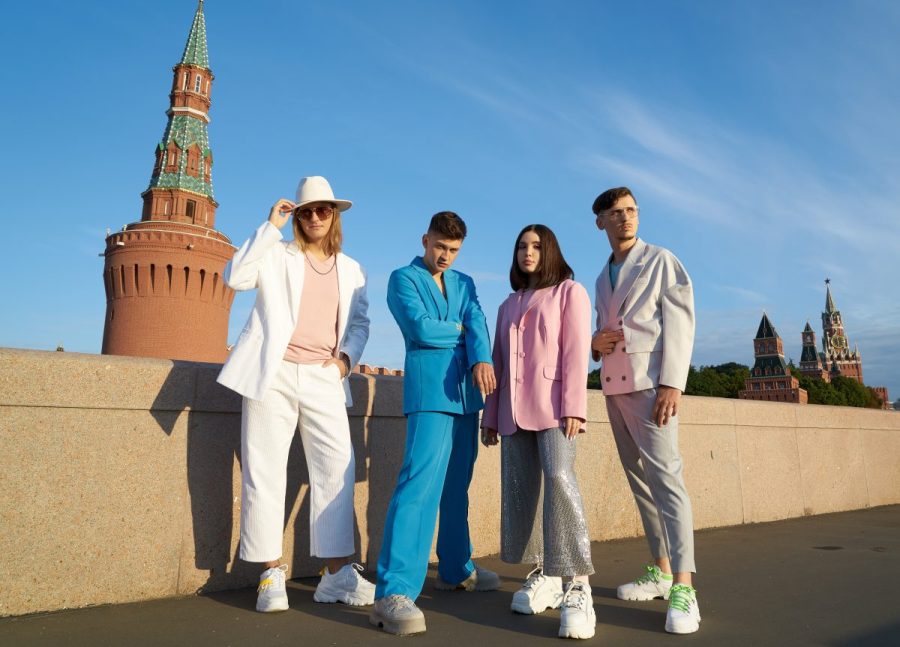
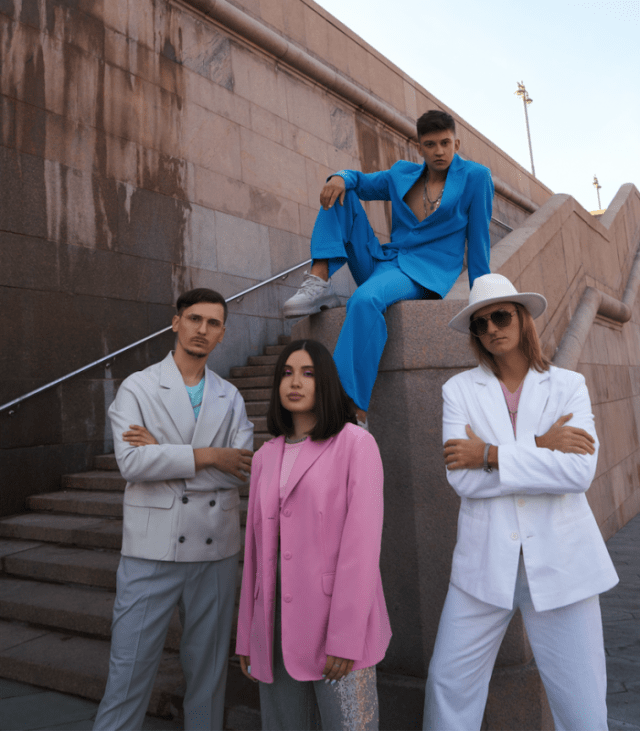
I’m excited to introduce the delightfully-named electro funk band Neon Tapehead, the very first music act from Russia to be featured on this blog. Drawing inspiration from R&B, soul, funk, electronic, early House and nu disco influences ranging from Rick James, Kool and the Gang, The GAP Band and Whitney Houston to Bruno Mars, Chromeo and Lizzo, the Moscow-based group combine nostalgic elements of old-school analog synthesizers with modern music production techniques to create their own sophisticated style of stylish and upbeat music. Making this wonderful music are Dmitry Ursul on lead guitar and synths, Aleksandr Kovalchuk on drums, Dmitry Votintsev on bass, and Maya Shonia on lead vocals. On November 13, they released “Know What I Want“, the lead single from their forthcoming debut EP Never Say Never, due out on December 4.
Neon Tapehead have spent the last few years honing their craft by releasing a number of terrific singles and remixes, and performing live shows in Moscow, where they were discovered by U.S. independent music label NexGen Music. The band’s first release on the label, “Know What I Want” is about the girl who knows what she wants even if her acts or wishes are illogical or inconsistent. About the song’s creation, the band explains: “This song was written and produced with influences of 80’s Electro Funk and Early 90’s house with a slower tempo. We tried to mix different elements of these styles into the one song. The main meaning behind this song is that you shouldn’t be shy with your wishes or goals. Just ask yourself about what you want right now and then go and get it! Brrr POW!”
“Know What I Want” is a feast for the ears, with a sensual vibe and funky dance groove that aims straight for the hips. The silky smooth synths and crisp percussive beats form a captivating backdrop for Maya’s soulful vocals that seduce us with her sultry croons and devilish purrs. It’s a terrific song that hearkens back to some of the great dance-funk and R&B songs of the 1980s.
The band has produced a beautiful video of them performing the song on a golf course outside Moscow. In most cases, I generally prefer videos that show an artist or band performing their song, rather than some silly narrative or plot line, so this video is right up my alley. The band provides some background about the video’s creation: “The music video was shot on a golf field in the suburbs of Moscow. It took some time and stress to organize the session but we made it happen. We were adamant about wanting to use the open space for a live video. The sound of the video is an actual live recording, so as far as we know we are the first Russian band to have recorded a funk song on a golf field in real-time! We were lucky because the wind had stopped blowing just before we started the recording and shooting, so it was easier to use to mix and master the sound later.”
“The introduction scene including Maya riding the golf car took a lot of takes because it was the first time that Maya had driven a vehicle of any kind – it was not a stand in actor! The trickiest part was to stop the car in the right place in front of the camera and walk to the microphone before the verse starts. We also had to be constantly aware of the Sun’s position which appeared to want to move towards sunset in double-time, so we tried to shoot this video as fast as possible.”
The song at #42 on my list of 100 Best Songs of the 2010s is “Radioactive” by Las Vegas-based pop-rock band Imagine Dragons. Since the release of their breakout single “It’s Time” in 2012, Imagine Dragons has become one of the biggest and most successful music acts in the world, selling over 35 million singles in the U.S. and 20 million albums worldwide (RIAA). Unfortunately, as it happens with a number of bands who’ve become hugely popular, there’s also been a bit of a backlash, with a sizable number of people hating them as well. I like them a lot, though I’ll admit many of their songs have been overplayed to the point where they got to be annoying.
“Radioactive” was their second single, and was included on their EP Continued Silence and later on their debut album Night Visions. It’s a bombastic alternative electronic rock song with booming dubstep beats, loads of distortion, and dramatic soaring choruses that make for an intense and exciting listen. The dark lyrics reference apocalyptic and revolutionist themes, though band front man Dan Reynolds told Rolling Stone that it’s “basically about my struggle with anxiety and depression. It’s about becoming self-empowered and rising above that. I wanted to write a masculine and primal song about conjuring and rising above human weakness.”
The song has sold over 10 million digital copies, and peaked at #3 on the Billboard Hot 100, and #1 on the Alternative, Hot Rock and Rock Airplay charts.
The official video produced for the song was directed by Syndrome and features actors Lou Diamond Phillips, who plays the ringleader of an underground puppet-fighting ring, and Alexandra Daddario, who plays a mysterious female drifter on a quest to save her friends in Imagine Dragons from Phillips. The video shows a series of fights between puppets, and just seems rather silly and childish to me, taking away from the overall power of the song. But in an interview with MTV, Reynolds explained that they wanted a more lighthearted approach in the video: “We read through a ton of scripts from really talented directors, and we came across one that stood out to us in particular, because it put into visuals the general theme of the song, which is kind of an empowering song about an awakening, but it did it in a way that was very different. A lot of people probably see a post-apocalyptic world when they hear ‘Radioactive’, understandably, but we wanted to deliver something that was maybe a little different from that … a lot different from that.” As I write this, the official video has been viewed more than 1.2 billion times, with 7.6 million likes on YouTube.
Here’s an audio-only video for those who’d just like to hear the song:






 ECLECTIC MUSIC LOVER