ANDREW NEIL – Interview & Album Review: “Alien”

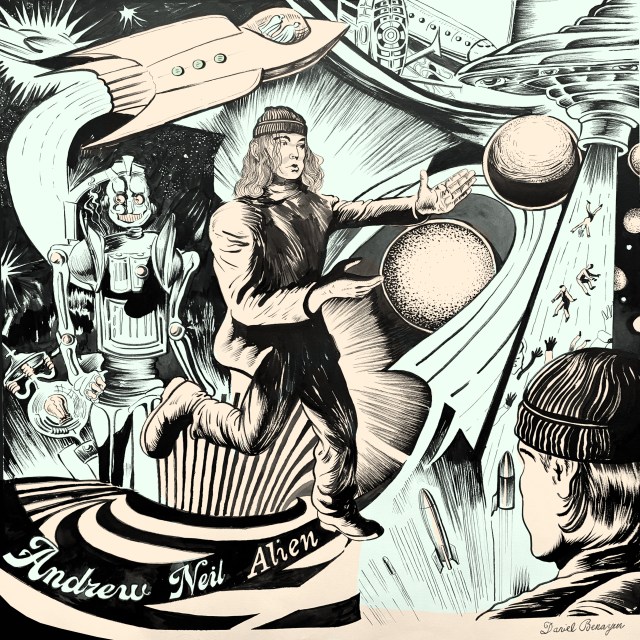
The cool album artwork was designed by Daniel Benayun

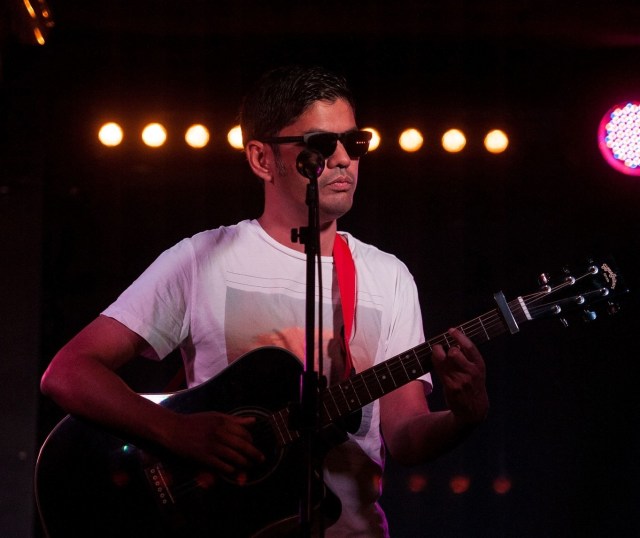
Though many singer-songwriters tend to draw inspiration from their own life experiences, few I’ve come across are quite as thoughtful, candid and personal as Virginia-based singer-songwriter Andrew Neil (born Andrew Neil Maternick). Considered an outsider music artist in a similar vein to the late Daniel Johnston, Andrew writes from his heart and soul. The 34-year old has faced a number of daunting life challenges that would have crushed many of us, but his faith, strength and resilience, as well as the incredible love and support of his family and friends, have enabled him to flourish as an artist.

I’ve featured Andrew twice on this blog, first in November 2019, when I reviewed his third album Freak, then again in June 2021 when I reviewed his fourth album Sunny Side (you can read those reviews by clicking on the Related links at the end of this post). I wrote extensively about his life experiences in those reviews, but will touch on a few significant points to provide a bit of context.

After growing up as a fairly typical kid and high school athlete, he suffered a life-altering event in 2009 when he sustained a serious head injury in a car accident. The injury resulted in two significant changes for Andrew: 1) he began having a series of psychotic episodes, and 2) he started writing songs, despite the fact he’d never had any prior music training of any kind. During a psychotic episode in 2013, he stabbed his younger brother in the arm, which landed him in jail for seven months until his family and attorney convinced the prosecutor that he needed help, rather than being incarcerated. 

He was subsequently released and sent to a state mental hospital, where he received excellent treatment and learned to manage his illness. During the three years there, he wrote and recorded around 70 songs on a battery powered Tascam recorder, which his father Ray later uploaded to a computer. Andrew was conditionally released from the hospital in May 2017, and moved into a group home in Charlottesville. (He now lives independently.)
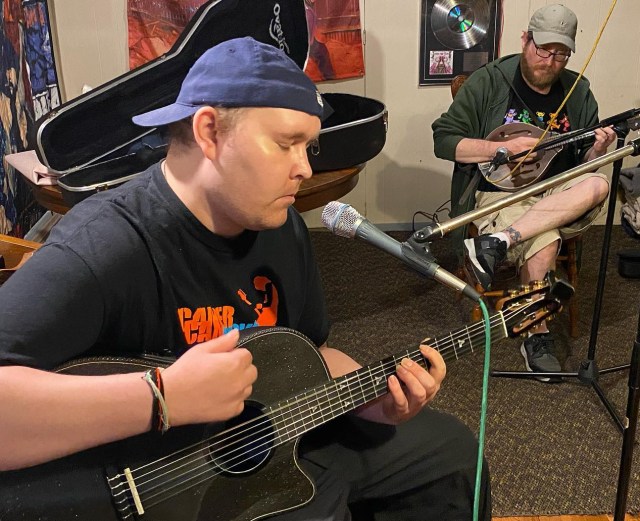
Upon his release, he produced his first album Code Purple – Andrew Neil, featuring 11 melancholy yet optimistic songs he hoped might help others struggling with similar mental health issues. He followed up a year later with his second album Merry Go Round, then quickly went back to work in early 2019 to record his third album Freak. Sadly, as he was wrapping up the recording he was hit with yet another health crises when he was diagnosed with Non-Hodgkin’s Lymphoma. He underwent a grueling round of chemotherapy while the album was being mixed and mastered, and he and his family started a Kickstarter campaign to help raise funds for album production and marketing, garnering even greater support than expected. The album, an ambitious work featuring 14 tracks addressing topics of love, faith, mental illness and self-identity, was released that October to widespread acclaim.

His cancer thankfully in remission, Andrew began recording songs during the Covid lockdown, this time with only his own quirky, endearing vocals and vintage nylon string Ovation acoustic guitar, accompanied on some tracks by subtle keyboard overdubs. The songs came together as his fourth album Sunny Side, featuring 10 optimistic tracks with a mellower, more lo-fi folk sound. Ever the creative, hard-working artist, Andrew’s now returns with his fifth album Alien, which dropped September 15th. Similar to Sunny Side, the songs on Alien were performed with just Andrew’s vocals and acoustic guitar, giving them a lo-fi folk sensibility. But the subject matter is a bit darker, touching on such issues as mental health, loneliness, suicide, alcoholism and relationships.

In order to get a bit more insight into his inspiration for writing Alien, I asked Andrew a few questions, to which he graciously responded.

EML: Thank you, Andrew, for agreeing to speak with me about your latest album Alien. You’ve experienced more than your fair share of trauma and difficult challenges in your life, and also suffer from depression, which you’ve spoken about pretty openly on social media. Like many songwriters, you draw from your own experiences when writing your lyrics, and as was the case with your previous albums, the songs on Alien address such topics as mental health and emotional well-being, addiction, suicide, loneliness and faith. Does writing and recording songs help bring you a little peace of mind?

Andrew: Yes, writing songs does bring me a little peace of mind. Some songs help me process my grief and sorrow. When I write it is like the hand of my heart reaching out to the world for help, love and understanding; almost always the world reaches back and that feels good. I also hope that my music will help others to deal with their own issues, depression, loneliness. If you think about it, it’s almost like a continuous circle of emotions. You write to help yourself, which directly or indirectly helps others and they in turn help you back with positive feedback. They view my song within their own life experiences and relate in their own way. We all learn from this exchange of melody and lyrics and emotions. Knowing this gives me peace of mind.

EML: The title track “Alien” reminds me a bit of “Freak” in that it seems to speak to embracing one’s identity, warts and all, rather than being ashamed of it. Is that the point you’re trying to make on this song?

Andrew: The point of “Alien” is the truth behind my belief in a universal family. We may come from other places, have different religions, have different governments, eat different food, but at the end of the day I firmly believe we all have hearts with similar desires. These hearts feel and desire love and it’s this desire that illustrates we truly are a family. So, when we see someone different, someone who fits the mold of an alien we should reach out to them with love and understanding.

EML: Two songs in particular, “I Need a Reason” and “Don’t Tell the Doctor”, are pretty heavy and dark, dealing with thoughts of suicide. Your dad told me that “Don’t Tell the Doctor” was inspired by a comment a woman whispered to you during a group therapy session – “Don’t tell the Doctor, but I’m in love with suicide”. What prompted you to write about that experience?

Andrew: I have spent a fair share of time in mental hospitals and have met many interesting characters. During one of my first stays at Virginia Baptist Memorial Hospital I met a young lady named Holly. It is true that we had a group session in which we were supposed to talk about what we love. Her answer was “Suicide”. I, like many in the group, could relate and it’s a moment of genuineness I will never forget. I wonder where Holly is these days, and she will always have a place in my heart.

EML: Not being a songwriter nor musician, I’m always impressed by people who can write compelling lyrics and compose interesting or catchy melodies. Do you generally write your lyrics first, then set them to music, or do you first come up with a melody or guitar riff, then write words to fit?

Andrew: When writing songs, I usually start with strumming some chords on the guitar. Then I hum a tune that fits and then I transform that tune into words. Sometimes I feel as though my fingers are guided on the fretboard. I don’t really know any standard chords or notes or even musical keys, but my fingers seem to find the right sound and melody. I really think melody is important. Melody is something I think is missing from many songs written today. There are lots of “beats” but not really much melody in many contemporary songs.

Once I have a melody, I try to determine what the melody is telling me or saying. The words/lyrics are by far the hardest part of the process. The lyrics are really my notes in a weird way. I write the lyrics so that the melody wraps around them. Sometimes I’ve come up with lyrics when the guitar is not in my hands. I might have a dream or a special feeling and the lyrics just pop into my head. “Mongolia” was a good example of this. In that case the lyrics helped to dictate the melody. I tend to write 2 to 3 songs a month.

EML: From what I can tell, the only sounds we hear on these songs are your voice and acoustic guitar, is that correct?

Andrew: Yes, it was certainly stripped down. Just me and my nylon string ovation guitar. I do not recall any keyboard dubs on the Alien album tracks. We decided to keep it simple and maintain a lo-fi sound. We also wanted to help the subtleties of my guitar playing, which is different than many guitarists, stand out. Over the years, I have come up with my own style of playing and make up my own chord shapes. It’s a very percussive style. My dad says it reminds him of Richie Havens in some ways. I am not really encumbered by the rules, scales, etc. of the instrument. I really think this gives me a certain amount of freedom in writing songs that many songwriters don’t have. They tend to stick to the conformity of the instrument.

EML: Who are some living artists or musicians whose work inspires you, or that you would like to collaborate with if possible?

Andrew: My inspirations are many. The living artists who come to mind are Bob Dylan, Willie Nelson, Carlos Santana, Richard Thompson, Sanjay Mishra, and Lady Gaga to name a few. I’ve also been listening a lot to Country artists John Anderson and Raelyn Nelson. It would be cool to collab with them, but I realize that is pie in the sky kind of stuff. More realistically, as far as collaboration, I would love to work with and perhaps co-write songs with some rising artists in different genres. One genre in particular I am developing an interest in is Alt-Country, which is a mix of Country, Garage Rock, Blues and Alternative. One up and coming Alt-country artist I would love to co-write a song with is Raelyn Nelson. As you know I was scheduled to open for her Band on 19 August of this year in Hershey PA, but it was cancelled due to an illness in her band. It will be rescheduled hopefully in November. After her manager notified me that they wanted me to open for them, I started listening to the Raelyn Nelson Band music. That listening experience inspired me to write a few Alt-County songs for the show. I would love to release an alt-country album after Alien. This would definitely be a different direction, but I think it’s also a way to reach more people with my music.

Prior to the inspiration by the Raelyn Nelson Band, I had begun to dabble in writing more country-like songs. For instance, I think the songs “Gambin Man” and “Kinda Turns me On”, on my Sunny Side Album have an alt-country feel to them. I think I am going to travel in that direction for the time being. Also, I am on this list on Ranker (Best Outsider Music Artist list). Many of the artists that are listed have passed on now. I really wish I could have worked with Daniel Johnston. But there are a few younger living artists on the list like John Revitte who is an exceptional lyricist, that I would love to collab with. R. Stevie Moore, and Iggy Pop are also on the list, but are really up there in age and I’m not sure if they are still active in music.

EML: Anything else you’d like to say about Alien or yourself that I’ve neglected to ask?

Andrew: No storm lasts forever. Life is good and people are beautiful. I appreciate you taking the time to review my music and get my story out there into this world. Music makes a difference in this jello world. Thanks again and peace out.

Now, let’s get to the album, which opens with the title track “Alien“. As Andrew stated, the song speaks of reaching out to people who are different from us with love and understanding, as we’d hope they’d do for us: “Far from ordinary, makes life kind of scary. I’d have it no other way. We come in peace. Don’t shoot please. It’s alright alien.” On the melancholy “I Need a Reason“, he questions the value of his very existence: “Like a bug stuck in a spider’s web, the more I struggle, the more I’m dead. I am blue, and blue I remain. Will I get conquered by my pain? I need a reason baby, a reason to be here. I need a reason baby, to make it through the year. I need a reason baby, before I disappear.

While “Mongolia” comes across as a pleasing folk tune, its lyrics are packed with meaning and emotional conflict. It starts off with Andrew listing a few of his psychoses: “I know angels on a first-name basis. And I can’t stare at the walls too long, or else I’ll see faces.” He then describes his wanting to escape to an exotic place in hopes of overcoming some of his shortcomings: “I want to go to Mongolia, Perhaps there I’ll get holier. Holier than the Judas that I am. Holier like Mary’s little lamb.” Continuing on, he acknowledges that he’s too old to be treated like a child, yet still needs emotional support and comfort from his mother: “Mommy please don’t spank me. I’m way, way too old. And I need a blankie, cause this world is so cold. So I wanna go to Mongolia.” Here’s a wonderful live performance of Andrew singing the song in 2021.

As described earlier, “Don’t Tell the Doctor” was inspired from an experience Andrew had in one of his group therapy sessions back in 2009, in which the discussion leader asked them to talk about what they loved. A woman in the group leaned over to Andrew and whispered “Don’t tell the doctor, but I’m in love with suicide“. The song has a languid, rather somber melody, with some really fine guitar noodling. Andrew’s melancholy vocals sing of feelings of hopelessness: “Sometimes I feel like there’s only one way out. That’s when you’ll find me hanging from a cloud. And sometimes I feel like there’s nowhere left to run. I keep my promises, I won’t use a gun.” That line, combined with the almost grungy feel of Andrew’s acoustic guitar, makes me think of Nirvana.

Fingers Crossed” seems to touch on people’s superficiality and phoniness, and making empty promises but not following through: “Ring, ring, ring, I ignore the call. So leave a message and I’ll call you back. Fingers crossed, yeah we all know that.” On “My Best Friend is Not Whiskey“, Andrew speaks to how alcohol does not solve our problems or make us feel better: “Where’s my fairy tale ending? What the fuck happened to me? Every day I keep pretending that I’m not in misery. Every day I keep pretending my best friend is not whiskey. It’s a thirsty world.” And on the allegorical “The Beat Goes On“, he describes a series of dreams in which he meets an Aztec priestess, has Jesus in a high school class, and is a Samurai warrior addicted to death and glory who ultimately commits hara kiri.

Remember to Forget” is a sweet song about being supportive and loving to a friend in need: “When you’re cold, I’ll be your sweater. When you’re sad, I’ll make you smile. We’re all in this together, mile after mile. When you need a hug, I’ll be your teddy. Yes, I’ll be your happy thought. Remember, remember to forget, the vampire that bit. Remember, remember to forget all of the bullshit.” And of course, it’s always wonderful getting that support in return: “When it rains, you’re my umbrella. When I cry, you dry my tears. We’re all in this together. You put meaning in my years.

The album closes with the charming “Black Sheep“, which speaks to how just because someone may be quirky and different, they still have qualities worth loving: “One day, we all kick the can. So girl, won’t you hold my hand. I promise that I am no creep. Yeah, I’m just a black sheep.” Andrew’s percussive style of guitar playing is strongly evident in his heavily-strummed acoustic notes. It’s an upbeat ending that keeps the album from being too overwhelmingly bleak. All in all, Alien is a marvelous little album, and Andrew’s stripped-down acoustic treatment really allows his endearing, heartfelt vocals and relatable poetic lyrics to shine.

Follow Andrew:  Facebook / Twitter / Instagram
Stream his music:  SpotifyApple Music / Soundcloud / Reverbnation
Purchase:  Bandcamp
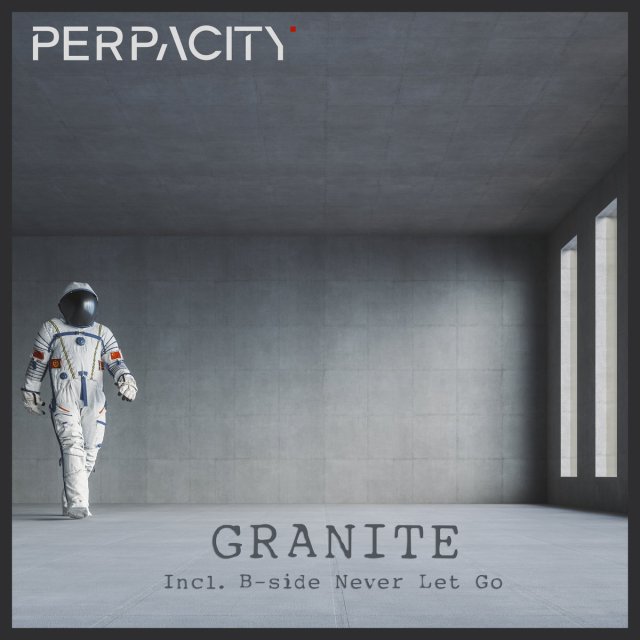
PERPACITY – Single Review: “Granite/Never Let Go”

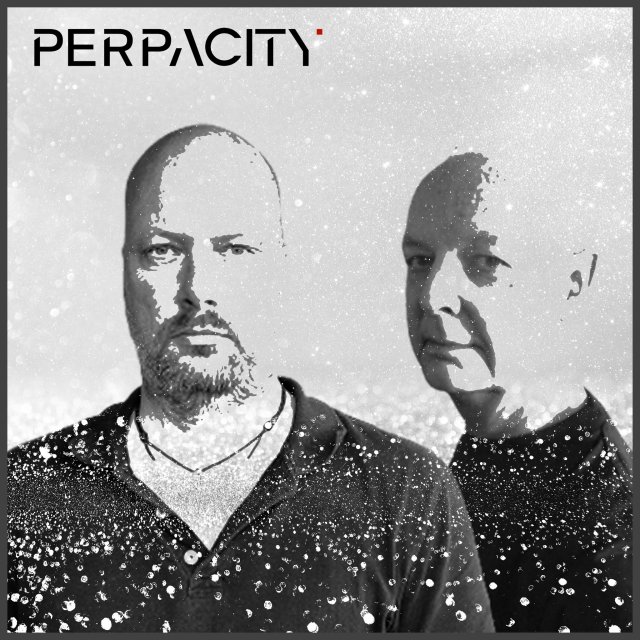
Perpacity is an electronic music act comprised of British singer-songwriter, composer and producer Ian Harling and Danish singer-songwriter, composer and producer Martin Nyrup (Martin is a also a member of Danish Electronica act Oui Plastique, whose single “The Fear” I reviewed last year.) They’re both accomplished musicians, with over 20 years of experience, and from what I’ve been able to discern from their website and social media accounts, have been collaborating for nearly a decade. Their sound is characterized by haunting melodies, lush electronic soundscapes and driving beats, with thoughtful and compelling lyrics. And while their social media following is rather modest, they have over 3,100 followers on Soundcloud, an impressive figure for an independent music act.

Martin Nyrup & Ian Harling

The released their debut album The Sinner Inclination in 2015, consisting of a previously-written catalogue of early instrumentals and songs. Since then, the prolific duo have released scores of singles and three more albums: Arise, The Order of Now and, most recently, Conflagration in 2020. Now they’re back with a new single “Granite“, along with a B-side “Never Let Go“, both of which will be included on their forthcoming fifth album Discordia. The songs explore the seemingly conflicting aspects of love lost and love found. Martin produced, mixed and mastered both tracks, and Ian produced the video for “Granite”.

Perpacity states that “‘Granite’ is about love lost and the repercussions that follow, finding that you are suddenly alone and vulnerable, whereas ‘Never Let Go’ is its opposite, about love found and the strength and cohesion it brings.” Both songs have a haunting, rather enigmatic vibe, but that’s where the similarities end. “Granite” features a insistent thumping beat, overlain with a pulsating synth bass groove and mysterious swirling synths. Ian’s low-key vocals nicely convey a sense of sad resignation as he contemplates a love that’s slipping out of reach, never to return.

Reading in Fahrenheit,
I'm in flames,
But I feel colder than the rain you left me in again today.
Bleeding but sanitised,
There's no pain,
But every little raindrop,
Is burning in my veins.

Don't let it rain anymore.
I'm washing away I'm not stone.
Don't let it rain anymore,
I'm slipping now don't let me go.

Nearing the danger line,
Overflow,
And the clouds that gather round my head are greyer than before.
Drowning in real time,
You couldn't wait,
You found a friend for shelter,
And let me liquidate.

Don't let it rain anymore.
I'm washing away I'm not stone.
Don't let it rain anymore,
I'm slipping now don't let me go.

Hvad som kommer er mit
Som i hvileløst granit

“Never Let Go” is more introspective, with a gentle, cinematic soundscape that nicely complements, but never overpowers, Ian and Martin’s enchanting vocal harmonies. The moody atmospheric synths and softly soaring strings are really captivating, and I think I actually prefer this track.

I was in denial,
I love LOVE, that you see me.
So let me stand trial,
I love you, now hear me.

I looked to the stars
I love LOVE, when you´re near me.
I carry all the scars,
You see them, you feel me.


You´re my seed to everything
And with water we´ll grow
And I´ll give you anything
Just you hold on and never let go


You´re always by my side
You´re loved LOVED, and I'm near you
When worlds they collide
Together, I´m with you

You and I have come far
You´re loved LOVED, and I am with you
I'm with the northern star
Everything shines up, when with you

Connect with Perpacity: FacebookTwitterInstagram

Stream their music: SpotifyApple MusicSoundcloudYouTube

Purchase on Bandcamp

MOUNT FAMINE – Single Review: “Offcuts”

Mount Famine are a British post punk/synth-infused indie rock’n’roll project based in Derby. Formed in 2019 as a collaboration of seasoned musicians with a shared love of such bands as The Cure, The Psychedelic Furs, Pet Shop Boys, Manic Street Preachers, Pulp and Suede, they aim to create music that, in their own words, “produces the adrenaline-fueled highs of indie disco dancefloors.” Hallmarks of their vibrant sound are infectious melodies, lush soundscapes and soaring vocals. A rather enigmatic band, they have no photos of themselves on any of their social media, nor do they list their members’ names. Band front man and vocalist Martin Stanier, who I know of from his having reached out to me on Instagram, explained that they’ve steered away from photos, wanting the focus to instead be on their music.

Beginning with their debut single “Faith” in January 2020, they’ve released a string of excellent singles over the past two and a half years. This past March, I included their fourth single “Distance” in a Fresh New Tracks post. The song garnered support from BBC Introducing East Midlands and Louder Than War, as well endorsements from actor Robert Carlyle and British broadcaster Terry Christian. I liked the song so much, it spent 11 weeks on my Weekly Top 30 list. Now they’re back with a new single “Offcuts“, a rousing anthem that calls to mind some of the great songs by New Order, Manic Street Preachers and The Killers.  

The song storms through the gates with an exuberant soundscape of swirling synths, roiling guitars and driving rhythms. Martin’s sparkling keyboards have a wonderful cinematic quality, and the layered shimmery and grungy guitars are quite marvelous. Also outstanding are the humming bassline and emphatic thumping drumbeats, both of which add great power and depth to the track. And, as always, Martin’s resonant vocals are incredibly pleasing, rising with a commanding force in the choruses. 

The song’s lyrics touch on the drudgery of executive management, work hierarchies, and the disposability of workers. Martin elaborated further: “It’s about a moment I had recently where I doubted myself. I spent some time in the company of some very senior managers in my job who weren’t nice or kind and treated others lower on the food chain really badly. And all the others treated them with adoration and respect that to my mind, they didn’t really deserve. I wondered if I had got it wrong and that doing this was the way forward. I mean, it didn’t last very long because of course that isn’t how to be or to treat people, but it also echoed the behaviour of a lot of our world leaders of late.

I am the new normal in rock and roll; discos
Kiss me, between the sheets
You're so discreet, discreet

Maybe I misunderstood
And dreams and schemes are not as fun 
As real life, through office doors
We are Offcuts on director's floors

Maybe I misunderstood
And dreams and schemes are not as fun 
As real life, through office doors
We are Offcuts on director's floors

Fast cars, high class bars
Now you are stars, all stars
Diamonds and dollars
Now you look down on us, on us

Maybe I misunderstood
And dreams and schemes are not as fun
As real life, through office doors
We are Offcuts on director's floors
 
Maybe I misunderstood
And real life is Hollywood
And Sundays walking through the malls are the best days, best times of all

Funny, you're so funny
They laugh with you
But money and power have made you sour

Maybe I misunderstood
And dreams and schemes are not as fun
As real life, through office doors
We are Offcuts on director's floors
 
Maybe I misunderstood
And real life is Hollywood
And Sundays walking through the malls are the best days, best times of all

“Offcuts” is a fantastic radio-friendly song that’s certain to be a hit.

Follow Mount Famine:  Facebook / Twitter / Instagram

Stream their music:  SpotifyApple MusicSoundcloud 

VAZUM – Single Review: “Double Stellium”

VAZUM is a deathgaze duo from Detroit, Michigan, consisting of Zach Pliska (vocals/guitar/drums) and Emily Sturm (vocals/bass). Combining elements of deathrock, goth, post-punk and shoegaze, they create their signature dark, haunting and melodic sound that sounds vaguely familiar, yet totally unlike anyone else I’ve heard. Since forming in 2017, the highly imaginative and prolific duo have released an impressive four albums, three EPs and nearly a dozen singles, all of which they produce, record, engineer and mix independently at their own Light Echo Studios.

I’ve followed VAZUM for over a year, and am finally featuring them on this blog on the occasion of the release of their latest single “Double Stellium“. Stellium is an astrological term that refers to when someone has at least three planets in one zodiac sign or house in their birth chart. Having a double stellium can be very intense with a lot of energy focused in specific areas. Both Zach and Emily have double stelliums in their astrological charts, hence the song’s theme and title.

The song blasts open with a jarring onslaught of shredded psychedelic guitars and explosive pummeling percussion, then settles into an eerily beautiful and melodic soundscape of industrial synths, those shredded guitars ever-present in the background. Halfway through, the music returns to the same intensity we heard at the beginning, before quickly calming back down, only to rev back up at the end for a final bombastic flourish. Zach and Emily’s echoed droning vocal harmonies are perfectly suited to the goth-flavored instrumentals, nicely enhancing the song’s overall haunting feel.

The lyrics are probably open to interpretation, but my take is that they speak to loving those close to us and living life to the fullest in the here and now, given the eventual certainty of death.

Soon it will claim us all
Drained, pale porcelain dolls
Swept in a sanguine pulse
Dark dreams, nothing else
Doesn’t really matter who we were
All that really matters

I’ll lie here with you till nightfall
I’ll bleed here in you till nightfall
I’ll lie here with you
There’s no end
I’ll bleed here in you
There’s no end

VAZUM also created and produced the trippy video for the track.

Connect with VAZUM: FacebookTwitterInstagram

Stream their music: SpotifyApple Music / SoundcloudYouTube

Purchase on Bandcamp

ART BLOCK – “White Horses EP”

Art Block is an alternative folk singer-songwriter and multi-instrumentalist based in East London, England. A prolific artist, he’s been making beautiful music for a number of years, and has released an impressive number of singles, EPs and remixes since early 2015, beginning with his debut L.A.-inspired single “Los Feliz”. I’ve featured him three times on this blog, the first time in November 2019 when I reviewed his enchanting song “The Basement”. The song has become his most successful to date, amassing over 290,000 streams on Spotify, which is notable in light of the fact he not represented by any label or management. A year later, I reviewed his lovely single “Borderline”, then this past March, I included his single “Pilgrim” in a post about my having been a moderator for Tom Robinson’s Fresh On The Net blog.

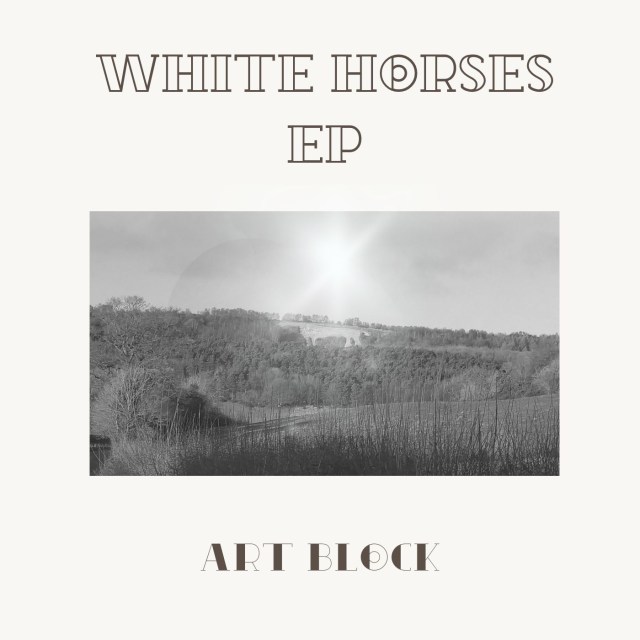
Now he returns with a new EP titled White Horses EP, featuring three tracks he says were “inspired by the beauty of nature but also touching upon war, themes of death, loss and the bitter sweet nature of human existence.” The EP was recorded at Super Symmetry Studios in Hackney, utilizing a mix of both analog and digital sounds that give the songs incredible texture and depth. William Robertson aka Wheeliemix produced, mixed and engineered the EP using Moog synthesizers, as well as played acoustic guitar, Raphael Bouchara played drums, and Sandra Brus played violin. Mastering was done by John Webber (David Bowie, Duran Duran). Art Block created the beautiful cover artwork for his EP using a photo he’d taken of the English countryside.

In addition to beautiful melodies and captivating arrangements, a defining aspect of Art Block’s songs are his tender, heartfelt vocals. With his incredibly emotive singing voice, he has the ability to convey a deep sense of sorrow and despair, which is on full display on all three songs. The first track “Saviour” speaks of a relationship that saved him at first, but ultimately ended because of the hurt and pain they inflicted on each other: “It was a travesty. Unjust unliberty. Hurting those around you. Building walls between ourselves. We knocked our brains out cold. Drank from the cup untold. Floored by passion and the drink. Makes us do what we don’t think. You were a precious stone. Now I am all alone. I’m fading, yeah I’m fading. We dug our grave too soon.” It’s a melancholy but lovely song, highlighted by Art Block’s stunning piano and Sandra Brus’ mournful violin.

White Horses” is another hauntingly beautiful piano-driven song with a somewhat similar vibe as “Saviour”, except Art Block’s vocals are more emotionally-wrought in the choruses. He says the song “was inspired by a beautiful place in England, but also by the attack in Mariupol Ukraine which was in the news, where I imagined I was going through the devastation there. Perhaps ‘White Horses’ is a metaphor for something else, greater, perhaps mystical or mysterious? The place I visited in England certainly had a mystical feel even though the White Horse itself etched into a hill was not ancient.” His lyrics are poetic and deep, touching on the terrifying randomness of death and suffering: “We bear our own cross. And the people may wonder why God’s left them alone? The wind is burning. There’s so much smoke cos’ you’re coughing up blood now. The poem has ceased. And the soil is all over me, I’m six feet deep.

The bittersweet “Low Light” is both captivating and melancholy. Art Block’s vocals are downright heartbreaking here, perfectly conveying the intense pain and heartache of a relationship or friendship that’s falling apart, but not wanting to come to terms with it just yet: “A friendship ooh has crumbled. Ooh we’ve stumbled, as we break into dust. A fear I don’t wanna see. A light I don’t want feel. A low light I don’t wanna see. A change I don’t wanna make tonight.” Art Block’s piano is sublime, accompanied by airy synths, William’s shimmery guitar notes, Sandra’s subtle electric violin, and Raphael’s gentle drums and cymbals that evoke waves crashing upon rocks at the sea’s edge.

While it’s subject matter is decidedly bleak, White Horse EP is nevertheless a gorgeous little work. With its flawless arrangements, production and performances by everyone involved, the three songs are among Art Block’s finest yet. The EP was released exclusively on Bandcamp today, September 2nd, and will be released on most streaming platforms on the 23rd.

Follow Art Block:  Facebook / Twitter / Instagram
Stream his music:  Spotify / Apple MusicSoundcloud
Purchase:  Bandcamp

WILD HORSE – Single Review: “Bitter”

Hailing from East Sussex, England is the talented and charismatic young pop-rock band Wild Horse, consisting of brothers Henry and Jack Baldwin and long-time friend Ed Barnes. Now in their early 20s, the guys are seasoned musicians who’ve been writing and recording songs since forming in 2013, when they were barely teenagers. Both Henry and Jack are multi-instrumentalists who play guitar, bass and keyboards, as well as sing vocals, while Ed plays drums and percussion, sings backing vocals and plays guitar on a few tracks. The Baldwin brothers are also prolific songwriters who’ve penned hundreds of songs over the years, with five albums, three EPs and numerous singles to their credit. I’ve been following them on social media for nearly five years, and have reviewed two of their albums, DANCE!! Like An Animal in 2019, and When the Pool Is Occupied this past December, which you can read here. 

Always keeping busy and productive, Wild Horse has recorded a number of new singles which they plan on releasing this year, starting with “Joy Ride” this past June. They now follow up with a second single “Bitter“, which drops today. The song explores the emotional minefield of casual romantic relationships, in which one partner desires a ‘no strings’ arrangement with the freedom to see other people, leaving the other partner feeling dissatisfied, insecure and generally unhappy.

I really like the song’s breezy, guitar-driven melody, which nicely contrasts with the poignant, rather ‘bitter’ lyrics. As always, the guitar work is first-rate, accompanied by a lively rhythm section that keeps the toe-tapping groove going, while allowing the guitars and vocals to shine. Jack’s endearing, heartfelt vocals sound better than ever here, and we feel his sad resignation as he plaintively laments “A little bit of feeling’s what I need. And just a little bit of pleasure’s all you want. And now I’m stuck here in the middle, playing games. I really thought we could have talked this out by now. I’m just a little bitter.”

“Bitter” is a wonderful track, nicely showcasing Wild Horse’s continuing growth and maturity as a band.

Connect with Wild Horse:  Facebook / Twitter / Instagram
Stream their music:  Spotify / Soundcloud / Apple Music / Reverbnation
Purchase:  Bandcamp / Amazon
pMad – Single Review: “Sisters”

pMad is the solo music project of Irish singer-songwriter Paul Dillon, a lifelong lover of music who’s been involved in songwriting and performing for years. Based in County Galway, Paul was previously a member of the bands Starve the Barber and The Suicidal Dufflecoats, and currently a member of The Greeting, as well as his project pMad. His eclectic sound, which is a dramatic and fascinating blend of darkwave, post-punk, alternative and goth rock, is heavily influenced by some of his favorite acts like The Cure, The Sisters of Mercy, Sonic Youth, Suicidal Tendencies, The The and Tom Waits.

When the pandemic lockdowns impacted his and just about every other artists’ ability to make and perform music, Paul created a “The Best of Irish Indie” page on Facebook, in which he ran a series of ‘Best of Irish’ polls. The response was so positive, he was newly energized and inspired to rework and record some of his previously-written songs, along with some newly-written ones. Without ever being in the same room together, he took advantage of modern recording technologies to create a number of singles remotely in collaboration with Zedakube Recording (Ireland), Protonaut Studio (Germany) and Elith Mastering Labs (Mexico). He released his debut single “Who Am I” last December, then followed in February with “Medicine”, and “Broken” in April (which I reviewed in a Fresh New Tracks post). He subsequently dropped a six-track EP Broken in May, featuring four songs and two remixes, then another single “Horror” in June, and today returns with his latest single “Sisters“. 

Like most of pMad’s songs, it’s dark, brooding and intense, but I loved “Sisters” upon my first listen. Even my husband, who’s not much into goth or alternative rock, liked it the moment he heard it. What a magnificent song it is, driven by a deep, chugging bassline, and awash in ominous darkwave synths, layered guitars and pulsating drums. There are so many brilliant instrumental textures and elements, such as the contrasting shimmery and gnarly, reverb-soaked guitars and dramatic swirling synths, all creating a darkly beautiful cinematic soundscape for pMad’s arresting monotone vocals that come across as simultaneously menacing and hopeful.

About “Sisters”, pMad says it speaks of “those we love gone too soon. They don’t go away very far, they walk beside us every day… having left such an impression on us! They are still loved, still missed and a very important influence on our lives.” He elaborated further in an interview for the NenesButler Presents Music blog: “The inspiration for ‘Sisters’ was my youngest sister Keira who just dropped dead one day! Too young and too good to die, yet she did. We mourned, but the world will spin with you or without you. So, life goes on but she left an indelible mark in my life, like my father and relations and friends that have died. She was a cool, calm character and had some great sayings and thoughts on life. Of course, like me and any of us, she was not perfect, and had a few of her own demons to conquer too. She always saw the good in people, [and] the one great thing she always said, if someone was mean to her or anyone, was ‘be kind to them, you don’t know what they are going through right now’.

“Sisters” is fantastic, and I think it’s the best single released yet by pMad! He plans on dropping more singles in the coming months, and his album Who Why Where What is scheduled for release in November.

The fabulous artwork for the single was created by Little Bird Design.

Follow pMad:  Facebook / Twitter / Instagram

Stream his music:  SpotifyApple MusicSoundcloudYouTube

Purchase:  BandcampAmazon

SAM RAPPAPORT – Single Review: “Easy to Love”

There are so many outstanding artists around today who are creating some really excellent music. One of my favorite finds of the past year is Sam Rappaport, a talented and affable singer-songwriter based in Brooklyn, New York. His mellow music style draws from elements of adult contemporary pop, folk, rock, soul and jazz, which he delivers with thoughtful, relatable lyrics and beautiful, pleasing vocals.

I first featured him on this blog last November, when I reviewed his wonderful single “Journeyman’s Ballet”. At the time, he was also a member of the indie R&B/blues rock band Gooseberry, who I’ve also written about, but he amicably parted ways with them in May to pursue his solo career. (Both “Journeyman’s Ballet” and Gooseberry’s single “Sleep” spent many weeks on my Weekly Top 30 earlier this year.) Now Sam is back with a new song “Easy to Love“, which is the lead single from his forthcoming debut EP Get Me Away From Myself.

Produced by Lorenzo Wolff and recorded at Restoration Sound Studio in Brooklyn, NY, “Easy to Love” explores both the difficulty and ease of falling in love, and the conflicting emotions of fear and desire inherent in romantic intimacies. “I think it’s about dating apps. A Tinder anthem of sorts. But I also think it’s about fear and desire, intimacy and suffocation“, says Sam.

For recording of the track, Sam played piano and Wurlitzer, and sang vocals, Lorenzo Wolff played bass, synths, acoustic guitar, baritone guitar, tuba and vibraphone, Dave Scalia played drums and percussion, Ryan Weisheit played saxophone, and Tiffany Wilson sang backing vocals. The song starts off slowly, with a gentle drumbeat and strummed acoustic guitar as Sam softly croons the lyrics, then gradually builds as a colorful array of instruments are added to create an exuberant, almost celebratory vibe. The arrangement and production are first-rate, and I love how each instrument can clearly be heard, particularly Sam’s dulcet piano keys, Lorenzo’s subtle bass and fuzzy vibraphone, and Ryan’s jazzy sax.

As always, Sam’s warm vocals are pure delight, beautifully conveying the casual, somewhat detached but rather bemused emotions expressed in the lyrics, and nicely accompanied by Tiffany’s lilting backup vocals. As it’s title suggests, “Easy to Love” is just that. It’s another fine single by Sam, and I look forward to the release of his EP.

Some people search for love for their entire lives
They sit in dim lit bars
They try to turn the waitress to a wife
They beat their head against the wall
Cause there's no finger for the ring
But I'm not mining for a heartbreak
That's the thing

They tell me finding love is rather hard
They take a redeye to Chicago with a Valentines Day card
They say this will last forever
But if it leaves it won't come back
I'm not saying it's a good thing
But it's easier than that

The way you laugh makes me tingle
The way you touch me makes me cry
And I know I'll end up leaving in the night
It's just too easy to love
And that's why

Some people search for love their entire lives
They say it might come once so don't think twice
They say hold on once you've got it
Else it's likely to be gone
But there's a billion people out there
That's what's wrong

The way you laugh makes me tingle
The way you touch me makes me cry
I know I'll end up leaving in the night
It's just too easy to love
And that's why

The wonderful photos were taken by Grace Rivera.

Connect with Sam on Instagram

Sam’s music may be found on: Spotify / Apple Music / YouTube / Amazon / Bandcamp

dwi – Single & Video Review: “Party4One”

One of the most fascinating artists I’ve come across over the past year is dwi, the music project of Canadian singer-songwriter Dwight Abell. He’s also bassist for Canadian alternative/power pop band The Zolas, who recently completed a tour of Canada and the U.S. Though he’s a devoted husband and father of two young boys living in the suburbs of Vancouver, he lets his creativity and imagination run totally wild with his zany alter ago, making outstanding music that’s innovative, quirky and fun. Last October, dwi released his brilliant debut album Mild Fantasy Violence, which I happily reviewed. One of the album’s tracks, “Good Friend”, spent four months on my Weekly Top 30, going all the way to #1 this past January.

Now he’s back with a marvelous new single “Party4One“, accompanied by a delightfully wacky video. He says the song is “about falling in love with yourself during an intense state of cabin fever. Love yourself, make out with yourself, and for the love of gawd, scare yourself. The weirdos are in charge now!” The song’s a blast from start to finish, with an infectious bouncy groove, highlighted by a chugging bass line, a lively mix of jangly and crunchy guitars, crisp, thumping drumbeats, and swirling psychedelic synths. dwi’s quirky vocals are relentlessly endearing as he sings “Hey reflection, I really like you. Don’t want your friends. Hey man, I think it’s pretty funny given who I am. Nothing can stop me, I’m living in a single player game. You can’t stop me, it’s a party for one.

The hilarious video was directed and produced by Canadian musician and film director Andrew Huculiak, and filmed in a house on the unceded territories of the Musqueam, Squamish), and Tsleil-Waututh nations. It stars dwi as an eccentric guy dressed in goth-punk black leather and a plaid skirt, with his hair featuring two tufts molded into devil horns. He enters an old house and proceeds to indulge in all sorts of childish antics, including playing video games with a giant stuffed teddy bear, overdosing on bowlfuls of Froot Loops, covering his face with lipstick in front of a bathroom mirror, and engaging in S&M pretend with the teddy bear. Haven’t we all wanted to run amok and do weird shit by ourselves at one time or another? I love it, and I love him!

Connect with dwi:  Twitter / Instagram / Facebook

Stream his music:  Spotify / Apple Music YouTube

30 Day Song Challenge, Day 22 – “Necrofantasia” by TheTrustedComputer

The subject for Day 22 of my 30-day Song Challenge is probably the most challenging of them all – “A song from an obscure music genre“. My pick is a composition titled “Necrofantasia” by TheTrustedComputer.

In doing an online search for music genres I was not familiar with, I came across one that looked kind of interesting: Black MIDI (not to be confused with the English rock band of the same name, whose music has no relation to the genre). Black MIDI is a sort of sub genre of electronic music. Since I knew nothing about it, nor any of the music from that genre, I’m going to be doing a lot of paraphrasing and quoting in this post.

In a nutshell, Black MIDI music essentially consists of compositions that use MIDI (Musical Instrument Digital Interface) files to create a song or a remix containing a large number of notes, typically in the thousands, millions, billions, or even trillions. The term “Black MIDI” comes from the fact that these huge numbers of notes are layered in such close proximity to one another in a composition that the music score would appear almost entirely black on traditional sheet music. People who create Black MIDI pieces are known as blackers.

A section of Black MIDI music by Ian Trobsky

Though Black MIDI’s exact origins are unclear, artists and musicians such as Canadian virtuoso pianist Marc-Andre Hamelin, whose player piano composition “Circus Galop” features a complex arrangement with up to 21 notes played simultaneously, and Frank Zappa, who wrote a dense and extremely difficult composition called “The Black Page”, have long experimented with computers and music software to push boundaries of traditional methods and practices for creating music.

According to an article by Sam Reising for webzine New Music Box, Black MIDI was first employed in Japan in 2009 when the first blacker, Shirasagi Yukki at Kuro Yuki Gohan, created a piece based on “U.N. Owen Was Her?”, an extra boss theme from the Touhou Project shooter video game The Embodiment of Scarlet Devil, which he uploaded to the Japanese video site Nico Nico Douga. Public awareness and popularity of Black MIDI started to spread from Japan to China and Korea over the next two years, then eventually migrated to Europe and the United States by early 2012.

Black MIDIs were created with MIDI sequencers such as Music Studio Producer, and Singer Song Writer, and played through MIDI players such as MAMPlayer and Timidity++. Many are based on the music from video games and cartoons, thanks to a healthy crossover in interest between blackers, anime heads and gamers, the majority of whom were males in their teens or even pre-teens. These blackers were often fiercely competitive, battling one another to see how many notes they could cram into a single composition. Soon, blackers from around the world began pushing limits of the style by making compositions with notes increasing into the millions, often using an enormous number of colors and patterns in their videos to match the complexity of the notes.

The first of these tracks to reach the million-note mark was “Necrofantasia”, from Touhou Project video game Perfect Cherry Blossom. The piece was arranged by California-based blacker TheTrustedComputer, aka TTC, when he only 15. At the time, he was one of Black MIDI’s reigning kings and the moderator of The Impossible Music wiki. He’s recorded numerous remixes, and this one contains three million notes! The composition, which sounds like a classical piece on steroids, is both strangely beautiful and macabre. You can hear the distortion in several places where the notes are crammed together so tightly that they just become tortured noise.

The number of notes and file sizes that could be played back have grown with the rising amount of processing and 64-bit programs that computers are able to handle, and while Black MIDIs of Japanese video game music and anime are still common, the genre also spilled over to compositions based on modern-day pop songs, such as “Wrecking Ball” by Miley Cyrus. (Reising, New Music Box)

Despite this increased computer storage capacity, there are still Black MIDI files so large they can cause an operating system to slow down or crash. The three largest Black MIDIs are “Armageddon v3”, “TheTrueEnd”, and “Ashes”, all of which contain the maximum number of notes allowed in the MIDI standard (approximately 93 trillion). Due to the nature of their creation and their sheer size, they are unable to be played back and recorded. (Wikipedia)

Here’s an interesting video from 2014 of YouTuber Sam Sutherland explaining Black MIDI: