30 Day Song Challenge, Day 28 – “The Less I Know the Better” by Tame Impala

Interest in my 30-day song challenge seems to be waning, as the number of views and likes have generally declined over time, but I’ll press on to the end. The subject for Day 28 of my 30-day Song Challenge is “A song that makes you want to fall in love“. There’ve been hundreds, if not thousands, of love songs released over the years, for love has long been the primary subject of many a song. Some of the great – or at least most popular – love songs include “At Last” by Etta James, “Can’t Help Falling in Love” by Elvis Presley, “She Loves You” by the Beatles, “How Sweet It Is (To Be Loved by You)” with versions by Marvin Gaye, Jr. Walker & the All Stars, and James Taylor, “Crazy For You” by Madonna, “Lovesong” by The Cure, “I Will Always Love You” by Dolly Parton and later Whitney Houston, “I Love You Always Forever” by Donna Lewis, “Truly Madly Deeply” by Savage Garden and “I’m Yours” by Jason Mraz, to name but a few.

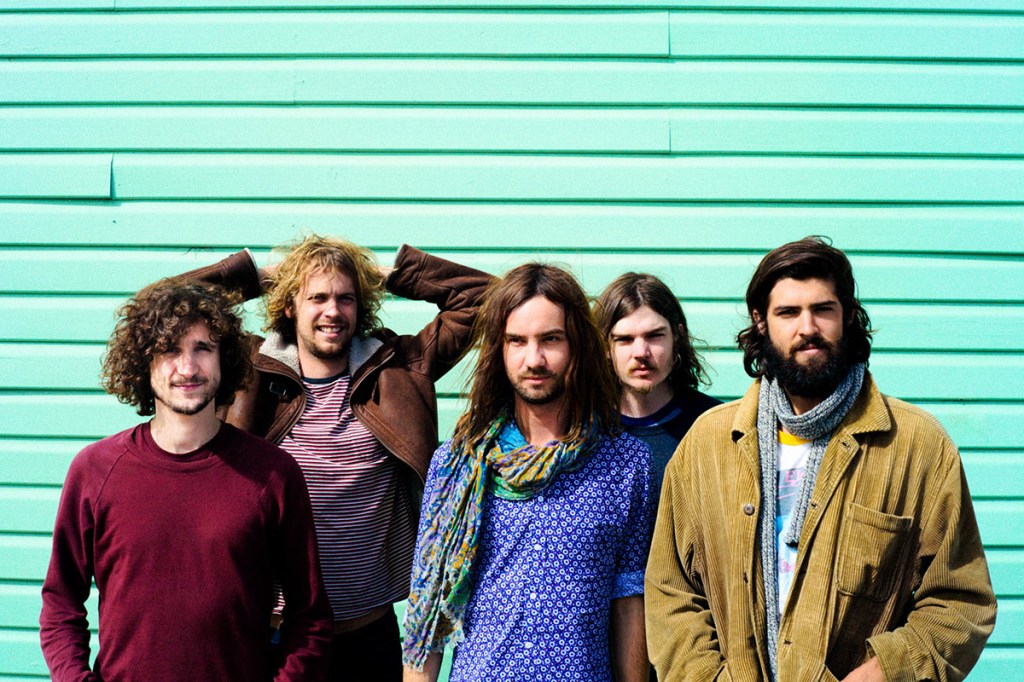
But the song that really makes me want to fall in love is “The Less I Know the Better” by Tame Impala. As I wrote in my article ranking the song at #25 on my Top 100 Songs of the 2010s, “the achingly beautiful song about young lust and love makes me wish I was 18 again, and is so fucking gorgeous it stirs the hopeless romantic in me, bringing a tear to my eye and a lump in my throat every time I hear it.” Despite the wrenching emotional roller-coaster ride of anxiety, longing and potential heartache, there’s nothing else in life that compares to the thrill of falling in love with someone new and exciting. I love this song so much I can listen to it on an endless replay loop.

The lyrics express a guy’s intense longing for a girl he can’t have, which Tame Impala front man Kevin Parker so beautifully expresses with his enthralling vocals:

Someone said they left together
I ran out the door to get her
She was holding hands with Trevor
Not the greatest feeling ever
Said, “Pull yourself together
You should try your luck with Heather”
Then I heard they slept together
Oh, the less I know the better
The less I know the better

Oh my love, can’t you see yourself by my side
No surprise when you’re on his shoulder like every night
Oh my love, can’t you see that you’re on my mind
Don’t suppose you could convince your lover to change his mind
So goodbye

She said, “It’s not now or never
Wait 10 years, we’ll be together”
I said, “Better late than never
Just don’t make me wait forever”
Don’t make me wait forever

Oh my love, can’t you see yourself by my side?
I don’t suppose you could convince your lover to change his mind

I was doing fine without ya
‘Til I saw your face, now I can’t erase
Giving in to all his bullshit
Is this what you want, is this who you are?
I was doing fine without ya
‘Til I saw your eyes turn away from mine
Oh, sweet darling, where he wants you
Said, “Come on Superman, say your stupid line”

The entertaining official video brings the song to life with an imaginative and humorous blend of romance, surrealism and colorful animation. It shows a high school basketball player lusting after a cheerleader, who soon begins a relationship with the team’s gorilla mascot named “Trevor”, who’s referenced in the lyrics. The video was filmed in Barcelona at the visual arts collective CANADA, and the two primary characters are played by Spanish actors Laia Manzanares as the cheerleader and Albert Baro as the basketball player.

Rather ridiculously, the video has been age-restricted by YouTube due to a couple of provocative scenes, so click on the “Watch on YouTube” link to watch it.

Or, just listen to the song in this audio only video:
30 Day Song Challenge, Day 27 – “The Drop” by David Oakes

The subject for Day 27 of my 30-day Song Challenge is “A song by an instrumental artist“, and once again, the possible choices are immense. Musicians and composers have been creating instrumental music since the dawn of time I suppose, with classical music, followed by jazz, being the two most widespread forms of instrumental music composed up until the beginning of the so-called ‘rock era’ in the mid 1950s. After that, instrumental music created by more mainstream artists became popular, and from the mid 1950s through early 1980s, scores of singles like “Tequila”, “Sleep Walk”, “The Theme from ‘A Summer Place'”, “Green Onions”, “Stranger on the Shore”, “Love is Blue”, “Classical Gas”, “Grazin’ in the Grass”, “Frankenstein”, “Love’s Theme”, “T.S.O.P.” and “Chariots of Fire” became huge hits. Why instrumental songs failed to become hits after that has been a subject of debate, which I won’t delve further into here, other than to say that I think it’s unfortunate.

That said, there are still lots of musicians and artists out there who are creating some great instrumental music, and I’ve featured many of them on this blog over the years. One of my favorites, and also the very first I wrote about as a new blogger way back in March 2016, is David Oakes. Born in England and now living in Wales, he’s an imaginative and prolific musician and composer of electronic alternative rock music, ranging from gentle synth-driven compositions to aggressive guitar-driven hard rock, and everything in between. I really like his music, and have written about quite a lot of it (you can read some of those reviews by clicking on the links under “Related” at the end of this post).

David’s been actively involved in making music since his late teens, when he started playing in various bands. From 2001-06, he and his younger brother were members of the rock band KOTOW, for which he played drums. He went on to study guitar and music theory at the Academy of Contemporary Music in Guildord, England from 2009-12, after which he started composing and recording music as a solo artist. Since 2012, he’s released an astonishing 10 albums! One of his non-album singles is “The Drop“, which I’ve chosen for my latest song challenge.

It’s an intense song, with a strong chugging bass line overlain with gritty staccato guitar and relentless pummeling drumbeats, highlighted by some tasty melodic riffs of metal guitar riffs. As with all his music, David played all the instruments, and recorded, produced and mixed the track.

The equally intense, horror-film like video, produced by Dark Fable Media, shows David playing the song on his guitar in the woods, where he encounters a man in a frightful-looking mask. The masked man attacks him, whereupon they struggle until David stabs him and runs off. The story seems to be a kind of nightmare, as all three men shown in the video are the same guy, stuck in a disturbing time loop. The entire video is filmed in black and white, with the only color shown being the red blood on the knife and the stabbed man’s hands.

Here’s David’s latest release Ten Years A Dave, featuring what he feels are his ten best tracks over the past ten years, including “The Drop”.

Stream/purchase David’s music on SpotifyApple MusicBandcamp

30 Day Song Challenge, Day 26 – “2am” by Foals

The subject for Day 26 of my 30-day Song Challenge is “A song by an artist whose voice you love“. This was another difficult category, as I love the singing voices of literally hundreds of artists, a few of whom I’ve already featured on this song challenge: Judy Garland, Chris Cornell, Karen Carpenter, Ray Charles and MISSIO’s Matthew Brue. To make my selection easier, I decided to narrow the field a bit by choosing an artist who’s still actively putting out new music, and my pick is Yannis Philippakis, the lead singer and guitarist of British alt-rock band Foals, and their recent single “2am“.

Formed in Oxford, England in 2005, Foals current line-up consists of Greek-born Philippakis, drummer and percussionist Jack Bevan, and rhythm guitarist Jimmy Smith. They’ve ranked among my favorite bands for the past seven years, and I love their exciting, incredibly melodic music, bolstered by Philippakis’ vibrant and distinctive vocal style that makes their songs instantly recognizable as only theirs. They’ve released seven studio albums to date: Antidotes (2008), Total Life Forever (2010), Holy Fire (2013), What Went Down (2015), and Everything Not Saved Will Be Lost – Part 1 & 2 (2019), and Life Is Yours, which dropped June 17th. “2am” was the second single released from Life Is Yours, and has spent the past 15 weeks on my Weekly Top 30.

Written mostly during the bleak Covid lockdowns, Life Is Yours is purposefully more upbeat than their previous albums, many of which featured more serious themes. In an interview with webzine NME, Philippakis remarked how writing upbeat tracks like “2am” offered much needed hope and escapism. “We were thinking about parties, club nights and being drunk on the bus at 2 a.m. trying to get home. All of it: the excitement before you go out, meeting up with your friends, the wild abandon. We really wanted to revel in the power of rhythm and music, and what that brings to your body, heart and soul.” While the lyrics are introspective and melancholic – “It’s about repetitive cycles of destructive behavior, which I think lots of people can relate to, and certainly it’s an expression of something that I struggle with,” Philippakis explained, adding: “There’s something cathartic about expressing that feeling to this upbeat music that’s got a sense of release and the hope of resolution. It’s an absolute banger of a track and feels joyous and full of light to us.” It feels joyous and full of light to me too!

Follow Foals:  FacebookTwitterInstagram

30 Day Song Challenge, Day 25 – “Nearly Forgot My Broken Heart” by Chris Cornell

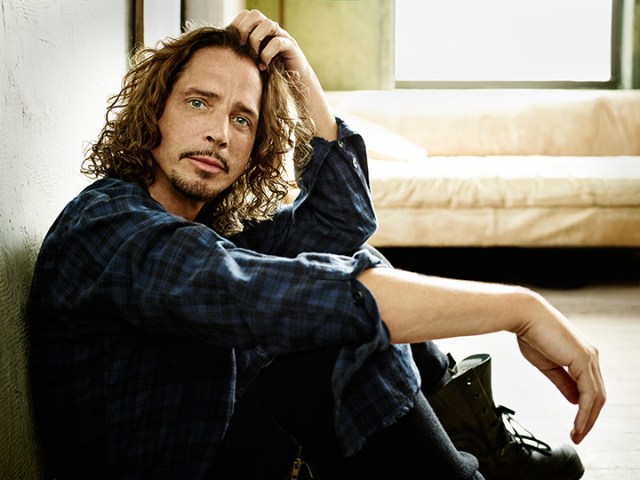
The subject for Day 25 of my 30-day Song Challenge is “A song by an artist who is no longer living“. I’ve already featured several artists no longer with us on this song challenge, including Ray Charles, Karen Carpenter, former Beatles John Lennon & George Harrison, George Gershwin, former Bee Gees Robin & Maurice Gibb, Jimi Hendrix, Kyu Sakamoto and Judy Garland. For this particular challenge, I’ve chosen the late, great Chris Cornell, and his stunning 2015 single “Nearly Forgot My Broken Heart“.

I trust Cornell needs no introduction, but to briefly summarize, he was born in Seattle, and was involved in numerous music projects both as a solo artist and a member of three notable bands over his prolific 30-year career. Widely considered one of the key figures of the 1990s grunge movement, he was lead vocalist and rhythm guitarist for rock bands Soundgarden and Audioslave, as well as the founder and frontman of Temple of the Dog, a one-off tribute band dedicated to his late friend Andrew Wood. As a solo artist, Cornell released four solo studio albums, Euphoria Morning (1999), Carry On (2007), Scream (2009), and Higher Truth (2015). “Nearly Forgot My Broken Heart”, released in August 2015, was the lead single from Higher Truth.

An impossibly beautiful man with an arresting powerhouse voice to match, Cornell was truly one of a kind. With his raw, nearly four-octave vocal range, he belted out his song lyrics with a passionate intensity that never failed to send chills up and down our spines. As Luke O’Neil so beautifully articulated in his tribute to Cornell for Esquire, “... there was perhaps no one who had such a mastery of his instrument as Cornell. When you can sing like that, it would be criminal not to. It sounds like the casual murmurings of a stoned guy in the crowd to say it in writing, but man, Cornell could shred. A voice like his doesn’t let you tune it out. It is a force that grabs you. It gets inside of you.”

“Nearly Forgot My Broken Heart” has a bit of a Western vibe, thanks to some wonderful twangy notes coming from either a ukelele or mandolin – or both, but there’s so much more going on musically. Throughout the song, our ears are treated to gorgeous plucked strings, vibrant piano and strident percussion, all creating a marvelous cinematic soundscape for Cornell’s glorious vocals. Then there are those grungy distorted riffs that enter halfway into the track, lending a dramatic and edgy aura of tension to the proceedings. It’s a magnificent song.

The lyrics speak of a troubled on-and-off relationship with a woman who rescued him from a broken heart, but ever since then has only caused him even more grief. In an interview with Yahoo! in 2015, Cornell elaborated on his inspiration behind “Nearly Forgot My Broken Heart”: “I was on tour with Soundgarden, and I remember writing down the title. The title immediately brought up the idea of the song, which is that someone is so distracted by a new person or a new thing in their life that they kind of forgot that they had given up on life. Sometimes it just happens without us even noticing.

Every time I stare into the sun
Trying to find a reason to go on
All I ever get is burned and blind
Until the sky bleeds the pouring rain

When you came along the time was right
Pulled me like an apple red and ripe
Wasn't very long you took a bite
And did me wrong, and it serves me right

And I nearly forgot my broken heart
It's taking me miles away
From the memory of how we broke apart
Here we go round again, again

Every little key unlocks the door
Every little secret has a lie
Tryna take a picture of the sun
And it won't help you to see the light
Every little word upon your lips
Makes a little cut where blood pours out
Every little drop of blood a kiss that I won't miss
Not for anything

And I nearly forgot my broken heart
It's taking me miles away
From the memory of how we broke apart
Here we go round again

Every single feeling tells me this is leading to a heart
In broken little pieces and you know I need this
Like a hole in the head
Every single feeling tells me this is leading to a heart
In broken little pieces and you know I need this
Like a hole in the head

And I nearly forgot my broken heart
It's taking me miles away
From the memory of how we broke apart
Here we go round again
And I nearly forgot my broken heart
It's taking me miles away
From the memory of how we broke apart
Here we go round again

The song reached #5 on the Billboard Mainstream Rock chart, #7 on the Rock Airplay chart, and #1 on the Canadian Rock chart. I ranked it #30 on my Top 100 Songs of 2015 list.

The dark music video produced for the song was directed by Jessie Hill, and featured Cornell and actor Eric Roberts as prisoners about to be hanged in an old Western town. (Cornell’s 10-year-old son Christopher also appeared in the video.) Cornell insisted on doing his own stunts and had an accident on set. The filming of the mock hanging ended up requiring several takes, and a liquid chemical used to singe the noose tied around Cornell’s neck rubbed off, causing second degree burns on his shoulder. Three weeks after his tragic suicide by hanging on May 18, 2017, the music video was pulled from YouTube. (Wikipedia) Consequently, I’ve embedded the lyric video.

30 Day Song Challenge, Day 24 – “Over the Rainbow” by Judy Garland

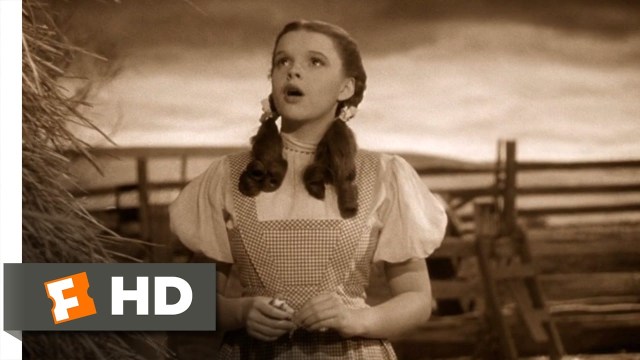
The subject for Day 24 of my 30-day Song Challenge is “A song from a movie you love“, and there was only choice for me – “Over the Rainbow“, sung by Judy Garland in The Wizard of Oz. The 1939 classic has been my favorite film for my entire life, and I’ve seen it more than 50 times. Each time I watch it, it moves and excites me every bit as much as it did when I was a child, and I never grow tired of seeing it. There are so many great scenes and songs in the film, and one of the best of them all is when Garland, as young teenager Dorothy Gale, wistfully sings “Over the Rainbow” after being told by her Auntie Em to find “a place where you won’t get into any trouble“.

“Over the Rainbow” was written by composer Harold Arlen, with lyrics by Edgar “Yip” Harburg, who together wrote all the wonderful music and song lyrics for The Wizard of Oz. “Over the Rainbow” was the final song written for the film, as Arlen and Harburg had struggled to come up with an appropriate song for the Kansas farm scene that takes place early in the film. Harburg claimed his inspiration was “a ballad for a little girl who was in trouble and… wanted to get away from Kansas – a dry, arid, colorless place. She had never seen anything colorful in her life except the rainbow“. Arlen decided the idea needed “a melody with a long broad line“. (Walter Frisch (2017) Arlen and Harburg’s Over the Rainbow)

Shockingly, the song was initially deleted from the film at the direction of MGM chief Louis B. Mayer because he thought it slowed down the picture, was too far over the heads of its targeted child audience, and “sounded like something for Jeanette MacDonald, not for a little girl singing in a barnyard“. Mayer was clearly wrong on all counts, as Garland’s heartfelt, vulnerable vocals beautifully conveyed a young girl’s hopes and dreams of a better place, far away from her dull, troubled life. Though still only 16 when she recorded “Over the Rainbow”, Garland had a powerful, incredibly emotive vocal style beyond her tender years.

Director Victor Fleming, producer Mervyn LeRoy, associate producer Arthur Freed, and Garland’s vocal coach and mentor Roger Edens all joined together to fight to have the song reinserted into the film. Freed told Mayer “The song stays—or I go,” to which Mayer replied: “Let the boys have the damn song. Put it back in the picture. It can’t hurt.” (Gary Shapiro (2017) Columbia News)

For a song that almost didn’t happen, “Over the Rainbow” has become one of the most beloved songs of all time, leaving an indelible legacy for both The Wizard of Oz and Judy Garland. It was awarded an Oscar for Best Original Song, and in 2001, was voted the greatest song of the 20th century in a joint survey by the National Endowment for the Arts and the Recording Industry Association of America. Numerous singers have recorded their own versions of the song, with one of the most popular being that of Hawaiian artist Israel Kamakawiwoʻole, who included “Over the Rainbow” in a beautifully moving ukulele medley with Louis Armstrong’s “What a Wonderful World”.

30 Day Song Challenge, Day 23 – “Ode to Billie Joe” by Bobbie Gentry

The subject for Day 23 of my 30-day Song Challenge is “A song that tells a story“. I feel confident in stating that just about everyone loves songs that tell a story, as they’re often very compelling, reeling us in as their lyrics unfold, and keeping our attention all the way to the end. Some of the great “story” songs that come to mind are “El Paso” by Marty Robbins (which I wrote about in 2019, and is my 8th most-viewed post ever), “Harper Valley P.T.A.” by Jeannie C. Riley, “A Boy Named Sue” by Johnny Cash, “Me and Bobby McGee” by Janis Joplin, “Stairway to Heaven” by Led Zeppelin, “Taxi” by Harry Chapin, “The Wreck of the Edmund Fitzgerald” by Gordon Lightfoot, and “Stan” by Eminem. But the one I’ve chosen is one of the very best – “Ode to Billie Joe” by Bobbie Gentry. I remember loving it as a 13-year old back in 1967.

My 45 single of “Ode to Billie Joe”

Bobbie Gentry wrote “Ode to Billie Joe” with the intention of having Lou Rawls record it. But after Capitol Records producer Kelly Gordon received her demo for her song “Mississippi Delta”, he liked it and asked her for a B-side that could be released on a single. She then recorded a demo of the song, with just her vocals accompanied by an acoustic guitar, in February 1967. Gordon liked her vocals on the demo, but decided to add an instrumental arrangement to the recording. He enlisted Jimmie Haskell (a composer and arranger for both motion pictures and an array of popular artists, including Elvis Presley, Neil Diamond, Crosby, Stills & Nash, Steely Dan, Billy Joel, and the Everly Brothers) to prepare a string arrangement with four violins and two cellos. Haskell felt the song sounded like it could be from a film and decided to write the arrangement with a more cinematic feel, as if it were a score. Gordon then overdubbed Gentry’s recording with the haunting string arrangement, and decided that “Ode to Billie Joe” would be the A-side of the single, with “Mississippi Delta” as the B-side.

The song was written in the form of a first-person narrative, told by the young daughter of a rural Mississippi Delta family, and sung by Gentry. It features perfect rhymes from the first to the sixth line of every verse and, unlike most songs, contains no chorus. The lyrics tell the story of the family’s reaction to the news of the suicide of Billie Joe McAllister, a local boy to whom the daughter (and narrator) is connected. The song quickly became popular upon its release in July 1967, because it created curiosity in listeners, leaving them wondering what the narrator and Billie Joe threw off the Tallahatchie Bridge, and what caused Billie Joe to commit suicide. In numerous interviews, Gentry clarified that she intended the song to portray the family’s indifference to the suicide in what she deemed “a study in unconscious cruelty”, while she remarked the object thrown was not relevant to the message.

In an August 1967 interview with the Los Angeles Times, Gentry compared the song to a play, and said she wanted to show “people’s lack of ability to empathize with others’ tragedy“. She pointed at the mother, noticing but not understanding her daughter’s lack of appetite, while later in the song, the daughter seems unable to fully grasp the similarity of her mother’s behavior after the father dies. Gentry explained that both characters had “isolated themselves in their own personal tragedies“, and remained unconcerned for the others. Regarding the object thrown off the Tallahatchie Bridge, she commented that people had found more meanings than she had intended, such as “a baby, a wedding ring, or flowers“, among other things. While she indicated that what happened at the bridge was the motivation behind Billie Joe’s suicide, she’d intended to leave that open to the listener’s interpretation, adding that her sole motivation was to show “people’s apathy“. (Wikipedia)

“Ode to Billie Joe” was a big hit, spending four weeks at #1 on the Billboard Hot 100, and also reaching #1 in Canada. Surprisingly, it peaked at only #17 on the Country chart. The song was also nominated for eight Grammy Awards, with Gentry and arranger Jimmie Haskell winning three between them, and later adapted for the 1976 film Ode to Billy Joe.

It was the third of June, another sleepy, dusty Delta day
I was out choppin’ cotton, and my brother was balin’ hay
And at dinner time we stopped and walked back to the house to eat
And mama hollered out the back door, y’all, remember to wipe your feet
And then she said, I got some news this mornin’ from Choctaw Ridge
Today, Billie Joe MacAllister jumped off the Tallahatchie Bridge

And papa said to mama, as he passed around the blackeyed peas
Well, Billie Joe never had a lick of sense; pass the biscuits, please
There’s five more acres in the lower forty I’ve got to plow
And mama said it was shame about Billie Joe, anyhow
Seems like nothin’ ever comes to no good up on Choctaw Ridge
And now Billie Joe MacAllister’s jumped off the Tallahatchie Bridge

And brother said he recollected when he, and Tom, and Billie Joe
Put a frog down my back at the Carroll County picture show
And wasn’t I talkin’ to him after church last Sunday night?
I’ll have another piece-a apple pie; you know, it don’t seem right
I saw him at the sawmill yesterday on Choctaw Ridge
And now ya tell me Billie Joe’s jumped off the Tallahatchie Bridge

And mama said to me, child, what’s happened to your appetite?
I’ve been cookin’ all morning, and you haven’t touched a single bite
That nice young preacher, Brother Taylor, dropped by today
Said he’d be pleased to have dinner on Sunday, oh, by the way
He said he saw a girl that looked a lot like you up on Choctaw Ridge
And she and Billie Joe was throwing somethin’ off the Tallahatchie Bridge

A year has come and gone since we heard the news ’bout Billie Joe
And brother married Becky Thompson; they bought a store in Tupelo
There was a virus going ’round; papa caught it, and he died last spring
And now mama doesn’t seem to want to do much of anything
And me, I spend a lot of time pickin’ flowers up on Choctaw Ridge
And drop them into the muddy water off the Tallahatchie Bridge

30 Day Song Challenge, Day 21 – “Sukiyaki” by Kyu Sakamoto

The subject for Day 21 of my 30-day Song Challenge is “A song sung in a different language“, and my pick is “Sukiyaki” by Kyu Sakamoto. I vividly remember hearing it played a lot on the radio in the summer of 1963, and even though I was only eight years old and couldn’t understand a single word he sang, I absolutely loved it. The beautiful song was a big worldwide hit, reaching #1 not only in Sakamoto’s home country of Japan, but also in the U.S., Canada, Australia, New Zealand and Norway.

Originally titled “Ue o Muite Arukō” – represented in Japanese as 上を向いて歩こう, and translated into English as “I Look Up as I Walk” – the song was alternatively titled “Sukiyaki” (the name of a Japanese hot-pot dish with cooked beef) for its release in English-speaking countries. The word ‘sukiyaki’ does not appear in, nor have any connection to, the song’s lyrics, but was used only because it was short, catchy, recognizably Japanese, and more familiar to English speakers. Written by lyricist Rokusuke Ei and composer Hachidai Nakamura, and sung by young Japanese crooner Kyu Sakamoto (who was only 19 when he recorded the song), “Ue o Muite Arukō” was first released in Japan in 1961. It quickly topped the Japanese pop music chart, and went on to become the #1 song of the year there.

Released in the U.S. in Spring 1963, “Sukiyaki” spent three weeks atop the Billboard Hot 100 in June 1963, one of the few non-English songs to do so. It was the only single by an Asian artist to top the Hot 100 until “Dynamite” by South Korean band BTS in 2020. “Sukiyaki” ranks among the best-selling singles of all time, selling over 13 million copies worldwide as of 2009.

In contrast to the upbeat arrangement and sunny instrumentals, the poignant lyrics tell the story of a man who looks up and whistles while walking so that his tears will not fall, with the verses describing his memories and feelings. Ei wrote the lyrics while walking home after having participated in the 1960 Anpo protests against the U.S.-Japan Security Treaty. Though he was expressing his frustration and dejection at the failed efforts to stop the treaty, his lyrics were purposefully generic so that they might also be interpreted to be referring to a lost love. (Wikipedia)

Tragically, Sakamoto died in August 1985 in the crash of Japan Airlines Flight 123. All 524 passengers and crew were killed in the crash, which remains the deadliest single-aircraft accident in global aviation history.

An alternative version of “Sukiyaki” was later recorded in 1981 by American band A Taste of Honey, who’d had a #1 hit in 1978 with their disco song “Boogie Oogie Oogie”. Just like me, A Taste of Honey vocalist Janice-Marie Johnson heard the original “Sukiyaki” on the radio in the summer of 1963 when she was nine years old, and loved it. Despite not understanding the lyrics, she was deeply moved by the song, demanding “Mom! Buy me this record!” She played the record constantly, phonetically learning its lyrics and teaching them to her sister, and before long the pair would sing “Sukiyaki” at neighborhood talent shows while performing their approximation of an Oriental dance number.

Years later, after Johnson heard the Linda Ronstadt cover of Smokey Robinson and the Miracles’ “Ooo Baby Baby” on her car radio, she thought remaking a 1960s hit could be a good career move for her band. Her obvious choice being her beloved “Sukiyaki”, Johnson contacted the song’s lyricist Rokusuke Ei, who provided her with a literal translation of what he had written. Because his translation did not yield complete sentences in English, Johnson set out to write a new set of lyrics she felt would capture the spirit of the song. Johnson later recalled the reaction of vice-president of Capitol Records Cecil Hale, who upon hearing her sing the lyrics she had written for “Sukiyaki” in the slow ballad style she envisioned for the track, said, “‘absolutely not! Black people don’t want to hear Japanese music.’ I was stunned [having been] so sure he would like it. I looked at him and I said ‘Last time I looked in a mirror I was black and I want to hear it.‘”

Producer George Duke, who was assigned to produce the upcoming A Taste of Honey album Twice as Sweet, shared Hale’s lack of enthusiasm. In a 2010 interview with All About Jazz, Duke recalled: “‘Man, what am I going to do with “Sukiyaki”?’ I thought [Johnson] was crazy, but I said ‘If that’s what she wants to do, I’ll do it.'” He brought in Clare Fischer to play the string arrangement and June Kuramoto, of the jazz band Hiroshima, to play koto, giving the track a Japanese flavor. “We added an R&B section, and that was it. It was a simple tune I never thought would become a hit. To this day, I can’t believe it was as big a record as it was.”

Though Capitol Records exec. Cecil Hale remained resistant to the song, after two released tracks from Twice as Sweet failed to gain traction, he finally relented and released “Sukiyaki” in January 1981. Even though I personally don’t much care for the song, it reached #1 on both the Billboard R&B and Adult Contemporary charts, and #3 on the Hot 100.

30 Day Song Challenge, Day 19 – “All Along the Watchtower” by Jimi Hendrix

The subject for Day 19 of my 30-day Song Challenge is “A song that’s a superior cover of the original“, and my pick is “All Along the Watchtower” by Jimi Hendrix. The magnificent song was technically recorded by The Jimi Hendrix Experience, which consisted of Hendrix on guitar, Noel Redding on bass, and Mitch Mitchell on drums. For this song, however, Hendrix also played bass, as he felt that Redding “did not put his heart into the bass.”

“All Along the Watchtower” was written by Bob Dylan, who recorded it in 1967 for his album John Wesley Harding, but Hendrix’s cover became the most iconic. Hendrix took Dylan’s acoustic original and radically rearranged it into a more dynamic and dramatic song, befitting the lyrics that many have stated are an allegory about the entertainment business, with artists feeling exploited by their managers and record labels. His complex, multi-layered blend of blues and psychedelic guitars is positively jaw-dropping and nothing short of spectacular.

In choosing to cover the song, Hendrix stated: “All those people who don’t like Bob Dylan’s songs should read his lyrics. They are filled with the joys and sadness of life. I am as Dylan, none of us can sing normally. Sometimes, I play Dylan’s songs and they are so much like me that it seems to me that I wrote them. I have the feeling that Watchtower is a song I could have come up with, but I’m sure I would never have finished it. Thinking about Dylan, I often consider that I’d never be able to write the words he manages to come up with, but I’d like him to help me, because I have loads of songs I can’t finish. I just lay a few words on the paper, and I just can’t go forward.” (Songfacts)

In a 1995 interview with the Fort Lauderdale Sun Sentinel, Dylan described his reaction to hearing Hendrix’s version: “It overwhelmed me, really. He had such talent, he could find things inside a song and vigorously develop them. He found things that other people wouldn’t think of finding in there. He probably improved upon it by the spaces he was using. I liked Hendrix’s [recording] and ever since he died I’ve been doing it that way. Strange how when I sing it, I always feel it’s a tribute to him.”

There must be some kind of way outta here
Said the joker to the thief
There's too much confusion
I can't get no relief
Business men, they drink my wine
Plowmen dig my earth
None will level on the line
Nobody offered his word
Hey, hey

No reason to get excited
The thief, he kindly spoke
There are many here among us
Who feel that life is but a joke
But, uh, but you and I, we've been through that
And this is not our fate
So let us stop talkin' falsely now
The hour's getting late, hey

All along the watchtower
Princes kept the view
While all the women came and went
Barefoot servants, too
Well, uh, outside in the cold distance
A wildcat did growl
Two riders were approaching
And the wind began to howl, hey

All along the watchtower

“All Along the Watchtower” was released as a single in September 1968, with the B-side “Burning of the Midnight Lamp”. Both songs were included on the album Electric Ladyland. Shockingly, it was Hendrix’ only song to reach the top 40 of the Billboard Hot 100, where it peaked at #20.

And here’s Bob Dylan’s original version:

30 Day Song Challenge, Day 4 – “A Beautiful Morning” by The Rascals

The subject for Day 4 of my 30 Day Song Challenge is “A song that reminds you of Spring“, and for my pick I’m going way back to 1968 with “A Beautiful Morning” by The Rascals. It’s not a song about Spring per se, but for me, its positive title and exuberant sunny vibe evoke images of a lovely Spring-like day, where it just feels good to be alive.

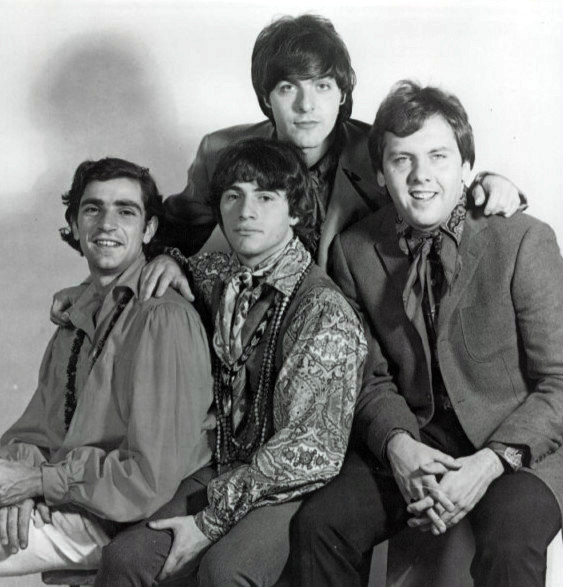
Co-written in Honolulu by band members Felix Cavaliere and Eddie Brigati while the band was performing in Hawaii, “A Beautiful Morning” continued with the theme of carefree optimism expressed on their massive hit song “Groovin'”. The song was appropriately released at the beginning of Spring on March 22, 1968, and was the band’s first single released as the ‘The Rascals’, rather than their previous moniker ‘the Young Rascals’. The single was also one of the earliest to be released in stereo, as 7-inch 45 singles had generally been recorded in mono. Together with the Doors “Hello, I Love You” it’s credited with changing the industry standard of singles. (Wikipedia) “A Beautiful Morning” also became a big hit, reaching #3 on the Billboard Hot 100.

EML’s Favorite Songs – “Bette Davis Eyes” by Kim Carnes

The other night I watched the wonderful classic 1942 film Now, Voyager, starring Bette Davis, Paul Henreid, and Claude Rains on Turner Classic Movies. Seeing Davis in scenes on the cruise ship, her famous eyes luminescent beneath the wide-brimmed white hat, made me think of the 1981 Kim Carnes hit song “Bette Davis Eyes”. It’s my favorite song of 1981, and ranks among my favorite songs of all time.

“Bette Davis Eyes” was written in 1974 by Donna Weiss and Jackie DeShannon, who’d had prior success with her hits “What the World Needs Now is Love” and “Put a Little Love in Your Heart”. With lyrics about a strong-willed, alluring and precocious woman with “Greta Garbo standoff sighs and Bette Davis eyes“, the song was originally recorded in 1974 by DeShannon for inclusion on her album New Arrangement. Her original recording has more of a country vibe, with twangy guitars and honky tonk piano, but it was Kim Carnes’ more synth-heavy 1981 version that made “Bette Davis Eyes” a massive worldwide hit. It spent nine weeks at #1 on the Billboard Hot 100, and reached #1 in many countries, including Australia, Canada, France, Spain, Germany, Norway, Switzerland and South Africa. It was ranked the #1 song of 1981 on the Hot 100, and also won Grammy Awards for Song of the Year and Record of the Year.

Though she’d been writing and recording music for well over a decade, it wasn’t until 1980 that the raspy-voiced Carnes broke through with two top 10 hits – her duet with Kenny Rogers “Don’t Fall in Love With a Dreamer”, which she co-wrote with her husband Dave Ellingson, and a terrific cover of the Smokey Robinson song “More Love”. But it was her cover of “Bette Davis Eyes” that shot her to international fame and acclaim.

The song fell into her lap almost by accident during the search for material for her album Mistaken Identity, which she was recording with music producer/engineer Val Garay (who’d previously produced “More Love”). Garay later recalled that songwriter Donna Weiss had contacted him about a song she’d just written with Bruce Roberts that she wanted to play for him and Carnes. “So she came over and played us the song, and Kim and I kind of looked at each other and we thought, ‘Yeah, not bad.’ But it wasn’t what we were looking for. So she said, ‘Well, you know, I have this other song I gave to George Tobin and nothing ever came of it.’ And that was ‘Bette Davis Eyes.’ Kim had actually heard it before, and liked it. So she played the demo for me, and it was totally different than the record. It sounds like a Leon Russell track, with this beer-barrel polka piano part. But I loved the melody and I loved the lyrics.

Garay had keyboardist Bill Cuomo come up with the signature synth riff, using a Sequential Circuits Prophet-5 synthesizer, which became a defining element of Carnes’ more sensual and rather mysterious version. The song was recorded in the studio on the first take. (Wikipedia, MIX webzine)

Bette Davis was 73 years old when Carnes’ version of “Bette Davis Eyes” became a hit, and was thrilled to have a song named after her and inspired by her legacy. She wrote letters to Carnes, Weiss, and DeShannon, telling them she loved the song and thanking them for making her “a part of modern times“, also adding that her grandson now looked up to her and told her she had “finally made it”. After their Grammy wins, Davis sent all three of them roses as well. In her 1987 memoir This ‘N’ That, Davis wrote “It was a thrill to become a part of the rock generation” as a result of the song. Carnes and Davis also struck up a special friendship, with Carnes visiting Davis at her home several times before her death in 1989.

Her hair is Harlow gold
Her lips a sweet surprise
Her hands are never cold
She's got Bette Davis eyes
She'll turn her music on you
You won't have to think twice
She's pure as New York snow
She got Bette Davis eyes

And she'll tease you, she'll unease you
All the better just to please you
She's precocious, and she knows just what it
Takes to make a pro blush
She got Greta Garbo's standoff sighs, she's got Bette Davis eyes

She'll let you take her home
It whets her appetite
She'll lay you on a throne
She got Bette Davis eyes
She'll take a tumble on you
Roll you like you were dice
Until you come out blue
She's got Bette Davis eyes

She'll expose you, when she snows you
Off your feet with the crumbs, she throws you
She's ferocious and she knows just what it
Takes to make a pro blush
All the boys think she's a spy, she's got Bette Davis eyes

She'll tease you, she'll unease you
All the better just to please you
She's precocious, and she knows just what it
Takes to make a pro blush
All the boys think she's a spy, she's got Bette Davis eyes
She'll tease you
She'll unease you
Just to please you
She's got Bette Davis eyes
She'll expose you
When she snows you
'Cause she knows you, she's got Bette Davis Eyes
She'll tease you

The song’s official video, which shows Kim Carnes singing in front of her support band before an audience of oddly-costumed people doing bizarre dance moves and symbolically slapping one another in sync with the percussive synths, is deeply unsatisfying to me. I think it would have been far more effective to have Carnes sing the song against a visual backdrop of scenes of Bette Davis from some of her most iconic film roles, but my guess is that it would have been prohibitively expensive or a lengthy legal process, or both, to obtain the rights to be able to include such scenes.

Here’s a simple audio of the song, which has much better sound quality: