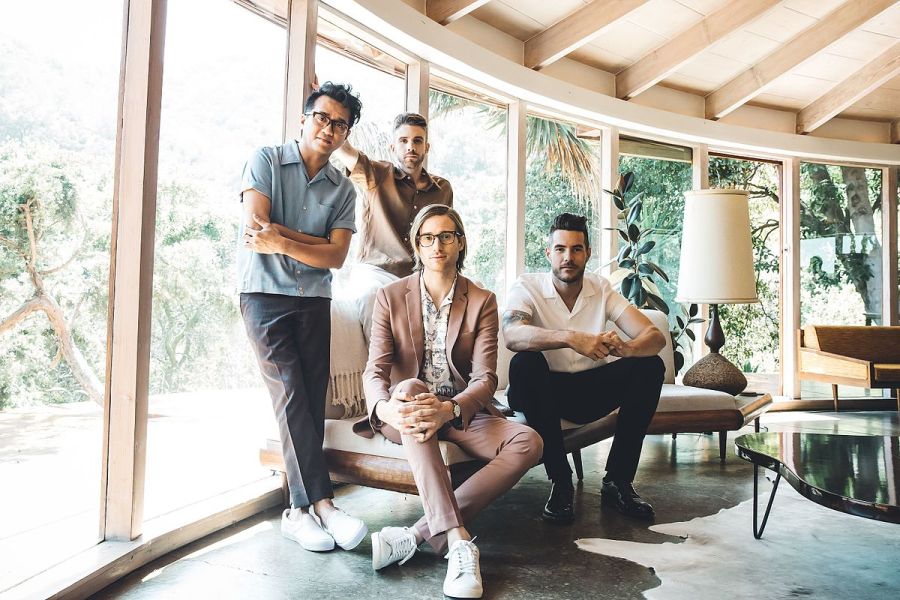
The song at #95 on my list of 100 Best Songs of the 2010s is “My Type” by Los Angeles-based Saint Motel. I loved this song the moment it first hit my eardrums back in late 2014, and it turned me into a big fan of the band. Their rousing, sophisticated sound is a nod to the brassy exuberance of the Big Band era, but delivered with a fresh, contemporary indie pop approach. “My Type” is a deliriously catchy song with a powerful driving dance beat and an exuberant horn-driven hook that make for a joyful and fun listen. It also has one of the best tongue-in-cheek lyrics ever: “You’re know you’re just my type. Oh, you’ve got a pulse and you are breathing.”
Band front man A.J. Jackson, who has a terrific singing voice, produced and directed the stylish video for the track, which was filmed in a cool Mid-Century Modern house in L.A.
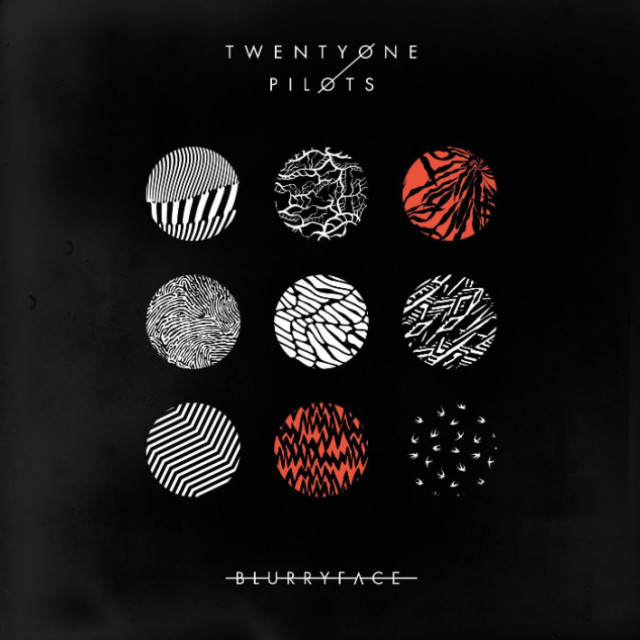
Blurryface is my favorite album of the past 10 years, and twenty one pilots is my current favorite band. I love them, and their music brings out the 25-year-old still lurking inside my decrepit old body. I saw them in concert in St. Louis with my sister in August 2016, and the two of us were quite literally the oldest people there who were not chaperoning their children or grandchildren!
Formed in 2009 and based in their hometown of Columbus, Ohio, twenty one pilots consists of vocalist and multi-instrumentalist extraordinaire Tyler Joseph and drummer Josh Dun (who joined the band in 2011 after two of the previous founding members left). Incorporating a ridiculously eclectic mix of genres – including hip hop, rap, alternative rock, pop, reggae, ska, psychedelia, electronica, new wave, folk and funk – and employing a vast array of instruments and synth sounds too numerous to mention, they create music that’s complex, innovative, exciting and totally original. With their unique sound, not to mention Joseph’s distinctively quirky vocals, they sound like no other act, and their music is immediately recognizable.
Released in May 2015, Blurryface was the band’s fourth studio album. Although they’d been putting out music since 2009, it wasn’t until April 2015 that I learned of them, when I first heard their single “Tear in My Heart”. It was love at first listen, and I quickly became a huge fan. I downloaded Blurryface on iTunes as soon as it was released, and also binged on their back catalog of music, especially their brilliant 2013 album Vessel. I burned Blurryface onto a CD, put it into my car stereo, and played it every time I went anywhere for months, turning many friends onto it as well.
The album is named after a fictional character called Blurryface, who Joseph said “represents all the things that I as an individual, but also everyone around, are insecure about”, namely, our doubts, fears and self-loathing. Joseph wore black paint on his hands and neck during their live shows and music videos for the album, almost apologizing: “Very dramatic, I know, but it helps me get into that character.” The album is of such high caliber that every one of its 14 tracks could be a hit song, and in fact, in 2018 it became the first album in the digital era to have every track receive a gold certification from the Recording Industry Association of America. It spent 276 consecutive weeks on the Billboard 200 Album chart, peaking at #1. It finally dropped off the chart three weeks ago, but then re-entered the following week, and as I write this, it’s enjoying its 278th week on the chart.
Although I love every song on the album, I’ll discuss my favorites to keep this write-up from becoming tedious. The first is “Tear in my Heart”, the second single released from the album and, as I stated earlier, my introduction to twenty one pilots. It’s a delightful song of love inspired by Joseph’s marriage to his wife Jenna a month earlier. Not only do I adore the song’s exuberant arrangement, arresting stop and start melody, colorful instrumentation, and Joseph’s wonderful plaintive vocals, I also love the endearing lyrics about the contradictory emotions of joy and agony that often come from romantic love: “The songs on the radio are okay. But my taste in music is your face! And it takes a song to come around to show you how. She’s the tear in my heart. I’m alive. She’s the tear in my heart. I’m on fire. She’s the tear in my heart. Take me higher than I’ve ever been!”
The video shows Joseph and Dun performing the song in L.A.’s Chinatown, with the people around him barely paying attention. Eventually, the surrounding buildings begin crumbling as Joseph notices Jenna in a group of people, and follows her down an alley and into a restaurant. She sings to him the opening lyrics of the song: “Sometimes you’ve got to bleed to know, that you’re alive and have a soul“, to which he responds: “but it takes someone to come around to show you how“, whereupon she starts beating him until he’s bleeding. The video ends with them kissing.
The pinnacle track on the album is “Stressed Out”, which is my favorite of all their songs, and now ranks among my favorite songs of all time. It’s a catchy and brilliant song with a relatively simple alternative rap-rock melody. The lyrics speak of facing the burdens and responsibility of adulthood, while longing for the simplicity and safety of one’s childhood: “Wish we could turn back time, to the good old days. When our mama sang us to sleep, but now we’re stressed out.” The song also references the album’s title and Joseph’s alter-ego Blurryface, expressed in the lyric “My name’s Blurryface, and I care what you think.” I especially love the strong drumbeats, spacey synths and contemplative piano keys. The song was a massive hit, reaching #1 on the Billboard Hot Rock Songs, Mainstream Top 40, Adult Top 40 and Alternative charts, where it spent 12 weeks on top. The delightful video, which has been streamed more than 2.1 billion times, portrays Joseph and Dun as both children at play and young adults grappling with the onset of adulthood, their parents and siblings looking on in bemused disapproval.
“Ride” was the fifth album cut to be released as a single, and was also a big chart hit. It’s a deliriously upbeat alternative hip hop song with a strong reggae undercurrent, and I love Joseph’s extraordinary vocals that go from earnest to rapping to falsetto to impassioned wails. He’s a really talented rapper, with an ability to deliver lyrics in a hard, staccato style of fast-paced rapping that only a handful of artists like Eminem are good at. The lyrics speak to uncertainties and anxieties over the meaning of life, with references to thinking about death, which Joseph raps about at high speed: “‘I’d die for you,’ that’s easy to say / We have a list of people that we would take a bullet for them, a bullet for you, a bullet for everybody in this room / But I don’t seem to see many bullets comin’ through / See many bullets comin’ through / Metaphorically, I’m the man / But literally, I don’t know what I’d do / ‘I’d live for you,’ an’ that’s hard to do / Even harder to say when you know it’s not true.” At the end, he concludes “I’ve been thinking too much, help me.” Dun’s power drumming is amazing, and the organ is a nice touch as well.
The guys show their darker, edgier side on album opener “Heavydirtysoul” which was the sixth and final single released from Blurryface. A melodically complex song with harsh industrial synths, crushing drumbeats and Joseph’s frantic rapping, several critics named it the best track on the album. They typically opened their sets with this song for their tours promoting Blurryface.
“Lane Boy” is a perfect example of how they blend together an unorthodox mix of music styles like dubstep, hip hop, jungle, ska, EDM and rock to achieve a thoroughly original and melodically surprising sound. And Joseph’s rapping on this track is particularly mind-blowing. The song challenges the idea that artists should stay in a ‘lane’ or be defined by a particular style, sound or genre, and not stray or vary from that expected formula for fear they’ll alienate fans or confound music critics: “They say, ‘stay in your lane boy, lane boy,’ but we go where we want to / They think this thing is a highway, highway, but will they be alive tomorrow?”
Another favorite is the beautiful track “Hometown”, which shows that the band is equally skilled at producing a more conventional EDM-styled song. I’m a big fan of this kind of electronic dance music, and the lush sweeping synths and driving beats are cinematic and glorious. The lyrics seem to address questions of faith, self-identity and depression: “Where we’re from, there’s no sun / Our hometown’s in the dark / Where we’re from, we’re no one / Our hometown’s in the dark.”
Album closer “Goner” is a melancholy song about defeating the darkness and fears represented by Blurryface once and for all. The track starts off with a gentle piano melody as Joseph plaintively sings “I’m a goner, somebody catch my breath / I wanna be known by you.” The music gradually builds with added percussion as he pleads “I’ve got two faces, Blurry’s the one I’m not / I need your help to take him out.” At the three-minute mark, the song erupts with explosive percussion and screaming synths as Joseph passionately wails “Don’t let me be / I’m a goner, somebody catch my breath!“, abruptly calming down at the very end and leaving us spent.
Twenty one pilots would go on to release an equally outstanding follow-up album Trench in 2018. A concept album about the saga of the fictional evil city of Dema ruled by nine bishops, Trench was produced by Paul Meany, front man of alternative rock band MUTEMATH (who opened for twenty one pilots on their Emotional Roadshow Tour), and reflected a somewhat more mature and even more complex sound for twenty one pilots. Nevertheless, Blurryface remains my favorite of their albums.
The song at #96 on my list of 100 Best Songs of the 2010s is “Wander” by Vox Eagle, featuring rap vocals by Pierre Fontaine. Vox Eagle is the music project of Australian-born and now Colorado-based singer-songwriter, producer and multi-instrumentalist Andy Crosby. One of the tracks from his outstanding 2018 album TriumAvium, “Wander” is an enchanting mashup of melodic dream rock and hip hop, and when those magical keyboard and string synths wash over us like a shower of tiny diamonds, it’s absolute bliss. Eventually, a trip hop beat ensues as Andy freestyles about how communication has broken down in his relationship, his vocals going from sultry to falsetto as he sings: “We don’t talk no more, baby girl, we just wander.” Guest vocalist Pierre Fontaine’s smooth rap vocals take over on the last third of the track, adding another wonderful textural element to this stunning track. I love this song so much I’ve probably listened to it five hundred times.
The song at #97 on my list of 100 Best Songs of the 2010s is the gorgeous “Loving You is So Easy” by Liverpool new wave/indie pop band Wide Eyed Boy. The UK has a thriving music scene today, perhaps the best since the late 1970s, and Wide Eyed Boy are among the best acts I’ve come across. I’ve featured them several times on this blog, beginning in March 2017 with my review of their superb debut single “Wolves”. That song is so good that I didn’t think they could top it, but I was wrong, as “Loving You is So Easy” is absolutely magnificent. The swirling guitars, sultry bass line, crashing percussion, and lush, sweeping industrial synths are all breathtaking, creating a stunning backdrop for singer Oliver Nagy’s beautiful and electrifying vocals. And then there’s that xylophone, adding a dash of enchanting magic to the track!
The song lyrics are fairly straightforward – “I don’t care the way you care. I can see it in your stare. But the way that we collide, it’s getting harder every time. Loving you is so easy. Easy when I’m down, down, down” – but Nagy delivers them with a smoldering seductiveness before launching into a soaring falsetto in the chorus that raises goosebumps.
The video produced for the track is visually stunning, with a minimalist set and subdued lighting, accentuated with background fluorescents, creating the perfect mood for this charismatic band’s dramatic performance.
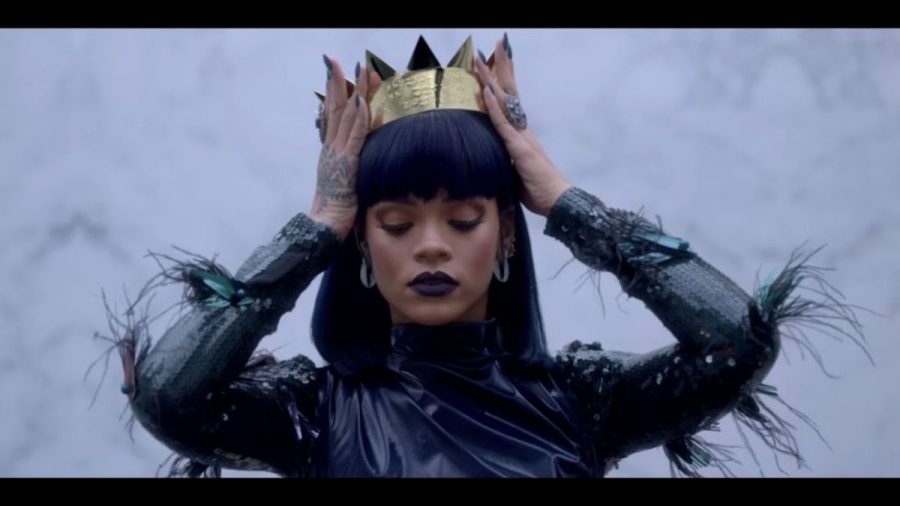
Rihanna (born Robyn Rihanna Fenty in Barbados) is an international music superstar, fashion designer, actress and businesswoman who emerged on the music scene in 2005 at the tender age of 17. Since then, she’s racked up an impressive string of monster hits and earned numerous awards and accolades. I love many of her songs, especially “Only Girl (In the World)”, “Stay”, We Found Love” and her duet “Love the Way You Lie” with Eminem, but my favorite of all is “Love on the Brain”.
The song is from her eighth studio album Anti, and features a sultry doo wop/R&B vibe in the style of many great R&B songs of the late 50s and early 60s that strongly appeals to my mature music sensibilities. It’s a stunning torch song that beautifully showcases her considerable vocal talents. Though it was a sizable hit, “Love on the Brain” peaked at only #5 on the Billboard Hot 100, a relative disappointment considering how many of her singles reached #1.
The song was originally written by Norwegian songwriter and producer Fred Ball and American songwriter Joseph Angel in late 2013. They wanted an old school soul feel with modern lyrics, and did not write it with Rihanna in mind. After hearing the song, however, Ball’s manager Jay Brown loved it and thought it would be a great song for Rihanna. He sent it to her and she loved it too, adding some additional lyrics to make the song her own. The explicit lyrics speak of a romantic obsession with another person who treats her poorly, but her feelings are so intense that she’s willing to endure whatever hurt and pain he doles out so long as he loves her. Some believed the song referred to Rihanna’s tempestuous relationship with Chris Brown, though she’s never confirmed it one way or another.
Oh, and, babe, I’m fist-fighting with fire Just to get close to you Can we burn something, babe? And I run for miles just to get a taste Must be love on the brain That’s got me feeling this way (feeling this way) It beats me black and blue but it fucks me so good And I can’t get enough Must be love on the brain, yeah And it keeps cursing my name (cursing my name) No matter what I do I’m no good without you And I can’t get enough Must be love on the brain
Baby keep loving me Just love me, yeah Just love me All you need to do is love me yeah Got me like ah-ah-ah-ow I’m tired of being played like a violin What do I gotta do to get in your motherfuckin’ heart?
Mondo Cozmo performing at the Outside Lands Music Festival at Golden Gate Park on Saturday, Aug. 12, 2017, in San Francisco, Calif. (Photo by Amy Harris/Invision/AP)
The song at #99 on my list of 100 Best Songs of the 2010s is the beautiful “Shine” by Mondo Cozmo. I’m not a religious person (I grew up Catholic but am now Atheist), so it’s kind of surprising that I would love it as much as I do. I guess it’s because of its stirring melody, the incredible guitar work, the way the instrumentals build into a sweeping gospel-like crescendo, and his raw, soaring vocals that remind me a little of Bob Dylan’s. Also, his lyrics are truly inspirational without sounding one bit mawkish or trite.
Mondo Cozmo is the artistic name of Philadelphia-born and now L.A.-based singer-songwriter Josh Ostrander, who told ABC Radio in an interview that he “wasn’t in the best headspace” when he wrote “Shine”. He added “It’s so cool that something written during that [low] time could be looked at now as being an inspirational thing. I didn’t think about the mixes or the recording, it was just all really loose, and I like to keep it like that. I think some of the charm is the shittiness of the recording.” I think it’s absolutely perfect.
Because literally no one is reading my decade-end post 100 Best Songs of the 2010sfor reasons that escape me – unlike my five-year-old post of the 100 Best Songs of the 2000s that still picks up 5-15 new views every single day – I’ve decided to post each song from the 2010s list, individually, at the rate of one per day. I worked very hard on that post, painstakingly writing about each of the 100 songs, and this will enable me to hopefully bring a bit of attention to each song by sharing my pithy discussions as to why I think it deserves to be considered among the 100 best of the decade.
I’ll begin at #100 – “Dang!” by the late Mac Miller, featuring Anderson .Paak. The untimely death of Mac Miller (born Malcolm James McCormick) was one of the more heartbreaking and unfortunate losses suffered by the music industry over the past decade. Born and raised in Pittsburgh, Pennsylvania, Miller was a musical genius of sorts, learning to play the piano, guitar, drums, and bass by the age of six. As he entered his teens he decided he wanted to be rapper, and started recording and releasing mixtapes at 15, becoming prominent in the city’s hip hop scene. By the time he reached 21, he was presented a key to the city by the mayor of Pittsburgh, and had a day named in his honor. He was such an amazing talent who produced an impressive catalog of music by the time of his death at 26, and we can only imagine what more great music he would have given us.
The first single from his fourth studio album The Divine Feminine, “Dang!” is ear candy from start to finish, featuring not only Miller but also the wonderful Anderson .Paak to sweeten the mix. Over a thumping retro-soul groove and shimmery synths, .Paak delivers the hook in his smooth, soulful croon: “I can’t keep on losing you / Over complications / Gone too soon / Wait, we was just hangin’ / I can’t seem to hold on to, dang!” Then Miller enters the scene, delivering his flow with swagger tinged with just enough vulnerability to reveal his consternation over the fragile state of his relationship. Initially boasting of his sexual prowess: “Yeah the dick ain’t free, I don’t give no fucks”, he later concedes love ain’t so simple: “Can’t concentrate, you always on my brain. If it’s love then why the fuck it come with pain?”
The sweet, colorful and sexy video produced for the song is superb.
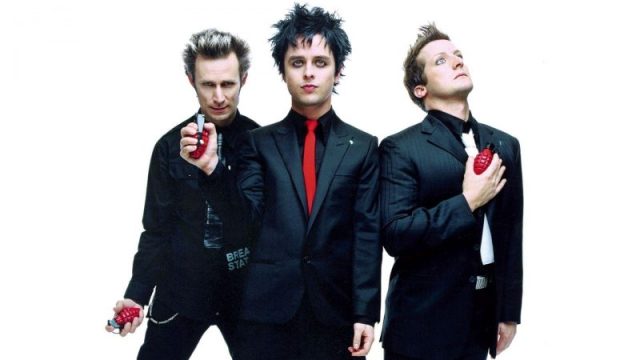
American Idiot is my favorite album by punk rock band Green Day, who also happen to be one of my all-time favorite bands. Their seventh studio album, it was released 16 years ago almost to the day, on September 21, 2004. Since 1990, the three primary members of Green Day have included Billie Joe Armstrong on lead guitar and vocals, Mike Dirnt on bass and backing vocals, and Tré Cool on drums.
American Idiot was a comeback album of sorts for them. Thanks to the massive success of their 1994 breakout album Dookie, as well as follow-up albums Insomniac and Nimrod, Green Day became one of the most popular rock bands of the 1990s. Unfortunately, despite garnering mostly positive reviews, their 2000 album Warning was a commercial disappointment. By 2003 they were experiencing internal strife, as well as beginning to feel like “elder statesmen” of the pop punk scene, even though they were then only in their early 30s.
They’d spent much of 2002 writing and recording songs for their next album to be titled Cigarettes and Valentines, but the demo master tapes were stolen from the studio (they were eventually recovered). After consulting with their longtime producer Rob Cavallo, the guys decided to scrap the old material and start fresh on a new project, with the goal of writing their best material yet. They also decided to use louder and heavier guitars for the record. For a story in a June 2005 issue of Guitar Legends, Armstrong told Alan DePerna: “We were like, ‘Let’s just go balls-out on the guitar sound—plug in the Les Pauls and Marshalls and let it rip’.”
Each band member began crafting their own 30-second songs in a kind of competition. In an interview with Entertainment Weekly, Armstrong recalled, “It started getting more serious as we tried to outdo one another. We kept connecting these little half-minute bits until we had something.” These bits would become the nine-minute long suite “Homecoming” consisting of five connected songs. They went on to write another nine-minute long suite, “Jesus of Suburbia”, also featuring five connected songs.
Armstrong then wrote the title and opening track “American Idiot” in response to the American public’s patriotic support of the Bush Administration’s war against Iraq. He was not only infuriated by the war itself, but also angered at how the mass media orchestrated support for the war by sowing paranoia and idiocy among the public through their news broadcasts. His anger carried over to the aggressive riffs and explosive percussion they employed on the track. That song, combined with the two suites they’d written, led to a change in the direction of the album, with the guys viewing the songs more as chapters or movements in a larger work. They decided to make it a concept album, also titled American Idiot, addressing sociopolitical issues of the day, and in a format they would call a “punk rock opera.” The title track was the first by Green Day to chart on the Billboard Hot 100, peaking at a paltry #61, however, it would spend six weeks at #1 on the Alternative chart.
For the creation of the album, Green Day drew inspiration from other notable rock operas such as the Who’s “Tommy” and “Quadrophenia” and David Bowie’s “The Rise and Fall of Ziggy Stardust and Spiders from Mars”, as well as the Broadway musicals West Side Story, The Rocky Horror Show, Grease, and Jesus Christ Superstar.
American Idiot explores the disillusionment and dissent of a generation that came of age in a period shaped by traumatic events like 9/11 and the Iraq War, and essentially follows the story of Jesus of Suburbia, a lower-middle-class suburban American teen, raised on “a steady diet of soda pop and Ritalin.” He hates his town, his family and everyone around him: “Everyone is so full of shit! Born and raised by Hypocrites.” He eventually escapes to the big city. His story is laid out in the nine-minute long “Jesus of Suburbia”, a hard-driving punk-infused suite consisting of five songs: “Jesus of Suburbia”, “City of the Damned”, “I Don’t Care”, “Dearly Beloved” and “Tales of Another Broken Home.”
Following the “Jesus of Suburbia” suite is “Holiday”, a protest anthem inspired by the Bush Administration’s invasion of Iraq. To a powerful driving beat, Armstrong emphatically rails against the neo-conservatives who pushed for war and their strategy of pitting one group against another. According to Armstrong, the chorus’s refrain – “This is our lives on holiday”— was intended to reflect the average American’s ambivalence of the issues of the day, and is spoken from the point of view of Jesus of Suburbia, who’s now high from endless partying in the big city.
The song immediately segues into “Boulevard of Broken Dreams”, a fantastic and bleak song described by Armstrong as the “subsequent morning after hangover”. He wrote it to describe the feelings of loneliness he sometimes felt during his time living in New York. The incredible musical arrangement with scratchy, tremolo-laden guitar set to a constant, mesmerizing beat, and accompanied by Armstrong’s almost mournful vocals, create a strong sense of isolation and disillusionment. One of my all-time favorite songs, “Boulevard of Broken Dreams” ranks #3 on my Top 100 Songs of the 2000s list. It peaked at #2 on the Billboard Hot 100, making it Green Day’s most successful song in the U.S. It also topped the Alternative chart, spending an astonishing 16 weeks at #1, and the Adult Top 40 chart, where it spent 11 weeks at #1. The song was awarded a Grammy for 2005 Record of the Year, and was the ninth-highest-selling single of the decade, with worldwide sales exceeding 5 million.
The second character introduced in the story is St. Jimmy, a badass “suicide commando that your momma talked about / King of the 40 thieves and I’m here to represent the needle in the vein of the establishment.” The third is Whatsername, introduced as a nemesis of St. Jimmy in the song “She’s a Rebel”: “She’s a rebel, she’s a saint / She’s the symbol of resistance and she’s holding on my heart like a hand grenade.” St. Jimmy and Whatsername represent the album’s underlying theme of “rage versus love”, with St. Jimmy turning out to be the rebellious and self-destructive facet of Jesus of Suburbia’s personality, explained to him by Whatsername in the song “Letterbomb”: “The St. Jimmy is a figment of your father’s rage and your mother’s love.” In choosing a more righteous path forward, Jesus of Suburbia eventually causes the figurative suicide of St. Jimmy. The album’s final song “Whatsername” touches on the passage of time, and that Jesus of Suburbia has lost his connection with Whatsername as well. He remembers her fondly but can’t recall her name.
The most poignant track on the album is “Wake Me Up When September Ends”, a beautiful and moving song written by Armstrong to convey his feelings of loss for his father, who died of cancer when Armstrong was 10 years old. The song seems like an outlier, in that it doesn’t directly relate to the rest of the album’s tracks or narrative, although the video made for the song addresses the loss of soldiers deployed in the Iraq War, so there’s that tie-in. The song also came to be used as a memorial to the victims of the 9/11 attacks, and in an independently made video, the song was used by a blogger to symbolize the aftermath of the Hurricane Katrina disaster. The guitar work is especially good on this track.
American Idiot is Green Day’s most successful album, selling more than 16,000,000 copies worldwide, and charting in 27 countries, reaching #1 in 19 of them. It spawned five successful singles: “American Idiot”, “Boulevard of Broken Dreams”, “Holiday”, “Wake Me Up When September Ends” and “Jesus of Suburbia”. Its success inspired a Broadway musical and it has appeared on several lists of the best albums of the year and the decade. In 2012, Rolling Stone ranked it #225 on their 500 Greatest Albums of All Time list, and Kerrang named it the best rock album of the 2000s, and 13th best of all time. I would place it among my 20 favorite albums of all time.
Given the ongoing fear-mongering by the media, increasingly intense political divisiveness, and chronic stupidity of the American public, American Idiot remains quite relevant in 2020.
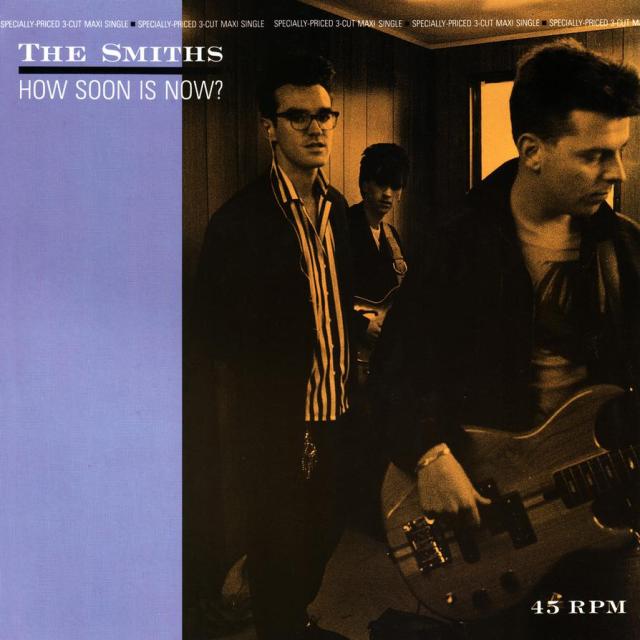
The other day I heard “How Soon Is Now?” by the Smiths on the radio, and was reminded of what a brilliant song it is and how much I love it. The highlight of the song is Johnny Marr’s mesmerizing and wailing tremolo-heavy guitar riff. The song was difficult to record and was even more difficult for the band to perform live. In 1990, Marr explained the recording process to Guitar Player Magazine: “I wanted it to be really, really tense and swampy, all at the same time. Layering the slide part was what gave it the real tension. The tremolo effect came from laying down a regular rhythm part with a capo at the 2nd fret on a Les Paul, then sending that out in to the live room to four Fender Twins. John (the band’s producer) was controlling the tremolo on two of them and I was controlling the other two, and whenever they went out of sync we just had to stop the track and start all over again. It took an eternity.”
Co-written by band vocalist Morrissey and guitarist Johnny Marr, the song was initially released in August 1984 as a B-side of the single “William, It Was Really Nothing”. The band and their producer John Porter felt that with “How Soon Is Now?”, they had a potential hit on their hands, and wanted it released as a single. However, their record label Rough Trade felt it was too different from the Smiths’ signature sound and released it as a B-side instead. Porter later angrily recalled “They totally threw it away, wasted it.” Fortunately, several British radio stations began playing the song, and it soon became the most-requested track. The song was subsequently included on the band’s compilation album Hatful of Hollow, which was released in November 1984.
The song was released in the U.S. via Sire Records that same month, with “Girl Afraid” as the B-side. It was expected to sell well and, for the first time, a video was made to promote one of the Smiths’ songs. It was also re-released as a lead single in the UK in January 1985, with “Well I Wonder” as the B-side. Unfortunately, the single failed to chart in the U.S., and peaked at only #24 in the UK.
In a 1987 interview with Creem magazine, Morrissey expressed his disappointment: “It’s hard to believe that ‘How Soon Is Now?’ was not a hit. I thought that was the one.” He also stated that he hated the video Sire Records produced for the song: “It had absolutely nothing to do with the Smiths. Quite naturally we were swamped with letters from very distressed American friends saying, ‘Why on earth did you make this foul video?’ [After] we saw the video we said to Sire, ‘You can’t possibly release this… this degrading video.’ And they said, ‘Well, maybe you shouldn’t really be on our label.’ It was quite disastrous.“
Well, as with a lot of great songs that were not big hits at the time of their release, the Smiths have been vindicated with “How Soon Is Now?”, as it has endured as their most popular and beloved song. In 2014, NME ranked the song #4 on its list of 500 Greatest Songs of All Time. Pitchfork named it the 10th best song of the 1980s, and in 2010, Rolling Stone ranked it #477 on its 500 Greatest Songs of All Time list.
The song lyrics were inspired by Morrissey’s own crippling shyness and how it made finding a romantic partner difficult. His vulnerable, haunting vocals beautifully convey his loneliness and despair.
I am the son And the heir Of a shyness that is criminally vulgar I am the son and heir Of nothing in particular
You shut your mouth How can you say I go about things the wrong way? I am human and I need to be loved Just like everybody else does
There’s a club if you’d like to go You could meet somebody who really loves you So you go and you stand on your own And you leave on your own And you go home and you cry And you want to die
When you say it’s gonna happen “now” When exactly do you mean? See I’ve already waited too long And all my hope is gone
You shut your mouth How can you say I go about things the wrong way? I am human and I need to be loved Just like everybody else does
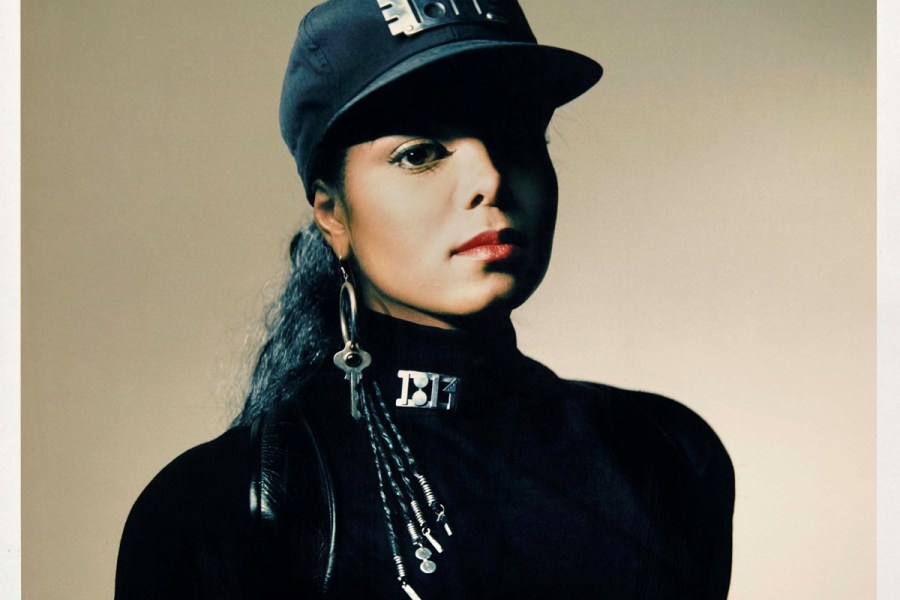
One of the albums I’d want to take along with me to that proverbial desert island is Rhythm Nation 1814, the fourth studio album by Janet Jackson. At the time of the album’s release in September 1989, I wasn’t what you’d call a huge fan of hers, though I’d really liked her hit songs “What Have You Done For Me Lately”, “Nasty” and “When I Think of You” from her hugely-popular 1986 breakout third album Control. In fact, I actually resented her a bit for a short while due to the fact that “Miss You Much”, the lead single from Rhythm Nation 1814, kept my then-favorite band Tears For Fears’ single “Sowing the Seeds of Love” from reaching #1 on the Billboard Hot 100. (“Sowing the Seeds of Love” and “Miss You Much” were released a day apart in late August 1989, and both entered the Top 40 on September 9th.) But as Jackson continued to release a succession of superb singles from the album, I got over my juvenile grudge and grew to love it, eventually purchasing the CD.
Rhythm Nation 1814 is a concept album that Jackson’s label A&M Records was initially set against. Like many music labels (and movie studios) who tend to want to repeat what successfully worked before, A&M wanted her to record another album like Control, but she wasn’t having it. Troubled by stories about crime, gangs, drug abuse and other tragedies she saw on the news, she wanted to make an album that touched on socially conscious themes, with a positive message of unity.
Given her popularity and youth (she was 23 at the time), Jackson believed that, through her music, she could reach a younger audience who may have been unaware of what it meant to be socially conscious. She herself was inspired by musicians like Joni Mitchell, Bob Dylan, Tracy Chapman, and U2, however, she felt their music appealed primarily to adults who were already invested in social change. In a 1989 interview with USA Today, she stated: “I’m not naïve; I know an album or a song can’t change the world. I just want my music and my dance to catch the audience’s attention and hopefully motivate them to make some sort of difference“.
For the recording of Rhythm Nation 1814, Jackson once again collaborated with songwriters and record producers Jimmy Jam and Terry Lewis, the geniuses behind the massive success of Control. Jackson does not possess a particularly strong singing voice, so the duo created a sound and style for her that played to her talents and rather limited mezzo-soprano vocal range. Over the course of her career, she’s received criticism for the limits of her vocal abilities, especially when compared with some of her contemporaries like Whitney Houston and Mariah Carey who had powerhouse voices. That said, her vocals seem most effective either on strong anthems where she can boldly belt out the lyrics, or on tender love ballads where her soft, sultry purrs work especially well. Also, because her voice did not translate particularly well to on-stage live performances, Jackson enhanced her act with elaborate dance routines. Normally, I’m not impressed by that kind of thing, but in Jackson’s case, I make an exception because of her strong charisma and likability.
The album title was a combination of a theoretical utopian nation inspired by the unifying power of music, represented by “Rhythm Nation”, with “1814” representing the year the national anthem “The Star-Spangled Banner” was written. The trio co-wrote six of the album’s songs, while Jackson solely wrote “Black Cat” and Jam and Lewis wrote the remaining five. The album was recorded in Minneapolis over a period of seven months, during which Jackson, Jam and Lewis chose to isolate themselves, without interference or involvement by anyone from A&M Records. The album was produced primarily with synthesizers and drum machines, specifically the use of sample loop and swing note and synthesized percussion techniques that had become popular by the late 1980s.
The album contains a total of 20 tracks, 12 of which are actual songs, with the other 8 consisting of interludes lasting anywhere from a few seconds to over a minute. These interludes serve as connectors or transitions between songs or groupings of songs. The tracks were sequenced beginning with those addressing societal injustice and transitioning to songs about love, relationships and sexuality. Musically, the album encompasses a variety of styles, such as new jack swing, pop, hard rock, dance and industrial music, which gave it wider appeal across multiple radio formats. And though some of the tracks sound fairly similar, with rather ubiquitous beats and melodies, they’re still incredibly upbeat and fun.
Although the album’s concept was initially met with mixed reactions, its production values and overall song quality earned it widespread critical acclaim. Rhythm Nation 1814 peaked at #1 on the Billboard 200 album chart, and has sold over 12 million copies worldwide. Rolling Stone ranked the album at #277 on its list of 500 Greatest Albums of All Time in 2012. Seven of its singles – “Miss You Much”, “Rhythm Nation”, “Escapade”, “Alright”, “Come Back to Me”, “Black Cat” and “Love Will Never Do (Without You)” – reached the top five on the Hot 100, making it the only album in history to achieve this. Four of them reached #1, and it’s also the only album in history to produce number one hits in three separate calendar years – 1989, 1990 and 1991.
The album opens with “Interlude: Pledge”, a 47-second spoken word piece where Jackson essentially explains the album’s intent, then launches into “Rhythm Nation”, an electrifying dance anthem with heavy industrial beats built around the punchy bass groove of Sly and the Family Stone’s “Thank You (Falettinme Be Mice Elf Agin)”. Jackson commandingly exhorts us to come together for justice: “People of the world unite / Strength in numbers we can get it right, one time / We are a part of the rhythm nation.” The song was the second single released from the album and peaked at #2 on the Billboard Hot 100.
One of the most poignant songs on the album is “Livin’ In A World (They Didn’t Make)”, inspired by the tragic 1989 shooting at a school in Stockton, California. The lyrics speak to the innocence of children, and that hate is something they’re taught by adults. “Escapade” is a joyously upbeat and celebratory anthem that always lifts my spirits, and is my all-time favorite Janet Jackson song. Set to an exuberant hip-swaying dance beat and colorful instrumentals, the hopeful lyrics speak to forgetting one’s problems, letting loose and having a good time: “Come on baby, let’s get away / Let’s save our troubles for another day / Come go with me, we got it made / Let me take you on an escapade.” It was the third single released from the album in January 1990, and the second to reach #1.
The hard-rocking “Black Cat” was a stylistic departure for Jackson, and was produced by Jellybean Johnson, who along with Jimmy Jam and Terry Lewis, was a former member of The Time. With its aggressive driving beat and metal rock guitars, it sounds like a song Def Leppard or Mötley Crüe could have done. Jackson snarls the biting lyrics warning a rebellious friend about their self-destructive substance abuse habit. The song was the third single from the album to reach #1.
“Love Will Never Do (Without You)” is another standout, with its strong sensual beat and rousing choruses, not to mention the great trumpet flourishes played by Herb Alpert, who Jackson had previously worked with on his 1987 hit song “Diamonds”. It was the seventh single to be released from the album, more than a year after its initial release, and you’d have thought that by now, interest would be waning. But not at all, as the song would become the fourth from the album to hit #1, in January 1991.
The final three tracks on the album are sensual slow burns, featuring sultry melodies and lush orchestration, with her vocals sounding softer and silkier than ever. My favorite of the three is the gorgeous and bittersweet “Come Back to Me”. I’ve always been a sucker for lush orchestration and soaring strings, and this song has them in spades. Jackson’s gentle vocals are perfect for this type of song, in which she softly laments with a palpable sense of heartache and despair over a lost love affair that she hopes can be rekindled. The song’s arrangement is first-rate and the stirring cinematic strings are really stunning. “Come Back to Me” was the fifth single released from the album, and peaked at #2, held down by Mariah Carey’s monster debut hit “Vision of Love”. So now I found myself rooting for a Janet Jackson song to reach number one!
The album closes on a steamy note with “Someday is Tonight”, a song about submitting to carnal desires. The song is downright sexy, and is to Jackson’s discography what “Love to Love You Baby” was to Donna Summer’s, if you get my drift. She coos and purrs her way through the song, accompanied by sultry beats and strings, and highlighted by Herb Alpert’s smoldering trumpet solo. The song was a precursor to Jackson’s evolving music style that would see her more fully explore sexual themes on her following albums Janet and The Velvet Rope. Both of those albums would receive massive critical and commercial acclaim, with Janet becoming her best-selling album. For me, however, Rhythm Nation 1814 remains her finest work.












 ECLECTIC MUSIC LOVER