EML’s Favorite Albums – PAUL SIMON: “Graceland”

One of my most beloved albums in my collection is the magnificent Graceland by the legendary singer-songwriter Paul Simon. The iconic masterpiece is generally considered the finest work of his long and illustrious solo career, as well as one of the greatest albums ever recorded. When it came out in August 1986, I was living in the Los Angeles region and, like many who live in that sprawling megalopolis, had a long daily commute. I would record albums or make mixtapes onto cassettes so I could listen to my favorite music on my long drives to and from work. Graceland was one of the best of that time period, and I had it on repeat for many months.

Before digging into the album and songs, a bit of background would be helpful to provide some context for its creation. Following his successful run of hit albums and singles as a solo artist throughout the 1970s, by the early 1980s Simon had hit both a personal and professional slump. His relationship with Art Garfunkel had deteriorated yet again, his 1983 album Hearts and Bones was a commercial disappointment, and his marriage to actress Carrie Fisher had fallen apart. After suffering through a period of depression, in 1984 he became fascinated with a bootleg cassette tape of an album Gumboots: Accordion Jive Hits, Volume II, that had been loaned to him by singer-songwriter Heidi Berg, with whom he’d been working as her producer. In his liner notes for Graceland, Simon described it as “very up, very happy music” that sounded familiar, yet foreign.

The album was by South African band The Boyoyo Boys, and was in a style of music known as Mbaqanga, also informally called “township jive”, the street music of Soweto. Simon was so smitten by the music that he considered buying the rights to his favorite track on the tape, “Gumboots”, and using it to write his own song, as he had years earlier with “El Condor Pasa”. Hilton Rosenthal, a South African record producer who Simon’s label Warner had put him in touch with, suggested instead that he record an album of South African music. Rosenthal sent him dozens of records by South African artists, which Simon immersed himself in. He began improvising his own melodies and decided he wanted to go to South Africa to record with some of the musicians whose albums he enjoyed. The problem was, at that time the United Nations had imposed a cultural boycott of South Africa due to its policy of apartheid. This forced “all states to prevent all cultural, academic, sporting and other exchanges” with South Africa and ordered “writers, artists, musicians and other personalities” to boycott it.

Despite this restriction, Simon was determined to go to South Africa, and told The New York Times: “I knew I would be criticized if I went, even though I wasn’t going to record for the government … or to perform for segregated audiences. I was following my musical instincts in wanting to work with people whose music I greatly admired.” Prior to leaving for Johannesburg, Simon participated in the recording of “We Are the World”, the charity single benefiting African famine relief. He spoke to producers Quincy Jones and Harry Belafonte about his wanting to record in South Africa, and though they had some reservations, both encouraged him to do it. The South African black musicians’ union also voted to let Simon come, feeling it would benefit their culture’s music by bringing it international attention.

At the time, musicians in Johannesburg were typically paid $15 an hour, and Simon arranged to pay them $200 an hour, triple the going rate for top players in New York City. He also offered writer’s royalties to those he felt had contributed to compositions. Nevertheless, he still received harsh criticism from organizations such as Artists United Against Apartheid, and anti-apartheid musicians like Billy Bragg, Paul Weller, and Jerry Dammers. At an album launch party, Simon bluntly clarified his position on the controversy: “I’m with the artists. I didn’t ask the permission of the ANC. I didn’t ask permission of Buthelezi, or Desmond Tutu, or the Pretoria government. And to tell you the truth, I have a feeling that when there are radical transfers of power on either the left or the right, the artists always get screwed.”

Simon and his engineer Roy Halee traveled to Johannesburg in February 1985, and spent two weeks recording with Lulu Masilela, Tao Ea Matsekha, General M. D. Shirinda and the Gaza Sisters, and the Boyoyo Boys Band. The album’s opening track “The Boy in the Bubble”, recorded with Lesotho band Tao Ea Matsekha, was one of the songs recorded at those sessions. The song has a powerful, bass-driven rhythmic groove, highlighted by an accordion that provides a lively, almost carnival-like vibe, setting a nice tone for the album.

Overall, Graceland is characterized by an eclectic mixture of music styles and genres, including pop, rock, a cappella, zydeco, isicathamiya, and mbaqanga, and reflecting the various locations where the album was recorded. Consequently, some songs are clearly African, while others sound like songs that you’d hear in New Orleans or Nashville. The album has a wonderful flow, alternating between playful and more serious songs. Simon thought of it as like a play: In that New York Times interview, he explained “As in a play, the mood should keep changing. A serious song may lead into an abstract song, which may be followed by a humorous song.”

Every track on the album is great, but one of the standouts is the title track “Graceland”, a gorgeous, contemplative tune. The song features flawless performances by fretless bass player Bakithi Kumalo and guitarist Ray Phiri, as well as Simon’s childhood heroes The Everly Brothers on backing vocals. In his album liner notes, Simon remarked that the song had the feel of American country music, adding: “After the recording session, Ray told me that he’d used a relative minor chord—something not often heard in South African music—because he said he thought it was more like the chord changes he’d heard in my music.” The song is thought to be about seeking solace from the end of his relationship with Carrie Fisher by taking a road trip. “Graceland” was awarded a Grammy in 1988 for Record of the Year, a year after the album itself won for 1987 Album of the Year.

The album cuts featuring South African styles and sounds are pure delight. “I Know What I Know” is based on music from an album by General M.D. Shirinda and the Gaza Sisters, who collaborated on the song and sang backing vocals. I love the unusual guitar notes and distinctive lilting chant-like vocals of the Gaza Sisters. “Gumboots”, the song that got this whole thing started, is named for the term used to describe the type of music favored by South African miners and railroad workers, and refers to the heavy boots they wear on the job. With support by the Boyoyo Boys themselves, the song has an upbeat Cajun zydeco feel, highlighted by charming synclavier and dual alto and soprano sax. Another favorite is “Diamonds on the Soles of Her Shoes”, a wonderful collaboration with Ladysmith Black Mambazo, one of South Africa’s best known and loved groups.

Another collaboration with Ladysmith Black Mambazo is the sublime a capella track “Homeless”, with lead vocals by Joseph Shabalala, who co-wrote the song with Simon. With a melody based on a traditional Zulu wedding song, the lyrics are in both English and Zulu, and address poverty within the black majority in South Africa, telling of people living in caves on the side of a mountain, cold and hungry. “Crazy Love, Vol II” is a lovely, joyful song, with instrumentals played by guitarist Ray Phiri’s band Stimela.

Perhaps the biggest and best-known song from the album is “You Can Call Me Al”, a bouncy and clever tune about a man going through a mid-life crisis: “Why am I soft in the middle? The rest of my life is so hard.” The musical highlights are Simon’s six-string electric bass, the exuberant sax, trumpets and trombones, and the charming pennywhistle solo played by Morris Goldberg.  The names mentioned in the wonderful lyric “I can call you Betty, and Betty when you call me, you can call me Al” came from an incident at a party that Simon went to with his first wife Peggy Harper. Noted French composer and conductor Pierre Boulez, who was at the same party, mistakenly referred to Paul as “Al” and to Peggy as “Betty”.

The humorous video for the song was actually a replacement, as Simon didn’t like the original video that was made. The replacement video was conceived partly by Saturday Night Live producer Lorne Michaels and directed by Gary Weis, with SNL alum Chevy Chase lip-syncing Simon’s vocals and making silly gestures punctuating the lyrics while Simon lip-synced to the backing vocals and brought into a room various instruments to play. The huge discrepancy in their heights made the video all the funnier.

Unfortunately, some of the songs generated a bit of controversy. Simon invited Linda Ronstadt to sing with him on the lovely “Under African Skies”, for which he received criticism, as three years earlier she had accepted $500,000 to perform at the South African luxury resort Sun City. “That Was Your Mother”, recorded in Louisiana, features the American zydeco band the Good Rockin’ Dopsie and the Twisters. Dopsie felt Simon had derived the melody from his song “My Baby, She’s Gone”, and was upset over not being credited, but decided not to take legal action. And on the rousing final track “All Around the World or the Myth of Fingerprints”, a collaboration with East Los Angeles-based Mexican-American band Los Lobos, the band felt they deserved writing credits. Band sax player Steve Berlin later recalled that Paul Simon “quite literally—and in no way do I exaggerate when I say—he stole the song from us. We go into the studio, and he had quite literally nothing. I mean, he had no ideas, no concepts, and said, ‘Well, let’s just jam’ and then goes, ‘Hey, what’s that?’ We start playing what we have of it, and it is exactly what you hear on the record.”

Be that all as it may, Graceland earned unanimous praise by music writers and critics, and was awarded the Grammy for Best Album of 1987. It’s Simon’s most successful solo album, selling more than 16 million copies worldwide, and in the recent update of their list of 500 Greatest Albums of All Time, Rolling Stone ranked it at #46 (up from #71 in 2012).

The last word comes from The Clash’s Joe Strummer, who in a 1988 interview with Richard Cromelin for the Los Angeles Times spoke of his love for the song “Graceland”: “I don’t like the idea that people who aren’t adolescents make records. Adolescents make the best records. Except for Paul Simon. Except for ‘Graceland’. He’s hit a new plateau there, but he’s writing to his own age group. ‘Graceland’ is something new. That song to his son is just as good as ‘Blue Suede Shoes’: ‘Before you were born dude when life was great.’ That’s just as good as ‘Blue Suede Shoes,’ and that is a new dimension.”
100 Best Songs of the 2010s – #76: “Pink Lemonade” by James Bay

The song at #76 on my list of 100 Best Songs of the 2010s is “Pink Lemonade” by British singer-songwriter and guitarist James Bay. He broke onto the music scene in 2014 with his wonderful hit single “Hold Back the River”, which I liked a lot, though I didn’t really follow him or his music very much. But with his earnest, low-key style of folk rock, combined with a casual look consisting of his signature hat and long hair, Bay quickly built a huge following.

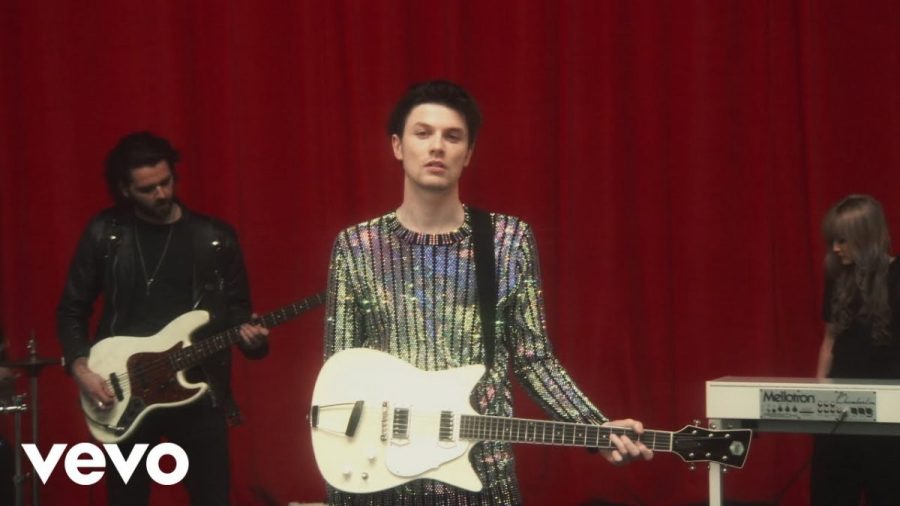
On March 7, 2018 he released “Pink Lemonade”, and a few days later, appeared on Saturday Night Live, revealing a major change in both his look and sound. When I watched his performance on SNL, I nearly fell out of my chair! Bay had ditched the hat, cut his hair and replaced his casual clothing style with a hot pink sequined shirt and black leather pants, and he looked hot! I developed a major man crush on him right then and there. As my friend Anthea commented – “who knew all that beautiful bone structure lay hidden beneath the hat and long hair!

Not only that, I loved the song’s exuberant rock’n’roll vibe, with scratchy guitars and a soulful and sexy bass-driven groove that reminded me of some of the great songs of the 60s. The song actually has a rather rough, gravelly production sound, which some felt detracted from its overall quality. My feelings are mixed about it, and perhaps James wanted a more rugged sound. In any case, many seemed to prefer his mellower folk ballads to this edgier, heavier rock sound (not to mention his casual look with long hair, to which he has since returned), so “Pink Lemonade” was not as successful as his other singles. Oh well, their loss, as I love it and couldn’t hear it enough. The song spent five weeks at #1 on my Weekly Top 30.

The lyrics touch on escape and not wanting to commit to a relationship. The official video for the song is cleverly done, showing scenes of James dressed in a sparkling top and performing the song with his back-up band, alternating with scenes of him dressed in a silver spacesuit and sneaking into the garage while his parents are asleep to live out his childhood dream of building his own spaceship. He told People magazine: “The inspiration behind the video comes from the theme of escape that runs through the song. I was reminded of a time when I was about 4 years old and I told my parents I’d had enough of living with them and would be leaving home.”

Here’s his riveting and charismatic SNL performance, where he seems to channel John Mayer with a hint of early Elvis Presley swagger.

100 Best Songs of the 2010s – #77: “Locked Out of Heaven” by Bruno Mars

The song at #77 on my list of 100 Best Songs of the 2010s is “Locked Out of Heaven” by the amazing Bruno Mars. Born Peter Gene Hernandez in Honolulu, Hawaii (but given the nickname “Bruno” by his father at the age of two, because of his resemblance to professional wrestler Bruno Sammartino) Bruno Mars is a hyper-talented singer, songwriter, producer, dancer and multi-instrumentalist dynamo with a style and showmanship reminiscent of Michael Jackson, James Brown and Little Richard all rolled into one. He comes from a musical family which exposed him to a diverse mix of music genres. His mother was both a singer and a dancer, his father performed Little Richard rock and roll, and his uncle was an Elvis impersonator, and encouraged three-year-old Mars to perform on stage. By the time he was four, he began performing five days a week with his family’s band The Love Notes, and became known in Hawaii for his Elvis Presley impersonations.

Mars moved to L.A. in 2003 when he was 18, and a year later signed a recording contract with Motown Records, but the deal went nowhere. Success eluded him until 2010, with the release of the successful singles “Nothin’ on You” by B.o.B and “Billionaire” by Travie McCoy, both of which featured his vocals. Soon after, Mars struck gold with his debut album Doo-Wops & Hooligans, which generated the hit singles “Just the Way You Are”, “Grenade”, and “The Lazy Song”. In 2012, he followed up with his hugely-successful second album Unorthodox Jukebox , the lead single of which was the fantastic reggae/pop/funk song “Locked Out of Heaven”. Among the producers who worked with Mars on the album and single were Jeff Bhasker (who also worked with fun. on Some Nights) and Mark Ronson (who produced the smash hit “Uptown Funk” that Mars sang vocals on).

“Locked Out of Heaven” was a massive hit, becoming his fourth single to reach #1 on the Billboard Hot 100, where it held the top spot for six weeks. It also topped the Canadian singles chart for three weeks, and received mostly positive reviews by music critics. Tim Sendra of AllMusic described the song as “a breezy mashup of Michael Jackson’s ‘Beat It’, The Police, and Dire Straits“, while Paul MacInnes of The Guardian called it “a brazen but successful welding of Dire Straits’ ‘Sultans of Swing’ and ‘Can’t Stand Losing You’ by the Police.” In fact, Mars stated that The Police were a strong influence for him in writing the song, which addresses the rapturous feelings of a loving and sexual relationship, something all of us can identify with. And I especially love the pounding drumbeats just before each chorus.

100 Best Songs of the 2010s – #78: “Trouble” by Cage the Elephant

Interest in these posts (and my blog in general) seems to be falling faster than a lead balloon, but I’ll soldier on. The song at #78 on my list of 100 Best Songs of the 2010s is “Trouble” by American alternative rock band Cage the Elephant. Cage the Elephant are one of my favorite bands, and “Trouble” is one of three of their songs on this list. The song is the second single from their fourth album Tell Me I’m Pretty, (after the uneven “Mess Around”) and was released in April 2016. The album was produced by Dan Auerbach of The Black Keys, and really shows his strong influence.

“Trouble” has a cool, almost magical vibe, thanks to its twinkling piano keys, xylophone and intricate chiming and gnarly guitars. I love singer Matt Shultz’s wonderful swooning falsetto in the chorus. Shultz explained to ABC Radio in an interview that the song was inspired by a conversation he had with someone close to him. “We were both presenting ourselves as being very honest in the conversation. And I felt there were several places where I was holding back, or kind of curating the idea of what I wanted projected pretty heavily as inside the conversation. So I was curious at what level they were doing the same. “So the song’s kinda just about honesty and adversity and struggle.

The song’s entertaining video was shot in a Western theme at Joshua Tree National Park, which is near my home and one of the most popular places to make music videos.

100 Best Songs of the 2010s – #79: “Stereo Hearts” by Gym Class Heroes feat. Adam Levine

The song at #79 on my list of 100 Best Songs of the 2010s is “Stereo Hearts” by American rap/rock band Gym Class Heroes, featuring additional vocals by Maroon 5 front man Adam Levine. I love this song! It’s so damned catchy and upbeat, with a joyful melody and irresistible hip hop beat, and just makes me feel happy. The endearing lyrics are filled with music-based metaphors that make the song very relatable to a music freak like me. Though the song was played nearly to death on the radio, I never tired of hearing it.

The track opens with Levine singing the chorus hook: “My heart’s a stereo. It beats for you, so listen close. Hear my thoughts in every note. Make me your radio. Turn me up when you feel low. This melody was meant for you. So sing along to my stereo.” Gym Class Heroes front man Travie McCoy then raps the lyrics directed at a former loved one, using musical metaphors to proclaim his love and devotion in the hope of winning her back: “If I was an old-school, fifty pound boom box. Would you hold me on your shoulder, wherever you walk. Would you turn my volume up in front of the cops, and crank it higher every time they told you to stop. And all I ask is that you don’t get mad at me when you have to purchase mad D batteries. Appreciate every mix tape your friends make. You never know we come and go like we’re on the interstate.” Songwriting doesn’t get any better than this.

100 Best Songs of the 2010s – #80: “Can I Sit Next to You” by Spoon

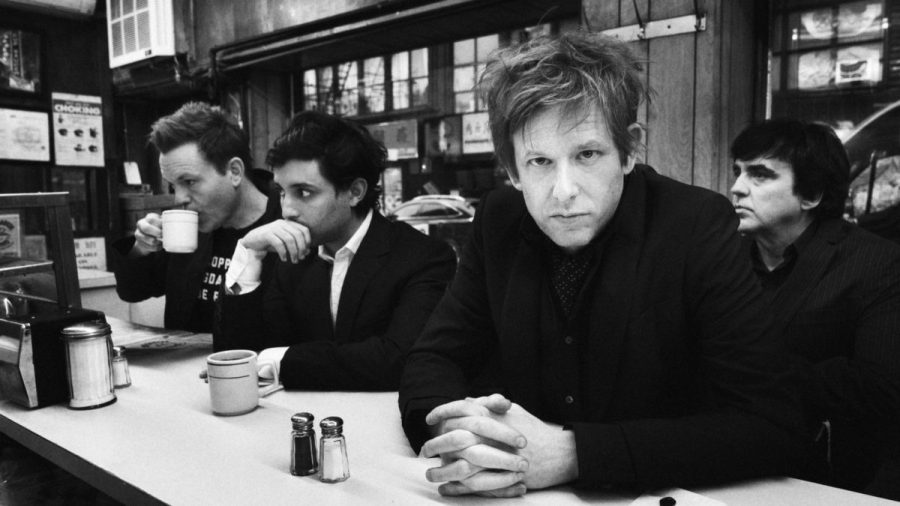
The song at #80 on my list of 100 Best Songs of the 2010s is “Can I Sit Next to You” by Austin, Texas based alternative/art rock band Spoon. I’m embarrassed – no, make that mortified – to admit that I was not familiar with Spoon until 2017, despite the fact they’ve been around since the mid 1990s! When I heard their brilliant ninth album Hot Thoughts, I became an instant fan and started bingeing on their impressive music catalog while kicking myself for all their great music I missed out on hearing all those years. I love their unique, innovative sound, as well as band front man Britt Daniel’s distinctive gritty vocal style that gives their songs an edgy authenticity.

My favorite track from Hot Thoughts is the deliciously sexy “Can I Sit Next to You”. The song has an almost sinister vibe, with a deep, bass-driven beat, accentuated by strong hand claps and grimy heavily-strummed guitars contrasting with twinkling and swirling psychedelic synths that impart an otherworldly feel. I love the dramatic spiraling synths in the chorus, as well as Daniel’s raspy vocals as he seductively snarls his way through each verse. It’s fucking awesome, and the surreal and trippy video directed by Marcel Dzama is both creepy and funny.

100 Best Songs of the 2010s – #81: “Some Nights” by fun.

The song at #81 on my list of 100 Best Songs of the 2010s is “Some Nights” by New York City-based alternative pop-rock band fun. Formed in 2008, fun. consists of singer-songwriter Nate Ruess, multi-instrumentalist Andrew Dost and singer-songwriter, multi-instrumentalist and record producer Jack Antonoff (who’s also front man for the terrific band Bleachers). Their debut album Aim and Ignite was fairly well-received, though a commercial disappointment. But it was their second album Some Nights that propelled fun. to international fame. The title track “Some Nights” was the second single and follow-up to their massive hit “We Are Young” (which appears later on this list). The song was a worldwide hit, reaching #1 in Australia, New Zealand, Belgium and Israel, and also the Billboard Alternative, Rock and Adult Top 40 Charts. It reached #3 on the Hot 100.

With both folk rock and power pop elements, “Some Nights” has an incredibly exuberant melody, with a powerful military-style drumbeat and Ruess’ commanding vocals that give it a jubilant vibe. The song has been favorably compared to Simon & Garfunkel’s “Cecilia”, and in fact, in an interview with Billboard, Ruess stated that Paul Simon’s Graceland was a major influence for the song. He added that the song is about “just being someone different on any given night.” In another interview with Mesfin Fekadu of the Associated Press, Ruess explained: “I’m always thinking about, ‘Who am I and why did I do something like that?’ And I think then it harkens back to my family, and I have such a strong tie to them and it’s always therapeutic to sing about them.”

The rather dark and intense video, produced by Poonam Sehrawat and directed by Anthony Mandler, depicts a fictional battle taking place during the American Civil War. The band is shown performing the song from afar as a battle breaks out, with lead singer Ruess appearing as the commander of the Union force.

In early 2015, fun. announced they were going on hiatus so that each band member could pursue their own individual projects. Ruess sang on P!nk’s 2013 hit single “Just Give Me a Reason” (which will also appear later on this list), and on Eminem’s 2014 single “Headlights”, and released a solo album Grand Romantic in June 2015 to mostly positive reviews. Andrew Dost wrote the soundtrack for the 2015 black comedy The D Train, and is currently working on new music. In addition to his work as front man for Bleachers, Jack Antonoff has worked as a songwriter and producer with several renowned artists, including Taylor Swift (on her albums 1989, Reputation, Lover and Folklore), Lorde (on her album Melodrama), St. Vincent (on her album Masseduction), Lana Del Rey (on Norman Fucking Rockwell) and The Chicks (on their album Gaslighter).

100 Best Songs of the 2010s – #82: “Cough Syrup” by Young the Giant

The song at #82 on my list of 100 Best Songs of the 2010s is “Cough Syrup” by Southern California alternative rock band Young the Giant. This is the second song by them on this best of the decade list, their other being “Superposition” which ranks at #91. “Cough Syrup” is one of their most well-known songs, and my personal favorite. It was released in 2011 as the second single from their eponymous debut album Young the Giant, but the song actually predated the band, as it was composed when they were called The Jakes, and first appeared on their 2008 EP Shake My Hand.

It’s a beautiful song, with gorgeous swirling guitars, somber cello and spirited drumbeats creating a stunning backdrop for band front man Sameer Gadhia’s passionate vocals. About the song’s meaning, Gadhia has stated it was written at a time when the band was unsigned, had no money and “felt somewhat oppressed by the universal expectation of what to do in Orange County…in suburbia in general. I think we really yearned to break out of that and do something a little bit different. [The song] is kind of a cry for help to break free, not necessarily from oppression, but from the common symptoms of suburbia like boredom, normality and homogeneity.”

I saw Young the Giant in concert in August 2019 (in a double bill with Fitz & the Tantrums), and here’s their wonderful performance of “Cough Syrup”.

100 Best Songs of the 2010s – #83: “Madness” by Muse

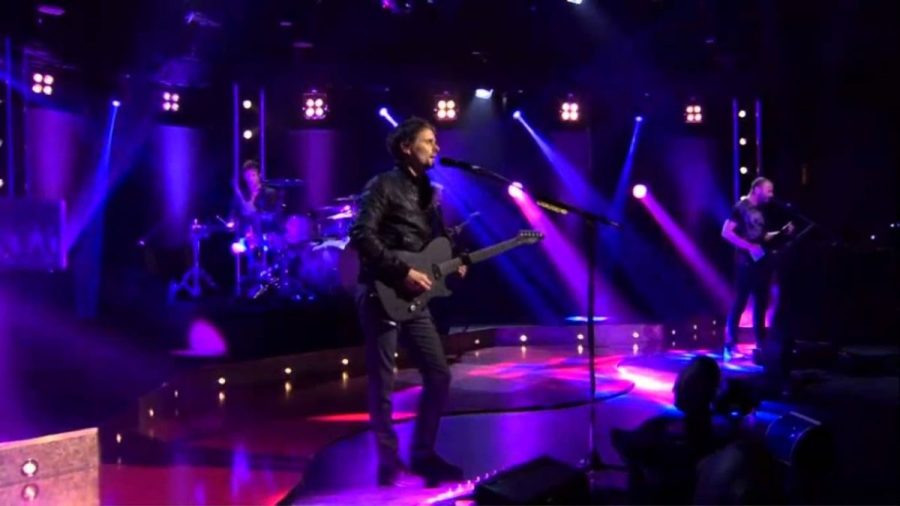
The song at #83 on my list of 100 Best Songs of the 2010s is “Madness” by British alternative/art rock band Muse. Like “Thrift Shop”, this was another song I loathed the first couple of times I heard it. At the time of its release in 2012, I wasn’t very familiar with Muse or their music; the opening lines “Ma ma ma ma ma ma madness” nearly drove me to the point of madness until one day the song suddenly clicked for me, and I fell madly in love with it – as well as Muse, who is now one of my favorite bands.

Formed in 1994 while they were in high school, Muse is comprised of the immensely talented Matt Bellamy on lead vocals, guitar and keyboards, Chris Wolstenholme on bass and backing vocals (who I think is one of the finest bassists around today), and Dominic Howard on drums. “Madness” is from their sixth studio album 2nd Law, and was inspired by a fight Matt Bellamy had with his then girlfriend Kate Hudson. He later said in an interview that the song was also an attempt to strip down the sound of the album.

To me, the song seems to be somewhat in the Bolero style, starting off slowly with Wolstenholme’s pulsating, almost wobbly double bass-driven melody that creates a sensual vibe, perfectly complementing Bellamy’s breathy vocals and chants of “Ma ma ma ma ma ma madness“. The music gradually builds to a dramatic crescendo, highlighted by Bellamy’s phenomenal guitar work and enthralling vocals that soar to the heavens, covering me in goosebumps. “Madness” was a modest hit, peaking at #25 in the UK and #45 on the Billboard Hot 100, however it spent an astonishing 19 weeks at #1 on the Billboard Alternative chart.

Fun fact: Bellamy’s father George was the rhythm guitarist of the 1960s British pop group The Tornados, who had a #1 hit in 1962 with “Telstar”.

Rather than the official video, I’m sharing one of their electrifying live performance of the song at their triumphant 2013 concert at Rome Olympic Stadium.

100 Best Songs of the 2010s – #84: “Royals” by Lorde

The song at #84 on my list of 100 Best Songs of the 2010s is “Royals“, the debut single by the amazing singer-songwriter Lorde. The New Zealand artist – born Ella Marija Lani Yelich-O’Connor – stunned the world in 2013 with the release of her mesmerizing track, which had a totally new and unique sound unlike anything that had been done before. Only 16 years old at the time, she was the youngest artist to have a #1 song on the Billboard chart since Tiffany in 1987. Lorde wanted to write a song expressing her disapproval of the luxurious lifestyle of many contemporary artists, and reportedly penned the lyrics in half an hour.

The song has a minimalist sound, with instrumentation consisting of a deep synth bass groove set to a languid hip hop beat, and accompanied by finger snaps and percussion. The song title came to her after seeing a photo in the July 1976 edition of National Geographic of Kansas City Royals baseball player George Brett signing baseballs, with his team’s name ‘Royals’ emblazoned across his shirt.

I’ll admit that it took a couple of listens before I was able to get into it, but once I did, I loved it. “Royals” spent nine weeks at #1, and also topped the charts in Canada, New Zealand and the UK. It sold over 10 million units worldwide, making it one of the best-selling singles of all-time, and was awarded Grammys for 2013 Song of the Year and Best Solo Pop Performance.

The cool video conveys the sense of ennui inferred in the lyrics, and shows Lorde singing the song, interspersed with scenes of two young guys looking bored and doing unremarkable stuff.