Named after his childhood imaginary friend, Eleanor Collides is the solo music project of London-based singer-songwriter and guitarist Nick Ranga. The talented artist melds alternative, indie and dream rock with synth pop to create his distinctly melancholic, yet beautiful sound. I love how he’s described his influences: “I find inspiration in the cathartic vulnerability of Low, the poetic storytelling of R.E.M., the passionate anthems of Manic Street Preachers, the genre-defying artistry of Orville Peck, and the darkly captivating electronica of Depeche Mode. These influences, among many others, have shaped my artistic vision, allowing me to carve out a unique sonic identity.”
Though he’d been writing songs for many years, he finally started recording and releasing music in the summer of 2021, beginning with a four-track EP How to Make Friends. He followed up with a couple of singles, then in March 2022, he released his debut album People are Taller in Real Life. Since then, the prolific artist has dropped eight more singles, one of which, the hauntingly beautiful “Pantomime“, I featured in a Fresh New Tracks this past April. Today he’s back with his latest single “Daydreams and Algorithms“, another outstanding track. All eight singles will be included in his forthcoming second album, due for release later in the year.
For the recording of the song, Nick sang lead vocals and played guitars, bass, piano, drums and strings, and Charles Connolly, who mixed and mastered the track, played marimba and sang backing vocals. Though “Daydreams and Algorithms” starts off slowly, with just a simple, rather melancholic strummed guitar, it soon becomes clear that there’s a lot going on musically. As the song progresses, the instrumentation expands into a captivating soundscape, with added guitar, piano and warm strings, accompanied by Charles’ enchanting marimba and Nick’s steady drumbeats and moody bassline. Nick’s pleasing, low-key vocals have a comforting, almost sensuous quality, nicely complemented by his and Charles’ ethereal backing harmonies. It’s a stunning song.
As to the song’s meaning, Nick says it’s “about longing and obsession in the age of social media, about falling in love with someone through a screen who may or may not be real.”
I can hear the sound of dreams The cigarettes and faded blue jeans The photographs and played back scenes Never knowing what they mean
I can see your days collide The indecision codified The fantasies and rising tide History happens in real time
ooh ooh ooh
You could be my daydream My landslide, my slipstream My devil chasing moonbeams Intention lost to the mainstream
I could be your joyride Your agent on the outside Your lowest low and highest tide Watch as I revert to type
Brain Ape is a wildly imaginative and creative London-based rock band who skillfully fuse punk, stoner rock, grunge, noise rock and shoegaze to create their unique sound they call “Scratch Rock.” Originally formed at the beginning of 2012, like many a band, Brain Ape cycled through a series of drummers, and is now a duo consisting of Minky Très-vain on guitar & vocals and Sol Alex Albret on bass. They’ve released music rather intermittently since 2012, but their discography includes three albums (Dara O’ in 2014, Auslander and Ausländer, an all-acoustic album featuring five tracks from the original plus three new tracks, both in 2017) and several singles. I reviewed the full-length Auslander, which you can read here.
After a hiatus lasting a couple of years, Brain Ape returned in January 2021 with “clxxvi. veni vidi vici”, the first in a series of strangely-titled singles. They followed in 2022 with “cclxxv. theatrum serpentis”, then “mcmi. fenchurch king”, the second of which marked a new shift in the band’s sound. Whereas their earlier sound was strongly influenced by grunge acts like Nirvana, their newer music is now strongly influenced by contemporary pop and hip-hop acts like Billie Eilish, Childish Gambino, and Denzel Curry.
Their latest single “mcmx. drawing room”, to be released on July 19th via London independent label Scratch Rock Records, is Brain Ape’s second single to reflect their change up in style and genre. According to the band’s press release, the song “references a drawing-room within the historic 10 Downing Street (the official London residence of the British prime minister), and continues where their previous single “mcmi. fenchurch king” left off, diving deeper into the story of Eric Tunglsson, son of the Auslander. Exploring rising nationalism in the West and the glorification of false icons, the song marks the second time the duo have made any kind of political statement.”
Musically, the song is unlike anything I’ve heard before, and is hard to categorize or describe. It’s also a brief track, lasting only 1:40 minutes. Starting with a simple, stuttering trip hop beat, Brain Ape layers mysterious psychedelic synths, sharp percussion, grungy scratching and otherworldly vocal sounds to create a decidedly unsettling soundscape that turns quite melodic in the final chorus. I’ve always liked Minky’s vocals, and though it’s sometimes difficult to understand the lyrics, they range from delicate falsetto to ethereal whisper to plaintive wail, all exuding a seductive, yet menacing vibe. A rather interesting feature of the song are the sudden skips occurring from 1:07-1:13, which I assume are intentional. An unusual song indeed, but also strangely beautiful and captivating. I like it!
The video, which was written, shot, produced, directed and edited by the band, features Minky as Eric Tunglsson, Sol as Wyn Pfaird, former bandmate Jacob Powell as Trin O’ Gealach, as well as Siubhan McGealach and The Shrewd.
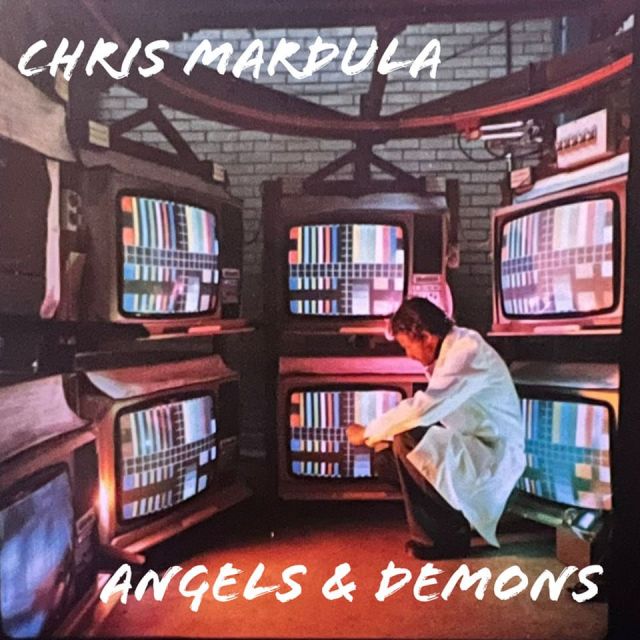
This past April, I featured British singer-songwriter Chris Mardula, an earnest and talented guy from Durham County in Northeast England, in an Artist Spotlight. To briefly summarize, his music style is strongly influenced by elements of folk, indie rock and blues. A seasoned musician, he’s played in several bands over the years, but often feeling frustrated by uneven levels of commitment by other members, he decided to go it alone as a solo artist. In November 2022, Chris began releasing singles at the rate of one per month, and has now dropped his 8th single “Angels & Demons“.
A hauntingly beautiful piano ballad, “Angels & Demons” is a very personal song for Chris, and was inspired by the recent passing of his father. The song touches on memories from his childhood, when he was too young to understand his father’s struggles with depression and alcoholism brought on by his own tough upbringing. His father (Chris’s grandfather) was a Polish World War II veteran who’d escaped from a concentration camp and fled to England to start a new life. Witnessing unimaginable things, like having his family wiped out during the war, left him with emotional scars that were sadly passed down to Chris’s father. In the song, Chris uses angels and demons as metaphors to help him understand his father’s actions more clearly: “We need to understand why people are the way they are, as everyone is fighting battles we don’t know about or understand, unless we are in their shoes. Everyone has good and bad in them, and sometimes we need to face things head-on and try and deal with them to stop going down the wrong path. Everyone does things with good intentions and usually for self preservation.”
For the recording of the song, Chris played the somber piano riff and edgy, mournful guitar riff that arrives halfway through the track, while Ben Young, who produced the track, played the haunting string arrangements. Chris’s heartfelt vocals are filled with emotion as he wistfully sings “When you’re lost in the mayhem. When you’re lost in your mind. We’ve all got angels and demons. We’ve all got to face them sometimes.” It’s a lovely, deeply moving song.
The heartwarming video includes stock footage that helps convey the sentiments expressed in the lyrics, interspersed with old family photos featuring Chris’s dad in the second half.
There are some musicians and bands who possess such uniquely distinctive styles or singing voices, they sound like no one else, making their music immediately identifiable as only theirs. London, England-based singer-songwriter and multi-instrumentalist Art Block falls into this esteemed category on the strength of his affecting vocals that are so heartfelt and steeped in emotion, they have the power to take our breath away as we try and swallow the huge lump in our throats that forms after listening to him sing.
The brilliant and prolific artist creates a haunting brand of alternative folk, characterized by stirring melodies, captivating arrangements and gorgeous instrumentation built around his poetic, deeply moving lyrics. He’s been writing and recording beautiful music for nearly a decade, and has released an impressive amount of it since early 2015. I’ve previously written about him and his music four times on this blog, including his enchanting single “The Basement” (his most successful single, which has been streamed over 350,000 times on Spotify alone) in late 2019 and, most recently, last September when I reviewed his stunning White Horses EP. The title track “White Horses” went all the way to #1 on my Weekly Top 30 chart last December.
Art Block has stayed busy in 2023, dropping a single “Vilnius” in February, then his first full-length album Stones and Fire in March, followed by Tiger EP, the subject of today’s review, at the end of April. Featuring four tracks, including “Vilnius” and an alternate version of “White Horses”, the EP was produced, recorded and mixed by William Robertson and mastered by John Webber. For the recording, Art played all instruments except for drums, which were played by Raphael Bouchara.
The title track “Tiger” opens with a strummed acoustic guitar, accompanied by mysterious airy synths and sounds taken from the streets of Cairo as Art begins to sing, with a strong tremolo effect in his voice, “A plain heart that cuts through all the acerbic dust.” As the song unfolds, the melody gradually swells and instrumentals expand with beautiful guitars, heavier synths and more intense percussion, all of which culminate into a dramatic crescendo. Like the music, the lyrics become more forceful too, with Art Block passionately lamenting of his pain and sorrow over having been left abandoned in a relationship: “A silence that kills, insatiable rips my tongue. A tiger has ripped my lungs, unable to breathe. A figure of speech, crawling through arctic veins. You left me when I needed a friend. A quarrelsome mind, and we don’t see we’re spinning all around as if it’s meant to be.”
“Vilnius” was inspired by Art’s visit to the Lithuanian capital last October, where he engaged with the Chromatikon artist collective who participated in a series of concerts intended to revive the old Jewish music of the Vilnius ghetto lost during Nazi occupation. Vilnius holds a special place in his heart, as he spent a year there as a volunteer for Voluntary Service Overseas after Lithuania’s independence from the Soviet Union. The lyrics seem to be told from the perspective of a young Jewish man witnessing the fall of Vilnius and Lithuania to the Nazis: “A Hebrew song, an old man’s lungs. Hold on my Vilnius. I see a cage and hold my rage. Hold on my Vilnius. I was meant to be playing C. Oh what a scene. Wasn’t yet an orphan. We were meant to meet in the dying streets but I forgot your number.” Art’s delicate acoustic guitar notes, accompanied by sparkling atmospheric synths and gentle drumbeats, create a melancholy but beautiful soundscape for his emotive, heartfelt vocals.
“White Horses (Alternate version)” is the same version that appears on Stones and Fire, and to my ears sounds very close to the original. For this alternate version, Art’s added some pretty guitar notes and more drawn-out string synths, as well as a drum machine beat, all of which add subtle textures to the original piano-driven track, making it even more gorgeous than ever. He says the song “was inspired by a beautiful place in England, but also by the attack in Mariupol, Ukraine which was in the news, where I imagined I was going through the devastation there. Perhaps ‘White Horses’ is a metaphor for something else, greater, perhaps mystical or mysterious? The place I visited in England certainly had a mystical feel even though the White Horse itself etched into a hill was not ancient.”
The final track “New Dawn” is a haunting piano ballad about struggling with inner demons and self-doubt that keep him from living a fuller and happier life: “I want to know when life will change, so I can reach out for a new day. Tired of manifesting, tired of love, I have a hole in my heart oh my God. I was always fighting with my thoughts, trying to find peace amid the wars. I was overthinking life, I was overcome with strife.” Art’s echoed vocals have an interesting lo-fi feel, backed by a vintage-sounding piano and Raphael’s skillful measured drums.
Tiger EP is wonderful, serving up eleven and a half minutes of auditory bliss that transports us to dreamy, faraway places. Art Block is a uniquely gifted artist who never fails to deliver exceptional music that’s deeply impactful, sonically beautiful and intensely thought-provoking.
One of the brightest spots on the British music scene today is Callum Pitt, a thoughtful and immensely-talented singer-songwriter based in Newcastle Upon Tyne. Inspired by such esteemed artists as Elliott Smith, Julien Baker, Adrianne Lenker, Sufjan Stevens, The War on Drugs and Fleet Foxes, he creates, in his own words, “indie-folk with a grand, orchestral, chamber pop sensibility plus an alt-rock edge”. I say that’s a pretty accurate description of his beautiful music, which is characterized by lush harmonies, captivating melodies, and honest, meaningful lyrics touching on subjects like depression, anxiety, and social and political unrest, expressed through his emotive pleasing vocals that nevertheless manage to instill feelings of optimism and unity.
Since 2017, Callum has released an impressive number of singles as well as a four-track EP Poisoned Reveries in 2019. His second single “Least He’s Happy” has been streamed more than two million times on Spotify, with several other singles garnering well over 100,000 streams. He’s also earned accolades such as the Alan Hull Songwriting Award in 2019, and the Fender Player Plus competition in 2021. I love his music, and have previously written about four of his songs, two of which – “Fault Lines” and “Mayfly” – made my Weekly Top 30 chart, with “Fault Lines” ranking #84 on my 100 Best Songs of 2020 list, and “Mayfly”, which peaked at #8 earlier this year, guaranteed to rank even higher on my 100 Best Songs of 2023 list. (You can read some of my previous reviews by clicking on the ‘Related’ links at the end of this post.)
Photo by Daniel Stark
Now Callum has just dropped his long-awaited debut album In The Balance, and it’s a real stunner! The culmination of nearly three years of work, the album’s nine songs were informed by a number of events that prompted him to explore questions of existentialism and fate, including a vehicle accident that could have killed his parents and brother, a close friend almost dying of a drug overdose after leaving a party at his house, and the death by suicide of a childhood friend. Remarkably, he wrote and recorded the album while also working at a job and studying for his masters degree in Occupational Therapy.
He wrote the album in his bedroom, using only a nylon-string guitar and cheap 90s keyboard. He then took his demos to the studio, where he worked with long-time producer John Martindale to turn them into rich recordings, featuring a string quartet, and trumpets by James Leonard Hewiston and saxophone by Alex Saxon. Callum sang lead vocals and played acoustic and electric guitars and keyboards, Luke Elgie played bass, Gavin Christie played drums, and John Martindale played percussion, with Ada Francis and Jodie Nicholson on backing vocals
The album kicks off with “I Feel a God and Devil in This Room“, in which Callum explores how both good and evil are present in human experiences more than in otherworldly realms like heaven or hell, and that we should embrace our lives here and now, rather than wait for a theoretically better afterlife: “I feel alone, but I feel in my bones tonight, something bigger moving like a tidal wave, a wilting bouquet, on fire. I feel a God and devil in this room.” The song is enchanting, opening with delicate guitar, piano and strings, then gradually building to a dramatic crescendo with added saxophone, heavier percussion and gorgeous harmonies. The lovely video, filmed and produced by Gareth Williams, features Mia Fuller dancing to the song in an empty church.
“Black Holes in the Sky” addresses the aforementioned close friend that almost died from an overdose of acid after leaving a party at Callum’s house, and was thankfully saved by a passing dog walker at dawn: “You left our party, the last one to go / I heard that a stranger found you laid down, blue in the lips and frost upon your clothes on the edge of town.” The song starts off with an almost gospel-like feel, but transitions into a stirring anthem, with emphatic piano keys, bold guitar notes and blaring trumpets. On the hauntingly beautiful and contemplative “Crow“, Callum speaks of his struggles with depression and anxiety: “There’s something in the leaves reminding me there’s no light without dark.” His piano and guitar work are particularly stunning here.
“Fraction of a Second” was inspired by a night in 2019, in which Callum was reminded of how a change of a mere second of time could have resulted in a life-altering outcome. Minutes after he waved goodbye to his brother and parents as they left his house, a fire engine hit the back edge of their car. They were all unharmed, but had their car been in the engine’s path a fraction of a second later – if he’d said one more word to them at the doorstep – it would have slammed directly into the drivers’ side. Musically, the song has a melancholy yet hopeful feel, and features a buoyant drumbeat overlain with delicate sweeping synths, beautifully-strummed guitar notes, lovely piano keys and vibrant strings. As always, Callum’s smooth vocals are comforting and warm as he sings of his gratitude that his family safely survived the crash: “And I don’t know what I’d do, if that truck had taken all of you, I think the moon may disappear. But a fraction of a second kept you here.”
On the piano-driven “More Than This“, Callum touches on the impermanence of life and worldly beauty: “And no one ever said there would be more than this, but I feel it turning golden in the fall. Everything must go, it’s an angel in the snow. And I will never ask for more.” The moving video was directed by Sel MacLean and filmed by Ross Marshall, and shows Callum singing the song in an empty theater as he watches a couple, played by Igor Tavares and Laura Alise do an interpretive dance.
One of my favorite songs on the album, “Mayfly” is essentially about adulthood, and speaks to Callum’s feelings of apprehension over the responsibilities he’ll face as a potential parent, fearing he might not be up to the task: “I don’t deserve the love that I am shown, but someday I will. ‘Cause I, I need time, so I can be, who you need me to be. So hold out please.” Musically, the song has a lively, upbeat melody that contrasts with the poignant lyrics. I love the perfect melding of acoustic guitar notes and delicate piano chords in the verses, and how the drums become more intense in the choruses, accompanied by glorious exuberant riffs and swirling keyboards. Callum’s smooth vocals are both comforting and heartfelt, backed by Ada and Jodie’s lovely harmonies, and Alex’s bold saxophone in the final chorus is wonderful.
On “Moths and Butterflies”, Callum speaks to the value of expressing one’s emotions in a society where the expectation is for men and boys to suppress their feelings. Though still essentially a folk song, it has more of a rock vibe, with heavier guitars and drums, especially in the bridge. The enchanting “Uncanny Moon” features delicate guitar notes, stirring strings and gorgeous soaring harmonies.
Album closer “The Will of the River” is a beautiful, cinematic anthem in the vein of Sam Fender’s “Seventeen Going Under”, which means I love it! The combination of gentle acoustic guitar notes with more resonant jangly chords and fuzz-coated gnarly riffs, layered over an exuberant stomping groove, make for an exceptionally impactful track. The poignant lyrics speak of the childhood friend who took his own life, leaving him wondering if there might have been something he could have done to prevent it: “I’m so sorry for how we drifted, maybe I knew you too soon. It’s darker now. You’re now away, but my memories are so clear. We move at the will of the river, but you’re ringing in my ear.”
I’m not sure what more I can say about In The Balance, other that to state with confidence that it’s a gorgeous little masterpiece. Mr. Pitt and company have gifted us an impressive, flawlessly-crafted work, for which they should be quite proud.
After having written about music for nearly eight years, I’ve come to the conclusion that, while trends come and go, music of high quality will always speak for itself and have a following, no matter the genre. Many have written of the death of rock, and while it’s largely been absent from the ridiculous Billboard Hot 100 (which, because it now relies primarily on streaming stats, is heavily weighted to formula pop, hip hop and bro-country), it’s undeniable that rock is still very much alive and loved by millions of fans.
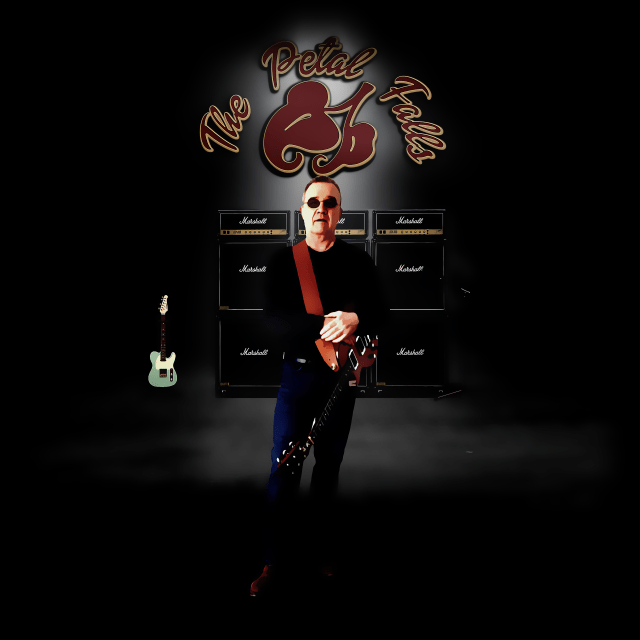
Case in point is British rock act The Petal Falls, the music project of Kent-based singer-songwriter Keith Leahy. I’ve previously reviewed two of his singles “I Won’t Be There”, in August 2021, and “Somebody To Love Me”, in April 2022 (you can read them by clicking on the “Related” links at the end of this post). To briefly reiterate some of what I previously detailed about The Petal Falls’ unfortunate history, Leahy formed the band in the mid 1990s as a performance platform for his music. Consisting of Leahy, who sings vocals as well as plays guitar and keyboards, and four other musicians – Robert Harpum (guitar), Dave Richards (guitar), Marius Ryndziewicz (bass) and Robin Tucker (drums) – they signed with a mid-tier music label in the hopes it would lead to greater success, but it instead resulted in their ultimate undoing. The label stifled their creativity and stalled their career for several years, leading to a great deal of frustration among band members and their eventual demise, without ever being given the opportunity to publicly release any of their impressive output of songs.
Thankfully, their outstanding music catalog eventually became available for release, and Keith jumped at the opportunity to re-master the original recordings into four albums, with help of friend and producer-engineer-drummer John King. The first of those albums, Workin All Night Workin All Day, was released in July 2020 to positive fan and critical response, an amazing feat for an act that had long been given up for dead. Though their songs were recorded nearly 30 years ago and feature an 80s vibe reminiscent of music by such artists as Whitesnake, John Mellencamp and Bruce Springsteen, among others, they still strongly resonate today, garnering over 1.2 million streams on Spotify alone. That first album’s success inspired Keith to resurrect The Petal Falls as a solo project, recording and releasing new music in collaboration with King. They followed with a second album All These Years in September 2021, then a third Everything About You in September 2022.
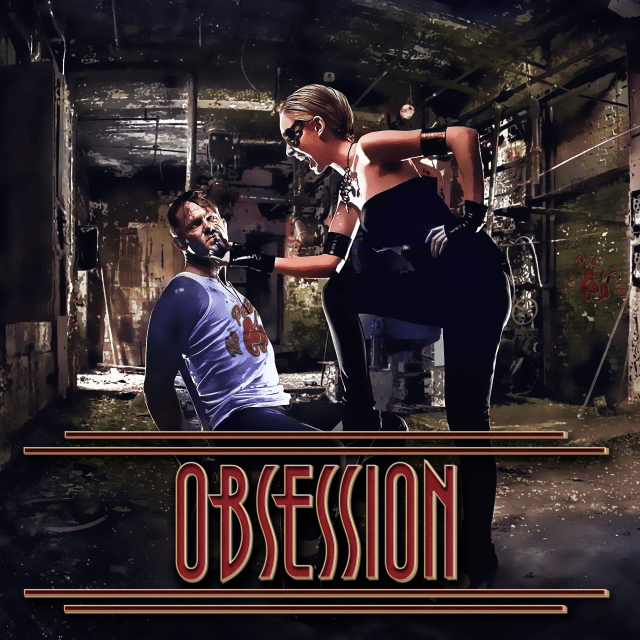
Now he returns with “Obsession“, the lead single from his fourth album The Rhythm Train, due for release this coming October. For the recording of “Obsession” Keith played guitar and keyboards and sang lead vocals, Robert Harpum played guitar, Martin Corder played bass and Robin Tucker played drums. Backing vocals were sung by Avril Davis and Tracy Tucker, with added guitar by Barry Kitchin and keyboards by Lee Tucker. The track was mastered by John King.
The song is an intense and brooding rocker about a passionate and reckless affair and the burning obsession it breeds. I know from personal experience how easy it is to fall under someone’s thrall, willing to cast all rationality and caution aside in the pursuit of their attention and, hopefully, love. To drive home their message, The Petal Falls unleashes a torrent of searing riffs, pulse-pounding bass and thunderous drums, creating a powerful and darkly sensual soundscape. The combination of three guitarists working their magic results in a rich and contrasting tapestry of shimmery chiming notes, spine-tingling psychedelic runs and grinding buzzsaw riffs. Keith’s arresting vocals are brimming with passion as he wails “I’d jump off a mountain, if I thought you’d stop and stare. I’d swim a raging river, if I knew you would be there. You can beat me, beat me to despair. You can love me, I don’t really care. You’re my obsession!“
The dark, beautifully-filmed video brings the song’s lyrics to life with sizzling scenes of a sexy woman dominating her willing subject.
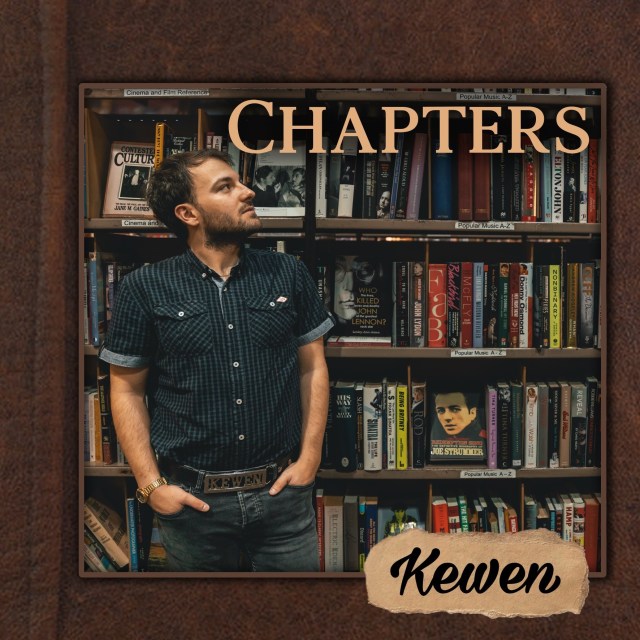
Kewen is the solo music project of British singer-songwriter Callum Kewen, who plays a pleasing style of folk rock inspired by such acts as Bob Dylan, Johnny Cash, the Beatles and Bruce Springsteen. Based in Northeast England, the busy young musician is also frontman and lead vocalist of soft rock band Kewen & The Crosswalks, and does oral music reviews of local artists on his Facebook page.
He’s been releasing music as a solo artist for six years, beginning with his debut singles “This Feelin’” and “This April Day” in April 2017, followed that September by his first EP Chimes. He followed that EP with more singles, culminating in the release of his second EP A Little Bit of Magic in 2019. He dropped a lockdown single “Freedom” in 2020, then a single “The Line” in 2021. Since then, he’s been working on his debut album Chapters, due for release in September. He just dropped the album’s title single “Chapters“, an upbeat song of optimism and hope for a better future.
Kewen elaborates on his inspiration for writing the song and album: “This album has been 2.5 years in the making and I’ve put my heart and soul into it. I wrote ‘Chapters’ not long after I went through a breakup in my personal life. I took myself off to the Lake District in the UK for a night of wild camping on the mountain side, and wanted to get into a different frame of mind which is something I had never done before. This was one of two songs I wrote up there that day, and I think they may be some of the best stuff I’ve ever written. I very much felt at that time in my life that I was moving onto the next chapter in my life and I knew I wanted to title my next project in relation to that. The song started writing itself once I got pen to paper and it was probably done within the hour.“
For the recording of the song, Kewen played acoustic rhythm guitar and sang lead and backing vocals, with additional contributions by several of his fellow musicians: Oliver Cobb, who produced the track, played electric rhythm and lead guitars, Kewen & the Crosswalks bassist Hannah Ward played bass and sang backing vocals, Jack Herron played drums, and WayneOnSax played the wonderful saxophone. Primary backing vocals were sung by Teah McCafferty, along with Hope Laverty, James Brown and Eddie Hogg.
I really like the song’s bouncy melody and infectious toe-tapping groove, highlighted by lots of cheerful guitar noodling, exuberant percussion and that marvelous wailing sax. Though he strains a bit on the higher notes, Kewen’s plaintive vocals are pleasing as he fervently sings “I can feel the chapters closing in, I can feel the chapters of life. I can feel the chapters, and everything’s alright. I can feel the pages of this worn-out book, I can feel the new pages rise.” The delightful backing vocals, especially those of Teah McCafferty, nicely complement his. “Chapters” is a fine single, and a promising glimpse of what we can expect on the forthcoming album.
British singer/songwriter, multi-instrumentalist and producer Philip Morgan Lewis is a creative and engaging artist who’s long been a favorite of mine. Drawing from an eclectic range of music genres and influences, including alternative rock, blues, R&B, soul, jazz, garage rock and folk, the London East Ender crafts his own unique sound. That unique style, combined with his distinctive unusual and raspy singing voice that sounds like no one else, makes his music instantly recognizable as only his. And, as I’ve noted on previous reviews, I like how each of his songs is uniquely different, with every release surprising us with a totally new vibe. Moreover, he isn’t afraid to address the darker side of humanity and the emotional wreckage of failed relationships, love gone bad and our sometimes self-destructive ways, while also offering glimmers of hope and redemption.
Over the past decade, Philip has released quite a lot of music, including his 2016 EP Karma Comedown, two albums, the brilliant Grief Harbour in 2017 (which I reviewed), and the ambitious 18-track opus work Now + Then in 2021, as well as over a dozen singles, a number of which I’ve also reviewed. Two of my favorites are “Come Find Me Back”, which ranks #88 on my 100 Best Songs of 2021 list, and “Redchurch Street Blues”, ranking #63 on my 100 Best Songs of 2022 list.
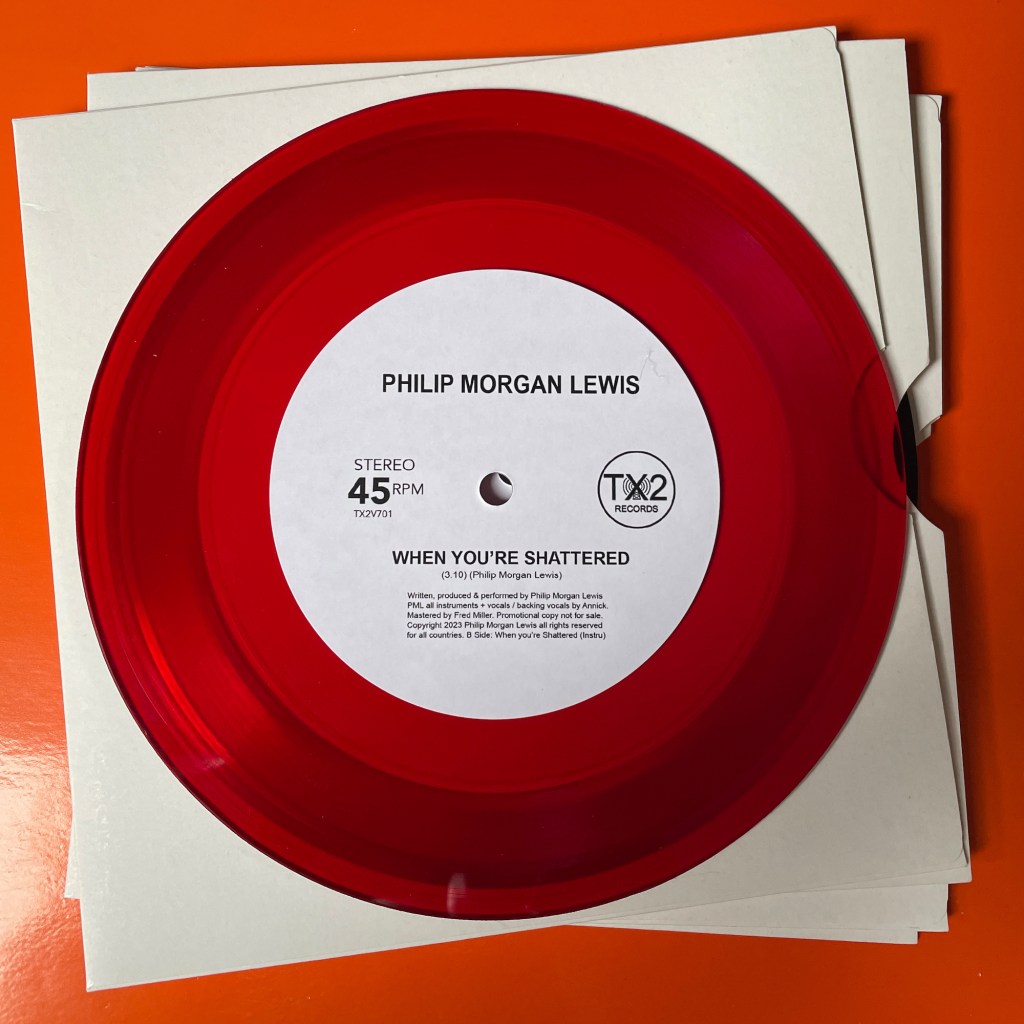
Now he’s back with “When You’re Shattered“, the first single from his upcoming EP, due for release on June 20th. Philip says the song was quite cathartic for him. “I have written a lot over the past year as I was going through a very rough time. I realised that even though I was struggling, I kept on answering “I’m alright mate” when asked how I felt. This track is about that- don’t even try to hide [your feelings], just let it out and help might come.”
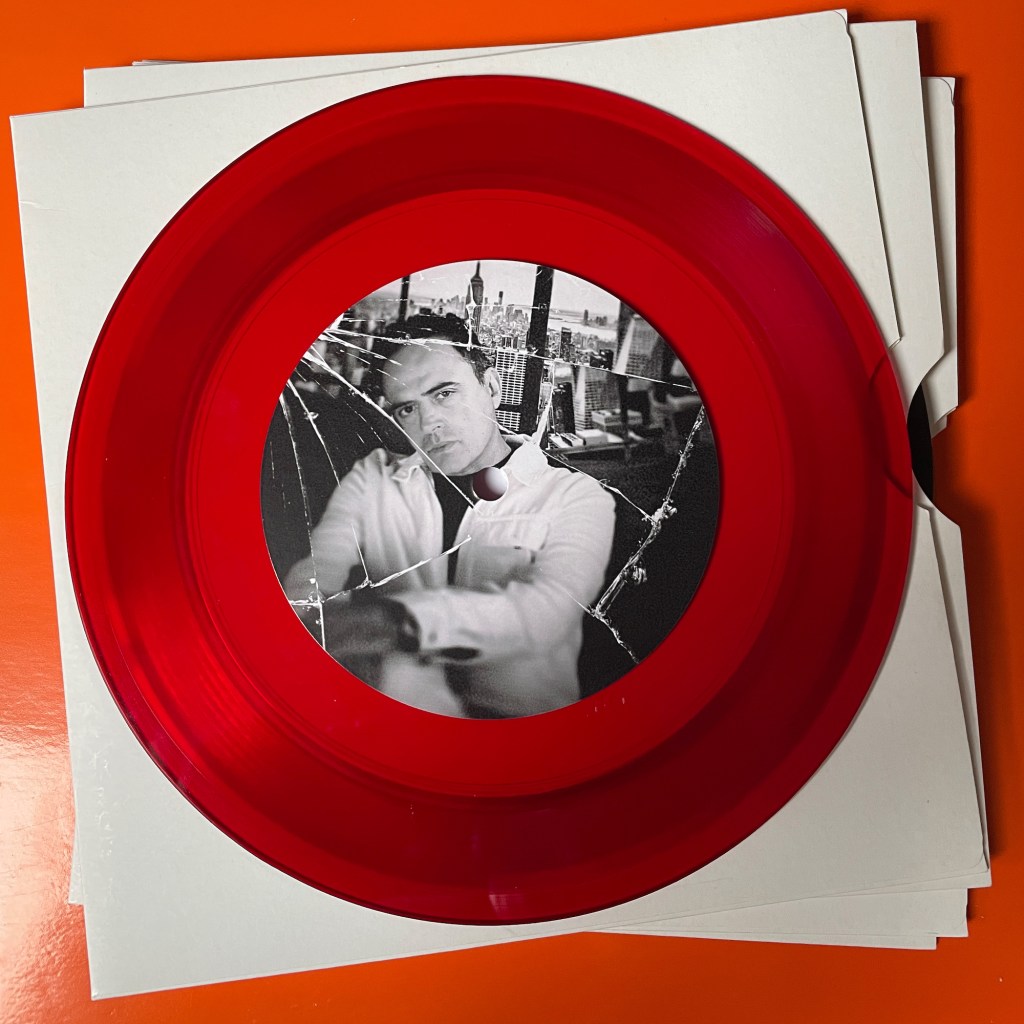
Philip wrote, produced, recorded and mixed the track, played guitar, bass, percussion and keyboards, and sang vocals. His 12 year old daughter Annick, who’s sung on all of this records since she was four, sang backing vocals. The track was mastered by Fred Miller in his Copenhagen studio. Released via Philip’s own label TX2 Records, a cool-looking special limited edition 7-inch 45 rpm red vinyl pressing of the single is also available.
To drive home his point, Philip starts with a strong driving beat, fueled by a bold, thumping bassline. He then layers a marvelous array of blues-soaked grungy guitars, snappy drums and mysterious swirling synths, creating a dark, cinematic backdrop for his emotion-packed vocals that range from sultry croons to fervent entreaties. Annick’s lilting backing vocals, which sound far more mature than a 12 year old, are wonderful, and the perfect complement to her father’s raspy croons. “When You’re Shattered” is another gem in an unbroken string of superb releases by this uniquely talented artist.
Your body’s torn to pieces
Your mind is drifting free
You seek blue ladders
That’ll take you to the sky
Well I tell you baby
Your heart is sick and tired
Keep on pretending sugar
This love will never die
When you’re shattered
When you’re shattered
Shattered deep inside
When you’re shattered
Oh baby when you’re shattered
Don’t even try to hideNow keep on moving baby
Push on through the crowd
When you think of what you’ve been through
This shuffle brings you down
People tell you what to do
They sell you dirty lies
Say everything's all right
And you know that everything’s all wrong
Cause’ when you’re
Six feet buried deep babe
You sure just waste your timeWhen you’re shattered
Baby when you’re shattered
Shattered deep inside
When you’re shattered
Baby when you’re shattered
Don’t even try to hide
Don’t even try to hide
When you’re shattered
When you’re shattered
Shattered deep inside
Don’t even try to hide
When you’re shattered
Baby when you’re shattered
Shattered deep inside
Don’t even try to hide
You’re shattered baby
Oh you’re just shattered babe
Oh you’re just shattered babe
Oh you’re just shattered babe
I seem to be in a pattern of writing about British artists lately (this is my seventh in a row!), but truth be told, they reach out to me about their music far more often than artists from any other countries, including the U.S. Today, I’m shining a spotlight on Chris Mardula, a singer-songwriter from Durham County in Northeast England. His music style is strongly informed with elements of folk, indie rock and blues.
A seasoned musician, he’s played in several bands over the years, but often felt frustrated by uneven levels of commitment by other members. He told me that with everyone having other responsibilities, it was often difficult getting everyone on the same page. Sick and tired of having to rely on other people, he eventually decided to move forward on his own as a solo artist. “I’ve had all of these songs just sitting there doing nothing for years. I thought to myself, it’s time I do something with them and get them out there to be heard. If there’s only me, there’s no excuses. So I built myself a little studio in the house and got busy making a few demos and writing some new tracks.”
Last November, Chris began releasing songs at the rate of one per month, starting with a lovely demo titled “Don’t let me down“. Consisting of just his strummed acoustic guitar and heartfelt vocals, the song is a poignant folk ballad about a fragile relationship. He assures his partner that he’ll be there for her, imploring her to not let him down: “Please stop complaining over things that I do. If you’re not so happy, you know what to do. Said I’d be there, I guess I always will. Just don’t let me down, C’mon now, don’t let me down. Cause this time is gonna be the last.” Listening to his pleasing vocals, I could easily be convinced that Chris was from Nashville or Austin instead of Northeast England.
He followed in December with his first official single “Take It Or Leave It“, which is my favorite song he’s released thus far. Written several years ago, Chris says the song is about living in a small town, making the most of it and finding your way forward while getting through the drag of everyday life, and how things usually turn out alright in the end. For this song, he layers beautiful programmed strings and vibrant percussion over strummed guitar notes, creating a stirring cinematic backdrop for his warm vocals as he fervently sings “Taking chances on the outside. I’m on the outside looking in. See my friends and see their faces. And all the places that we’ve been. So take it or leave it. Seen it all before. Take it or leave it. Cause you know you wanted more.”
In January, he dropped “Fade Away“, a beautiful rock song with a more powerful feel than his previous two. Chris’s guitar work is quite impressive as he unleashes an onslaught of scorching riffs over a background of strummed guitars, sweeping strings and riotous percussion. The lyrics seem to speak to the enduring pain over the death of a friend or loved one that refuses to fade away. “Days since he left me, was the day that he died. Still I can’t forget you, still here in my mind. Why can’t it all just fade away?” The song’s compelling video features footage shot by Chris, Craig Addison and Ella Brown.
February saw the release of “Catch a Fire“, an impactful rock song about not continuing to waste our precious time, and to keep pushing forward through the obstacles and pain life throws our way, in order to achieve our dreams and become a better person. The song has a bit of a Southern rock vibe, thanks to Chris’s splendid mix of bluesy and twangy guitars.
His most recent release “Calm In The Storm” is a terrific bluesy instrumental, where his skills on the guitar, piano and drums are allowed to really shine.
While it could be argued that the music world has more than enough ‘guys with guitars’ to go around, I think the quality of his songs places Chris near the top of a crowded field. Based on the five tracks he’s released so far, I’d say that he’s a pretty talented songwriter, musician and vocalist with a promising future. I also like that each of those five songs sounds completely different, a testament to his ability to reach across genres. He’s now putting the finishing touches on his debut album Monumental Horizons, which he plans on releasing later this year.
Though my feelings about social media are conflicted and complicated – a sentiment I’m confident many others share – one of the things I do like about it is that it’s allowed me to connect with a lot of really talented musicians and bands. One I’m happy to know is NAVE, the solo music project of British singer-songwriter, composer and producer Nathan Evans. Incorporating a broad array of genres and styles, including alternative rock, electronica, trip-hop, ambient, orchestral and dark wave, the hyper-talented Bournemouth-based artist creates dramatic, incredibly compelling music that’s often atmospheric and gorgeous, but sometimes also harsh and disturbing. Nathan is a thoughtful guy who’s unafraid to tackle issues relating to social justice and mental health, calling out the incessant bullshit and hypocrisy we seem to be faced with on a daily basis.
A truly prolific songwriter, he’s released a staggering amount of music over the past 10 years, both as NAVE (also sometimes represented as Nave or N.A.V.E.) and as front man of alternative psychedelic rock band Native Tongue. He’s been on a creative tear since 2021, and from what I can tell, he dropped eight singles last year, including “Broken Record”, a hauntingly beautiful song decrying the addictive nature of social media and its negative impacts on our emotional well-being. I love it so much, it went all the way to #1 on my Top 30 chart and ranks #14 on my 100 Best Songs of 2022 list.
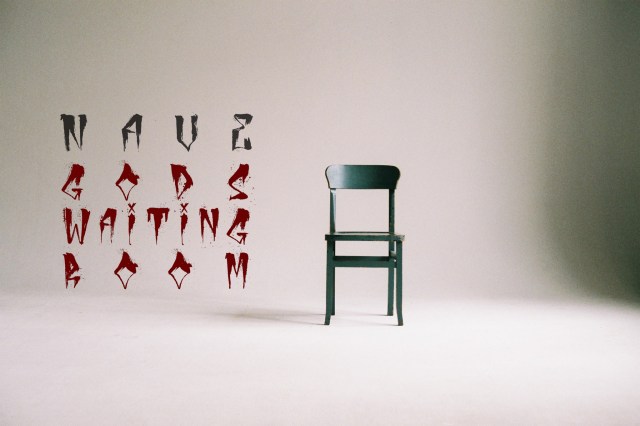
He’s continued to release lots of new music in 2023, and on February 19th, he dropped God’s Waiting Room, a monumental work which I believe is his first full-length album. The words “full-length” are a massive understatement, as the album contains a mind-boggling 31 tracks! Because of its daunting length, it was a few days before I was able to give it my full attention, but once I did, I was literally blown away! The word “masterpiece” is often overused and lightly awarded, but I can say with all certainty that in the case of God’s Waiting Room, it’s well-earned. Listening to this brilliant and stunning album is an immersive experience that takes us on a sonic journey through the many moods, ideas and emotions of NAVE’s creative mind.
In order to gain a bit of insight into his inspiration for creating such an epic work, I asked Nathan to answer a few questions, which he was more than eager to do. Here’s what we talked about:
EML: You’re an astonishingly prolific musician and composer Nathan, and I’m truly in awe of your tremendous output. Not only have you released an epic 31-track album, you’ve also recently released a number of other stand-alone songs. Where and how do you find your inspiration for all this music?
NAVE: First off, thank you for your continued support and kind words. You have been a true rare find in this shallow industry. The lack of camaraderie and true music lovers is scarce and we need more people like yourself who truly care about new music.
My 31 track album is a collection of songs and ideas spanning over 8 years to now. The majority of those songs were never intended to be released, but after going back and listening, I felt it was important because they carry so much emotion. I tend to release stand-alone songs that I spend a lot of time on and have that feeling of “oh this is a single”. The reason I called the album ‘Gods Waiting Room’ is because most of the songs aren’t singles, but more snapshots of moments in my life. What was going on and how I was feeling. I could imagine them all being played in a waiting room because they are so random and odd.
In answer to your question though, the honest response is I don’t know where and how I find the inspiration to have such a high output. Maybe I feel I have something to prove to myself and others who never believed in me. I was written off in school for having ADHD, and was medicated for 6 years with Ritalin so I always felt like an outcast. Maybe my subconscious wants to leave behind a large library of work that I feel is important. Maybe I’m on an autistic spectrum and I can’t stop jumping from one idea to the other, constantly trying to outdo myself and find my “smells like teen spirit” banger. Maybe I am trying to refine my tools and become the best I can be, which is very similar to the mentality I had when I was competing in trampolining from the age 5-11 and had to come 1st in all competitions. If I would come in 2nd ever, it would be crushing. I knew I had the magic and that has translated to music today
EML: Continuing on the theme of inspiration, some of the tracks on ‘God’s Waiting Room’ seem to have titles and/or lyrics dealing with self-assessment, mental health or personal well-being – e.g. “Jealous Little Bitch”, “Passive Aggressive”, “Son of a Rich Man”, “Computer Is My Friend” and “Kiss My Bad Side”. Are any of these songs autobiographical, or a means of addressing some inner demons or conflict?
NAVE: I find my songs either have a personal meaning, a message, or they don’t mean anything to me. Some tracks are blunt, some are cryptic, which means something to me, but to someone else interpreting them, it is completely different (which tends to happen often). Someone will tell me what my song means to them and I’ll be like “whoa, that’s not what I had in mind”. But I love that and it’s become clear from people’s comments that my music/lyrics creates imagery and causes multiple interpretations which I love.
For example, the songs you’ve mentioned. “Jealous Little Bitch” is an instrumental song, but made at a time when I was angry at certain people in my life and patterns of behaviour where I felt jealousy from “friends” or “family” instead of support and love. “Son of a Rich Man” was a dig at certain people that would never know the stress and uncertainty of having no money. They have an easy ride almost in a world where billionaires exist, and shouldn’t. I compare them to cartoon characters in a fairy tale paradise.
My track ‘Rose Tinted Glasses”, which was a stand alone release, was probably the most personal and therapeutic song I’ve ever written, about the loss of my Mum at 26. I put out a music video of it and I would cry every time I’d watch it. I’ve never had that with any song I’ve ever written and it addressed grief, anger and such sadness in me.
Another driving force isn’t so much facing inner demons but a feeling of obligation and duty to spread truth, love and light. Call out corruption, bullshit and lies. I made a tune called “blood thirsty billionaires” and made a video calling out certain people and shone a light on the ridiculous injustice and imbalance. It pisses me off that actors, musicians, sportsmen and whoever don’t use their platform enough to stand up to the lies we are fed everyday. The food we eat is full of harmful pesticides, the water we drink contains high levels of chlorine and the doctors don’t have our best interest at heart. They just read from a script or give us big pharma products. Cancer is 1 in 2 from the water, food and air, yet we freak out over a flu that mainly kills old and vulnerable people. We keep bending over to the government and accepting their lies and obeying without thinking for ourselves and truly questioning. Can you tell I am passionate about all this stuff. Can you see maybe why I make so much music lol?
EML: You certainly have a lot to say!When recording your songs as a solo artist, do you play and record all the music yourself? And besides the piano as your primary instrument, accompanied by what I’m guessing are lots of programmed synths, what other instruments do you play?
NAVE: Yeah, I mostly use the keyboard to write in synths, then programme and edit the drums. Then I finally add vocals. The vocals are always hit and miss. Sometimes they come quick and other times its a slog. I focus on the beat, atmosphere, melody and bass to create a vibe and if it makes me feel something, I quickly know whether to spend more time or move on. There always comes a time when I produce where that moment happens. Its like a magic. A transition occurs when the song comes to life and its amazing. I play drums, piano, guitar, bass and hope to learn the violin one day. I tried once and was terrible. The noise was so bad, I was unable to persist. So big respect to you violin players out there. You truly have to crawl through thorns and stinging nettles to reach the roses.
EML: With 31 amazing tracks, you could have broken them up into two or even three separate albums. Why the decision to include them all in one monumental album?
NAVE: I had considered that, but it felt they were all from a chapter in my life and belonged together. It also shows my progression till now and it was appealing to release a large body of work, particularly under such a poignant album title.
EML: That certainly makes sense. What other musicians or bands do you consider primary influences for your music?
NAVE: I ingested a lot of music as a teenager, but over the years I tend to stay away from listening to music as I find it better to be naive and not influenced by others’ music. The more music I listen to, the more chance I might feel I am copying them or “I cant do that because that sounds like that” if you know what I mean? But obviously Radiohead, Nirvana, Queens Of The Stone Age, Muse, BRMC, UNKLE, Jose Gonzalez, Deftones, Limp Bizkit, Morcheeba, Moby were big influences. Our bass player in my band Native Tongue is a music freak so he shows me a lot of new music and one track in particular that blew me away recently and inspired me to write my track “CONNIFER” is the track “NOT” by Big Thief. Incredible song.
EML: Is there anything I’ve neglected to ask that you’d like people to know about yourself or your music?
NAVE: I have struggled not finding the audience I was hoping to. It hurts when I put my heart and soul into these songs and I can’t reach anyone new or build my fan base, no matter how hard I try. I feel I’m finally coming to peace with that and doing this because I love it, not for people’s validation. My main drive has always been to reach people, and its been a painful road reaching so few people and not building that fan base I hoped for. Obviously there is still time but if it never happens, then fuck it. I still touched you and others, and devoted myself to an outlet which has kept me sane for so many years. Without it, I may not even be here now to answer these questions.
So my final thing to say is to everyone out there, do what makes you happy and try not to seek happiness externally. Think for yourself and question authority. We have been boxed up like objects and we are still treated like slaves working long hours for no money. It doesn’t have to be this way. Seek the truth within yourself and the world will open up like a flower. Independent thought. Love yourself and be kind to others.
Thank you Jeff. You are a star.
EML: Thank YOU Nathan for taking the time to answer my questions, and for all your incredible music. Hopefully, this review and interview will bring you at least a few more fans.
Okay, let’s get to God’s Waiting Room, shall we? Because it contains so many tracks – all of which are outstanding – I won’t be doing my usual track-by-track discussion, as it would take me forever and besides, no one would read it all! Instead, I’ll touch on my favorites, as well as some of the more fascinating and impactful tracks. Of the album’s 31 offerings, 17 are instrumentals, whereas 14 feature lyrics and vocals of some kind or another.
On the unsettling opening track “The Speaker“, NAVE talk-sings in a mysterious whispered voice “Why do you listen to the speaker? Isn’t that, in listening to the speaker, you’re listening to yourself? Is that what is taking place? The speaker is only pointing something out. Acting as a mirror in which you only see yourself. Your own state of mind. Your own consciousness. And if at the end of these talks, you say to yourself ‘I have not changed’, why, it is your fault.” Though I didn’t ask him, my guess is that the song set the overall tone for the album, also serving as a kind of introduction.
As the album unfolds, each new track brings a different mood and vibe, keeping it sounding fresh and holding our attention. The second track “Sleepy Head” is a darkly beautiful instrumental featuring a mesmerizing trip hop groove and rather spooky string synths. And speaking of spooky, “White Witch” is downright chilling as NAVE drones “Never again, will you and I suffer.Never again, will the world go by unnoticed” against a mysterious cinematic backdrop that would make a great opening for a horror film.
Several instrumental tracks, like “Into the Abyss“, “Twilight Zone” and “Watch It Unfold“, are atmospheric and beautiful, with haunting piano movements, sparkling synths and cinematic strings. One of my favorites is the stunning “Linda’s Song“, with its vibrant piano keys, soaring strings and pleasing guitar chords. I also love “Jealous Little Bitch“, with its gorgeous violin notes and eerie synths layered over an assertive skittering beat.
Another favorite (on an album full of favorites) is “Passive Aggressive“, with its trippy hip hop groove, highlighted by menacing industrial synths sprinkled here and there with twinkling little touches that keep the song from sounding too heavy and dark. NAVE does a great job rapping the wonderful lyrics about an encounter with an unpleasant receptionist at a medical appointment: “Walk in the door, time for my appointment. Ignored by a lady unhappy in employment. Making me wait for a good few minutes. Grittin’ my teeth, pushed to the limit. I calm myself, instant reflection dealing with this middle-aged bitch on reception. Stay strong, try not to break. Refrain from explaining, I’m here cuz my balls ache. I’ve come a long way, massive obsessive, passive aggressive.“
“Swim Away With Me” is so quietly majestic and beautiful, it brings tears to my eyes. Then, abruptly changing the mood with “Millions of Wilfully Ignorant Sleepwalkers“, he skillfully uses a droning melody and rather ghostly, dream-like synths to convey a sense of people moving through life like zombies, seemingly unaware of their surroundings. The darkly beautiful “Breath With Me” has a strong Radiohead vibe, thanks in large part to the beguiling falsetto by appropriately-named guest vocalist Ethereal, which seems to channel Thom Yorke.
The terrific “Son of a Rich Man” is a languid and bluesy, guitar-driven song that NAVE touched on earlier as being a dig at people born with a silver spoon in their mouths. I love the pointed lyrics: “I don’t know who I am anymore. In fact, I don’t think I ever did. I’m indecisive, with hindsight bias. Sure, the grass could always be greener./ But who knows, paradise could just be a fairly tale, only fit for cartoon characters and billionaires. Maybe I should make a plan, or wait to reincarnate as the son of a rich man.”
One of the most beautiful tracks on the album is “Infinite Ground“, where NAVE’s dreamy echoed vocals meld so perfectly with the delicate acoustic guitar notes, it nearly takes my breath away. The unusual “Tashi Delek” is a dark song, featuring a strong trip hop beat, deep bass and harsh industrial synths, punctuated by contrasting delicate xylophone sounds. NAVE’s otherworldly vocals add to the song’s edgy vibe as he wails “I looked at your face. I couldn’t help but stare. I got you on my mind. There ain’t nothing wrong. Just a slip of the tongue. Can you feel my pain? And I miss you.”
The album closes with the contemplative piano piece “My Goodbye“, a beautiful and fitting end to this exquisite work of musical art. I’ve probably listened to God’s Waiting Room more than 15 times, and it manages to reveal new sounds, textures and meanings each time I hear it. I love this album, and hope at least some of my readers will appreciate and enjoy it too.









 ECLECTIC MUSIC LOVER