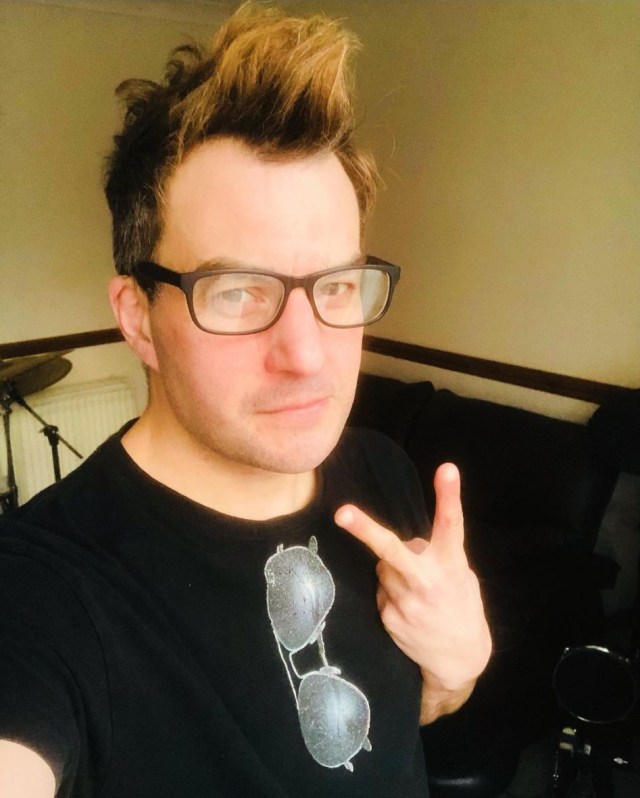
Hailing from the southwest coast of Wales, David Oakes is an imaginative and prolific musician and composer of electronic alternative rock music. Strongly influenced by his love of such acts as Dream Theater, Mastodon, Metallica, Therapy?, Green Day and Smashing Pumpkins, his musical output ranges from gentle synth-driven compositions to aggressive guitar-driven hard rock, though his last several works have trended toward the latter. I really like his music and have featured him on this blog many times over the past eight years (you can read some of those reviews by clicking on the links under “Related” at the end of this post).
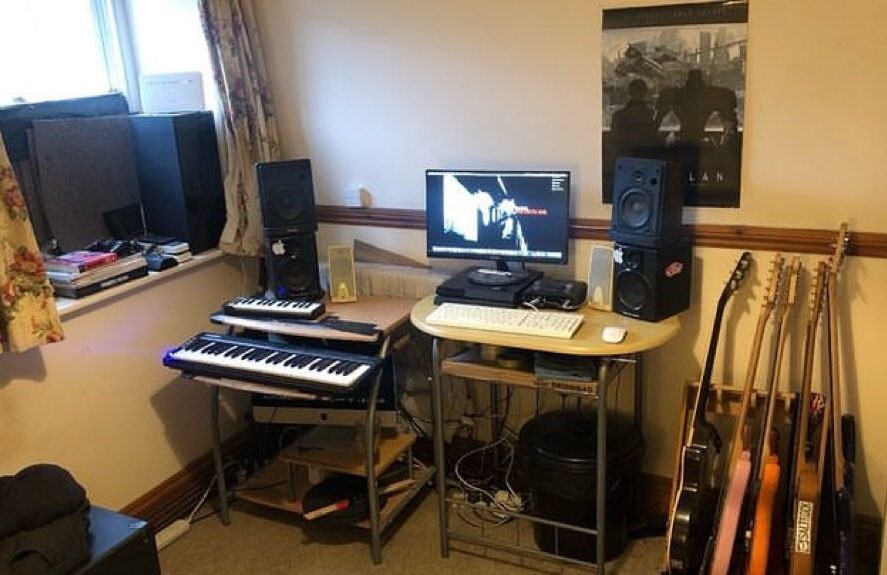
David’s been actively involved in making music since his late teens, when he started playing in various bands. From 2001-06, he and his younger brother were members of the rock band KOTOW, for which he played drums. He went on to study guitar and music theory at the Academy of Contemporary Music in Guildford, England from 2009-12, after which he began composing music as a solo artist, all of which he records and produces himself in his little home studio setup. This drum kit is his pride and joy!
He released his first album The Juggernaut in 2014, and in the years since, has recorded and released an astonishing eleven more albums, the latest of which is Prosthetic Soul, which he released on Bandcamp on February 16th. His first new album in two years, Prosthetic Soul serves up 28 minutes of superb psychedelia-tinged melodic instrumental rock, featuring many of David’s signature electronic and guitar-heavy elements we’ve come to love and expect. But here he’s pushed himself even further, experimenting with new sounds and instrumental techniques, along with what seems to be an even greater emphasis on industrial elements employed by bands like Nine Inch Nails, Rammstein, Dream Theater and Depeche Mode.
Album opener “Minus One” starts off with distant sounds of super-gnarly guitars, which are soon joined by a mix of spooky industrial synths, heavy, razor-sharp percussion and jagged guitar notes layered over an ominous droning synth bass groove. The track immediately segues into “Super Zero”, and we’re off to the races. Though only 1:49 minutes long, the track packs a powerful punch, beginning as a mysterious soundscape of wobbly synths, then exploding into a furious maelstrom of raging grungy guitars and crushing drumbeats.
“The Future Has Begun” is a bit of a musical tour de force, beginning gently with eerie pulsating synths accompanied by a somber piano movement. Forty seconds in, the music abruptly transitions to a rapid barrage of raging guitars and thunderous percussion before calming back down at roughly two and a half minutes to a lovely introspective interlude. Seeming to end at around three minutes, those raging guitars suddenly come roaring back for the next 30 seconds before fading out.
With it’s glitchy sci-fi vibe, infused with both Western and Middle Eastern touches soaked in reverb, the appropriately titled “Dust” would be a perfect fit on the soundtrack for an installment of the Dune film franchise. And David’s skills on guitar and drums are on full display on the marvelous title track “Prosthetic Soul”, as he unleashes a furious onslaught of blistering riffs while beating the hell out of his drum kit. It’s one of my favorite tracks on the album.
“The Dissociation Suite Parts I and II” are a rather intense but melodic couplet, with lots of great keyboards that work quite well with the twangy and grungy guitars that build to a wailing solo toward the end. Living up to its title, “The Reality Bomb” is a glorious little blast of atomic energy, with swirling distorted guitars layered over a grinding bassline, fortified with smashing drumbeats. Halfway into the song, the music calms down to a darkly beautiful interlude of haunting synths, harsh percussion and bewitching stummed guitar notes before exploding into a brief raging torrent in the finale.
“Dirt…” seems to pick back up where “Dust” left off, with more of those mysterious and glitchy sci-fi vibes, only this time accompanied by some really marvelous twangy guitars. The final track is the original version of “The Dissociation Suite Part II”, which David has designated a Bonus Track. To my untrained ear, it sounds fairly similar to the final version, except with a longer lead-in and not quite as many synth flourishes.
Prosthetic Soul is another stellar album by David that ranks among his finest works. It nicely showcases his continued growth as both a composer and musician.
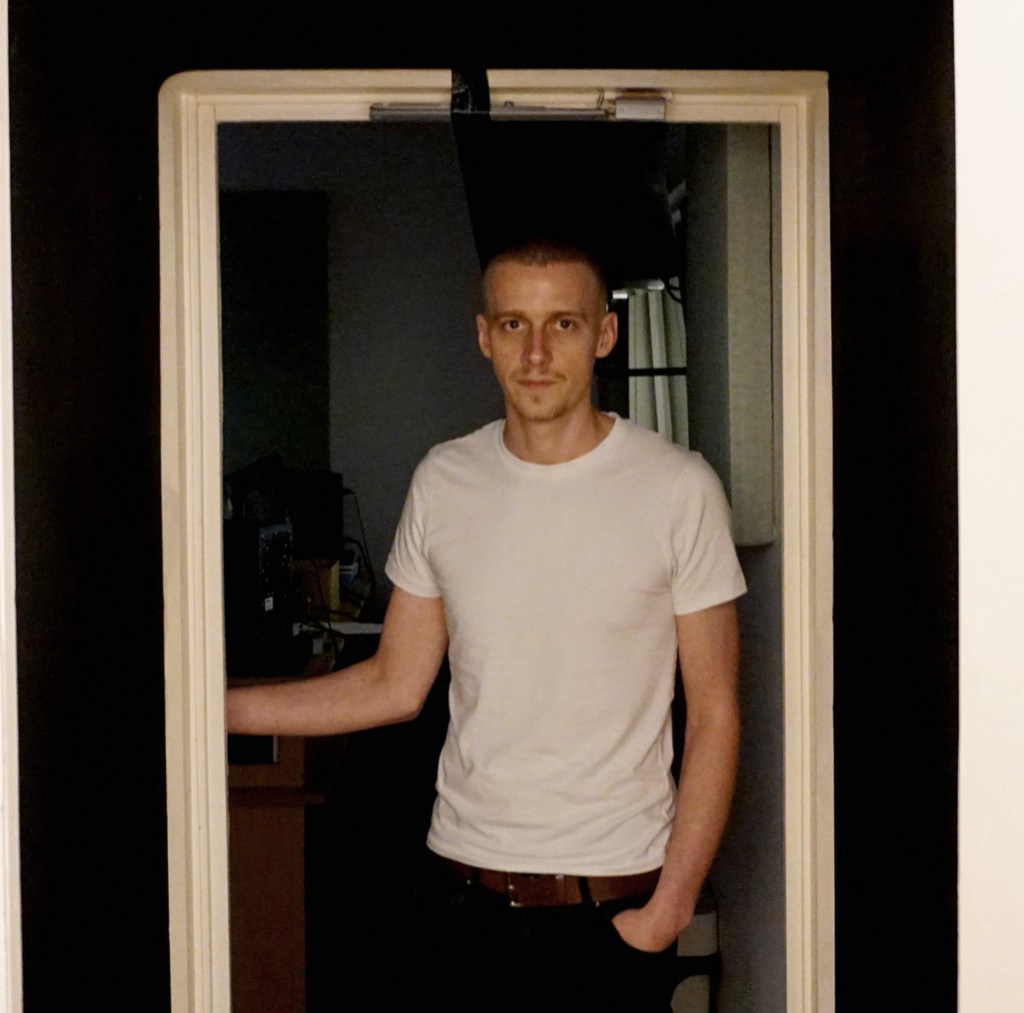
Over the past year, London-based Frank Joshua – a rather enigmatic yet enormously talented singer-songwriter and producer who, wanting his music to speak for itself, shares no photos of himself – has become a favorite of mine on the strength of his beautiful baritone voice and beguiling music style. It’s no exaggeration for me to say that Mr. Joshua has one of the most enthralling singing voices I’ve heard in a long while, and I was blown away the moment I first heard his music. His lush, vibrant vocals are soothing and warm in the vein of crooners like Michael Bublé or Michael Feinstein, only better in my opinion. Despite his wish to remain somewhat anonymous, it hasn’t kept him from engaging with his fans on social media and showing genuine appreciation toward them. He’s been particularly supportive of me, which makes me more than happy to support him in return.
The prolific artist has released a staggering amount of music over the past three years or so, including two albums and numerous singles, all of which have been exceptional. Every one of his songs is a captivating feast for the ears. I’ve previously written about two of them, the lovely “Bluebell Wood”, which spent three months on my Weekly Top 30 and ranks #53 on my 100 Best Songs of 2023 list, and “Patent Leather Car”, a breezy tune Frank said is about “feelings of fear and love, and finding solace in something you know probably isn’t good for you.” His enchanting single “Winter Cowboy” is currently enjoying a long run on my Top 30, where it currently sits at #8.
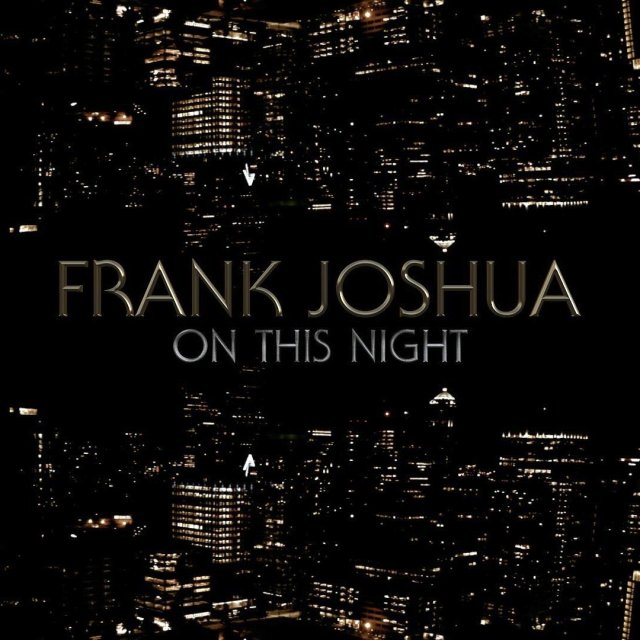
On February 16th, he dropped his 32nd single “On This Night“, yet another outstanding track released via Numen Records. Although Frank writes some of his songs, like the majority of his singles, “On This Night” was written by his frequent collaborator Simon Pitheakley, and produced by Tony White. The song, along with several of his recently released singles, will be included on his forthcoming third album Turn To Your Soul, planned for release in April.
The song opens with ambient sounds of wind or perhaps the distant rumbling of a subway, accompanied by sirens, creating a foreboding sense of danger. This is soon joined by gentle thumping beats, wispy atmospheric synths and somber piano keys as Frank begins to sing of searching for guidance that might help him find peace of mind and his sense of purpose in this world: “On knees in the outback. Open hearted for cross check. Praying for purpose, needing a voice on this night. Deep in this night.” The music gradually builds into a dramatic soundscape of glittery piano keys, crisp percussion and soaring cinematic synths, as Frank’s vocals grow more impassioned in the choruses, expressing a fervent sense of desperation and pain I’ve not heard from him in any of his previous songs.
It’s a gorgeous, dark and impactful song that immediately ranks among my favorite of his many great songs.
Giving something and nothing
Giving faith and nothing
When skies turn to seas
Turn to oceans
Skies turn to oceans

On knees in the outback
Open hearted for cross check
Praying for purpose
Needing a voice
On this night
Deep in this night

And if it pleases this mortal
For all his falter
Is pleading for guidance
Is trying for peace
In this night
Peace in this night

Of mind in this distance
Should it please your indifference
Would love to be shown the path of your choice
In this night
Deep in this night

And for all this muddle
And to give in his struggle
His heart would believe if you’d give him the choice
In this night
Deep in this night

Though the eye’s full of trouble
Of a simplistic struggle
A truer devotee could not be found
On this night
Deep in this night

Let him bleed forever
If the bleeding’s essential
If hurting may heal
His eternal fight
On this night
Deep in this night
The beautiful video, produced by Italian filmmaker Diego Monfredini, features scenes of a dire medical emergency set amidst a world of glittering nightlife in a dense urban environment, skillfully conveying the contrasting sense of danger and beauty of the night, where every emotion and experience seem heightened in one way or another. Sexual attraction and romantic desires feel more intense, and entertainment in all its forms, be it the theater, movies, music concerts, gambling, etc., seem more enjoyable (perhaps due in part from higher consumption of alcohol or other mind-altering substances), whereas our worst fears and worries feel more burdensome and intractable, emergencies more calamitous, and the unfamiliar or unknown more ominous and threatening under the cover of darkness.
Based in South London, England, Oli Barton is a wildly creative and exceptionally talented singer-songwriter, not to mention a dangerously charismatic charmer. Though I’m sorry to say I’ve never had the pleasure of seeing him perform live (him being in the UK and me 5,500 miles away in Southern California), he’s gained a reputation for his wild, uninhibited live shows that Reyt Good Magazine describes as “straight from indie heaven”. Barton has supported such acts as Kid Kapichi, Baxter Dury and Starsailor.
I’ve been following him for seven years, both as front man of his backing band the Movement, and now as a solo artist, and have featured him many times on this blog. (You can read some of those reviews by clicking on the ‘Related’ links at the end of this post.) His eccentric yet sophisticated style of alternative rock is a colorful mix of post-punk and psychedelia, fortified with touches of funk, grunge and pop, and I can state without exaggeration that I’ve loved every single one of his songs. Five of them have appeared on my Weekly Top 30 charts – the provocative 2017 single “Kinky”, which went all the way to #1, as well as “44”, “Martyr”, “Just Like Always” and, most recently, “Paid Off”, all of which reached the top 5.
It’s always a good day when Barton releases new music, and I’m thrilled to present his latest single “It’s Over Now“, released today via Coke & Dagger Records. For the song’s recording, Barton was joined by Jamal Aggoun on guitar, Marco Fuzz Paone on bass and Josh Needham on drums. Produced by Alex O’ Donovan (Sea Girls) and mixed by Cenzo Townshend (Inhaler), the song is an exuberant piece of indie-pop ear candy, with a lively blend of crunchy and shimmery guitars, fortified by deep thumping bass and propulsive drumbeats layered over a rousing, infectious groove. Or, to put it more simply, this song fucking rocks!
I always love Barton’s distinctive, resonant singing voice and rich accent, which he uses to full effect here as he plaintively implores to a romantic partner, asking if what they once shared is truly over, or if there’s still any chance of reconciliation: “Would you say that it’s over now, or should I wait? Would you say that it’s over now, is it too late?Should I stay?”
About the song, Barton says, “it’s in the whole world of teenage heartbreak and social media; the way that jealousy gets inside us and really makes us into a whole different person and perhaps distorts the decisions we make“, which he nicely articulates in the lyrics “So now I’m spending night times tracking down precise times. I’m addicted to my screen. I see you follow him and you follow her, and it all just seems so clean. But then you drop a like, and well it don’t seem right, and I’ll just sit there green.”
Today I have a terrific new dance single to share with my esteemed readers – “Dream Tonight“, a collaboration by British artists The Ocean Beneath and Liz Mann that dropped yesterday, February 9th.
The Ocean Beneath is the music project of Leeds-based electronic musician, composer and producer Matt Burnside. Influenced by bands such as Gunship, HVOB and Talk Talk, he combines 80’s synthpop elements with modern recording techniques, analogue synthesizers and huge melodic grooves to create music that sounds retro, yet fresh. Like many electronic artists, he often collaborates with other musicians and vocalists, and has released a substantial amount of outstanding music, some of which I’ve reviewed previously.
Liz Mann is a silky-voiced synthpop artist from Manchester who, in her own words, “mixes 60s pop melancholy with a synth-based vintage style”. Thus far, she’s released two wonderfully sultry singles, “Chocolate” in 2022 and “COOL” in 2023.
As is typical with The Ocean Beneath’s collaborations, he composed the music and beats and produced the track, while Mann wrote the lyrics and sang vocals. The track was mastered by Tony Dixon, with additional vocal production by Grant Henderson. The beautiful single artwork was conceptualised by Jack Loxham.
About the song, Liz explains “I’ve been such a big fan of The Ocean Beneath’s work since he remixed Purple Thread’s track ‘Something Good’ a few years ago. So this was a special collaboration in the making. It’s a bit of a departure from my usual sound, but we hope you’ll join us on a dark disco pop journey through the realms of dreams and desires, exploring the yearning to connect with a special someone in the ethereal landscapes of the subconscious mind.”
I’m a sucker for dance music of all kinds, so “Dream Tonight” fills the bill quite nicely. I love the hypnotic, thumping dance groove and enigmatic synths, punctuated by spacey and funky flourishes that call to mind some of the great 70s euro-disco music by artists like Cerrone and Alec Costandinos. Mann’s sensuous vocals perfectly complement the track’s dark and sultry soundscape as she croons, “Come close to me, come close to me, want you in my dreams tonight.”
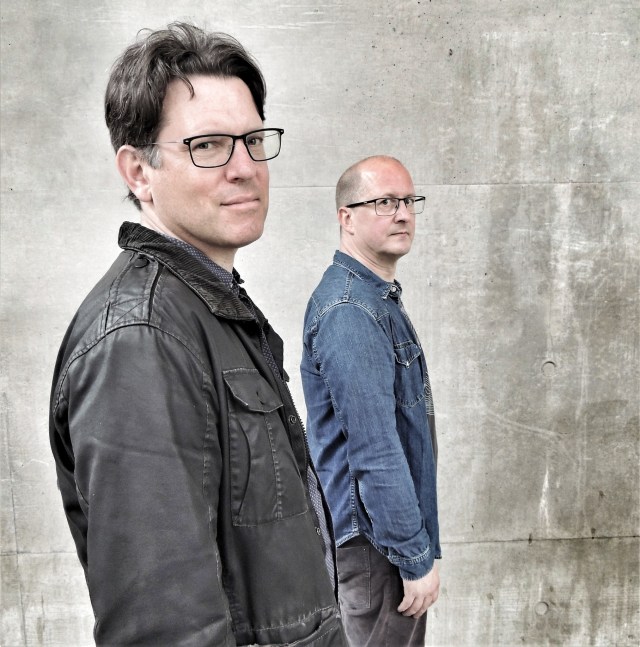
In my eight years as a music blogger, I’ve written about quite a few artists and bands with odd or quirky names, but one of the strangest of them all has to be that of British duo Hats Off Gentlemen It’s Adequate. Based in London and comprised of singer-songwriter, multi-instrumentalist and producer Malcolm Galloway and multi-instrumentalist and co-producer Mark Gatland, with help by Malcolm’s wife Kathryn Thomas on flute and backing vocals, they create their unique brand of progressive alternative rock, infused with experimental and classical elements, minimalist, metal, folk, funk, and electronica. I’m not exaggerating when I say they’re both multi-instrumentalists, as Malcolm plays lead guitar, keyboards/synths, percussion/drums and programming, while Mark plays bass, guitar, slide guitar, keyboards/synths, Chapman Stick (an electric instrument resembling the fretboard of an electric guitar, devised by Emmett Chapman, which has ten or twelve individually tuned strings) and additional percussion/drums.
Photo of Malcolm and Mark by Kathryn Thomas
Longtime friends who’ve been playing together since they were in school, Malcolm and Mark’s music often explores scientific and philosophical themes, and they’re strong advocates of social and environmental causes. Accordingly, they’ve organized and supported charity events for Save the Children, Cancer Research UK, Marie Curie Cancer Care, Ehlers-Danlos Support UK, Brain Tumour UK and Prog The Forest, which raises money to protect over 40 acres of threatened habitat. From what I can tell, they’ve released quite a lot of music since 2012, including six albums, three EPs and numerous singles. On September 9th, they’re finally dropping their long-awaited seventh album The Light of Ancient Mistakes.
When they reached out to me about the album in July, I was initially overwhelmed by its size, subject matter and scope, and I admit it’s taken me a while to fully absorb this ambitious and fascinating work. Also, I’m a master procrastinator who always waits until the last minute to write my reviews, a bad habit going back to my college years that I’m afraid I’ll never be able to break. And finally, after reading some superb reviews of the album written by others, I’m now left feeling both intimidated and deflated, wondering how I can ever write a coherent review that does justice to this amazing album. I will give it my best effort.
Although not necessarily a concept album, many of the songs on The Light of Ancient Mistakes are inspired by various books, including works by Adrian Tchaikovsky, Iain M. Banks, David Cornwell (who wrote as John le Carré), Philip K. Dick, and Conservative MP Chris Bryant, as well as issues of personal importance and concern for Malcolm, who wrote all the lyrics. The music was co-written by him and Mark. The album contains 15 tracks, seven of which feature lyrics and vocals, while eight are instrumentals. The Bandcamp version of the album also includes four bonus tracks that are radio edits of four of the original 15.
The album opens with “Sold the Peace” a bitter diatribe against the corporate greed and political cowardice that have essentially negated all the hard-fought gains in the battle against authoritarianism in World War II and the Cold War period that followed, ushering in a new generation of despots, expressed in the lyrics “We risked it all to set the world free. Dead or free, the opportunity cost of the unused bombs. So much invested. We stormed the citadel, then bought the lease. We won the war, we sold the peace.” To drive home their point, the guys start with a grungy bass groove, then layer cinematic industrial synths, noirish piano chords and jagged guitar notes to create an unsettling soundtrack for Malcolm’s exasperated-sounding vocals.
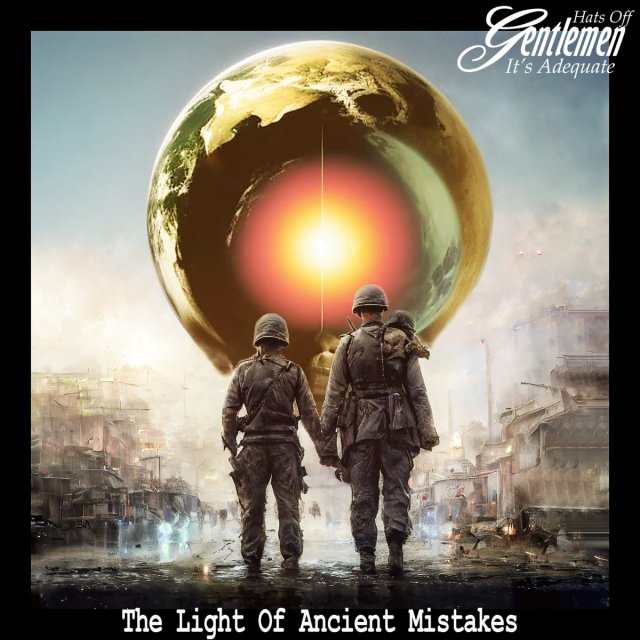
Next up is the hauntingly beautiful six-minute 40-second-long Pink Floyd-esque title track “The Light of Ancient Mistakes“, inspired by science fiction author Iain M. Banks’ novel Look To Windward. Malcolm explained the song to David Edwards of The ProgressiveAspect blog, “It explores the long-lived consequences of an atrocity. The light from a sun-destroying explosion has travelled for 800 years before reaching an orbital where a commemoration for the tragedy is due to take place. The protagonist of the song is an artificial intelligence trying to show the futility of cycles of hatred to someone planning an act of mass destruction.”
This is followed by the electronic instrumental track “Arvana Kern is Made of Ants“, which along with tracks 6 “The Requisitioner and the Wonder” and 8 “Gothi and Gethli“, refer to a character, two spaceships and a pair of crow-like creatures which insistently deny they are sentient in Adrian Tchaikovsky’s Children of Time series. The frantic skittering beats and swirling keyboards on “Arvana Kern is Made of Ants” cleverly evoke the non-stop flurry of activity one would see in a colony of ants, while the somber atmospheric tones of “The Requisitioner and the Wonder”, punctuated by some beautiful guitar notes, convey images of two spaceships traversing the heavens. Mark’s deliciously funky bass and Malcolm’s jazzy piano work make the jaunty “Gothi and Gethli” one of the most upbeat tracks on the album.
Track 4, “The Anxiety Machine Part 1“, is the first of a three-part triptych of darkly beautiful contemporary classical instrumental interludes that serve as connectors within the album, creating unsettling feelings of loneliness, resentment and desolation, in keeping with the overall feel of the album. This immediately segues into the heartbreaking “Sixteen Hugless Years“, a song inspired by the childhood experiences of David Cornwell, better known as John le Carré, namely the abandonment he felt after his mother left him and his family when he was five years old. The 16 years referenced in the song is the time that passed before his mother initiated a reconciliation. Malcolm’s vocals are filled with pain as he bitterly recalls “You packed your Harrod’s suitcase and left. You didn’t even slam the door. I was left with a hole. I didn’t grow up, I just got older. I was only five years old. Sixteen hugless years. Sixteen long, long years. I’ve grown old and I’m cold and hard but I’m told I’m the life and soul but it feels so hollow after 16 hugless years.” The musical highlights for me are Mark’s deep, throbbing bassline and Malcolm’s haunting guitar.
“The Glamour Boys” was inspired by Labour MP Chris Byrant’s book of the same name about the experiences of a group of mostly homosexual or bisexual Conservative MPs who argued against appeasement towards Nazi Germany and Fascist Italy, despite threats from Prime Minister Neville Chamberlain to expose their secrets. Many went on to risk, and in some cases lose their lives in the Second World War. “They call us the glamour boys. The punishment for speaking out. The leaks and smears and telephone taps. The hints the threat the veiled attacks.“
One of my favorite tracks on the album is “imtiredandeverythinghurts“, a chugging, energetic rocker inspired by Malcolm’s experiences with an invisible disability due to Ehlers-Danlos Syndrome (a group of inherited disorders that affect the bodies’ connective tissue, primarily skin, joints and blood vessel walls, resulting in chronic pain), and the challenge of responding honestly to the well-intentioned and seemingly benign question “how are you?” Malcolm elaborated to The ProgressiveAspect blog, “I don’t want to be dishonest with people by pretending to be fine when I’m not, but I also don’t want to drag people into a conversation about chronic pain that they may not be comfortable with. On the other hand, for those of us with conditions that vary from day to day (or hour to hour), it may be important to communicate what our current level of functionality is. I am also aware that there is no negative intention behind the question, and the last thing I want to do is to discourage people from communicating.” He plaintively sings “I keep smiling so you might not notice that I’m falling apart. I’m close to an edge. I need help. If this time you’re really asking, I’m tired and everything hurts.“
The centerpiece of the album is “Walking To Aldebaran“, an epic progressive rock masterpiece inspired by the science fiction novella of the same name by Adrian Tchaikovsky. Clocking in at just under nine minutes, the song features an exciting and eclectic mix of styles and textures, including progressive metal, free-form jazz, contemporary classical and musical theater, as it tells the story of space-ship pilot Garry Rendell who, due to a miscommunication between himself and an old, possibly malfunctioning but well-intentioned machine, is transformed into a monster. The colorful, intricate guitar work, jazzy piano, swirling synths and Kathryn’s lovely flute are all utterly exquisite throughout. Malcolm’s dynamic vocals alternately remind me of David Bowie, Al Stewart and a myriad of male vocalists from such Broadway musicals as Les Misérables and Phantom of the Opera as he forlornly laments “I’ve become what the monsters are scared of. I’ve been changed by the mother machine. I am the thing that used to be me.“
“Goodbye Cassini” is a beautiful instrumental tribute to the NASA probe that spent 13 years exploring Saturn and its moons. When its fuel supply was finally exhausted on September 15th, 2017 it plunged into Saturn’s atmosphere, still returning data right up until its end. The musical highlight of this track is Kathryn’s gorgeous flute. The effervescent instrumental “The Man Who Japed” is named after the 1950s Philip K. Dick novel of the same name, in which a previously obedient government official “japes” – i.e. commits a practical joke – by severing the head of a statue of their dictator in a symbolic act of resistance, thereby putting himself at personal risk. Malcolm created all the artwork for the album using AI assisted art creation software, and the one for this track is particularly good:
The final track “Burn the World” is an hauntingly beautiful and unsettling song about the perils of global warming, sung from the perspective of someone in the future looking back with regret on measures humans could have taken, but didn’t. Malcolm’s melancholy plaintive vocals are drenched in sadness and despair as he laments over lost opportunities that could have helped avert climate disaster: “We could have cared just enough to give ourselves a chance. But it’s easier to fail. We never learned to change. All the things we could have done, and we chose to burn the world.” The track has a strong progressive feel, with a meandering melody overlain by a mix of chiming and wailing guitar notes, ethereal synths, gritty bass and measured percussion. Hats Off Gentlemen It’s Adequate released “Burn the World” as a single in support of Prog The Forest, an environmental fundraising festival that donates to the World Land Trust, which acquires threatened rainforests and other valuable habitats to place them in protective trust in collaboration with local communities. They will be donating all proceeds from sale of the single until at least the end of 2024.
I’ve gone on and on, so will close by simply saying that, in my opinion, The Light of Ancient Mistakes is a certifiable masterpiece. The amount of thought, care, and effort Malcolm and Mark have put into creating this ambitious undertaking is truly astonishing, and they should be very proud of what they’ve accomplished. While the depth and complexity of the music and the rather dark, provocative subject matter of the lyrics may not be everyone’s cup of tea, I think it’s brilliant and worth a listen. If you like excellent progressive rock, you will enjoy this album.
Sheffield, England-based collaborative music project The 23s have had quite a successful 2023 thus far, dropping seven terrific singles over the past seven months. Comprised of singer-songwriter and electronica musician Rob Cohen, singer-songwriter Rob Gurruchaga, and producer Tom Taylor, the enigmatic trio came together remotely during the Covid lockdowns, and decided to form a collaborative music project they named The 23s, after Taylor’s Channel 23 Studio. With their shared love of acts like David Bowie, Peter Gabriel, Blaqk Audio, Gary Numan, Depeche Mode, The Cure, Echo and the Bunnymen and Thomas Dolby, they clicked right from the start, and began working on song demos using analog synthesizers and synth guitars, which they shared across the internet.
Eventually, they gathered in person at Taylor’s Channel 23 Studio to pick their favorites out of the more than 100 demos they’d recorded, finally culling them down to 23 songs. They put their finishing touches and overdubs on the 23 tracks, and decided to release them one at a time, at the rate of one per month over a 23-month period, on the 23rd of each month. All 23 songs will ultimately be released in a full album at the end of the singles run.
They began their monthly parade of single releases a bit behind schedule on February 10th with “Never Be The Same” (which I reviewed), but from their second single on, they’ve remained faithfully on schedule, diligently releasing each successive single on the 23rd. I really like all their singles thus far, and also the fact that no two sound alike. Their music style varies widely with each new release, with some songs having a strong electronic sound, while others are more rock or pop-oriented. The23s have created a Spotify playlist of their songs, to which each successive new single will be added as they’re released. To hear all their songs that will be included on the forthcoming album, click on this link:
Their latest single, which dropped August 23rd, is “My Kinda Girl“, an incredibly pleasing love song with a wonderful 60s vibe. About the song, the band explains: “Originally recorded on 4 tracks, ‘My Kinda Girl’ was a very rough idea by Rob. This was then pulled apart in the studio, and lush strings with a very art school Carnaby Street London 60s vibe was pulled from the original idea and fleshed out, with the production skills and additional ideas added by band mates Tom & Rob. You can almost taste & smell the 60s floating throughout this track! We’re all very pleased with how it eventually grew into itself and became the final version.“
Everything about the song is perfect – the breezy melody, irresistible toe-tapping beat, dreamy synths, soothing keyboards and beautiful twangy guitars. But the highlight for me are Rob’s sensuous, multi-faceted vocals – which have never sounded better – as he sings his praises to a woman who’s captured his heart and mind: “You’re the kinda girl. Sticks in my world. You’re the kinda girl that sticks in my mind. There’s never been a decision made that was always right. There’s never been a right time. Don’t you know it’s true.”
I love “My Kinda Girl”, and it’s my new favorite out of all seven songs they’ve released thus far.
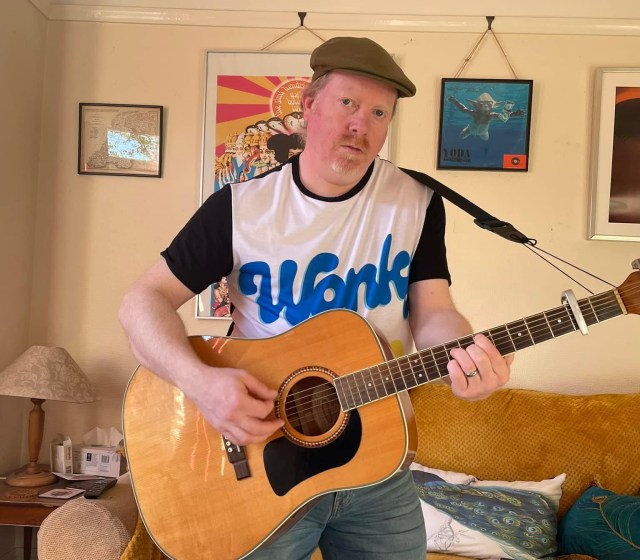
Joe Peacock is a British singer-songwriter and musician based in Birmingham, England. Describing himself as “a genre-hopping storyteller, whose music has been compared to Bowie, Blur and Costello”, he cheekily adds “all money from the digital sales of my music go into paying producers/mixing & mastering engineers.” As I do for all music artists or bands I’m writing about for the first time, I read all I could find about him on his own social media pages, as well as other websites and blogs, and listened to a fair amount of his substantial music catalog. In the process, I learned that he grew up in rural Herefordshire, went to university in Stoke, and spent seven years living in St. Petersburg, Russia before settling in Birmingham. Not only is he a hard-working and talented songwriter and musician who’s not afraid to continually experiment and push himself beyond his comfort zone, but also a thoughtful family man who cares deeply about the environment, social justice and inequality, things he spoke passionately about in a January 2022 interview with COOLTOP20 music blog.
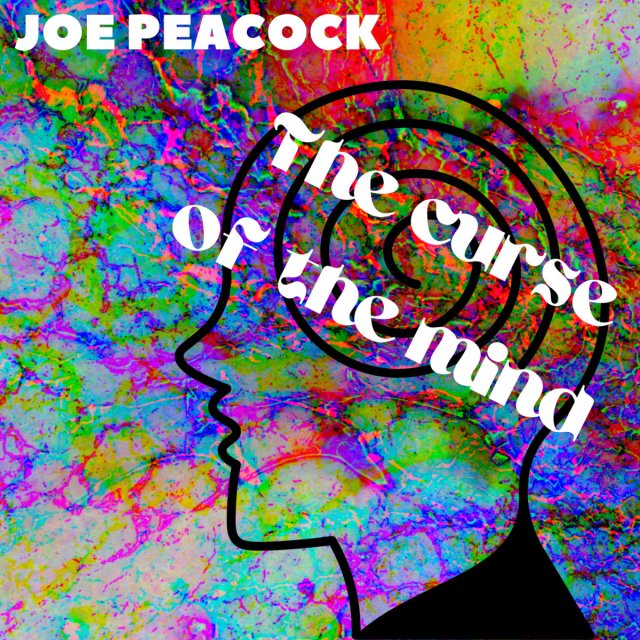
According to his bio, Mr. Peacock rediscovered his creative spark during the Covid lockdowns, and began writing and recording songs at home, handling all aspects of performance and recording. From what I can tell, the prolific artist has released a tremendous amount of music in less than three years, including three albums – I’m Only Here, in April 2021, Before the robots told us where to go, in December 2021, and Mirror Neuron Generator, in July 2022 – as well as two EPs and numerous singles. In addition, he’s also one half of art-folk duo The Missed Trees, his side project with singer/fiddle player Louisa Davies-Foley, who released their three-track EP Animals in April. Now he’s back with a new EP The curse of the mind, featuring four marvelous tracks written, performed and recorded by him, and beautifully mixed and mastered by Adam Whittaker.
The first track, “Thought Camera“, is a magnificent and complex tour de force that, to my ears, sounds like David Bowie singing a Radiohead song that was arranged by Pink Floyd. Incorporating elements of alternative, progressive and dream rock with a stirring orchestral arrangement, Peacock creates a gorgeous cinematic fantasia. His dramatic instrumentation, particularly the haunting piano notes, soaring strings, gnarly guitars and tumultuous percussion, are truly spectacular.
The searing lyrics explore aspects of privacy and mind-control, which he elaborated on in a Tumblr post: “it’s about privacy and the desires by the powerful to monetise our thoughts. Nikola Tesla had an idea for a thought camera, which would project our thoughts onto a wall. Now social media is big business – monetising our anger from us posting our thoughts online. I wonder why Elon Musk is so keen to throw money at Twitter – he named his car company after Tesla, so does he want to use that to help control our thoughts?” He sings “Could we light the world up with the electricity generated by your hatred? /These electrical impulses should be put to use! How will we know if this is all an illusion? You can think deeply and be quite insane. Are there signs we should look out for? Mr. Orwell might be quite amazed by the surveillance, but we still don’t have a mind-reading machine. So I can make sense of your world, I need the thought camera that Nikola dreamed of.“
On “Poltergeist“, which Peacock states was inspired by The Haunting of Alma Fielding, a book by Kate Summerscale that explores a case where a woman reported being haunted by a poltergeist, as well as what he calls “a few bits of personal experience on exploring the supernatural at an impressionable age and (probably unrelated) psychological problems”, he touches on mental health issues: “Scaring everyone like a poltergeist. Have you opened the door into another mind? Can you tell me what’s wrong?” As the title suggests, the song has a haunting quality, yet Peacock employs some melodic touches like a breezy melody, soothing orchestral strings, warbly guitar notes and falsetto vocals to lighten the mood a bit.
He addresses brainwashing and thought-control by authoritarian regimes on “Cult of fake heroes“, using the Soviet Union as an example. He further explains on his Tumblr post: “I use the story of Pavlik Morozov, who, according to the propaganda of the time, informed on his father for anti-communist activities and was a model soviet citizen brutally murdered by others in his family for what he’d done. His story was then told by Stalin’s regime (despite the dictator being scathing of him when he initially heard the story) to inspire others to inform on family, friends and neighbours during the red terror and he inspired patriotism in pioneers and schoolchildren.” He expresses this story thusly: “Every school kid learned his name. The storyline was powerful. At the time they needed heroes. From a village in Siberia got his dad into trouble. Murdered and made an icon.”
I love the track’s intense jangly guitars and emphatic drumbeats, punctuated by stabbing rhythmic flourishes, which Peacock created using an odd 5/4 time signature, which he said gives it a slightly strange, unbalanced feel.
“The Outsider“, which Peacock says is about the outside artist Henry Darger, is for me the most unusual track on the EP, both from a musical and lyrical standpoint. He elaborates about the artist on Tumblr: “He suffered traumatic events in his childhood, which affected his ability to interact with people. He had very few friends and mainly kept himself to himself, working as a janitor and then locking himself away in his room. It was not until he became very ill and was moved into a hospice that his artworks and graphic novels were discovered. He’s acknowledged as the archetypal outsider artist.” He tells Darger’s story with his colorful descriptive lyrics: “15,000 pages of fantasy, in the realms of the unreal. 9-foot-long drawings on both sides, his panoramic sagas. Emotionally arrested, he didn’t know what to do with freedom. He wrote about the weather, when not in fantastic battles in his mind.”
To create the unsettling but darkly beautiful soundscape, he used fragments of guitar parts he chopped up and then put back together. He layers them over a droning melody, accompanied by harsh industrial synths, chiming guitar notes and a strong synth bass groove. That, combined with his array of echoed vocals, otherworldly chants of “ah-bah-suh-duh”, and menacing whispers, the song would be a perfect fit for the musical Sweeney Todd: The Demon Barber of Fleet Street.
Given it’s rather unusual song structures, creative arrangements and unique instrumentation, it took a couple of listens for me to fully appreciate the magnificence of this remarkable EP. With The curse of the mind, Joe Peacock has pushed himself to create an exquisite piece of musical art, and I’m so happy he reached out to me about it!
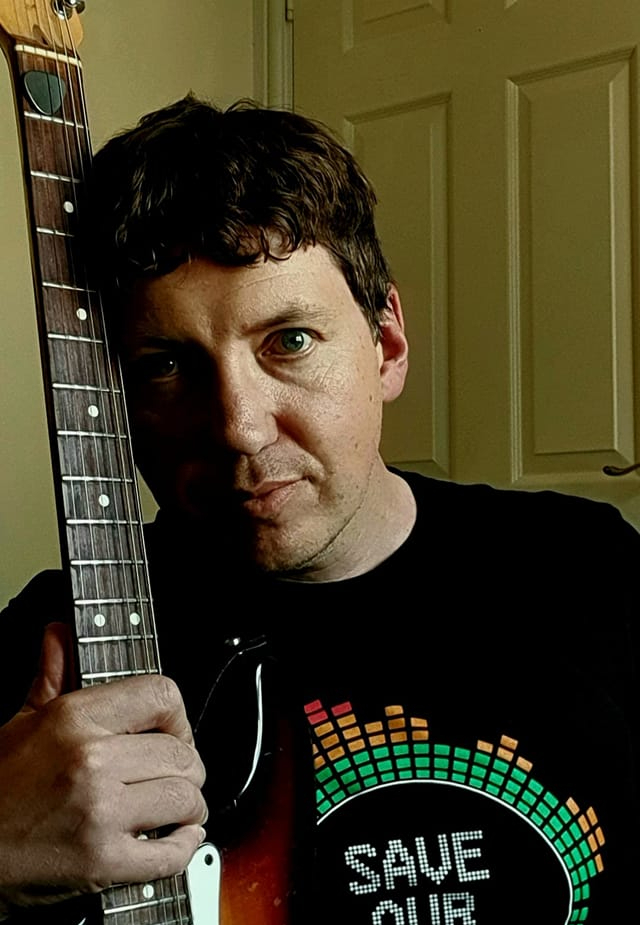
That Hidden Promise is the music project of British singer-songwriter and multi-instrumentalist Wayne Lee, who’s been recording and performing under that moniker since 2011. Now based in Bristol, England, the talented and versatile fellow writes, records and produces all his songs, plays acoustic and electric guitar, and creates all his own music, including beats and percussion. He’s produced an extensive catalog of outstanding alternative and pop-rock music over the past 12 years, often incorporating blues, post-punk, folk, electronic, psychedelic and shoegaze elements into the mix. The result is a varied and eclectic sound, delivered with exceptional guitar work and distinctive, gravelly vocals that remind me at times of a young Bob Dylan.
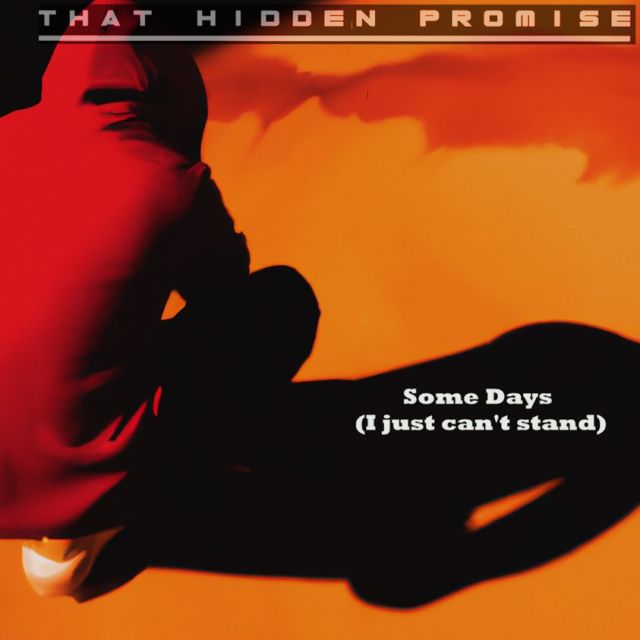
I’ve featured That Hidden Promise on this blog a number of times over the last six years, most recently in October 2020 when I reviewed his brilliant album Who Knows Now? This past April, he released Pre THP – Vaults: 2001-2008 Vol. 1, an album featuring eleven older tracks Lee wrote in the years prior to launching That Hidden Promise. Now he returns with a powerful new single “Some Days (I Just can’t stand)“, the first track from his forthcoming album A New Horizon, due for release later this year.
The song is a diatribe against the seemingly endless stream of bullshit bombarding us these days, whether it be from corrupt politicians, the media, duplicitous people, or just the everyday hassles of life, leaving us feeling beaten down and sucking the joy out of our lives. To drive home his message, Lee starts off with a terrific thumping bassline and drumbeat, then unleashes a reverb-soaked onslaught of roiling jagged riffs, pummeling bass and explosive percussion lasting five and a half minutes. He shreds his guitar with abandon, serving up some blistering solos later in the second half of the song that send shivers down my spine. Yet despite the music’s ferocity, there’s much melodic beauty to be found in his intricate guitar work. He’s a true guitar virtuoso, and I think this is one of his heaviest and best songs ever!
Lee doesn’t have a particularly powerful singing voice, but he more than rises to the occasion here, venting his spleen with an emphatic fervor as he bitterly snarls “Everybody’s just shouting but who’s to know? Bring me life, bring me death, bring me something, that makes more sense. Woah. Heal me, release me. Give me all the things I want but can’t….get. Hold me up, cos some days, I just can’t stand!” And I just love his little “woahs” sprinkled throughout the track, injecting a bit of levity into the otherwise intense proceedings.
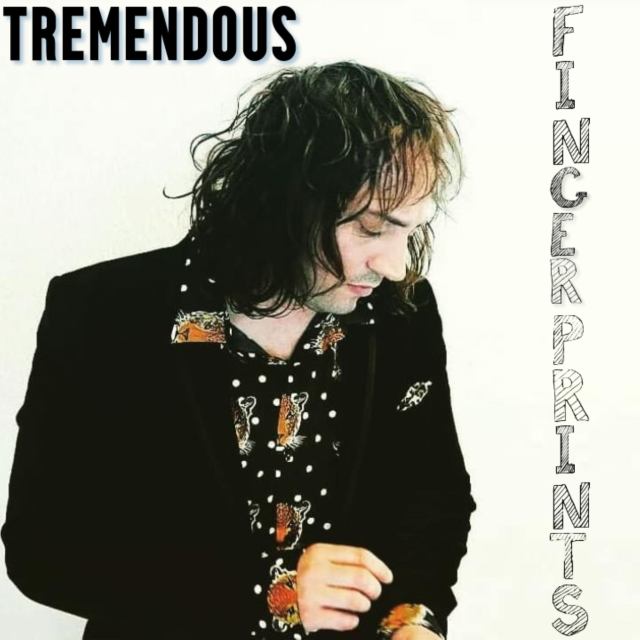
Hailing from Birmingham, England is TREMENDOUS, a musical act fronted by singer-songwriter and guitarist Mark Dudzinski, who with a revolving roster of musicians, creates an exuberant and colorful brand of glam rock. They began dropping a series of singles in 2018, which culminated in the release of their excellent debut album Relentless in May 2020. (My reviews of the album and two of the singles can be read by clicking on the ‘Related’ links at the end of this post.) Both the album and singles garnered widespread critical acclaim from numerous music writers, as well as significant airplay on several British and internet radio programs.
After a bit of a hiatus, due in part to the pandemic but also issues with unreliable musicians, TREMENDOUS is back and sounding better than ever with a great new single “Fingerprints“. The song starts off gently, with just Mark’s tender heartfelt vocals accompanied by a beautiful strummed electric guitar. At 45 seconds, the song abruptly transitions to a stirring power ballad beginning with the first chorus, fueled by a barrage of gnarly guitars, throbbing bass and thunderous percussion. As the track continues, the band lives up to its name, delivering a series of scorching guitar solos that can only be described as tremendous.
Mark has a distinctive and pleasing tenor singing voice that hovers just below a falsetto, which he uses to great effect here as he plaintively croons the lyrics that speak to the hurt and pain caused by a former lover who he’s having a very tough time getting over, with every word or memory only serving to reinforce those feelings of pain and loss: “Fingerprints all over my heart. All over the sad part baby, you break in daily. There’s only bad in goodbye.”
“Fingerprints”, which officially drops on all major music platforms on August 4th, is a superb track, and I’m happy to report that the three-year hiatus has not diminished Mark’s songwriting or musicianship in the least.
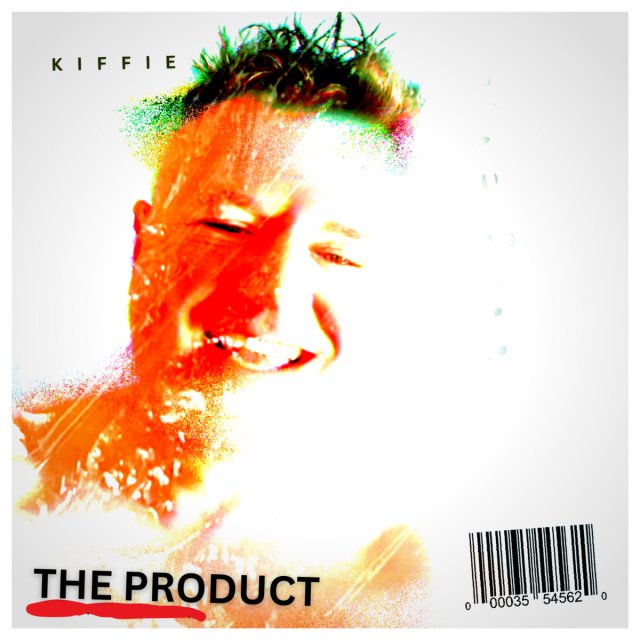
British artist Kiffie (the music moniker of Daniel Paul Kiff) is a creative and fascinating singer-songwriter, composer and producer of electronic music based in Norwich, England. Drawing from a wide range of music genres including electronica, hip-hop, rock, folk and classical, his arresting songs are inspired by current events, as well as the oft-covered topics of love, lies and betrayal. Kiffie records and produces all his own music at home using hardware instruments, synthesizers and drum machines. In a space of less than three years, the incredibly prolific artist has released an astonishing 13 albums, six EPs, two compilation albums, two CDs, and numerous singles. His songs have received critical acclaim, and garnered airplay on BBC Radio 6 and other internet radio programs.
His latest album, The Product, which he released exclusively on Bandcamp last Friday, July 21st, really struck a chord with me. In his remarks about the album, Kiffie wrote: “Evil things happen when good people say nothing. This album asks a lot of questions…. it’s up to you to work out the answers.” Accordingly, the songs touch on such timely issues as creeping authoritarianism, income inequality, misinformation and fake news, anti-science/conspiracy mongering, and political corruption – all things of great concern to me. He originally wrote the songs for his participation in the Lights & Lines Album Writing Club, and the album represents the final updated version.
The album opens with “Thank You For The Hope“, a melancholy, yet almost cinematic track, with introspective keyboards and wobbly, atmospheric synths. The spare lyrics are directed to a loved one who’s support offers a glimmer of light in the darkness: “Although the sky looks dark, the future looks grey for us, and it no longer feels like home, it doesn’t mean there is no hope! You are with me!” “New Enemy” speaks of cynical, soulless politicians who seek to divide us by scapegoating others, making them into our enemies: “History, it teaches you to be a little wary, of men, who’ll say anything to convince you to vote for them. History, it teaches you to be a little wary, of them, who blame anyone to create a new enemy.” Kiffie’s ominous soundscapes nicely convey the sinister forces at work here.
On “Leadership“, he laments about those who only want to hear what they want to believe, whether it’s truthful or not: “I don’t think I can deceive you, the truth is on my side. And I won’t lie to try to save you, what is there to hide?” The songs starts off with a simple piano riff, but eventually builds into an unsettling track, accompanied by Kiffie’s somewhat disconcerting, echoed droning vocals. And on the melancholy “Small Boats“, he sings of refugees of political unrest making the hazardous journey across the sea (the Mediterranean, I assume), in search of a better life, encountering resentment and hate by some, but empathy and assistance by others: “You’re welcome to stay. I promise you wont be a burden on the state, but don’t read the headlines today.“
“Being Patriotic” touches on how some politicians use ‘patriotism’ as a cudgel to keep us in line while claiming that government cannot afford to provide public services, yet are eager to give tax breaks to the wealthy: “They don’t know how to speak the truth, they only need to mesmerise you. They don’t have a lot of money to look after you, but they’ll find it when their friends ask them to./ They cant keep a single promise if it means their shares go down in value. They count on you being apathetic. they count on you being patriotic.” Musically, the track has a rapid, skittering trip hop beat, overlain by a droning synth bass groove.
“Independent Examination” speaks to those who subscribe to fake news and conspiracy theories, refusing to accept scientific verification: “Truth is based on fact. It doesn’t rely on lies, I can assure you of that./ Science follows an enquiry process. Your ideals might not align with that. Facts aren’t open to interpretation, they stand up to independent examination.”
The title track “The Product” is a dark and unsettling instrumental piece, featuring ominous buzzing synths accompanied by a repetitive percussive beat, creating a palpable sense of impending doom. “Reparations” addresses income inequality, and how the rich and powerful strive to maintain the status quo: “How did you come to be so powerful? How did things come to be so unequal?/ Should you pay back the profits? Should you recompense? Should you give up the titles? And should you start again, With nothing, like we did, like we did?” The hauntingly beautiful track is dominated by contemplative piano keys and a mournful keyboard organ riff, punctuated by languid drumbeats, all of which create a kind of dirge-like atmosphere. Kiffee’s droning vocals are at once both soothing and accusatory.
On “What Was Promised“, Kiffee ponders about our purpose and role in this world, and whether our actions and efforts make a difference: “Why do we try to change our lives? Why do we want the world to be better after all? Could it be we don’t see what was promised anymore? Could it be it’s time for love to rule forevermore?” The minute-long instrumental piece “Resolution” closes the album on a rather portentous note, with droning, ominous-sounding synths.
While not always an easy listen, given its bleak subject matter and instrumentation, The Product is compelling nevertheless, offering us glimmers of hope and beauty throughout. Kiffie makes a bold and impactful statement with this album, and I for one am glad to see artists having the courage to speak out about these issues facing society today.







 ECLECTIC MUSIC LOVER