With so much new music being released, it’s time for another Fresh New Tracks post. Today I’m pleased to present four outstanding new singles by, in alphabetical order, German singer-songwriter Lowry Lane, New York City-based indie rock band Onism E, Canadian singer-songwriter Martin Saint, and British alt-rock band The Zangwills.
Lowry Lane – “Wasting Time”
Lowry Lane (born Paul Friebe) is an earnest, thoughtful and talented singer-songwriter and multi-instrumentalist from Regensburg, Germany. Influenced by a vast spectrum of acts ranging from Sonic Youth, The Velvet Underground and The Cure to Nirvana, The Strokes and Kurt Vile, Lowry creates their own unique brand of alternative indie rock. We’ve followed each other on social media for more than five years, and I’ve featured them several times on this blog, most recently in October 2021 when I reviewed their excellent debut album Lonely War. An ambitious and deeply personal work, the album touched on dark subjects like relationship troubles, personal loss, addiction and mental health, while still offering glimmers of optimism.
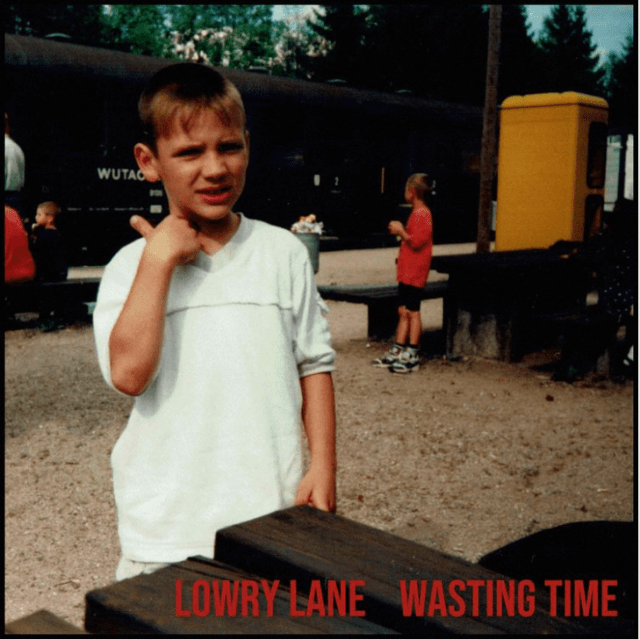
Lowry has just released a new single “Wasting Time“, a song that seems to be about the passage of time and making the most of it – or not: “Is stealing time really a crime? Running on empty, while others have plenty. Our hearts may be shattered, our souls may be scattered. We’re still alive and kicking, the clock keeps on ticking. So take me home to places that I’ve never known. Take your time. Yeah, I’ve been wasting most of mine.” The song has a bit of a Kurt Vile feel, with a meandering laid-back groove, highlighted by Lowry’s intricate textured guitar work. I love the elastic ‘rubberband’ sound of their guitar, which nicely contrast with the wonderful chiming riffs. The swirling synths and snappy drum fills are great too. Their smooth vocals are delivered in a casual monotone, yet still sound impactful. I love the endearing artwork for the single, which is from an old photo of Lowry as a child.
Onism E – “It’s Not Over”
Indie rock band Onism E is the brainchild of California-born, Texas-raised and now New York City-based singer-songwriter Eline Chavez (the term “Onism” can be defined as “The awareness of how little of the world you will actually experience.”). In addition to Eline, the band includes Chris ‘Lefty’ Vargas on guitar, Magnus Timbre on bass, and Raj Arenas on drums. Since the release of their debut single “Love You More” in August 2019, they’ve dropped several more outstanding singles, as well as an album Survivors in February 2021. This past May, they released a brilliant single “Lin Manuel“, inspired by Eline’s struggles of trying to make it as a musician during the uncertainty of the pandemic (read my review here). The song spent three months on my Weekly Top 30 over the summer, peaking at #13.
Now they’re back with “It’s Not Over“, a lovely uplifting single, accompanied by a beautiful heartwarming video, that celebrate the strength and resiliency of the human spirit, and that, together with love and support, we’ll make it through the dark times. Musically, the song features a gorgeous blend of twangy and shimmery guitars, accompanied by a subtle bassline, thumping drumbeats and lots of crashing cymbals, and finishing with a blast of distorted guitars before fading out. Eline’s beautiful, fervent vocals are filled with emotion and a vulnerable sense of urgency as she sings “You had this idea that the world isn’t all blue. It’s all kinds of colors, most I never knew. But sometimes love is blinded by the dark. And sometimes it feels like healing takes too long to start. But no one is being left behind. No baby, I’ve got you. There’s no me without you. This river will guide us through. It’s not over. No, we’ve just begun.”
Martin Saint – The Law
Martin Saint is a singer-songwriter and guitarist based in Montreal. Active in the local music scene for many years, he’s also currently the lead singer and rhythm guitarist of Montreal-based alt-rock band The Ember Glows (whose recently-released EP Where Spirits Play, I reviewed last month), and was previously front man for the band Citylake. He’s released a fair amount of music as a solo artist, including a spoken word EP Fly Tales in 2019, an album One Word Away in January 2020, and the EP Last New Year’s Eve in March 2021. On November 4th, he dropped his latest offering “The Law“, a rearranged cover of the Leonard Cohen original. While Cohen’s original has a slow, almost mournful feel, with sparse instrumentals and a gentle backing female chorus, Saint speeds up the tempo a bit, adds mysterious cinematic synths, a more pronounced beat, and lots of multi-textured guitars. Some of his guitar notes, which go from shimmery to chiming to twangy reverb, are absolutely stunning. His warm, smooth vocals are both sultry and comforting, and as I noted in my The Ember Glows review, remind me of the late Scott Walker.
People have speculated as to the song’s meaning, but Cohen’s use of the words ‘law, arm and hand’ in the lyrics – “I’m not asking for mercy. Not from the man. You just don’t ask for mercy while you’re still on the stand. There s a Law, there’s an Arm, there’s a Hand. I don’t claim to be guilty. Guilty’s too grand. There s a Law, there’s an Arm, there’s a Hand” – suggest it’s about morality and judgement, whether by oneself or by a higher power, and paying for one’s crimes, whether you feel remorse or guilt for them or not. In a 1985 interview, Cohen said “I always felt this was a ‘post-guilt’ song. There is an age of guilt, and we are in the age after. Guilt is too inflamed an emotion, even for us today…” Others have said it speaks to the chains of love, and the preordained rules which we must follow, no matter how painful or difficult they might me. Whatever it’s meaning, I think Saint does justice to Cohen’s song.
The Zangwills – “Backpatters and Shooters”
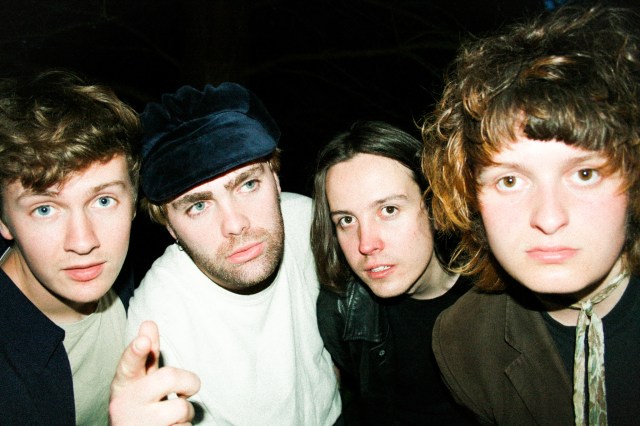
Last, but most certainly not least, are British four-piece The Zangwills. Based in Cheshire, they consist of the immensely talented Jake Vickers (vocals, guitar, keyboards), Ed Dowling (bass), Sam Davies (lead guitar) and Adam Spence (drums). Their exciting, highly melodic music is outstanding, with a maturity of songwriting and musicianship as fine as many top big-name bands around today. Though they’ve been actively making music since 2017, when they were all still in their teens, I didn’t learn about them until summer of 2021, when I was blown away by their magnificent single “Never Looked Back”. I reviewed the song, and loved it so much that it went all the way to #1 on my Weekly Top 30, and ended up at #24 on my Top 100 Songs of 2021 list.
They followed with another beautiful single “The Feeling” this past February, and on November 11th, they dropped their latest single “Backpatters and Shooters“. Like their previous singles, the song was produced and engineered by Mark Winterburn and mastered by Ben Booker. And let me say that I was every bit as stunned when I first listened to it as I’d been with “Never Looked Back”. Wow, what a gorgeous song it is, with a haunting piano-driven melody and some of the most achingly beautiful guitar work I’ve heard in a while. Those lush, twangy guitar notes, combined with that haunting piano and glorious sweeping synths, have me covered in chills with every listen. Then there are Jake’s beautiful emotive vocals, which have an incredible vulnerability as he croons the lyrics addressing the pursuit of love and how love far outweighs the importance of anything else: “You know that I’d be the first to plant roses in your face, and frame beauty with beauty. And though I’m dying of thirst, I’m still running in your race. With the men who pat my back, and the men who would shoot me. And when I look up, if I squint I see love. But it’s never that much, and no it’s never enough.” I love this song, and I love this band!
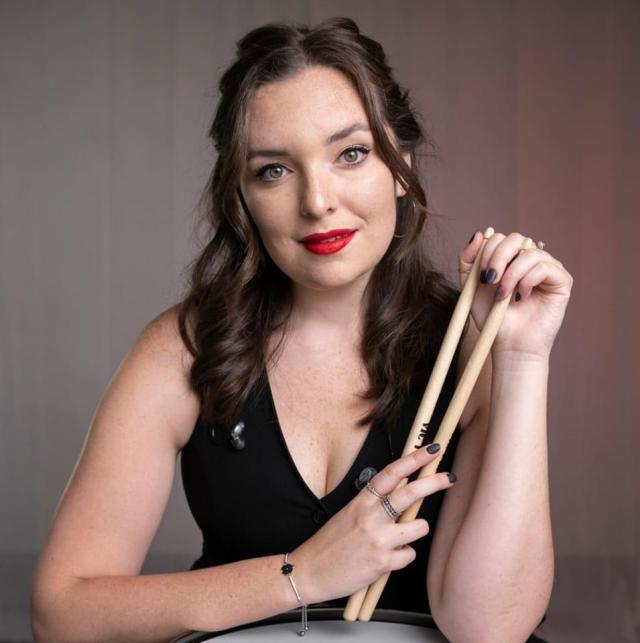
Sometimes the most compelling lyrics are born from adversity and pain, which is certainly the case for the beautiful new single “Night Bus” by Welsh singer-songwriter Caitlin Lavagna. Born and raised in the picturesque Rhondda Valley, with strong Gibraltarian roots, the multi-talented and lovely singer-songwriter, musician and actress has had a life-long love for music and the arts, with a special passion for percussion and drums. Her vibrant vocal style is heavily influenced by some of her favorite artists like Sting, Stevie Nicks, Florence Welch, P!nk and Adele.
Photo by Akta Photography
In July 2021, Caitlin released her marvelous debut single “How Not To Start a Fight”, which I reviewed. Now she’s back with her second single “Night Bus”, which is every bit as good. In addition to singing both vocals and backing harmonies, she also played drums and percussion on the track. And from what I was able to gather from her Instagram post about the song, fellow Welsh musician Mark Croft played guitar and bass, Joe Rodwell programmed synths, and Lucas August Mendes produced, engineered and mixed the track.
The song was inspired by her experience of moving to London for the purpose of furthering her music and acting career, and the disappointments and struggles she faced while there. She elaborates: “‘Night Bus” is about being a young creative in a big city with life getting in the way of that creativity. Working 40 hours a week, burning money on everything apart from your career, going around in circles and seeing the worst of a city you thought would give you your big break. As a young Welsh Actor Musician, I experienced this recently when deciding to finally leave London and move home to the Rhondda. It was a difficult time, because after all, everyone says you won’t be successful unless you’re in the City. That was not my experience at all. I was so tired. When I did have time, I would be burnt out from work or supporting other musician and actor friends in shows and gigs I couldn’t really afford to go to. I hope people can relate to this track and that it provides them some comfort and escape. It is both angry and triumphant with a catchy melody and beat!“
I like how the song starts off slowly, with Caitlin’s lovely pensive vocals accompanied by gently-strummed guitar notes and airy synths, then gradually builds into a dramatic sweeping anthem. The sparkling synths, thumping bass and lively guitars are superb, but just as with “How Not To Start a Fight”, the highlight for me are Caitlin’s commanding impassioned vocals, as well as her exuberant galloping drumbeats that give the track such incredible energy and force. It’s a wonderful track.
I’m feeling sad
Sad girl on the train
I feel so bad
It’s coming back again
Come to London City
When you cry you look so pretty
It’s a waste that no one looks at your face
When I close my eyes that’s when I feel like I’m alright
When I’m awake then I get lost in the space
I’m so tired…Fist fights
Laddered tights
Dancing under fairy lights
Thought I was doing fine
Night bus
Reckless
Everybody look at us
But not in the morning light
Woahhh
Eighteen
Daydreams
Circling my bloodstream
The City that swallowed me up
I learn my lines
I turn up to play
I show up on time
Reject me anyway
Come to London City
When you cry you look so pretty
It’s a waste that no one looks at your face
When I close my eyes that’s when I feel like I’m alright
When I’m awake then I get lost in the space I’m so tired…
Fist fights
Laddered tights
Dancing under fairy lights
Thought I was doing fine
Night bus
Reckless
Everybody look at us
But not in the morning light
Woahhh
Eighteen
Daydreams
Circling my bloodstream
The City that swallowed me up Woahhh
(So tired of the City)
Fist fights
Laddered tights
Dancing under fairy lights
Thought I was doing fine
Night bus
Reckless
Everybody look at us
But not in the morning light
(So tired of the city)
Woahhh
Eighteen
Daydreams
Circling my bloodstream
The City that swallowed me up
And I try and I fail and I try and I fail and I try
(Fist fights
Laddered tights
Dancing under fairy lights)
I get up again
And I try and I fail and I try and I fail and I try
(Night bus
Reckless
Everybody look at us)
I get up again
And I try and I fail and I try and I fail and I try
(Woahhh)
In the City that swallowed me up
Marianne Kesler is a Dayton, Ohio-based singer-songwriter with a life-long love for music. A prolific artist, she’s been writing and recording music for over 25 years, and has released five albums and more than 10 singles as a solo artist. She’s also collaborated with numerous other artists, including neo-soul/pop/folk artist Leah Thompson, with whom she co-wrote over 30 songs, as well as her friend Kate Stanton, as part of a duo named Every Lovely Thing, who I featured in an Artist Spotlight nearly four years ago. On top of all that, she’s also written a three-volume trilogy of free verse poetry/prose and photography.
Her pleasing style of folk/pop has earned her comparisons to such artists as Judy Collins, Carole King, Aimee Mann and Sheryl Crow. In fact, she cheekily describes her sound this way: “Imagine if Joni Mitchell got together with Leonard Cohen for a writing session at the coffeehouse where Neil Young and the Counting Crows were playing, folk artist Jan Krist was singing, Tori & Fiona were pouting, Over The Rhine & Aimee Mann opened, and Santana stopped by to play some smokin’ guitar…Yeah, It sounds something like that!“
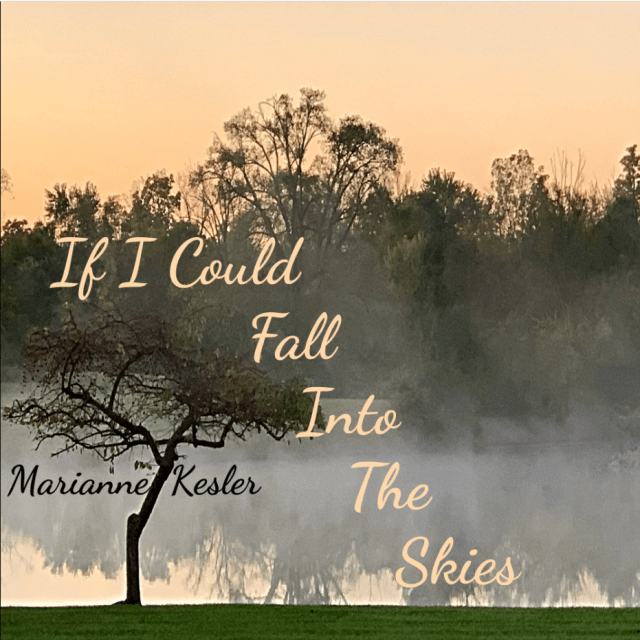
Today, Marianne has dropped a hauntingly beautiful new single “If I Could Fall Into the Skies“, which I’ve chosen as my New Song of the Week. Her first release of 2022, it’s a melodically simple but impactful song, dominated by a somber but lovely piano movement, and accompanied by airy synths that create an enchanting backdrop for her gentle, ethereal vocals. My only criticism, and it’s a minor one, is that I wish Marianne’s vocals were a bit more pronounced, as the bold piano keys sometimes overpower her delicate vocals. Otherwise, it’s a wonderful track.
The bittersweet lyrics speak of wanting to know someone – perhaps a romantic interest, but it could apply to any special friendship – better, but being unable to break through to them:
If I could fall into the skies
If I could fall into your eyes
If I could somehow find a way
I would stay … I would stay.
Staring at the water it appears as though the world is upside down
Summer skies reflected there are shimmering like clouds upon the ground
I could jump right now … If I just knew how
Gazing in your eyes I glimpse a depth I’ve never noticed there before
Subtle undertow beneath the surface has me aching to explore
I could jump right now … If I just knew how
If I could fall into the skies
If I could fall into your eyes
If I could somehow find a way
I would stay … I would stay.Standing on the edge with everything I’ve ever wanted down below
Painfully aware I’ve never told you how I feel or let you know
But I could jump right now … If I just knew how
Catch a falling star … Landing where you are
Starlit skies … In your eyes
Upside down … Spun around
’Til the world seems out of focus as I fall …
If I could fall into the skies
If I could fall into your eyes
If I could somehow find a way
I would stay … I would stay ...
I would stay … I would stay ...
I would stay … I would stay.
Marianne created a stunning video to accompany the song, about which she has this to say: “This song was inspired by seeing how the sky was reflected through a window onto my glass top desk ~ looking as though I could fall right into it! I tried to shoot video footage that captured this same ‘world upside down’ reflection (mostly on water) to add visuals to these lyrics of longing.”
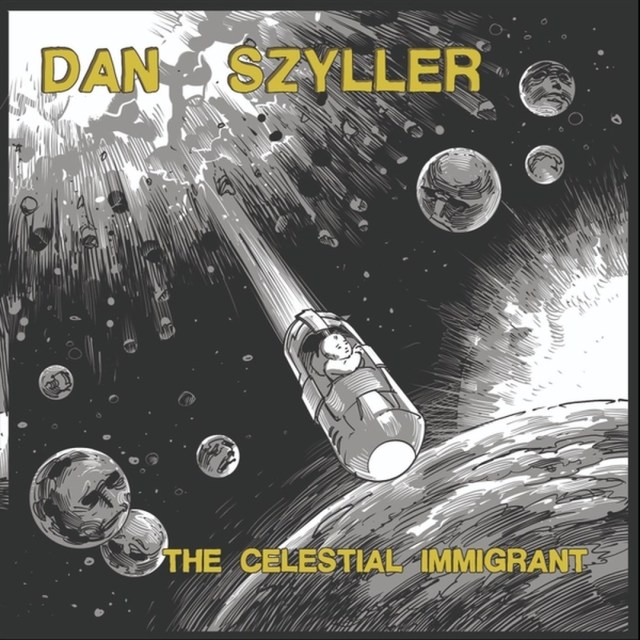
Dan Szyller is an imaginative and earnest Brazilian singer-songwriter and musician currently based in Metz, France. Born and raised in Sao Paulo, Brazil, he also spent time living in the U.S. and Israel before emigrating to France, and those life experiences led him to write and record songs for his debut album The Celestial Immigrant. Dan says “It’s the story of many travels I have made and places I have been in my life, mostly as an immigrant.” The album, written and recorded over a six month period earlier this year, was released on Apple Music and Spotify on July 20th. For recording of the album, Dan played guitar and sang vocals, Fabien Pilard played additional guitars, bass, keyboards and sang backup, and Meriem Rezik played drums.
A lifelong lover of music, Dan’s songs are influenced by some of his favorite bands like The Doors, Iron Maiden, King Crimson and Pink Floyd. These influences are readily apparent on the opening title track “The Celestial Immigrant“. With its expansive, moody soundscapes, highlighted by a vibrant blend of jangly and psychedelic guitars, it sounds like a long-lost Pink Floyd song. The lyrics, about a young boy hurtling through outer space toward the Milky Way, seem to be an allegory for Dan’s well-traveled, sometimes beautiful and perhaps at times chaotic, childhood, being repeatedly moved without his consent to several different countries, in search of a better life: “Sent away into the darkness. No warnings were given, the baby. In the wake of the night.The celestial immigrant is on his way, in the Milky Way. Will he ever make it? The stars are watching him—riding the neon wave. Will he ever make it? Will he find new home? All the forgotten faces, all part of a strange dream somehow. All the beautiful places, The journey of the sacred moon-child.”
On the grunge-flavored “My Road“, Dan seems to ponder the fleeting impermanence of life: “Life passes by so fast; old pictures and you’re gone. The Crossroads is coming. Another drifter’s story.” And on the optimistic “Summer Kiss” he sings of the joys of summer, and how people and nature come alive with activities and romance: “The birds are calling, the people will wake. The smell of grass, the children that play. The night is falling, the feast will begin. A man is hunting, a girl is the prey.” The song features some great reverby guitars and 60s-flavored organ.
Some of the progressive influences from bands like King Crimson and Pink Floyd are strongly evident on the next three tracks, with meandering melodies and fascinating instrumental flourishes. On “The Believer” Dan sings of being a world traveler, in search of a better life: “I can see a land of riches. / The howling winds of freedom, my life and blood astray. I dream of a paradise beyond the clouds. I read, the signs are so evident now. Believe, the blind shall see. I am away. I am a troubadour. I have many stories to tell.” His vocals, while not particularly powerful, are emotive and heartfelt, conveying just the right amount of passion and fervor when he sings.
On the dark and dramatic “King’s Hall“, he uses medieval fantasy metaphors to describe what could be the plot of a Game of Thrones episode: “Inside the King’s Hall, love and jealousy. Blades are held high! The old man is gazing from his throne. A lifetime before his eyes.” I’m not quite sure what the story in this song has to do with the album’s overall theme, but it’s an intriguing track nonetheless.
On the introspective and bittersweet “Sunday Again“, Dan wistfully sings of being at a low point in his life, feeling bored and alone, and missing those he’s left behind: “Looking out the window. A quiet street, no life at all. The rain that falls each day. The fog that hides the dawn. Sitting on a couch, I think of her. Could I fall in love once more? My imagination is playing games with me. Happiness seems so far, so lost.” Musically, it sounds almost like two different songs melded together, with the first, more grungy segment ending just after three minutes, and the second segment having a more relaxed vibe, with some great reverby and distorted surf guitars. On this segment, Dan seems to have come to terms with his loneliness, finding solace in his music: “It’s Sunday, I’m free again. In a corner, playing my guitar. La La, La La La.“
The final track “Interstellar (Voyager 1)” is a captivating instrumental piece, with more of those great reverb-drenched guitars we’ve heard on several of the album’s songs, accompanied by spacey atmospheric synths that beautifully convey images of traveling through outer space. The only vocals we hear are Dan’s spoken words briefly reciting a description of the Voyager 1 space probe that was “launched by NASA on September 5, 1977, as part of the Voyager program to study the outer Solar System and interstellar space beyond the Sun’s heliosphere.” The description is taken from Wikipedia, which he cites on his album liner notes, and includes a statistic of how long the space probe has been in operation “Launched 16 days after its twin Voyager 2, Voyager 1 has been operating for 44 years, 9 months and 12 days as of June 17, 2022 (now 45 years, 1 month and 6 days as of today, October 12, 2022). The track brings the album’s celestial theme full-circle, with an overriding message – to my mind at least – that we’re all travelers on this planet, which itself exists within a much greater universe that’s beyond our comprehension.
The Celestial Immigrant is an ambitious and fascinating work, and an impressive debut for Dan Szyller. His creativity, imaginative songwriting and strong musicianship really shine on this very fine album.
This is a guest post by Stephen Choi, a singer-songwriter based in Melbourne, Australia. He creates music under his artistic moniker Duel Native, and is a founding member of London-based indie band Greyhound Green. He describes his sound as a blend of alt-rock, indie-folk and dream-pop, with some environmental science thrown in. Thus far, he’s released three singles and an EP, his latest of which is the lovely single “Hiding Out”, which dropped September 2nd.
He named his music project ‘Duel Native’ for two reasons: First, to reflect his international heritage and dual citizenship, as he’s half-Trinidadian and half-Hong Kongese, born in the UK, and currently based in Australia. Second, it recognizes his multiple passions in life, the two biggest of which are music and his environmentalism. Stephen is also a trained environmental architect who’s currently working on “green music” projects, like reducing waste at festival campsites, understanding the life-cycle impacts of releasing digital music, and exploring alternatives to PVC in records, i.e. non-vinyl vinyl! With that in mind, he’s written an article about the positives and negatives of using vinyl for records, and efforts being made to remedy the problem.
Turning the Tables
People love vinyl. And it seems, every year, they love it more. The vinyl resurgence began in the mid-2000s, and has since grown at an increasing rate. Last year, one out of every three albums sold in the US were vinyl LPs.
Why is this happening? I think it’s because there are things you can do with vinyl that you don’t do with digital music, like… wrap it up and give it to someone, or put the artwork on a wall, or read the liner notes, or – and this one is for real music-lovers – actually listen to an album from start to finish!
As a musician, I love vinyl too, but the problem with vinyl is… well, the vinyl. Or more specifically… the PVC. PVC has been described as “The Poison Plastic”, and “One of the most hazardous consumer products ever created.”
Polyvinyl chloride – or PVC – is a rather controversial synthetic material, typically made from ethylene (found in crude oil) and chlorine (found in salt). To cut short a science lesson, when processed, these two ingredients are combined to form PVC. Throw in some Polyvinyl Acetate to make a polymer, plus a few other additives, and we end up with a mix that is used to make vinyl records. It’s often referred to by the industry as “the most versatile plastic”, because they’re kind of “ideal” for records – you can achieve a smooth finish, it’s robust but not too brittle, and, it’s cheap to make.
The problem is that production of PVC results in toxic, chlorine-based chemicals and dioxins that are building up in our air, water, and food chain, and they spread across the globe quickly.
Scientific studies show these chemicals are linked to severe and wide-spread health problems, including infertility, impaired childhood development, immune system damage, hormone disruption, and even cancer. Musicians aren’t usually au fait with chemistry, but most I’ve listened to know that there’s something about the toxicity of vinyl that they don’t feel so comfortable being a catalyst for.
In recent years, we’re starting to see PVC being removed from all kinds of products from all kinds of companies, from toothbrushes to yoga mats, to kids’ toys. But it’s still the primary ingredient in vinyl records!
So… what to do about our love of vinyl? Do we stop buying it? Do we stop listening to music altogether due to the environmental impacts of doing anything at all?
I would say a resounding NO!
If you love vinyl, there are a lot of things we can do to reduce the impact, such as:
Go to a local indie record store and buy used vinyl.
If we’ve got records we don’t listen to, give them away or sell them!
Finally, let’s look after our records well, because one thing worse than vinyl is… damaged vinyl, because PVC is almost never recycled.
There’s another exciting development in this space… new materials to make vinyl. Later this year, the world’s first bioplastic LP will be released. The mix was formulated by Evolution Music after five years of research, and it contains sugars and starches – not PVC – and does not create any toxic waste in their production!
Being a first-of-its-kind, it won’t be perfect; further work is being done. Like any attempt to shift an industry, change can be scary. But, I believe this is the start of a healthy conversation, and one that will change the vinyl industry for good. So we can keep listening to music and keep supporting artists, and do so whilst caring for the health of our world.
There’s a literal avalanche of new music being released again, so it’s time for another Fresh New Tracks installment. Today I’m featuring songs by three artists I’ve previously written about – (in alphabetical order) Chicago-based alternative electronic rock artist brett.grant.5, Virginia-based singer-songwriter The Frontier, and Spokane, Washington-based singer-songwriter Johnny Ritchie, as well as Youngy, a Scottish singer-songwriter from Glasgow who’s new to me. All four songs were released today, September 30th.
brett.grant.5– “Ancient Messages”
brett.grant.5 is the artistic name of singer-songwriter, composer and producer Brett Grant, who’s been active in the Chicago music scene for many years, both as a member of several bands and as a solo artist. Drawing from a wide and eclectic range of musical sources and genres, ranging from 1920’s jazz and classical to electronic and experimental progressive rock, his sound is bold, unorthodox and fascinating. We’ve been following one another on social media for over five years, and I’ve grown quite fond of him, both as an artist and a human. Since 2019, I’ve written about his solo music as well as that of his band A Million Rich Daughters.
With his new single “Ancient Messages“, he continues to push himself artistically by exploring new sounds and techniques, keeping his music innovative and fresh in the process. Brett told me he actually wrote this song a few years ago while still in college, but lost it when his laptop was stolen. He recently stumbled across an old demo he’d recorded, and decided to rework the track. The song has a dark undercurrent, gradually building from a somewhat unsettling and tentative vibe, highlighted by a droning, pulsating synth bass groove, into a magnificent dramatic soundscape of eerie synths and jagged grungy guitars. The lyrics are rather abstract, but my take is that they’re about a growing emotional chasm between two people in a relationship, and being unable to either reach them or quit them: “And if I reach for your embrace, your questions could I even face? I guess I know I’ll never win. My motivation drips with sin. Decaying from within. Why can’t I exorcise you from the claim?”
Another artist I’m very fond of is The Frontier, the music project of singer-songwriter Jake Mimikos. Based in northern Virginia, the talented, gracious and funny guy has released an impressive amount of music since 2015, and we’ve followed each other on social media for nearly that long. Drawing upon elements of pop, folk, rock and electronica, his music is incredibly pleasing and flawlessly crafted. As with many singer-songwriters, Jake’s songs are often inspired by personal experiences, and touch on such topics as love, relationships and loss. He lyrics are honest and straightforward, as if he were having a conversation with a friend, and delivered with comforting vocals. I’ve loved all of his songs, and have featured many of them on this blog over the years. Three of them – “Dark Places”, “Can We Go Back”, and most recently “Closer” – have reached #1 on my Weekly Top 30 charts.
He never disappoints with each release, and hits a home run with his new single “Rather Be“. It’s a melancholy but lovely song, with a languid guitar-driven melody, nicely enhanced with lush keyboards and percussive synths. Jake’s guitar work is really beautiful, as are his heartfelt layered vocals. The bittersweet lyrics speak of a relationship that’s broken beyond repair due to one partner’s inability to be faithful and honest “All that you said, was it easy to find the right combination of words in your mind? Well I’d rather be lonely than lied to.”
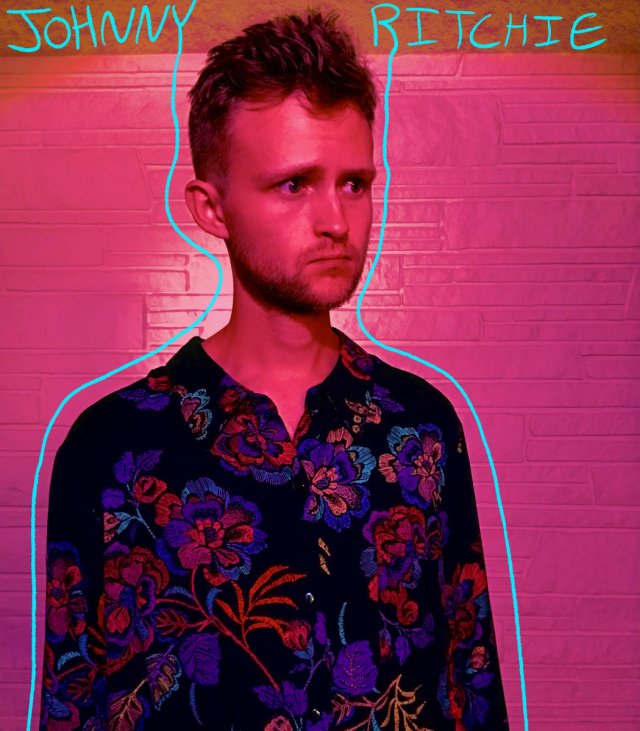
Johnny Ritchie is an engaging and thoughtful young singer-songwriter and multi-instrumentalist who I’ve previously featured twice on this blog, when I reviewed his singles “Social Robots” and “Too Much Trouble”. Originally from Indiana, Johnny recently relocated from Great Falls, Montana to Spokane, Washington. With a lifelong love for music, he began learning to play piano and drums as a child, then went on to study Contemporary, Urban, and Popular Music at Columbia College Chicago (where he also met Brett Grant), and in 2020 earned a B.A. degree in Music at Western Michigan University. He now has his own business teaching others to play piano, keyboards and drums, as well as providing lessons in music theory, songwriting and improvisation. He also writes and records music in which he fuses alternative and experimental rock with neo-psychedelia and contemporary jazz to create incredibly fascinating and sophisticated soundscapes.
His latest single “Know Better” certainly fits that description, with a progressive jazzy vibe that’s both pleasing and compelling, in a vein similar to some of Steely Dan’s music. The track, which was produced by brett.grant.5, features a meandering free-form melody and a colorful mix of sparkling synths, gentle bass and guitars, and just the right amount of crisp percussion, allowing each instrument to stand out without overpowering the others. Regarding the song’s inspiration and meaning, Johnny said it not only helped him grow and learn as an artist, but also made him thankful for people who, despite no longer being in his life, were nevertheless influential in his development as a person and an artist.
All of us have people who come in and out of our lives over time, some of whom have a significant impact on shaping who we are. The lyrics in “Know Better” are directed at a woman he was once romantically involved with. Though no longer together, he still thinks of her, and wonders if she ever thinks of him: “Sometimes I wonder if you’re missing me. Or missing the person that I used to be. Well I hope you do, I hope you don’t, ooh. Cause now we’re strangers, though I’ve seen your eyes glow. And we’re strangers who have shared our bodies exposed. Yeah we’re strangers./I wish you could know me better as I am now. I wish I could know you better than memories. I wish present us could sit down and talk but I’ll just keep wishing we had known better than to fall in love.“
Youngy is an artist based in Glasgow, Scotland who recently reached out to me about his new debut single “Halo“. I don’t know very much about him, other than that he was a member and front man of Glasgow indie grunge band Audiotown, who disbanded this past March. Now he’s embarking on the next phase of his music career as a solo artist, and “Halo” is his first single. To prepare to write about him, I listened to Audiotown’s back catalogue of songs, and their songs couldn’t be any more different in style and sound than “Halo”. Whereas Audiotown’s music was grungy and edgy, in the vein of such bands as Alice in Chains, Youngy’s debut track is unabashed synthpop. That’s not a bad thing, at least for me, as I love synthpop, especially when it’s fueled by a strong driving dance beat.
And wow, “Halo” hits right from the start and doesn’t let up. I love this kind of music, so it’s right up my alley. The driving beats, exuberant melody and cinematic instrumentals are all fantastic, and I defy anyone to not get moving while hearing this song. The rather simple lyrics seem to speak to letting loose and enjoying the moment for all its worth: “Living life inside a daydream. No place I’d rather be. Nothing makes me feel so happy. There’s nothing else I need. Smoke rings growing like a halo. Twist up around my head.” Youngy sings in a somewhat gravelly monotone, which I didn’t care for at first. But the more I listened to the song, I think his low-key vocals work well with the mesmerizing music. I look forward to hearing more from him!
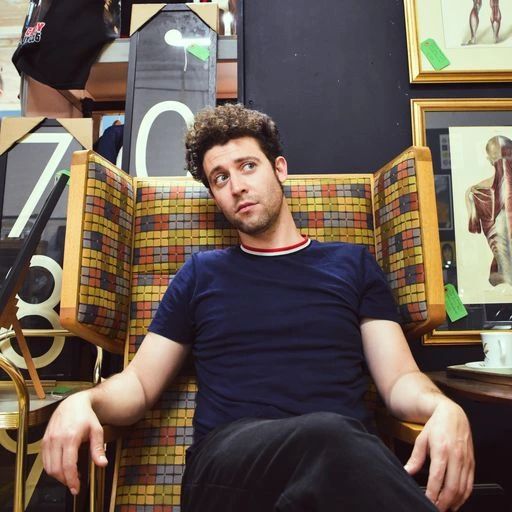
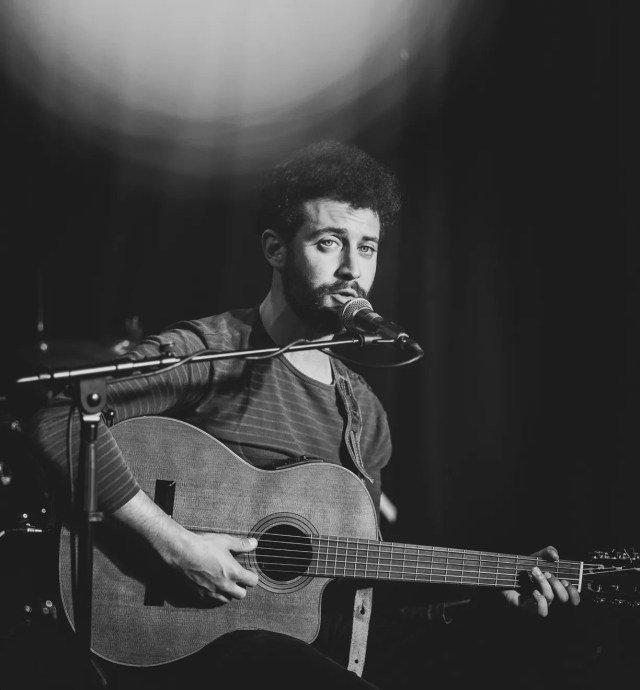
I continue to be astounded by all the creativity and talent coming out of the British music scene, and one of my favorites (who I’ve been following for several years) is Granfalloon, the music project of Manchester-based singer-songwriter, producer and guitarist Richard Lomax. Using acoustic guitars, synthesizers and drum loops, along with unusual instruments such as vintage Omnichords, the engaging, curly-haired artist creates his own unique style of music that’s a pleasing hybrid of lo-fi alternative folk, experimental and electronica. His songs are enchanting little stories touching on the many idiosyncrasies of everyday life, but with a dollop of quirky surrealism to keep them fun. And his warm, soothing vocals, delivered with a lighthearted cheekiness and charming accent, are so wonderful I would literally enjoy hearing him sing the telephone book. Simply put, his songs make me feel happy.
Since forming Granfalloon in late 2016, Lomax has released a fairly steady stream of singles and albums, beginning with his debut album Down There For Dancing in 2017. He followed two years later with his beautiful second album RGB, then dropped his marvelous third album Positive Songs in August 2021, a collaborative work featuring 11 tracks produced for The Positive Song Project, launched by Lomax and his friend Lobelia Lawson during the first lockdown of 2020. They invited songwriters to create new music by challenging themselves to focus on positive aspects and feelings, rather than negative or depressing songs about feeling isolated and bored during lockdown. The response was overwhelming, resulting in the creation of over 300 tracks by artists from around the world. (I reviewed two of the tracks from Positive Songs – “Working On Your Own” and “The Pigeon” – which you can read by clicking on the Related links at the end of this post.)
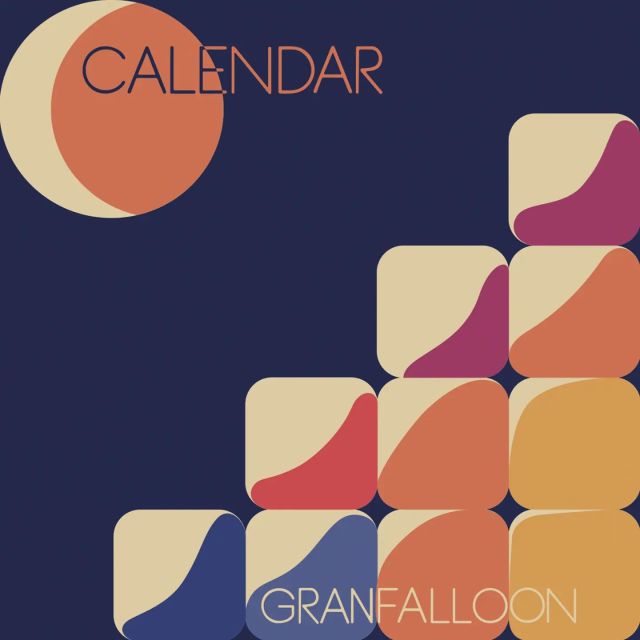
Now he’s back with his fourth album Calendar, featuring 12 delightful tracks. I’ll leave it to him to explain his inspiration behind the album’s creation: “The roots of this album can be traced back to 2014, when I was recording a debut album with my previous band. It was the 13th time I had recorded that album. Getting it right was proving difficult… A different approach was needed to keep things fresh. I would write new songs, one every week, without perfectionism weighing down the process. By the end of 2014 I had amassed 52 new songs, each one reflecting the week I’d experienced, all framed as fevered journal entries. After founding Granfalloon in 2016 and releasing two albums, I went into the studio in February of 2020 to begin the task of committing definitive versions of the songs from my ’52 Project’.
Obviously the pandemic put the project on hold and ironically, now everyone had a double album of songs squirrelled away. But I never wrote because I had too much time on my hands. Writing has always been a matter of necessity for me. I returned to the studio again in 2021 with a core band from the Positive Songs Project to whittle down the original 52 to 12 songs. These 12 songs comprise this new album ‘Calendar’.”
In addition to Lomax, who sang lead vocals and played guitars, Wurlizter, Omnichord and melodica, a host of other musicians contributed their talents on some or all of the songs, adding a colorful kaleidoscope of instrumental sounds and textures: Daz Woodcock (bass, vocals, organ, keys), Andy Lyth (drums, percussion, banjo), Cleg (guitars, mandolin, vocals), Garreth Knott (trumpet), Sarah-Jane Pearson (vocals), Caffs Burgis (vocals, synths), Dom Major (guitars), Ellie Boney (cello), George Burrage (violin), Robin Melinda Koob (violin), Molly Becker (violin), Tim Davies (drums), Jack Wakeman (bass), and Jason Alder (contrabass clarinet).
The songs encompass an array of styles, from the exotically folksy “Witch of Woodplumpton” and seductively bluesy “Eulerian Circles“, to the whimsically poppy “Bee on a String” and Americana-tinged “A Year After the Party Died“. But the one thing they all have in common is their outstanding arrangements, instrumentation and production values. The album kicks off with “Archive“, which opens with Jason Alder’s fascinating contrabass clarinet notes, nicely accompanied by twangy guitars, George Burrage’s violin, Ellie Boney’s cello, Tim Davies’ military-style drumbeats. and Sarah-Jane Pearson’s gentle vocals.
I like all the songs of Calendar, but I’ll call out some of the standouts for me, as well as some particularly lovely little moments heard on a few tracks. The aforementioned “Witch of Woodplumpton” is pleasing, but with a mysterious undercurrent, and lyrics that speak to the historic and ongoing oppression of women: “From Mary of Eden to Joan of Arc, we’ve been burning and burying you from the start. You have to dig your way out of your own grave.” Richard’s intricate guitar work is sublime, and I think I also hear Cleg’s sweet mandolin notes. And once again, we’re treated to Sarah-Jane Pearson’s smooth backing vocals, Ellie’s lovely cello, and George’s violin, with added violin by Robin Melinda Koob for good measure.
“Paint It By Numbers” is a cheeky number sung from the perspective of a professor who can only express their love through mathematical figures: “Shall I compare thee to the fundamental theorem of algrebaic K-theory? Like Pythagorus said, something’s deeply irrational about the square root of 2 where the 2 are me and U. Let me show you the numbers. Tell you in numbers. Lay down the numbers. Paint it by numbers 4 U.“
Far and away the highlight for me on the album is the thoroughly enchanting “Please Write Responsibly“, which tells the story of an innocently-written song that goes rogue: “This yarn had caused more harm than was ever my intention. I’d only scribbled words on paper, I hadn’t wanted this destruction. I mean, whoever got hurt by a story? What song brought a government to its knees? What poem dismantled a tank, or started World War 3? And As I tracked the trail of carnage caused by my fantasy, it leapt right out of my computer screen and began to attack me. My Story tore me limb from limb, all the while screaming with glee: ‘Words are more powerful than you ever could conceive So please write responsibly!’” The beguiling song features the musical handiwork of Richard and Dom Major on guitars, Molly Becker on violin, Daz Woodcock and bass, and Andy Lyth on the sweet banjo. I love this song, which is currently enjoying an extended run on my Weekly Top 30.
Another favorite is the bouncy “Bee on a String“, with its lively guitars and Garreth Knott’s warm trumpet. The lyrics describing a woman who keeps a bee on a string trapped in a tupperware box in her refrigerator are an allegory for keeping her man similarly under her control: “I know you’re fascinated by me but won’t you let me be free? Why won’t you let me bee free? O must you keep me in a deep freeze. It makes me sleep so you keep me, and she keeps bees in a deep freeze...”
“O Joyce” tells the story of a Joyce over a 60-plus period of years, beginning with how her mother bought a pet Macaw who she named Bobby Corwen when Joyce was a young child. It’s a cute little ditty, with some nice trumpets by Garreth and guitar, Wurlizter and Omnichord by Richard. I also like how he whispers in a slightly seductive voice, “Joyce, make us a cuppa tea“, after each verse.
“All My Old Lovers (live on the same street)” is a rather wistful, introspective song about past loves, loss, and the need to move on and away from judgmental neighbors and gossiping tongues: “All the meetings they’ll have about this and that, make you feel so exposed. In a small town like this all you do is exist. This is no place to heal. It’s time to move on – You can’t live here any more.” The song is lovely, with a bit of a melancholy undercurrent, highlighted by gentle chiming guitar notes, cello and violin. Richard’s smooth vocals convey a slightly sad sense of resignation.
In a similar vein, “The Day the Party Died” speaks to loss and the passage of time, with references to several mythical characters like Ahab, Peter Pan and Cupid to drive home the inevitable changes that happen with time. Not all of these changes are for the better, expressed in the lyrics “They’ve turned the club into a takeaway. They’ve turned the pub into a takeaway. They’ve turned our home into a takeaway.”
But then on the album closer “Rushmore“, Granfalloon admonishes us to look to the future with hope and optimism, and not dwell in the past: “Don’t waste your life on a memory. The wind will change, both kind and strange. It’s never as dark as you think.” The song is another favorite of mine, as I love the dramatic shimmery electric guitars and beautiful soaring vocal harmonies in the chorus. It’s a fine finish to a delightfully charming album. With Calendar, Richard and his fellow musicians have created a lovely and thoughtful work that makes for a thoroughly enjoyable listen, for which they should be very proud.
His albums are only available as a digital download on Bandcamp and in CD format, though several of his singles are also available for streaming on Spotify, Apple Music & Soundcloud.
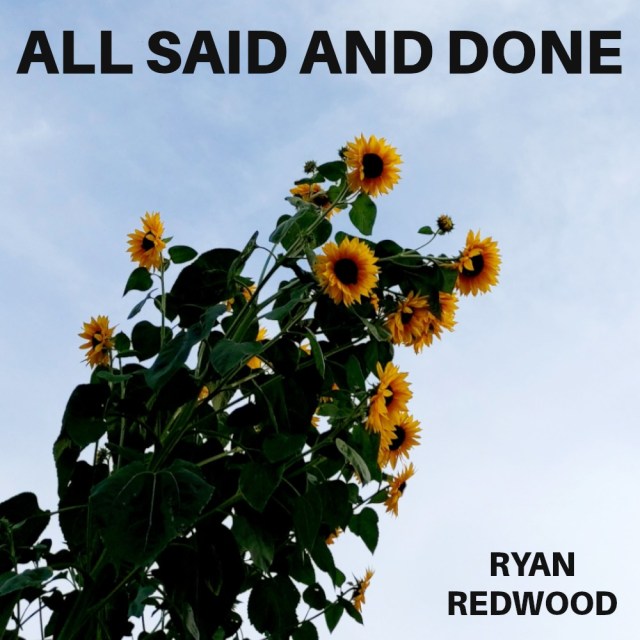
Ryan Redwood is a creative, charming and affable young British singer-songwriter based in Lowestoft. I’ve been following him since the beginning of 2018, back when he was lead vocalist for alternative indie rock band The Only Route, and reviewed several of their singles. After the band called it quits at the end of 2019, Ryan soldiered on as a solo artist, writing and recording songs influenced by some of his favorite acts like Oasis, The Charlatans, Catfish and The Bottlemen and Blossoms. He released his first single “Perhaps” in December 2020, and since then has released four more singles, the latest of which is “All Said and Done”, which I’m pleased to select as my New Song of the Week.
Ryan says “All Said and Done” is “effectively two songs sort of bashed together“. He’d finished the initial framework for the song, but hadn’t yet developed a bridge. He’d also composed another musical piece, but didn’t feel he could create an entire song around it, so he came up with the idea of inserting it into the middle of “All Said and Done” to change things up a bit. Under the guidance of producer/engineer/multi-instrumentalist Sam Wilson, who then recruited his musician friend Dylan Levett to play sax, together they’ve created a wonderful, more melodically complex and interesting track.
The song starts off as a rousing rocker, with a lively blend of shimmery and jangly guitars bathed in reverb and accompanied by assertive thumping drumbeats. At the two minute-and-fifteen second mark, the music abruptly downshifts to a mellow instrumental interlude lasting about a minute, highlighted by Dylan’s terrific saxophone solo, giving the song a jazzy, sophisticated vibe. At the end of the interlude, everything ramps back up to the urgent rock groove heard at the beginning, ending with a strong finish. Ryan has a relatively low-key vocal style that’s not particularly powerful, but he does a fine job here, his earnest vocals rising in intensity along with the music.
The lyrics speak to the inevitable predictability and drudgery of day to day life that eventually afflicts us all as we age, but also taking solace in the fact we have a loved one beside us to help and support us along the way: “I can’t help but shake the feeling I’ll wake up one day, in the same job, in the same house, in the same place. When it’s all said and done, it’ll be me and you.When push comes to shove, it’s always better with you. When it’s all said and done, it’ll be us forever.”
I think “All Said and Done” is Ryan’s best work yet, and nicely showcases his growth and maturity as a musician, songwriter and vocalist.
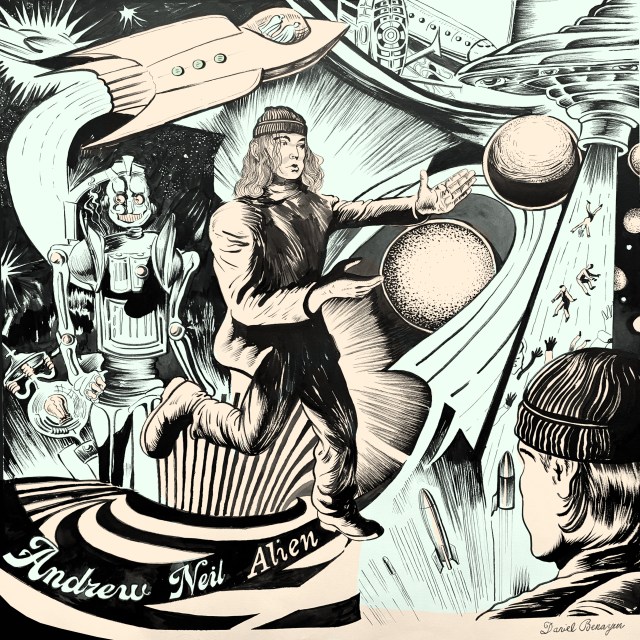
The cool album artwork was designed by Daniel Benayun
Though many singer-songwriters tend to draw inspiration from their own life experiences, few I’ve come across are quite as thoughtful, candid and personal as Virginia-based singer-songwriter Andrew Neil (born Andrew Neil Maternick). Considered an outsider music artist in a similar vein to the late Daniel Johnston, Andrew writes from his heart and soul. The 34-year old has faced a number of daunting life challenges that would have crushed many of us, but his faith, strength and resilience, as well as the incredible love and support of his family and friends, have enabled him to flourish as an artist.
I’ve featured Andrew twice on this blog, first in November 2019, when I reviewed his third album Freak, then again in June 2021 when I reviewed his fourth album Sunny Side (you can read those reviews by clicking on the Related links at the end of this post). I wrote extensively about his life experiences in those reviews, but will touch on a few significant points to provide a bit of context.
After growing up as a fairly typical kid and high school athlete, he suffered a life-altering event in 2009 when he sustained a serious head injury in a car accident. The injury resulted in two significant changes for Andrew: 1) he began having a series of psychotic episodes, and 2) he started writing songs, despite the fact he’d never had any prior music training of any kind. During a psychotic episode in 2013, he stabbed his younger brother in the arm, which landed him in jail for seven months until his family and attorney convinced the prosecutor that he needed help, rather than being incarcerated.
He was subsequently released and sent to a state mental hospital, where he received excellent treatment and learned to manage his illness. During the three years there, he wrote and recorded around 70 songs on a battery powered Tascam recorder, which his father Ray later uploaded to a computer. Andrew was conditionally released from the hospital in May 2017, and moved into a group home in Charlottesville. (He now lives independently.)
Upon his release, he produced his first album Code Purple – Andrew Neil, featuring 11 melancholy yet optimistic songs he hoped might help others struggling with similar mental health issues. He followed up a year later with his second album Merry Go Round, then quickly went back to work in early 2019 to record his third album Freak. Sadly, as he was wrapping up the recording he was hit with yet another health crises when he was diagnosed with Non-Hodgkin’s Lymphoma. He underwent a grueling round of chemotherapy while the album was being mixed and mastered, and he and his family started a Kickstarter campaign to help raise funds for album production and marketing, garnering even greater support than expected. The album, an ambitious work featuring 14 tracks addressing topics of love, faith, mental illness and self-identity, was released that October to widespread acclaim.
His cancer thankfully in remission, Andrew began recording songs during the Covid lockdown, this time with only his own quirky, endearing vocals and vintage nylon string Ovation acoustic guitar, accompanied on some tracks by subtle keyboard overdubs. The songs came together as his fourth album Sunny Side, featuring 10 optimistic tracks with a mellower, more lo-fi folk sound. Ever the creative, hard-working artist, Andrew’s now returns with his fifth album Alien, which dropped September 15th. Similar to Sunny Side, the songs on Alien were performed with just Andrew’s vocals and acoustic guitar, giving them a lo-fi folk sensibility. But the subject matter is a bit darker, touching on such issues as mental health, loneliness, suicide, alcoholism and relationships.
In order to get a bit more insight into his inspiration for writing Alien, I asked Andrew a few questions, to which he graciously responded.
EML: Thank you, Andrew, for agreeing to speak with me about your latest album Alien. You’ve experienced more than your fair share of trauma and difficult challenges in your life, and also suffer from depression, which you’ve spoken about pretty openly on social media. Like many songwriters, you draw from your own experiences when writing your lyrics, and as was the case with your previous albums, the songs on Alien address such topics as mental health and emotional well-being, addiction, suicide, loneliness and faith. Does writing and recording songs help bring you a little peace of mind?
Andrew: Yes, writing songs does bring me a little peace of mind. Some songs help me process my grief and sorrow. When I write it is like the hand of my heart reaching out to the world for help, love and understanding; almost always the world reaches back and that feels good. I also hope that my music will help others to deal with their own issues, depression, loneliness. If you think about it, it’s almost like a continuous circle of emotions. You write to help yourself, which directly or indirectly helps others and they in turn help you back with positive feedback. They view my song within their own life experiences and relate in their own way. We all learn from this exchange of melody and lyrics and emotions. Knowing this gives me peace of mind.
EML: The title track “Alien” reminds me a bit of “Freak” in that it seems to speak to embracing one’s identity, warts and all, rather than being ashamed of it. Is that the point you’re trying to make on this song?
Andrew: The point of “Alien” is the truth behind my belief in a universal family. We may come from other places, have different religions, have different governments, eat different food, but at the end of the day I firmly believe we all have hearts with similar desires. These hearts feel and desire love and it’s this desire that illustrates we truly are a family. So, when we see someone different, someone who fits the mold of an alien we should reach out to them with love and understanding.
EML: Two songs in particular, “I Need a Reason” and “Don’t Tell the Doctor”, are pretty heavy and dark, dealing with thoughts of suicide. Your dad told me that “Don’t Tell the Doctor” was inspired by a comment a woman whispered to you during a group therapy session – “Don’t tell the Doctor, but I’m in love with suicide”. What prompted you to write about that experience?
Andrew: I have spent a fair share of time in mental hospitals and have met many interesting characters. During one of my first stays at Virginia Baptist Memorial Hospital I met a young lady named Holly. It is true that we had a group session in which we were supposed to talk about what we love. Her answer was “Suicide”. I, like many in the group, could relate and it’s a moment of genuineness I will never forget. I wonder where Holly is these days, and she will always have a place in my heart.
EML: Not being a songwriter nor musician, I’m always impressed by people who can write compelling lyrics and compose interesting or catchy melodies. Do you generally write your lyrics first, then set them to music, or do you first come up with a melody or guitar riff, then write words to fit?
Andrew: When writing songs, I usually start with strumming some chords on the guitar. Then I hum a tune that fits and then I transform that tune into words. Sometimes I feel as though my fingers are guided on the fretboard. I don’t really know any standard chords or notes or even musical keys, but my fingers seem to find the right sound and melody. I really think melody is important. Melody is something I think is missing from many songs written today. There are lots of “beats” but not really much melody in many contemporary songs.
Once I have a melody, I try to determine what the melody is telling me or saying. The words/lyrics are by far the hardest part of the process. The lyrics are really my notes in a weird way. I write the lyrics so that the melody wraps around them. Sometimes I’ve come up with lyrics when the guitar is not in my hands. I might have a dream or a special feeling and the lyrics just pop into my head. “Mongolia” was a good example of this. In that case the lyrics helped to dictate the melody. I tend to write 2 to 3 songs a month.
EML: From what I can tell, the only sounds we hear on these songs are your voice and acoustic guitar, is that correct?
Andrew: Yes, it was certainly stripped down. Just me and my nylon string ovation guitar. I do not recall any keyboard dubs on the Alien album tracks. We decided to keep it simple and maintain a lo-fi sound. We also wanted to help the subtleties of my guitar playing, which is different than many guitarists, stand out. Over the years, I have come up with my own style of playing and make up my own chord shapes. It’s a very percussive style. My dad says it reminds him of Richie Havens in some ways. I am not really encumbered by the rules, scales, etc. of the instrument. I really think this gives me a certain amount of freedom in writing songs that many songwriters don’t have. They tend to stick to the conformity of the instrument.
EML: Who are some living artists or musicians whose work inspires you, or that you would like to collaborate with if possible?
Andrew: My inspirations are many. The living artists who come to mind are Bob Dylan, Willie Nelson, Carlos Santana, Richard Thompson, Sanjay Mishra, and Lady Gaga to name a few. I’ve also been listening a lot to Country artists John Anderson and Raelyn Nelson. It would be cool to collab with them, but I realize that is pie in the sky kind of stuff. More realistically, as far as collaboration, I would love to work with and perhaps co-write songs with some rising artists in different genres. One genre in particular I am developing an interest in is Alt-Country, which is a mix of Country, Garage Rock, Blues and Alternative. One up and coming Alt-country artist I would love to co-write a song with is Raelyn Nelson. As you know I was scheduled to open for her Band on 19 August of this year in Hershey PA, but it was cancelled due to an illness in her band. It will be rescheduled hopefully in November. After her manager notified me that they wanted me to open for them, I started listening to the Raelyn Nelson Band music. That listening experience inspired me to write a few Alt-County songs for the show. I would love to release an alt-country album after Alien. This would definitely be a different direction, but I think it’s also a way to reach more people with my music.
Prior to the inspiration by the Raelyn Nelson Band, I had begun to dabble in writing more country-like songs. For instance, I think the songs “Gambin Man” and “Kinda Turns me On”, on my Sunny Side Album have an alt-country feel to them. I think I am going to travel in that direction for the time being. Also, I am on this list on Ranker (Best Outsider Music Artist list). Many of the artists that are listed have passed on now. I really wish I could have worked with Daniel Johnston. But there are a few younger living artists on the list like John Revitte who is an exceptional lyricist, that I would love to collab with. R. Stevie Moore, and Iggy Pop are also on the list, but are really up there in age and I’m not sure if they are still active in music.
EML: Anything else you’d like to say about Alien or yourself that I’ve neglected to ask?
Andrew: No storm lasts forever. Life is good and people are beautiful. I appreciate you taking the time to review my music and get my story out there into this world. Music makes a difference in this jello world. Thanks again and peace out.
Now, let’s get to the album, which opens with the title track “Alien“. As Andrew stated, the song speaks of reaching out to people who are different from us with love and understanding, as we’d hope they’d do for us: “Far from ordinary, makes life kind of scary. I’d have it no other way. We come in peace. Don’t shoot please. It’s alright alien.” On the melancholy “I Need a Reason“, he questions the value of his very existence: “Like a bug stuck in a spider’s web, the more I struggle, the more I’m dead. I am blue, and blue I remain. Will I get conquered by my pain?I need a reason baby, a reason to be here. I need a reason baby, to make it through the year. I need a reason baby, before I disappear.“
While “Mongolia” comes across as a pleasing folk tune, its lyrics are packed with meaning and emotional conflict. It starts off with Andrew listing a few of his psychoses: “I know angels on a first-name basis. And I can’t stare at the walls too long, or else I’ll see faces.” He then describes his wanting to escape to an exotic place in hopes of overcoming some of his shortcomings: “I want to go to Mongolia, Perhaps there I’ll get holier. Holier than the Judas that I am. Holier like Mary’s little lamb.” Continuing on, he acknowledges that he’s too old to be treated like a child, yet still needs emotional support and comfort from his mother: “Mommy please don’t spank me. I’m way, way too old. And I need a blankie, cause this world is so cold. So I wanna go to Mongolia.” Here’s a wonderful live performance of Andrew singing the song in 2021.
As described earlier, “Don’t Tell the Doctor” was inspired from an experience Andrew had in one of his group therapy sessions back in 2009, in which the discussion leader asked them to talk about what they loved. A woman in the group leaned over to Andrew and whispered “Don’t tell the doctor, but I’m in love with suicide“. The song has a languid, rather somber melody, with some really fine guitar noodling. Andrew’s melancholy vocals sing of feelings of hopelessness: “Sometimes I feel like there’s only one way out. That’s when you’ll find me hanging from a cloud. And sometimes I feel like there’s nowhere left to run. I keep my promises, I won’t use a gun.” That line, combined with the almost grungy feel of Andrew’s acoustic guitar, makes me think of Nirvana.
“Fingers Crossed” seems to touch on people’s superficiality and phoniness, and making empty promises but not following through: “Ring, ring, ring, I ignore the call. So leave a message and I’ll call you back. Fingers crossed, yeah we all know that.” On “My Best Friend is Not Whiskey“, Andrew speaks to how alcohol does not solve our problems or make us feel better: “Where’s my fairy tale ending? What the fuck happened to me? Every day I keep pretending that I’m not in misery. Every day I keep pretending my best friend is not whiskey. It’s a thirsty world.” And on the allegorical “The Beat Goes On“, he describes a series of dreams in which he meets an Aztec priestess, has Jesus in a high school class, and is a Samurai warrior addicted to death and glory who ultimately commits hara kiri.
“Remember to Forget” is a sweet song about being supportive and loving to a friend in need: “When you’re cold, I’ll be your sweater. When you’re sad, I’ll make you smile. We’re all in this together, mile after mile. When you need a hug, I’ll be your teddy. Yes, I’ll be your happy thought. Remember, remember to forget, the vampire that bit. Remember, remember to forget all of the bullshit.” And of course, it’s always wonderful getting that support in return: “When it rains, you’re my umbrella. When I cry, you dry my tears. We’re all in this together. You put meaning in my years.“
The album closes with the charming “Black Sheep“, which speaks to how just because someone may be quirky and different, they still have qualities worth loving: “One day, we all kick the can. So girl, won’t you hold my hand. I promise that I am no creep. Yeah, I’m just a black sheep.” Andrew’s percussive style of guitar playing is strongly evident in his heavily-strummed acoustic notes. It’s an upbeat ending that keeps the album from being too overwhelmingly bleak. All in all, Alien is a marvelous little album, and Andrew’s stripped-down acoustic treatment really allows his endearing, heartfelt vocals and relatable poetic lyrics to shine.
Art Block is an alternative folk singer-songwriter and multi-instrumentalist based in East London, England. A prolific artist, he’s been making beautiful music for a number of years, and has released an impressive number of singles, EPs and remixes since early 2015, beginning with his debut L.A.-inspired single “Los Feliz”. I’ve featured him three times on this blog, the first time in November 2019 when I reviewed his enchanting song “The Basement”. The song has become his most successful to date, amassing over 290,000 streams on Spotify, which is notable in light of the fact he not represented by any label or management. A year later, I reviewed his lovely single “Borderline”, then this past March, I included his single “Pilgrim” in a post about my having been a moderator for Tom Robinson’s Fresh On The Net blog.
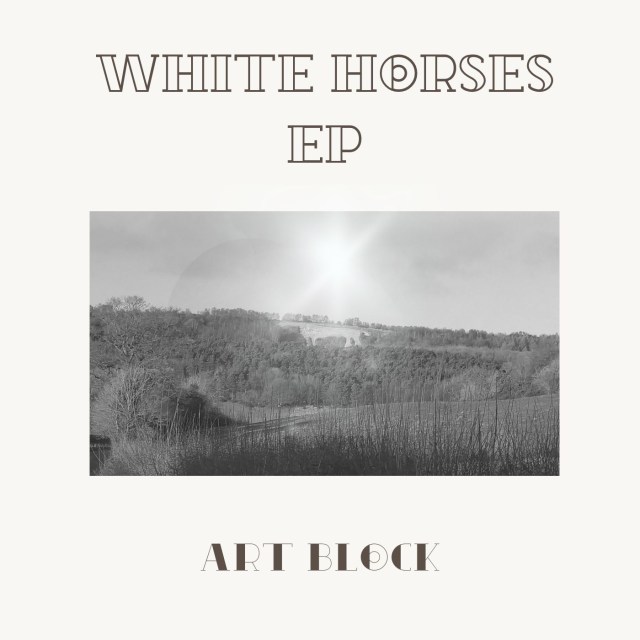
Now he returns with a new EP titled White Horses EP, featuring three tracks he says were “inspired by the beauty of nature but also touching upon war, themes of death, loss and the bitter sweet nature of human existence.” The EP was recorded at Super Symmetry Studios in Hackney, utilizing a mix of both analog and digital sounds that give the songs incredible texture and depth. William Robertson aka Wheeliemix produced, mixed and engineered the EP using Moog synthesizers, as well as played acoustic guitar, Raphael Bouchara played drums, and Sandra Brus played violin. Mastering was done by John Webber (David Bowie, Duran Duran). Art Block created the beautiful cover artwork for his EP using a photo he’d taken of the English countryside.
In addition to beautiful melodies and captivating arrangements, a defining aspect of Art Block’s songs are his tender, heartfelt vocals. With his incredibly emotive singing voice, he has the ability to convey a deep sense of sorrow and despair, which is on full display on all three songs. The first track “Saviour” speaks of a relationship that saved him at first, but ultimately ended because of the hurt and pain they inflicted on each other: “It was a travesty. Unjust unliberty. Hurting those around you. Building walls between ourselves. We knocked our brains out cold. Drank from the cup untold. Floored by passion and the drink. Makes us do what we don’t think. You were a precious stone. Now I am all alone. I’m fading, yeah I’m fading. We dug our grave too soon.” It’s a melancholy but lovely song, highlighted by Art Block’s stunning piano and Sandra Brus’ mournful violin.
“White Horses” is another hauntingly beautiful piano-driven song with a somewhat similar vibe as “Saviour”, except Art Block’s vocals are more emotionally-wrought in the choruses. He says the song “was inspired by a beautiful place in England, but also by the attack in Mariupol Ukraine which was in the news, where I imagined I was going through the devastation there. Perhaps ‘White Horses’ is a metaphor for something else, greater, perhaps mystical or mysterious? The place I visited in England certainly had a mystical feel even though the White Horse itself etched into a hill was not ancient.” His lyrics are poetic and deep, touching on the terrifying randomness of death and suffering: “We bear our own cross. And the people may wonder why God’s left them alone? The wind is burning. There’s so much smoke cos’ you’re coughing up blood now. The poem has ceased. And the soil is all over me, I’m six feet deep.“
The bittersweet “Low Light” is both captivating and melancholy. Art Block’s vocals are downright heartbreaking here, perfectly conveying the intense pain and heartache of a relationship or friendship that’s falling apart, but not wanting to come to terms with it just yet: “A friendship ooh has crumbled. Ooh we’ve stumbled, as we break into dust. A fear I don’t wanna see. A light I don’t want feel. A low light I don’t wanna see. A change I don’t wanna make tonight.” Art Block’s piano is sublime, accompanied by airy synths, William’s shimmery guitar notes, Sandra’s subtle electric violin, and Raphael’s gentle drums and cymbals that evoke waves crashing upon rocks at the sea’s edge.
While it’s subject matter is decidedly bleak, White Horse EP is nevertheless a gorgeous little work. With its flawless arrangements, production and performances by everyone involved, the three songs are among Art Block’s finest yet. The EP was released exclusively on Bandcamp today, September 2nd, and will be released on most streaming platforms on the 23rd.





 ECLECTIC MUSIC LOVER