JOE PEACOCK – EP Review: “Beast Mode”

Joe Peacock is a British singer-songwriter and musician who was born and raised in rural Herefordshire and now based in Birmingham, England. Describing himself as “a genre-hopping storyteller, whose music has been compared to Bowie, Blur and Costello”, he cheekily adds “all money from the digital sales of my music go into paying producers/mixing & mastering engineers.” Not only is he a hard-working and talented songwriter and musician who’s not afraid to continually experiment and push himself beyond his comfort zone, but also a thoughtful family man who cares deeply about the environment, social justice and inequality.

Mr. Peacock rediscovered his creative spark during the Covid lockdowns, and began writing and recording songs at home, handling all aspects of performance and recording. The prolific artist has released a tremendous amount of music in over the past three years, including three albums – I’m Only Here, in April 2021, Before the robots told us where to go, in December 2021, and Mirror Neuron Generator, in July 2022 – as well as numerous singles and four EPs, one of which, The curse of the mind, I reviewed last August. In addition, he’s also one half of art-folk duo The Missed Trees, his side project with singer/fiddle player Louisa Davies-Foley, who released their three-track EP Animals last April. Now he returns with his fifth EP Beast Mode, featuring six fascinating animal-themed tracks based on real events. He hosted a listening party for the EP yesterday, in which he provided lots of insight behind each track.

The EP kicks off with “Pass the puffer“, a song inspired by an episode of the BBC program Spy in the Wild, which detailed how dolphins swimming round a puffer fish can become blissed out from small doses of the lethal toxins emitted by the fish. He was prompted to do a bit of research on dolphins and created a song not intended to be political or animal rights based, but simply a cheeky observation of the dolphins’ strange behaviour. “One bite can paralyze and kill a human, but dolphins get a buzz off the neurotoxin. Are they purposely experimenting, then going off to look at their reflection? Pass the puffer before the seas get rougher.” I love the edgy cinematic synths, grungy psychedelic guitars and pulsating synth-bass, and the chirpy dolphin sounds early in the song are wonderful. Peacock’s vocals remind me of Damon Albarn, frontman of British bands Blur and Gorillaz.

Fed to the tigers” tells the story of Marius, a two-year-old giraffe born and raised at Copenhagen Zoo. Though healthy, he was genetically unsuitable for future captive breeding because his genes were over-represented in the captive population, so the zoo authorities decided to euthanize him on February 9, 2014, after which his body was dissected and necropsied in a public educational class, then fed to the zoo’s lions and tigers. Peacock notes “They didn’t want to sell him to some private collector or a circus so decided the most humane thing was to kill him and feed him to the tigers. I don’t make a judgement, just think it’s a dilemma that’s worth thinking about.”

His lyrics are both bitterly direct and heartbreaking: “Perfectly healthy (and utterly adorable). The zoo said it had no choice, but to kill poor Marius. Shot through the head, he died instantly. He will take up space for more genetically valuable giraffes. He is of no use to us and he costs us money. We can’t exceed our carrying capacity. Overpopulation is a problem you know.” The dark, spacey synths and heavy guitar tremolo lends a strong, disconcerting undercurrent to the track.

On “Cyborg (Broken Animal)“, Peacock explores the idea of using technology to control or even alter humans and animals. He elaborates further: “There’s a philosophical element to it in terms of how we should feel about experimenting with impulses going straight to the brain to control movements and things, plus a bit of a fear of what if it goes wrong and robot-insect armies start attacking us!” He sings “I’m picking up a signal, picking up a signal. My brain is now wired differently. I didn’t pop a pill or flick a switch, but I am tuning in now. See the cyborgs all around, the offspring of necessity. Our motherboards are so corrupted, we are all breaking down.” Musically, the song has a quirky but pleasant sci-fi vibe, with lots of glitchy synths and a gnarly guitar solo layered over a bouncy, repetitive dance beat.

One of the six tracks is a remix of “Cyborg” by the EP’s producer Chris Marney, titled the “Cyborg (Cyber Madness Remix)”. Marney removes Peacock’s guitar solo and fortifies those glitchy sci-fi synths with added sheen, also expanding the track by one minute and ten seconds. Peacock’s vocals have also been put through a vocoder, enhancing the overall spacey vibe. I can’t pick one over the other, as I really like both versions.

Sweet Kiss of Death” was inspired by a true story about a young Irish horse trainer and jockey named Frank Hayes who died of a heart attack while riding a horse named Sweet Kiss in a race at Belmont Park in New York in 1923. Hayes died in the latter part of the race, but his body remained in the saddle when Sweet Kiss crossed the finish line. Peacock wrote the poignant lyrics from the point of view of the horse, who was nicknamed Sweet Kiss of Death for the rest of her life. (Wikipedia) “I don’t know why your heart failed, but you’d been under pressure to lose weight. You strove and sweated, denied yourself water. Was it all too much? You never complained. Laid to rest in your racing silks, you were ready to ride again. When the reaper paid a visit, I felt your dead weight before we crossed the line. They called me the sweet kiss of death, but I carried you home.” The song opens with a what sounds like a melancholy electronic oboe, which is soon joined by what Peacock calls a weird talking bass sound he used to keep the song from sounding too overly reggae. Despite the rather dour subject matter, the song still has a lighthearted feel.

The final track “Radioactive Hybrid Terror Pigs (24 remix)” is a reimagining of a song he originally released as a stand-alone single in October 2022. Peacock says “It was the first song Chris mixed for me, so I thought I’d bring it back. It was fast and punky all the way through before, so I slowed down the verses and chopped up the guitar line, adding a few synth elements, too.” The song was inspired by a story he read about how wild boars moved into contaminated land in Hiroshima, Japan after World War II. They didn’t appear to have suffered any ill effects from the radiation, and eventually inter-bred with domesticated pigs that had been left behind in the desperate aftermath of the disaster.

Peacock added “The title’s a little bit sensationalist, but when I read it, I just thought that has to be a song! Thematically it fits perfectly with this EP.” The remix verses are sung in a skittering, almost dubstep groove with gnarly guitars, accompanied by sounds of blaring sirens as he sings “A nuclear disaster took all the humans away. Down from the mountains the boars made a foray into the dangers of the big exclusion zone. Almost indestructible, this place became their home.” The music then ramps up to a furious galloping pace in the choruses as he plaintively asks “What can we do now they’ve moved in? Radioactive hybrid terror pigs. Fierce and wild, but domesticated, too.” It’s an entertaining take on a somewhat creepy subject.

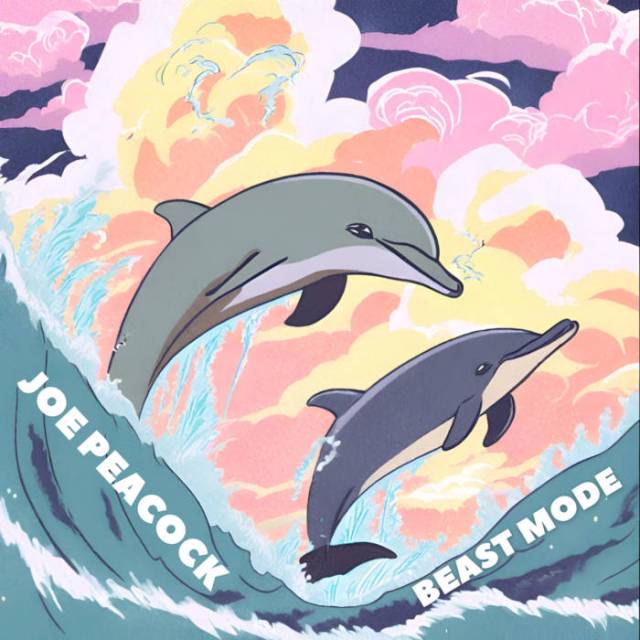
Though Beast Mode might not be everyone’s cup of tea, I think it’s pretty brilliant, and another fine example of Joe Peacock’s impressive imagination, songwriting and musicianship. He also created the lovely cover art for the EP using AI.

Follow Joe:  Facebook / X (Twitter) / Instagram

Find his music on Bandcamp / Spotify / Apple Music / YouTube / Soundcloud
ART BLOCK – EP Review: “Dandelion”

Art Block is a brilliant and innovative singer-songwriter and multi-instrumentalist based in East London, England, who’s been making beautiful alternative folk music for nearly ten years. A prolific artist, he’s released an impressive catalog of music since the beginning of 2015, including numerous singles, EPs, remixes and three albums, two of which, Stones and Fire and borderline, were released in 2023 alone! I’ve featured him several times on this blog, most recently last June when I reviewed his wonderful EP Tiger. (You can read a few more of those reviews by clicking on the ‘Related’ links at the end of this post.) One of his songs, the haunting and gorgeous “White Horses”, went all the way to #1 on my Weekly Top 30 in December 2022, and ranks #26 on my 100 Best Songs of 2022 list.

On March 1st, Art Block released a new EP Dandelion, featuring three exquisite tracks inspired by the Northumberland coast and St Abbs, a small fishing village on the southeastern Scottish coast. The EP was produced, mixed and recorded by his longtime collaborator William Robertson at Super Symmetry Studios, and mastered by Tony Cousins at Metropolis Studios. Art Block played all instruments except for drums, which were played by Raphael Bouchara, another frequent collaborator of his. The lovely string arrangements were done by Joseph Robertson, with additional synths by Charlie Shan.

In addition to his sublime melodies, poetic lyrics and gorgeous arrangements, a defining aspect of Art Block’s music are his distinctive, deeply affecting vocals that are often so emotionally wrought, they rip at our heartstrings. The three songs on Dandelion are no exception. First up is “Journey”, a beautiful, cinematic song that I’m guessing uses the voyages of seamen, sailing from the Northumberland coast to distant lands, as a metaphor for how we take our idiosyncrasies and shortcomings with us wherever we go: “A journey from a distant light. Don’t you understand? The actions you made in the past echo now. A cold cold heart, frosty like the art burns in the arctic.” Musically, the song starts off with a delicately strummed guitar accompanied by gentle synths and faint sounds of the sea, then gradually builds into a dramatic soundscape highlighted by lush orchestral strings and AB’s lovely soaring harmonies.

The title track “Dandelion” serves up more beautifully strummed guitars, sumptuous strings and bold percussion, as AB plaintively sings “I feel I am like a Dandelion, burning in the sun, spreading pollen. Riding the wind through time, I spin, alone in my sphere. I’m separating. I’m caught in the rain, only He knows my pain. Teardrops of joy and you’re constantly away. Growing older fast. This dance is not our last. Float like a seed in the sky. Dandelion in an empty sky.”

On the moving third track “Holy Island”, AB sings his praises for Lindisfarne, a tidal island off the Northumberland coast also known as Holy Island, and how its beauty inspires and invigorates him, helping him to cope with life’s challenges, also giving a nod to Palestine: “Holy Island your clear blue sea, cleansing every part of me. Whispering winds, monks they pray to stop eternal damnation. Don’t believe they see your beauty, even appearing through the rain. I may feel but I am blind, wilted and worn out. Oh I cry and feel your soul. Aching in my dune-filled soul. Poetry so divine our future’s may so intertwine. Palestine I see you there, sweeter than you might care. Holy Island by the sea, you fill me with your beauty.” Again, a beautiful, strummed guitar and lilting strings are the dominant musical features, along with warbling synths and Raphael Bouchara’s wonderful cymbals creating the majestic sounds of waves gently crashing on the shore.

Once again, Art Block has delivered a sonically beautiful, flawlessly crafted, and intensely thought-provoking work. Though it contains only three tracks, Dandelion is deeply impactful nonetheless, leaving a lasting impression for all who take the time to give it a careful listen. I remain a dedicated follower and fan.

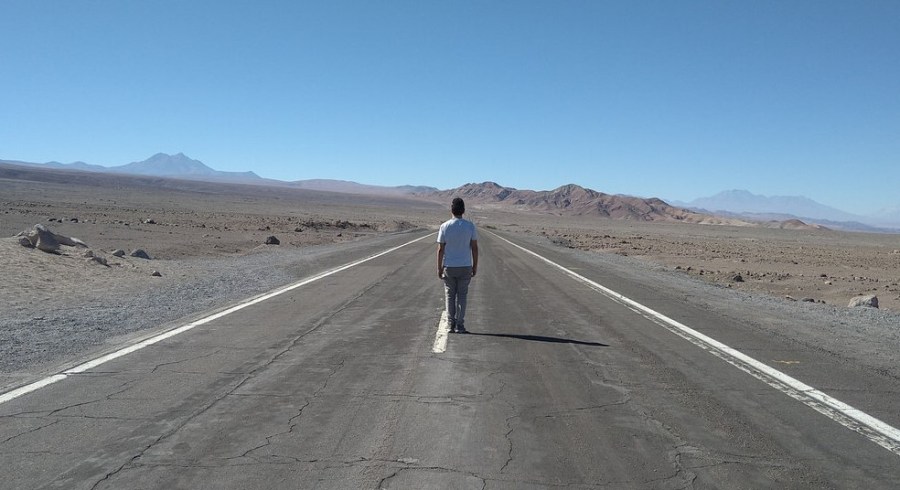
The header photo is of Art Block standing on a lonely road in the Atacama Desert of northern Chile.

Connect with Art Block: Facebook / X (Twitter) / Instagram
Find his music on Bandcamp / Spotify / Apple Music / Soundcloud / YouTube

OLI BARTON – Single Review: “It’s Over Now”

Photo by Alice Denny

Based in South London, England, Oli Barton is a wildly creative and exceptionally talented singer-songwriter, not to mention a dangerously charismatic charmer. Though I’m sorry to say I’ve never had the pleasure of seeing him perform live (him being in the UK and me 5,500 miles away in Southern California), he’s gained a reputation for his wild, uninhibited live shows that Reyt Good Magazine describes as “straight from indie heaven”. Barton has supported such acts as Kid Kapichi, Baxter Dury and Starsailor.

I’ve been following him for seven years, both as front man of his backing band the Movement, and now as a solo artist, and have featured him many times on this blog. (You can read some of those reviews by clicking on the ‘Related’ links at the end of this post.) His eccentric yet sophisticated style of alternative rock is a colorful mix of post-punk and psychedelia, fortified with touches of funk, grunge and pop, and I can state without exaggeration that I’ve loved every single one of his songs. Five of them have appeared on my Weekly Top 30 charts – the provocative 2017 single “Kinky”, which went all the way to #1, as well as “44”, “Martyr”, “Just Like Always” and, most recently, “Paid Off”, all of which reached the top 5.

It’s always a good day when Barton releases new music, and I’m thrilled to present his latest single “It’s Over Now“, released today via Coke & Dagger Records. For the song’s recording, Barton was joined by Jamal Aggoun on guitar, Marco Fuzz Paone on bass and Josh Needham on drums. Produced by Alex O’ Donovan (Sea Girls) and mixed by Cenzo Townshend (Inhaler), the song is an exuberant piece of indie-pop ear candy, with a lively blend of crunchy and shimmery guitars, fortified by deep thumping bass and propulsive drumbeats layered over a rousing, infectious groove. Or, to put it more simply, this song fucking rocks!

I always love Barton’s distinctive, resonant singing voice and rich accent, which he uses to full effect here as he plaintively implores to a romantic partner, asking if what they once shared is truly over, or if there’s still any chance of reconciliation: “Would you say that it’s over now, or should I wait? Would you say that it’s over now, is it too late? Should I stay?

About the song, Barton says, “it’s in the whole world of teenage heartbreak and social media; the way that jealousy gets inside us and really makes us into a whole different person and perhaps distorts the decisions we make“, which he nicely articulates in the lyrics “So now I’m spending night times tracking down precise times. I’m addicted to my screen. I see you follow him and you follow her, and it all just seems so clean. But then you drop a like, and well it don’t seem right, and I’ll just sit there green.” 

Single artwork by Sam Crowston.

Follow Oli Barton:  FacebookX (Twitter)InstagramTikTok

Find his music on SpotifyApple MusicAmazon MusicYouTube

DANTÉ RAVENHEARST – Single Review: “Asphalt”

Today I’m pleased to present Canadian singer-songwriter Danté Ravenhearst and her enchanting debut single “Asphalt“. Born and raised in Kawartha Lakes, Ontario and currently based in Toronto, Danté is also a scientist and conservationist. Her pleasing style of alternative folk draws from classic country, traditional folk, Americana, soft rock and jazz elements, which she delivers with thoughtful, compelling lyrics and warm, comforting vocals.

Photo by Sam Keravica

Recorded in November 2023, “Asphalt” was a labour of love and friendship between Ravenhearst and a group of close Toronto and Hamilton-based session musicians who helped bring her beautiful song to life. For the recording of the song, Ravenhurst played acoustic guitar and sang vocals, Ben McWebb played organ, Kurt Van Bendegem played lead guitar, bass and sang backing vocals, and Jonathan Horvath played drums. The track was produced by Matt Fasullo, who also sang backing vocals, and engineered by David Worthen.

The song is a stunning feast for the senses, with vibrant twangy guitar notes, throbbing bass and shimmery percussion layered over a somber organ riff, all coming together in glorious alchemy to create a mesmerizing backdrop for Ravenhearst’s captivating vocals. As the song progresses, the music builds to a soaring cinematic crescendo while her vocals overflow with passion, leaving me covered in goosebumps.

Ravenhearst shared her thoughts about her inspiration for writing the song: “I am really entranced by the correlation of loss between our emotional and physical spaces and the mourning that comes with that. ‘Asphalt’ is about searching for a connection that existed in a world that physically no longer exists. Its question “Where are you? Where are you?” hauntingly chanted to the listener, is only asked and never answered.

You can also find “Asphalt” on Apple Music

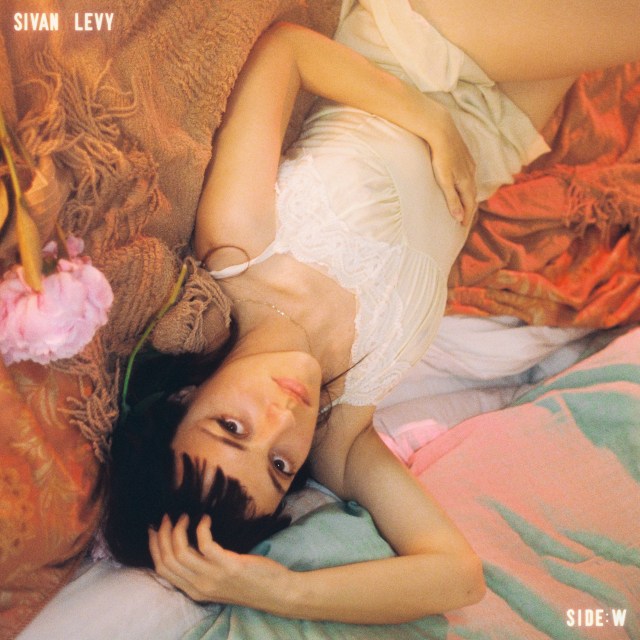
SIVAN LEVY – EP Review: “SIDE:W”

Sivan Levy is a multi-faceted Queer Israeli artist currently based in Tel Aviv, who’s not only a talented singer-songwriter and musician, but also a successful actress and filmmaker. She’s starred in several highly acclaimed films and television series, earning multiple awards for her exceptional work. Her latest film, My Daughter My Love, written and directed by Eitan Green, premiered last summer at the prestigious Jerusalem Film Festival. Also last summer, in June, Levy released a beautiful EP side:s, her first music release since her self-titled three-song EP in 2015. The EP features six captivating tracks written and sung by her, one of which, “Jacaranda”, received a special live performance that was captured in a lovely video. Levy released that video last August, which I featured on this blog (you can read my article about it here). 

Now Levy returns with a new EP side:w (‘w’ is for winter, whereas the ‘s’ in her previous EP side:s represented summer). Continuing the journey that began with side:s, side:w takes us on an emotional rollercoaster through the human psyche with introspective songs exploring relationships, love and loss, and emotional well-being, served up with dreamy and often dramatic instrumentals and Levy’s arresting ethereal vocals. Like side:s, side:w was recorded and co-produced by Levy and Yoav Rosenthal, who also played guitar and bass, handled programming, and sang backing vocals. Levy played piano and keyboards, Giori Politi played drums, percussion, and programmed beats, Maya Belsitzman played cello, and Yael Enosh played additional synths. Mixing was done by Nicolas Vernhes.

The EP opens with “Forgot“, a haunting song mourning the dissipation of a once-torrid love affair. Starting off with rather unsettling scraping sounds accompanied by a gentle pounding drumbeat, the music gradually expands into a mysterious, darkly beautiful soundscape, whereupon Levy softly laments of her memories of what it felt like to be in love, feelings she no longer shares: “I got used to breathing on my neck. To the warmness that caresses all night long. To mornings full of joy or fight or silence. My love had faded through the years, and I forgot, oh, everything. I’m just a rock inside a sea, that’s waiting floods to be.” The piano and cello are particularly affecting and along with the airy synths, create a gorgeous backdrop for Levy’s enchanting breathy vocals. By song’s end, Levy asks whether life is worth living without love: “And there’s no one in my mind. And I’m in no one’s mind. Am I alive when I’m not loved? When I can’t love no more.

On the equally haunting and cinematic “Kick Off“, Levy sings of not allowing fears and self-doubt to keep you from living your life to the fullest: “I will not run I won’t get scared. I will stay here and I’ll breathe / Kick-off that voice in your head that just judge and judge and judge and judge and suddenly, you’ll see how the green is greener. How the blue is bluer.” The lovely video utilizes AI-generated imagery to great effect.

The captivating “My Far Away Femme” seems to touch on a brief romantic encounter, and how the other person’s idealized image and adoration of you is not based in reality – a sentiment I’m afraid I’ve fallen victim of more than once: “My far-away femme. You see someone in your sleep, and you’re in love with her completely. She’s everything you’re dreaming. Your fantasy (does not exist). And this someone has my face and has my body. This someone has my eyes and has my voice. But this someone who’s so present in your head is so far away from being me. Your fantasy (does not exist).”

When the Winter’s Coming In” is an achingly beautiful and emotionally powerful song, and I may be way off, but my take on its meaning is that it seems to be about coming to terms with one’s eventual passing from this earth, with winter a metaphor for the end of life. There is no despair, only acceptance and a hope of being reborn in another life. Levy’s vocals are appropriately chilling as she plaintively sings “When the winter’s coming in, no, I will not miss so much. Everything that’ll never be, I will be enough. Wild sky. Smoking velvet, brutal pink. Pure me up and bare me down. Rebirth me, please.

On the melancholy “Steams“, she remorsefully sings of a love affair that now appears to be broken beyond repair, and my guess is that steam signifies feelings of suffocation in a toxic relationship: “The air got thicker in the room. The steams have nowhere to get clear / I didn’t think we’d dare to leave the maze we’ve built in so much pain. You were so brave to rip the chords and breathe me into air. Our eyes are empty. There’s nothing left of us. Everything is, Everything is over now.” And on the captivating closing track “Silent Legs“, Levy sings of searching for solace in the tempest of life, and our tendency to want to wall ourselves off in order to avoid being hurt and subjected to pain: “Now you’ve found how to build that wall around you, you can’t get hurt, you can’t get hurt anymore. Silent legs, silent eyes. Your heart made too much noise.” The mournful cello and atmospheric synths create a doleful but lovely backdrop for Levy’s haunting, emotive vocals.

side:w is an exquisite, brilliantly executed work of almost surreal beauty. With a run time of over 29 minutes, and such deeply impactful and breathtaking soundscapes and vocals that take us on an enthralling sonic journey, it feels more like a full album than an EP. Sivan Levy and company should be very proud of what they’ve created here.

Connect with Sivan:  Facebook / Twitter/X / Instagram / TikTok

Find her music on Bandcamp / Spotify / Apple Music / YouTube / Soundcloud / deezer
SAM RAPPAPORT – Single Review: “Bicycle Away”

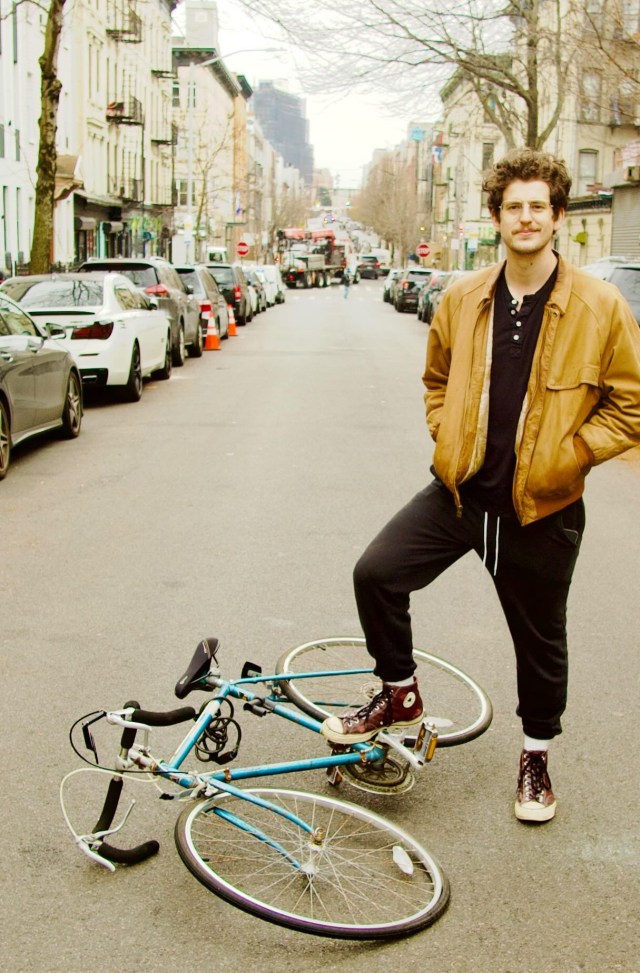
Sam Rappaport is a talented and affable singer-songwriter and musician who was born and raised in Los Angeles and now living in the Bushwick neighborhood of Brooklyn, New York. (He’s also a terrific writer, and you can read some of his work here.) He began his music career in earnest as keyboardist and backing vocalist of indie pop-rock band Gooseberry, but in early 2021, he released his first single “Till the Morning Comes” as a solo artist. He amicably left Gooseberry in May 2022 to focus on his solo career, and has since released a number of outstanding singles, as well as his debut EP Get Me Away From Myself, in November 2022. 

Sam’s mellow, understated music style draws from elements of adult contemporary pop, folk, rock, soul and jazz, and features thoughtful, relatable lyrics delivered by his smooth, pleasing vocals. I’m a big fan of his, and have previously featured him twice on this blog, first in November 2021 when I reviewed his wonderful single “Journeyman’s Ballet”, then in August 2022 when I reviewed “Easy to Love”. Thus far, two of his songs – “Journeyman’s Ballet” and “Dance for Me” – have appeared on my Weekly Top 30, with the latter ranking #68 on my 100 Best Songs of 2023 list. 

Now he returns with a beautiful new single “Bicycle Away“, his first new music in over a year. The song was produced and engineered by his frequent collaborator Lorenzo Wolff, mixed by Rocky Gallo and mastered by Mike Kalajian. For the track’s recording, Sam played Wurlitzer electronic piano and sang vocals, Alwyn Robinson played drums, Spencer Zahn played bass, Mike Haldeman played guitar, Jake Sherman played keyboards and synths, and Lorenzo handled additional drum programming.

About the song, Sam says “‘Bicycle Away’ traces the volatile seesawing of a relationship struggling to arrive at equilibrium. The song’s narrator acknowledges and laments his need for emotional growth, while yearning for an escape route.” It’s a wonderful song, with hauntingly beautiful instrumentation that gradually builds as the song progresses. I love the clarity and nuance of each instrument, and how beautifully they all come together to create a harmonious and captivating soundscape. The deep but subtle bass, crisp percussion and Sam’s sublime Wurlitzer notes are marvelous, and those wailing guitar notes at the end add just the right amount of drama to the proceedings. 

But for me, the song’s highlight is Sam’s warm, comforting vocals, which though low-key still manage to express a deep well of emotion. I love his voice, and could honestly listen to him sing the telephone book!

Let me go
Stop chasing, you're way too close
I'm breaking I know there's more
Cuz I'm empty and I need to grow
I know these words sound hollow as I've said them before


Cold water hits my eyelids
I remember 17
Wide streets for my escape from being seen

I'll bicycle away
I'll race against the sun as it cascades into the sea
I'll move beyond today
Stay close and promise when I push you away
Be honest when you hear that I say
I'm broken, tell me I need to grow
I know these words are just lines that we've read before


Cold water hits my eyelids
I remember 17
Wide streets for my escape from being seen

I'll bicycle away
I'll race against the sun as it cascades into the sea
I'll bicycle away
I'll move beyond today

The arresting video was created by and stars Kathleen Dalton and Sonja Petermann, co-founders of “Molar Movement Projects”, an artist collective rooted in intimate reflection of shared experiences and deep emotional cross-examination. In the past year, Kathleen and Sonja completed residencies with Moulin/Belle in Périgord Vert, France, as well as with Swale NYC on Governors Island, New York. In the video, the two perform an interpretive dance filmed alternately in a spare room and outdoors in woods resplendent with fall foliage, artfully expressing the conflict between emotional connection and estrangement described in the lyrics.

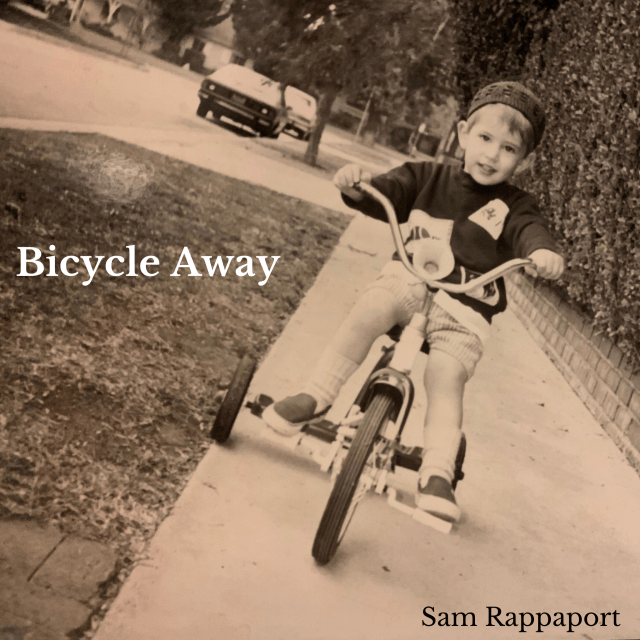
The sweet cover photo for the single is a photo of Sam riding his bike as a toddler.

Connect with Sam on Instagram and learn more about him on his Website

Sam’s music may be found on: Spotify / Apple Music / YouTube / Amazon

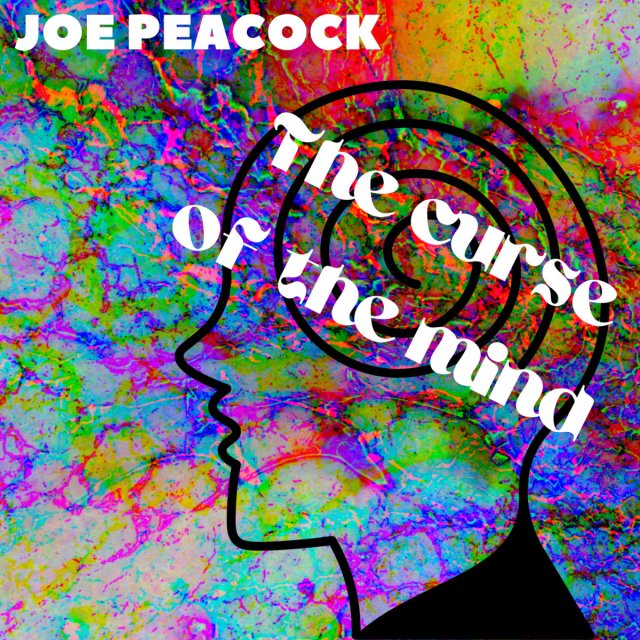
JOE PEACOCK – EP Review: “The curse of the mind”

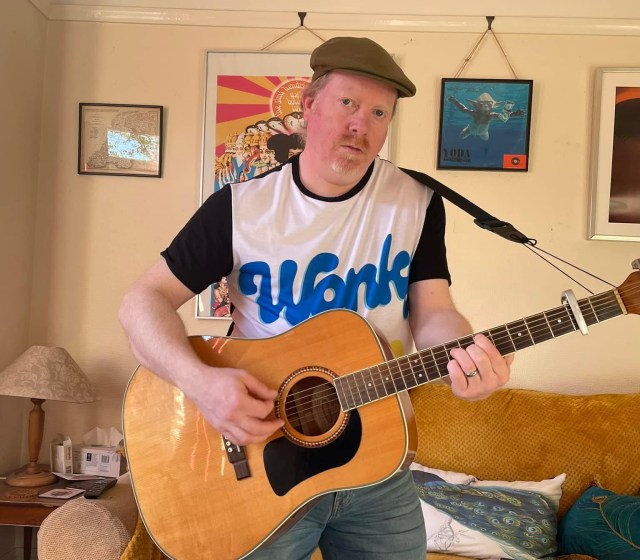
Joe Peacock is a British singer-songwriter and musician based in Birmingham, England. Describing himself as “a genre-hopping storyteller, whose music has been compared to Bowie, Blur and Costello”, he cheekily adds “all money from the digital sales of my music go into paying producers/mixing & mastering engineers.” As I do for all music artists or bands I’m writing about for the first time, I read all I could find about him on his own social media pages, as well as other websites and blogs, and listened to a fair amount of his substantial music catalog. In the process, I learned that he grew up in rural Herefordshire, went to university in Stoke, and spent seven years living in St. Petersburg, Russia before settling in Birmingham. Not only is he a hard-working and talented songwriter and musician who’s not afraid to continually experiment and push himself beyond his comfort zone, but also a thoughtful family man who cares deeply about the environment, social justice and inequality, things he spoke passionately about in a January 2022 interview with COOLTOP20 music blog.  

According to his bio, Mr. Peacock rediscovered his creative spark during the Covid lockdowns, and began writing and recording songs at home, handling all aspects of performance and recording. From what I can tell, the prolific artist has released a tremendous amount of music in less than three years, including three albums – I’m Only Here, in April 2021, Before the robots told us where to go, in December 2021, and Mirror Neuron Generator, in July 2022 – as well as two EPs and numerous singles. In addition, he’s also one half of art-folk duo The Missed Trees, his side project with singer/fiddle player Louisa Davies-Foley, who released their three-track EP Animals in April. Now he’s back with a new EP The curse of the mind, featuring four marvelous tracks written, performed and recorded by him, and beautifully mixed and mastered by Adam Whittaker.

The first track, “Thought Camera“, is a magnificent and complex tour de force that, to my ears, sounds like David Bowie singing a Radiohead song that was arranged by Pink Floyd. Incorporating elements of alternative, progressive and dream rock with a stirring orchestral arrangement, Peacock creates a gorgeous cinematic fantasia. His dramatic instrumentation, particularly the haunting piano notes, soaring strings, gnarly guitars and tumultuous percussion, are truly spectacular.

The searing lyrics explore aspects of privacy and mind-control, which he elaborated on in a Tumblr post: “it’s about privacy and the desires by the powerful to monetise our thoughts. Nikola Tesla had an idea for a thought camera, which would project our thoughts onto a wall. Now social media is big business – monetising our anger from us posting our thoughts online. I wonder why Elon Musk is so keen to throw money at Twitter – he named his car company after Tesla, so does he want to use that to help control our thoughts?” He sings “Could we light the world up with the electricity generated by your hatred? /These electrical impulses should be put to use! How will we know if this is all an illusion? You can think deeply and be quite insane. Are there signs we should look out for? Mr. Orwell might be quite amazed by the surveillance, but we still don’t have a mind-reading machine. So I can make sense of your world, I need the thought camera that Nikola dreamed of.

On “Poltergeist“, which Peacock states was inspired by The Haunting of Alma Fielding, a book by Kate Summerscale that explores a case where a woman reported being haunted by a poltergeist, as well as what he calls “a few bits of personal experience on exploring the supernatural at an impressionable age and (probably unrelated) psychological problems”, he touches on mental health issues: “Scaring everyone like a poltergeist. Have you opened the door into another mind? Can you tell me what’s wrong?” As the title suggests, the song has a haunting quality, yet Peacock employs some melodic touches like a breezy melody, soothing orchestral strings, warbly guitar notes and falsetto vocals to lighten the mood a bit.

He addresses brainwashing and thought-control by authoritarian regimes on “Cult of fake heroes“, using the Soviet Union as an example. He further explains on his Tumblr post: “I use the story of Pavlik Morozov, who, according to the propaganda of the time, informed on his father for anti-communist activities and was a model soviet citizen brutally murdered by others in his family for what he’d done. His story was then told by Stalin’s regime (despite the dictator being scathing of him when he initially heard the story) to inspire others to inform on family, friends and neighbours during the red terror and he inspired patriotism in pioneers and schoolchildren.” He expresses this story thusly: “Every school kid learned his name. The storyline was powerful. At the time they needed heroes. From a village in Siberia got his dad into trouble. Murdered and made an icon.”

I love the track’s intense jangly guitars and emphatic drumbeats, punctuated by stabbing rhythmic flourishes, which Peacock created using an odd 5/4 time signature, which he said gives it a slightly strange, unbalanced feel.

The Outsider“, which Peacock says is about the outside artist Henry Darger, is for me the most unusual track on the EP, both from a musical and lyrical standpoint. He elaborates about the artist on Tumblr: “He suffered traumatic events in his childhood, which affected his ability to interact with people. He had very few friends and mainly kept himself to himself, working as a janitor and then locking himself away in his room. It was not until he became very ill and was moved into a hospice that his artworks and graphic novels were discovered. He’s acknowledged as the archetypal outsider artist.” He tells Darger’s story with his colorful descriptive lyrics: “15,000 pages of fantasy, in the realms of the unreal. 9-foot-long drawings on both sides, his panoramic sagas. Emotionally arrested, he didn’t know what to do with freedom. He wrote about the weather, when not in fantastic battles in his mind.”

To create the unsettling but darkly beautiful soundscape, he used fragments of guitar parts he chopped up and then put back together. He layers them over a droning melody, accompanied by harsh industrial synths, chiming guitar notes and a strong synth bass groove. That, combined with his array of echoed vocals, otherworldly chants of “ah-bah-suh-duh”, and menacing whispers, the song would be a perfect fit for the musical Sweeney Todd: The Demon Barber of Fleet Street.

Given it’s rather unusual song structures, creative arrangements and unique instrumentation, it took a couple of listens for me to fully appreciate the magnificence of this remarkable EP. With The curse of the mind, Joe Peacock has pushed himself to create an exquisite piece of musical art, and I’m so happy he reached out to me about it!

Connect with Joe:  FacebookTwitterInstagram

Find his music on BandcampSpotifyApple MusicYouTubeSoundcloud

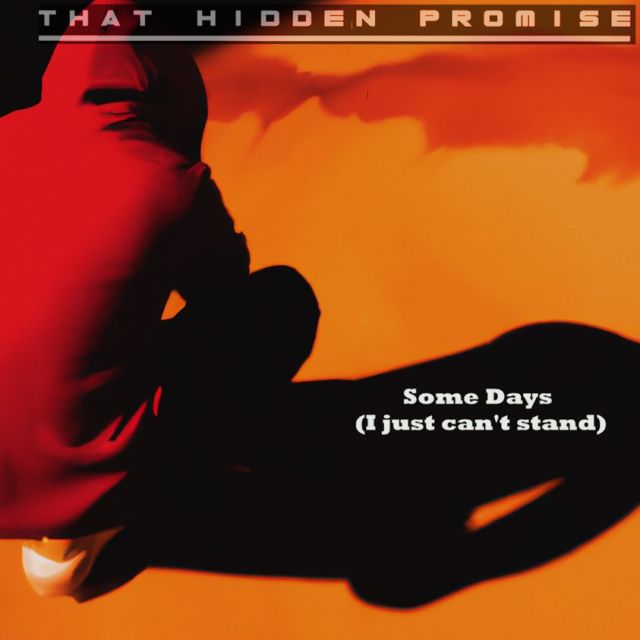
THAT HIDDEN PROMISE – Single Review: “Some Days (I Just can’t stand)”

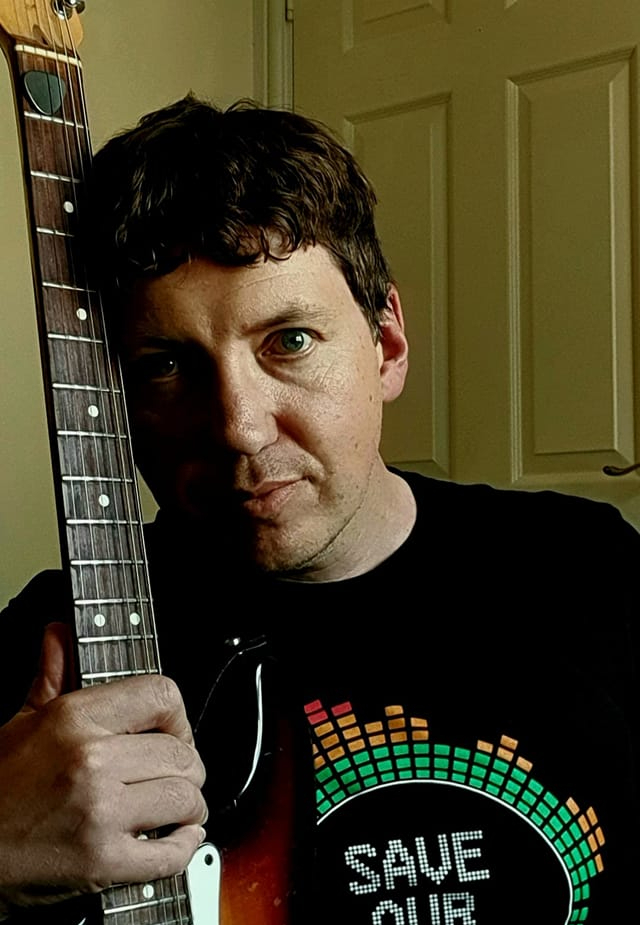
That Hidden Promise is the music project of British singer-songwriter and multi-instrumentalist Wayne Lee, who’s been recording and performing under that moniker since 2011. Now based in Bristol, England, the talented and versatile fellow writes, records and produces all his songs, plays acoustic and electric guitar, and creates all his own music, including beats and percussion. He’s produced an extensive catalog of outstanding alternative and pop-rock music over the past 12 years, often incorporating blues, post-punk, folk, electronic, psychedelic and shoegaze elements into the mix. The result is a varied and eclectic sound, delivered with exceptional guitar work and distinctive, gravelly vocals that remind me at times of a young Bob Dylan.

I’ve featured That Hidden Promise on this blog a number of times over the last six years, most recently in October 2020 when I reviewed his brilliant album Who Knows Now? This past April, he released Pre THP – Vaults: 2001​-​2008 Vol. 1, an album featuring eleven older tracks Lee wrote in the years prior to launching That Hidden Promise. Now he returns with a powerful new single “Some Days (I Just can’t stand)“, the first track from his forthcoming album A New Horizon, due for release later this year.

The song is a diatribe against the seemingly endless stream of bullshit bombarding us these days, whether it be from corrupt politicians, the media, duplicitous people, or just the everyday hassles of life, leaving us feeling beaten down and sucking the joy out of our lives. To drive home his message, Lee starts off with a terrific thumping bassline and drumbeat, then unleashes a reverb-soaked onslaught of roiling jagged riffs, pummeling bass and explosive percussion lasting five and a half minutes. He shreds his guitar with abandon, serving up some blistering solos later in the second half of the song that send shivers down my spine. Yet despite the music’s ferocity, there’s much melodic beauty to be found in his intricate guitar work. He’s a true guitar virtuoso, and I think this is one of his heaviest and best songs ever!

Lee doesn’t have a particularly powerful singing voice, but he more than rises to the occasion here, venting his spleen with an emphatic fervor as he bitterly snarls “Everybody’s just shouting but who’s to know? Bring me life, bring me death, bring me something, that makes more sense. Woah. Heal me, release me. Give me all the things I want but can’t….get. Hold me up, cos some days, I just can’t stand!” And I just love his little “woahs” sprinkled throughout the track, injecting a bit of levity into the otherwise intense proceedings.

Here’s the song on Bandcamp:

And on YouTube:

Connect with That Hidden Promise:  Facebook / Twitter / Instagram
Find his music on BandcampSpotifyApple Music / Tidal / NapsterAmazonSoundcloudYouTube

JOHNNY RITCHIE – EP Review: “JAWKNEE”

As a music blogger who writes about a lot of independent and unsigned artists, I’m continually impressed by the number of creative and talented people who are making some truly innovative music. One such artist is Johnny Ritchie, an intelligent, personable and wildly imaginative young singer-songwriter and multi-instrumentalist who grew up in Indiana and is now living in Spokane, Washington. I’ve featured him several times on this blog (you can read some of my reviews by clicking on the ‘Related’ links at the end of this post), but will reiterate a bit of his background.

With a lifelong love for music, he began learning to play piano and drums as a child, then went on to study Contemporary, Urban, and Popular Music at Columbia College Chicago, ultimately earning a B.A. degree in Music at Western Michigan University in 2020. He now has his own business teaching others to play piano, keyboards and drums, as well as giving lessons in music theory, songwriting and improvisation. He also writes and records music in which he fuses alternative and experimental rock with neo-psychedelia and contemporary jazz to create incredibly fascinating and sophisticated soundscapes for his often provocative lyrics addressing relevant and timely topics like political corruption, intolerance and our troubled and conflicted relationship with social media.

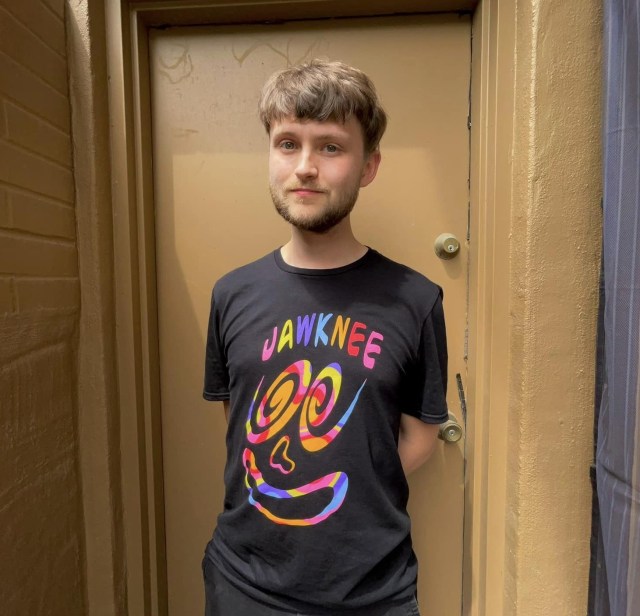
Johnny released his debut single “Social Robots” in March 2021, a song exploring people’s behavior and social media consumption in response to the tragic shooting at Marjory Stoneman Douglas High School in Parkland, FL in 2018. He’s since followed with 11 more singles, and in keeping with his penchant for continual experimentation and pushing his musical boundaries, each sounds totally different and distinctive from the rest. His most recent, “walking anomaly”, was released on July 14th in advance of his debut EP JAWKNEE, which drops today. With a title that’s an endearing phonetic spelling of his first name, JAWKNEE is a work of self-exploration and discovery for Johnny, which he says is “a way of reclaiming who I am, what I am, what I believe and what I want to believe.

Unlike most debut EPs and albums put out by a lot of musicians and bands, where they include some or all of their previously-released singles, Johnny has instead written all new material for JAWKNEE. The EP features eight tracks, three of which are instrumentals lasting a minute or less. Johnny graciously explained the background and/or meaning for several, beginning with opening track “twelve tone jawknee“, which “started as an experiment beat on a video call with my best friend Charlie Petralia. We wanted to create a lick that used all 12 tones in the chromatic scale in western music. I became obsessed with this lick and ran with it. Some of the speaking parts you hear were provided by Bill Davies, a friend of my uncle’s. He sent me audio recordings of poetry for another project we’re working on. I decided to splice some of his testing phrases, and this helped set the tone for the rest of the EP.” The result is a trippy fantasia of skittering spacey synths, layered over a deep, pulsating bass groove and accompanied by Johnny’s clipped, otherworldly vocal repeating the words “Jawknee” and “what’s going on inside of your head?” This track is followed by “majik“, a 47-second long instrumental that sounds like a fractured and twisted reimagining of the melody in “twelve tone jawknee”.

The song that resonates most with me is “bologna“, where Johnny focuses his anger on leaders and those in society who scapegoat others they don’t like, degrade the environment for their own personal gain, and refuse to pass legislation to protect us from real dangers, not invented ones. He elaborated on his sentiments: “the song hits on a lot of themes typical in my other songs, however it has a heavy emphasis on protecting our young people and empowering and emboldening them to have agency and to be conscious of their actions unlike the generations before them. I feel a heavy burden personally and socially to make a better world for our young people. They are too often used as political pawns for the ruling class’s money games all while being the ones who suffer the most. The ugly truth is that the USA is a country that has politicians trying to ban books about LGBTQ+ lifestyles because of this preposterous myth that transgender people are pedophiles and groomers, yet actively refuse to pass safer gun legislation to prevent more school shootings even going so far as to suggest putting MORE guns in schools- all so they can get a bigger paycheck from the NRA and gun-lobbying corporations. It’s absolutely disgusting to me and I’m tired of our government’s inability to lead due to their own selfish and greedy desires.” I couldn’t agree more!

Musically, the song has a languid hip hop vibe, with a deep, undulating bass groove and gentle airy synths, over which Johnny, in electronically-altered vocals, rap/sings his biting lyrics. I love them all, but will quote just a few: “I wanna see some change, I wanna see some action./ Want the kids to grow old, maybe they’ll help save us. What the hell do we know, been gluttonous for ages./ Focus on your money, convinced we can’t do better, but that’s just straight boloney.”

With its hypnotic, almost menacing beat, spacey industrial synths and eerie, otherworldly voices, “mandible patella” would be great for a sci-fi movie soundtrack. Johnny explained “this song is actually a sample from the first song “twelve town jawknee”; I did some splicing and editing, threw some FX on the track, and that’s how the beat was born. The speaking parts are my grandpa, taken from an audio interview I did of my grandparents back in 2018, in which he was describing his thoughts on death. I spliced up and rearranged the words to reflect what I wanted in the message. After that I just needed to added a cool hook melody that wrapped it all together.”

Johnny wrote “deestrukt” and “walking anomaly” in February/March of 2022, when he was still living in Great Falls, Montana, “during a period in which my family and I were the victims of abuse from church officials, congregation members, and wealthy small-town-Montana politics. During this time of injustice I felt very ostracized, manipulated, exploited, traumatized. I’ve been working through these issues, but these two songs were my initial reactions and expression of what was happening in my world. I was angry, but I used it as a catalyst to become a better version of myself. I’m proud of who I am now, I wouldn’t be this person without that chapter in my life. I don’t hate boomers responsible for it, however I feel immense sadness for their stunted worldview and vast ignorance, it is a waste of the human consciousness.”

“deestrukt” is a super grungy, mostly instrumental track, with harsh, rather menacing psychedelic synths and sharp percussive sounds painting a macabre nightmarish scene. Johnny’s vocals convey a visceral anger as he shouts “Who am I to challenge reality?” The track ends with a staccato of what sounds like gunfire, bathed in discordant reverb. On the other hand, “walking anomaly” is more languid and melodic, featuring watery chiming guitars, a throbbing bassline, swirling synths and very crisp percussion, all of which give the track a distinctively sharp sound. Johnny sings of embracing his true self, not giving a fuck what others may think: “Grew my hair down to my waist. Some people called me a hippie. Really I am just depressed. Some called me a Jesus. Really I am just super pissed. Some called me a hooligan. You’re damn straight I am one of them, so stop trying to ignore who I really am. I’m damn glad to be out of my mind. I would sure hate to be in it. Walking anomaly.

Dividing the two aforementioned tracks is “ponchi“, a quirky and fun little minute-long instrumental piece Johnny says is an homage to Chopin’s “Nocturne in Eb”. The delightfully spacey 46-second-long closing instrumental piece “nif” brings the EP full circle, with Johnny’s otherworldly-sounding voice repeatedly chanting “Jawknee”.

While JAWNEE is an unusual and unorthodox work that probably won’t appeal to everyone, I think it’s artistically brilliant, lyrically compelling, and thoroughly unique. I love that Johnny continues to expand his musical horizons through fearless experimentation and willingness to speak his mind on important issues of the day.

Connect with Johnny:  FacebookInstagramTikTok

Fnd his music on SpotifyApple MusicBandcampYouTube

SIVAN LEVY Releases a Captivating Live Session of Her Song “Jacaranda”

Photo still from video by Eric Raphael Mizrahi

Sivan Levy is a multi-faceted Israeli artist currently based in Tel Aviv, who’s not only a successful actress and filmmaker, but also a talented singer-songwriter and musician. She’s starred in several highly acclaimed films and television series, earning multiple awards for her exceptional work. Her latest film, My Daughter My Love, written and directed by Eitan Green, was screened last month at the prestigious Jerusalem Film Festival.

Photo by Alon Shastel

In June, Levy released a beautiful EP side:s, her first music release since her self-titled three-song EP in 2015. Featuring six captivating tracks written and sung by her, side:s was recorded and co-produced by Levy and Yoav Rosenthal, who also played guitar and bass, and sang backing vocals. Levy played piano and keyboards, Giori Politi played drums and programmed beats, and Maya Belsitzman played cello. Mixing was done by Nicolas Vernhes. One of the songs from the EP, “Swimming Backwards”, has already been streamed over 400,000 times on Spotify alone. Another track, “Jacaranda“, is now the subject of a special live performance filmed and recorded by Levy and her supporting musicians, released as a video premiering on August 4th.

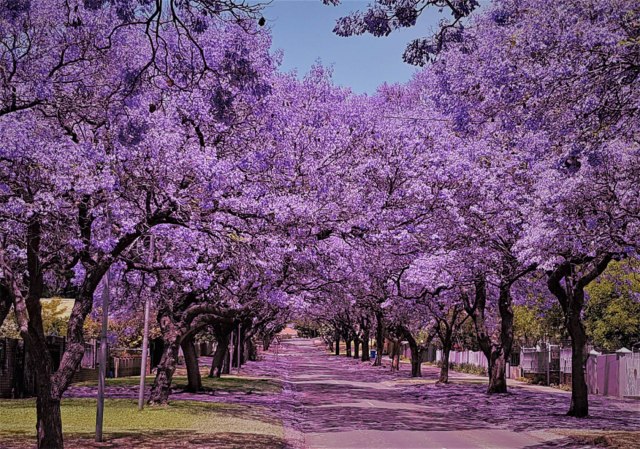
One of the standout tracks on the EP, “Jacaranda”, is named for the Jacaranda mimosifolia, a type of tree that produces huge clusters of purplish-blue flowers in mid-to-late spring. Native to tropical and subtropical regions of Central and South America, they also thrive in Mediterranean climate regions like Spain, Portugal, Italy, Israel and Lebanon, northern Africa, Australia and California. They even grow in the hot desert climate of the Coachella Valley where I live.

The jacaranda tree has a special meaning for Levy, who says her song “‘Jacaranda’ is a love song for my childhood jacaranda tree. It was my favorite place to climb and sleep and hide. On my birthday, the 4th of June, I would wake up every year to a yard covered in a purple carpet. A gift from the tree.”

The live performance of the song, filmed by Eric Raphael Mizrahi, is an acoustic reimagining of the original studio version found on the EP, which features lush atmospheric synths, shimmery guitars and feathery percussion. Yet it still retains its enchanting vibe, with Levy’s lovely piano work, accompanied by Yoav Rosenthal on bass and Giori Politi on glockenspiel and gentle percussion, all of which create a stunning backdrop for Levy’s bewitching ethereal vocals, transporting us to a beautiful and dreamy world.

Connect with Sivan:  FacebookTwitter/XInstagram TikTok

Find her music on BandcampSpotifyApple MusicYouTubeSoundcloud deezer