Nicholas a. Milillo (born Nicholas Pavoni) is a songwriter, electronic music composer and producer currently based in Nashville. He began writing and recording music as N Pa Productions when he was only 17 years old, and in 2007 he self-released his first albums Reality | a dream and Reality | a dream: The B-Side (neither of which are now available). Over the next couple of years, he collaborated with numerous vocalists and producers from different genres of music for the recording of his debut album Sight & Sound, as well as producing tracks for several artists. He was later signed to a couple of different London-based independent labels from 2010 to 2014, but in the years since has worked as a solo independent artist. In September 2013, he independently released his second studio album The Ghost Within: The Tale of Turmoil, an ambitious concept work involving at least 20 other songwriters and built around the main character and protagonist Turmoil (which I reviewed in 2021) as well as a separate EP Unorthodox.
In late 2020, Nicholas began work on an autobiographical concept album to be titled Euphoric Absence, but due to some personal life struggles as well as recording and technical issues, its release has been pushed back to 2025. He released the first single from the album, “Nothing In Your Eyes” in December 2021, followed by the instrumental second single “Ambience of Sound and Motion” in August 2023. Now he returns with “Waking Life“, the third and final single he plans to release in advance of the album.
The song’s title and theme were inspired by the 2001 film Waking Life by Richard Linklater, along with the soundtrack itself (notably, “Ballad Part 3 and Ballad 4 – Parts 1 & 2”), as well as Nicholas’ own personal struggles. The track features lead and harmony vocals by Italian singer-songwriter Dee Wolf and Los Angeles-based singer-songwriter and percussionist Bobby Jasso, electric guitar by Nicholas’ cousin Gabrielle Marella, and drum programming by Pennsylvania-based musician John Browne. Also featured are some carefully selected archival audio recordings of Nicholas and Gabrielle’s late grandfather Anthony “Tony” Milillo, Jr. from the late 1990s, with the audio being spliced up to form new phrases and cohesion within the narrative of the song.
Dee WolfBobby Jasso
This is the third collaboration between Nicholas and Bobby Jasso, with the pair having previously worked together on “Life, At The Speed Love” (2009) from Nicholas’ debut album Sight & Sound, and Bobby providing additional vocals, and sampled vocals for “Sea of Darkness” (2013) from Nicholas’ second studio album The Ghost Within: The Tale of Turmoil.
Tony Milillo with infant Nicholas
Nicholas has fond memories of his grandfather, and wanted to pay homage to him in the song. He elaborates: “My grandfather and I have shared a similar path, sadly, with both of us ending up homeless during our lifetimes and ended up turning it out for ourselves. He went from being a compulsive gambler to president of the Council on Compulsive Gambling of Pennsylvania. It’s a feat in and of itself; if I could only live up even to a tenth of the degree he has. He helped thousands of people, taking personal phone calls, doing seminars, you name it.”
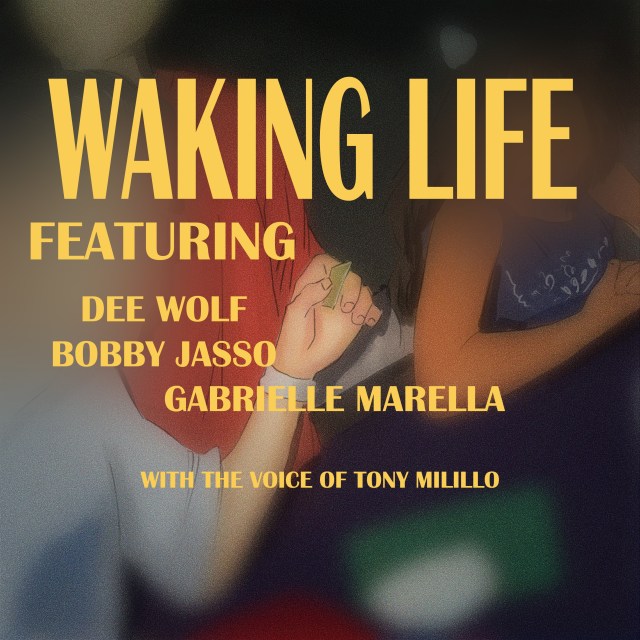
“Waking Life” was composed, written and produced by Nicholas, with additional lyrics by Bobby Jasso. The track was mixed and mastered by TomeKeeper Productions. Samples used in the track include archival audio of Tony Milillo were provided by The Legislative Report with Paul Clymer (1998), and selected lyrics from the 2008 Baumer song “Were It Not For You”, written by Nate Boykin (Baumer was an American indie rock band from South Carolina that was active from 2003-08). The cover art for the single, designed by Haiqa Ghazi, features a vintage childhood photo of Nicholas and Gabrielle:
About the song’s production and recording, Nicholas gives the following tribute: “I’m so proud and filled with anxiety about this official release. It’s taken me personally so long to get to this point and I just want to say thank you to Gabrielle Marella, my cousin for being here with me throughout all of this. Bobby Jasso for being the best collaborator and friend I could possibly ask for. Diletta (D Wolf) for being an incredible, kind, and awesome individual. You’ve elevated this in a way I could only dream. To Ian and Mark of TomeKeeper Productions, this would not be possible without you. I can’t thank you enough for seeing my vision and working it through to the end. I’m blown away by what you’ve done! Thank you!!!“
Well, I can firmly state that Nicholas and company have achieved their goal, and then some. Together, they’ve created a gorgeous and emotionally impactful song about the pain and disappointments that life can throw our way, as well as a plea for hope that things will get better. The song opens with a beautifully-strummed electric guitar riff by Gabrielle, which are soon joined by Bobby Jasso’s captivating plaintive vocals singing “What is this? This waking life.”
As Nicholas’ pulsating bassline and Baumer’s swirling synths enter the proceedings, we hear the spoken words of his late grandfather, adding a compelling solemnity to the track: “Struggle through the day. Is that our purpose?The denial that they sell you a fantasy. They sell you a dream, that dream sounds so appealing.” Bobby and Dee Wolf begin singing the first verse in perfect harmony, while the music builds with the addition of Gabrielle’s edgier guitar work, accompanied by assertive drums. Everything erupts into a thunderous anthemic crescendo in the chorus, with Bobby and Dee’s vocals rising to impassioned wails to match the explosive instrumentation, all of which creates a glorious and electrifying wall of sound that leaves me breathless.
Verse 1: Lost in all this anger Silence in this space Reaching deep down I’ve seen no hope throughout the day Is that our purpose Does time just pass us by Does time just pass us by (So tell me)
Chorus: What is this waking life And how are we to overcome (Can we find the answer) Is there some notion Within all this commotion
Verse 2: What is this waking life? What is this? What is this waking life?
Things were better then Things are always better when Baby, you can say, “Those were the days”
A promotional video titled Waking Life: the Visual Experience, is planned for later release, possibly in August. A collaboration with the Psyn Agency and Haiqa Ghazi rotoscoping, the Visual Experience will feature animations of the archival video of Tony Millio, along with home video recordings, filmed by Nicholas, of his younger cousins J & B, as well as his cousin Gabrielle playing the guitar. The promotional video is a homage to Waking Life and Undone, a 2019 TV series.
Terry Gomes is a composer/guitarist from Ottawa, Canada who’s been involved with music his entire life, both as a musician, singer-songwriter and composer of instrumental music, and as a teacher of rock and classical guitar. (He also taught elementary school for 26 years.) He studied classical guitar/composition at the University of Ottawa, where he graduated with honors. Over the years, he’s played in several rock bands and as one half of a flute/classical guitar duo. After writing songs for others, he began recording his own music in 2006, releasing three albums featuring songs in the singer-songwriter/pop/folk-rock genres. He later transitioned toward mostly guitar-based instrumental music, beginning with the release of his album Shh., which featured a more jazz-oriented, easy-listening style. In 2015, he released his Caribbean-influenced EP Blue.Green.Aquamarine, which he followed with The Tropical Dream in 2018, a delightful concept album detailing a tropical vacation written while he recovered from a back injury.
In 2019, Terry released an instrumental single “Rumjaro 360”, in which he combined elements of rumba, jazz and rock, and in 2022, he released two beautiful piano-based singles, “Elegy” and the jazzy “Steen’s Reverie”. Now he returns with “Dark Riders“, a rather unorthodox rock guitar soundtrack he wrote several years ago, accompanied by a quirky animated video. For the recording of the track, Terry played all guitars, bass and organ, and Jeff Asselin played drums and percussion. Mixing was done by Steve Foley at Audio Valley Studios in Ottawa, and mastering by Jason Fee at Conduction Mastering.
“Dark Riders” is a six and a half minute long instrumental track with progressive elements, though Terry’s twangy guitars lend a strong Western vibe to the proceedings. I love his guitar work, and the spooky organ adds some great texture to the track. About the video, Terry says “Encompassing a surreal “dark ride” with Old West imagery, it follows an individual’s unexpected and unusual journey. I think of this project as a cross between David Lynch and Scooby Doo–somewhat creepy and surreal and yet, sort of, fun.” The fun and clever video was made with mostly black and white animation images created by Andres Olmos.
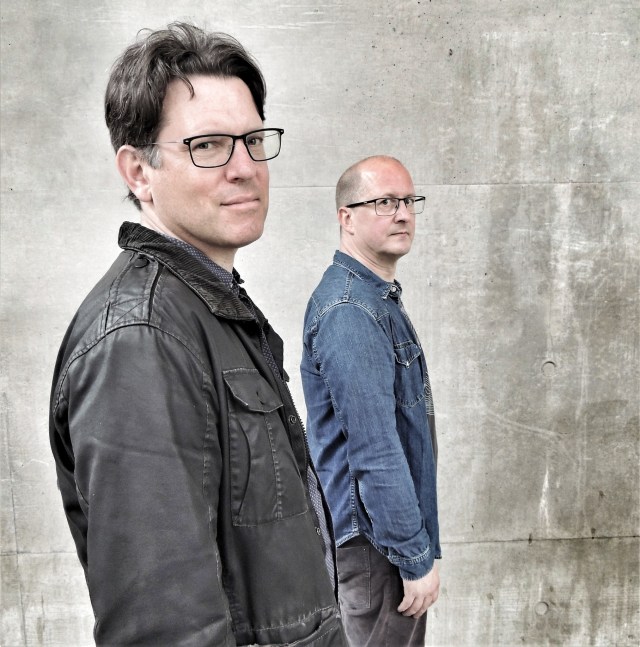
In my eight years as a music blogger, I’ve written about quite a few artists and bands with odd or quirky names, but one of the strangest of them all has to be that of British duo Hats Off Gentlemen It’s Adequate. Based in London and comprised of singer-songwriter, multi-instrumentalist and producer Malcolm Galloway and multi-instrumentalist and co-producer Mark Gatland, with help by Malcolm’s wife Kathryn Thomas on flute and backing vocals, they create their unique brand of progressive alternative rock, infused with experimental and classical elements, minimalist, metal, folk, funk, and electronica. I’m not exaggerating when I say they’re both multi-instrumentalists, as Malcolm plays lead guitar, keyboards/synths, percussion/drums and programming, while Mark plays bass, guitar, slide guitar, keyboards/synths, Chapman Stick (an electric instrument resembling the fretboard of an electric guitar, devised by Emmett Chapman, which has ten or twelve individually tuned strings) and additional percussion/drums.
Photo of Malcolm and Mark by Kathryn Thomas
Longtime friends who’ve been playing together since they were in school, Malcolm and Mark’s music often explores scientific and philosophical themes, and they’re strong advocates of social and environmental causes. Accordingly, they’ve organized and supported charity events for Save the Children, Cancer Research UK, Marie Curie Cancer Care, Ehlers-Danlos Support UK, Brain Tumour UK and Prog The Forest, which raises money to protect over 40 acres of threatened habitat. From what I can tell, they’ve released quite a lot of music since 2012, including six albums, three EPs and numerous singles. On September 9th, they’re finally dropping their long-awaited seventh album The Light of Ancient Mistakes.
When they reached out to me about the album in July, I was initially overwhelmed by its size, subject matter and scope, and I admit it’s taken me a while to fully absorb this ambitious and fascinating work. Also, I’m a master procrastinator who always waits until the last minute to write my reviews, a bad habit going back to my college years that I’m afraid I’ll never be able to break. And finally, after reading some superb reviews of the album written by others, I’m now left feeling both intimidated and deflated, wondering how I can ever write a coherent review that does justice to this amazing album. I will give it my best effort.
Although not necessarily a concept album, many of the songs on The Light of Ancient Mistakes are inspired by various books, including works by Adrian Tchaikovsky, Iain M. Banks, David Cornwell (who wrote as John le Carré), Philip K. Dick, and Conservative MP Chris Bryant, as well as issues of personal importance and concern for Malcolm, who wrote all the lyrics. The music was co-written by him and Mark. The album contains 15 tracks, seven of which feature lyrics and vocals, while eight are instrumentals. The Bandcamp version of the album also includes four bonus tracks that are radio edits of four of the original 15.
The album opens with “Sold the Peace” a bitter diatribe against the corporate greed and political cowardice that have essentially negated all the hard-fought gains in the battle against authoritarianism in World War II and the Cold War period that followed, ushering in a new generation of despots, expressed in the lyrics “We risked it all to set the world free. Dead or free, the opportunity cost of the unused bombs. So much invested. We stormed the citadel, then bought the lease. We won the war, we sold the peace.” To drive home their point, the guys start with a grungy bass groove, then layer cinematic industrial synths, noirish piano chords and jagged guitar notes to create an unsettling soundtrack for Malcolm’s exasperated-sounding vocals.
Next up is the hauntingly beautiful six-minute 40-second-long Pink Floyd-esque title track “The Light of Ancient Mistakes“, inspired by science fiction author Iain M. Banks’ novel Look To Windward. Malcolm explained the song to David Edwards of The ProgressiveAspect blog, “It explores the long-lived consequences of an atrocity. The light from a sun-destroying explosion has travelled for 800 years before reaching an orbital where a commemoration for the tragedy is due to take place. The protagonist of the song is an artificial intelligence trying to show the futility of cycles of hatred to someone planning an act of mass destruction.”
This is followed by the electronic instrumental track “Arvana Kern is Made of Ants“, which along with tracks 6 “The Requisitioner and the Wonder” and 8 “Gothi and Gethli“, refer to a character, two spaceships and a pair of crow-like creatures which insistently deny they are sentient in Adrian Tchaikovsky’s Children of Time series. The frantic skittering beats and swirling keyboards on “Arvana Kern is Made of Ants” cleverly evoke the non-stop flurry of activity one would see in a colony of ants, while the somber atmospheric tones of “The Requisitioner and the Wonder”, punctuated by some beautiful guitar notes, convey images of two spaceships traversing the heavens. Mark’s deliciously funky bass and Malcolm’s jazzy piano work make the jaunty “Gothi and Gethli” one of the most upbeat tracks on the album.
Track 4, “The Anxiety Machine Part 1“, is the first of a three-part triptych of darkly beautiful contemporary classical instrumental interludes that serve as connectors within the album, creating unsettling feelings of loneliness, resentment and desolation, in keeping with the overall feel of the album. This immediately segues into the heartbreaking “Sixteen Hugless Years“, a song inspired by the childhood experiences of David Cornwell, better known as John le Carré, namely the abandonment he felt after his mother left him and his family when he was five years old. The 16 years referenced in the song is the time that passed before his mother initiated a reconciliation. Malcolm’s vocals are filled with pain as he bitterly recalls “You packed your Harrod’s suitcase and left. You didn’t even slam the door. I was left with a hole. I didn’t grow up, I just got older. I was only five years old. Sixteen hugless years. Sixteen long, long years. I’ve grown old and I’m cold and hard but I’m told I’m the life and soul but it feels so hollow after 16 hugless years.” The musical highlights for me are Mark’s deep, throbbing bassline and Malcolm’s haunting guitar.
“The Glamour Boys” was inspired by Labour MP Chris Byrant’s book of the same name about the experiences of a group of mostly homosexual or bisexual Conservative MPs who argued against appeasement towards Nazi Germany and Fascist Italy, despite threats from Prime Minister Neville Chamberlain to expose their secrets. Many went on to risk, and in some cases lose their lives in the Second World War. “They call us the glamour boys. The punishment for speaking out. The leaks and smears and telephone taps. The hints the threat the veiled attacks.“
One of my favorite tracks on the album is “imtiredandeverythinghurts“, a chugging, energetic rocker inspired by Malcolm’s experiences with an invisible disability due to Ehlers-Danlos Syndrome (a group of inherited disorders that affect the bodies’ connective tissue, primarily skin, joints and blood vessel walls, resulting in chronic pain), and the challenge of responding honestly to the well-intentioned and seemingly benign question “how are you?” Malcolm elaborated to The ProgressiveAspect blog, “I don’t want to be dishonest with people by pretending to be fine when I’m not, but I also don’t want to drag people into a conversation about chronic pain that they may not be comfortable with. On the other hand, for those of us with conditions that vary from day to day (or hour to hour), it may be important to communicate what our current level of functionality is. I am also aware that there is no negative intention behind the question, and the last thing I want to do is to discourage people from communicating.” He plaintively sings “I keep smiling so you might not notice that I’m falling apart. I’m close to an edge. I need help. If this time you’re really asking, I’m tired and everything hurts.“
The centerpiece of the album is “Walking To Aldebaran“, an epic progressive rock masterpiece inspired by the science fiction novella of the same name by Adrian Tchaikovsky. Clocking in at just under nine minutes, the song features an exciting and eclectic mix of styles and textures, including progressive metal, free-form jazz, contemporary classical and musical theater, as it tells the story of space-ship pilot Garry Rendell who, due to a miscommunication between himself and an old, possibly malfunctioning but well-intentioned machine, is transformed into a monster. The colorful, intricate guitar work, jazzy piano, swirling synths and Kathryn’s lovely flute are all utterly exquisite throughout. Malcolm’s dynamic vocals alternately remind me of David Bowie, Al Stewart and a myriad of male vocalists from such Broadway musicals as Les Misérables and Phantom of the Opera as he forlornly laments “I’ve become what the monsters are scared of. I’ve been changed by the mother machine. I am the thing that used to be me.“
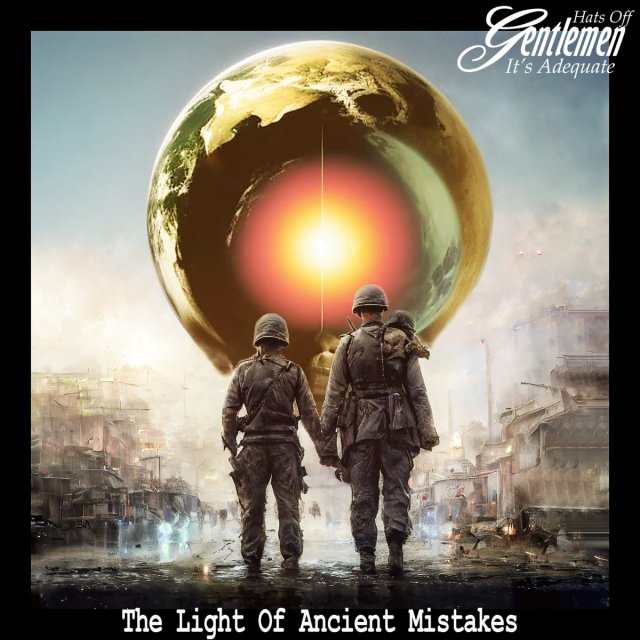
“Goodbye Cassini” is a beautiful instrumental tribute to the NASA probe that spent 13 years exploring Saturn and its moons. When its fuel supply was finally exhausted on September 15th, 2017 it plunged into Saturn’s atmosphere, still returning data right up until its end. The musical highlight of this track is Kathryn’s gorgeous flute. The effervescent instrumental “The Man Who Japed” is named after the 1950s Philip K. Dick novel of the same name, in which a previously obedient government official “japes” – i.e. commits a practical joke – by severing the head of a statue of their dictator in a symbolic act of resistance, thereby putting himself at personal risk. Malcolm created all the artwork for the album using AI assisted art creation software, and the one for this track is particularly good:
The final track “Burn the World” is an hauntingly beautiful and unsettling song about the perils of global warming, sung from the perspective of someone in the future looking back with regret on measures humans could have taken, but didn’t. Malcolm’s melancholy plaintive vocals are drenched in sadness and despair as he laments over lost opportunities that could have helped avert climate disaster: “We could have cared just enough to give ourselves a chance. But it’s easier to fail. We never learned to change. All the things we could have done, and we chose to burn the world.” The track has a strong progressive feel, with a meandering melody overlain by a mix of chiming and wailing guitar notes, ethereal synths, gritty bass and measured percussion. Hats Off Gentlemen It’s Adequate released “Burn the World” as a single in support of Prog The Forest, an environmental fundraising festival that donates to the World Land Trust, which acquires threatened rainforests and other valuable habitats to place them in protective trust in collaboration with local communities. They will be donating all proceeds from sale of the single until at least the end of 2024.
I’ve gone on and on, so will close by simply saying that, in my opinion, The Light of Ancient Mistakes is a certifiable masterpiece. The amount of thought, care, and effort Malcolm and Mark have put into creating this ambitious undertaking is truly astonishing, and they should be very proud of what they’ve accomplished. While the depth and complexity of the music and the rather dark, provocative subject matter of the lyrics may not be everyone’s cup of tea, I think it’s brilliant and worth a listen. If you like excellent progressive rock, you will enjoy this album.
Joe Peacock is a British singer-songwriter and musician based in Birmingham, England. Describing himself as “a genre-hopping storyteller, whose music has been compared to Bowie, Blur and Costello”, he cheekily adds “all money from the digital sales of my music go into paying producers/mixing & mastering engineers.” As I do for all music artists or bands I’m writing about for the first time, I read all I could find about him on his own social media pages, as well as other websites and blogs, and listened to a fair amount of his substantial music catalog. In the process, I learned that he grew up in rural Herefordshire, went to university in Stoke, and spent seven years living in St. Petersburg, Russia before settling in Birmingham. Not only is he a hard-working and talented songwriter and musician who’s not afraid to continually experiment and push himself beyond his comfort zone, but also a thoughtful family man who cares deeply about the environment, social justice and inequality, things he spoke passionately about in a January 2022 interview with COOLTOP20 music blog.
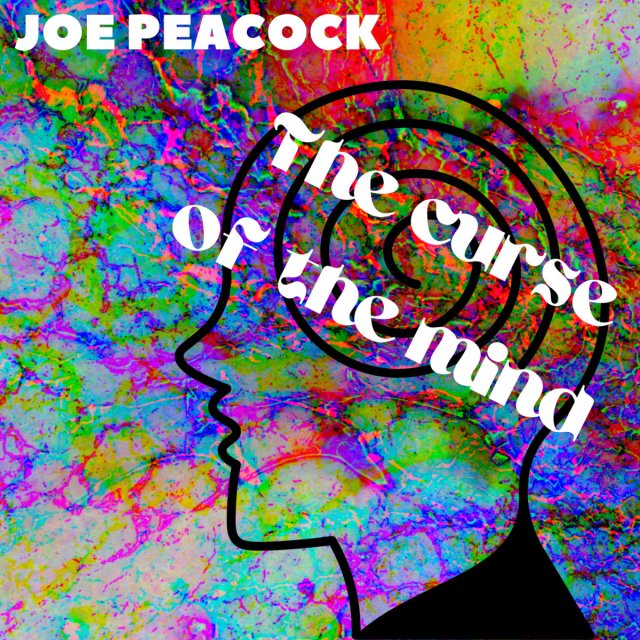
According to his bio, Mr. Peacock rediscovered his creative spark during the Covid lockdowns, and began writing and recording songs at home, handling all aspects of performance and recording. From what I can tell, the prolific artist has released a tremendous amount of music in less than three years, including three albums – I’m Only Here, in April 2021, Before the robots told us where to go, in December 2021, and Mirror Neuron Generator, in July 2022 – as well as two EPs and numerous singles. In addition, he’s also one half of art-folk duo The Missed Trees, his side project with singer/fiddle player Louisa Davies-Foley, who released their three-track EP Animals in April. Now he’s back with a new EP The curse of the mind, featuring four marvelous tracks written, performed and recorded by him, and beautifully mixed and mastered by Adam Whittaker.
The first track, “Thought Camera“, is a magnificent and complex tour de force that, to my ears, sounds like David Bowie singing a Radiohead song that was arranged by Pink Floyd. Incorporating elements of alternative, progressive and dream rock with a stirring orchestral arrangement, Peacock creates a gorgeous cinematic fantasia. His dramatic instrumentation, particularly the haunting piano notes, soaring strings, gnarly guitars and tumultuous percussion, are truly spectacular.
The searing lyrics explore aspects of privacy and mind-control, which he elaborated on in a Tumblr post: “it’s about privacy and the desires by the powerful to monetise our thoughts. Nikola Tesla had an idea for a thought camera, which would project our thoughts onto a wall. Now social media is big business – monetising our anger from us posting our thoughts online. I wonder why Elon Musk is so keen to throw money at Twitter – he named his car company after Tesla, so does he want to use that to help control our thoughts?” He sings “Could we light the world up with the electricity generated by your hatred? /These electrical impulses should be put to use! How will we know if this is all an illusion? You can think deeply and be quite insane. Are there signs we should look out for? Mr. Orwell might be quite amazed by the surveillance, but we still don’t have a mind-reading machine. So I can make sense of your world, I need the thought camera that Nikola dreamed of.“
On “Poltergeist“, which Peacock states was inspired by The Haunting of Alma Fielding, a book by Kate Summerscale that explores a case where a woman reported being haunted by a poltergeist, as well as what he calls “a few bits of personal experience on exploring the supernatural at an impressionable age and (probably unrelated) psychological problems”, he touches on mental health issues: “Scaring everyone like a poltergeist. Have you opened the door into another mind? Can you tell me what’s wrong?” As the title suggests, the song has a haunting quality, yet Peacock employs some melodic touches like a breezy melody, soothing orchestral strings, warbly guitar notes and falsetto vocals to lighten the mood a bit.
He addresses brainwashing and thought-control by authoritarian regimes on “Cult of fake heroes“, using the Soviet Union as an example. He further explains on his Tumblr post: “I use the story of Pavlik Morozov, who, according to the propaganda of the time, informed on his father for anti-communist activities and was a model soviet citizen brutally murdered by others in his family for what he’d done. His story was then told by Stalin’s regime (despite the dictator being scathing of him when he initially heard the story) to inspire others to inform on family, friends and neighbours during the red terror and he inspired patriotism in pioneers and schoolchildren.” He expresses this story thusly: “Every school kid learned his name. The storyline was powerful. At the time they needed heroes. From a village in Siberia got his dad into trouble. Murdered and made an icon.”
I love the track’s intense jangly guitars and emphatic drumbeats, punctuated by stabbing rhythmic flourishes, which Peacock created using an odd 5/4 time signature, which he said gives it a slightly strange, unbalanced feel.
“The Outsider“, which Peacock says is about the outside artist Henry Darger, is for me the most unusual track on the EP, both from a musical and lyrical standpoint. He elaborates about the artist on Tumblr: “He suffered traumatic events in his childhood, which affected his ability to interact with people. He had very few friends and mainly kept himself to himself, working as a janitor and then locking himself away in his room. It was not until he became very ill and was moved into a hospice that his artworks and graphic novels were discovered. He’s acknowledged as the archetypal outsider artist.” He tells Darger’s story with his colorful descriptive lyrics: “15,000 pages of fantasy, in the realms of the unreal. 9-foot-long drawings on both sides, his panoramic sagas. Emotionally arrested, he didn’t know what to do with freedom. He wrote about the weather, when not in fantastic battles in his mind.”
To create the unsettling but darkly beautiful soundscape, he used fragments of guitar parts he chopped up and then put back together. He layers them over a droning melody, accompanied by harsh industrial synths, chiming guitar notes and a strong synth bass groove. That, combined with his array of echoed vocals, otherworldly chants of “ah-bah-suh-duh”, and menacing whispers, the song would be a perfect fit for the musical Sweeney Todd: The Demon Barber of Fleet Street.
Given it’s rather unusual song structures, creative arrangements and unique instrumentation, it took a couple of listens for me to fully appreciate the magnificence of this remarkable EP. With The curse of the mind, Joe Peacock has pushed himself to create an exquisite piece of musical art, and I’m so happy he reached out to me about it!
Describing his sound as “Happy/Sad music for Happy/Sad people”, Scottish alt-rock artist Gloom is Okay is spot on, in that his music takes listeners from euphoric highs to crushing lows and back again. Drawing from an array of elements ranging from alternative and dream rock to progressive and metal, and blending darker lyrical themes with complex melodies, gorgeous guitar riffs and grandiose synths, his unique sound is variously reminiscent of some of his favorite acts like Porcupine Tree, Thrice, Radiohead, Nine Inch Nails and Anathema, to name but a few. He started the project in the early days of Covid lockdown as a kind of coping mechanism, and being an advocate for positive mental health, he wanted to put a positive spin on things through his music. He loves listening to sad music and embracing the myriad emotions it brings out, both good and bad.
Based in Glasgow, Gloom is Okay is the music project of singer-songwriter and multi-instrumentalist Martin Walker. Involved with music from an early age, he was previously a member of award-winning Scottish progressive rock band Akord, who released an EP Carry the Sound in 2013 and an album Ethereality in 2016. In 2020, Gloom is Okay released his debut solo EP Loopholes, featuring five exquisite instrumental tracks so dramatic and beautiful, they literally take my breath away. After a two and a half year-long hiatus, he began dropping a series of new singles this past March, culminating in the release of his second self-titled EP Gloom is Okay on July 14th.
For the recording of the EP, Martin sang lead vocals and played guitars, bass, piano and programmed synths, Iain MacLeod played additional bass, Mark Norris played drums, and Scottish musician and singer Modern Sonder sang additional vocals on “Pine”. The EP was mixed and mastered by Tomekeeper Productions.
I loved Gloom is Okay at first listen, and though it sounds different from Loopholes, due in large part to the inclusion of lyrics and vocals, it’s every bit as dramatic and gorgeous. It opens with “Butcher“, a song about being stuck in a recurring cycle of counter-productive behavior, unable to change for the better: “Repetition, to fill the gap. It makes me wonder what I’ve never had. My inhibitions, thrown from the shade. It makes me wonder If I will ever stay.” The song is a progressive rock gem, with vibrant, edgy guitars, exuberant drums and soaring atmospheric synths. Martin’s somewhat echoed vocals have a haunting but warm quality that’s both pleasing and impactful.
“Gravity” speaks to Martin’s struggles with writing music, or as he so beautifully puts it, “it’s a song about the madness of musicians…for those moments where you just want to smack your head against a brick wall, hoping the ideas will fall out of your ear.” The song has a beautiful but mysterious vibe, with a haunting melody that alternates between moments of calm with delicate piano keys, airy synths and chiming guitars, to cinematic flourishes of grungy guitars, heavy bass and tumultuous drums. Martin’s vocals have an emphatic sense of urgency as he sings “We show fire. Madness like gravity. We grow but you’d rather conserve your energy.Feeling low but inspired to scrawl through this melody. From head to toe expired, but I’ll swim through this debris.” The official video shows a woman experiencing her own little bout of madness.
The darkly beautiful “Pine” is sort of like two different songs in one. The first three-quarters of the track consists of a lush, moody soundscape, punctuated by gorgeous shimmery guitars and sharp percussion and the stunning dual vocals of Martin and Modern Sonder (aks Jazz Dey), backed by their own harmonies. At 3:21, the music abruptly explodes with a furious riff played by Martin on his 8-string Strandberg guitar, accompanied by Mark Norris’ pummeling drums, for the final minute of the track.
About the song, Martin explains: “I wrote “Pine” when the whole world shut down and I felt like I was missing an important piece of a never ending puzzle. Although there was no end in sight at the time, I could see the positive effects of conversations and searching for the good in the little things. It’s a positive spin on what was probably one of the most difficult times for a lot of people.” This is expressed in the lyrics “We pine but we’re focussed, with no more time to readjust. We saw a stable flare to guide us through, to see us through. But we are breaking through with no tools in our hands. We are mending you.”
The rather mysterious video shows a young teenage boy and two young Asian women exploring a scary-looking derelict abandoned building.
A deep and grungy synth bass introduces us to “Phantom“, an intense, ominous-sounding track that seems to speak of people who are out of touch, and no longer dealing with reality: “Have you even considered at all that you’re missing time? You only project what you thought caused this to climb.Within the grey you don’t comply. But you’ve found the way and the phantom’s live.”
Martin calls the final track “Good Morning” the one love song on the EP. Though running nearly six minutes, it’s a real tour de force so compelling and beautiful that it seems over sooner than I want it to end. It starts off as a lovely piano ballad as Martin croons “I can’t wait for the echo as it follows you, so I can keep up. And I will stay for the moment it fades off of you, cause I’ll still see it.” At the one-minute mark, a sensuous Latin dance beat takes over, accompanied by finger snaps and melodic guitar notes lasting around 40 seconds. The music then slows back down to an enchanting interlude before the wonderful Latin beat returns at 2:20. At 3:40, heavier gnarly guitars ensue, along with crashing cymbals, bold percussion until finally a scorching guitar solo brings everything to an electrifying crescendo in the bridge. The grungy vibes then continue through to the end of the track.
Gloom is Okay is a glorious little EP, with lots of beauty and drama packed into its 23 minutes. As Gloom is Okay, Martin and company have done an masterful job creating this exquisite collection of songs, and they should be proud of what they’ve achieved here. He’s an insanely talented songwriter and musician, and I look forward to hearing more from him.
Dan Szyller is an imaginative and earnest Brazilian singer-songwriter and musician currently based in Metz, France. Born and raised in Sao Paulo, Brazil, he also spent time living in the U.S. and Israel before emigrating to France, and those life experiences led him to write and record songs for his debut album The Celestial Immigrant. Dan says “It’s the story of many travels I have made and places I have been in my life, mostly as an immigrant.” The album, written and recorded over a six month period earlier this year, was released on Apple Music and Spotify on July 20th. For recording of the album, Dan played guitar and sang vocals, Fabien Pilard played additional guitars, bass, keyboards and sang backup, and Meriem Rezik played drums.
A lifelong lover of music, Dan’s songs are influenced by some of his favorite bands like The Doors, Iron Maiden, King Crimson and Pink Floyd. These influences are readily apparent on the opening title track “The Celestial Immigrant“. With its expansive, moody soundscapes, highlighted by a vibrant blend of jangly and psychedelic guitars, it sounds like a long-lost Pink Floyd song. The lyrics, about a young boy hurtling through outer space toward the Milky Way, seem to be an allegory for Dan’s well-traveled, sometimes beautiful and perhaps at times chaotic, childhood, being repeatedly moved without his consent to several different countries, in search of a better life: “Sent away into the darkness. No warnings were given, the baby. In the wake of the night.The celestial immigrant is on his way, in the Milky Way. Will he ever make it? The stars are watching him—riding the neon wave. Will he ever make it? Will he find new home? All the forgotten faces, all part of a strange dream somehow. All the beautiful places, The journey of the sacred moon-child.”
On the grunge-flavored “My Road“, Dan seems to ponder the fleeting impermanence of life: “Life passes by so fast; old pictures and you’re gone. The Crossroads is coming. Another drifter’s story.” And on the optimistic “Summer Kiss” he sings of the joys of summer, and how people and nature come alive with activities and romance: “The birds are calling, the people will wake. The smell of grass, the children that play. The night is falling, the feast will begin. A man is hunting, a girl is the prey.” The song features some great reverby guitars and 60s-flavored organ.
Some of the progressive influences from bands like King Crimson and Pink Floyd are strongly evident on the next three tracks, with meandering melodies and fascinating instrumental flourishes. On “The Believer” Dan sings of being a world traveler, in search of a better life: “I can see a land of riches. / The howling winds of freedom, my life and blood astray. I dream of a paradise beyond the clouds. I read, the signs are so evident now. Believe, the blind shall see. I am away. I am a troubadour. I have many stories to tell.” His vocals, while not particularly powerful, are emotive and heartfelt, conveying just the right amount of passion and fervor when he sings.
On the dark and dramatic “King’s Hall“, he uses medieval fantasy metaphors to describe what could be the plot of a Game of Thrones episode: “Inside the King’s Hall, love and jealousy. Blades are held high! The old man is gazing from his throne. A lifetime before his eyes.” I’m not quite sure what the story in this song has to do with the album’s overall theme, but it’s an intriguing track nonetheless.
On the introspective and bittersweet “Sunday Again“, Dan wistfully sings of being at a low point in his life, feeling bored and alone, and missing those he’s left behind: “Looking out the window. A quiet street, no life at all. The rain that falls each day. The fog that hides the dawn. Sitting on a couch, I think of her. Could I fall in love once more? My imagination is playing games with me. Happiness seems so far, so lost.” Musically, it sounds almost like two different songs melded together, with the first, more grungy segment ending just after three minutes, and the second segment having a more relaxed vibe, with some great reverby and distorted surf guitars. On this segment, Dan seems to have come to terms with his loneliness, finding solace in his music: “It’s Sunday, I’m free again. In a corner, playing my guitar. La La, La La La.“
The final track “Interstellar (Voyager 1)” is a captivating instrumental piece, with more of those great reverb-drenched guitars we’ve heard on several of the album’s songs, accompanied by spacey atmospheric synths that beautifully convey images of traveling through outer space. The only vocals we hear are Dan’s spoken words briefly reciting a description of the Voyager 1 space probe that was “launched by NASA on September 5, 1977, as part of the Voyager program to study the outer Solar System and interstellar space beyond the Sun’s heliosphere.” The description is taken from Wikipedia, which he cites on his album liner notes, and includes a statistic of how long the space probe has been in operation “Launched 16 days after its twin Voyager 2, Voyager 1 has been operating for 44 years, 9 months and 12 days as of June 17, 2022 (now 45 years, 1 month and 6 days as of today, October 12, 2022). The track brings the album’s celestial theme full-circle, with an overriding message – to my mind at least – that we’re all travelers on this planet, which itself exists within a much greater universe that’s beyond our comprehension.
The Celestial Immigrant is an ambitious and fascinating work, and an impressive debut for Dan Szyller. His creativity, imaginative songwriting and strong musicianship really shine on this very fine album.
Hailing from Irvine, North Ayrshire, Scotland is Culann, a talented five-piece comprised of brothers PJ (vocals, guitar) and Sean (drums) Kelly, Greg Irish (guitar), Ross McCluskie (keyboards) and Calum Davis (bass). Formed in 2008 while still in their teens, they’ve managed to stay together as a band all these years, rather unusual for a group with five members. Skillfully blending elements of folk, Celtic-rock, alt-rock, prog rock and even a bit of reggae, as well as largely ignoring the norms of conventional songwriting and structures, they employ complex melodies, frequent time changes and an unlikely fusion of traditional Scottish music with a contemporary rock approach to create their own distinct and colorful sound. They’re also proud of their Scottish heritage, and sing it’s praises on a lot of their songs.
They’ve released music rather sporadically over the years, beginning with their self-titled debut album Culann in 2012. They followed with a few singles, finally dropping their beautiful second album The Great Ecumene seven years later, in 2019 (which I reviewed). Now, Culann are back with a fantastic new single “Rovers”. Released in September, it’s their first new music in three and a half years. The time off hasn’t diminished their dynamic sound one bit. The guys effortlessly deliver driving rhythms, fueled by Calum’s powerful chugging bass line and Sean’s explosive drums, and fortified by PJ and Greg’s dual intertwining guitars and Ross’s sparkling keyboards. The music is alternately raging and delicate, serving to heighten the tension as the song progresses, and keeping a firm grasp on our attention from start to finish. “Rovers” is another superb song from this remarkable band.
As to the song’s meaning, PJ explained: “It’s based on an old myth from our area in Scotland called ‘Rovers Doom on the Carrick Shore’. The two main characters, pirates consisting of a captain known as the ‘rover’, and his shipman, used to take their ship and raid the coastal towns. The younger of the two men hears a voice one night, an enchanting mermaid’s song beckoning them to come closer. He tells his captain, who immediately is defiant of any supernatural occurrence. He ignores the younger man’s advice and hits full steam ahead, causing the ship to crash into the rocks, whereupon the crew meet their doom. Lyrically we wanted to show both men’s point of view; the younger man laments the song and speaks of how he hears the mermaids song in his dreams. The older captain is bullish, in the lyrics he says things like ‘ignore the heathen’s lore’.”
‘Row out to me my love’
Came the gorgeous sunset cry
A force, a voice of comfort
With no danger & no lie
It’s you, when I close my eyes
No others see you in their dreams
and your voice that haunts me only
Are things not what they seem
SAIL! It’s springtime in the harbour.
Fuck the cries, the mermaid’s lies. Ignore the heathen's lore.
SAIL! It’s your time in the harbour.
There’s no Red Head, alive or dead, that can whip winds off the shore
So now, from the burning sea
We watch, as the waves turn wild
and I beg don’t call another
to leave one more orphan child, tonight.
SAIL! It’s springtime in the harbour.
Fuck the cries, the mermaid’s lies. Ignore the heathen's lore.
SAIL! It’s your time in the harbour.
There’s no Red Head, alive or dead, that can whip winds off the shoreSo why, why take me blindly
I’ll never comprehend
Cause you, you curse the bounty
and sent me to my end
Below the ocean waves
across the thunder sea
Below the ocean waves
You sleep with me
The dramatic video, shot in black and white by Stuart Alexander, was filmed in and around the historic coastal hamlet of Portencross, and features Scottish actor Rab Affleck, who’s also starred in six other Culann videos, as well as actor Brian Blakeley. The two are seen acting out their conflict, interspersed with scenes of the band performing the song near a raging fire.
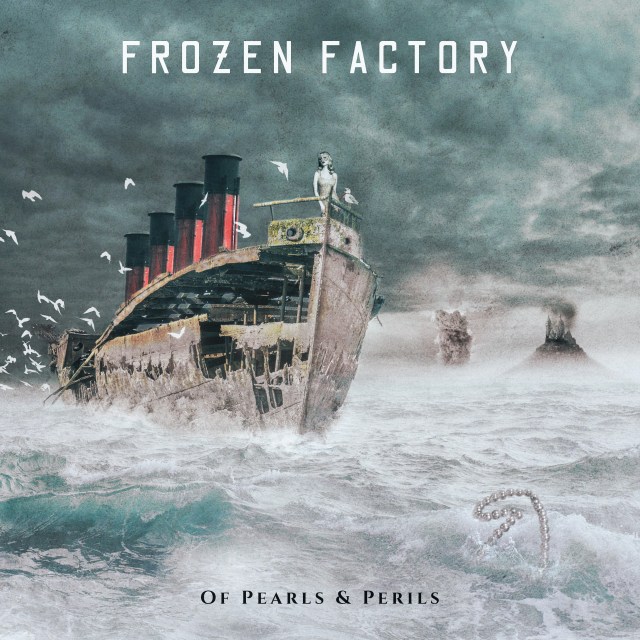
Hailing from the beautiful nation of Finland is the exceptionally talented rock band Frozen Factory. I first introduced them to my readers last June when I reviewed their excellent EP The First Liquidation, which they cheekily described as “an EP with a suspiciously high number of tracks.” I was so impressed with its high quality that I didn’t think they could top it, but their new album Of Pearls & Perils has proven me wrong. I’m not generally a huge fan of hard rock, but I loved it at first listen. And it’s not often I call an album a “masterpiece”, but Of Pearls & Perils deserves that title, and then some.
Since forming in December 2018, Frozen Factory has undergone several personnel changes, and now consists of founding member Tomi Hassinen on bass, keyboards and backing vocals, Stephen Baker (who’s originally from England) on lead vocals, Mici Ehnqvist on lead guitar, Marianne Heikkinen on drums, and Johnny Koivumäki, who joined the band in late 2021, on rhythm guitar. Influenced by some of their favorite acts like Alice In Chains, Iron Maiden, Depeche Mode, Pink Floyd, System of a Down and Rage Against the Machine, they create moody, complex and melodic alternative rock with strong undercurrents of progressive, grunge, symphonic, metal and dream rock. This seemingly contradictory and eclectic combination of stylistic elements makes for some incredibly compelling and darkly beautiful music that’s a joy to listen to.
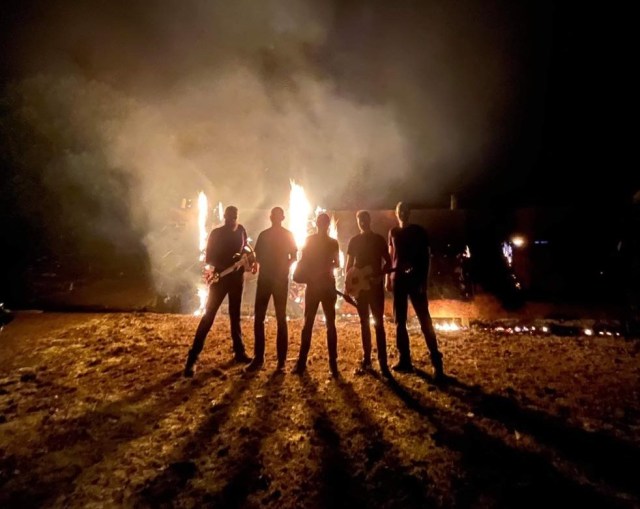
Photo of Mici, Johnny, Marianne, Stephen & Tomi by Petri Sara
Interestingly, Of Pearl & Perils was actually written and partly recorded before the band even began writing and recording The First Liquidation EP. They explain: “We penned ‘Of Pearls & Perils’ almost immediately after finishing 2020’s ‘Planted Feet’ and fell so in love with the songs that we wanted to make sure we’d give the album all the right conditions to sound the best it could. So, we banked the songs and experimented with the creation of ‘The First Liquidation’, expanding our horizons along the way. As a result, the EP and this new album link together almost like siblings. That’s not to say that ‘The First Liquidation’ is a B-record – it simply felt like a necessary bridge to our growth before we tackled the monster we knew was lurking within ‘Of Pearls & Perils’.“
And what a magnificent monster it is! They’ve really outdone themselves with their skillful blending of alt-rock, melodic metal and progressive elements to create an epic, mind-blowing and stunning work. All 12 tracks are outstanding, overflowing with gorgeous melodies, driving rhythms and breathtaking instrumentation. The poetic lyrics are both biting and deeply insightful, and delivered with Stephen’s powerful, resonant vocals, which often cover me with chills. He seriously has one of the more beautiful voices in rock today.
Written by Stephen and Tomi, the album addresses such topics as inequality and oppression, toxic masculinity, the afterlife, and the climate crisis. More specifically, the dark lyrics reflect Stephen’s inner struggles with the behavior of much of the human race, including himself. He elaborates: “I really cannot comprehend why we’re so careless with our home planet and the living communities that depend on it. I’m sad when I see regular people fighting with other regular people and then voting to give power to people who’re hell-bent on destroying regular folk. I feel like we’ve become so easy to influence, so easy to deceive, so easy to distract with trivial differences. I’d like to see a safe world where every kind and life-respecting human has the opportunity to reach their potential, no matter what kind of body they possess, beliefs they follow or lifestyle they lead. Our songs are usually a wake-up call, and often written to push myself as well as anyone else who listens, because I sometimes feel lazy and inactive about things that should anger me to the core. I want to be more. I want to do more to help. I want human civilisation to succeed.”
Album opener “Murder in the Depths” starts off with a woman speaking the line “Il n’y a que les imbéciles qui ne changent pas d’avis” (which translates to English as “Only a fool would never change their mind”), accompanied by jarring sounds of a siren blaring a warning. The woman speaking is Angela Carolei, one of Frozen Factory’s most active fans, whom they’ve never met. Her voice is also featured in several other little moments throughout the record, in both French and English. Stephen said that he chose to use some minor French moments for both Of Pearls & Perils and The First Liquidation “because the French language includes some absolutely killer phrases that don’t work so well in English.”
With lyrics containing nautical references, a theme that will be repeated on several tracks, the song encapsulates the album’s overall messages of social injustice and inequality, not only among classes but between men and women, oppression and environmental degradation. “Murder in the Depths” speaks of a woman who perished while diving for pearls intended for the wealthier class, which she would never have had the opportunity to wear: “With little choice like most before, she laboured for a dream. Was sent to dive too deep, where nobility refused to even dip their toes. Her lungs collapsed far below...if we don’t face up together, fear will point our distrust down. And billions more will drown.”
The song quickly segues into “Host With the Most“, blasting through the speakers with a barrage of raging guitars, throbbing bass and Marianne’s explosive drumbeats. And though it’s purely coincidental, I like the little guitar riff that sounds like the one from The B-52s “Rock Lobster”, and Mici’s wailing guitar solo in the bridge is absolute fire. As an Atheist who does not believe in heaven nor hell (other than how both are manifested here on earth), the lyrics about how so many people endure injustice and pain in their lives, hopeful in the belief they’ll do better in an afterlife, strongly resonate with me: “How many place their bets on bliss? How many live their lives for this? Oh have they seen some guarantees or signs of afterlife? / There’s only one life given at a time. The rest is a question that will never die. But you will die, so be prepared to say goodbye. No afterlife.“
“Solar Windfalls” is a gentle song with a nod to David Bowie’s iconic “Space Oddity” and “Life On Mars”, sung from the perspective of an astronaut traveling through space, contemplating their endless search for exciting new adventures and the state of the world they’ve left behind: “I’m closer than ever to an answer for Bowie. Yeah I turned to face the strange, but what can life on Mars teach me about the richer man’s change?/ What have I become? Pursuing shiny desires. Points of light above keep me majorly wired. Is there even a place at the end of my trail? Or will I endlessly trace a line that’s destined to fail? The pale blue dot fades, she is to me ever darker, ever farther she wanes, and the chasm grows starker.” The somber piano keys, twinkling synths and chiming guitars are wonderful, as are Stephen’s plaintive vocals.
The next several tracks see Frozen Factory railing against racism, cruelty and putting our faith in duplicitous leaders who steer us to ruin. On “Equalise Power“, they call out racism, fear of the other, and police brutality, and implore us to act with fairness, tolerance and compassion: “What part of you is broken? That your heart cannot be open to a person of another colour, what is colour? You’ve been put in a bubble to elevate your struggles. Your fire stoked by nonsense that you swallow gladly. Apparently unable to see what’s on the table. The poison that you’ve been fed since your first days alive./ Your reasons for hate are not reasonable. When you discriminate you are not reasonable. That call you will make it is not reasonable. The actions police take will not be reasonable. Time to end this now. Time to equalise power. Seize thy hour.”
They channel their inner Alice In Chains on the hard-hitting “The Depths of Hell“, a scathing diatribe against too many societies’ penchant for going against our best interests in the support of disingenuous and evil leaders who stoke hate and divisiveness by preying on our fears: “Our only future is the ash of the past, when we fund and root for the most egregious ass. We love a Lucifer to fork our lives on every burning issue. They will decide. We’ve picked our demons to fix our aim and sell us our trip to heaven.” The song’s a proper metal rock gem, with a deep, pummeling rhythm courtesy of Tomi’s crushing bassline and Marianne’s speaker-blowing drums. Mici’s guitar work is positively fearsome as he makes his six-string wail and scream, and Stephen’s vocals are dripping with venom as he matches the music’s fury note for note.
And speaking of venom, they launch headlong into “Loud, Lazy, Late“, furiously calling out an asshole totally lacking in any redeemable attributes: “Can’t you show any will to grow? Any thoughts to be kinder than you’ve been. You’ve no empathy, it’s all me me me. You don’t like my tone, but you’ve abso-fucking-lutely got to go! Loud, lazy, late and low quality!“
“Pie in the Sky” is a stirring anthemic ballad, with beautiful piano, cinematic synths, and exuberant jangly and wailing guitars. The lyrics seem to speak of finding contentment not from material possessions and desires, but from the natural beauty and love that lies inside each of us if we allow it to flourish and grow: “False symbols of winning life, bring promise before denial. ‘Cause what we’d like you cannot buy. This is our own and it’s beautiful.”
I think my favorite track from a musical standpoint is “Absolute in Vanity“. I love its strong driving beat, heavy chugging rhythms and gorgeous ostinato guitar riffs of a similar vein as Led Zeppelin’s “Kashmir”, though the melody is vastly different. The song is a kind of response to “The Depths of Hell” above, but this time sung from the perspective of the evil Trump-like leader people have elected: “You! I will be your king if you please. What’s that? You love me? Well. I don’t come free. No. I will be your king if you please. What’s that? You chose me? Well. I don’t come cheap. Because of lies, lies. You idolise lies.” Between those fiery riffs and Stephen’s spectacular impassioned vocals, I’m left covered in goosebumps.
“We’re Gonna Die” is a rousing banger decrying peoples’ greed and insatiable need for more, more, more, and how it’s killing the planet: “Long ago on a hill lived a group who felt they had a need. Though they had more than most, their whole life was a spiral of greed. They lit a fire for their revolution. The first distant lands burned with absolution. Hey you, we’re gonna die if you don’t change your lifestyle now.” The arresting piano riff reminds me a bit of U2’s “New Years Day”. “Never is a Theory” is perhaps the most enigmatic song on the album. I’m not sure of the song’s meaning, but my guess is that it’s about coming to terms with one’s own death, as expressed in these lyrics: “Will I cease to be tonight, as i can’t believe my sight. A myth the trust in vision seems hard to swallow, lies or dreams yeah. End of the river. End of the river. I’m trying to see, what’s at the end of the river. End of the river for me.” In any case, it’s an enchanting rock song, with terrific improvised guest vocals sung by Lily M.
The title track “Of Pearls & Perils” opens on a pensive note with a man assuring his son that, even though the ship (representing the Titanic) is in trouble, everything will be alright: “Try not to worry about it son. You know what the captain said. He said ‘Every single one of us is safe on this ship.” The song gradually expands into a haunting piano-driven anthem, accompanied by grungy guitars and soaring vocals.
Stephen states that the song is essentially about toxic masculinity, and how men have taken the world in the wrong direction, but remain incredibly stubborn and resistant to change, denying or underplaying their weaknesses and overstating their strengths in order to protect their pride. The ship represents the ruling elite of men who currently control the ship of human destiny, and in this song, a man gains a woman’s love with a gift of pearls, assuring her the ship is safe: “With a hull so strong, we will brush off ice and storms. On the treacherous cold seas we will never freeze. I’ve heard no man can steer us wrong. Our ship will n carry on. This titan can’t be breached. These props will never seize.” As the ship continues to sink deeper into the ocean, his unwavering belief in the men who built the ship, and that it would never sink, cannot be broken: “Sit with me, be relaxed. Rest assured this is a lapse. Don’t listen, look or think. You cannot know that we will sink.” The song ends with sounds of actual Morse code from the Titanic, sending out a distress call, accompanied by an eerie voiceover of a woman, sung by Angela Carolei, saying “Ce n’est pas la mer à boire“, which translates to “It’s not the sea to drink”.
The album closes with the somber “Deceit Upon the Decks“, a final note to the story of the woman described in “Of Pearls & Perils”. The song also mirrors the first track “Murder in the Depths”, except that in this song, the woman who perished was upper-class, rather than a worker: “A skull dressed with her jewels. He never loved her true. They never really were for her, but emblems for other men to observe. Of status, cash and property. The shackles in his evil dream. Her trust went to the top of the chain. They both tumbled when he fell from grace.” Stephen says that the final lines of the song sum up the album’s overall meaning, that we’ve been conditioned to believe that many things that are actually against our own interest would be good for us, and we often allow things to happen that are bad for us: “Of pearls and perils there is much lore. To claim each as a gem for the men with it all. And they’ve told you they’re one and the same. And it’s not your place to question their game.” The last words, spoken by Angela, quietly implore us to “Please, think again.”
What more can I say about this album that I haven’t already gushed over, other than to restate that it’s an epic, mind-blowing and stunning work. The thought, care and strong musicianship that have gone into its creation and production are truly impressive, and the five members of Frozen Factory should be very proud of what they’ve accomplished. I think it’s one of the best albums of 2022.
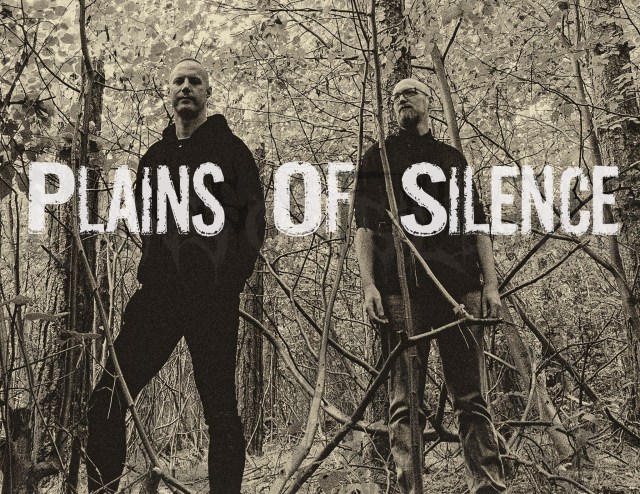
Plains of Silence is a progressive/post-rock act based in Lincolnshire, England, and comprised of the very talented double threat of songwriter and multi-instrumentalist Rick Whitehead and bassist/guitarist Geoff Standeven. The busy duo have also been active with other bands and music projects both in the past and present. Both were members of alt-rock band The Saboteurs (who I’ve previously written about and are now on hiatus). Rick also records music under his music project Sparralimb, and was previously a member of now defunct rock band Tripswitch, while Geoff also plays bass with metal rock band Sleepless.
As Plains of Silence, Rick and Geoff create exquisite instrumental compositions that incorporate elements of progressive, alternative, grunge and metal rock. Rick plays lead guitars, keyboards/synths and drums, while Geoff plays rhythm guitar and bass. Last August, they released their debut single “Jeremiah”, a darkly beautiful 8-minute, 40-second long tour-de-force of melodic guitars, meandering rhythms and cinematic crescendos. Now the guys are back with their debut EP Archangel, which they’ve released on Bandcamp. The EP will be available beginning March 4th on all major streaming sites.
Archangel features “Jeremiah”, along with four new tracks, each of which sounds uniquely different and most of which are fairly long, running well over five minutes. Kicking off the EP is the gorgeous title track “Archangel“, which Geoff told me is dedicated to all mums everywhere, and in particular his own mum who’s currently battling cancer. He said he wanted to write something from the heart that people could connect with, and after listening to the track, I think he’s succeeded quite nicely. The song begins with a somber but lovely acoustic guitar riff, backed by a rather mysterious gravelly background synth of some kind that provides a fascinating contrast with the haunting guitar notes. Two minutes in, the music expands into a glorious and almost spiritual Pink Floyd-esque soundscape, with shimmery guitars, throbbing bass and emphatic drumbeats.
Plains of Silence switch things up on the next track “Redded“, a moody rocker with a blend of grungy and melodic riffs layered over a strong driving rhythm. Rick lays down a tasty psychedelic guitar solo in the bridge, before the song fades out. This is followed by “Jeremiah“, which I think is my favorite track on the EP. As I alluded to earlier, the song is a monumental tour-de-force and a feast for the ears. The song starts off with a simple but arresting acoustic guitar riff lasting slightly over a minute, at which point it’s joined by a rhythm section of subtle bass and measured drums. Soon, the guitar becomes more intricate and melodic up to around 3:45, when the tempo increases with edgier riffs and more forceful drums and bass. The instrumentals continue to build until everything erupts into a dramatic crescendo of grinding gnarly riffs, pummeling bass and assertive, military-style drumbeats that transition to a barrage of thunderous percussion. The music calms back down to just strummed guitar and thumping drumbeats for the final minute as the song ends on a somber note.
As its title would suggest, “The Saint of Killers” is the darkest, most intense track on the EP, with strong progressive and alternative metal underpinnings. Much of the song features a furious barrage of grinding buzz saw riffs, crushing bass and explosive percussion, interspersed here and there with brief interludes of beautiful chiming guitar notes and subtle drumbeats, all of which serves to create a powerful and sonically fascinating track.
The final track “Starlight” is a wonderful melodic rock song, highlighted by Rick’s impressive guitar work and Geoff’s gorgeous driving bassline. The first two-thirds of the song is hard-hitting, with an onslaught of heavy riffs, bass and drums. But at around 3:45, the tempo abruptly changes to a serene, contemplative mood, with lovely strummed guitar notes and ambient natural sounds of birds chirping in the breeze all that we hear. It’s a fine, soothing close to the EP, ending it as it began with the first notes of “Archangel”.
Archangel is a stellar EP, and a testament to the creativity and talents of these two musicians Rick and Geoff. Anyone who’s a fan of progressive rock or alternative metal, delivered with outstanding musicianship, will enjoy this record.
I’ve been following British psychedelic garage/punk band DENSE pretty much since their beginnings nearly five years ago, and it’s been gratifying to watch them grow and mature as artists. Based in Leeds, the wickedly talented trio – comprised of Charlie Fossick (Guitar/Vocals), Dylan Metcalf (Bass) and Sam Heffer (Drums) – live up to their moniker by combining thick, fuzz-coated grooves with progressive elements and fierce instrumentation to create music that’s electrifying, innovative and intense.
I’ve written about them numerous times over the past four and a half years, most recently in August 2020 when I reviewed their debut EP Abjection, which I described as “four combustible sticks of dynamite packed into 14 explosive minutes” (you can read some of my previous reviews by clicking on the links under ‘Related’ at the end of this post). Now the guys are back with a new single “Reckoning“, which they refer to as “a desperately needed release of energy“. After listening to the track, I’d say that’s almost an understatement, as it’s a furious eruption of wailing distortion and sonic mayhem.
The guys have gained a reputation for their electrifying live performances, and they’ve somehow managed to capture that energy and inject it into their songs. As MC (who goes by @LeedsGigs_ on Twitter and writes about shows in and around Leeds) commented on my review of Abjection, “Seeing them live is a visceral experience and their music demands your attention. Charlie contorting primeval sounds from both mic and guitar through his pedal board, Dylan prowling the stage with adrenaline-fueled rockstar stances, riffing on a parody of every bedroom axeman, and Sam, limbs akimbo, thrashing his drumkit into quivering submission.”
According to their press release, “‘Reckoning’ is an abstract journey through anguish, capturing the frustrations of modern day life through utilisation of melodic dissonance alongside a focus on rhythm and groove-led songwriting, conveying what the lyrics represent. The track boasts a mix from Ross Orton, who has worked with the likes of Arctic Monkeys, Drenge, God Damn, Pulled Apart by Horses and Working Men’s Club. This was the first track we wrote together in 12 months post-lockdown, and it feels like the track absorbed and channeled a lot of our pent-up energy and frustration that the three of us individually experienced during isolation.”
That pent-up energy and frustration is manifested in an explosive barrage of super-gnarly guitars, grinding bass and bombastic percussion. Dylan drives the chaotic rhythm forward with a deep, chest-thumping bassline while Sam smashes his drumkit like a man possessed, the two of them somehow bringing order to the madness. Charlie unleashes the full fury of his double-barreled arsenal of gritty guitars and savage vocals, thrashing the airwaves with frantic, reverb-drenched psychedelic riffs, punctuated here and there by flourishes of screaming distortion, while sending shivers up and down our spines with his signature demonic wails and screams. The song is so intense, I’m left in a quivering heap by the end. It’s good to hear that DENSE have not lost one bit of their fearsome edge in the 12 months they’ve been quiet.
The guys pull no punches with their bitter lyrics that speak to a sense of hopelessness and despair, a reckoning with the terrible state of things:
When I get inside I never feel dry the rain it constantly pours and I’ll ask for more
I feel a nervous pulse men riding on horse been dropped in the tank shot, point blank
residing I’m torn providing I’m born declining I’m torn reclining I’m born
I’m formed we’re scorned No future And no past
and it sails, to the core sailing down to the core, to the core, to the core
Reliving Past lives and I’m always Terrified
The ends are looking frayed Cause it tore me Fired under No cause
residing I’m torn providing I’m born declining I’m torn reclining I’m born
Reckon now? Reckon now? Re, Reckoning, Reckoning
I’m formed we’re scorned No future And no past
and it sails, to the core sailing down to the core, to the core, to the core
DENSE will be launching “Reckoning” at a show tonight at the Castle Hotel in Manchester. They’ll perform again on the 13th at Royal Park Cellars in Leeds.
















 ECLECTIC MUSIC LOVER