

As I wrote last October when I reviewed his brilliant album Friday Night Rockstar (which you can read here), singer-songwriter-musician Lewca is one of the funniest, most creative and irreverent artists I’ve come across, with a deliciously bawdy sense of humour. As he cheekily states in his bio, “Lewca was born in a squat in Brixton, by age nineteen he was living in a squat in Paris, go figure. After studying fine art and dabbling in film, he started making music just before he was too old to die young. His influences range from cheap beer to expensive rum, and also The Clash, The Streets, Sleaford Mods, LCD Soundsystem, Bob Dylan, Eminem, Tom Waits…whoever is making decent music. He currently lives in Normandy, has three kids, a mortgage, and a semi-domesticated hedgehog named ‘Sonic’.”
To reiterate, he’s been making music for years, and after being in a few bands “that fell apart for the usual reasons”, he decided to embark on his own music project as Lewca in 2018. Although he collaborates with lots of different musicians on his projects, his main partner in crime is S.O.A.P. (shorthand for Son of A Pitch), a Parisian composer, producer, drum & bass DJ and beatmaker he met at a gig in 2013. Their partnership grew from a shared love of wonky beats, British soundscapes and a healthy dose of humour, along with an “expectation of absolute world domination and unfathomable wealth, obviously”. Together, they make exciting, zany and eclectic music drawing from a multitude of genres ranging from alternative rock, post-punk and indie pop to hip hop, drum and bass and nu disco.

Now the dynamic duo are back with another uproarious new album Boombap for Boomers, and I’m here for it! Though Lewca is far too young to be a Boomer (the generation I sit squarely in the middle of) and is most likely at the tail end of Generation X, he perfectly articulates the puzzled bewilderment of a middle-aged working stiff and parent coming to terms with the fact he’s not young anymore. As for the word “boombap”, a quick Wikipedia search revealed it to be a subgenre of hip hop that’s “an onomatopoeia representing the sounds used for the bass (kick) drum and snare drum, respectively.” The style was apparently prominent on the East Coast of the U.S. during the golden age of hip hop from the late 1980s to the early 1990s.
Lewca says Boombap for Boomers, the second album to come from the basement sessions with S.O.A.P., “is as laid back as ‘Friday Night Rockstar” was angst ridden“, adding that it’s “about time passing, personal doubts and demons, abuse and dreams that will never come true.” All the lyrics were written by Lewca and the music composed by S.O.A.P., who also mixed the tracks. Mastering was done by Blanka. Besides Lewca and S.O.A.P., additional vocals and/or instrumentals on the album were performed by the artists MC Burnoot (of Scottish band Fire Up The Sun), Mick Swagger, Jamaican dancehall artist Elephant Man, Faya Braz, OrangeG, John Michie, Ian Williamson, Christelle Canot, Cody and Dylan Forsyth, and Luis.
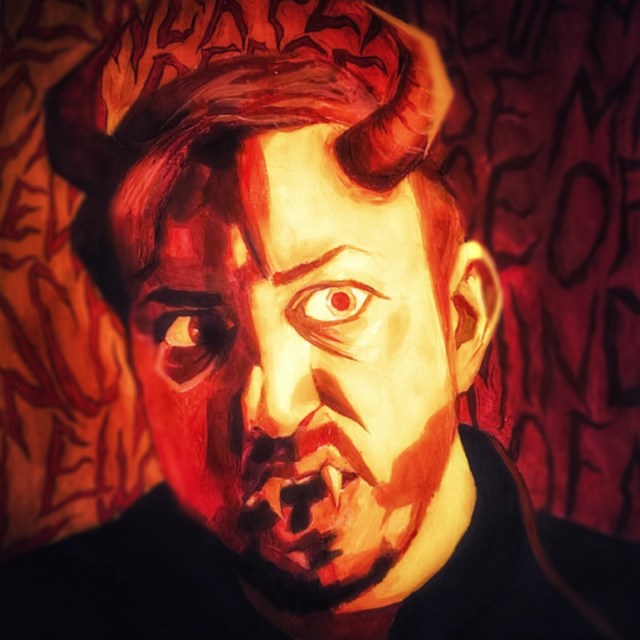
The album kicks off with blaring bagpipes and the voice of Scottish artist MC Burnoot trashing the album right from the get-go on the 32-second long “Fire Up the Intro“: “What the fuck is this? I’ve just finished listening to the new record by Lewca and let me tell ya, it’s pure dogshit. ‘Boombap for Boomers’, what in the fuck is that?” Next up is “Peace of Mind“, a delightful tune about facing yourself after having sold your soul to the Devil to get what you thought you wanted: “Does the Devil now have my number, or have I always been in hell? All I ever wanted, was peace of mind. Bought a brand new soul, with a piece of mine. All those Sunday mornings, behind locked doors. I had all I needed, but I wanted more.” I love the slow, honky tonk piano riff, carnival-like synths and quirky childlike background vocals and sound effects that give the song its zany feel.
Even more delightful is “Roundabout“, where Lewca reminisces about lazy summers spent with friends during his teen years: “Sitting in the middle of a roundabout, smoking weed and wonderin’ what life’s about. Spend a whole summer hanging out, pretending we were free. And I guess we were somehow.” As the song progresses, he sings of how that comaraderie is recaptured when they meet up again as adults with kids of their own, knowing those kids will end up behaving just the same, also viewing him as “a geezer who’s out of touch“. Once again, Lewca and S.O.A.P. employ all sorts of quirky instruments and goofy sound effects to create a lighthearted and playful vibe.
On “I Got it All“, he questions whether material possessions really make us successful, acknowledging with his usual cheeky humour that he’s already satisfied with what he’s got: “Got a beautiful wife that can hardly stand me. We got a nice house, yeah we got a nice family. Car that starts every once in a while. Different colored doors really give it a style./ I don’t need shit, mate. King of the world, mate. I got it all!” Listening to Lewca sing, I can’t help but compare his deep, heavily accented vocals to those of Mick Jagger. Conversely, the jazzy hip hop track “Day Job” sees him lamenting about the difficulties of making it in the music industry: “The game’s fucked up, and with the money I make in music, I’ll be giving it up” Guest vocalist Mick Swagger raps in agreement “I guess we do it for the love / Money’s a disease and I’m tryin’ to catch it / Fingers crossed, but ain’t we quittin’ day jobs yet.”
“Quite Like Me” has Lewca and S.O.A.P. teaming up with Jamaican dancehall (a style of reggae known as ragga or dub) legend Elephant Man, who Lewca said they “managed to get by basically cold calling him drunk.” Apparently written as a vehicle for the dream collaboration, the song celebrates the joys of being a totally unique artist with a style like no one else. With call and response lyrics, Elephant man ponders “Why you do what we do?”, to which Lewca replies “There’s nobody quite like me.”
On the madcap drum and bass gem “All Grown Up“, Lewca decries the soul-killing responsibilities of adulthood and how desperately he wants to avoid it: “We’re all grown up, and it fucking sucks! Oh no, I don’t wanna grow. I refuse to be an adult.” Once again, S.O.A.P. draws from his bag of musical tricks to create a playful sense of mayhem with goofy synths, funhouse sound effects, squeaking toys and the child voices of brothers Cody and Dylan Forsyth. All that being said, there are times when Lewca simply must perform his role as an adult in order to get his kids off to school, despite suffering from a hangover, on the wonderful ska song “Monday Morning“.
One of my favorite songs on he album is the superb title track “Boombap for Boomers“, a celebration of the music Lewca and S.O.A.P. make: “I really got nothing to say, just rappin’ some shit, hope it sounds okay / We ain’t got a lot of talent, but we do what we can / We ain’t in it for the money, we’re just booming boombap.” With its propulsive drum and bass beat, wobbly industrial synths and intense scratching, the song is an exhilarating blast from start to finish.
And speaking of exhilarating, “Discoboy” nicely delivers with a wonderful pulsating house dance groove, exuberant piano keys and a colorful blend of gnarly and swirling synths. Featuring some terrific beatbox by French beatboxer and looper Faya Braz, the song encourages us to lose ourselves on the dancefloor while ignoring the haters and judgemental pricks, and practice a live and let live attitude by embracing others’ differences. Lewca frantically raps “Be who you want in life, fuck who you wanna fuck, goddamn, and fuck them haters / Forget the grind, the world outside, let’s lose our minds again.”
Featuring a buoyant retro 80s synthpop vibe, “Internet Recovery” opens with those annoying dial up sounds we all suffered through in the early days of the internet. Lewca cleverly uses a computer reboot as a metaphor for reviving his exhausted and frazzled self “I’m running on fumes, mate. It’s like my system is about to shut down / I need to regroup, get my shit together / Best guess is to erase the whole damn disk, format my mind, I might cease to exist.“
One of the many things I love about Lewca’s songs are the entertaining and humorous stories he weaves. On the autobiographical “Life, innit?“, he tells of his marriage, and how it went to shit: “I met a girl / We had sex, we fell in love, we had more sex / We got married on a beach / We had kids, we left the city / We got a loan, we bought a house / I did it up, but guess what, she threw me out / Love is funny like that, innit mate.” But later in the song, he confesses that his marriage is in fact pretty good: “Full disclosure, I was just kidding. Me and my wife, we’re okay, we’re still winning. I’m so happy we’re still together. But for this song, getting thrown out just worked better.” With a deep drum and bass house groove, lots of glitchy sounds, and guitar played by British singer-songwriter and musician John Michie, it’s a great track.
The closing track “Daydreaming“, a mellow Americana-tinged ska song featuring charming banjo strumming by Pittsburgh artist OrangeG, continues the autobiographical theme with Lewca confessing some of his shortcomings, which aren’t really so serious at the end of the day: “I played a fool / Made believe that I break the rules / My life is one big bluff, but too much is never enough / Daydreaming, wasting my life away / Nothing’s gonna be okay, and that’s okay with me.” It’s a heartwarming end to a fantastic, massively entertaining and thoroughly enjoyable album.
Boombap for Boomers will also be available in a limited edition Halloween Orange 12-inch Vinyl. For purchases within the UK, Lewca advises pre-ordering through the Wax & Beans website shorturl.at/zFKT9, as the postage will be more affordable.
Connect with Lewca on Facebook / X (Twitter) / Instagram / TikTok
Find his music on Bandcamp / Spotify / Apple Music / Soundcloud / YouTube


 ECLECTIC MUSIC LOVER