Fresh New Tracks, Vol. 48 – eLxAr, Joe Peacock, Kevin Robertson, Sorry Ghost

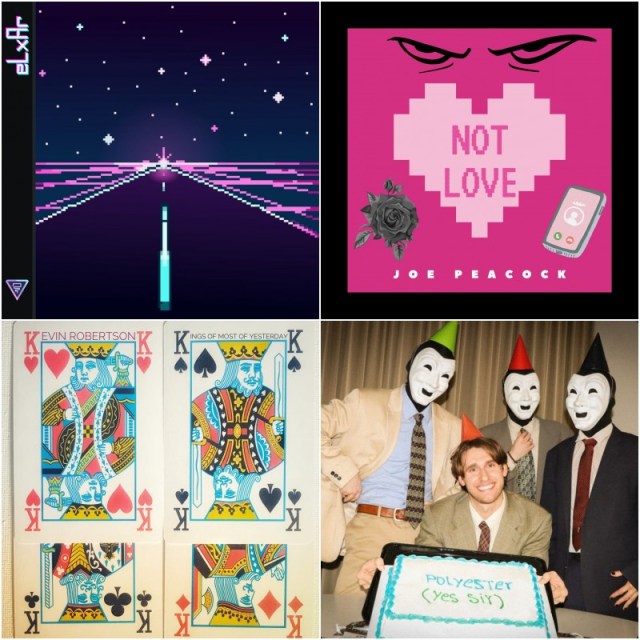
Time for another installment of my Fresh New Tracks series. Today I’m featuring new songs by, in alphabetical order, Italian electronic/synthwave duo eLxAr, English singer-songwriter Joe Peacock, Scottish singer-songwriter Kevin Robertson, and Los Angeles-based indie pop/rock band Sorry Ghost. I’ve previously featured the first three on this blog, while this is the first time I’m writing about Sorry Ghost.

eLxAr – “Lights at the Edge of the Road”
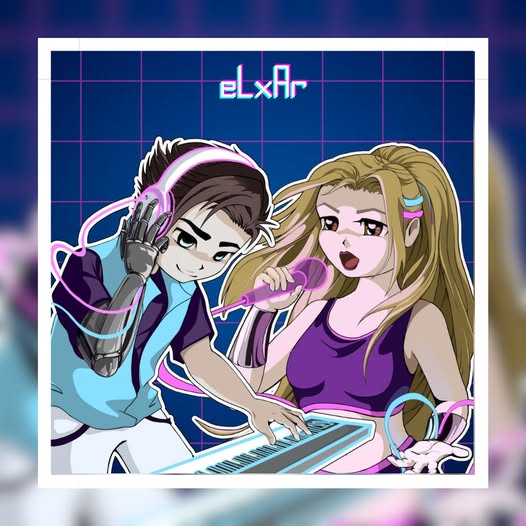
eLxAr is a fascinating electronic/synthwave act from Italy consisting of Luca, a pianist, composer, producer and game designer, and Alex (short for Alexandra), a singer-songwriter, digital designer, illustrator and multi-faceted artist. Not only are both of them multi-talented and creative, they’re also passionate about social justice and environmental issues. I first wrote about them in March 2024 when I reviewed their powerful anti-cyberbulling single “Nessuno Vede”. They’ve since released a lot more music, and I thought it was time I featured them again on this blog. Their latest single is the enchanting instrumental track “Lights at the Edge of the Road”. About the song, the band states: “I think there’s something mystical about traveling at night. Look out the window and it’s only darkness. Darkness and the streetlights, passing by the car as if they were divine fires, falling directly from the sky.” The darkly sensuous groove and crystalline synths beautifully capture the aura and mystery of a night drive.

Joe Peacock – “Not Love”
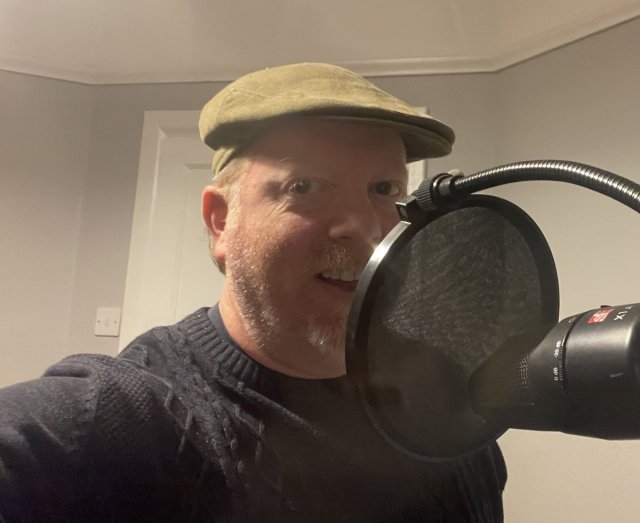
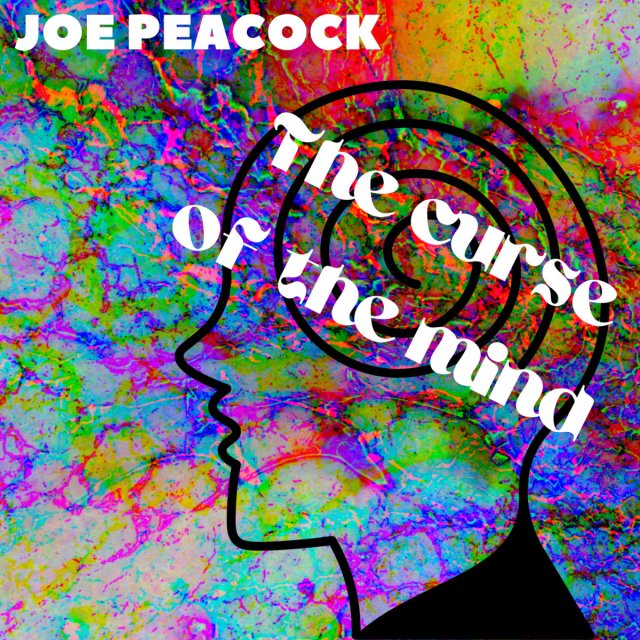
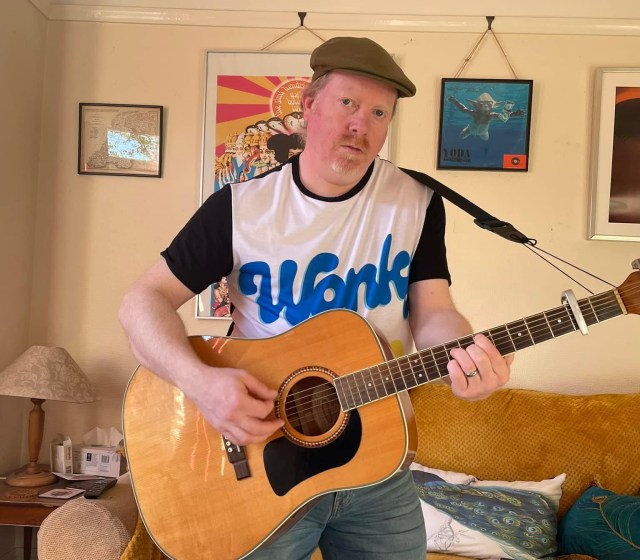
Joe Peacock is a British singer-songwriter and musician born and raised in rural Herefordshire and now based in Birmingham. Describing himself as “a genre-hopping storyteller, whose music has been compared to Bowie, Blur and Costello”, he’s a hard-working, thoughtful and talented musician who continually experiments and pushes himself beyond his comfort zone. And like eLxAr, Joe also cares deeply about the environment, social justice and inequality. The prolific artist has released a tremendous amount of music over the past four years, including three albums – I’m Only Here in 2021, Before the robots told us where to go in 2021, and Mirror Neuron Generator in 2022 – as well as numerous singles and five EPs, two of which, The curse of the mind and Beast Mode, I reviewed. He’s also one half of art-folk duo The Missed Trees, his side project with singer/fiddle player Louisa Davies-Foley.

His latest single is “Not Love“, an alternative rock song exploring the futility of trying to make someone love you when they’re just not interested. Joe elaborates: “The single’s about reversing the traditional lines in songs about unrequited love, as I find that a bit creepy and people should realise that going after someone who doesn’t reciprocate never works and just makes both sides unhappy. All the incels and toxic masculinity stuff comes in there a bit, too.” I love his shimmery and grungy psychedelic guitars as well as clever lyrics like “I tried to woo her with charm and wits, but she was just not having it./ I danced close to her in a club to get the opportunity to rub myself against her body.” 

Kevin Robertson – “Kings Of Most Of Yesterday”

Hailing from Aberdeen, Scotland is Kevin Robertson, a singer-songwriter and guitarist who makes a very agreeable style of jangle and psych pop. Strongly influenced by a range of influences including 60’s pop, classic and psychedelic rock, 80’s jangle music and 90’s Brit pop, he’s been actively recording and releasing music both as a solo artist and as a member of Aberdonian (I love that word) jangle pop five-piece The Vapour Trails since 2019. In a relatively short period of time, Kevin has released an impressive amount of music under his own name, including four albums – Sundown’s End in 2021, Teaspoon of Time in 2022, Magic Spells Abound, an aptly-titled collection of nine exquisite songs I reviewed in 2023, and The Call of the Sea in 2024.

Now’s he’s back with his latest single, “Kings of Most of Yesterday“, which dropped yesterday, June 20th. The song is the second single from his forthcoming fifth album Yellow Painted Moon, to be released July 11th. Written and sung by Kevin, who also played acoustic and electric guitars, the song includes additional eclectric guitar and bass played by his son Scott Robertson, with drums and mellotron by Nick Bertling, who also produced the track. The song features Kevin and Scott’s beguiling twangy guitars that remind me in spots of Dire Straits’ “Sultans of Swing”. It’s a beautiful song with an understated, yet powerful message about the ephemeral nature of each generation’s dominance within a given culture, with each gradually passing the torch to a younger generation who will then lead: “Change it has to come. The generations live and die. The kings of most of yesterday shall fall. Tomorrow goodbye.”

Sorry Ghost – “polyester (yes sir)”
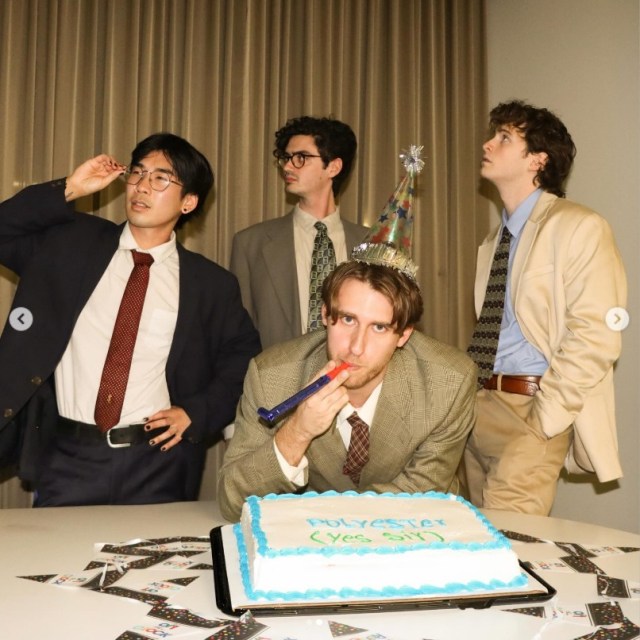
Without question, one of the most irrepressibly charming – and might I add best-looking – bands around today is indie pop/rock four-piece Sorry Ghost. Originally formed as a pop punk band in Baton Rouge, Louisiana by guitarist and vocalist Matt Polito and bassist and vocalist Dan Anton, along with Ryan DeJean and Nick Broyles, they released their debut EP Win By Default in late 2016. Ryan and Nick later left the band and Tyler Hernandez briefly joined the lineup as drummer, at which point they released their debut album The Morning After in April 2020. Tyler departed in 2021, after which Matt and Dan relocated to Los Angeles, where they were eventually joined by Tate Silver on drums and Sean Duong on guitar and vocals to complete their current lineup. The new location and lineup steered their musical direction toward a breezier indie pop/rock sound, and their popularity has continued to grow.

The guys have a wickedly cheeky sense of humor, calling themselves ‘iconic indie idiots’ whose music is “a potent blend of optimism and frustration, loud and soft edges, encouragement and rejection“, and frequently delight their fans and followers with hilarious and endearing video reels of themselves on Instagram and TikTok. I follow then on Instagram, and their posts never fail to put a big smile on my face. Their videos are also highly entertaining and creative, evidenced by the one for their new single “polyester (yes sir)“, which dropped yesterday. Directed by Jeremy Stewart, produced by Katherine Myers and shot by Luis Adrian Lara, the video shows the guys performing the song in a bucolic setting in the Santa Monica Mountains, with Dan playing a decidedly frustrated office executive. My take on the lyrics is that they speak to feeling stuck in a job or lifestyle you hate, acting out a part that doesn’t feel genuine or fulfilling, with ‘polyester’ representing the wardrobe you’re forced to wear: “When I step right into line. Just a little to the left. Step right don’t you lie, There’s so little to me. Left my life ‘low the frame. Now I’ve found me to blame. Polyester that’s a yes sir, I can’t take another gesture.” I love the song’s mellow vibe that sits in a sweet spot between sunny and melancholy, as well as the colorful blend of jangly and chiming guitars accompanied by pleasing harmonies.
JOE PEACOCK – EP Review: “Beast Mode”

Joe Peacock is a British singer-songwriter and musician who was born and raised in rural Herefordshire and now based in Birmingham, England. Describing himself as “a genre-hopping storyteller, whose music has been compared to Bowie, Blur and Costello”, he cheekily adds “all money from the digital sales of my music go into paying producers/mixing & mastering engineers.” Not only is he a hard-working and talented songwriter and musician who’s not afraid to continually experiment and push himself beyond his comfort zone, but also a thoughtful family man who cares deeply about the environment, social justice and inequality.

Mr. Peacock rediscovered his creative spark during the Covid lockdowns, and began writing and recording songs at home, handling all aspects of performance and recording. The prolific artist has released a tremendous amount of music in over the past three years, including three albums – I’m Only Here, in April 2021, Before the robots told us where to go, in December 2021, and Mirror Neuron Generator, in July 2022 – as well as numerous singles and four EPs, one of which, The curse of the mind, I reviewed last August. In addition, he’s also one half of art-folk duo The Missed Trees, his side project with singer/fiddle player Louisa Davies-Foley, who released their three-track EP Animals last April. Now he returns with his fifth EP Beast Mode, featuring six fascinating animal-themed tracks based on real events. He hosted a listening party for the EP yesterday, in which he provided lots of insight behind each track.

The EP kicks off with “Pass the puffer“, a song inspired by an episode of the BBC program Spy in the Wild, which detailed how dolphins swimming round a puffer fish can become blissed out from small doses of the lethal toxins emitted by the fish. He was prompted to do a bit of research on dolphins and created a song not intended to be political or animal rights based, but simply a cheeky observation of the dolphins’ strange behaviour. “One bite can paralyze and kill a human, but dolphins get a buzz off the neurotoxin. Are they purposely experimenting, then going off to look at their reflection? Pass the puffer before the seas get rougher.” I love the edgy cinematic synths, grungy psychedelic guitars and pulsating synth-bass, and the chirpy dolphin sounds early in the song are wonderful. Peacock’s vocals remind me of Damon Albarn, frontman of British bands Blur and Gorillaz.

Fed to the tigers” tells the story of Marius, a two-year-old giraffe born and raised at Copenhagen Zoo. Though healthy, he was genetically unsuitable for future captive breeding because his genes were over-represented in the captive population, so the zoo authorities decided to euthanize him on February 9, 2014, after which his body was dissected and necropsied in a public educational class, then fed to the zoo’s lions and tigers. Peacock notes “They didn’t want to sell him to some private collector or a circus so decided the most humane thing was to kill him and feed him to the tigers. I don’t make a judgement, just think it’s a dilemma that’s worth thinking about.”

His lyrics are both bitterly direct and heartbreaking: “Perfectly healthy (and utterly adorable). The zoo said it had no choice, but to kill poor Marius. Shot through the head, he died instantly. He will take up space for more genetically valuable giraffes. He is of no use to us and he costs us money. We can’t exceed our carrying capacity. Overpopulation is a problem you know.” The dark, spacey synths and heavy guitar tremolo lends a strong, disconcerting undercurrent to the track.

On “Cyborg (Broken Animal)“, Peacock explores the idea of using technology to control or even alter humans and animals. He elaborates further: “There’s a philosophical element to it in terms of how we should feel about experimenting with impulses going straight to the brain to control movements and things, plus a bit of a fear of what if it goes wrong and robot-insect armies start attacking us!” He sings “I’m picking up a signal, picking up a signal. My brain is now wired differently. I didn’t pop a pill or flick a switch, but I am tuning in now. See the cyborgs all around, the offspring of necessity. Our motherboards are so corrupted, we are all breaking down.” Musically, the song has a quirky but pleasant sci-fi vibe, with lots of glitchy synths and a gnarly guitar solo layered over a bouncy, repetitive dance beat.

One of the six tracks is a remix of “Cyborg” by the EP’s producer Chris Marney, titled the “Cyborg (Cyber Madness Remix)”. Marney removes Peacock’s guitar solo and fortifies those glitchy sci-fi synths with added sheen, also expanding the track by one minute and ten seconds. Peacock’s vocals have also been put through a vocoder, enhancing the overall spacey vibe. I can’t pick one over the other, as I really like both versions.

Sweet Kiss of Death” was inspired by a true story about a young Irish horse trainer and jockey named Frank Hayes who died of a heart attack while riding a horse named Sweet Kiss in a race at Belmont Park in New York in 1923. Hayes died in the latter part of the race, but his body remained in the saddle when Sweet Kiss crossed the finish line. Peacock wrote the poignant lyrics from the point of view of the horse, who was nicknamed Sweet Kiss of Death for the rest of her life. (Wikipedia) “I don’t know why your heart failed, but you’d been under pressure to lose weight. You strove and sweated, denied yourself water. Was it all too much? You never complained. Laid to rest in your racing silks, you were ready to ride again. When the reaper paid a visit, I felt your dead weight before we crossed the line. They called me the sweet kiss of death, but I carried you home.” The song opens with a what sounds like a melancholy electronic oboe, which is soon joined by what Peacock calls a weird talking bass sound he used to keep the song from sounding too overly reggae. Despite the rather dour subject matter, the song still has a lighthearted feel.

The final track “Radioactive Hybrid Terror Pigs (24 remix)” is a reimagining of a song he originally released as a stand-alone single in October 2022. Peacock says “It was the first song Chris mixed for me, so I thought I’d bring it back. It was fast and punky all the way through before, so I slowed down the verses and chopped up the guitar line, adding a few synth elements, too.” The song was inspired by a story he read about how wild boars moved into contaminated land in Hiroshima, Japan after World War II. They didn’t appear to have suffered any ill effects from the radiation, and eventually inter-bred with domesticated pigs that had been left behind in the desperate aftermath of the disaster.

Peacock added “The title’s a little bit sensationalist, but when I read it, I just thought that has to be a song! Thematically it fits perfectly with this EP.” The remix verses are sung in a skittering, almost dubstep groove with gnarly guitars, accompanied by sounds of blaring sirens as he sings “A nuclear disaster took all the humans away. Down from the mountains the boars made a foray into the dangers of the big exclusion zone. Almost indestructible, this place became their home.” The music then ramps up to a furious galloping pace in the choruses as he plaintively asks “What can we do now they’ve moved in? Radioactive hybrid terror pigs. Fierce and wild, but domesticated, too.” It’s an entertaining take on a somewhat creepy subject.

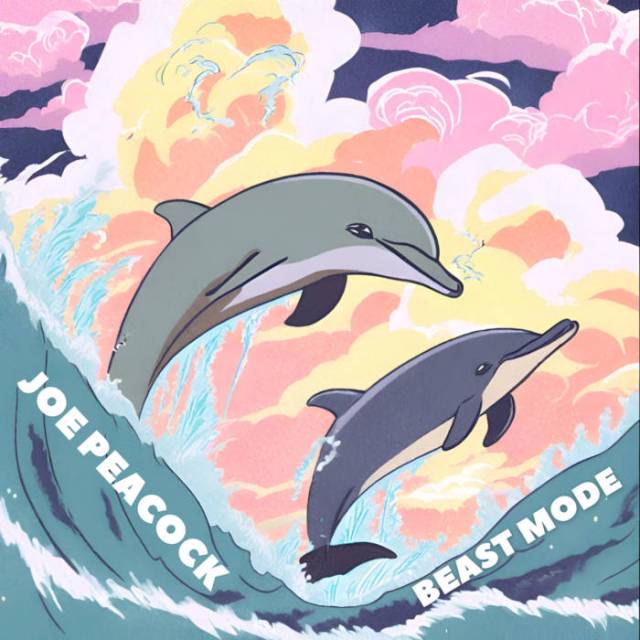
Though Beast Mode might not be everyone’s cup of tea, I think it’s pretty brilliant, and another fine example of Joe Peacock’s impressive imagination, songwriting and musicianship. He also created the lovely cover art for the EP using AI.

Follow Joe:  Facebook / X (Twitter) / Instagram

Find his music on Bandcamp / Spotify / Apple Music / YouTube / Soundcloud

JOE PEACOCK – EP Review: “The curse of the mind”

Joe Peacock is a British singer-songwriter and musician based in Birmingham, England. Describing himself as “a genre-hopping storyteller, whose music has been compared to Bowie, Blur and Costello”, he cheekily adds “all money from the digital sales of my music go into paying producers/mixing & mastering engineers.” As I do for all music artists or bands I’m writing about for the first time, I read all I could find about him on his own social media pages, as well as other websites and blogs, and listened to a fair amount of his substantial music catalog. In the process, I learned that he grew up in rural Herefordshire, went to university in Stoke, and spent seven years living in St. Petersburg, Russia before settling in Birmingham. Not only is he a hard-working and talented songwriter and musician who’s not afraid to continually experiment and push himself beyond his comfort zone, but also a thoughtful family man who cares deeply about the environment, social justice and inequality, things he spoke passionately about in a January 2022 interview with COOLTOP20 music blog.  

According to his bio, Mr. Peacock rediscovered his creative spark during the Covid lockdowns, and began writing and recording songs at home, handling all aspects of performance and recording. From what I can tell, the prolific artist has released a tremendous amount of music in less than three years, including three albums – I’m Only Here, in April 2021, Before the robots told us where to go, in December 2021, and Mirror Neuron Generator, in July 2022 – as well as two EPs and numerous singles. In addition, he’s also one half of art-folk duo The Missed Trees, his side project with singer/fiddle player Louisa Davies-Foley, who released their three-track EP Animals in April. Now he’s back with a new EP The curse of the mind, featuring four marvelous tracks written, performed and recorded by him, and beautifully mixed and mastered by Adam Whittaker.

The first track, “Thought Camera“, is a magnificent and complex tour de force that, to my ears, sounds like David Bowie singing a Radiohead song that was arranged by Pink Floyd. Incorporating elements of alternative, progressive and dream rock with a stirring orchestral arrangement, Peacock creates a gorgeous cinematic fantasia. His dramatic instrumentation, particularly the haunting piano notes, soaring strings, gnarly guitars and tumultuous percussion, are truly spectacular.

The searing lyrics explore aspects of privacy and mind-control, which he elaborated on in a Tumblr post: “it’s about privacy and the desires by the powerful to monetise our thoughts. Nikola Tesla had an idea for a thought camera, which would project our thoughts onto a wall. Now social media is big business – monetising our anger from us posting our thoughts online. I wonder why Elon Musk is so keen to throw money at Twitter – he named his car company after Tesla, so does he want to use that to help control our thoughts?” He sings “Could we light the world up with the electricity generated by your hatred? /These electrical impulses should be put to use! How will we know if this is all an illusion? You can think deeply and be quite insane. Are there signs we should look out for? Mr. Orwell might be quite amazed by the surveillance, but we still don’t have a mind-reading machine. So I can make sense of your world, I need the thought camera that Nikola dreamed of.

On “Poltergeist“, which Peacock states was inspired by The Haunting of Alma Fielding, a book by Kate Summerscale that explores a case where a woman reported being haunted by a poltergeist, as well as what he calls “a few bits of personal experience on exploring the supernatural at an impressionable age and (probably unrelated) psychological problems”, he touches on mental health issues: “Scaring everyone like a poltergeist. Have you opened the door into another mind? Can you tell me what’s wrong?” As the title suggests, the song has a haunting quality, yet Peacock employs some melodic touches like a breezy melody, soothing orchestral strings, warbly guitar notes and falsetto vocals to lighten the mood a bit.

He addresses brainwashing and thought-control by authoritarian regimes on “Cult of fake heroes“, using the Soviet Union as an example. He further explains on his Tumblr post: “I use the story of Pavlik Morozov, who, according to the propaganda of the time, informed on his father for anti-communist activities and was a model soviet citizen brutally murdered by others in his family for what he’d done. His story was then told by Stalin’s regime (despite the dictator being scathing of him when he initially heard the story) to inspire others to inform on family, friends and neighbours during the red terror and he inspired patriotism in pioneers and schoolchildren.” He expresses this story thusly: “Every school kid learned his name. The storyline was powerful. At the time they needed heroes. From a village in Siberia got his dad into trouble. Murdered and made an icon.”

I love the track’s intense jangly guitars and emphatic drumbeats, punctuated by stabbing rhythmic flourishes, which Peacock created using an odd 5/4 time signature, which he said gives it a slightly strange, unbalanced feel.

The Outsider“, which Peacock says is about the outside artist Henry Darger, is for me the most unusual track on the EP, both from a musical and lyrical standpoint. He elaborates about the artist on Tumblr: “He suffered traumatic events in his childhood, which affected his ability to interact with people. He had very few friends and mainly kept himself to himself, working as a janitor and then locking himself away in his room. It was not until he became very ill and was moved into a hospice that his artworks and graphic novels were discovered. He’s acknowledged as the archetypal outsider artist.” He tells Darger’s story with his colorful descriptive lyrics: “15,000 pages of fantasy, in the realms of the unreal. 9-foot-long drawings on both sides, his panoramic sagas. Emotionally arrested, he didn’t know what to do with freedom. He wrote about the weather, when not in fantastic battles in his mind.”

To create the unsettling but darkly beautiful soundscape, he used fragments of guitar parts he chopped up and then put back together. He layers them over a droning melody, accompanied by harsh industrial synths, chiming guitar notes and a strong synth bass groove. That, combined with his array of echoed vocals, otherworldly chants of “ah-bah-suh-duh”, and menacing whispers, the song would be a perfect fit for the musical Sweeney Todd: The Demon Barber of Fleet Street.

Given it’s rather unusual song structures, creative arrangements and unique instrumentation, it took a couple of listens for me to fully appreciate the magnificence of this remarkable EP. With The curse of the mind, Joe Peacock has pushed himself to create an exquisite piece of musical art, and I’m so happy he reached out to me about it!

Connect with Joe:  FacebookTwitterInstagram

Find his music on BandcampSpotifyApple MusicYouTubeSoundcloud