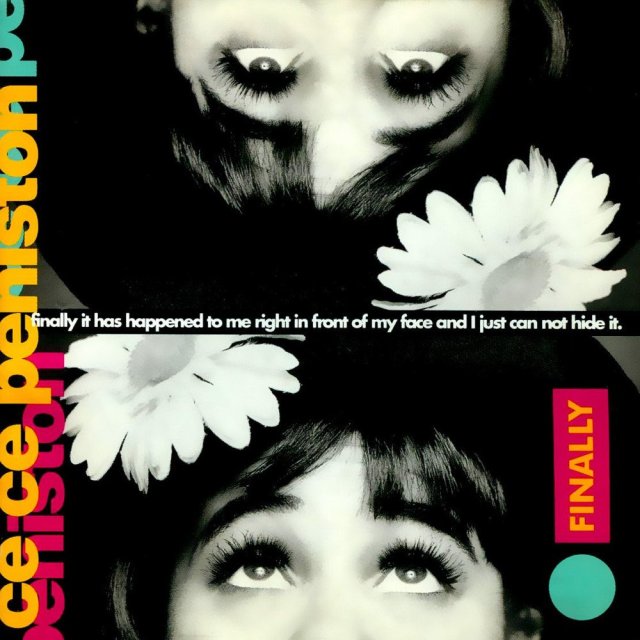
30 Day Song Challenge, Day 6 – “Finally” by CeCe Peniston

The subject for Day 6 of my 30 Day Song Challenge is “A song that makes you want to dance.” This was a tough one for me, as there are literally hundreds upon hundreds of songs that make me want to dance. I considered some great dance songs by the likes of Donna Summer, Madonna, Janet Jackson and Dua Lipa, among others, but when I walked into my local Trader Joe’s last evening and heard the CeCe Peniston classic “Finally” playing on their sound system, I immediately had my song pick for Day 6. I’ve always loved the song, with its infectious throbbing bass drum-driven dance groove and her euphoric soulful and sexy vocals.

First, a bit of background on CeCe: Born Cecilia Veronica “CeCe” Peniston in Dayton, Ohio in 1969, she moved with her family to Phoenix at the age of nine. She attended high school there, and sang at church and performed in plays and musicals in middle and high school, as well as local theater groups. After graduating from high school, she studied liberal arts at Phoenix College, where she got involved in athletics, and entered beauty pageants. She was crowned Miss Black Arizona in 1989.

Her music career began in January 1991, when Felipe “DJ Wax Dawg” Delgado, a record producer and friend also based in Phoenix, asked Peniston to record back-up vocals for Tonya Davis, a rapper known as Overweight Pooch. Though Overweight Pooch’s album was a commercial flop, another DJ and producer Manny Lehman had taken notice of Peniston’s powerful backing vocals. He offered Delgado a chance to produce a track for Peniston to cultivate her potential as a solo artist. Delgado called hometown friend and music producer, Rodney K. Jackson, to help co-produce Peniston’s first single, which would become “Finally”.

Peniston began writing pop songs while in school, and initially wrote the words to “Finally” as a poem during a chemistry class, while thinking about dating and how she hadn’t yet found her Mr. Right. She was 21 years old when “Finally” was released in September 1991, and it became an instant dance hit, reaching #1 only a month later on the Billboard Hot Dance Music/Club Play chart. The song went on to peak at #5 on the Hot 100 in January 1992, and #2 in the UK that March.

It’s major impact on the dance music genre has been recognized by numerous publications. VH1 ranked “Finally” at #29 in their list of the “100 Greatest Dance Songs” in 2000. MTV Dance ranked it #28 in their list of “The 100 Biggest ’90s Dance Anthems of All Time” in 2011. Heart TV ranked it #3 in their list of “55 Biggest ’90s Club Classics” in March 2017. Also in 2017, BuzzFeed placed it at #1 in their list of “The 101 Greatest Dance Songs of the ’90s”, noting “When it comes to ‘90s dance songs, you’d be hard-pressed to find another song that so perfectly incorporates other music genres that made the decade so great — i.e., R&B, house, and pop — which is what makes “Finally” the quintessential ‘90s dance song.” And last, but not least, Slant Magazine ranked it #37 in their list of “The 100 Best Dance Songs of All Time” in 2020. (Wikipedia)

“Finally” was featured in the 1994 Australian film The Adventures of Priscilla, Queen of the Desert, a hilarious road comedy written and directed by Stephan Elliott. The film portrays the misadventures of two drag queens, played by Hugo Weaving and Guy Pearce, and a transgender woman, brilliantly played by Terence Stamp, as they journey across the Australian Outback from Sydney to Alice Springs in a tour bus that they’ve named “Priscilla”, encountering various groups and colorful individuals along the way. Here’s a clip of the trio’s over the top drag performance to the song:
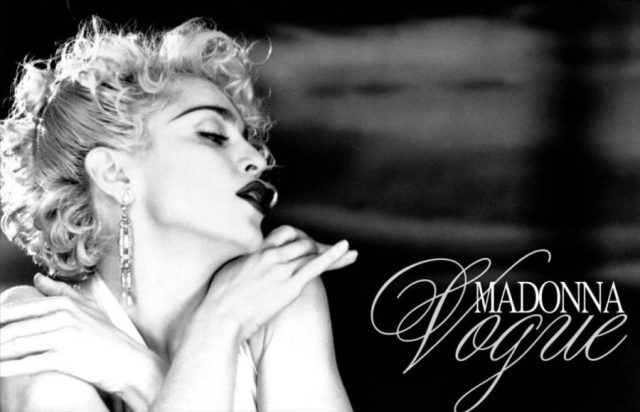
EML’s Favorite Songs – MADONNA: “Vogue”

I’ve been watching season two of the TV series POSE, a show about New York City’s underground drag ball scene of the 1980s and early 1990s, and the first episode featured the hit song “Vogue” by Madonna. The drag ball scene was primarily a young African-American and Latino LGBTQ underground subculture in which people – many of whom lived together in groups of friends as members of families in “houses” that replaced their own families of origin from which they were often estranged due to their being LGBTQ – competed for trophies and recognition by vogueing, a style of dance that involved walking and posing like fashion models on a runway.

Released in March 1990, “Vogue” became one of Madonna’s biggest hits, topping the charts in over 30 countries, including Australia, Canada, Japan, the UK and the U.S., and was the best-selling single in the world in 1990. With “Vogue”, Madonna brought underground vogueing into the mainstream. Vogueing has since become a prominent dance form practiced worldwide, and many performers, including Beyoncé, Rihanna and Ariana Grande, have followed Madonna’s footsteps by adopting the dance style and incorporating it into their music videos and performances. The song also brought house music into mainstream popular music, as well as reviving the dance music genre a decade after the death of disco.

With its deep house groove and pulsating dance beat, “Vogue” is a wonderful celebratory anthem about escaping one’s problems and enjoying yourself on the dance floor, no matter one’s race, gender or sexual orientation. The music and arrangement were written by producer Shep Pettibone, who had previously worked with Madonna on a number of her songs, and she wrote the lyrics. After completing her work on the Dick Tracy film and soundtrack, Madonna flew to New York and recorded her vocals in a small basement studio on West 56th Street. According to Pettibone, Madonna worked efficiently, rapidly tracking all the verse and chorus vocals in order, and in single takes. He proposed the idea of a rap verse for the middle eight, consisting of namechecking classic film stars and celebrities from Hollywood’s golden age. He and Madonna quickly came up with a list of names, which she immediately recorded. (Wikipedia) The names include Greta Garbo, Marilyn Monroe, Marlene Dietrich, Joe DiMaggio, Marlon Brando, Jimmy Dean, Gracy Kelly, Jean Harlow, Gene Kelly, Fred Astaire, Ginger Rogers, Rita Hayworth, Lauren Bacall, Katharine Hepburn, Lana Turner and Bette Davis.

“Vogue” was originally intended as the B-side for “Keep It Together”, the final single from Madonna’s album Like a Prayer, but both she and her label Warner Bros. decided it should be released as its own single. And though it had nothing whatsoever to do with Dick Tracy, it was included on the film’s soundtrack album I’m Breathless. I saw the film and liked it well enough to buy the album, but it was mainly because I wanted the song “Vogue”. It’s become my all-time favorite Madonna song – which is saying something, given her remarkable and extensive discography – and also my third-favorite song of the 1990s (after R.E.M.’s “Losing My Religion” and Sinead O’Connor’s “Nothing Compares 2 U”).

The video for “Vogue” was directed by a young David Fincher (who went on to direct such noted films as Seven, Fight Club, The Social Network, The Girl with the Dragon Tattoo and Gone Girl). Shot in black and white, the video was inspired by films and photographs of 1920s and 1930s Hollywood, and features Madonna and her dancers vogueing and posing in various choreographed moves. The video has been ranked as one of the greatest of all time by numerous critics and in several polls, and was nominated in nine categories at the 1990 MTV Video Music Awards, ultimately winning three. Strike a pose!