Hailing from lovely Bournemouth on the southern English coast is NAVE, the solo music project of British singer-songwriter, multi-instrumentalist, composer and producer Nathan Evans. Incorporating a broad array of genres and styles, including alternative rock, electronica, trip-hop, folk, ambient, orchestral and dark wave, the hyper-talented artist creates dramatic, incredibly compelling music that’s often atmospheric and gorgeous, but sometimes also harsh and unsettling. Though he says he generally shies away from listening to a lot of music, as he prefers to “be naive and not heavily influenced by others’ music” in the creation of his own songs, he admits to finding inspiration from the music of his youth by such acts as Radiohead, Nirvana, Queens Of The Stone Age, Muse, BRMC, UNKLE, Deftones, Limp Bizkit, Morcheeba and Moby. And in fact, Nathan formed a band called Deltorers in his teens, which eventually took him to Australia in support of Queens Of The Stone Age.
Nathan’s a deeply thoughtful guy who’s unafraid to tackle issues relating to social justice, mental health and emotional well-being. A truly prolific songwriter, he’s released a staggering amount of music over the past 12 years or so, both as NAVE and as front man of alternative psychedelic rock band Native Tongue. He’s been on a creative tear since 2021, and has released a ton of music, including numerous singles, several EPs and a monumental album God’s Waiting Room, featuring an astounding 31 tracks, in April 2023. (You can read my review here.) And one of his singles “Broken Record”, a hauntingly beautiful song decrying the addictive nature of social media and its negative impacts on our emotional well-being, went all the way to #1 on my Top 30 chart and ranks #14 on my 100 Best Songs of 2022 list.
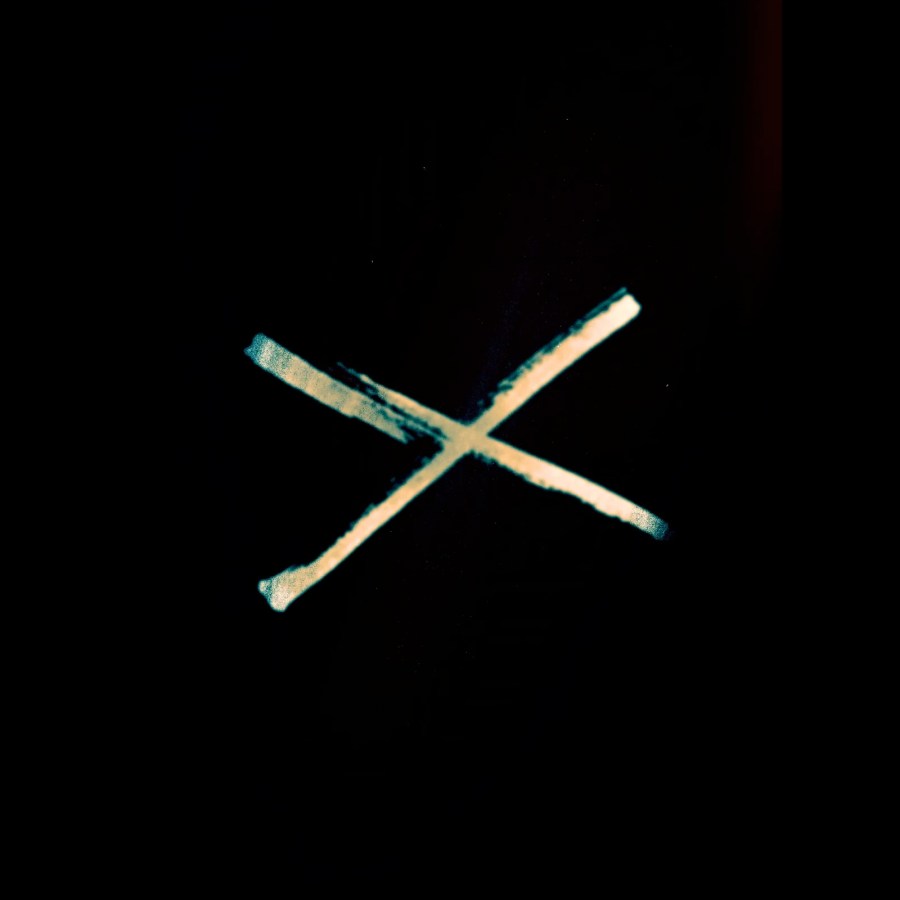
His latest release is a fastinating and dark 10-track album titled simply “X“, which dropped January 31st. I’ll discuss the songs and my take on their meanings later, but in a nutshell, the album tells the story of a girl who suffers from a major life-altering trauma at the age of 14, and how she deals with it going forward. When I asked Nathan about the rather obscure title, he responded “The album has intentionally been made for the listener to find their own meaning. Think of it as when David Lynch is asked what it means, ha ha – he leaves it to the audience to make up their mind. So this album has a little privacy behind it but which I think makes it special, as people will ask so many questions. The title ‘X’ refers to the Roman numeral 10 for 10 songs in the album, and also as a symbol for its open interpretation.”
First and foremost, the songs on X are equal parts melancholy, disturbing and beautiful. The music consists predominantly of pensive acoustic guitar notes, accompanied here and there by haunting atmospheric orchestral synths, gentle piano keys and soft percussion, lending an enchanting texture to the otherwise moody tracks. Another interesting feature is how Nathan sings in both his deeper voice and an ethereal falsetto, which almost gives the impression of having two different vocalists on a few tracks, as well as providing a bit of contrasting tension.
The album opens with “The Tide”, in which NAVE introduces us to a young girl who is harmed, possibly raped by someone she’d trusted: “Innocence and wonder were the lights that she stood under. When she turned 14 the world wasn’t what it seemed. Predatory eyes, devils in disguise. Cartoons had not prepared her for the pain that god declared her. To clip an angel’s wings, and tie them up strings./There’s nothing left to say, only bide your time and wait.”
On “The Ashes”, she’s taken somewhere where she’ll be safe, but the effects of her trauma continue to haunt her, with her possibly resorting to cutting or burning herself to try and deal with her emotional pain: “Her stomach grows sick, her wings were clipped, and slowly her blood had drained. She felt so weak, wiping the ashes stuck to tears on her cheek./Emotional wreck, digging her nails in the back of her neck.”
One of the most disturbing but sonically beautiful tracks is “The Scars”, which continues to explore her coping mechanisms, this time focusing on her dreams of exacting revenge on those who hurt and/or failed to protect her, and erecting walls to keep her safe from predators: “She would awake from nightmares with tears in her eyes.Dreams of torture, her family burned alive. Plagued by corruption by her own broken mind.What kind of asshole rips an angel’s wing? She built a castle to stop them getting in.“
Just past the halfway mark of X we’re hit with quite a surprise on the haunting track “The Apology”, in which NAVE reveals that the young girl and her story were fabricated in order to make the listener take notice and connect with him and his music. The lyrics are incredibly poignant, and probably accurately reflect the sentiments of more than a few musicians and authors: “We’re over halfway and I’m sorry to say I fed you all a lie. The girl never existed. I had to stop writer’s block, so I made her up. Can you forgive me? I’m sorry to disappoint, emotionally exploit. I’m just playing the game so you would remember my name. I know it’s kind of pathetic. I hope you still think I’m poetic. Please forgive me for lying through my teeth. I’m trying to make you feel something that is real. I must connect to gain all of your respect. To stop me from feeling worthless and give me some kind of purpose.”
Then, on track eight “The Moment”, he returns to the girl who’d been victimized, indicating that she is in fact real after all. “The moment she couldn’t speak of. The moment she was afraid. The moment no one listened to a word she had to say. The moment she was a victim as an innocent young girl. This world makes me angry. It’s no joke, that’s a real person in pain. What’s the matter with you, that’s a real person, broken and bruised…screaming for help.”
On “The Strangest Secret”, it appears that the passage of time has allowed the girl to heal somewhat and take back control of her own life: “That little girl has discovered a secret. Now she gets to keep it all for herself. Silence growing, her life is glowing. Attracting nature to her, power runs right through her. Knowledge now she knows she’s reaping what she sows.”
On the stunning closing track “The Lost and the Found”, NAVE sings to the young woman who’s now become his muse, joyous in the fact they’ve found each other and in the process, rescued themselves from their demons and emotional traumas”: “I wanna freeze time, and stay here forever now I’ve found you, I wrote us these songs to heal our wounds and free us at last. You are my muse. You are my lost and found./ Time goes so fast, I’m grateful for every second I have that passes me by.”
It’s a beautiful, heartwarming and comforting end to both the story being told and the album itself. And once again, I’ve been blown away by NAVE’s artistry, creative imagination and soul-baring honesty.
Hailing from Cork, Ireland is Cormac O Caoimh, a talented singer-songwriter and musician who writes incredibly pleasing indie folk/pop songs filled with sublime melodies and beautiful arrangements. His thoughtful, intelligent lyrics, exploring the universal topics of life, love, hope and loss, are delivered with fine instrumentation and warm, comforting vocals that remind me at times of Paul Simon. The prolific artist has released an impressive amount of music over the past 25 years (both with his previous band Citadels and as a solo artist), including six outstanding albums, the most recent being Where The World Begins, released last October (of 2023). I’ve previously reviewed two of his singles, “I’m in Need”, in 2020, and “My Little Buddha“, in March 2023. You can read those reviews by clicking on the “Related” links at the end of this post.
On May 3rd, Cormac will release his seventh album 1999-2012 Vol. 1, featuring 20 tracks. The first 10 are new recordings of older songs of his that were first released between 1999 and 2012, while the second 10 are the original recordings of those same 10 songs. About this project, he remarked “The new recordings are not necessarily better (some might be, some are not) but they are all very different.” In advance of the album release, he’s dropped two of the new tracks as singles – “You’ll Find Me (There’s Gold There Somewhere)”, a reimagining of “There’s Gold There Somewhere”, and “There’s A Crack (Heart Attack)“, a reimagining of “Heart Attack”. Both of the original songs are from his 2012 album A New Season For Love.
The original recording of “Heart Attack” is a lovely though somewhat melancholy song highlighted by Cormac’s beautifully strummed acoustic guitar, accompanied by gentle synths and well-placed electric guitar chords. His soothing vocals really do sound like Paul Simon on this version. “There’s A Crack (Heart Attack)”, which is 25 seconds shorter than the original, has a bigger, more dramatic feel, with added somber piano keys, darker, more powerful synths, and more strongly resonant guitar notes. Cormac’s vocals also sound different, this time much more emphatic and with added echo that impart a greater sense of foreboding. Though each version sounds very different, I really like them both a lot.
The lyrics describe feelings that might occur during a panic attack, when one loses all rationality and a healthy sense of perspective: “Your ears hear a tune that nobody sings. Your eyes are immune to the beautiful things. There’s a crack on your path. There’s no way back. Your heart’s under attack.” The fascinating and quite effective video features distorted footage of a male passenger on an airplane having a panic attack.
Here’s the full album on Bandcamp, with eight tracks currently available for streaming:
It can be argued that modern technology is both a blessing and a curse, but certainly one redeeming aspect of it is the ability it affords for different musicians located halfway around the world to come together and collaborate in the creation of a song. As a shining example of that synergy, I bring you “Adrift“, the wonderful new single by American rock band Voodoo Planet and Australian singer-songwriter and multi-instrumentalist Mikey J.
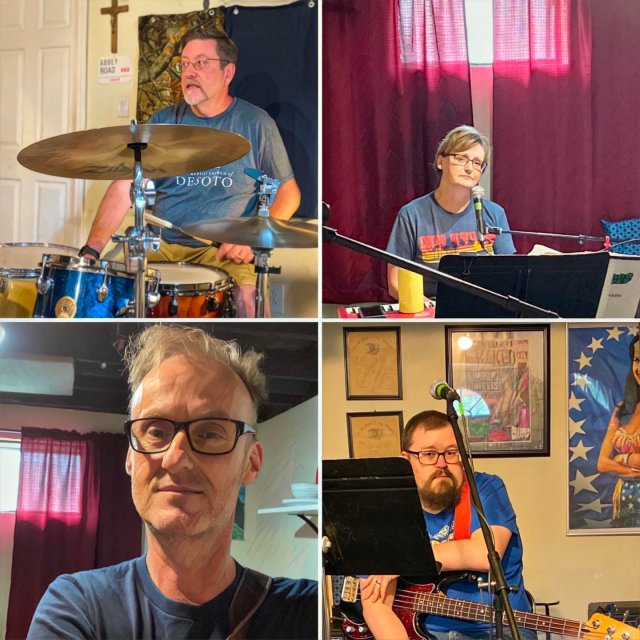
Based in DeSoto, Missouri, a small city approximately 40 miles southwest of St. Louis (where I lived from 1995-2011), Voodoo Planet formed in 2010, and consists of John Gilbert on guitar & vocals, Ed Henry on bass, guitar & vocals, Adrienne Myers on keyboards & vocals, and Patrick Myers on drums & vocals. Their eclectic sound draws from a wide cross-section of genres including garage, alternative, grunge, punk, psychedelic and experimental rock, country, folk, Americana and pop.
They began releasing music in 2013 with their self-titled EP Voodoo Planet, followed by their live EP Bookstore Sessions in 2017. Several tracks from both EPs were later included in their full-length album Ripsnorters, released in early 2020. Some of the tracks were inspired by the stories of real historical figures like Lizzie Borden and the radium girls, women factory workers who contracted radiation poisoning from painting watches with luminous paint containing radium. After a bit of a hiatus, they came roaring back in early 2023 with “Bewitched” a song touching on the sad tale of Bridget Bishop, who was persecuted in the Salem witch trials. Since then, they’ve dropped several more singles, their latest of which is “Adrift”, their collaboration with Mikey J.
Mikey J (aka Michael Johnson), who humbly refers to himself as “just a dude who loves music“, is a prolific singer-songwriter and multi-instrumentalist from Melbourne, Australia. Inspired by some of the great songwriters of the past, life experiences and his family, his songs are a mix of rock, blues, folk, funk and indie influences, all of which he performs and records in what he calls his simple setup at home. He’s been writing and recording music since his teens, releasing his first self-titled EP in 1999 at the age of 17 with his then band Blue Tracer. In 2011, he released a solo album Happy “六” Anniversary, inspired by and dedicated to his wife Ella. Nearly 10 years would pass until his next release ISO-Inspiration, an album inspired by the Covid lockdown, in October 2020. Since then, Mikey J’s been on a creative tear, dropping five more albums, as well as numerous singles.
Described as “an acoustic seafaring-themed song about lost friendship“, “Adrift” is a bit of a stylistic departure for both Voodoo Planet and Mikey J, with a mellower, more contemplative feel than their typical, more rock-oriented sounds. For the track’s recording, John Gilbert played acoustic guitar & percussion, and sang vocals, Pat Myers played bass, drums & percussion, Adrienne Myers played piano & keyboards, and Mikey J played cello. The track was co-produced by John Gilbert and Ed Henry, and mixed and mastered by Ed.
The song is a melancholy but lovely folk ballad that tells the sad tale of a group of young men who go out on a sailing adventure that ends in tragedy. John’s beautifully strummed acoustic guitar, accompanied by Adrienne’s soothing organ riff and the sound of gently crashing waves, set a comforting tone for the song. But soon, Mikey J’s somber cello strings enter, injecting a palpable sense of tension and unease to the proceedings. John’s pleasing, low-key vocals convey feelings of resignation and sadness as he sings the bittersweet lyrics:
Signed up for a party, on a big metal ship
Things got heavy, the boat began to tip, boat began to tip.
As young sailors, we never learned how to swim, No hanging on, dear.
The quicker to meet our end, quicker to meet our end.
Tried all the knots, to find one that would hold,
Hard to tie when hands and hearts grow cold, hands and hearts grow cold.

That storm came crashing in, we knew it had to end
That storm came crashing in, we knew it had to end.
The sea didn't take us that day
The sea didn't take us that day
The sea didn't take us that day
Only one of us washed away, only one of us walked away..

Lost at sea, my friend, far away at the world's end
Tied a string to all we held dear
But sirens whispered in your ear, sirens whispered in your ear
Things best unspoken, and floating debris,
Best leave it all, and sink into the sea, sink in to the sea.

The sea didn't take us that day
The sea didn't take us that day
The sea didn't take us that day
Only one of us washed away, only one of us walked away..

No wind in our sails, but we're headed home
Might drown in a bottle, you never know
Pray all you like, but keep rowing for shore.
The Bandcamp offering is an EP which includes the original song, along with two alternate mixes.
I seem to be in a pattern of writing about British artists lately (this is my seventh in a row!), but truth be told, they reach out to me about their music far more often than artists from any other countries, including the U.S. Today, I’m shining a spotlight on Chris Mardula, a singer-songwriter from Durham County in Northeast England. His music style is strongly informed with elements of folk, indie rock and blues.
A seasoned musician, he’s played in several bands over the years, but often felt frustrated by uneven levels of commitment by other members. He told me that with everyone having other responsibilities, it was often difficult getting everyone on the same page. Sick and tired of having to rely on other people, he eventually decided to move forward on his own as a solo artist. “I’ve had all of these songs just sitting there doing nothing for years. I thought to myself, it’s time I do something with them and get them out there to be heard. If there’s only me, there’s no excuses. So I built myself a little studio in the house and got busy making a few demos and writing some new tracks.”
Last November, Chris began releasing songs at the rate of one per month, starting with a lovely demo titled “Don’t let me down“. Consisting of just his strummed acoustic guitar and heartfelt vocals, the song is a poignant folk ballad about a fragile relationship. He assures his partner that he’ll be there for her, imploring her to not let him down: “Please stop complaining over things that I do. If you’re not so happy, you know what to do. Said I’d be there, I guess I always will. Just don’t let me down, C’mon now, don’t let me down. Cause this time is gonna be the last.” Listening to his pleasing vocals, I could easily be convinced that Chris was from Nashville or Austin instead of Northeast England.
He followed in December with his first official single “Take It Or Leave It“, which is my favorite song he’s released thus far. Written several years ago, Chris says the song is about living in a small town, making the most of it and finding your way forward while getting through the drag of everyday life, and how things usually turn out alright in the end. For this song, he layers beautiful programmed strings and vibrant percussion over strummed guitar notes, creating a stirring cinematic backdrop for his warm vocals as he fervently sings “Taking chances on the outside. I’m on the outside looking in. See my friends and see their faces. And all the places that we’ve been. So take it or leave it. Seen it all before. Take it or leave it. Cause you know you wanted more.”
In January, he dropped “Fade Away“, a beautiful rock song with a more powerful feel than his previous two. Chris’s guitar work is quite impressive as he unleashes an onslaught of scorching riffs over a background of strummed guitars, sweeping strings and riotous percussion. The lyrics seem to speak to the enduring pain over the death of a friend or loved one that refuses to fade away. “Days since he left me, was the day that he died. Still I can’t forget you, still here in my mind. Why can’t it all just fade away?” The song’s compelling video features footage shot by Chris, Craig Addison and Ella Brown.
February saw the release of “Catch a Fire“, an impactful rock song about not continuing to waste our precious time, and to keep pushing forward through the obstacles and pain life throws our way, in order to achieve our dreams and become a better person. The song has a bit of a Southern rock vibe, thanks to Chris’s splendid mix of bluesy and twangy guitars.
His most recent release “Calm In The Storm” is a terrific bluesy instrumental, where his skills on the guitar, piano and drums are allowed to really shine.
While it could be argued that the music world has more than enough ‘guys with guitars’ to go around, I think the quality of his songs places Chris near the top of a crowded field. Based on the five tracks he’s released so far, I’d say that he’s a pretty talented songwriter, musician and vocalist with a promising future. I also like that each of those five songs sounds completely different, a testament to his ability to reach across genres. He’s now putting the finishing touches on his debut album Monumental Horizons, which he plans on releasing later this year.
Though my feelings about social media are conflicted and complicated – a sentiment I’m confident many others share – one of the things I do like about it is that it’s allowed me to connect with a lot of really talented musicians and bands. One I’m happy to know is NAVE, the solo music project of British singer-songwriter, composer and producer Nathan Evans. Incorporating a broad array of genres and styles, including alternative rock, electronica, trip-hop, ambient, orchestral and dark wave, the hyper-talented Bournemouth-based artist creates dramatic, incredibly compelling music that’s often atmospheric and gorgeous, but sometimes also harsh and disturbing. Nathan is a thoughtful guy who’s unafraid to tackle issues relating to social justice and mental health, calling out the incessant bullshit and hypocrisy we seem to be faced with on a daily basis.
A truly prolific songwriter, he’s released a staggering amount of music over the past 10 years, both as NAVE (also sometimes represented as Nave or N.A.V.E.) and as front man of alternative psychedelic rock band Native Tongue. He’s been on a creative tear since 2021, and from what I can tell, he dropped eight singles last year, including “Broken Record”, a hauntingly beautiful song decrying the addictive nature of social media and its negative impacts on our emotional well-being. I love it so much, it went all the way to #1 on my Top 30 chart and ranks #14 on my 100 Best Songs of 2022 list.
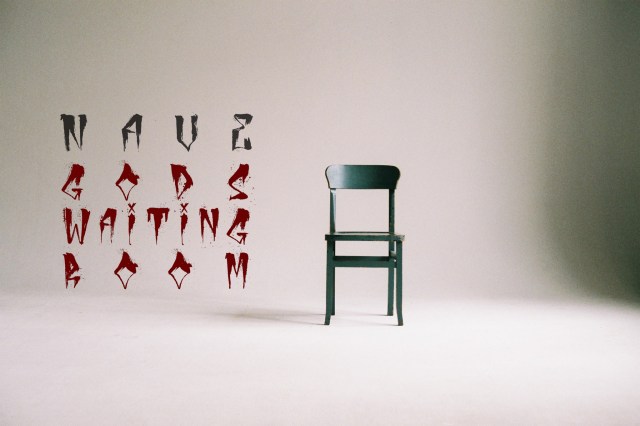
He’s continued to release lots of new music in 2023, and on February 19th, he dropped God’s Waiting Room, a monumental work which I believe is his first full-length album. The words “full-length” are a massive understatement, as the album contains a mind-boggling 31 tracks! Because of its daunting length, it was a few days before I was able to give it my full attention, but once I did, I was literally blown away! The word “masterpiece” is often overused and lightly awarded, but I can say with all certainty that in the case of God’s Waiting Room, it’s well-earned. Listening to this brilliant and stunning album is an immersive experience that takes us on a sonic journey through the many moods, ideas and emotions of NAVE’s creative mind.
In order to gain a bit of insight into his inspiration for creating such an epic work, I asked Nathan to answer a few questions, which he was more than eager to do. Here’s what we talked about:
EML: You’re an astonishingly prolific musician and composer Nathan, and I’m truly in awe of your tremendous output. Not only have you released an epic 31-track album, you’ve also recently released a number of other stand-alone songs. Where and how do you find your inspiration for all this music?
NAVE: First off, thank you for your continued support and kind words. You have been a true rare find in this shallow industry. The lack of camaraderie and true music lovers is scarce and we need more people like yourself who truly care about new music.
My 31 track album is a collection of songs and ideas spanning over 8 years to now. The majority of those songs were never intended to be released, but after going back and listening, I felt it was important because they carry so much emotion. I tend to release stand-alone songs that I spend a lot of time on and have that feeling of “oh this is a single”. The reason I called the album ‘Gods Waiting Room’ is because most of the songs aren’t singles, but more snapshots of moments in my life. What was going on and how I was feeling. I could imagine them all being played in a waiting room because they are so random and odd.
In answer to your question though, the honest response is I don’t know where and how I find the inspiration to have such a high output. Maybe I feel I have something to prove to myself and others who never believed in me. I was written off in school for having ADHD, and was medicated for 6 years with Ritalin so I always felt like an outcast. Maybe my subconscious wants to leave behind a large library of work that I feel is important. Maybe I’m on an autistic spectrum and I can’t stop jumping from one idea to the other, constantly trying to outdo myself and find my “smells like teen spirit” banger. Maybe I am trying to refine my tools and become the best I can be, which is very similar to the mentality I had when I was competing in trampolining from the age 5-11 and had to come 1st in all competitions. If I would come in 2nd ever, it would be crushing. I knew I had the magic and that has translated to music today
EML: Continuing on the theme of inspiration, some of the tracks on ‘God’s Waiting Room’ seem to have titles and/or lyrics dealing with self-assessment, mental health or personal well-being – e.g. “Jealous Little Bitch”, “Passive Aggressive”, “Son of a Rich Man”, “Computer Is My Friend” and “Kiss My Bad Side”. Are any of these songs autobiographical, or a means of addressing some inner demons or conflict?
NAVE: I find my songs either have a personal meaning, a message, or they don’t mean anything to me. Some tracks are blunt, some are cryptic, which means something to me, but to someone else interpreting them, it is completely different (which tends to happen often). Someone will tell me what my song means to them and I’ll be like “whoa, that’s not what I had in mind”. But I love that and it’s become clear from people’s comments that my music/lyrics creates imagery and causes multiple interpretations which I love.
For example, the songs you’ve mentioned. “Jealous Little Bitch” is an instrumental song, but made at a time when I was angry at certain people in my life and patterns of behaviour where I felt jealousy from “friends” or “family” instead of support and love. “Son of a Rich Man” was a dig at certain people that would never know the stress and uncertainty of having no money. They have an easy ride almost in a world where billionaires exist, and shouldn’t. I compare them to cartoon characters in a fairy tale paradise.
My track ‘Rose Tinted Glasses”, which was a stand alone release, was probably the most personal and therapeutic song I’ve ever written, about the loss of my Mum at 26. I put out a music video of it and I would cry every time I’d watch it. I’ve never had that with any song I’ve ever written and it addressed grief, anger and such sadness in me.
Another driving force isn’t so much facing inner demons but a feeling of obligation and duty to spread truth, love and light. Call out corruption, bullshit and lies. I made a tune called “blood thirsty billionaires” and made a video calling out certain people and shone a light on the ridiculous injustice and imbalance. It pisses me off that actors, musicians, sportsmen and whoever don’t use their platform enough to stand up to the lies we are fed everyday. The food we eat is full of harmful pesticides, the water we drink contains high levels of chlorine and the doctors don’t have our best interest at heart. They just read from a script or give us big pharma products. Cancer is 1 in 2 from the water, food and air, yet we freak out over a flu that mainly kills old and vulnerable people. We keep bending over to the government and accepting their lies and obeying without thinking for ourselves and truly questioning. Can you tell I am passionate about all this stuff. Can you see maybe why I make so much music lol?
EML: You certainly have a lot to say!When recording your songs as a solo artist, do you play and record all the music yourself? And besides the piano as your primary instrument, accompanied by what I’m guessing are lots of programmed synths, what other instruments do you play?
NAVE: Yeah, I mostly use the keyboard to write in synths, then programme and edit the drums. Then I finally add vocals. The vocals are always hit and miss. Sometimes they come quick and other times its a slog. I focus on the beat, atmosphere, melody and bass to create a vibe and if it makes me feel something, I quickly know whether to spend more time or move on. There always comes a time when I produce where that moment happens. Its like a magic. A transition occurs when the song comes to life and its amazing. I play drums, piano, guitar, bass and hope to learn the violin one day. I tried once and was terrible. The noise was so bad, I was unable to persist. So big respect to you violin players out there. You truly have to crawl through thorns and stinging nettles to reach the roses.
EML: With 31 amazing tracks, you could have broken them up into two or even three separate albums. Why the decision to include them all in one monumental album?
NAVE: I had considered that, but it felt they were all from a chapter in my life and belonged together. It also shows my progression till now and it was appealing to release a large body of work, particularly under such a poignant album title.
EML: That certainly makes sense. What other musicians or bands do you consider primary influences for your music?
NAVE: I ingested a lot of music as a teenager, but over the years I tend to stay away from listening to music as I find it better to be naive and not influenced by others’ music. The more music I listen to, the more chance I might feel I am copying them or “I cant do that because that sounds like that” if you know what I mean? But obviously Radiohead, Nirvana, Queens Of The Stone Age, Muse, BRMC, UNKLE, Jose Gonzalez, Deftones, Limp Bizkit, Morcheeba, Moby were big influences. Our bass player in my band Native Tongue is a music freak so he shows me a lot of new music and one track in particular that blew me away recently and inspired me to write my track “CONNIFER” is the track “NOT” by Big Thief. Incredible song.
EML: Is there anything I’ve neglected to ask that you’d like people to know about yourself or your music?
NAVE: I have struggled not finding the audience I was hoping to. It hurts when I put my heart and soul into these songs and I can’t reach anyone new or build my fan base, no matter how hard I try. I feel I’m finally coming to peace with that and doing this because I love it, not for people’s validation. My main drive has always been to reach people, and its been a painful road reaching so few people and not building that fan base I hoped for. Obviously there is still time but if it never happens, then fuck it. I still touched you and others, and devoted myself to an outlet which has kept me sane for so many years. Without it, I may not even be here now to answer these questions.
So my final thing to say is to everyone out there, do what makes you happy and try not to seek happiness externally. Think for yourself and question authority. We have been boxed up like objects and we are still treated like slaves working long hours for no money. It doesn’t have to be this way. Seek the truth within yourself and the world will open up like a flower. Independent thought. Love yourself and be kind to others.
Thank you Jeff. You are a star.
EML: Thank YOU Nathan for taking the time to answer my questions, and for all your incredible music. Hopefully, this review and interview will bring you at least a few more fans.
Okay, let’s get to God’s Waiting Room, shall we? Because it contains so many tracks – all of which are outstanding – I won’t be doing my usual track-by-track discussion, as it would take me forever and besides, no one would read it all! Instead, I’ll touch on my favorites, as well as some of the more fascinating and impactful tracks. Of the album’s 31 offerings, 17 are instrumentals, whereas 14 feature lyrics and vocals of some kind or another.
On the unsettling opening track “The Speaker“, NAVE talk-sings in a mysterious whispered voice “Why do you listen to the speaker? Isn’t that, in listening to the speaker, you’re listening to yourself? Is that what is taking place? The speaker is only pointing something out. Acting as a mirror in which you only see yourself. Your own state of mind. Your own consciousness. And if at the end of these talks, you say to yourself ‘I have not changed’, why, it is your fault.” Though I didn’t ask him, my guess is that the song set the overall tone for the album, also serving as a kind of introduction.
As the album unfolds, each new track brings a different mood and vibe, keeping it sounding fresh and holding our attention. The second track “Sleepy Head” is a darkly beautiful instrumental featuring a mesmerizing trip hop groove and rather spooky string synths. And speaking of spooky, “White Witch” is downright chilling as NAVE drones “Never again, will you and I suffer.Never again, will the world go by unnoticed” against a mysterious cinematic backdrop that would make a great opening for a horror film.
Several instrumental tracks, like “Into the Abyss“, “Twilight Zone” and “Watch It Unfold“, are atmospheric and beautiful, with haunting piano movements, sparkling synths and cinematic strings. One of my favorites is the stunning “Linda’s Song“, with its vibrant piano keys, soaring strings and pleasing guitar chords. I also love “Jealous Little Bitch“, with its gorgeous violin notes and eerie synths layered over an assertive skittering beat.
Another favorite (on an album full of favorites) is “Passive Aggressive“, with its trippy hip hop groove, highlighted by menacing industrial synths sprinkled here and there with twinkling little touches that keep the song from sounding too heavy and dark. NAVE does a great job rapping the wonderful lyrics about an encounter with an unpleasant receptionist at a medical appointment: “Walk in the door, time for my appointment. Ignored by a lady unhappy in employment. Making me wait for a good few minutes. Grittin’ my teeth, pushed to the limit. I calm myself, instant reflection dealing with this middle-aged bitch on reception. Stay strong, try not to break. Refrain from explaining, I’m here cuz my balls ache. I’ve come a long way, massive obsessive, passive aggressive.“
“Swim Away With Me” is so quietly majestic and beautiful, it brings tears to my eyes. Then, abruptly changing the mood with “Millions of Wilfully Ignorant Sleepwalkers“, he skillfully uses a droning melody and rather ghostly, dream-like synths to convey a sense of people moving through life like zombies, seemingly unaware of their surroundings. The darkly beautiful “Breath With Me” has a strong Radiohead vibe, thanks in large part to the beguiling falsetto by appropriately-named guest vocalist Ethereal, which seems to channel Thom Yorke.
The terrific “Son of a Rich Man” is a languid and bluesy, guitar-driven song that NAVE touched on earlier as being a dig at people born with a silver spoon in their mouths. I love the pointed lyrics: “I don’t know who I am anymore. In fact, I don’t think I ever did. I’m indecisive, with hindsight bias. Sure, the grass could always be greener./ But who knows, paradise could just be a fairly tale, only fit for cartoon characters and billionaires. Maybe I should make a plan, or wait to reincarnate as the son of a rich man.”
One of the most beautiful tracks on the album is “Infinite Ground“, where NAVE’s dreamy echoed vocals meld so perfectly with the delicate acoustic guitar notes, it nearly takes my breath away. The unusual “Tashi Delek” is a dark song, featuring a strong trip hop beat, deep bass and harsh industrial synths, punctuated by contrasting delicate xylophone sounds. NAVE’s otherworldly vocals add to the song’s edgy vibe as he wails “I looked at your face. I couldn’t help but stare. I got you on my mind. There ain’t nothing wrong. Just a slip of the tongue. Can you feel my pain? And I miss you.”
The album closes with the contemplative piano piece “My Goodbye“, a beautiful and fitting end to this exquisite work of musical art. I’ve probably listened to God’s Waiting Room more than 15 times, and it manages to reveal new sounds, textures and meanings each time I hear it. I love this album, and hope at least some of my readers will appreciate and enjoy it too.
Describing himself as “a middle-aged, middle-class singer-songwriter from South London“, Tim Eveleigh seems to be a humble man right from the get-go. After listening to his charming debut album, simply titled A Record, I am certain of it. Not only that, he’s a Renaissance man of sorts, with many talents and interests ranging from music and stand-up comedy to computer programming/IT development, music and events promotion, economics and politics. He’s also a staunch advocate for racial justice and equality.
Tim’s been involved with music since his childhood, and in a wonderful interview with the webzine Croydonist, he discussed how he began studying piano at a young age, eventually working his way up to violin and then viola in secondary school, where he also played in the orchestra. He began writing songs when he was 10, and ended up playing in two bands, which he cheekily remarked “rather worryingly, evidence of this still exists“. By his early 30s he’d written what he described as a solid collection of songs, but “after playing these for a few years I scrapped them all and started again, and I’ve written enough songs to record a couple of albums.”
From what I can tell, he’s released music rather sporadically over the past 15 years, beginning with a three-track EP this is all i have in December 2007. Nearly 13 years passed before he put out another release, a three-track EP In Kilnsea in June 2020, and last month, he returned with his debut album A Record, which dropped March 15th. The album features nine tracks, eight written by Tim and one, “White Lines”, written by British singer-songwriter and musician Ben Cosh. For the album’s recording, Tim played guitars, keyboards & percussion and sang lead vocals, Maria Levesley sang backing vocals, and Joe Jones played bass. Additionally, several other musicians contributed their talents on selected tracks, including Pete Long on saxophone, Pete Cooper on flugelhorn and trumpet, Andy Thornton on guitar, bells and bass, Chris Kimber on tubular bells, and Cara Thornton on backing vocals.
The album opens with “Overture“, a lovely, almost gospel-like song with a bit of a Celtic folk vibe. The inspiring lyrics “tell the world you’re alright, tell the world you sleep tight, and nothing can wake you up” set an overall tone of love and optimism for A Record. And though most of its tracks touch on aspects of love, relationships and emotional well-being, the lone – and glaring – exception is “Drones“. Though the song sounds pleasing from a musical standpoint, highlighted by Pete Cooper’s appropriately droning flugelhorn, the lyrics are searing and bitter, calling out our leaders who lead us into endless wars while insulating themselves from the resulting horrors: “You send our sons and our daughters to war. You send our sons into battle and our daughters into hell. You send our sons and our daughters to war and now you want us to do it all again. Have you learned no lessons from the deaths of the millions. Now you want us to do it all again. I see your sons and your daughters are alive. You make these big decisions, then let others do the killing. I see your sons and your daughters are alive.”
Tim has a pleasing and warm singing voice that’s similar to another British artist I’ve written about, The Blue Flame (aka Richard Stone), as well as Neil Tennant of the Pet Shop Boys in spots. On the beautiful and jazzy “Manifesto“, he sings of the games we play and things we say in order to keep our romantic relationships alive, referring to them as ‘propaganda’: “Propaganda: keeping us together. Propaganda: the lies that we tell each other. Propaganda: tell me what i need to hear. Propaganda: we are all actors. And I will love you till the end of time, and I will take you everywhere you want to go, and I will hold your hand while you sleep. I will be here until you go.” With Joe’s terrific little bassline, Tim and Andy’s wonderful guitars, Tim’s lovely keyboards, and Maria’s enchanting backing harmonies, this is one of my favorite tracks on the album.
On “Headrest“, strummed acoustic guitars and cheerful rhythms create a lighthearted backdrop for the rather bittersweet lyrics about a relationship that may have reached its end: “I don’t have the skills that I need to recover your faith and trust, but this is the best I can do with the lessons I’ve learned in life. I understand we’re in a tricky situation. A song and a smile are not the solution. If your ears are burning this might be the reason. Just this once we tried love, we tried grace, we had hope, we had faith, I found work, we had sex, I’m not sure there’s anything left.”
“Binary” is a brief but upbeat, guitar-driven song with a bouncy melody and sweet lyrics describing a relationship where both partners have long-settled into a comfortable routine that many of us in long-term relationships can identify with: “Turn the light out it’s on your side. Turn the light out it’s in my eyes. And I’ll let you know if I need you now.” On the poignant ballad “Good“, Tim tenderly sings to a loved one of his love and devotion in spite of the hurt he’s caused, accompanied by melancholy piano keys and strummed guitars.
Another favorite of mine is “Deluge“, with it’s bouncy bass-driven groove, lively strummed acoustic guitars, melodic mellotron, and Tim’s spirited taps on the cajón (a box-shaped percussion instrument originally from Peru). Tim assures his romantic partner of his love and devotion as they face the perils of war and conflict: “I have touched you everywhere. we have spoken in the dark. We have talked about so many things and you, you are perfect as you areThe sky’s alight with bombers, and the truth is withheld from us, I don’t know what to believe. The train is at the station, and the soldiers keep us safe from everything that would destroy us.”
The album closes with the tender love song “Touch“, in which Tim serenades his romantic partner of his fervent affection: “The beat of your heart a light in the dark. When I hear you laugh I’m tongue-tied.” Pete Long’s warm saxophone gives the track a nice jazzy touch (no pun intended!). It’s a fine ending for a delightful, well-crafted collection of songs written and sung from the heart.
Irish musician and singer-songwriter Cormac O Caoimh is a skillful wordsmith, guitarist and vocalist from Cork. He writes sublime indie folk/pop songs filled with thoughtful, intelligent lyrics touching on the universal subjects of life, love, hope and loss, and delivers them with subtle hooks, fine instrumentals and pleasing vocals that remind me at times of Paul Simon. His catchy melodies seem to effortlessly draw us in, then stay with us long after the songs end. As Mojo Magazine once so eloquently put it: “each song superglues to the memory“, and indeed they do! His songs have earned him comparisons to such artists as The Go Betweens, Badly Drawn Boy, Elliott Smith, Crowded House, Nick Drake, Leonard Cohen and Sufjan Stevens.
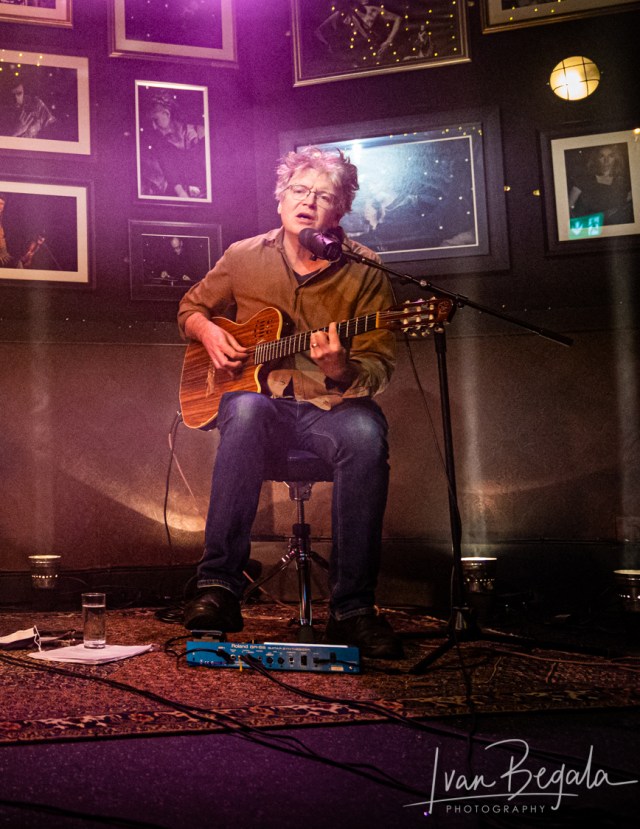
Photo by Ivan Begala
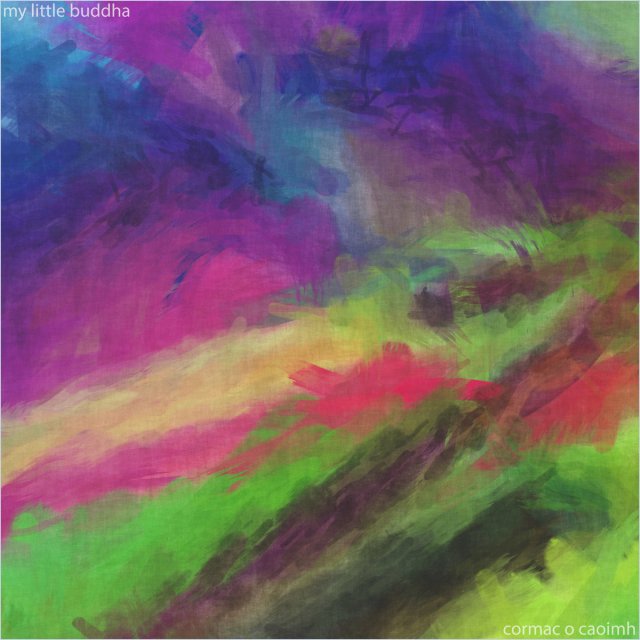
Cormac has released an impressive amount of music since 2007, including five studio albums, the most recent being the beautiful Swim Crawl Walk Run, released in May 2020. In February 2020, I reviewed “I’m in Need”, the lead single from that album. He followed in June 2022 with his lovely single “There Must Be a Catch”, and since then has dropped five more singles, the latest of which is “My Little Buddha“, a song he says is “about living in the now“. For the song’s recording, Cormac sang lead vocals and played guitars and keyboards, Aoife Regan sang backing vocals, and Cormac’s frequent collaborator, friend and fellow musician Martin Leahy played drums and bass. The track was mixed by Adam Whittaker, and mastered by Hafod Mastering.
It’s a charming song, with beautiful guitar work, accompanied by gentle bass and percussion, with a frosting of twinkly synths adding a lovely magical touch to the proceedings. Cormac’s vocals are comforting and warm as he sings the sweet lyrics expressing his love and assurance to a child, telling them to enjoy their moment, free from fears or worries: “Dance, no words my little Buddha. Dance, no fear, my little Buddha, Dance, no worries no fear here.” Aoife’s delicate backing vocals nicely complement Cormac’s in perfect harmony.
The delightful video for “My Little Buddha” features the same footage of actor Christopher Walken dancing around a deserted hotel lobby that was originally used in Fatboy Slim’s award-winning video for his 2001 song “Weapon of Choice”.
Those who purchase the song on Bandcamp will get an exclusive bonus b-side track “Believe (If You Feel)”, a mellow reimagining of Cormac’s song “If You Feel” from his debut album Start a Spark.
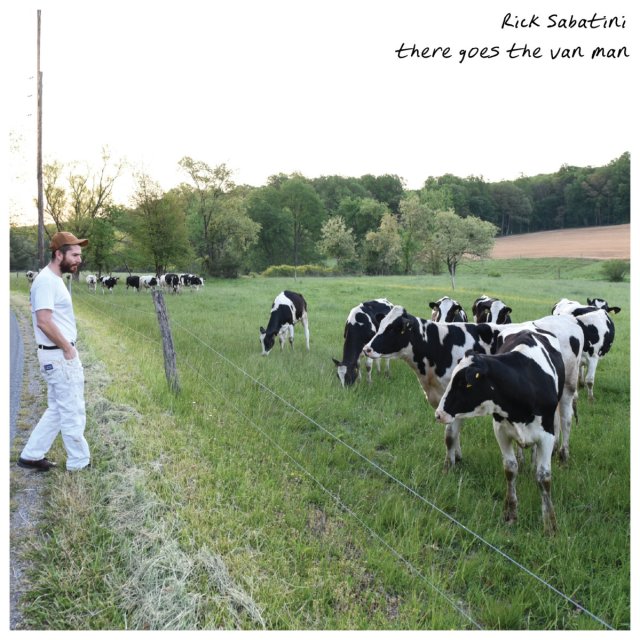
I recently learned about Philadelphia-based singer-songwriter Rick Sabatini when he reached out to me on Facebook about his album There Goes the Van Man. Released on New Year’s Day, the album features nine wonderful tracks with lighthearted relatable lyrics addressing the emotional minefields of romantic entanglements and responsibilities of young adulthood. It’s his second album, marking an eight-year span since the his first release Album 1 Demos back in November 2013. A delightful collection of lo-fi acoustic songs, Album 1 Demos is available for free download on his Bandcamp account.
Rick, who’s also been a member of The Band Sheep for the past several years, told me he composed most of the the songs for There Goes the Van Man five or six years ago on his iPad, but didn’t have the money to properly record it in a studio at the time. So, he started his own business doing painting and carpentry to earn money to fund the record, as well as earn a living, since he’d gotten married and had a child along the way. He finally recorded the album in a studio with the help of session musicians, and the result is a really enjoyable and well-crafted work.
Rick’s pleasing, highly accessible music can generally be described as indie pop with elements of folk, rock and jazz, and characterized by catchy melodies, lots of great guitar work and his endearing laid back vocals. The album opens with “At Your Service“, a sweet song about finding romance while working at a shoe store: “Just another day at the shoe store, the meet and greet, the fit your feet and send you out the door. Some of them I know by first name, and last name too. / If there’s anything that I can do for you baby, I’m at your service like a godat your church while you’re preachin’.”
Next up is “Van Man“, a terrific auto-biographical song about Rick that also serves at the de-facto title track, given its refrain “There goes the van man.” He croons about his workday routine “I was the van man today, I took the van real far away. I did stuff and got paid. I brought something that I made. I blasted sports radio. That’s just the way that I go when I’m driving down the open road.” The song is fantastic, with a wonderful, breezy melody and lots of cool instruments like organ, banjo and exuberant sax, adding nice Americana and jazz elements, as well as incredible texture to the overall sound. If all that’s not enough, there’s also a great guitar solo in the bridge too.
“The Office” is a fun Americana song with a lively piano-driven melody and more of that great banjo. The cheeky lyrics speak to the drudgery of working at a dead-end office job: “I don’t like to drive when it’s dangerous. Roads are pretty treacherous, but the boss man, he doesn’t give a shit. He says ‘I want you in’, well if I crash would you pay for it? I’m desperate, strapped for cash, and I can’t afford another accident. It’s a lot to risk, just to waste my day away in the office.“
On the bouncy “Tax Return“, Rick sings of the joys of finally being able to treat his girl to a nice evening out, now that he’s gotten his tax refund: “Baby relax I got my tax return. Girl let’s go out, I got some cash to burn. We’re gonna find somewhere nice to eat. The government paid me real good this week.” The musical highlights of the track are the great bassline, guitars, organ and piano keys, and I love the vocal harmonies.
One of my favorite tracks is “Talk to Me“, with its smooth and sophisticated jazzy vibe. I love the intricate, funky guitars, cool keyboards and subtle snare drums, but for me the biggest highlight are Rick’s lovely soothing vocals, backed by gorgeous Beach Boys-esque harmonies. This song really showcases his strong songwriting, musicianship and vocal abilities. “Colleen” is another great song, opening with a gospel-like organ riff and Rick’s voiceover speaking as an airline pilot to a plane full of passengers. That wonderful organ riff continues throughout the song, serving as its driving force and overlain with guitar, strings, sax and crisp percussion. Rick sings to a woman named Colleen of his desires for her affection: “Colleen, I might not be your man right now, but someday I will.“
“Devils” is a fascinating track, and much darker than the other songs on the album. Musically, it has a languid trip hop beat, with spooky synths, somber piano keys and skittering drumbeats, and in the background can be heard a man’s voiceover, speaking about LSD. It all serves to create an unsettling vibe. Rick’s vocals, which remind me of Mark Foster of Foster the People on this track, have a sense of sad resignation as he laments about trying to overcome drug addiction, or possibly a relationship that’s falling apart because of a partner who’s either addicted to drugs or cheating on him: “I’m trying to quit the devil, but he’s got his grip so tight on me it’s hard not be deceived and made of fool of. Well I’m wrestling with the devil. It’s not something that I’m proud of, but do you have to be so loud in the restaurant? I’m just trying to get back to normal.Well I caught you with the devil. You smelled like his cologne. All those moments you were alone, his smoky breath, the telephone. I thought we were getting back to normal.“
On the upbeat “Principal Problems“, Rick sings from the perspective a high school kid frustrated with his principal, who’s trying to make him quit his aggressive behavior that’s earned him a reputation as a tough guy on campus: “I’m gonna punch my principal in the face, if he tries to stop my fight with Tony Robinson./ You’ve got an occupation, I’ve got a reputation to hold up.” And on the delightful album closer “Tel Aviv Blues“, he sings of a woman he loves and how her ambivalence is making him crazy: “At night I’m wonderin’, about what you’re doing. You’re my baby, but only in my dreams. Only kissing me when I fall asleep. I told my best friend, a real good Christian, he said ‘You don’t need her love, you need the Lord’. But the Lord ain’t never kissed me good before. I’m back to drinkin’, I’m tryin’ hard to rid you from my mind.” The song has a lively Southern rock feel, with a colorful mix of twangy guitars and banjo, accompanied by swirling organ, sax and a great toe-tapping rhythm.
There Goes the Van Man is a marvelous album, and I’m so glad Rick reached out to me about it. He’s a talented guy who knows his way around a song, and here he delivers nine superb tracks. Each one is different from the next, a testament to his eclectic sound and the quality of his songwriting. This album needs to be heard by as many people as possible, and I hope some of my readers will enjoy it as much as I do.
Aptly-named Cleveland, Ohio-based indie band You’re Among Friends want us to feel welcome when hearing their music or watching them perform. With their laid-back style of funky, blues-infused folk rock reminiscent of the music of Steely Dan and The Grateful Dead, with touches of Randy Newman and Elvis Costello, listening to their music is like spending time with a good friend. That comforting, low-key vibe, combined with relatable lyrics touching on everyday aspects of life in this crazy, mixed-up world of ours, has a way of making us feel that everything’s gonna be alright at the end of the day.
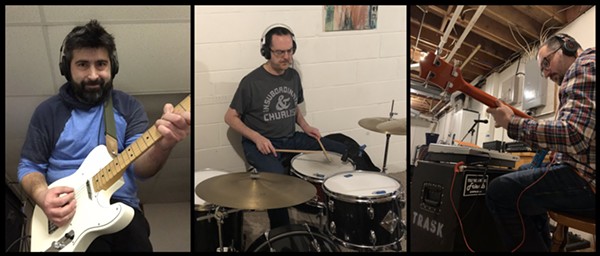
The band was formed in 2007 by founding members and long-time friends Anthony Doran (lead vocals and guitars) and Kevin Trask (bass, keyboards and backing vocals). And like too many bands, they’ve struggled to find and keep drummers, but their current (and seventh) drummer Mike Janowitz, who came on board in late 2019, has turned out to be a perfect fit.
You’re Among Friends released their debut self-titled album in 2007, followed by an EP and double single, but the demands of life, work and starting families took so much of their time, they went on a hiatus in 2011 lasting four years. They reconnected in 2015, and the following year, released their second album As We Watch the Years Go…, with songs inspired by their life experiences, as well as the passage of time and how it affects friendships and relationships. They followed in late 2017 with an EP One Day You’ll Look Back, then dropped their third album Start Making Sense in May 2020. (I’ve reviewed their last three releases, which you can read by clicking on the links under “Related” at the bottom of this page.) Now the guys are back with their fourth album, Good Enough Sometimes, which dropped January 10th.
One of the many things I like about their songs is that the titles let us know exactly what they’re about, as well as the conversational flow of their down-to-earth lyrics that make us feel like we’re speaking with a friend. Kicking things off is “Don’t Borrow Trouble“, a mellow, upbeat song advising us to not overthink or worry over things we can’t change or that haven’t even happened yet: “Don’t borrow trouble, why worry about something before it’s here. By the time the dust settles, and the moving parts stop, don’t you know it may not be as bad as you fear.” These simple but wise words could be directed at me, as I’m frequently guilty of obsessing over a lot of shit.
Several tracks address the theme set forth in the album’s title, starting with “Here in the Middle of the Pack“. The lyrics advise us that it’s okay to be average, so long as we do our best and feel contentment with ourselves: “Don’t have to be the best. Just strive to be consistent./ It all works out eventually.” I like Anthony’s guitar noodling and endearing vocals that remind me of Randy Newman. On a similar vein, “Okay is Good Enough Sometimes” urges us not to expect everything in life to be perfect or the way we want them to be: “Got to let some things go, to preserve your mind and soul. Not everything is worth your peace, try not to lose too much sleep, because okay is good enough sometimes.” Anthony’s bluesy guitars and Kevin’s funky bassline are terrific.
The guys take a somewhat different tack on “You Know What You Want“, with lyrics about not giving up on your dreams and aspirations, “When you set your mind on something, you don’t stop til you’re done. It’s one of those things that I love about you. Someday your chance will come. Cause you know what you want.” I like the quirky and cool instrumental flourish in the bridge. And on the sweet “Accompanied“, Anthony sings his praises to a loved one who’s always there for him: “Sometimes life brings me down. That’s when I’m glad you’re around to pull me through. It’s tried and true.”
But sometimes, even friends need a bit of tough love. On the catchy “Toxic Positivity“, with its bluesy Grateful Dead vibe, Anthony calls out those who spout meaningless positive adages like “What doesn’t kill us makes us stronger”: “Spare me your toxic positivity. When the world’s pissing in my face, I don’t have to pretend it’s refreshing rain.” On “Learn to Leave Well Enough Alone“, he admonishes someone to get off his back and mind their own business: “You’ll be the first to know when I want to hear opinions from folks who don’t understand a thing about my business.” The song has an interesting sound, with a repetitive bluesy groove, and delightful jazzy organ and percussion at the end.
Though You’re Among Friends don’t get political very often, there are times you just need to call out corporations, politicians and the media for their duplicitous actions too. The dark “Bad Karma and a Special Place inHell” decries those who promote fear to keep the masses fired up and their profits soaring, while “This is Unsustainable” speaks to corporate greed and income inequality: “Don’t expect them to understand, how they’re living off our backs.”
With a breezy, upbeat groove that hovers in a sweet spot between Steely Dan and the Grateful Dead, album closer “Plan Cancellation Chicken” is one of my favorite tracks from a musical standpoint. Anthony’s guitar riffs are really wonderful, nicely layered over Kevin and Mike’s jazzy, thumping rhythm. The song circles back to the album’s overall theme of just calming down and going with the flow, with lighthearted lyrics that describe a romance in a cheeky, backhanded way: “It’s all a big game of plan cancellation chicken. I’m so glad you caved and canceled before I did. It’s looks like I won this round. Let’s keep each other around, so we’ll have someone to cancel plans with.”
With Good Enough Sometimes, You’re Among Friends serves up 30 minutes of pleasing songs – with a few edgier ones thrown in for variety – we’ve come to expect and enjoy from them. Like I’ve mentioned previously, it’s like the return of an old friend with whom we’re able to pick right back up from where we left off.
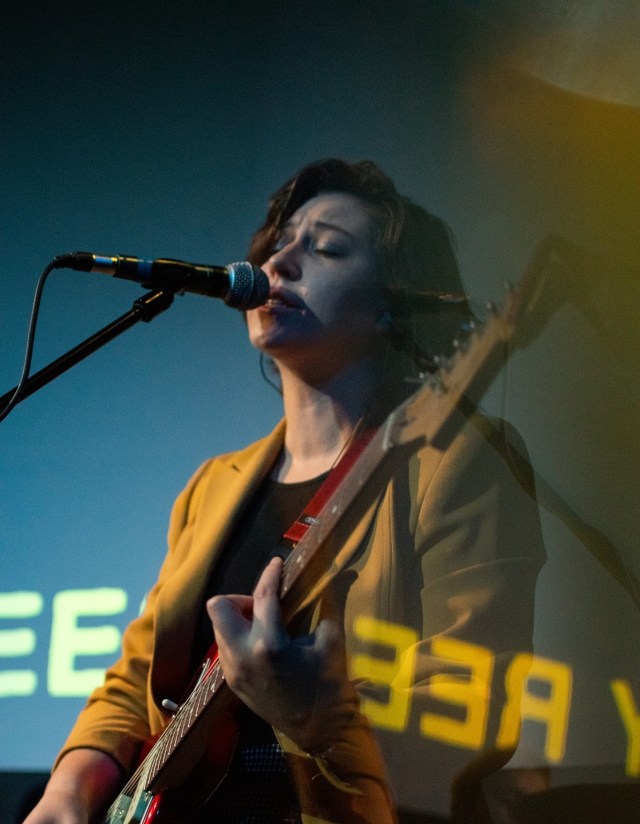
Holly Rees is a talented and thoughtful singer-songwriter based in Newcastle, England who’s been writing and recording exceptional indie folk songs for the past five years or so. Like many songwriters, her poetic lyrics are inspired by personal experiences that make them highly relatable to us listeners. She then delivers them wrapped in beautiful, understated melodies, fine guitar work and lovely, heartfelt vocals, all of which have earned her critical acclaim and a loyal following, with flattering comparisons to artists like Laura Marling and Courtney Barnett.
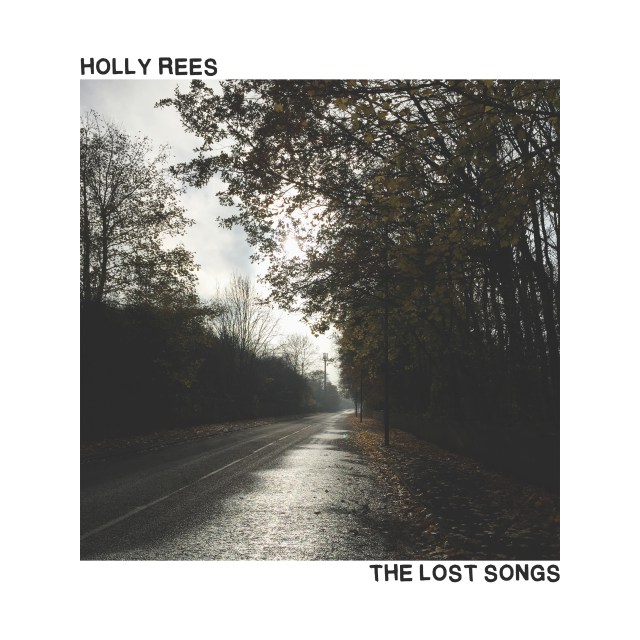
Holly released her debut EP Ilex in 2017, garnering airplay on BBC 6 Music and a feature on Tom Robinson’s BBC Introducing Mixtape. In 2018, she performed at the Hit The North and Evolution Emerging music festivals, and released her excellent second EP Slow Down. She followed with “Text Me When You Get There”: The Live EP in May 2019, and that September, dropped her single “Getting By“, which I reviewed. On December 10th, she surprised us with release of The Lost Songs, an all-acoustic EP originally recorded in isolation exclusively for her Patreon supporters (patreon.com/hollyrees) that she’s now gifted to the world.
She explains: “Here are the lost songs – songs I’ve written over the past three years that have fallen down the gaps. I never really intended these sad soft songs to see the light of day, but coming towards the end of another year I thought it might be nice to share them now, as a gentle winter gift before we draw a line under the year and start fresh in 2022. As some of you know, I’ve had to shield for a lot of the past two years, which is where this project started, in isolation. Every part of this project I’ve done by myself – writing, playing, recording, mixing, mastering, even the artwork – and I’m really proud of that. I hope that in listening you might find some of the joy, peace or escape that I found in making it.”
It’s a gentle EP, featuring five melancholy but lovely acoustic folk songs addressing conflicting emotions stemming from lost loves, missed connections, and the passage of time. With only her beautifully strummed guitar notes and clear, soothing vocals, Holly has created exquisite little gems that are simple yet profound, with a quiet intensity that touches the soul. The opening track “heather” is a kind of love song to her home of North East England (she told me that she actually got a heather tattoo right before leaving for her Canada tour in 2019, as an homage to the heather on the moors where she grew up): “I could be anywhere, except that the rain is making me homesick. Cry at your records, you were always such a sensitive soul. I tried to wear my heart on my sleeve but I must have got cold. And I feel open for the first time in a year.“
Likewise, the enchanting “victoria” is a heartbreak song to the British Columbia capital city: “Oh Victoria, I think you always knew that I would fall for her. Victoria. She broke my heart for a year, god was I trying. But first came Victoria, Vancouver Island.” On the bittersweet song of unrequited love “i justwant you“, Holly softly laments about being hopelessly in love with someone who just doesn’t feel the same about her: “Tell me about your family and living with your brothers. Tell me all your favourite streets, your heartbreaks and lovers. Tell me everything except the one thing I won’t ask. You don’t tell me if you feel the same. I know that you can’t do. I know it’s all on me, but I’m sick of writing about things that I can’t change. But I can’t change. I just want you.”
She touches on how shyness and fear of rejection sometimes hold us back, possibly losing out on opportunities for love on “seattle“. She sings of seeing a woman she’s attracted to on a bus in Seattle, but being too afraid to make contact: “Don’t know why I still hide like I’m seventeen. Smile and I won’t meet your eyes. You take down your bike. This must be your stop and we’re out of time. Go to Seattle maybe you were the one.” The serene “glad it’s you” has a bit of a Joni Mitchell vibe, and finds Holly content in a loving and trusting relationship: “Been singing with my all exposed. Been listening with my eyes closed, but my heart’s open. No I haven’t felt like this in a long time a long time, but I’m glad it’s you.“
The Lost Songs is a wonderful little EP that beautifully showcases Holly’s strong songwriting, singing, recording and production talents. I’m confident she’ll continue to impress us with more outstanding music in 2022.







 ECLECTIC MUSIC LOVER