The song at #70 on my list of 100 Best Songs of the 2010s is “Moves Like Jagger” by Maroon 5featuring Christina Aguilera. While I would be the first to concede that it probably doesn’t qualify as a truly great song, it’s still a deliciously catchy electropop dance tune that’s just too damn fun to resist. When it came out in the summer of 2011, I couldn’t get enough of it, and it’s my biggest guilty pleasure song on this entire list. The song was a massive worldwide hit, reaching #1 in the U.S. and 25 other countries from Brazil to Finland to South Korea, and selling over 15 million digital units.
“Moves Like Jagger” was the the fourth single to be released from Maroon 5’s third album Hands All Over. Both Christina Aguilera and Maroon 5 front man Adam Levine were judges and coaches on the hit music competition show The Voice at the time, and their great chemistry shines through in the song. The video was filmed at the historic Los Angeles Theater, and features a bevy of costumed dancers doing their best Mick Jagger imitations along with Aguilera singing and Levine shown performing shirtless, of course, interspersed with vintage footage of Jagger dancing at several Rolling Stones concerts. In an interview on the ABC program Nightline in November 2011, Jagger stated he was flattered by being named in the song, and later joked on the Late Show with David Letterman about not seeing any royalties from it.
Fun fact: “Moves Like Jagger” is one of three songs on this list featuring prominent whistling, the others being the upcoming “Trampoline” by SHAED and “Pumped Up Kicks” by Foster the People.
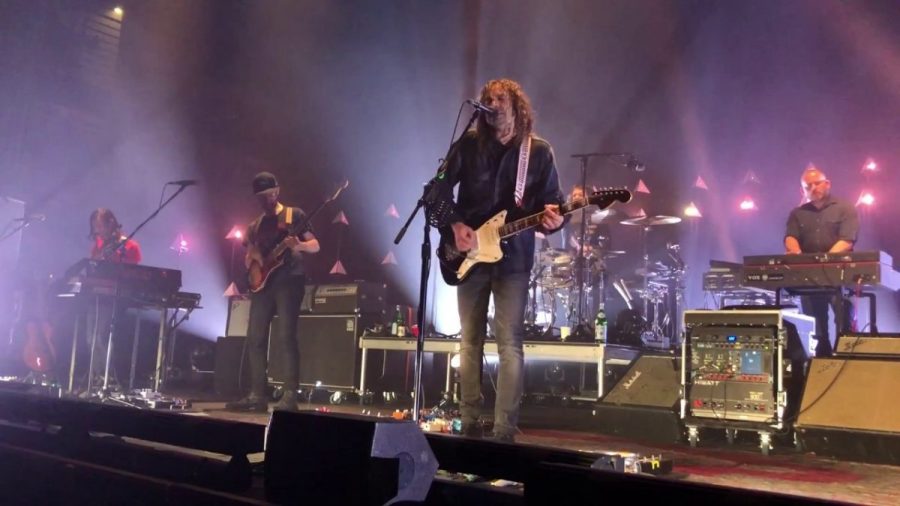
The song at #71 on my list of 100 Best Songs of the 2010s is “Holding On” by Philadelphia-based alternative rock band The War on Drugs. They’re quite honestly one of the best bands making music today, and I love their lush melodic sound that’s a beautiful mash-up of alternative, heartland rock, neo psychedelia and Americana. The band was formed by Adam Granduciel and Kurt Vile in 2005, but Vile left after the completion of their first album to pursue his solo career. The band has undergone quite a few changes in lineup over the years, and now consists of the aforementioned Granduciel on guitar and lead vocals, David Harley on bass, Jon Natchez on sax & keyboards, Anthony LaMarca on guitar & keyboards, Robbie Bennett and piano, keyboards and guitar, and Charlie Hall on drums & organ.
I became a fan of The War on Drugs in 2014 after hearing their spectacular song “Red Eyes.” So it was natural that I’d love their beautiful song “Holding On” from their magnificent, critically-acclaimed and Grammy-winning 2017 album A Deeper Understanding. Having six band members, including three guitarists, three keyboardists, one of whom also plays sax, a bassist and a drummer, gives their music a full, almost orchestral sound. The piano, guitars, xylophone and synths on “Holding On” are breathtaking, and I love the powerful driving rhythms. Granduciel’s sublime vocals bear a striking resemblance to Bob Dylan on this and some of their other songs.
The song lyrics speak to the passage of time and how it allows a different perspective about a life-changing relationship that ultimately failed. The singer ponders as to whether he left the relationship too soon, or was it possible he held onto it longer than he should have – something many of us have probably wrestled with in less than happy relationships.
Ain’t no way I’m gonna last Hiding in the seams, I can’t move the past Feel like I’m about to crash Riding the same line, I keep keeping on
And he never gonna change He never gonna learn I keep moving on the path, yeah Holding on to mine
When you talk about the past What are we talking of? Did I let go too fast? Was I holding on too long?
Here’s the official video for the song, featuring Granduciel and Frankie Faison:
And here’s a live performance without a visual storyline, which I almost prefer:
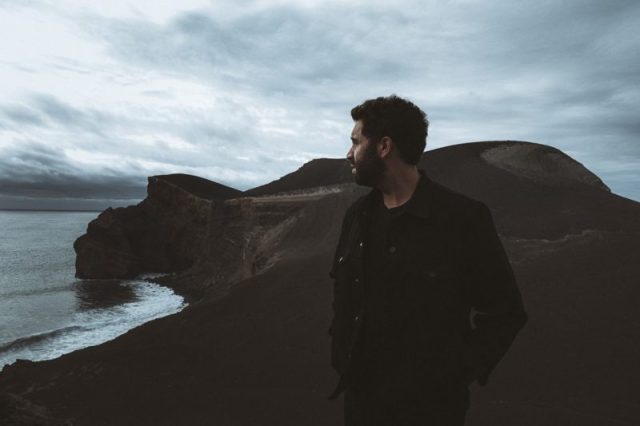
Portuguese singer/songwriter Cristóvam grew up in the Azores islands, surrounded by music and the natural beauty of his home. His grandfather started the second oldest radio station in the Atlantic region, and left behind a massive record collection that captivated him as a child and teen, and influenced him to become a musician. Drawing inspiration from such artists as Bob Dylan, Ray Lamontagne, Bon Iver, Angus & Julia Stone, as well as the beauty of his surroundings, Cristóvam creates incredibly pleasing folk songs steeped in lovely melodies and poetic lyrics, and delivered with beautiful instrumentals and his warm, comforting vocals that sound like he could be from Nashville, Austin, or even Dublin. In fact, he reminds at times of Matt Nathanson.
Cristóvam released his debut album Hopes & Dreams in 2018, which I really enjoyed listening to as I familiarized myself with his music in preparation to write this review. It’s an outstanding collection of songs, and I highly recommend that my readers check it out on your favorite streaming platform. He then followed up earlier this year with the poignant and timely “Andra Tutto Bene”, which spoke to the struggles so many have faced as a result of the pandemic.
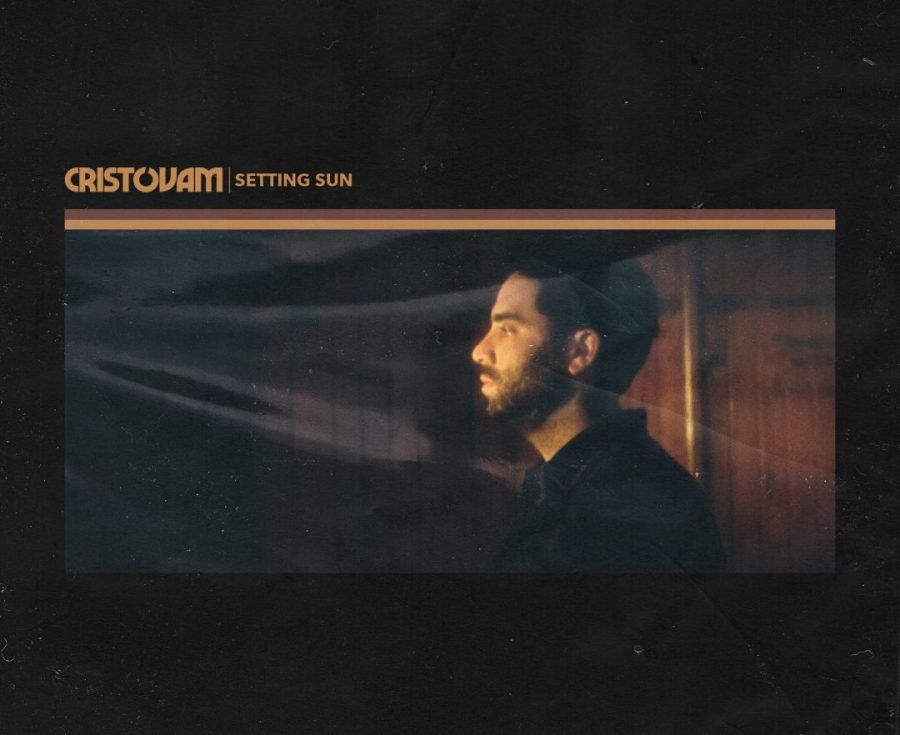
On October 9th, he dropped his latest single “Setting Sun”, a beautiful, uplifting song about two people so deeply in love that together, they can weather any storm that comes their way, or at least forget the troubles of the outside world for a little while: “Our love is like an island floating in the desert blue.” Cristóvam confides, “I started writing it in 2018, when I was on a holiday with my girlfriend in Sardinia, and sort of left it there. But this year, with all that’s happening and the world being such a strange place, somehow those lyrics resonated back with me, and the fact that I felt so lucky to find comfort in my own little corner, far out in the middle of the Atlantic.”
The stunning video was filmed in and around the Capelinhos volcano in the Azores, and beautifully captures the romance and sweeping majesty of the track.
The song at #72 on my list of 100 Best Songs of the 2010s is the stunning “The Joke” by singer-songwriter Brandi Carlisle. Written as a comment on the sociopolitical climate following the 2016 US presidential election, the song is a deeply poignant ode to the delicate boys and striving girls who continue to struggle in our society. In an interview with NPR, Carlisle explained her inspiration for writing the song: “There are so many people feeling misrepresented. So many people feeling unloved. Boys feeling marginalized and forced into these kind of awkward shapes of masculinity that they do or don’t belong in…so many men and boys are trans or disabled or shy. Little girls who got so excited for the last election, and are dealing with the fallout. The song is just for people that feel under-represented, unloved or illegal.”
Carlisle has a commanding voice and her stirring, passionate vocals on on this song send chills up and down my spine. Hearing her sing the defiant lyrics in her beautiful voice, backed by haunting piano keys and soaring instrumentals highlighted by gorgeous strings courtesy of the late Paul Buckmaster (a music genius who arranged Carlisle’s album By The Way, I Forgive You, as well as such legendary recordings as David Bowie’s “Space Oddity”, The Rolling Stones’ Sticky Fingers and many of Elton John’s early hits), is a religious experience indeed.
“The Joke” was nominated for a 2018 Grammy Award in four categories, including Record and Song of the Year, and won for Best American Roots Song and Best American Roots Performance.
You’re feeling nervous, aren’t you, boy? With your quiet voice and impeccable style Don’t ever let them steal your joy And your gentle ways, to keep ’em from running wild They can kick dirt in your face Dress you down, and tell you that your place Is in the middle, when they hate the way you shine I see you tugging on your shirt Trying to hide inside of it and hide how much it hurts
Let ’em laugh while they can Let ’em spin, let ’em scatter in the wind I have been to the movies, I’ve seen how it ends And the joke’s on them
You get discouraged, don’t you, girl? It’s your brother’s world for a while longer We gotta dance with the devil on a river To beat the stream Call it living the dream, call it kicking the ladder They come to kick dirt in your face To call you weak and then displace you After carrying your baby on your back across the desert I saw your eyes behind your hair And you’re looking tired, but you don’t look scared
Let ’em laugh while they can Let ’em spin, let ’em scatter in the wind I have been to the movies, I’ve seen how it ends And the joke’s on them
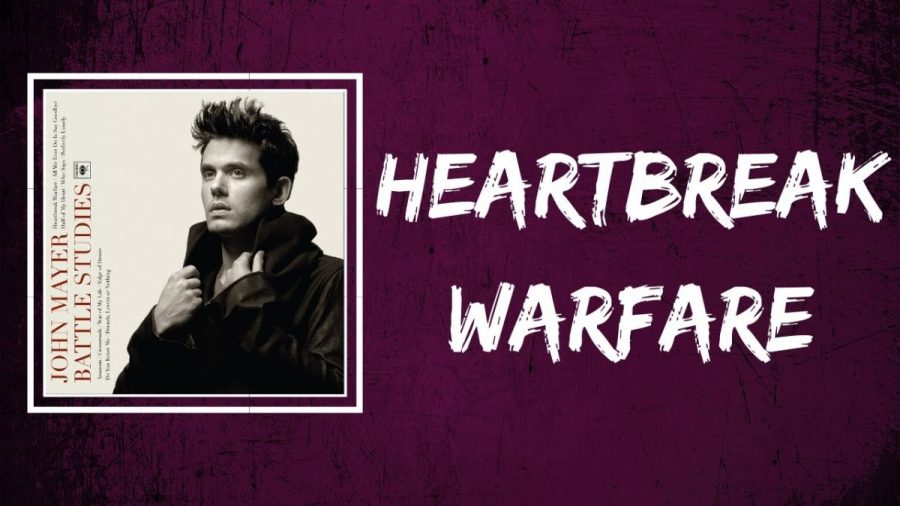
The song at #73 on my list of 100 Best Songs of the 2010s is “Heartbreak Warfare” by American singer-songwriter and guitarist John Mayer. My first introduction to Mayer was his wonderful debut single “No Such Thing” in 2002. The song was a poignant look back at the high school experience that really resonated with me, as it was played a lot on the radio during the time of one of my milestone High School reunions. I loved that song so much it ended up at #17 on my Top 100 Best Songs of the 2000s list.
“Heartbreak Warfare” is another of Mayer’s songs that I love. The darkly beautiful song is from his fourth studio album Battle Studies, and though it was released in October 2009, it became a hit in early 2010, so in my book, it should be celebrated as one of the best songs of 2010, and also of the 2010s. The song is has a mellow, almost hypnotic tempo, albeit with a haunting undercurrent. Mayer is a fine guitarist, and his work on this track is particularly good, and I love the sense of bitter frustration that comes across in his silky vocals. The lyrics speak of a toxic relationship, and are a plea for his lover to ease up on her poisonous behavior in the hope they can salvage what’s left: “How come the only way to know how high you get me is to see how far I fall? God only knows how much I’d love you if you let me but I can’t break through it all.”
The song at #74 on my list of 100 Best Songs of the 2010s is the beautiful “Just Give Me a Reason” by P!nk, featuring guest vocals by Nate Ruess. The deeply moving piano ballad is one of my favorite songs from P!nk, and was the third single from her outstanding 2012 album The Truth About Love. The song was a massive worldwide hit, topping the charts in 21 countries including the U.S., and received unanimous critical acclaim.
“Just Give Me a Reason” was co-written by P!nk, Jeff Bhasker (who produced the album), and fun. lead singer Nate Ruess, who also provides his stirring vocals. The song is a heartfelt plea between two people desperate to hold on to a relationship that appears to be falling apart. It was originally intended to be sung just by P!nk, but she soon realized that she needed someone else to sing the song with her, as she felt it was more of a conversation between two people rather than from the perspective of just one person in the relationship. She asked Ruess to sing the song with her as a duet, and the result was magical. The raw emotional power achieved by their dual vocal harmonies gives me goosebumps every single time I hear it.
The lyrics are so honest and relatable that I feel compelled to include them in their entirety:
Right from the start You were a thief You stole my heart And I your willing victim I let you see the parts of me That weren’t all that pretty And with every touch you fixed them
Now you’ve been talking in your sleep, oh, oh Things you never say to me, oh, oh Tell me that you’ve had enough Of our love, our love
Just give me a reason Just a little bit’s enough Just a second we’re not broken just bent And we can learn to love again It’s in the stars It’s been written in the scars on our hearts We’re not broken just bent And we can learn to love again
I’m sorry I don’t understand Where all of this is coming from I thought that we were fine (Oh, we had everything) Your head is running wild again My dear we still have everythin’ And it’s all in your mind (Yeah, but this is happenin’)
You’ve been havin’ real bad dreams, oh, oh You used to lie so close to me, oh, oh There’s nothing more than empty sheets Between our love, our love Oh, our love, our love
Just give me a reason Just a little bit’s enough Just a second we’re not broken just bent And we can learn to love again I never stopped You’re still written in the scars on my heart You’re not broken just bent And we can learn to love again
Oh, tear ducts and rust I’ll fix it for us We’re collecting dust But our love’s enough You’re holding it in You’re pouring a drink No nothing is as bad as it seems We’ll come clean
Just give me a reason Just a little bit’s enough Just a second we’re not broken just bent And we can learn to love again It’s in the stars It’s been written in the scars on our hearts That we’re not broken just bent And we can learn to love again
From humble beginnings in France as a folk pop duo making mostly acoustic music, Yard of Blondes have faced some of the same challenges and struggles as many young artists and bands experience since relocating to Los Angeles in 2014. Now a four-piece, they’re finally on an upward trajectory and making a name for themselves with their exciting and edgy style of alternative rock. The band is comprised of the hard-working French-born singer/songwriter and guitarist/vocalist Vincent Walter Jacob and bassist/vocalist Fanny Hulard, guitarist Burak Yerebakan, originally from Turkey, and Northern California native Forrest Mitchell on drums.
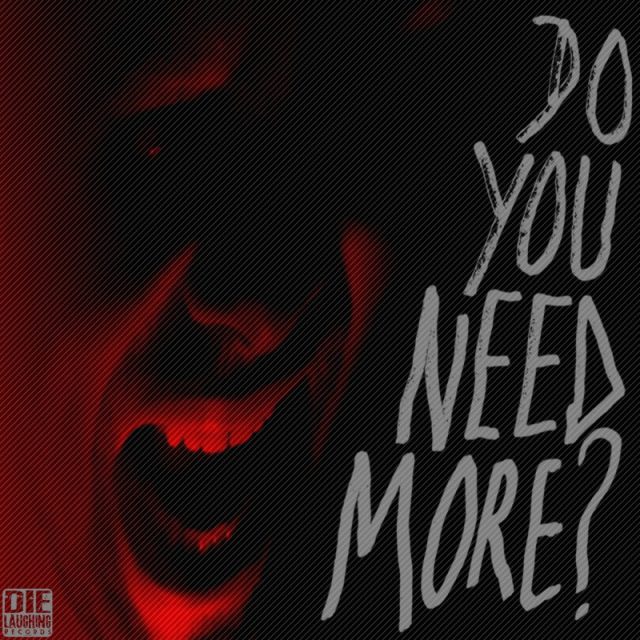
I’ve previously featured Yard of Blondes twice on this blog, first in July 2019 when I reviewed their marvelous bilingual single “Je veux danser tout l’été”, along with two alternative versions, then again this past February when I reviewed their single “Lowland”. (You can read those reviews by clicking on the links under “Related” at the end of this post.) Now they’re back with “Do You Need More?“, the third single from their forthcoming debut album Feed the Moon, due for release early next year. The single and album were produced by Billy Graziadei (Biohazard, Powerflo), mixed by Michael Patterson (Nine Inch Nails, Black Rebel Motorcycle Club) and mastered by Maor Applebaum (Faith No More).
In a recent interview with music blog TrueStyleMusic, Vincent provided some background on “Do You Need More?”: “It was one of the first songs we wrote for our upcoming album, and it’s the song we always play first at our shows. It’s a song that seems very straight forward, but it evolves into a more complicated piece as Fanny is adding more and more layers of vocals, and as we end up breaking the installed routine with some surprisingly heavy bridge. Regarding the lyrics, it’s also a tricky song. It feels like a love song at the beginning, but it’s actually a toxic love story where one gaslights another, and it ends up with kind of a Stockholm syndrome situation.“
The song is a rampaging beast, storming through the gates like a bat out of hell with furious riffs of grimy guitars and a thunderous barrage of explosive rhythms. Fanny’s throbbing bass line propels the song forward while Forrest keeps pace with his pummeling drumbeats. Meanwhile, Vincent and Burak are busy laying to the airwaves with their aggressive, intertwining guitars, delivering chugging riffs of shredded distortion that threaten to blow out the speakers. Vincent and Fanny’s expressive vocals rise to the occasion, becoming downright feral in the chorus as they wail “Do you need more? Do you really need more? Gimme, gimme, gimme some more! I want it all!” Finally, everyone spent, the song fades out in a hum of reverb.
If the three singles released thus far – “You and I & I”, “Lowland” and “Do You Need More?” are any indication, Feed the Moon is guaranteed to be a terrific album.
The song at #75 on my list of 100 Best Songs of the 2010s is “Out of My League” by Los Angeles-based pop/neo soul band Fitz and the Tantrums. Although they’d been making music since 2008, I was not familiar with them until my musical awakening in late summer 2013. One day I discovered the Billboard Alternative Rock chart, and it was a revelation! I saw songs by lots of artists I’d either never heard of, or who I knew about but wasn’t aware they had new music out. One of the songs riding high on the chart at that time was “Out of My League”, and I instantly fell in love with it’s exuberant piano and bass-driven synth pop grooves. The song is so damned electrifying and catchy, and I couldn’t get enough of it. I became a huge Fitz and the Tantrums fan, and bought their CD More Than Just a Dream, which also features their terrific follow-up single “The Walker”. I loved that CD so much I played it nearly to death over the next six months.
Fitz and the Tantrums are headed by front man and lead vocalist Michael Fitzgerald, and includes the lovely Noelle Skaggs on co-lead vocals, James King on sax and flute, Joseph Karnes on bass, Jeremy Ruzumna on keyboards and John Wicks on drums and percussion. A unique aspect of their music is that they have no designated guitarist, but they more than make up for it with a strong rhythm section and generous use of King’s sax (though it’s not prominent on “Out of My League”). Sadly, their two follow up albums have been rather disappointing to me, as well as many of their early fans and music critics. They seem to have abandoned their earlier soulful, groove-based sound in favor of a more pop-oriented style that just sounds generic and predictable. Also, their newer stuff hasn’t utilized Noelle Scaggs’ great vocals nearly enough. I still like them though.
I saw Fitz and the Tantrums in concert in a double bill with Young the Giant (two of whose songs have already been featured on this list) at the Los Angeles Forum in August 2019. They put on a fantastic show.
One of my most beloved albums in my collection is the magnificent Graceland by the legendary singer-songwriter Paul Simon. The iconic masterpiece is generally considered the finest work of his long and illustrious solo career, as well as one of the greatest albums ever recorded. When it came out in August 1986, I was living in the Los Angeles region and, like many who live in that sprawling megalopolis, had a long daily commute. I would record albums or make mixtapes onto cassettes so I could listen to my favorite music on my long drives to and from work. Graceland was one of the best of that time period, and I had it on repeat for many months.
Before digging into the album and songs, a bit of background would be helpful to provide some context for its creation. Following his successful run of hit albums and singles as a solo artist throughout the 1970s, by the early 1980s Simon had hit both a personal and professional slump. His relationship with Art Garfunkel had deteriorated yet again, his 1983 album Hearts and Bones was a commercial disappointment, and his marriage to actress Carrie Fisher had fallen apart. After suffering through a period of depression, in 1984 he became fascinated with a bootleg cassette tape of an album Gumboots: Accordion Jive Hits, Volume II, that had been loaned to him by singer-songwriter Heidi Berg, with whom he’d been working as her producer. In his liner notes for Graceland, Simon described it as “very up, very happy music” that sounded familiar, yet foreign.
The album was by South African band The Boyoyo Boys, and was in a style of music known as Mbaqanga, also informally called “township jive”, the street music of Soweto. Simon was so smitten by the music that he considered buying the rights to his favorite track on the tape, “Gumboots”, and using it to write his own song, as he had years earlier with “El Condor Pasa”. Hilton Rosenthal, a South African record producer who Simon’s label Warner had put him in touch with, suggested instead that he record an album of South African music. Rosenthal sent him dozens of records by South African artists, which Simon immersed himself in. He began improvising his own melodies and decided he wanted to go to South Africa to record with some of the musicians whose albums he enjoyed. The problem was, at that time the United Nations had imposed a cultural boycott of South Africa due to its policy of apartheid. This forced “all states to prevent all cultural, academic, sporting and other exchanges” with South Africa and ordered “writers, artists, musicians and other personalities” to boycott it.
Despite this restriction, Simon was determined to go to South Africa, and told The New York Times: “I knew I would be criticized if I went, even though I wasn’t going to record for the government … or to perform for segregated audiences. I was following my musical instincts in wanting to work with people whose music I greatly admired.” Prior to leaving for Johannesburg, Simon participated in the recording of “We Are the World”, the charity single benefiting African famine relief. He spoke to producers Quincy Jones and Harry Belafonte about his wanting to record in South Africa, and though they had some reservations, both encouraged him to do it. The South African black musicians’ union also voted to let Simon come, feeling it would benefit their culture’s music by bringing it international attention.
At the time, musicians in Johannesburg were typically paid $15 an hour, and Simon arranged to pay them $200 an hour, triple the going rate for top players in New York City. He also offered writer’s royalties to those he felt had contributed to compositions. Nevertheless, he still received harsh criticism from organizations such as Artists United Against Apartheid, and anti-apartheid musicians like Billy Bragg, Paul Weller, and Jerry Dammers. At an album launch party, Simon bluntly clarified his position on the controversy: “I’m with the artists. I didn’t ask the permission of the ANC. I didn’t ask permission of Buthelezi, or Desmond Tutu, or the Pretoria government. And to tell you the truth, I have a feeling that when there are radical transfers of power on either the left or the right, the artists always get screwed.”
Simon and his engineer Roy Halee traveled to Johannesburg in February 1985, and spent two weeks recording with Lulu Masilela, Tao Ea Matsekha, General M. D. Shirinda and the Gaza Sisters, and the Boyoyo Boys Band. The album’s opening track “The Boy in the Bubble”, recorded with Lesotho band Tao Ea Matsekha, was one of the songs recorded at those sessions. The song has a powerful, bass-driven rhythmic groove, highlighted by an accordion that provides a lively, almost carnival-like vibe, setting a nice tone for the album.
Overall, Graceland is characterized by an eclectic mixture of music styles and genres, including pop, rock, a cappella, zydeco, isicathamiya, and mbaqanga, and reflecting the various locations where the album was recorded. Consequently, some songs are clearly African, while others sound like songs that you’d hear in New Orleans or Nashville. The album has a wonderful flow, alternating between playful and more serious songs. Simon thought of it as like a play: In that New York Times interview, he explained “As in a play, the mood should keep changing. A serious song may lead into an abstract song, which may be followed by a humorous song.”
Every track on the album is great, but one of the standouts is the title track “Graceland”, a gorgeous, contemplative tune. The song features flawless performances by fretless bass player Bakithi Kumalo and guitarist Ray Phiri, as well as Simon’s childhood heroes The Everly Brothers on backing vocals. In his album liner notes, Simon remarked that the song had the feel of American country music, adding: “After the recording session, Ray told me that he’d used a relative minor chord—something not often heard in South African music—because he said he thought it was more like the chord changes he’d heard in my music.” The song is thought to be about seeking solace from the end of his relationship with Carrie Fisher by taking a road trip. “Graceland” was awarded a Grammy in 1988 for Record of the Year, a year after the album itself won for 1987 Album of the Year.
The album cuts featuring South African styles and sounds are pure delight. “I Know What I Know” is based on music from an album by General M.D. Shirinda and the Gaza Sisters, who collaborated on the song and sang backing vocals. I love the unusual guitar notes and distinctive lilting chant-like vocals of the Gaza Sisters. “Gumboots”, the song that got this whole thing started, is named for the term used to describe the type of music favored by South African miners and railroad workers, and refers to the heavy boots they wear on the job. With support by the Boyoyo Boys themselves, the song has an upbeat Cajun zydeco feel, highlighted by charming synclavier and dual alto and soprano sax. Another favorite is “Diamonds on the Soles of Her Shoes”, a wonderful collaboration with Ladysmith Black Mambazo, one of South Africa’s best known and loved groups.
Another collaboration with Ladysmith Black Mambazo is the sublime a capella track “Homeless”, with lead vocals by Joseph Shabalala, who co-wrote the song with Simon. With a melody based on a traditional Zulu wedding song, the lyrics are in both English and Zulu, and address poverty within the black majority in South Africa, telling of people living in caves on the side of a mountain, cold and hungry. “Crazy Love, Vol II” is a lovely, joyful song, with instrumentals played by guitarist Ray Phiri’s band Stimela.
Perhaps the biggest and best-known song from the album is “You Can Call Me Al”, a bouncy and clever tune about a man going through a mid-life crisis: “Why am I soft in the middle? The rest of my life is so hard.” The musical highlights are Simon’s six-string electric bass, the exuberant sax, trumpets and trombones, and the charming pennywhistle solo played by Morris Goldberg. The names mentioned in the wonderful lyric “I can call you Betty, and Betty when you call me, you can call me Al” came from an incident at a party that Simon went to with his first wife Peggy Harper. Noted French composer and conductor Pierre Boulez, who was at the same party, mistakenly referred to Paul as “Al” and to Peggy as “Betty”.
The humorous video for the song was actually a replacement, as Simon didn’t like the original video that was made. The replacement video was conceived partly by Saturday Night Live producer Lorne Michaels and directed by Gary Weis, with SNL alum Chevy Chase lip-syncing Simon’s vocals and making silly gestures punctuating the lyrics while Simon lip-synced to the backing vocals and brought into a room various instruments to play. The huge discrepancy in their heights made the video all the funnier.
Unfortunately, some of the songs generated a bit of controversy. Simon invited Linda Ronstadt to sing with him on the lovely “Under African Skies”, for which he received criticism, as three years earlier she had accepted $500,000 to perform at the South African luxury resort Sun City. “That Was Your Mother”, recorded in Louisiana, features the American zydeco band the Good Rockin’ Dopsie and the Twisters. Dopsie felt Simon had derived the melody from his song “My Baby, She’s Gone”, and was upset over not being credited, but decided not to take legal action. And on the rousing final track “All Around the World or the Myth of Fingerprints”, a collaboration with East Los Angeles-based Mexican-American band Los Lobos, the band felt they deserved writing credits. Band sax player Steve Berlin later recalled that Paul Simon “quite literally—and in no way do I exaggerate when I say—he stole the song from us. We go into the studio, and he had quite literally nothing. I mean, he had no ideas, no concepts, and said, ‘Well, let’s just jam’ and then goes, ‘Hey, what’s that?’ We start playing what we have of it, and it is exactly what you hear on the record.”
Be that all as it may, Graceland earned unanimous praise by music writers and critics, and was awarded the Grammy for Best Album of 1987. It’s Simon’s most successful solo album, selling more than 16 million copies worldwide, and in the recent update of their list of 500 Greatest Albums of All Time, Rolling Stone ranked it at #46 (up from #71 in 2012).
The last word comes from The Clash’s Joe Strummer, who in a 1988 interview with Richard Cromelin for the Los Angeles Times spoke of his love for the song “Graceland”: “I don’t like the idea that people who aren’t adolescents make records. Adolescents make the best records. Except for Paul Simon. Except for ‘Graceland’. He’s hit a new plateau there, but he’s writing to his own age group. ‘Graceland’ is something new. That song to his son is just as good as ‘Blue Suede Shoes’: ‘Before you were born dude when life was great.’ That’s just as good as ‘Blue Suede Shoes,’ and that is a new dimension.”







 ECLECTIC MUSIC LOVER