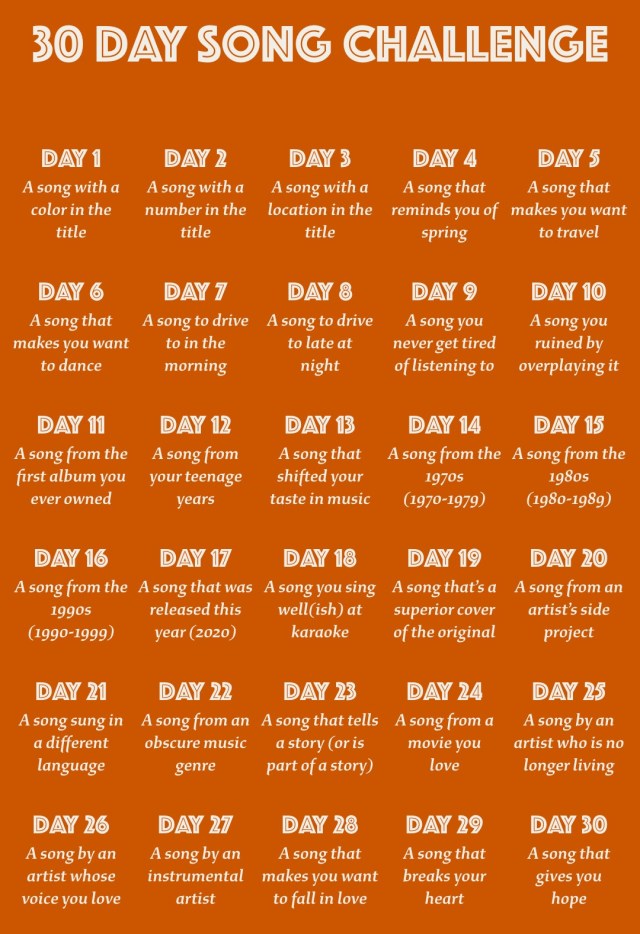
30 Day Song Challenge, Day 12 – “It’s Too Late” by Carole King

My original 45 single of “It’s Too Late/I Feel the Earth Move”

The subject for Day 12 of my 30 Day Song Challenge is “A song from your teenage years“, and my pick is the poignant break-up song “It’s Too Late” by Carole King. I was 16 years old when the song came out in April 1971, and remember thinking that it had a more mature feel, both lyrically and musically, than most of the other songs I’d heard up to that point in my young life. Though I’d not yet been involved in a romantic relationship, the song’s bittersweet lyrics about the end of a love affair really resonated with me. I also loved the song’s simple, yet sophisticated, arrangement and King’s earnest vocals that beautifully expressed a sense of sad resignation, without being too maudlin.

The song was co-written by King, who composed the music, and Toni Stern, who wrote the lyrics. Stern later told author Sheila Weller for her 2009 book Girls Like Us: Carole King, Joni Mitchell, Carly Simon – and the Journey of a Generation, that she wrote the lyrics in a single day, after her love affair with James Taylor ended. For the recording of the song, King played piano and sang vocals, Danny Kortchmar played guitar and conga, Curtis Amy played the haunting saxophone, Charles Larkey played bass, Joel O’Brien played drums, and Ralph Schuckett played electric piano.

The lead single from her hugely successful and critically-acclaimed masterpiece album Tapestry, “It’s Too Late” was a massive hit, spending five weeks at #1 on both the Billboard Hot 100 and Adult Contemporary charts in the summer of 1971, and is my favorite song of that year. The single’s B-side “I Feel the Earth Move” also charted, peaking at #12. “It’s Too Late” was awarded a Grammy for Record of the Year in 1972.

Stayed in bed all mornin' just to pass the time
There's somethin' wrong here, there can be no denyin'
One of us is changin', or maybe we've just stopped tryin'

And it's too late, baby, now it's too late
Though we really did try to make it
Somethin' inside has died
And I can't hide and I just can't fake it
Oh, no, no, no, no, no
(No, no, no, no)

It used to be so easy, livin' here with you
You were light and breezy, and I knew just what to do
Now you look so unhappy and I feel like a fool

And it's too late, baby, now it's too late
Though we really did try to make it (we can't make it)
Somethin' inside has died
And I can't hide and I just can't fake it
Oh, no, no

There'll be good times again for me and you
But we just can't stay together, don't you feel it, too?
Still I'm glad for what we had and how I once loved you

But it's too late, baby, now it's too late
Though we really did try to make it (we can't make it)
Somethin' inside has died
And I can't hide and I just can't fake it
Oh, no, no, no, no

It's too late, baby
It's too late now, darling
It's too late
30 Day Song Challenge, Day 11 – “I Want to Hold Your Hand” by the Beatles

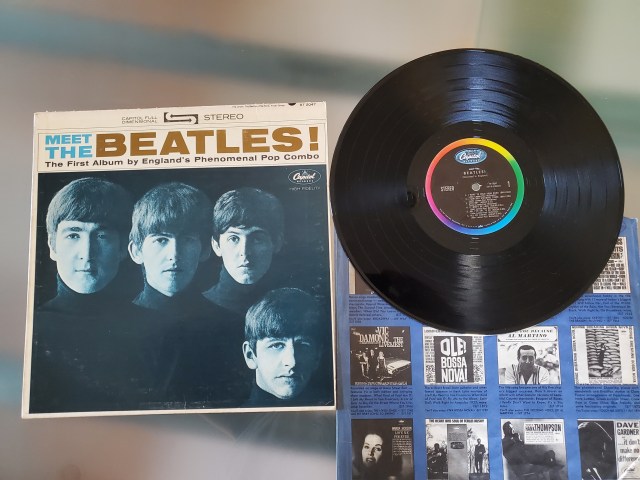
The subject for Day 11 of my 30 Day Song Challenge is “A song from the first album you ever owned“. This will reveal how ancient I am, but the first album I ever owned was Meet the Beatles!, which I bought in 1964 when I was nine years old. My copy, pictured above, is still in mint condition. The song I’ve chosen from the album is “I Want to Hold Your Hand“, which was my introduction to the Beatles, and their first Top 40 hit in the U.S. (The version of the album released in the UK was titled With the Beatles, and featured a different list of tracks, none of which was “I Want to Hold Your Hand”.)

The Beatles recorded “I Want to Hold Your Hand” at EMI Studios in London on October 17, 1963, along with “This Boy”, which became the B-side of the 45 single released in the UK. The two songs were recorded on the same day, and required seventeen takes to complete. The single was released on November 29, 1963 in the UK, and December 26, 1963 in the U.S., although the version released in the U.S. featured “I Saw Her Standing There” as the B-side.

The song entered the Billboard Hot 100 chart at #45 on January 18, 1964, which music historians mark as the beginning of the ‘British Invasion’ of the American music industry. It reached #1 on February 1st, and stayed there for seven weeks before being replaced by “She Loves You”, which had actually been released in September 1963, but shockingly, failed to catch on in the U.S. at the time. Despite receiving a positive review in Billboard, “She Loves You” garnered very little radio airplay, sold only about 1,000 copies, and completely failed to chart on Billboard (I previously featured “She Loves You” for another song challenge in 2020, which you can read here).

After the poor reception for “She Loves You” in the U.S., Capitol Records (the Beatles’ label for the distribution of their music in the U.S.) resisted releasing any more of their music, despite protestations by Beatles’ producer George Martin and manager Brian Epstein. Capitol finally released “I Want to Hold Your Hand” the day after Christmas 1963. 

Though the song was quickly embraced by raving fans on both sides of the Atlantic, it was dismissed by some stodgy critics as nothing more than another fad song that would not hold up to the test of time. Proving them wrong, “I Want to Hold Your Hand” went on to become the Beatles’ best-selling single worldwide, selling more than 12 million copies, and in 2018, Billboard named it the 48th biggest hit of all time on its Hot 100. In the UK, it was the second highest selling single of the 1960s, behind “She Loves You”.

Here’s their famous performance on the Ed Sullivan Show on February 9, 1964.

30 Day Song Challenge Day 10 – “For All We Know” by The Carpenters

Well, I somehow managed to skip over the correct Day 9 subject of the 30-day song challenge and mistakenly went directly to Day 10 for Saturday’s post. So, for today’s Day 10 post I’m going to tackle “A song you never get tired of listening to“. And once again, this was a tough call, as there are hundreds of songs I love that I never tire of hearing. But pick one I must, and to make my selection a little easier, I’ve chosen a beloved song I’ve not previously written about. My pick is “For All We Know” by the Carpenters. (I have previously written about the Carpenters though, when I featured their song “Superstar” in 2019.)  

As I wrote in that earlier article, with their successful run of great singles from 1970-75, beginning with their massive hit “(They Long to Be) Close to You”, the Carpenters were one of my favorite acts back then. Their music was beautiful, with the kind of lush orchestration I love, and Karen Carpenter had the voice of an angel. Her distinctive, pitch-perfect contralto singing voice remains one of the finest of any female pop singer ever, in my opinion. I loved their music so much as a teen that I wrote a paper about them for my 11th grade English class (the only time I wrote about music or an artist until becoming a blogger several decades later). 

“For All We Know” was written for the hilarious 1970 comedy Lovers and Other Strangers, with music by Fred Karlin and lyrics by Robb Wilson Royer and Arthur James Griffin (both Royer and Griffin were founding members of the soft rock group Bread). (Most of the songs recorded by the Carpenters were written by others, other than their hits “Goodbye to Love” and “Yesterday Once More”, which were co-written by Richard Carpenter and John Bettis, “Only Yesterday” by Carpenter, Bettis and Kōji Makaino, and “I Need to Be in Love” by Carpenter, Bettis and Albert Hammond.) The song was originally sung by Larry Meredith for the film’s soundtrack, and when Richard heard his version while watching Lovers and Other Strangers, he felt the song would be perfect for their style and Karen’s voice.

For the recording of the song, Richard initially wanted Jose Feliciano, who was a big fan of theirs and wanted to play on one of their records, to play guitar on the intro. They went into the studio, where Feliciano came up with an intro on his nylon string acoustic guitar, however, the following day Feliciano’s manager demanded that he be removed from the recording. (Wikipedia) Disappointed but undaunted, Richard removed Feliciano’s guitar intro and replaced it with a beautiful oboe intro by Earle Dumler (an esteemed musician who played on several Carpenters records, as well as with an eclectic range of artists such as Stan Kenton, Tim Buckley, J.D. Souther, Frank Zappa, Helen Reddy, Barbra Streisand, Robert Palmer and Nina Simone, among many others over the years). Though I haven’t heard Feliciano’s guitar intro, I believe Dumler’s sublime oboe intro had to have made the song much better. Besides Dumler’s oboe, the other instruments on “For All We Know” were played by Richard Carpenter (piano, Hammond organ, Wurlitzer electric piano), and Wrecking Crew members Joe Osborn (bass) and Hal Blaine (drums).

“For All We Know” was also recorded by Shirley Bassey at the same time as the Carpenters’ version, where it was a hit in the UK, peaking at #6, and later by Petula Clark and Nicki French. But it was the Carpenters’ recording that’s the best known and most popular, reaching #3 on the Billboard Hot 100 chart and #1 on the Easy Listening chart in 1971. The song also won the Academy Award for Best Original Song.

An interesting bit of trivia I learned in researching the song for this write-up is that the Motion Picture Academy did not previously allow artists to perform a best original song nominee at the Oscars if they had not appeared in a film, which finally explains for me why Anne Reinking sang “Against All Odds” (in a terrible performance that included a bizarre interpretive dance) at the 1985 Oscars instead of Phil Collins, but I digress. Since the Carpenters were not allowed to perform “For All We Know” at the ceremony, they requested that it be performed by their friend Petula Clark. Clark would later perform the song in tribute to Karen Carpenter at her concert at Royal Albert Hall on February 6, 1983, two days after Karen’s untimely and very sad death. Here’s a video of that poignant performance:

Top 30 Songs for July 10-16, 2022

A year after it’s release in July 2021, the beautiful “Seventeen Going Under” by the immensely talented English singer-songwriter Sam Fender reaches the pinnacle of my Weekly Top 30. Somewhat of a sleeper hit, the song finally peaked at #3 on the UK Singles Chart this past January, when it also began getting airplay in the U.S. It eventually appeared on various Alternative song charts (where it recently peaked at #10 on the Billboard Triple A chart). Though I actually ranked it #44 on my Top 100 Songs of 2021 list, I felt compelled to add the song to my Weekly Top 30 in May, and it’s quickly climbed my chart ever since. Even though it’s now fallen off most charts, I love it more than ever, and it’s my current favorite song. Those gorgeous jangly guitars, exuberant trumpet and sax, cracking drumbeats and Fender’s arresting tenor vocals are all magnificent.

Written by Fender and released as the lead single from his brilliant and critically acclaimed second album Seventeen Going Under, the album in general, and song in particular, chronicle his life at 17 when his mother was afflicted with fibromyalgia and depressed because she could no longer work after 40 years of service as a nurse. Though she’d never missed a day of work, the Department for Work and Pensions harassed her with letters and treated her unjustly. Fender wanted to help her financially, even considering selling drugs to earn money, but she talked him out of it. In an interview with Rolling Stone, he commented: “That’s when my rose-tinted glasses fell off. 17 is when all the challenges begin: you’re not a baby, but you’re definitely not an adult.” With his striking tenor voice, strong Geordie accent, and heartthrob good looks, it’s hard to believe Fender was bullied for being overweight and unathletic as a child.

I think “Seventeen Going Under” is one of the most perfect songs I’ve heard in a long while, and in May, the song won the Ivor Novello Award for Best Song Musically and Lyrically from the British Academy of Songwriters, Composers, and Authors. Fun fact: Sam Fender also plays Fender guitars.

In other chart highlights, Arcade Fire‘s “Unconditional I (Lookout Kid) leaps 8 spots to #3, and YUNGBLUD‘s “The Funeral” jumps 6 spots to #17. Debuting at #s 29 & 30 are the beautiful “Until I Found You” by Nashville singer-songwriter Stephen Sanchez and “SUPERMODEL” by Italian band Måneskin.

  1. SEVENTEEN GOING UNDER – Sam Fender (2)
  2. TELL ME THE TRUTH – Two Feet (1)
  3. UNCONDITIONAL I (LOOKOUT KID) – Arcade Fire (11)
  4. BELIEVE – Caamp (6)
  5. ABOUT DAMN TIME – Lizzo (7)
  6. A LITTLE BIT OF LOVE – Weezer (8)
  7. MY LOVE – Florence + the Machine (4)
  8. AS IT WAS – Harry Styles (5)
  9. 2am – Foals (10)
  10. CHASING TRAINS – HULLAH (3)
  11. WILD CHILD – The Black Keys (9)
  12. SYNCHRONIZE – Milky Chance (13)
  13. THE FOUNDATIONS OF DECAY – My Chemical Romance (15)
  14. CLOSER – The Frontier (16)
  15. LONELY – Sea Girls (17)
  16. BLOODRUSH – The Amazons (12)
  17. THE FUNERAL – YUNGBLUD (23)
  18. IN THE MIRROR – The Interrupters (20)
  19. WARNING SIGNS – Band of Horses (21)
  20. BEDS ARE BURNING – AWOLNATION feat. Tim McIlrath (19)
  21. MISTAKES – Sharon Van Etten (26)
  22. DESPERATELY WANTING – Brian Lambert & Marc Schuster (24)
  23. LIN MANUEL – Onism E (25)
  24. THAT’S WHERE I AM – Maggie Rogers (14)
  25. FAILURE TO COMPLY – MISSIO (27)
  26. LOVE BRAND NEW – Bob Moses (18) 20th week on list
  27. BROKEN RECORD – NAVE (30)
  28. WILD – Spoon (21)
  29. UNTIL I FOUND YOU – Stephen Sanchez (N)
  30. SUPERMODEL – Måneskin (N)

30 Day Song Challenge Day 9 – “American Pie” by Don McLean

The subject for Day 9 of my 30 Day Song Challenge is “A song you ruined by overplaying it“. This is my least-favorite item on this song challenge, because 1) it’s negative, and 2) I don’t as a rule ruin songs for myself by overplaying them. Obviously, I only intentionally play songs that I want to hear, and if I’m tired of a song, I won’t play it. However, radio stations have ruined a number of songs for me over the years by playing them over and over until I’m sick to death of them, so I’m tweaking this subject to “A song that was ruined for me by being overplayed“.

I don’t listen to much commercial radio anymore, except occasionally when in the car, but when I was a teenager and young adult, I listened to a lot of radio. When I think back on songs that I’d liked at first, but later grew to detest because they were so grossly overplayed, most were generally from the 70s and 80s. And the one that most quickly comes to my mind is the 1972 classic “American Pie” by Don McLean. It was a massive #1 hit and one of the most popular songs of the 1970s, and like all big hits, it was played to death on the radio. To make matters worse, it was so damned long, clocking in at over 8 1/2 minutes, and seemed to go on forever. I liked it at first, but after a few months of non-stop airplay (back in the day when hearing songs on the radio was our main form of listening to music besides playing them on our stereos), I came to loathe it. The moment I’d hear “Long, long time ago…” I’d jab my finger on the radio button to change the station as quickly as possible.

If I never hear “American Pie” again that would be a good thing. And if I had my own radio station, it, along with a several other songs, would not be allowed in the building.

30 Day Song Challenge Day 8 – “I Drove All Night” by Cyndi Lauper

The subject for Day 8 of my 30 Day Song Challenge is “A song to drive to late at night“, and the first song I thought of was “I Drove All Night” by Cyndi Lauper. (A runner-up was the beautiful Cars song “Drive”, but Cyndi Lauper’s 1989 hit is a no-brainer for this subject.) The song was a sizable hit for Lauper, reaching #6 on the Billboard Hot 100, #7 in the UK and #8 in Canada. She had a string of hits from 1984-89, beginning with “Girls Just Want to Have Fun”, and two of them – “Time After Time” and “True Colors” went all the way to #1. “I Drove All Night” was her last single to reach the top 10 in the U.S.

The song was originally written by Billy Steinberg and Tom Kelly for Roy Orbison, who recorded it in 1987, a year before his death, but his version was not released until 1992. Lauper recorded the song and released it as a single in April 1989. She liked the song and wanted to record her version because she liked the idea “of a woman driving, of a woman in control.” I love the strong propulsive rhythms, blasting drumbeats and edgy strings that powerfully convey the passion and urgency of a woman driving all night to get to her lover. And I really like Lauper’s vocals, which have a somewhat more mature quality than on some of her earlier songs.

The song was included on her third studio album A Night to Remember, and considered by nearly everyone to be the highlight of an otherwise disappointing album. A Night to Remember received mixed-to-poor reviews and less commercial success than her two previous albums. Because of its poor reviews and disappointing sales, as well as the problems she experienced with producer and boyfriend David Wolf⁠ during the production of the album, Lauper referred to it as “A Night to Forget”. Despite the album’s poor performance, “I Drove All Night” was nominated for a Grammy for Best Female Rock Vocal Performance.

The song was also later covered by Celine Dion in 2003, whose version topped the Canadian Singles Chart and reached #7 on the Billboard Adult Contemporary chart.

Here’s Roy Orbison’s original version, which is also pretty good. The song’s official video features the young and very beautiful actors Jennifer Connelly and Jason Priestly.

30 Day Song Challenge Day 7 – “Born to Be Wild” by Steppenwolf

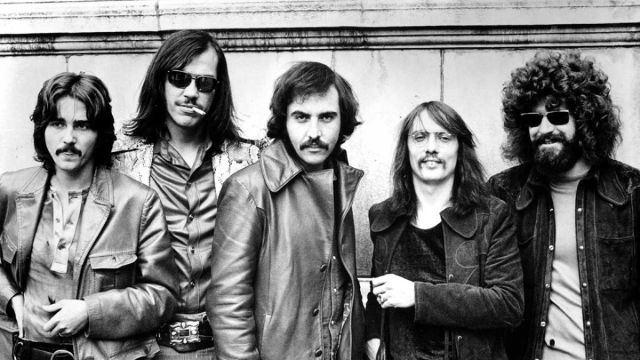
The subject for Day 7 of my 30 Day Song Challenge is “A song to drive to in the morning“. I think it’s a rather odd subject, but my interpretation is that it’s a song that gets you going in the morning, and the one that immediately comes to my mind is “Born to Be Wild” by Steppenwolf. If that adrenaline-inducing rocker – perfectly described by Hal Horowitz of AllMusic as “a roaring anthem of turbo-charged riff rock” – doesn’t charge your engines first thing in the morning, then nothing will!

“Born to Be Wild” was originally written as a ballad by Canadian rock musician Mars Bonfire (aka Dennis Edmonton), who was previously a member of the Sparrows, the predecessor band to Steppenwolf, and whose brother Jerry became Steppenwolf’s drummer. The other founding members of Steppenwolf included John Kay (born Joachim Fritz Krauledat in Germany) on lead vocals and rhythm guitar, Michael Monarch on lead guitar, Rushton Moreve on bass, and Goldy McJohn on keyboards. Bonfire initially offered the song to a few other bands, but “Born to Be Wild” was eventually recorded by Steppenwolf in a sped-up and rearranged version that came to define their signature hard rock sound. Those raging riffs of shredded guitars, chugging rhythms and thunderous percussion, accompanied by fantastic psychedelic keyboards and Kay’s powerful gritty vocals, made the song a classic that beautifully captured the rebelliousness of the late 60s.

The song is often invoked in both popular and counter culture to symbolize a biker appearance or attitude, partly due to being featured in the 1969 film Easy Rider. It’s also been described by many as the first heavy metal song, and the second verse lyric “heavy metal thunder” was the first use of this term in rock music. According to Robert Walser in his 1993 book Running with the Devil: Power, Gender, and Madness in Heavy Metal Music, the words “heavy metal thunder” describe a motorcycle, not a musical style.

“Born to Be Wild” became Steppenwolf’s most successful single, reaching #2 on the Billboard Hot 100 singles charts. (It was kept from the #1 spot by the Rascals’ “People Got to Be Free”.) Rolling Stone ranked “Born to Be Wild” at #129 on their 2004 list of 500 Greatest Songs of All Time, and in the same year, the song was ranked #29 on AFI‘s 100 Years…100 Songs survey of top tunes in American cinema. VH1 ranked it #40 in their list of the 100 Greatest Songs of Rock and Roll in 2000, and the 53rd best hard rock song of all time in 2009. In 2018, the song was inducted into the Rock and Roll Hall of Fame in a new category for singles. (Wikipedia)

Here’s the iconic scene from Easy Rider in which “Born to Be Wild” is featured

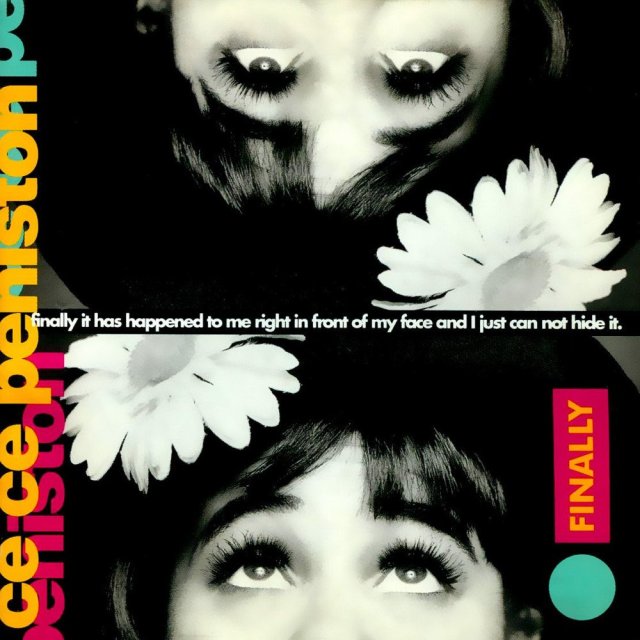
30 Day Song Challenge, Day 6 – “Finally” by CeCe Peniston

The subject for Day 6 of my 30 Day Song Challenge is “A song that makes you want to dance.” This was a tough one for me, as there are literally hundreds upon hundreds of songs that make me want to dance. I considered some great dance songs by the likes of Donna Summer, Madonna, Janet Jackson and Dua Lipa, among others, but when I walked into my local Trader Joe’s last evening and heard the CeCe Peniston classic “Finally” playing on their sound system, I immediately had my song pick for Day 6. I’ve always loved the song, with its infectious throbbing bass drum-driven dance groove and her euphoric soulful and sexy vocals.

First, a bit of background on CeCe: Born Cecilia Veronica “CeCe” Peniston in Dayton, Ohio in 1969, she moved with her family to Phoenix at the age of nine. She attended high school there, and sang at church and performed in plays and musicals in middle and high school, as well as local theater groups. After graduating from high school, she studied liberal arts at Phoenix College, where she got involved in athletics, and entered beauty pageants. She was crowned Miss Black Arizona in 1989.

Her music career began in January 1991, when Felipe “DJ Wax Dawg” Delgado, a record producer and friend also based in Phoenix, asked Peniston to record back-up vocals for Tonya Davis, a rapper known as Overweight Pooch. Though Overweight Pooch’s album was a commercial flop, another DJ and producer Manny Lehman had taken notice of Peniston’s powerful backing vocals. He offered Delgado a chance to produce a track for Peniston to cultivate her potential as a solo artist. Delgado called hometown friend and music producer, Rodney K. Jackson, to help co-produce Peniston’s first single, which would become “Finally”.

Peniston began writing pop songs while in school, and initially wrote the words to “Finally” as a poem during a chemistry class, while thinking about dating and how she hadn’t yet found her Mr. Right. She was 21 years old when “Finally” was released in September 1991, and it became an instant dance hit, reaching #1 only a month later on the Billboard Hot Dance Music/Club Play chart. The song went on to peak at #5 on the Hot 100 in January 1992, and #2 in the UK that March.

It’s major impact on the dance music genre has been recognized by numerous publications. VH1 ranked “Finally” at #29 in their list of the “100 Greatest Dance Songs” in 2000. MTV Dance ranked it #28 in their list of “The 100 Biggest ’90s Dance Anthems of All Time” in 2011. Heart TV ranked it #3 in their list of “55 Biggest ’90s Club Classics” in March 2017. Also in 2017, BuzzFeed placed it at #1 in their list of “The 101 Greatest Dance Songs of the ’90s”, noting “When it comes to ‘90s dance songs, you’d be hard-pressed to find another song that so perfectly incorporates other music genres that made the decade so great — i.e., R&B, house, and pop — which is what makes “Finally” the quintessential ‘90s dance song.” And last, but not least, Slant Magazine ranked it #37 in their list of “The 100 Best Dance Songs of All Time” in 2020. (Wikipedia)

“Finally” was featured in the 1994 Australian film The Adventures of Priscilla, Queen of the Desert, a hilarious road comedy written and directed by Stephan Elliott. The film portrays the misadventures of two drag queens, played by Hugo Weaving and Guy Pearce, and a transgender woman, brilliantly played by Terence Stamp, as they journey across the Australian Outback from Sydney to Alice Springs in a tour bus that they’ve named “Priscilla”, encountering various groups and colorful individuals along the way. Here’s a clip of the trio’s over the top drag performance to the song:

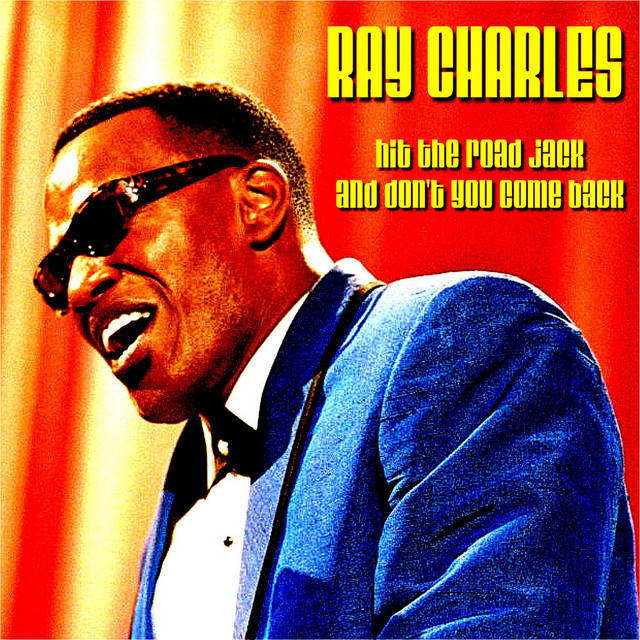
30 Day Song Challenge, Day 5 – “Hit the Road Jack” by Ray Charles

The subject for Day 5 of my 30 Day Song Challenge is “A song that makes you want to travel“. There are some great songs about traveling, such as Willie Nelson’s “On the Road Again”, Ricky Nelson’s “Travelin’ Man”, Creedence Clearwater Revival’s “Travelin’ Band”, and John Denver’s “Take Me Home, Country Roads”. But my pick is the marvelous Ray Charles song “Hit the Road Jack“. While not necessarily about travel, the song’s bouncy R&B groove really gets the toes tapping, compelling you to move! It’s barely two minutes long, but packs quite a punch.

The song was written by R&B singer Percy Mayfield, who first recorded it in 1960 as an a cappella demo that he sent to music executive Art Rupe. “Hit the Road Jack” was later recorded by Ray Charles in June 1961, with delicious call and response vocals by Margie Hendrix, who was the lead singer of The Raelettes, a girl group originally formed to sing backup on many of Ray Charles songs. She admonishes Charles in the song, informing him in no uncertain terms that she thinks he’s a bum “you ain’t got no money, you just ain’t no good“, while his pleas for her forgiveness “Now baby, listen baby, don’t ya treat me this way, ’cause I’ll be back on my feet some day“, fall on deaf ears.

The song became a huge hit, reaching #1 on the Billboard Hot 100 in the fall of 1961, as well as in Sweden and New Zealand. It also won a Grammy award for Best Rhythm and Blues Recording, and became one of Charles’ signature songs.

Here’s the demo recorded by Percy Mayfield:

30 Day Song Challenge, Day 4 – “A Beautiful Morning” by The Rascals

The subject for Day 4 of my 30 Day Song Challenge is “A song that reminds you of Spring“, and for my pick I’m going way back to 1968 with “A Beautiful Morning” by The Rascals. It’s not a song about Spring per se, but for me, its positive title and exuberant sunny vibe evoke images of a lovely Spring-like day, where it just feels good to be alive.

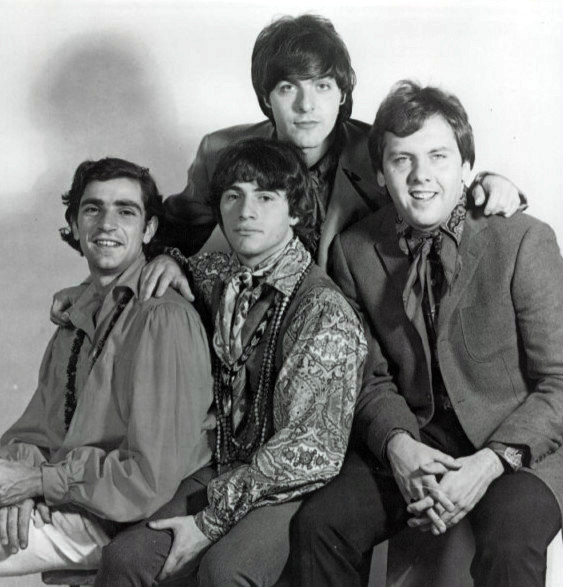
Co-written in Honolulu by band members Felix Cavaliere and Eddie Brigati while the band was performing in Hawaii, “A Beautiful Morning” continued with the theme of carefree optimism expressed on their massive hit song “Groovin'”. The song was appropriately released at the beginning of Spring on March 22, 1968, and was the band’s first single released as the ‘The Rascals’, rather than their previous moniker ‘the Young Rascals’. The single was also one of the earliest to be released in stereo, as 7-inch 45 singles had generally been recorded in mono. Together with the Doors “Hello, I Love You” it’s credited with changing the industry standard of singles. (Wikipedia) “A Beautiful Morning” also became a big hit, reaching #3 on the Billboard Hot 100.